
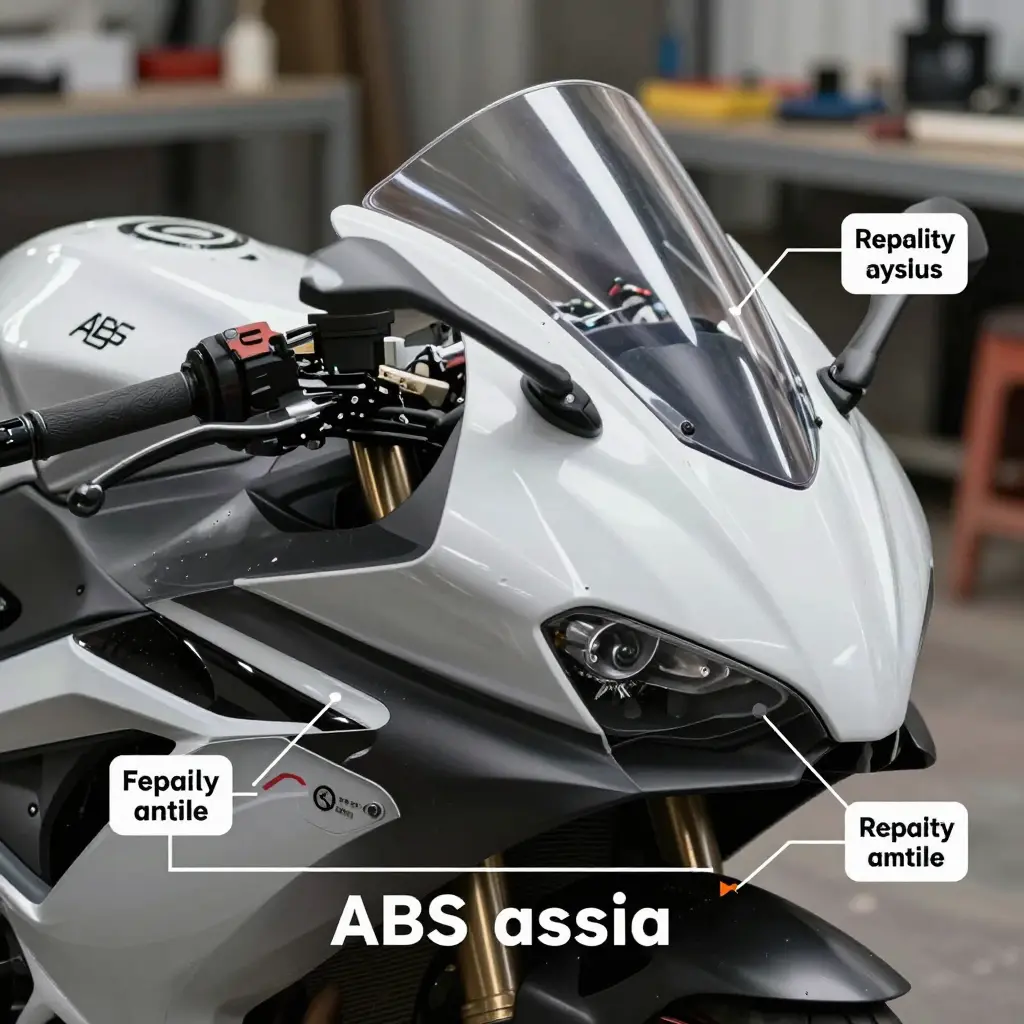
Motorcycle fairings keep wind, rain, and road debris off the rider, and they give a bike its finished shape. So when a panel cracks, the choice between ABS and fiberglass becomes a practical one: both materials are sold as aftermarket and OEM replacements, but they behave differently once the bike is on the road.
ABS motorcycle fairings are molded from a thermoplastic that flexes on impact instead of cracking, which is why they show up on most modern sportbikes. Fiberglass motorcycle fairings are glass cloth bonded in resin, producing a stiff shell that custom builders and race teams have favored for decades. For anyone weighing lightweight vehicle component upgrades, weight is often the deciding factor.
What follows compares ABS vs fiberglass motorcycle fairings on three points that decide whether a fairing survives a season: how they wear, how they repair, and how they handle heat. Each one feeds into fairing durability and into the long-term value of a given motorcycle fairing material.
Riders, shops, and owners tend to reach different answers, mostly because they ride and maintain their bikes in different ways.
Material Composition and Manufacturing
How ABS Fairings Are Built
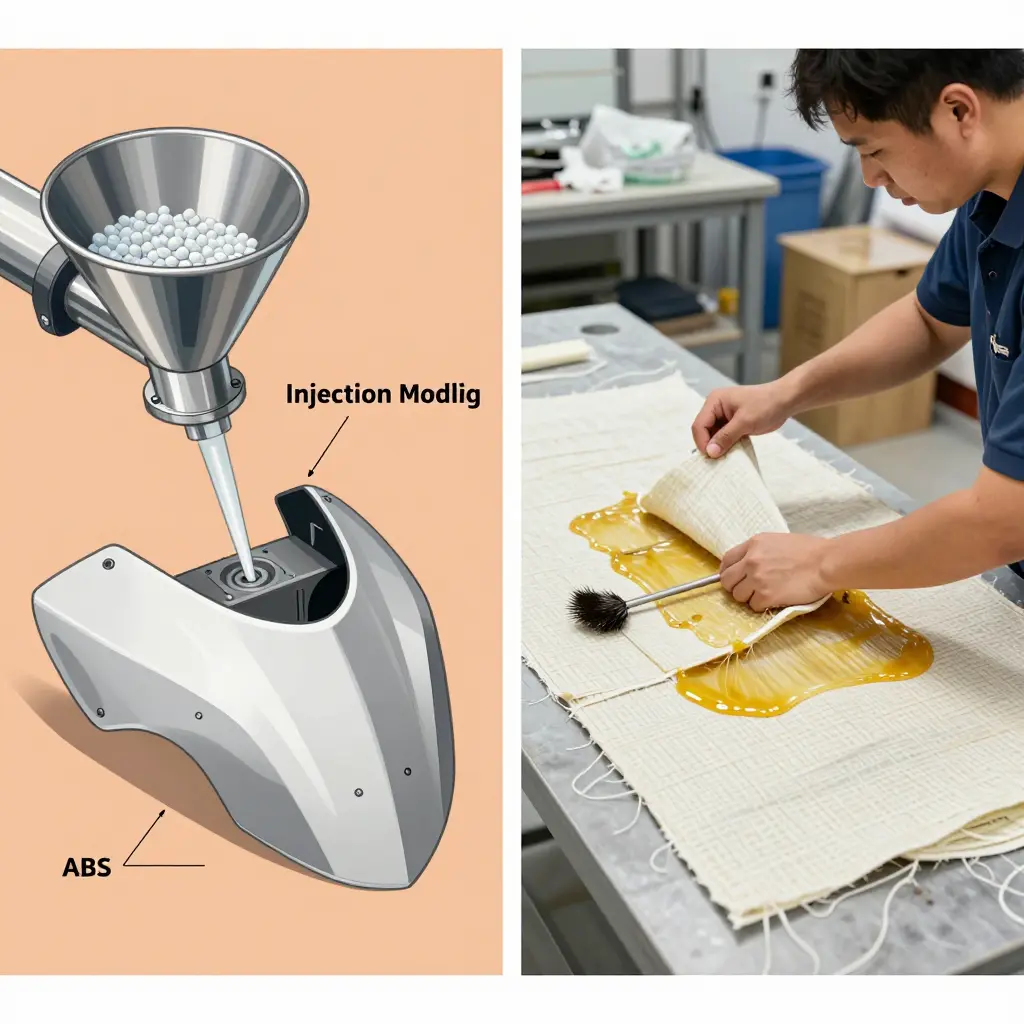
ABS fairings begin as thermoplastic pellets. The pellets are melted and injected under high pressure into a steel mold, a process known as an injection molded motorcycle fairing. Every cycle uses the same tool, so each panel comes out already shaped, textured, and trimmed, and one mold can produce thousands of identical pieces with little hand labor. Because ABS is a thermoplastic, the material can also be reheated and reshaped later. That repeatability is why ABS is the standard for factory-style replacement bodywork.
How Fiberglass Fairings Are Built
Fiberglass is made by hand. A builder lays layers of woven glass cloth into an open mold and wets each layer with fiberglass fairing resin, usually polyester or epoxy. After the resin cures, the panel comes out, gets sanded, and is often primed or gel-coated. Because a person controls the layup, the amount of cloth, the number of layers, and the final thickness all vary from part to part. That is what makes fiberglass tunable, and also what makes it labor intensive: every race-style fairing is a small composite job in its own right.
How the Process Shapes Real-World Behavior
The way a panel is made shows up in the traits riders notice. Injection molding produces thin, even walls, so ABS panels are typically lighter and hold their shape with a consistent flex. Hand layup tends to build thicker, denser panels that resist cracking but carry extra weight. Finish differs too: a good mold yields an ABS panel that is ready to bolt on, while fiberglass almost always needs filling, sanding, and paint before it looks clean.
Fairing fitment is where the two methods diverge most sharply. Molded ABS inherits its mounting bosses, tabs, and holes directly from the tool, so panels usually line up with factory points right out of the box. Hand-laid fiberglass shrinks and shifts slightly as the resin cures, so holes are often drilled after the fact and minor trimming may be needed to seat the panel correctly.
- Tooling cost: ABS needs expensive steel molds but cheap per-unit production; fiberglass needs cheap tooling but costly labor.
- Weight: Uniform ABS walls tend to run lighter than thicker, resin-rich fiberglass layups.
- Flex: ABS flexes predictably and springs back; cured fiberglass is stiffer and more rigid.
- Fitment and finish: Injection-molded panels arrive paint-ready with factory-aligned mounts, while fiberglass needs trimming, drilling, and finishing.
The manufacturing method is not a factory detail. It is the reason the two fairing types feel, weigh, and install so differently once they are on the bike. For a closer look at how lightweight materials reshape real builds, see how smart material choices cut weight on this overlanding rig.
Wear and Abrasion Performance: ABS vs Fiberglass Motorcycle Fairings
Which Material Lasts Longer
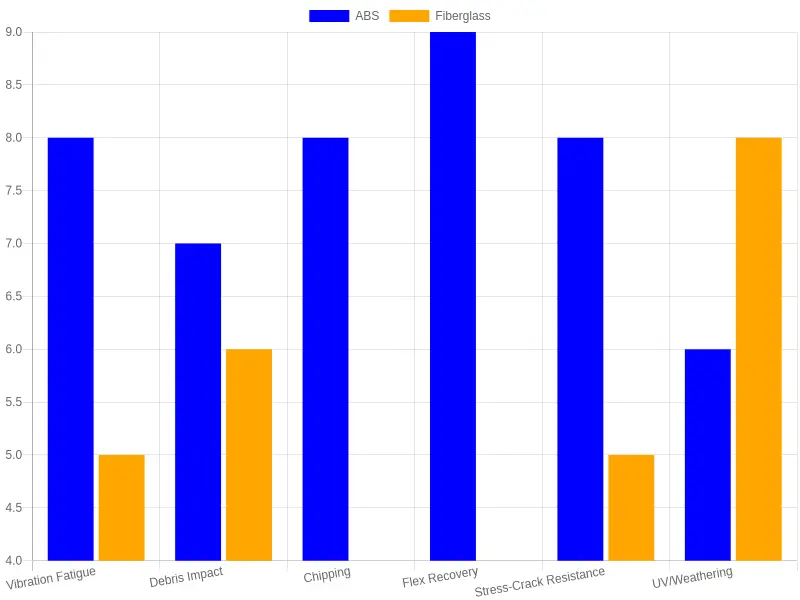
Ride hard, commute year-round, or share the road with flying gravel, and ABS generally outlasts fiberglass in the wear department. Fiberglass wins on surface hardness and UV stability, but it loses on impact toughness and flex. In plain terms: ABS bends, fiberglass breaks.
Here is how the two materials stack up against the abuse a real bike takes.
Where Each Material Wears Down
ABS (thermoplastic)
- Vibration: Soaks up engine buzz and panel-to-panel chatter without fatiguing. It is the quieter, longer-lived choice on high-vibration bikes.
- Impact and chipping: Flexes on stone strikes instead of cracking, then springs back. Small chips stay small.
- Stress cracking: Rare under normal use, though tight over-torqued bolts can create white stress marks over time.
- Weak spot: Heat and UV exposure. Prolonged sun can fade color and make older panels brittle.
Fiberglass (thermoset composite)
- Vibration: Stiffer and more prone to hairline cracks radiating from mounting points under sustained shaking.
- Impact and chipping: Hard gel-coat resists scratching, but a sharp hit causes spiderweb cracking or star chips that spread.
- Stress cracking: A real concern. Fiberglass does not recover from flex, so repeated bending eventually splits the resin.
- Weathering: Excellent UV and weathering resistance, often superior paint depth and finish longevity.
What the Ratings Show
The chart below scores each material across the failure modes that matter most in real riding. The pattern is consistent: ABS leads on toughness, fiberglass leads on surface and weather durability.
For riders who prioritize durability over cosmetic rigidity, choosing proven lightweight materials built for rough, real-world travel is the same trade-off: flexibility usually survives longer than stiffness.
Matching Material to Riding Style
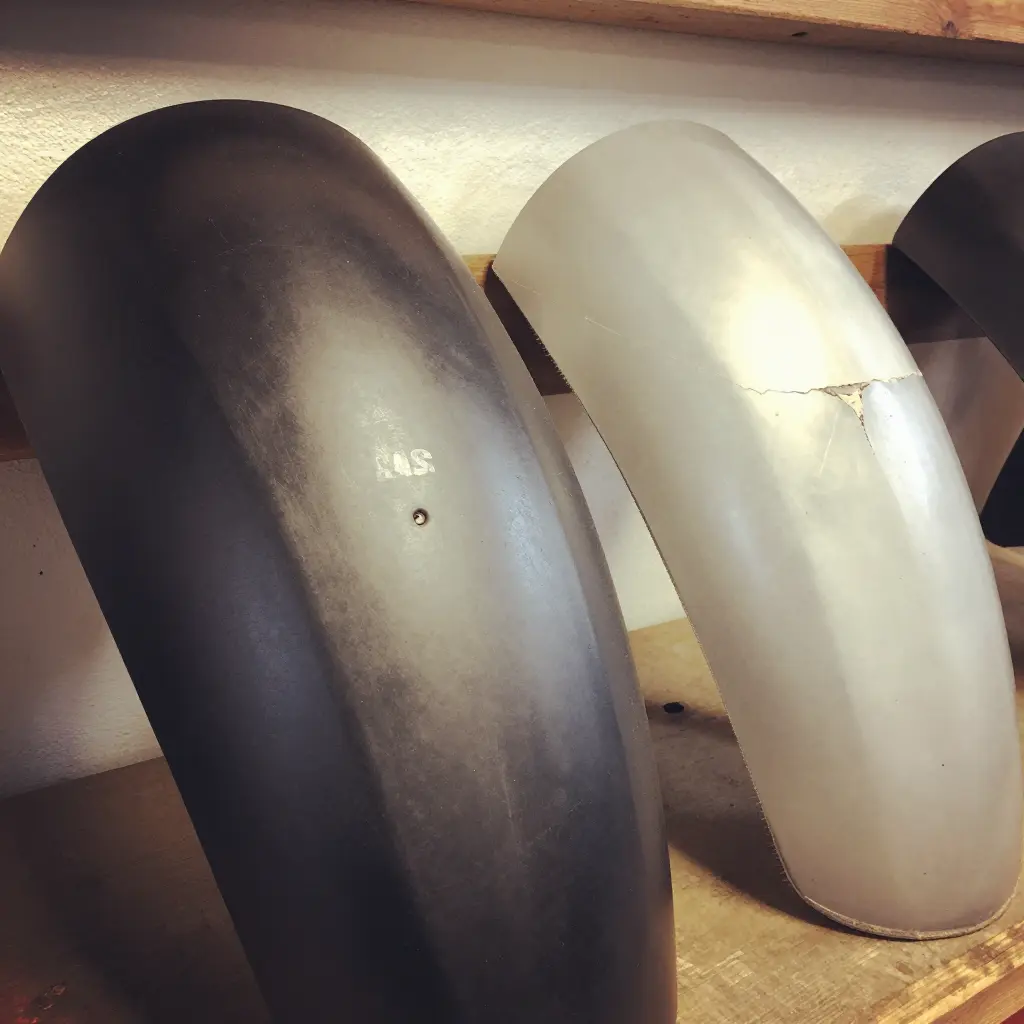
There is no single winner, only the right material for your riding style. Choose ABS for daily commuting, touring, off-road excursions, and any bike that sees vibration, gravel, or parking-lot knocks; its flex and crack-resistant behavior means fewer failures and easier repairs. Choose fiberglass for show bikes and fair-weather riders who value a rigid, glossy finish and UV durability, and who can accept the risk of stress cracks after a drop. Match the material to how you ride, and your fairings will look better and last longer.
| Property | ABS Fairing Characteristics | Fiberglass Fairing Characteristics |
|---|---|---|
| Weight | Lightweight; roughly 30-40% lighter than fiberglass panels | Heavier; resin and mat add noticeable mass |
| Impact resistance | Flexes on impact; resists cracking but can dent | Rigid; cracks or shatters under sharp, concentrated hits |
| Vibration and flex behavior | Absorbs vibration well; flexes without stress cracks | Stiff; transmits vibration and may develop hairline cracks |
| Surface finish | Smooth out of the mold; needs minimal prep work | Needs sanding, filling, and priming for a smooth finish |
| UV and weather resistance | Fades and degrades without a UV-stable coating | Resistant; gel coat shields against UV and moisture |
| Long-term wear tendency | Warps or yellows over years; less heat stable | Holds shape; repairable but prone to stress cracking |
Heat Resistance and Thermal Behavior: ABS vs Fiberglass Fairings
Why Heat Builds Up
A fairing spends its whole life sandwiched between heat sources it cannot escape: hot engine cases, exhaust pipes sitting millimeters away, and direct sun on a summer afternoon. Under that constant load, fairing heat resistance stops being a spec-sheet curiosity and becomes a real durability question.
The core difference is simple. ABS is a thermoplastic that softens as it warms, while fiberglass is a thermoset composite that stays rigid until it burns. That single material fact drives everything that follows.
The Base Numbers
The numbers tell most of the story. ABS begins to soften around 105°C, and its heat deflection temperature sits closer to 90°C, meaning it can sag under its own weight or engine vibration well before that point. Fiberglass with polyester resin typically holds shape to roughly 120°C, and epoxy-based layups push past 160°C. That gap is exactly what separates thermal deformation in ABS from the far smaller risk in fiberglass.
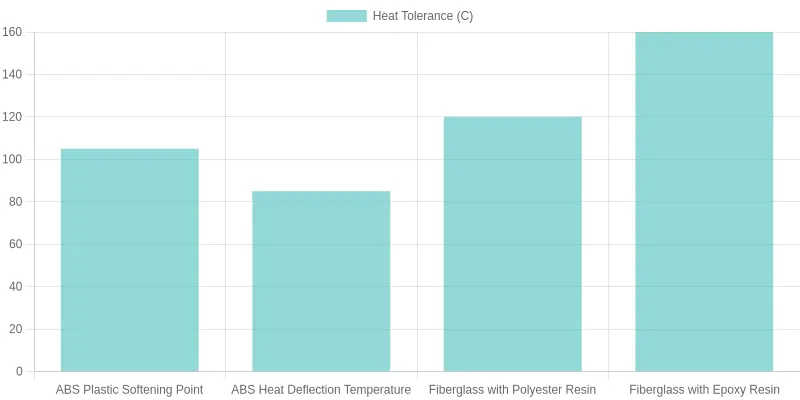
A quick side-by-side shows how the materials behave under thermal load:
| Material | Typical Heat Tolerance | Deformation Risk | Color Fade Under Heat |
|---|---|---|---|
| ABS Plastic | Softens ~105°C | Higher – sags, warps | Moderate – UV + heat yellowing |
| Fiberglass (Polyester Resin) | ~120°C | Lower – stays rigid | Low to moderate – gelcoat fades |
| Fiberglass (Epoxy Resin) | ~160°C | Low – best stability | Low – most fade resistant |
Where fairings actually fail is at close-contact zones: exhaust-adjacent panels and tight engine cutouts. ABS there can slump, distort around mounts, and later crack as it re-hardens. Fiberglass handles that proximity far better, though gelcoat and paint still fade from sustained UV and heat. In fiberglass that fade is cosmetic; in ABS it often arrives alongside structural softening.
Which Material Wins on Heat
In genuinely hot riding environments, fiberglass holds up better. Its higher heat tolerance keeps panels dimensionally stable near exhausts and engines, precisely where ABS is most vulnerable, and its color layer fades more slowly. ABS stays lighter, cheaper, and easier to replace, but if the question is simply which material survives heat, fiberglass wins.
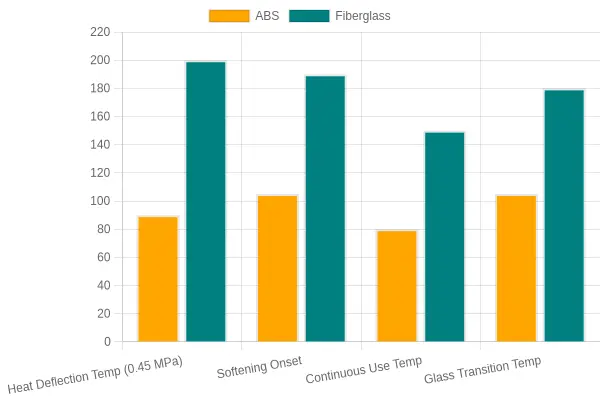
How to read this chart
This grouped bar chart compares ABS and fiberglass fairing materials across four heat-related thermal thresholds, all measured in degrees Celsius (°C). Higher bars mean the material keeps its shape and structural integrity at higher temperatures, which matters when your fairing sits close to an engine, exhaust header, or a baking summer sun.
| Thermal Threshold Indicator | ABS (°C) | Fiberglass (°C) |
|---|---|---|
| Heat Deflection Temp (0.45 MPa) | 90 | 200 |
| Softening Onset | 105 | 190 |
| Continuous Use Temp | 80 | 150 |
| Glass Transition Temp | 105 | 180 |
What Each Threshold Means
- Heat Deflection Temperature (HDT) is the point where the material bends under a light load of 0.45 MPa. ABS starts to sag around 90 °C, while fiberglass holds firm until roughly 200 °C – more than double the ceiling.
- Softening Onset is where the surface first starts to feel rubbery. ABS hits this near 105 °C; fiberglass stays rigid until about 190 °C.
- Continuous Use Temperature reflects the highest temperature a part can live at day after day without creeping or warping. ABS is comfortable to about 80 °C, fiberglass to around 150 °C.
- Glass Transition Temperature marks where the polymer shifts from a hard, glassy state to a soft, leathery one. ABS transitions near 105 °C, fiberglass near 180 °C.
The takeaway: fiberglass fairings carry a clear thermal advantage, tolerating sustained heat that would leave ABS soft, droopy, and prone to deformation. That said, ABS remains lighter, cheaper, and easier to repair for riders who rarely push their plastic into extreme heat zones.
Repair and Maintenance: ABS vs Fiberglass Fairings
Here is the part that catches most riders off guard: the fairing material quietly decides how painful your next drop becomes. A low-speed tip-over is a fast fix for one material and a full rebuild for the other.
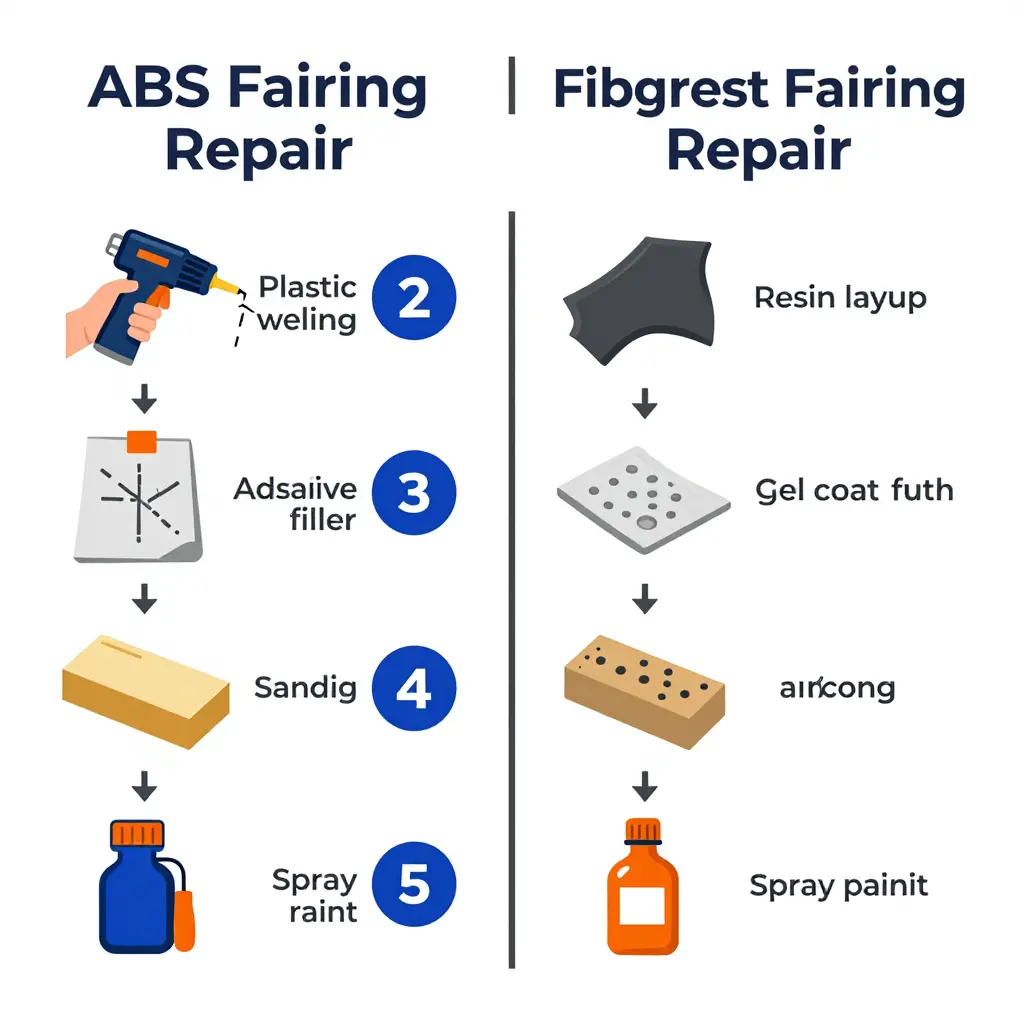
Repairing ABS Fairings
ABS is a thermoplastic, which makes ABS fairing repair surprisingly forgiving. The go-to method is plastic welding: a technician melts the cracked edges back together with a heat gun or dedicated welder, often feeding in a matching ABS filler rod.
For hairline splits or missing chunks, adhesive fillers and flexible epoxy rebuild the surface. Sanding then smooths the repair, and repainting restores the factory finish.
Repairability is high, cost stays low, and the skill required is moderate; plenty of owners handle minor fixes at home with a basic kit.
Repairing Fiberglass Fairings
Fiberglass is a thermoset composite, so fiberglass fairing repair works on a different principle. Instead of melting, the technician performs a resin layup: grinding back the damage, layering fiberglass cloth patches, and saturating them with resin until the area cures hard.
A gel coat then seals and matches the surface, followed by sanding and repainting. This more demanding fairing crack repair process rewards real craftsmanship.
Repairability is strong – arguably best for large structural breaks – but the cost is higher and the skill required is significant, usually beyond a casual driveway job.
Repairability, Cost, and Structural Integrity at a Glance
| Factor | ABS Fairings | Fiberglass Fairings |
|---|---|---|
| Core repair method | Plastic welding, adhesive fillers | Resin layup, cloth patches, gel coat |
| Repairability | High for minor damage | High, even for large breaks |
| Cost of repair | Low to moderate | Moderate to high |
| Skill required | Moderate (DIY-friendly) | High (professional recommended) |
| Restores structural integrity | Yes, when welded properly | Yes, often stronger than the original |
| Finish restoration | Sanding plus repaint | Gel coat, sanding, plus repaint |
The Difference Is Effort
Both materials can be repaired, and both can regain full structural integrity when the work is done correctly. The real difference is effort: ABS rewards quick, budget-friendly fixes, while fiberglass rewards patience and skill with a repair that can outlast the original panel.
Repair Steps at a Glance
Whether you are patching a cracked ABS panel or rebuilding a shattered fiberglass unit, the workflow follows the same rhythm: clean, prep, repair, finish. The real difference is how each material wants to be handled. If you enjoy this kind of hands-on work, you might also get a kick out of other practical truck and vehicle repair projects. Here is the quick version for both materials.
Repairing ABS Fairings
- Wash the panel with mild soap and water, then wipe it with a plastic-safe cleaner.
- Sand the cracked area with medium-grit paper to rough the surface and expose fresh material.
- Weld or chemically bond the seam using heat and a matching ABS filler rod.
- Fill any low spots with flexible plastic filler, then sand the patch smooth.
- Prime with a flexible primer designed specifically for plastics.
- Finish with a color-matched base coat sealed under a clear topcoat.
Repairing Fiberglass Fairings
- Clear away loose debris and wash the surface with a degreaser.
- Grind out the crack and bevel the edges to open a strong bonding channel.
- Layer fiberglass mat or cloth over the damage and saturate it with resin.
- Once the resin cures, sand the patch flush with the surrounding panel.
- Apply body filler to level the surface, then sand it smooth again.
- Prime and paint with a compatible topcoat system to match the original finish.
The sequence looks almost identical on paper, but ABS rewards heat and chemical welding while fiberglass rewards patience with resin and layered cloth. Match the method to the material, and either fairing can come back looking factory-fresh.
Cost, Value, and Longevity: ABS vs Fiberglass Motorcycle Fairings
The cheapest fairing rarely stays the cheapest.
When riders first compare motorcycle fairing cost, they usually stare at the sticker price of a single set. But real value only shows up over years of riding, repairing, and repainting. Upfront price is just the first line of the equation.
ABS plastic fairings typically start lower, while fiberglass commands a premium for its rigidity, smoother surface, and easier finishing. Here is how the two stack up:
| Factor | ABS Plastic | Fiberglass |
|---|---|---|
| Typical upfront price (set) | $250 – $500 | $450 – $900 |
| Repairability | Moderate; heat reshaping | High; resin patching |
| Replacement frequency | Higher (every 2-3 years) | Lower (every 4-5 years) |
| Finish durability | Good paint adhesion | Excellent gloss retention |
Over a five-year window, the gap narrows fast:
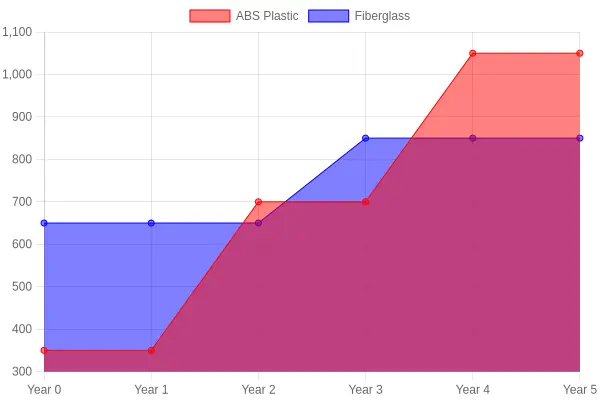
The ABS line climbs in steps as cracked panels get swapped out. Fiberglass rises more slowly because it survives impacts, repaints cleanly, and needs replacing less often. Competitive fairing suppliers can also offer lower prices across a wide range of styles, trimming the entry premium that used to scare buyers away.
Buy for fairing longevity, not the lowest invoice. Calculate cost-per-year, not just cost-per-set. When you weigh ABS vs fiberglass fairing price against repairability and finish durability, fiberglass often wins the long game – while ABS stays the smarter pick for tight budgets and occasional track-day thrills.
Choosing the Right Fairing Material: ABS vs Fiberglass
Knowing how to choose motorcycle fairing material starts with matching the panel to how you actually ride. Both ABS and fiberglass have loyal followings, and neither wins outright – the right answer depends on your riding style, climate, budget, and how you feel about repairs.
For Motorcycle Owners
If you commute daily, park on the street, and value low maintenance, ABS is usually the smarter buy. The ABS fairing benefits include molded-in color, resistance to minor impacts, and a factory fit that rarely needs prep work. Owners who chase a custom paint job or ride in extreme heat may prefer fiberglass, which tolerates higher temperatures and can be built up to match a one-off design.
For Enthusiasts
Track riders and builders often lean toward fiberglass. The fiberglass fairing benefits show up as stiffness, easier sanding and drilling, and simple damage repair using resin and mat. ABS stays more flexible and chip-resistant on the street, though bonding and refinishing it take the right primers and adhesives. Stiffness matters here, much like the lightweight material choices in real-world builds that prioritize strength without added mass.
For Repair Shops
Shops should stock based on their customer mix. ABS requires specific plastic-welding tools and adhesives, while fiberglass rewards traditional bodywork skills. Fiberglass also lets a shop rebuild cracked sections rather than replacing a whole panel, which can improve margins on older bikes.
Quick Selection Factors
- Riding style – commuting and touring favor ABS; track and custom builds favor fiberglass
- Climate – hot, sunny regions suit fiberglass; varied, cold weather favors flexible ABS
- Budget – ABS costs less upfront but needs less finishing work
- Repair preference – ABS is the easier DIY fix; fiberglass patches are stronger but demand more skill
- Fit and finish – ABS arrives ready to bolt on; fiberglass often needs prep
There is no universal winner. Match the material to your climate, your tooling, and the way you ride, and both options can deliver years of dependable service.
Frequently Asked Questions: ABS vs Fiberglass Motorcycle Fairings
1. In the ABS vs fiberglass motorcycle fairings debate, which material is more durable for daily riding?
For everyday commuting, ABS plastic fairings usually hold up better against low-speed drops, parking-lot tip-overs, and constant vibration because they flex instead of cracking. Fiberglass is stiffer and more resistant to abrasion and road rash, but it can shatter under a sharp impact. Riders who navigate dense traffic and tight parking tend to favor the forgiving nature of ABS plastic fairings.
2. Can both ABS and fiberglass fairings be repaired after a crack?
Yes, but the methods differ. ABS fairings are typically repaired with plastic welding or solvent adhesives that chemically fuse the material back together and restore much of its original strength. Fiberglass is repaired with resin and added layers of glass cloth, which can actually make the patched area stronger than the surrounding panel. Matching the repair technique to the fairing type is essential, since combining the two approaches leads to weak bonding.
3. Which fairing material handles engine and exhaust heat better?
Fiberglass generally tolerates higher continuous temperatures than standard ABS, which can soften and warp under prolonged exposure. Because engine cases and exhaust headers radiate significant warmth, ABS fairings mounted close to those hotspots may sag over time. As a thermoset composite, fiberglass holds its shape and resists deformation better in those zones. Adding heat shielding helps both materials perform reliably.
4. Do ABS and fiberglass fairings cost the same?
No, prices differ noticeably. Mass-produced ABS fairings are usually cheaper because they are injection-molded in high volumes, which is why they dominate on stock motorcycles. Fiberglass fairings are often hand-laid in smaller batches, raising labor costs and pushing prices higher. Aftermarket race and custom fiberglass sets typically cost more unless you find a budget supplier.
5. How long do ABS and fiberglass fairings typically last?
With normal care, both can last many years, but their failure modes differ. ABS fairings may discolor, crack at mounting tabs, or turn brittle after years of UV exposure and vibration. Fiberglass resists UV damage better when gel-coated but can develop stress cracks and gel-coat crazing over time. Storage conditions and sun exposure matter as much as the material; even lightweight composite materials benefit from UV shielding and routine cleaning.
| Factor | ABS Plastic | Fiberglass |
|---|---|---|
| Daily impact resistance | High (flexes) | Moderate (stiff) |
| Repair method | Plastic welding | Resin plus glass cloth |
| Heat tolerance | Lower (can warp) | Higher |
| Typical cost | Lower | Higher |
| Common failure | Cracking at tabs | Stress and gel-coat cracks |
The Bottom Line on ABS vs Fiberglass Motorcycle Fairings
The wear, repair, and heat comparisons all point to the same conclusion: the ABS vs fiberglass motorcycle fairings debate has no single winner, only trade-offs that map to how you actually ride.
ABS fairings flex under impact and vibration, resist cracking, and shrug off everyday heat and weather without much fuss. That forgiving nature makes ABS plastic fairings the lower-maintenance choice for daily riders and commuters who want durability without constant attention.
Fiberglass fairings, by contrast, are stiffer and hold a molded shape better, which suits performance-minded riders chasing a specific look or fit. But that stiffness comes at a cost. Fiberglass cracks rather than flexes, and repairs demand more skill, curing time, and careful finishing to blend the surface back to factory smooth.
In practical terms, ABS rewards riders who value resilience and easy ownership, while fiberglass rewards those willing to trade some toughness for stiffness and customization.
A Balanced Recommendation
- Enthusiasts: Choose fiberglass if stiffness and a tailored finish matter most, but budget for careful repair work.
- Repair shops: Keep both on hand. ABS is faster to fix and refit; fiberglass calls for dedicated composite skills.
- Owners: Pick ABS for low-hassle longevity, or fiberglass if appearance and rigidity outweigh maintenance.
Either way, matching the material to your riding habits is what keeps a fairing looking good season after season.

