Cracked Motorcycle Fairings Are Rarely a Distance Problem
Buyers, carriers, and insurers argue most often over cracked motorcycle fairings discovered at delivery. The journey’s length is the usual suspect, but distance plays only a small part. How the motorcycle was crated, and how that crate was handled in transit, decides the outcome far more often.
A long route does not guarantee damage, and a short local move can crack a fairing just as easily when the packing is weak or the handling careless. What happens before and during transport, not the mileage, usually decides whether the bodywork arrives intact.
Two Terms That Decide the Outcome
Crating means building and securing a protective enclosure around the motorcycle: the frame or box, the padding and bracing around bodywork, fork and wheel restraints, and the straps that keep the machine from shifting.
Freight handling covers every physical contact with that crate after it leaves the shipper: forklift lifting, trailer stacking, terminal transfers, warehouse staging, and final unloading. A well-built crate still fails if handlers ignore its load limits or orientation.
What This Article Covers
The sections below cover how crating and freight handling shape insurance claim outcomes for three groups: buyers receiving motorcycle fairings on arrival, transport companies managing liability, and insurance claim professionals assessing fault and payout.
Why Fairings Crack in Transit
The damage rarely comes from one dramatic event. More often it is the slow accumulation of stress that a fairing was never designed to absorb while sitting still inside a truck or van.
Understanding why these panels fail is the first step toward preventing the damage and toward building a claim that holds up.
The Physical Mechanics Behind the Failure
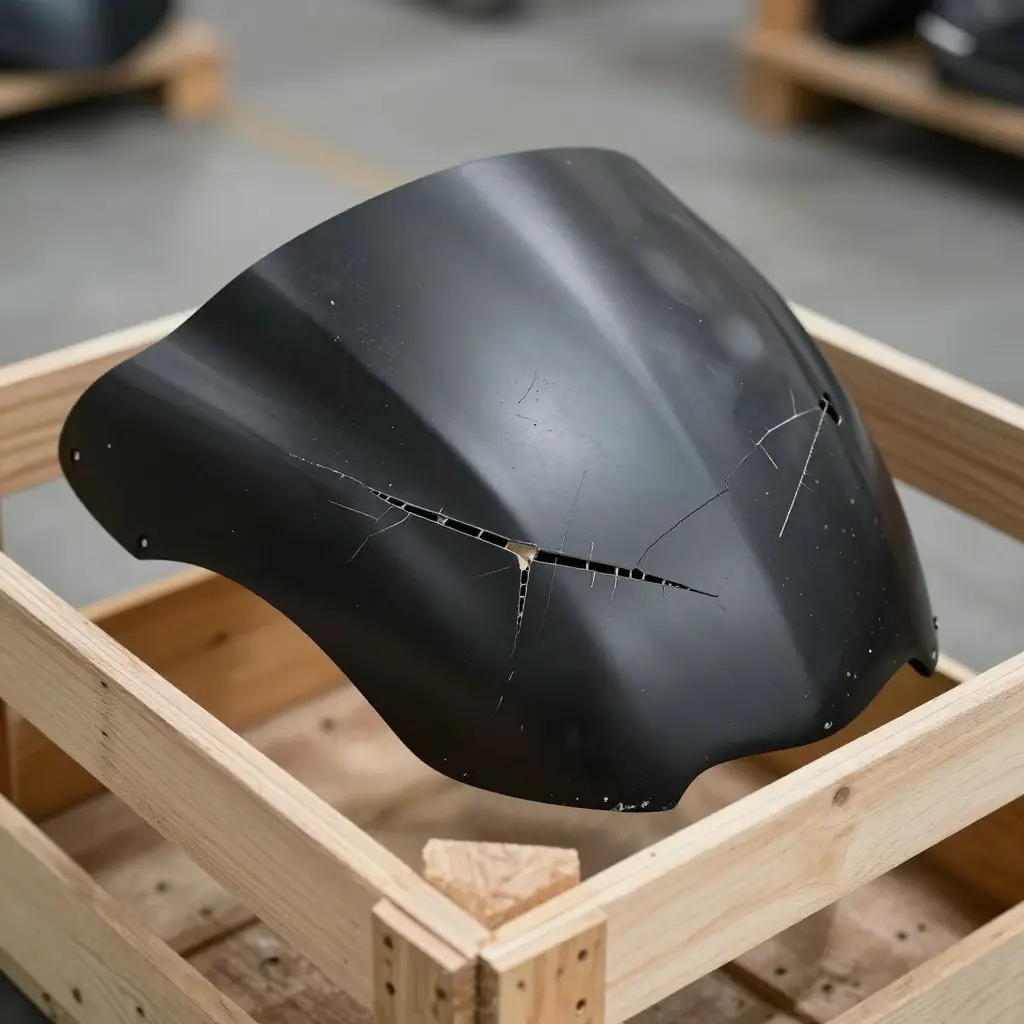
Fairings are lightweight by design, and that lightness costs something. Engineers cut weight the same way builders of lightweight aftermarket components do: less material wherever possible. Thin material also fails more easily. Three failure modes dominate:
- Thin shells flex. An ABS fairing often has walls only a few millimeters thick. Under load the panel bends instead of resisting, and repeated bending concentrates stress at corners and edges.
- Layered composites delaminate. Fiberglass is resin and glass layers bonded together. When that bond weakens, the layers separate, and the failure stays hidden until the gel coat splits.
- Mounting tabs snap. Tabs are small, rigid, and carry the entire weight of the panel. They are the first thing to give when a fairing shifts even a few centimeters.
The Four Forces That Break Fairings
Vibration
Road vibration works like a slow hammer. Over hundreds of miles it fatigues plastic and loosens fasteners, letting panels rattle against each other inside the crate.
Compression Stacking
When crates are stacked or panels packed too tightly, the pressure deforms shells permanently. Once a fairing takes a set, it never lines up correctly again.
Impact During Handling
Forklifts, thrown boxes, and dropped pallets create sudden point loads, the biggest single cause of fairing shipping damage and the easiest to catch on camera.
Temperature Swings
Plastic and resin expand and contract at different rates. A freezing night followed by a hot trailer flexes the joints again and again, and repeated flexing weakens them.
How ABS, Fiberglass, and Polypropylene Respond
| Material | Flexibility | Best Trait | Weak Point |
|---|---|---|---|
| ABS | High | Absorbs impact | Heat sensitivity, stress cracks |
| Fiberglass | Moderate | Rigid and repairable | Delamination |
| Polypropylene | Moderate | Chemical resistance | Low impact toughness |
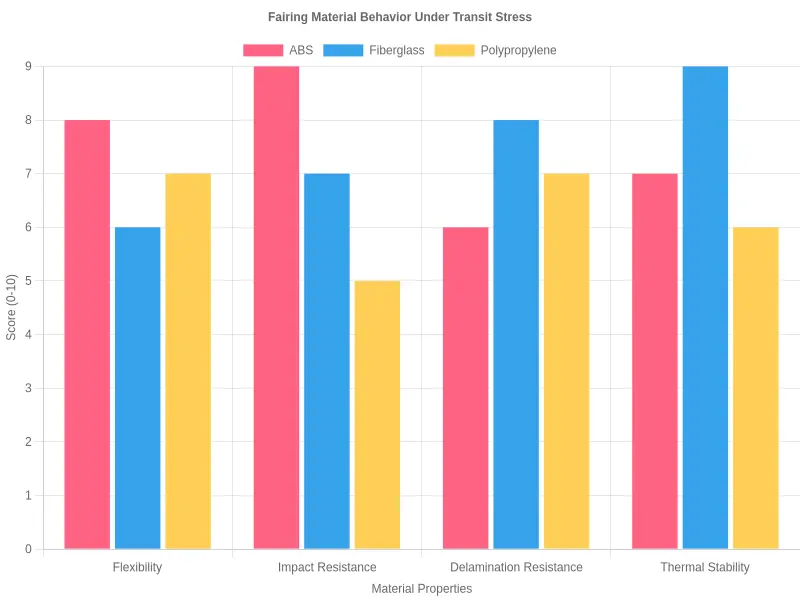
Each material fails differently. An ABS fairing flexes and usually cracks at tabs and stress risers. Fiberglass holds its shape but delaminates once the resin matrix fails. Polypropylene resists most chemicals, though it is notch-sensitive and can shatter under a sharp hit.
The chart below scores each material against those four forces.
Why This Matters for Your Claim
Photos of flexed shells, separated layers, and snapped tabs are physical evidence. They help show the damage happened in transit rather than on the road, which is the foundation of a freight claim.
Crating Materials and Protection Levels Compared
Crating is where claims are won or lost. Once a fairing leaves on a pallet, its packaging sets how much impact, vibration, and moisture it can survive. The table ranks common crating methods so you can match protection to the load’s value and fragility before the truck rolls.
| Crating Material / Method | Impact Protection | Vibration Damping | Moisture Resistance | Typical Cost Level | Best Fit |
|---|---|---|---|---|---|
| Single-wall cardboard | Low | Low | Low | $ | Light, non-fragile parts on short domestic runs |
| Double-wall cardboard with foam | Moderate | Moderate | Low to moderate | $$ | Mid-weight fairings on short-to-medium routes |
| Wooden crate with foam bracing | High | Moderate to high | Moderate | $$$ | Heavy or irregular parts needing rigid support |
| Plywood crate with custom-cut foam inserts | Very high | High | High | $$$$ | High-value, precision-fit components like full fairing sets |
| Molded foam shell in a rigid crate | Highest | Highest | High | $$$$$ | Painted fairings, fragile OEM plastics, long international freight |
How to read this table
As you move down the rows, protection and cost both rise. A bare metal bracket may travel fine in single-wall cardboard. A freshly painted fairing crossing an ocean or passing through several terminals needs a molded foam shell in a rigid crate to keep vibration fatigue and handling impacts from turning into a claim. Whatever the method, document it. The crating method is the clearest predictor of whether parts arrive intact, and of who pays when they do not.
Crating Best Practices That Reduce Claims
Crating is the most controllable variable in whether a shipment arrives intact. A properly built motorcycle fairing crate absorbs shock, holds the panels still, and keeps moisture out, which lowers the odds of cracked motorcycle fairings on the receiving dock. The aim is to remove every chance a panel has to flex, scrape, or sit in water between the loading bay and the final handoff.
- Wrap each panel individually in soft foam. Foam soaks up vibration and minor impacts and keeps panels from grinding against each other, which removes the micro-abrasions that later turn into cracks.
- Block and brace panels to stop movement. A fairing that can slide inside its crate becomes a projectile when a truck brakes hard or a pallet tips. Lumber blocking and straps lock it in place.
- Reinforce mounting points. Bolt holes, tabs, and clip mounts are the thinnest sections on a fairing and the first to fracture. Backing plates or rigid inserts spread the load and keep them from splitting.
- Add padded corner protectors. Corners take the most direct hits. Foam or plastic caps cushion the edges during loading, stacking, and unloading.
- Seal panels against moisture. Humidity and condensation blister paint, corrode hardware, and weaken composite lay-up over a long route. A moisture barrier keeps the material from turning brittle.
- Label crate orientation and fragile status. Clear “This Side Up,” “Do Not Stack,” and “Fragile” markings tell handlers how to treat the load, and fewer inverted or dropped crates mean fewer claims for cracked motorcycle fairings.
Treat these as a checklist, and photograph each step before the crate is sealed. The photos protect the shipment in transit and give you evidence if rough freight handling still causes damage.
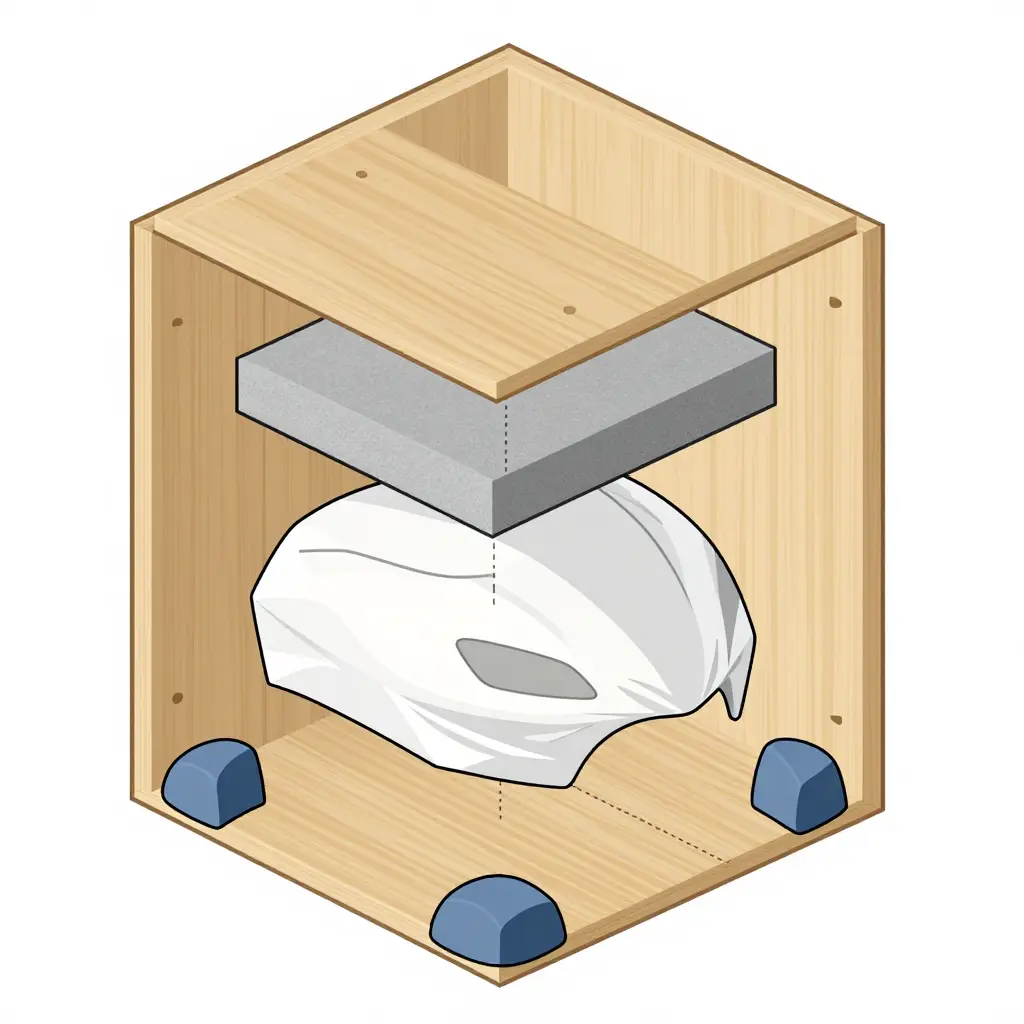
The diagram breaks an ideal crate into its protective layers. The outer wall takes the brunt of impacts and rough handling. A foam insert spreads and absorbs shock. The wrapped panel is shielded from abrasion, and padded corner protectors guard the most exposed points. Each layer does a distinct job; together they turn a single hard hit into a gradual, spread-out force the panel and the structure around it can survive.
How Freight Handling Shapes Damage Outcomes
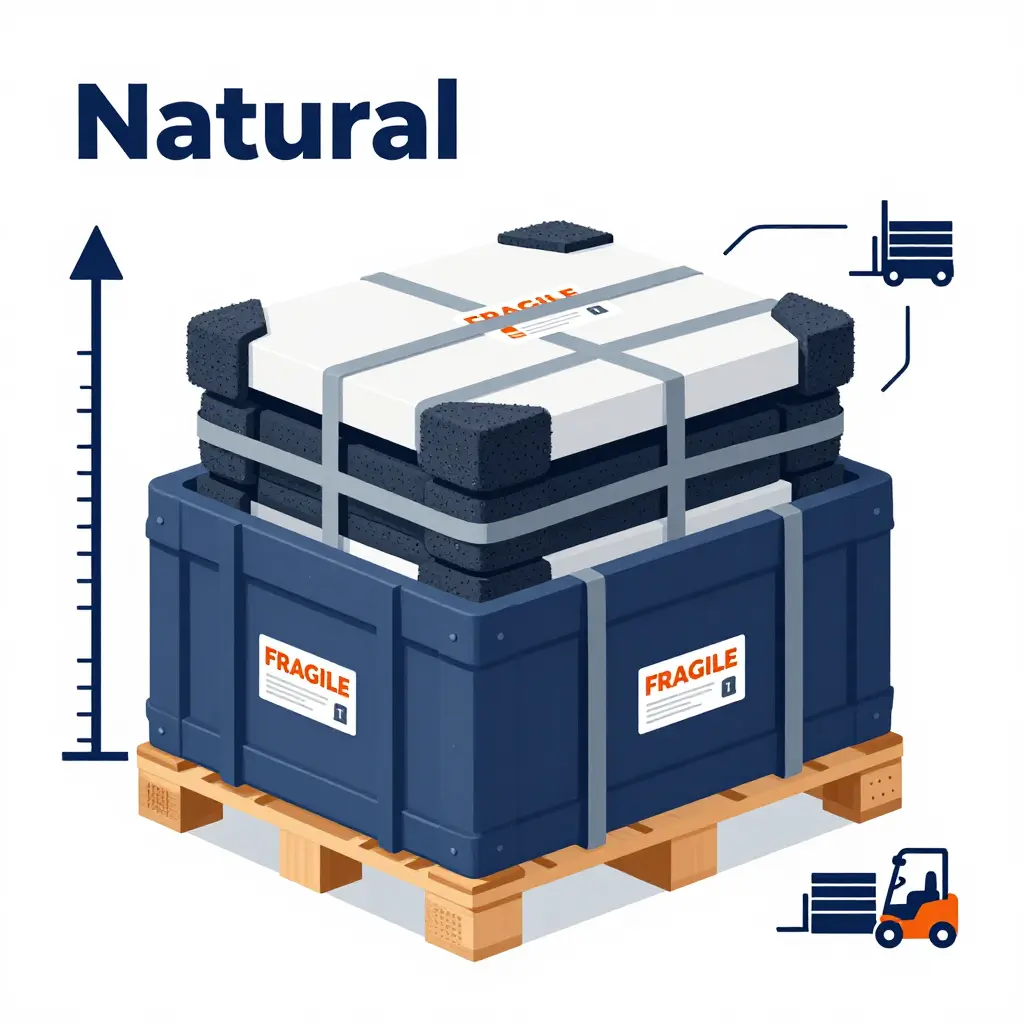
Crating protects a fairing; freight handling decides whether that protection holds. Two shipments can leave the same shop in identical crates and arrive in very different condition. Where the crate is lifted, stacked, and transferred is where the outcome is decided, and knowing where damage happens is the first step toward knowing who pays when cracked motorcycle fairings on arrival become a transport damage claim.
Loading Practices Set the Baseline
How a crate is lifted and secured matters more than most shippers expect. A fork tine through a crate wall, or a load left unbraced against the trailer rail, concentrates force where resin panels crack. Padding on a level floor reduces flex better than a hastily wedged box.
Stacking, Palletization, and Weight Distribution
Weight belongs low and centered. When several fairings are palletized, uneven stacking presses on the weakest panel, usually a thin side fairing with little internal bracing. Secure palletization spreads the load across the whole base instead of a few contact points.
LTL Versus Dedicated Transport
Less-than-truckload (LTL) freight moves through multiple terminals and is handled far more often than a dedicated run. Every extra touch is another chance for mishandling. Dedicated transport costs more but usually means fewer handling events and a cleaner liability chain.
Transfer Points: The Hidden Risk
Most damage happens at transfers: dock to trailer, trailer to cross-dock, cross-dock to delivery truck. Each handoff brings new equipment and new hands. Photographing crate condition at pickup and keeping a signed bill of lading is the simplest way to isolate which transfer caused the harm.
Drop Height and Energy
A crate that survives a six-inch drop may fail at three feet. Impact energy rises with drop height, and thin ABS or fiberglass fairings flex before they crack. Cushioning, clear “this side up” markings, and drop indicators help handlers respect that limit.
Where Carrier Responsibility Ends and Shipper Responsibility Begins
The split determines liability:
| Responsibility | Falls On | Typical Evidence |
|---|---|---|
| Adequate crating and packaging | Shipper | Packing spec, photos at pickup |
| Safe loading and securement | Carrier | Load photos, seal records |
| Handling at terminals and transfers | Carrier | Dock logs, exception reports |
| Accurate weight and labeling | Shipper | Bill of lading, labels |
| Condition on arrival | Jointly documented | Delivery photos, signed receipt |
The shipper owns the crate; the carrier owns the journey. When fairings arrive broken, a claim usually turns on whether the crate was fit for transport or whether handling defeated its protection. Proof of condition at both ends makes that question answerable and keeps a transport damage claim from becoming a guessing game.
Chart type: Bar
Title: Fairing Damage Claim Success Rate by Crating Quality
Y-axis: Claim Success Rate (%)
X-axis: Crating Tier
| Crating Tier | Claim Success Rate (%) |
|---|---|
| Minimal Protection | 22 |
| Standard Protection | 47 |
| Reinforced Protection | 71 |
| Custom Foam-in-Crate | 89 |
Data series: Claim Success Rate (%) = [22, 47, 71, 89]
Labels: [“Minimal Protection”, “Standard Protection”, “Reinforced Protection”, “Custom Foam-in-Crate”]
Documenting Damage for a Strong Claim
When cracked motorcycle fairings arrive on your dock, the clock starts. Carriers often require written notice within a short window, and a complete freight claim documentation package can mean the difference between a full payout and a rejected damage claim. Work through these steps in order.
-
Photograph the outer box before opening it. Capture the label, shipping marks, and any dents, punctures, or crushed corners. This is the first thing an adjuster checks, and it helps show the damage happened in transit rather than after delivery.
-
Photograph the interior packing. Record the foam, corner blocks, and void fill as you found them. These images show whether the crating was adequate, which is a key factor in deciding liability.
-
Document each crack with close-up photos. Take wide shots for context, then tight shots of every fracture, scuff, and missing tab. Clear, dated images make the extent of the loss hard to dispute.
-
Note the damage on the delivery receipt. Write the visible damage on the receipt before signing. Once you sign “clean,” you may be treated as accepting the shipment in good condition and weaken your position.
-
Notify the carrier in writing. Send formal notice within the deadline in the contract. Email and certified letter both create a timestamped record that supports your claim.
-
Submit the claim with the packing reference. Include your invoice, photos, receipt notes, and the packing reference number so the carrier can trace the shipment. A complete, referenced file speeds up approval.
Each step supports the next, and together they form the chain of evidence carriers and insurers expect.
The Claim Escalation Path, Step by Step
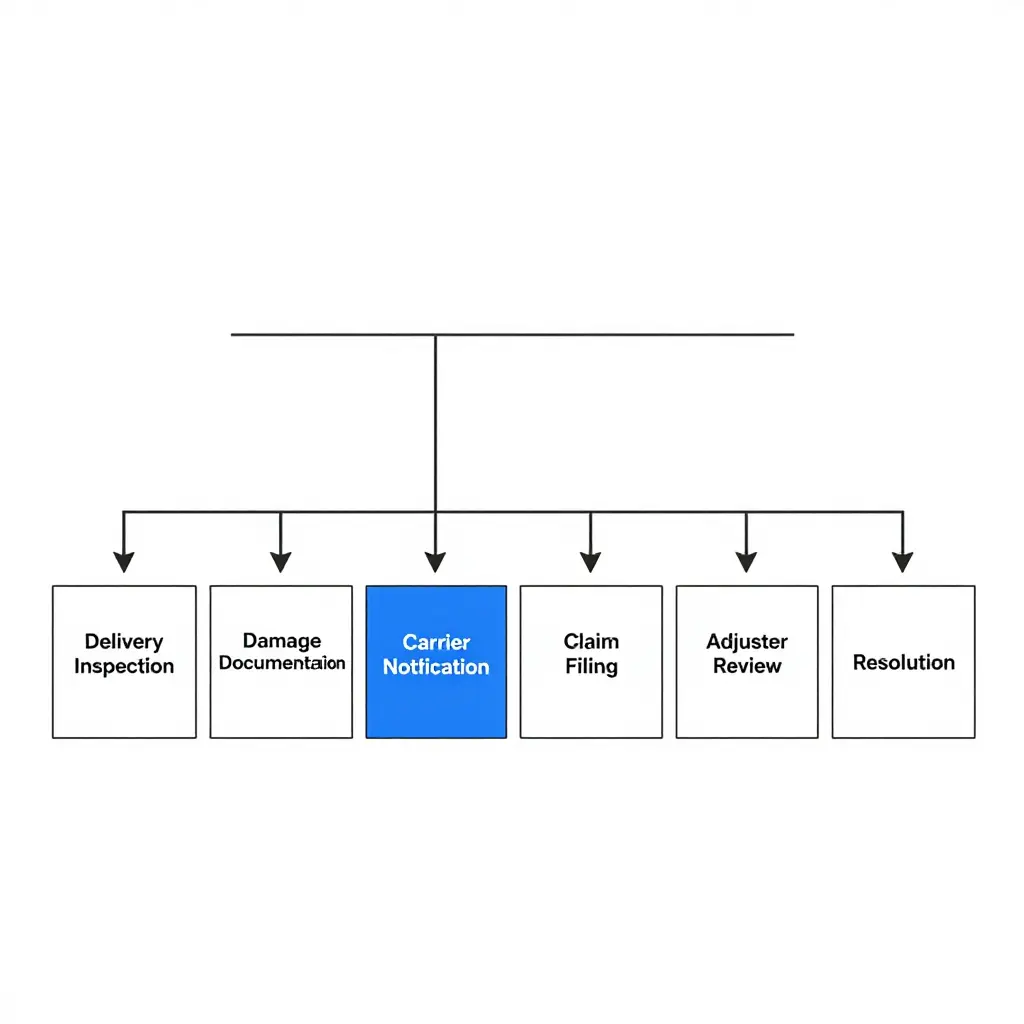
A claim for cracked fairings rarely settles in one phone call. It moves through a sequence in which each stage depends on what you documented in the previous one. Miss a step and the chain can collapse before an adjuster opens your file.
The diagram maps the path from the moment the crate is unloaded to the final payout decision.
Reading the flow
The path is linear by design. Each stage hands evidence to the next, so a weak link does not just slow the claim down; it breaks the chain.
| Stage | What Happens | Why It Matters to Your Claim |
|---|---|---|
| Delivery Inspection | Examine the crate and fairings before signing anything | Verifies damage existed at arrival, not in your garage |
| Damage Documentation | Photograph crate, straps, and every crack | Creates the visual proof carriers and insurers demand |
| Carrier Notification | File a formal damage notice within the contract window | Late notices are the most common reason claims die |
| Claim Filing | Submit forms, photos, invoice, and repair estimate | Converts raw evidence into an official, trackable demand |
| Adjuster Review | An adjuster assesses fault, packing method, and handling | Determines payout percentage and liability split |
| Resolution | Settlement, repair, or denial is issued | Closes the file, or opens the appeal path |
Where claims tend to stall
In practice, most fairing claims fail before the adjuster stage, during Delivery Inspection or Damage Documentation, when a rider signs a clean receipt or takes photos that miss the crate’s condition. Because the flow only moves forward, those gaps are hard to repair later.
Crating quality and freight handling sit behind every stage here. A well-built crate shifts the argument toward carrier liability; a flimsy one invites the claim that the damage was preventable.
Treat each stage as a checkpoint rather than a formality: document at delivery, notify immediately, and file a complete package the first time. Do that and the process works as intended.
What Adjusters Weigh When Deciding a Claim
When cracked motorcycle fairings arrive at your door, the crack is only the symptom. An adjuster asks a causal question: did the damage happen during crating, during freight handling, or before the shipment left the dock? Knowing these claim decision factors helps you assemble a file that survives review.
Packing Adequacy
Adjusters start with the crate. Dense foam, corner blocks, and a rigid frame signal a defensible pack. Loose wrapping or a thin cardboard skin suggests the loss was predictable, and that inference alone can sink an insurance claim.
Carrier Handling Records
Freight handling leaves a paper trail. Bill of lading notes, terminal transfer logs, and driver exception reports reveal whether the crate was dropped, over-stacked, or forklifted incorrectly. A clean record shifts suspicion back to packing; a flagged record often decides the case on its own.
Documentation Quality
Photos at every stage matter. Time-stamped images of the packed crate, the sealed load, and the unboxed damage give the adjuster a timeline. Missing or vague proof invites denial before anyone discusses the merits.
Proof of Value
Invoices, OEM part numbers, and repair estimates establish worth. Without them, the payout defaults to depreciated value rather than replacement cost, which shrinks your recovery.
Prior Damage Exclusions
Policies exclude damage that predates coverage. A pre-shipment inspection report is the only reliable defense against a “this was already cracked” finding.
Inspection Timing
Report damage promptly. A delayed inspection lets adjusters argue the harm happened after delivery, which can void an otherwise strong claim.
Why Causality Decides the Outcome
Crating and freight handling are the decisive variables, not minor details. A well-built crate and careful handling create a clean causal chain that favors approval. A weak crate or a rough handling record breaks that chain. Adjusters judge the cause, not the crack.
Distribution of Fairing Arrival Claim Outcomes
The doughnut chart breaks down how fairing arrival claims resolve once they reach a carrier or insurer. Full approval is not guaranteed, and the largest denial category traces back to how the fairing was packed rather than to what happened in transit.
| Outcome | Share |
|---|---|
| Approved in Full | 31% |
| Partially Approved | 22% |
| Denied – Insufficient Packing | 27% |
| Denied – Late Reporting | 12% |
| Unresolved | 8% |
| Total | 100% |
What the numbers show:
- Approved in Full (31%) – Fewer than one in three claims are paid in full. Full approval usually requires documented, factory-grade crating and clean delivery records.
- Partially Approved (22%) – Nearly a quarter settle at a reduced value, often because the evidence points to some fault on both the shipper’s packing and the carrier’s handling.
- Denied – Insufficient Packing (27%) – The largest denial category. When a fairing is boxed without proper bracing, foam, or corner protection, insurers treat the cracks as a foreseeable packaging failure rather than transport damage.
- Denied – Late Reporting (12%) – Missing the notification window destroys the chain of evidence and kills otherwise valid claims.
- Unresolved (8%) – A tail of disputed or abandoned claims, often stuck on inspection delays and missing photos.
Packing and handling, not luck, decide the result. Insufficient packing (27%) and late reporting (12%) together account for 39% of outcomes, more than the 31% approved outright. Control the crate and control the clock, and you move your claim out of the denial column.
Frequently Asked Questions About Cracked Motorcycle Fairings on Arrival
Why do new motorcycle fairings crack in transit?
Fairings are large, thin, curved ABS or fiberglass panels that flex and vibrate under the stresses of long-haul transport. When crating does not isolate each panel or absorb road shock, small flex points become hairline fractures, which is why cracked motorcycle fairings on arrival usually trace back to packing rather than manufacturing. Temperature swings inside trailers and rough handling make brittle plastics more likely to split along their mounting edges.
Does crating quality affect claim approval?
Yes, and it often decides the outcome. Insurers and carriers ask whether the crating met the standard of care for fragile, oversized parts, so a flimsy wooden frame or missing foam blocking can be read as shipper negligence. Documenting a robust, well-padded crate strengthens your insurance claim and shifts liability away from the receiver.
Who pays when fairings arrive damaged?
Responsibility usually depends on the shipping terms, often Incoterms or the carrier’s bill of lading. Under most Incoterms, risk passes at a defined point in the journey, so who arranged the freight matters less than where that point falls: a seller on DAP terms carries the risk to the named destination, while an FOB or CIF buyer generally carries it once the goods are loaded. Clear photos and a signed delivery exception note help establish who is accountable.
How long do you have to file a freight damage claim?
For most U.S. interstate shipments, the law gives you at least nine months to file a written claim, and carrier tariffs usually set the deadline there. Even so, carriers and insurers often want notice within 24 to 72 hours of delivery, and visible damage should be noted on the delivery receipt at the handoff. Noting it quickly protects your insurance claim and avoids disputes over whether the damage happened in transit.
Can fairings be repaired instead of replaced?
In many cases, yes. Minor cracks and stress fractures in ABS plastic can be repaired with plastic welding, reinforcement mesh, and flexible filler, then repainted to a factory finish. Structural damage or shattered mounting points usually call for full replacement, so an assessor should confirm whether a repair meets both safety and cosmetic standards.