

Introduction
In an era where logistics and freight management dictate the efficiency of industries, pickup trucks have emerged not just as vehicles, but as indispensable assets for various businesses. These versatile workhorses are key in sectors like construction, distribution, and fleet management, greatly impacting operational capabilities. Have you ever considered how much your business spends on transportation? Understanding the potential tax deductions available through vehicle ownership can significantly affect your bottom line. As we delve into the specifics of utilizing pickup trucks as business expenses, it’s vital to recognize the substantial role these vehicles play in enhancing productivity and streamlining day-to-day operations. From food and beverage distributors to trade companies, every sector stands to benefit from strategic investment in pickup trucks, not just for their utility, but also for the financial advantages they can yield. Learn more about how logistics companies are adapting to economic challenges and explore the nuances that allow businesses to turn such investments into a lucrative expense strategy.
Understanding Business Expenses: The Role of Pickup Trucks
In the world of logistics, construction, and various business operations, understanding the concept of business expenses is critical. When it comes to utilizing pickup trucks, they often represent a significant investment that can yield substantial returns. By effectively managing and categorizing these trucks as business expenses, companies can optimize their financial strategies, improve fleet management, and enhance operational efficiency. Furthermore, exploring the tax benefits associated with pickup truck expenses can help businesses maximize their savings and support their growth initiatives. For more insights on how businesses are adapting their fleets, learn more about Coca-Cola Canada’s electric fleet expansion and the economic challenges impacting the trucking industry in this analysis.
What Qualifies as a Business Expense for a Pickup Truck
When determining whether a pickup truck can be classified as a business expense, it is essential to consider the criteria set forth by the IRS and other regulatory authorities. The classification and potential deductions associated with a vehicle depend on how it is used, the nature of business operations, and compliance with tax laws.
IRS Guidelines on Vehicle Expenses
According to the IRS, to qualify for business expense deductions, a vehicle must be used ‘primarily’ for business purposes. This definition is critical because it implies that at least 50% of the vehicle’s usage must be tied to business activities for the costs related to its operation, maintenance, depreciation, and acquisition to be deductible under tax laws. The IRS outlines two primary methods for calculating these expenses:
- Actual Expense Method: Under this approach, businesses can deduct the actual costs associated with the operation of the vehicle; this includes gas, repairs, insurance, registration fees, and depreciation. Specific documentation is necessary to substantiate these expenses.
- Standard Mileage Rate: Alternatively, businesses can utilize the IRS’ standard mileage rate, which for 2023 is 65.5 cents per mile driven for business. This method simplifies record-keeping, as it requires tracking only business miles driven.
For more detailed information on how to document and claim these deductions effectively, one can refer to the IRS publication on Business use of car.
Heavy Vehicle Tax Deductions
Another vital consideration for pickup trucks, particularly those that exceed 6,000 pounds, is the eligibility for heavier vehicle tax deductions. Under Section 179 of the IRS code, businesses can deduct a significant portion of the purchase cost of qualifying vehicles that are used primarily for business. For trucks that fall into this category, the maximum deduction for 2023 can be as high as $28,900. This maneuver allows businesses to recover the costs faster and invest more capital into operations.
Moreover, a one-time bonus depreciation may be available, permitting businesses to write off 100% of the deduction in the year the vehicle is purchased, further incentivizing the acquisition of heavy vehicles and optimizing financial outcomes.
Importance of Documentation
It is imperative for businesses to maintain thorough and accurate records to support any claims made for vehicle expenses. This includes mileage logs, receipts for expenses, and documentation that confirms the business purpose of the trips taken with the vehicle. In absence of such documentation, businesses may face challenges during audits or in attempting to substantiate their claims for deductions.
In conclusion, classifying a pickup truck as a business expense necessitates a detailed understanding of IRS regulations, the vehicle’s primary use, and maintaining adequate records. By adhering to these guidelines and leveraging the tax benefits provided for heavy vehicles, businesses can optimize their deductions on vehicle-related expenses significantly.
For additional insights on leveraging logistics and business expansions, consider exploring topics like the healthcare expansion strategies or how businesses like Coca-Cola expand their fleets towards electric vehicles.
Comparison Table of Tax Benefits by State
Here’s a general comparison table that outlines potential tax deduction benefits associated with using pickup trucks for business, based on general guidelines rather than state-specific laws:
| State | Section 179 Deduction | Business Use Requirement | Bonus Depreciation | Notes |
|---|---|---|---|---|
| California | Eligible | > 50% | Available | High vehicle tax allowance |
| Texas | Eligible | > 50% | Available | No state income tax, enhancing deductions |
| Florida | Eligible | > 50% | Available | No state income tax |
| New York | Eligible | > 50% | Available | Local taxes apply |
| Illinois | Eligible | > 50% | Available | Restricted use may apply |
Important Notes:
- Always consult a tax professional for personalized tax advice based on your specific circumstances and current laws.
- For more detailed information on tax strategies associated with trucking, you might want to learn more.
Common Misconceptions About Pickup Trucks as Business Expenses
When it comes to classifying pickup trucks as business expenses in a company’s accounting, several misconceptions persist that can lead to confusion and potential financial liabilities. Understanding these misconceptions can ensure that expenses related to pickup trucks are correctly recognized, maximizing potential tax benefits and operational effectiveness.
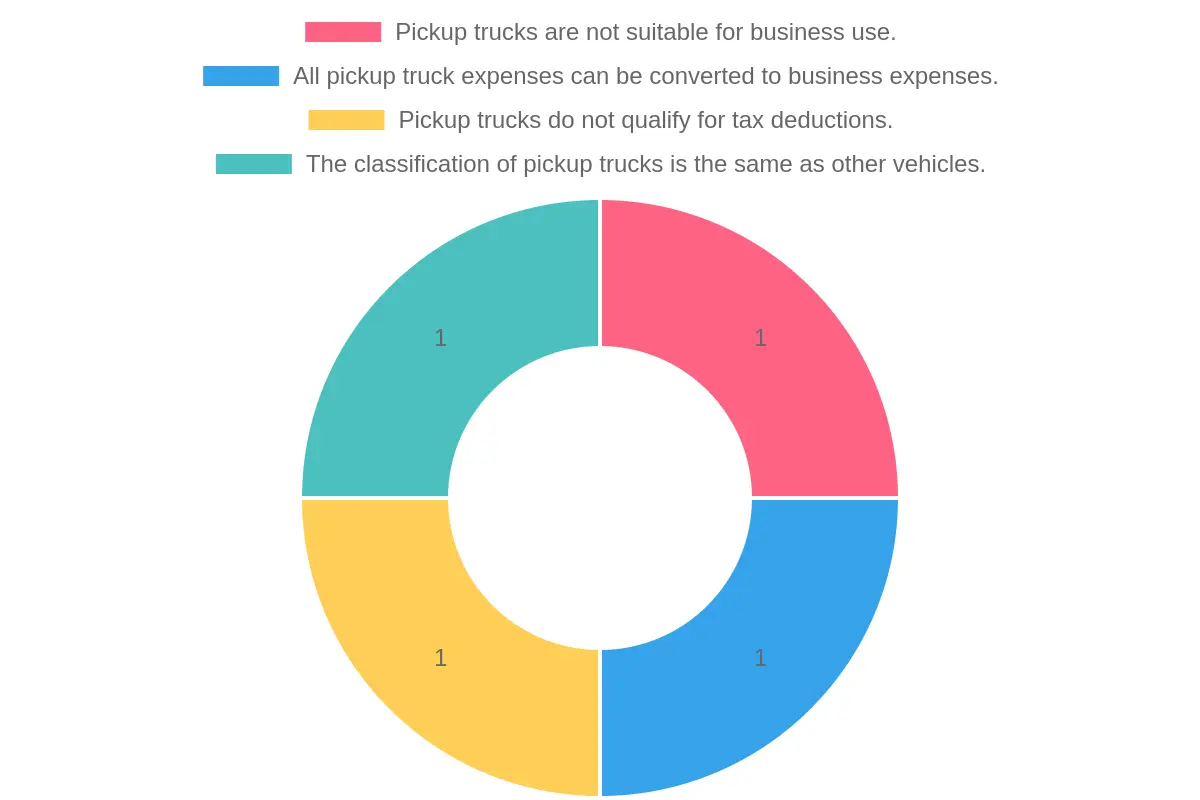
Misconception 1: Pickup Trucks Are Not Suitable for Business Use
Many people believe that pickup trucks are primarily personal vehicles and lack suitability for business applications. In reality, modern pickup trucks offer versatility and capability that make them highly suitable for diverse business needs. For instance, they can be employed for hauling goods, transporting tools, or even serving as mobile offices, making them essential assets for industries like logistics and construction. A detailed look into this can be seen in sources like Nissan News.
Misconception 2: All Pickup Truck Expenses Can Be Converted to Business Expenses
Another common misconception is that every cost associated with a pickup truck can be classified as a business expense. This is not true. Only those expenses that are directly related to the truck’s use for business purposes can be deducted. Personal usage, maintenance, and modifications not intended for business activities cannot be claimed as deductions. Understanding the nuances of this issue is critical for proper reporting. The implications of this misconception can be further explored in general tax resources, like those from TaxEDU.
Misconception 3: Pickup Trucks Do Not Qualify for Tax Deductions
A prevailing misconception is that pickup trucks are ineligible for tax deductions. However, under IRS guidelines, businesses utilizing pickup trucks for legitimate business purposes can indeed qualify for such deductions. The tax deductions can apply to various expenses, including maintenance, insurance, gas, and depreciation. This critical misunderstanding may lead business operators to overlook potential savings. More information can be found through tax-related articles such as those by Boss Tax Law.
Misconception 4: The Classification of Pickup Trucks Is the Same as Other Vehicles
Businesses often assume that pickup trucks are classified the same as passenger vehicles in their accounting. This does not hold true if the truck’s weight exceeds 6,000 pounds, where different provisions apply regarding deductions and expense classifications. Knowing these distinctions is essential for businesses to ensure they adhere to tax obligations correctly. Thorough discussions on classifications can be found in many tax-related resources.
To further illustrate these misconceptions and their impact, refer to the chart below:
Summary
By addressing these common misconceptions, logistics and freight companies, as well as construction and engineering firms, can take proactive steps to manage pickup truck-related expenses effectively. Understanding the true nature of pickup trucks in a business context not only aids in proper accounting but also ensures compliance with tax regulations. For further insight into managing business expenses tied to truck usage, consider reviewing resources from SCORE and others that delve deeper into vehicle use in business.
Quote: “Understanding how to leverage vehicle expenses effectively can lead to significant tax savings for businesses. Whether opting for the standard mileage rate or actual expenses, keeping meticulous records is essential to substantiate these claims.”
Incorporating a comprehensive understanding of vehicle-related expenses can substantially impact a company’s bottom line, especially in fields like logistics and construction. Knowing how to classify these expenses correctly allows businesses to optimize their tax returns and manage their finances more effectively.
The Importance of Good Record-Keeping When Claiming a Pickup Truck as a Business Expense
For logistics & freight companies, construction & engineering firms, fleet management businesses, and food & beverage distributors, claiming a pickup truck as a business expense can be a strategic financial decision. However, the benefits hinge significantly on meticulous record-keeping and documentation practices. Proper records not only substantiate your claim but also help avoid compliance issues, audits, and potential penalties that can arise from inadequate documentation.
Why Careful Documentation Matters
A pickup truck used for business purposes often faces scrutiny from tax authorities. Claiming related expenses such as depreciation, fuel costs, repairs, leasing fees, and insurance requires proof that these usages are legitimate and directly tied to business activities. Without comprehensive records, these expenses may be disallowed, negating potential tax savings.
Best Practices for Your Industry
- Detailed Mileage Logs: Track every mile driven specifically for business purposes separately from personal use. Use digital tools or traditional logbooks to note date, destination, purpose, and miles driven.
- Receipts and Invoices: Keep all receipts related to fuel, maintenance, repairs, insurance, and any modifications or accessories important for your truck’s business function.
- Usage Policies: Businesses with multiple drivers or fleet trucks should formalize vehicle usage policies to ensure consistency in documentation.
- Separate Business and Personal Use: Ensure a clear distinction in how the vehicle is used. If the truck serves dual purposes, allocate expenses accurately.
- Depreciation Records: Maintain purchase documents, financing agreements, and records of depreciation calculation methods used.
Consequences of Poor Record-Keeping
Failing to maintain accurate records can result in rejected business expense claims, increased tax liabilities, and even fines. For fleet management companies and firms where pickup trucks are essential work assets, the financial impact can be substantial.
Technology Solutions
Leveraging fleet management software and mobile apps specifically designed for logging vehicle use and expenses can simplify compliance, reduce errors, and save time. These tools can automatically generate reports required during tax filing or audits.
Final Thoughts
Careful and consistent record-keeping ensures that your business gains maximum benefit from its pickup truck investments while minimizing risks related to tax compliance. For businesses in demanding industries like construction and freight, where trucks are lifelines, implementing robust documentation practices is key to successful expense claims.
To understand how logistics companies are evolving with technology and operational strategies, you may find this insight on how trucking stabilized in late 2024 useful.
Average Vehicle Depreciation Over Time
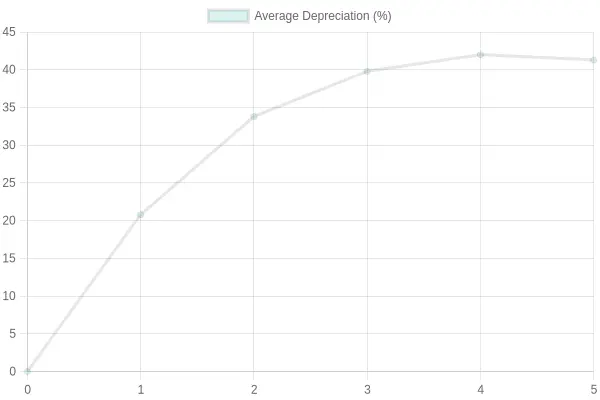
Understanding the depreciation of pickup trucks used for business is critical for logistics and fleet management companies when determining costs and planning budgets. The following chart illustrates the average depreciation rates of pickup trucks over a five-year period:
| Year | Average Depreciation (%) |
|---|---|
| 0 | 0% |
| 1 | 20.8% |
| 2 | 33.8% |
| 3 | 39.8% |
| 4 | 42% |
| 5 | 41.3% |
This chart shows that within the first year, the vehicle can depreciate by approximately 20.8%. Over the following years, the depreciation continues to progress, reaching around 42% by the fourth year before stabilizing somewhat by the fifth year.
For more insights into the challenges of fleet investments, read about the emission regulations affecting truck OEMs.
Conclusion
In conclusion, correctly classifying a pickup truck as a business expense is crucial for businesses seeking to optimize their taxation strategy. As discussed, utilizing a pickup truck can provide significant deductions under IRS guidelines, which can substantially lower the tax burden and improve cash flow. However, maintaining accurate records and understanding the regulations surrounding vehicle deductions is essential to avoid complications with the IRS. We encourage logistics and fleet management companies, along with those in construction and food distribution, to take advantage of these deductions by consulting with a tax professional to ensure compliance and maximize savings. For further insights into how businesses can leverage vehicle expenses for better financial outcomes, click here to explore IRS guidelines, or visit this article for more tax advantages for self-employed individuals. Empower your business today by making informed decisions about your vehicle expenses!

