

Introduction
Tariffs are significantly impacting the cost structure of Class 8 trucks and other heavy-duty trailers. Data indicates that these tariffs have led to cost increases ranging from 15 to 30 percent.
Class 8 trucks specifically have faced cost surges between 15 and 24 percent due to import tariffs, while dry van and reefer trailers have seen prices inflate by 16 to 18 percent. Moreover, other heavy-duty trailers are experiencing even steeper price hikes, ranging from 17 to 30 percent.
These inflated prices not only strain the budgets of fleet operators but also create uncertainty in purchasing decisions, as many are hesitant to invest in new equipment amidst fears that tariffs may persist or worsen. The overall escalation in costs due to tariffs highlights a critical concern for the trucking industry, prompting stakeholders to seek effective financing solutions to mitigate the impact.
| Category | Cost Increase (%) |
|---|---|
| Class 8 Trucks | 15-24 |
| Dry Van Trailers | 16-18 |
| Reefer Trailers | 16-18 |
| Other Heavy-Duty Trailers | 17-30 |
Regulatory Impacts
The imposition of stringent Environmental Protection Agency (EPA) regulations is contributing to rising costs for the commercial trucking industry, which is felt across the supply chain. The EPA’s new emissions standards for heavy-duty trucks, set to take effect between 2027 and 2032, require significant investment in energy-efficient technologies, which has profound financial implications for fleet operators and dealers alike.
Industry experts project that meeting these new regulations could increase the cost of trucks dramatically. According to the Owner-Operator Independent Drivers Association (OOIDA), a model year 2032 long-haul sleeper-cab tractor could see an increased price by approximately $15,000 due to these standards. On the upper end, the American Truck Dealers Association estimates that costs might surge by around $42,000 per truck, potentially hitting a total burden of $55 billion over the program’s lifetime. This significant escalation in pricing means that trucking companies will likely pass these costs along to consumers.
Jim Mullen, executive director of the Clean Freight Coalition, remarked, “The EPA’s rule will have detrimental ramifications to the commercial vehicle industry, many small and large businesses, commercial vehicle dealers and their customers.” This highlights the concern around not only the direct costs of the trucks but also the long-term sustainability of many operators in the industry.
The complexities do not stop at the acquisition of new vehicles. With advanced emission control technologies now essential for compliance, the operational maintenance expenses are predicted to rise as well. For instance, specialized servicing at dealerships—where labor rates can exceed hundreds of dollars per hour—has raised alarms for small operators who might not have the financial leeway to maintain these new standards.
Moreover, as David Heller of the Truckload Carriers Association pointed out, the readiness of infrastructure to support the transition to zero-emission vehicles is precarious. He said, “We have to make sure that the reliability is there, and the achievability and affordability are there. But it’s just not there yet.”
In summary, while the EPA’s regulations aim to promote environmental health, they impose significant financial pressures that could reshape the landscape of the trucking industry. The ongoing discourse among industry experts underscores the importance of balancing regulatory objectives with the economic realities faced by fleet operators and manufacturers.

Expert Insights on Tariffs and Financing Decisions
The insights from industry experts, Kyle Treadway and Krista Toenjes, reveal significant implications of tariffs on financing decisions in the trucking sector. Treadway warns that his hesitation to order new trucks stems from the fear of inflated costs if tariffs are removed.
“We’re hesitant (to order) because if the tariffs go away, we’ll have an expensive truck,”
he noted, capturing the concern many dealers face.
Similarly, Toenjes highlighted the intricate relationship between tariffs and production costs, stating,
“It has a very direct impact on production costs,”
reinforcing the notion that tariffs affect not just purchase prices but also the underlying manufacturing operations. She explained that understanding the tariff implications on individual components is essential for evaluating cost structures. This sentiment reflects a deep awareness that the cumulative effect of tariffs leads to inflated prices across the supply chain, constraining financial decisions for fleets and dealerships alike.
Consequences of Delayed Purchases
In the commercial trucking industry, the consequences of delaying truck purchases are increasingly evident as they create significant pent-up demand and alter market dynamics in unpredictable ways.
Increased Pent-Up Demand
Delaying purchases leads to an accumulation of unmet needs within fleets and small operators. Kyle Treadway emphatically states, “The longer customers postpone purchases, the greater the pent-up demand grows…” This sentiment rings true as operators defer acquisitions amidst economic uncertainty and the looming threat of tariff-induced price increases. The growing backlog of orders not only puts pressure on manufacturers to meet demand but also risks further supply chain delays as inventory levels dwindle.
Market Dynamics and Operational Costs
Simultaneously, the delayed purchases are shifting market dynamics dramatically. Fleet operators are witnessing a stark decrease in available inventory, significantly affecting their purchasing power. For example, the used truck market is feeling the toll, with inventory declines around 39 percent year-over-year for some models, consequently driving prices up between 10 and 20 percent. These price surges compound the problem of operational cost increases across the board, as truck payments, driver wages, maintenance costs, and insurance premiums have all seen notable upticks.
Moreover, these inflationary pressures make it challenging for operators to forecast operational budgets effectively, as they are left grappling with rising costs while delaying necessary investments in new equipment. As pointed out by Krista Toenjes, these circumstances have a “very direct impact on production costs,” implying that every moment of hesitation further complicates an already volatile financial landscape.
Future Outlook
Looking ahead, it is crucial for industry stakeholders to recognize that while pent-up demand can eventually lead to a surge in truck acquisitions, the current hesitations can foster a constrained market that could ripple through to impact pricing and availability significantly. Eric Starks from FTR Transportation Intelligence notes, “We always say we have to understand the freight market first, and that will tell us what the equipment market is going to do… When you’re in that kind of a market, you’re only looking at replacing the equipment you already have.”
In summary, the delay in purchasing trucks creates not just short-term hurdles but also sets the stage for longer-term challenges affecting both demand and pricing structures in the commercial trucking industry. Managing such dynamics requires strategic foresight and adaptable financial approaches from all parties involved.
Summary of User Adoption Data
In the commercial truck industry, ongoing pressures from rising costs are shaping dealer and fleet purchasing strategies in profound ways. Recent user adoption data reveals a noticeable shift toward prioritizing used vehicles and flexible financing options, substantially influenced by economic uncertainties and tariffs currently affecting the market.
- Increased Used Truck Sales: Recent statistics indicate a significant surge in used truck sales, with an increase of 28.5% month-over-month. This trend reflects the difficulty many fleet operators face in securing financing for new trucks, particularly as tighter credit standards make it challenging for small fleets and owner-operators to purchase new models. As a result, many are opting for older, higher-mileage trucks as a more affordable alternative.
- New Truck Sales Facing Challenges: While new commercial vehicle sales saw a year-over-year increase of 9.1%, quarter-over-quarter performance suffered an 11% decline due to rising costs and market uncertainty. Observers noted a noteworthy trend of buyers experiencing longer inventory turnover times, signaling hesitance in committing to new purchases amid fluctuating costs.
- Growing Popularity of Leasing: In light of rising operational costs, many fleet managers are reconsidering traditional ownership models in favor of leasing. This option saw a 15% increase in usage in 2024 compared to 2023 as it provides flexibility and can help mitigate some financial burdens tied to ownership.
- Adopting Clean Technologies: The shift toward battery-electric vehicles (BEVs) is noteworthy, with registrations reaching a new high in 2024. However, barriers such as high upfront costs and infrastructure inadequacies persist, prompting dealers to invest in relevant training and infrastructure to facilitate this transition.
- Supply Chain Disruptions: Ongoing supply chain challenges and tariff impacts have forced many fleets to delay their replacement cycles and even extend current vehicle lifespans. In fact, 48% of fleets reported delaying replacement cycles, showcasing the significant role these elements play in fleet financing strategies.
In summary, the commercial trucking industry is navigating a landscape dramatically altered by economic pressures. Dealers and fleet operators are adapting their purchasing behaviors, with an emphasis on the strategic acquisition of vehicles, whether through used options, leasing arrangements, or investments in future-ready technologies to mitigate the impact of rising costs.
User Adoption Data Visualization
To further illustrate the trends in user adoption within the commercial trucking industry, refer to the following bar chart that encapsulates the recent statistics and shifts in purchasing behavior:
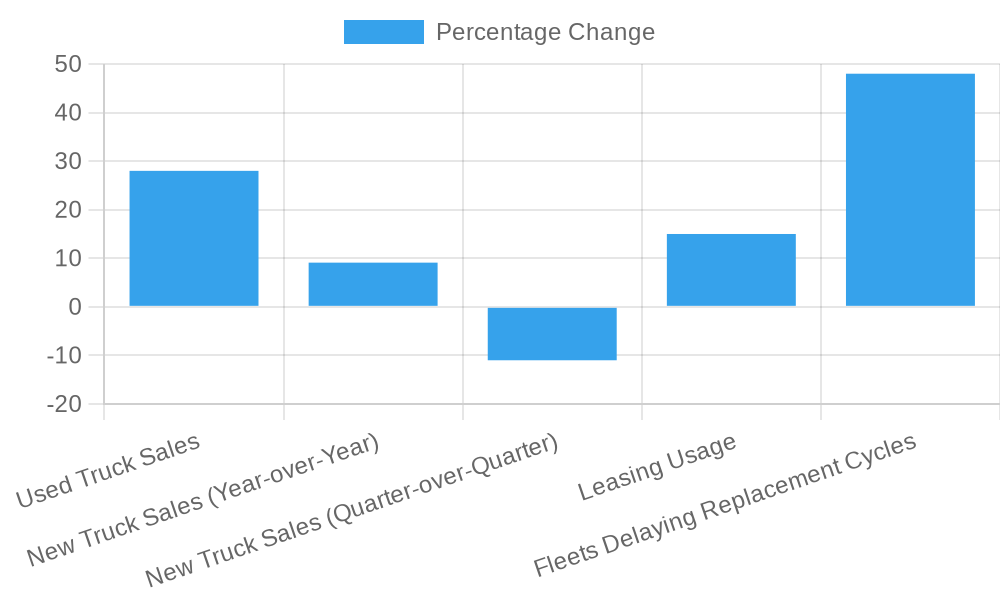
The chart presents significant changes in used truck sales, new truck sales performance, leasing usage, and fleet replacement cycles, highlighting the industry’s adaptation to rising costs and economic uncertainties.
| Metric | Change (%) | Timeframe | Source |
|---|---|---|---|
| Used Truck Sales | +28.0% | Month-over-Month | Irontrax, Winter 2025 |
| New Truck Sales | +9.1% | Year-over-Year | Work Truck Solutions, Q1 2025 |
| New Truck Sales | -11.0% | Quarter-over-Quarter | Work Truck Solutions, Q1 2025 |
| Leasing Usage | +15.0% | Not specified | Irontrax, Winter 2025 |
| Fleets Delaying Replacement Cycles | 48.0% | Not specified | Irontrax, Winter 2025 |
This data visualization provides a clearer perspective on the dynamic changes currently shaping the commercial trucking landscape as industry stakeholders adjust their strategies in response to economic pressures.
As we conclude our exploration of the rapidly changing landscape of the trucking industry, it is clear that both tariffs and EPA regulations are exerting significant pressure on trucking costs and financing decisions. The escalating costs—spurred by tariffs that have driven up the prices of Class 8 trucks and trailers by 15 to 30 percent—coupled with the anticipated financial burdens from new EPA emissions standards, present a formidable challenge for fleet operators and dealers alike.
These developments necessitate a re-evaluation of financing strategies across the industry. Stakeholders must be proactive in navigating this environment by investing in diverse financing options, leveraging used vehicle markets, and adopting innovative technologies. Moreover, the need for strategic planning has never been more urgent as companies face the potential for prolonged economic uncertainty and inflated operating costs.
It is imperative for all players in the trucking sector to engage in open dialogues about these challenges, adapt their purchasing behaviors, and explore collaborative approaches to mitigate the financial impacts. The future of the industry depends on our ability to respond effectively to these regulatory challenges while maintaining the operational integrity that keeps goods moving across the nation. Let us act now to secure the sustainability and growth of this essential industry for years to come.
Trucking Industry Challenges
As the trucking industry grapples with a complex web of rising trucking costs fueled by tariffs and stringent EPA regulations, the urgency for effective commercial truck financing has never been more pressing. The current landscape sees Class 8 trucks facing a staggering 15 to 24 percent increase in costs due to these tariffs. This escalation extends beyond just trucks; dry van trailers and reefer trailers are also experiencing a 16 to 18 percent surge. With such inflationary pressure on essential fleet components, dealerships and fleet operators are finding themselves in a precarious situation, caught between the need for investment in new trucks and the fear of escalating prices that could drain their budgets further. Navigating this intricate market requires a clear understanding of financing options that can mitigate risk while positioning fleets for future growth amidst the uncertainties of regulatory impacts and trade policies.
Tariffs are significantly impacting the cost structure of Class 8 trucks and other heavy-duty trailers. Data indicates that these tariffs have led to cost increases ranging from 15 to 30 percent. Class 8 trucks specifically have faced cost surges between 15 and 24 percent due to import tariffs, while dry van trailers and reefer trailers have seen prices inflate by 16 to 18 percent. Moreover, other heavy-duty trailers are experiencing even steeper price hikes, ranging from 17 to 30 percent. These inflated prices not only strain the budgets of fleet operators but also create uncertainty in purchasing decisions, as many are hesitant to invest in new equipment amidst fears that tariffs may persist or worsen. The overall escalation in costs due to tariffs highlights a critical concern for the trucking industry, prompting stakeholders to seek effective financing solutions to mitigate the impact.
| Category | Cost Increase (%) |
|---|---|
| Class 8 Trucks | 15-24 |
| Dry Van Trailers | 16-18 |
| Reefer Trailers | 16-18 |
| Other Heavy-Duty Trailers | 17-30 |
Regulatory Impacts
The imposition of stringent Environmental Protection Agency (EPA) regulations is contributing to rising costs for the commercial trucking industry, which is felt across the supply chain. The EPA’s new emissions standards for heavy-duty trucks, set to take effect between 2027 and 2032, require significant investment in energy-efficient technologies, which has profound financial implications for fleet operators and dealers alike.
Industry experts project that meeting these new regulations could increase the cost of trucks dramatically. According to the Owner-Operator Independent Drivers Association (OOIDA), a model year 2032 long-haul sleeper-cab tractor could see an increased price by approximately $15,000 due to these standards. On the upper end, the American Truck Dealers Association estimates that costs might surge by around $42,000 per truck, potentially hitting a total burden of $55 billion over the program’s lifetime. This significant escalation in pricing means that trucking companies will likely pass these costs along to consumers.
Jim Mullen, executive director of the Clean Freight Coalition, remarked, “The EPA’s rule will have detrimental ramifications to the commercial vehicle industry, many small and large businesses, commercial vehicle dealers and their customers.”
This highlights the concern around not only the direct costs of the trucks but also the long-term sustainability of many operators in the industry.
The complexities do not stop at the acquisition of new vehicles. With advanced emission control technologies now essential for compliance, the operational maintenance expenses are predicted to rise as well. For instance, specialized servicing at dealerships—where labor rates can exceed hundreds of dollars per hour—has raised alarms for small operators who might not have the financial leeway to maintain these new standards.
Moreover, as David Heller of the Truckload Carriers Association pointed out, the readiness of infrastructure to support the transition to zero-emission vehicles is precarious. He said, “We have to make sure that the reliability is there, and the achievability and affordability are there. But it’s just not there yet.”
In summary, while the EPA’s regulations aim to promote environmental health, they impose significant financial pressures that could reshape the landscape of the trucking industry. The ongoing discourse among industry experts underscores the importance of balancing regulatory objectives with the economic realities faced by fleet operators and manufacturers.
Expert Insights on Tariffs and Financing Decisions
The insights from industry experts, Kyle Treadway and Krista Toenjes, reveal significant implications of tariffs on financing decisions in the trucking sector. Treadway warns that his hesitation to order new trucks stems from the fear of inflated costs if tariffs are removed. “We’re hesitant (to order) because if the tariffs go away, we’ll have an expensive truck,” he noted, capturing the concern many dealers face.
Similarly, Toenjes highlighted the intricate relationship between tariffs and production costs, stating, “It has a very direct impact on production costs,” reinforcing the notion that tariffs affect not just purchase prices but also the underlying manufacturing operations. She explained that understanding the tariff implications on individual components is essential for evaluating cost structures. This sentiment reflects a deep awareness that the cumulative effect of tariffs leads to inflated prices across the supply chain, constraining financial decisions for fleets and dealerships alike.
Consequences of Delayed Purchases
In the commercial trucking industry, the consequences of delaying truck purchases are increasingly evident as they create significant pent-up demand and alter market dynamics in unpredictable ways.
Increased Pent-Up Demand
Delaying purchases leads to an accumulation of unmet needs within fleets and small operators. Kyle Treadway emphatically states, “The longer customers postpone purchases, the greater the pent-up demand grows…” This sentiment rings true as operators defer acquisitions amidst economic uncertainty and the looming threat of tariff-induced price increases. The growing backlog of orders not only puts pressure on manufacturers to meet demand but also risks further supply chain delays as inventory levels dwindle.
Market Dynamics and Operational Costs
Simultaneously, the delayed purchases are shifting market dynamics dramatically. Fleet operators are witnessing a stark decrease in available inventory, significantly affecting their purchasing power. For example, the used truck market is feeling the toll, with inventory declines around 39 percent year-over-year for some models, consequently driving prices up between 10 and 20 percent. These price surges compound the problem of operational cost increases across the board, as truck payments, driver wages, maintenance costs, and insurance premiums have all seen notable upticks.
Moreover, these inflationary pressures make it challenging for operators to forecast operational budgets effectively, as they are left grappling with rising costs while delaying necessary investments in new equipment. As pointed out by Krista Toenjes, these circumstances have a “very direct impact on production costs,” implying that every moment of hesitation further complicates an already volatile financial landscape.
Future Outlook
Looking ahead, it is crucial for industry stakeholders to recognize that while pent-up demand can eventually lead to a surge in truck acquisitions, the current hesitations can foster a constrained market that could ripple through to impact pricing and availability significantly. Eric Starks from FTR Transportation Intelligence notes, “We always say we have to understand the freight market first, and that will tell us what the equipment market is going to do… When you’re in that kind of a market, you’re only looking at replacing the equipment you already have.”
In summary, the delay in purchasing trucks creates not just short-term hurdles but also sets the stage for longer-term challenges affecting both demand and pricing structures in the commercial trucking industry. Managing such dynamics requires strategic foresight and adaptable financial approaches from all parties involved.
Summary of User Adoption Data
In the commercial truck industry, ongoing pressures from rising costs are shaping dealer and fleet purchasing strategies in profound ways. Recent user adoption data reveals a noticeable shift toward prioritizing used vehicles and flexible financing options, substantially influenced by economic uncertainties and tariffs currently affecting the market.
- Increased Used Truck Sales: Recent statistics indicate a significant surge in used truck sales, with an increase of 28.5% month-over-month. This trend reflects the difficulty many fleet operators face in securing financing for new trucks, particularly as tighter credit standards make it challenging for small fleets and owner-operators to purchase new models. As a result, many are opting for older, higher-mileage trucks as a more affordable alternative.
- New Truck Sales Facing Challenges: While new commercial vehicle sales saw a year-over-year increase of 9.1%, quarter-over-quarter performance suffered an 11% decline due to rising costs and market uncertainty. Observers noted a noteworthy trend of buyers experiencing longer inventory turnover times, signaling hesitance in committing to new purchases amid fluctuating costs.
- Growing Popularity of Leasing: In light of rising operational costs, many fleet managers are reconsidering traditional ownership models in favor of leasing. This option saw a 15% increase in usage in 2024 compared to 2023 as it provides flexibility and can help mitigate some financial burdens tied to ownership.
- Adopting Clean Technologies: The shift toward battery-electric vehicles (BEVs) is noteworthy, with registrations reaching a new high in 2024. However, barriers such as high upfront costs and infrastructure inadequacies persist, prompting dealers to invest in relevant training and infrastructure to facilitate this transition.
- Supply Chain Disruptions: Ongoing supply chain challenges and tariff impacts have forced many fleets to delay their replacement cycles and even extend current vehicle lifespans. In fact, 48% of fleets reported delaying replacement cycles, showcasing the significant role these elements play in fleet financing strategies.
In summary, the commercial trucking industry is navigating a landscape dramatically altered by economic pressures. Dealers and fleet operators are adapting their purchasing behaviors, with an emphasis on the strategic acquisition of vehicles, whether through used options, leasing arrangements, or investments in future-ready technologies to mitigate the impact of rising costs.
As we conclude our exploration of the rapidly changing landscape of the trucking industry, it is clear that both tariffs and EPA regulations are exerting significant pressure on trucking costs and financing decisions. The escalating costs—spurred by tariffs that have driven up the prices of Class 8 trucks and trailers by 15 to 30 percent—coupled with the anticipated financial burdens from new EPA emissions standards, present a formidable challenge for fleet operators and dealers alike.
These developments necessitate a re-evaluation of financing strategies across the industry. Stakeholders must be proactive in navigating this environment by investing in diverse financing options, leveraging used vehicle markets, and adopting innovative technologies. Moreover, the need for strategic planning has never been more urgent as companies face the potential for prolonged economic uncertainty and inflated operating costs.
It is imperative for all players in the trucking sector to engage in open dialogues about these challenges, adapt their purchasing behaviors, and explore collaborative approaches to mitigate the financial impacts. The future of the industry depends on our ability to respond effectively to these regulatory challenges while maintaining the operational integrity that keeps goods moving across the nation. Let us act now to secure the sustainability and growth of this essential industry for years to come.
Consequently, the following section on user adoption data will illustrate how these hesitations manifest in actual purchasing behaviors, revealing the broader implications of such delays on the industry’s adaptation to emerging trends and technologies.
Outbound Links for Enhanced Credibility
-
Impact of Tariffs on the Commercial Trucking Industry: Learn more about the repercussions of tariffs on U.S. commercial trucking from the American Trucking Associations.
Read more here -
EPA Regulations: The EPA’s new standards are crucial for understanding the pressures faced by the industry. Discover more about how these regulations are set to impact trucking here:
Environmental Protection Agency – New Standards -
Expert Opinions on Tariffs: Gain insights into the expert perspectives on recent tariffs affecting the trucking industry from various credible sources.
See expert reactions here -
Economic Impact of EPA Regulations: Understand the broader economic implications of EPA regulations on the trucking sector and the potential for industry consolidation. For more details, check this report:
EPA Regulations Overview
Incorporating Related Keywords for SEO Enhancement
Financing Strategies in the Commercial Trucking Industry
As the commercial trucking industry navigates ongoing pressures from tariffs and operational costs, innovative financing strategies are essential. Effective commercial truck financing options such as equipment financing, leasing, and invoice factoring allow fleet operators to preserve cash flow while acquiring Class 8 trucks and other vehicles. Flexible payment plans and online credit applications streamline the purchasing process, making it easier for operators to secure the vehicles they need amidst economic uncertainties.
Here are key ideas to enhance your SEO with respect to financing strategies:
- Companies can leverage data-driven financing to predict their needs based on predictive freight transport events.
- Alternative financing options provide additional flexibility, especially for smaller operators who may face tighter credit conditions.
Understanding the Supply Chain Dynamics
The complexities of the supply chain continue to impact the commercial vehicle market significantly. Supply chain disruptions have increased costs across the board, forcing fleets to adapt their purchasing strategies. Keywords such as supply chain management, supply chain resilience, and supply chain optimization are relevant for businesses to incorporate into their strategy.
- Understanding supply chain visibility can enable informed decision-making, crucial for maintaining productivity during challenging times.
- The integration of supply chain finance solutions can help fleets balance their cash flow while managing inventory effectively.
The Commercial Vehicle Market Overview
The commercial vehicle market is evolving due to factors like tariffs, regulatory changes, and growing operational costs. Stakeholders in the trucking industry must be aware of the latest commercial vehicle industry trends to remain competitive.
- Focusing on commercial vehicle leasing, commercial vehicle sales, and commercial vehicle technology in content can bolster relevance.
- Keeping track of commercial vehicle maintenance trends ensures that operators can minimize downtime and maximize efficiency, a critical aspect of staying competitive in today’s market.
By integrating these keywords effectively throughout your content, you can enhance your search engine visibility and attract readers keenly interested in commercial truck financing and the broader market context.
Overall, utilizing these keywords can make your content more relevant to search queries associated with financing strategies, supply chain, and the commercial vehicle market while improving your website’s SEO performance. By being proactive in leveraging these concepts, you can enhance the visibility of your content and engage a targeted audience seeking information in these areas.

