
China’s trucking sector sits at the heart of a dynamic logistics ecosystem, where surging freight demand, continuous infrastructure investments, and a tightened safety and compliance regime converge to shape strategic outcomes for Logistics & Freight Companies, Construction & Engineering Firms, Fleet Management Companies, and Food & Beverage Distributors. The market is marked by robust activity across modes—rail, road, and air—while government initiatives push for greater efficiency, safer operations, and better regulatory oversight. This article dissects five critical dimensions that define the current environment, illustrating how each dimension reinforces the others to produce a cohesive, opportunity-rich landscape. By connecting demand signals with safety reforms, infrastructure progression, and broader logistics trends, we offer practical insights and concrete considerations for fleet operators, project contractors, logistics planners, and distributors seeking to optimize performance, mitigate risk, and capture value in 2026 and beyond.
Chapter 1: Riding the Surge—How China’s Trucking Engine Fuels Demand, Momentum, and Transformation
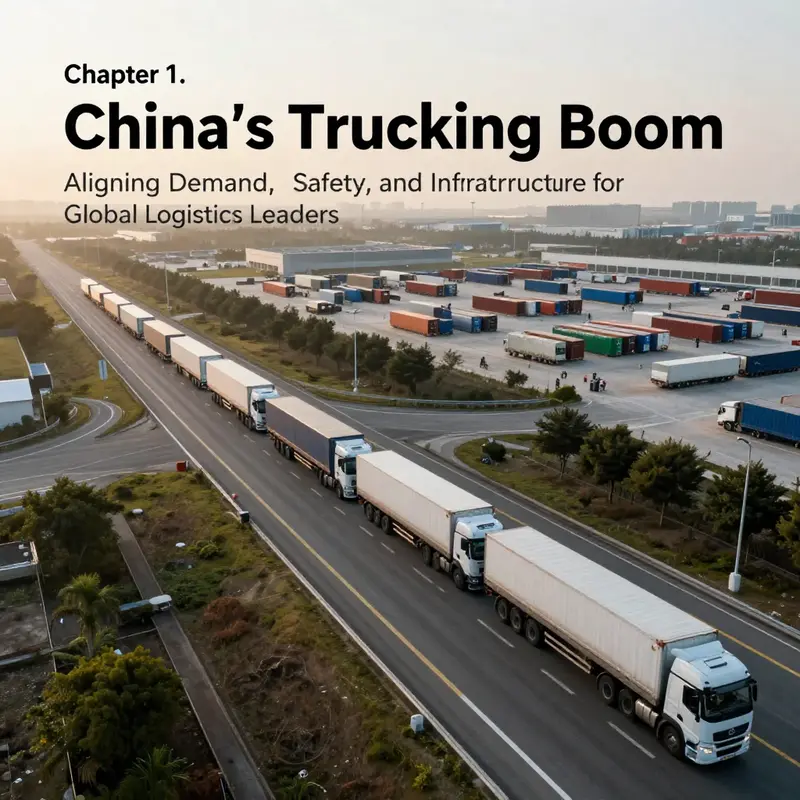
The trucking industry in China today sits at the center of a broader transformation in its logistics ecosystem. It is not merely moving goods from point A to point B; it is powering a supply chain that must be fast, visible, and resilient in a landscape of rapid urbanization, digital commerce, and ambitious infrastructure expansion. The result is a market marked by high activity, buoyant demand, and a continuous push toward smarter, safer, and cleaner operations. To understand how the trucking business is driving such demand and momentum, we must trace the threads that tie consumer behavior, manufacturing intensity, and policy direction into a single, dynamic network.
At the heart of this momentum is the accelerating surge of e-commerce and cross-border trade. The spellbinding growth of online platforms has redefined delivery expectations, especially for last-mile services. The reach of online shopping has extended beyond megacities into mid-tier urban hubs, and this geographic spread has intensified the need for efficient road freight to bridge distribution centers and front doors. The express-delivery culture, which has become the norm for many consumer items, relies on a fleet of trucks that can navigate complex urban corridors while maintaining precise time windows. As a result, the logistics system has shifted from a line of independent functions to a tightly coordinated, data-driven network where trucking acts as the essential feeder link from inland production zones to coastal export hubs.
The scale of manufacturing output in China remains a sustaining force. Being a global manufacturing engine means the movement of raw materials, components, and finished goods across vast distances is a constant tempo. Freight corridors stretch from inland industrial belts to ports and distribution nodes, with road transport playing a pivotal role in bridging capacity gaps that rail or waterways cannot instantly close. In sectors such as electronics, automobiles, and machinery, steady production cycles create recurring cycles of heavy road freight activity. This ongoing industrial tempo reinforces how essential trucking is to maintaining supplier reliability, managing inventories, and enabling just-in-time logistics across the country.
Infrastructure development and urbanization further compound demand. China’s expressway expansion—marked by ambitious projects that extend capacity and improve connectivity—reduces transit times and eases congestion in key corridors. The nation’s road network is increasingly integrated with rail, sea, and air freight to form a more seamless multi-modal system. This not only lowers the cost of moving goods but also increases the reliability of delivery schedules. The widening and modernization of highways, the completion of longer tunnel routes, and the introduction of new international freight corridors all contribute to a more resilient trucking backbone. Urbanization adds another layer: as cities grow, the demand for building materials, consumer goods, and perishable items climbs, necessitating robust urban freight networks that can service dense, competitive markets without compromising safety or efficiency.
Policy direction—especially the dual circulation framework—adds a strategic layer to demand. The emphasis on strengthening domestic consumption while preserving international trade links channels investment into domestic logistics infrastructure and promotes road freight as a connective tissue between inland markets and coastal export hubs. In practical terms, this policy stance supports more reliable, integrated road networks, better last-mile capabilities, and improved cross-regional coordination. It also nudges operators toward digitalization and standardization that reduce friction in cross-region and cross-border flows. In tandem with policy support, the Belt and Road Initiative and related cross-border logistics corridors have reinforced demand along major routes, while modern customs procedures and digital documentation have lowered entry barriers for trucks moving international freight.
The digital transformation sweeping China’s trucking landscape is not cosmetic; it reshapes core economics. Market-leading digital freight platforms have reorganized how capacity is matched with demand. A platform-driven approach reduces empty miles, optimizes routing, and increases utilization rates across fleets. This is not only a story about a single company or platform; it reflects a broader shift to API-enabled connectivity, data sharing, and ecosystem partnerships that align shippers, carriers, and third-party logistics providers. The result is a more transparent, predictable, and scalable trucking market. In contexts such as cross-border e-commerce, digital coordination becomes even more critical, enabling smoother handoffs between domestic networks and international logistics providers.
But the rising demand is tempered by notable risks and costs that require careful management. Safety and compliance have become frontline priorities as regulators intensify oversight to curb speeding, distracted driving, fatigue, and equipment failures. The emphasis on safety is not about slowing the industry; it is about increasing accountability and leveraging technology—telematics, real-time monitoring, and automated alerts—to prevent incidents and maintain service reliability. This safety imperative sits alongside urban freight restrictions, which push operators toward off-peak deliveries, strategic routing, and capital investments in cleaner, quieter vehicles suitable for dense city cores.
The push toward sustainability also reshapes demand. Alternative powertrains—especially LNG and electric propulsion—are gaining ground as the economics of fuel, maintenance, and emissions compliance tilt in favor of cleaner fleets. LNG trucks have emerged as a cost-effective option in several fleets, offering a lower total cost of ownership when diesel prices rise or volatility makes long-haul operations expensive. Electric trucks, supported by government incentives and charging or swapping infrastructure, are extending their reach in urban delivery and shorter-haul tasks. This shift toward greener powertrains is not simply a regulatory response; it is a strategic reallocation of capital toward technologies that can reduce operating risks and align with urban policy goals while preserving capacity and speed.
The export dimension has become increasingly strategic for Chinese manufacturers and logistics providers. Export volumes have risen in tandem with domestic demand, with a growing share of global truck sales capturing attention in new markets. The expansion of cross-border e-commerce and the creation of dedicated cross-border corridors illustrate how Chinese trucking is becoming an integrated component of a global supply chain. This global orientation is visible in the rise of overseas distribution networks, international partnerships, and the continuous push to align product, service, and regulatory standards with foreign markets. The industry’s export momentum also feeds back into domestic capacity planning, encouraging manufacturing scale, supply chain resilience, and technology investments that support export competitiveness.
Within this evolving landscape, leadership and workforce development are crucial levers. A driver shortage persists, exacerbated by aging workforces and the demanding nature of the job. Addressing this gap requires more than wages; it calls for holistic talent development, safer working environments, and smarter dispatching that guards against fatigue. Industry leaders and policymakers alike are exploring wage structures, housing and welfare incentives, training pipelines, and career paths that attract younger workers to a profession long perceived as strenuous. The convergence of digitalization and people-focused strategies is essential to sustain capacity as demand continues to climb.
The chapter of this era is written in a language of integration. Roads connect inland manufacturing to coastal markets; rail and sea links knit together with air freight for time-critical movements; and digital platforms knit together shippers and carriers in a shared network of visibility and reliability. The trucking sector does not exist in isolation; it is the mobile artery of a high-functioning economy. The data streams—from weekly freight tonnage on rail to highway vehicle counts and express-delivery volumes—signal a robust, if complex, growth story. Even as the industry expands, the emphasis on safety, efficiency, and green transformation ensures that this growth remains sustainable and adaptable to future shocks.
For readers seeking a broader perspective on people-centered strategies within trucking, one discussion worth exploring is Investing in people—a new path for trucking fleets. Investing in people—a new path for trucking fleets.
External context enriches this narrative as well. A forward-looking lens points to noteworthy developments in the zero-emission truck and bus space, which have gained momentum in 2024 and beyond as incentives and infrastructure mature. For a broader external reference, see the real-world coverage on the rapid growth of zero-emission trucks and buses in China: https://www.reuters.com/business/energy/chinas-zero-emission-truck-and-bus-market-experiences-significant-growth-2024-2025-03-25/.
In sum, China’s trucking market is riding a surge of demand driven by e-commerce, manufacturing intensity, and a vast, expanding transport network. It is becoming more integrated, more data-driven, and more sustainable. The capacity to meet this demand hinges on a balanced mix of workforce development, smarter logistics, and the strategic adoption of cleaner technologies. As the industry continues to mature, the longer-term trajectory points toward greater efficiency, deeper cross-border collaboration, and a more resilient backbone for China’s high-quality growth trajectory.
Chapter 2: Safety as the Driving Force—How the Trucking Industry Is Shaping Modern Safety and Compliance Reforms
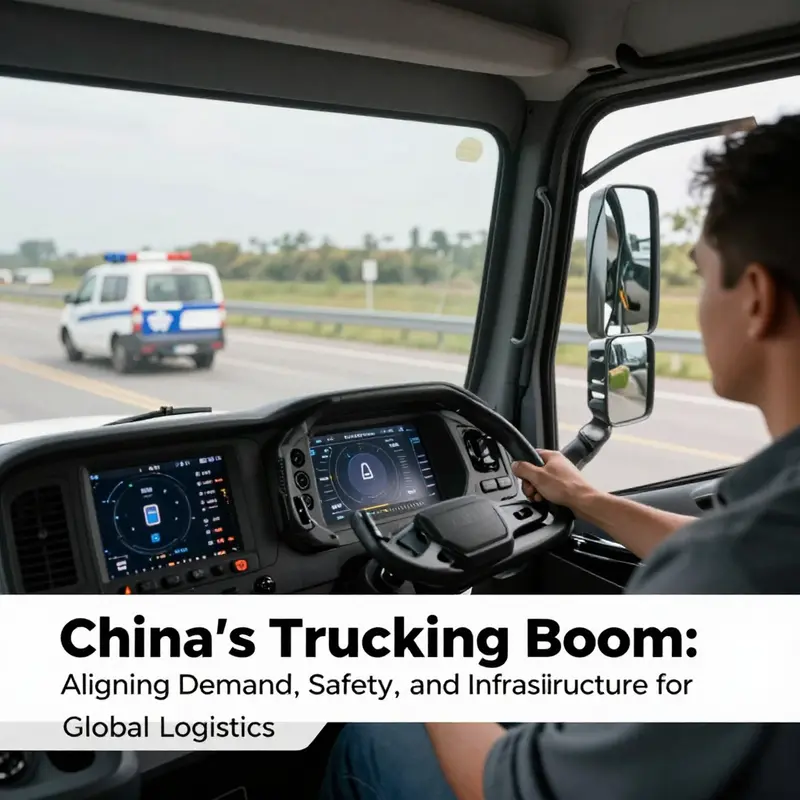
Safety and compliance have moved from the periphery to the core of the trucking business. As freight demand tightens access to lanes and lifts fleets into tighter schedules, firms find that the true cost of doing business is not just fuel, maintenance, or driver wages, but the reliability of every mile driven and every load delivered. This shift is not a retreat into more paperwork; it is a strategic reengineering of how goods move, who moves them, and how risk is managed in real time. The momentum comes from three interlocking forces: a surge in demand and infrastructure capacity, the adoption of sophisticated safety technologies, and a regulatory environment that uses data to reward accountability and punish carelessness. In practice, this means safety has become a competitive differentiator. Fleets that invest in precise hours-of-service tracking, predictive risk analytics, and driver training build not only safer trucks but more predictable schedules, lower disruption, and improved service levels for customers who rely on just‑in‑time deliveries. The overall logistics ecosystem—driven by robust rail and road networks, expanding express services, and growing e‑commerce—depends on trucking behaving as a reliable, tightly managed system. This reality invites a closer look at how reforms in safety and compliance sustain growth while elevating industry standards. The U.S. Federal Motor Carrier Safety Administration’s Electronic Logging Device (ELD) mandate, enforced since 2017, offers a illuminating baseline for this transformation. It requires most commercial drivers to log hours electronically, reducing the opportunity for falsified records and, crucially, fatigue-related driving. A 2023 FMCSA study reported that crashes involving fatigued drivers declined by roughly 15 percent in the years after ELD adoption. Although the mandate operates within a different regulatory framework than China’s evolving enforcement environment, the principle is universal: precise, tamper‑resistant data on when drivers are behind the wheel enables better safety decisions, more accountable operations, and safer roads for everyone sharing the landscape of moving goods. This is the philosophical heartbeat of modern trucking safety: information becomes an asset that shapes behavior, fuels training, and informs policy. As operators translate this data into action, the industry shifts from reactive measures—patching defects after incidents—to proactive risk management that anticipates where and when trouble might arise. The road is no longer just a path from A to B; it is a living, data‑driven environment where vehicle health, driver state, and traffic conditions converge to decide how a job is done. Advanced Driver Assistance Systems (ADAS), real-time telematics, and artificial intelligence increasingly populate this space. ADAS features help drivers avoid common error patterns, such as lane drift or sudden proximity to trailing vehicles, while telematics provide a granular, vehicle‑level view of performance indicators like harsh braking, speeding, or excessive idling. When these signals are integrated into fleet dashboards, managers can spot patterns—recurrent sharp accelerations after long rest breaks, or fatigue indicators tied to particular routes or shifts—and intervene with targeted coaching, route adjustments, or schedule changes. AI‑driven predictive analytics then step in, mining vast streams of data to forecast risk hotspots and optimize maintenance cycles. This is not a single technology adoption; it is a cultural shift toward a safety‑first operating model. Compliance, too, is migrating from a patchwork of paper trails to a cohesive, digital ecosystem. Digital platforms streamline adherence to federal and local rules around drug and alcohol testing, vehicle maintenance, and driver qualifications. They create audit trails that are accessible, verifiable, and enduring, reducing human error and liberating managers to focus on coaching and process improvement rather than chasing compliance boxes. In practice, this means fewer missed inspections, quicker corrective actions, and a stronger reputation with regulators and insurers. The measurable benefits extend beyond safety metrics. When fatigue, speeding, or maintenance issues are detected early, breakdowns and delays drop, cargo integrity improves, and on‑time delivery rates rise. These outcomes feed directly into the broader objective of scalable growth. The industry’s expansion in China mirrors this global safety trajectory, even as local enforcement emphasizes sharp penalties for persistent violations—speeding, distracted driving, driver fatigue, and malfunctioning monitoring equipment being flagged by regional bureaus. The message is consistent: safety is an investment, not an expense, and the price of neglect is paid in slower cycles, higher costs, and greater risk to public trust. The linkage between demand and discipline becomes clearer when we look at the broader logistics picture. The express and courier segments are expanding rapidly, with parcel volumes and revenue reaching record highs in 2025 and expectations pointing to massive growth by 2026. In such a climate, trucking must function as a reliable feeder within multi‑modal networks that span rail, sea, and air freight. Every improvement in safety and compliance elevates the entire supply chain, reducing disruption and enabling faster turnover of goods. To that end, the industry is increasingly embracing a holistic safety program, one that couples technology with ongoing driver education and a culture that values transparency. Training is evolving from a once‑a‑year event to a continuous, data‑driven practice where feedback loops translate real‑world driving experiences into actionable lessons. This approach aligns closely with the idea that investing in people is not optional but foundational. For those who want to explore how workforce development dovetails with safety, see Investing in People: Key to Trucking’s Success. The argument is simple: well‑trained, vigilant drivers paired with intelligent systems create resilient fleets that can keep pace with rising demand while maintaining high safety standards. As we move deeper into this era, regulators are increasingly adopting data‑driven strategies to target inspections and interventions. Rather than blanket checks, agencies can identify high‑risk carriers and prioritize resources accordingly. This not only improves enforcement efficiency but also motivates carriers to uphold higher baseline standards, knowing that sustained compliance yields tangible benefits in safety ratings, insurance costs, and access to capital. The synergy between policy, technology, and people thus becomes the engine of reform. It is a long arc, not a single policy event, and its success will depend on how well industry players harmonize investment in equipment, digital infrastructure, and human capital. The Chinese context, with its ongoing highway expansions, tunnel developments, and cross‑border freight initiatives, illustrates how infrastructure and reform reinforce each other. When new corridors and smarter traffic management reduce congestion, the payoff is amplified if safety systems and training keep pace. In that sense, safety and compliance reforms are not merely protective measures; they are accelerants of efficiency, reliability, and trust in freight movement. For a deeper, globally informed look at one facet of safety—the ELD‑driven approach to reducing fatigue—see the official report at https://www.fmcsa.dot.gov/safety/eld-mandate. The chapter’s broader takeaway is clear: as freight volumes rise and networks grow more complex, the trucking industry must think of safety and compliance not as compliance costs but as strategic capabilities that enable growth, protect people, and sustain the momentum of modern logistics. This integrated view will guide the next chapters, where we turn from what reforms are doing to how fleets can implement them in practical, scalable ways without losing sight of the human element at the heart of every mile traveled.
From Concrete Highways to Clouded Data: How Infrastructure and Digital Technology Are Reshaping the Trucking Business
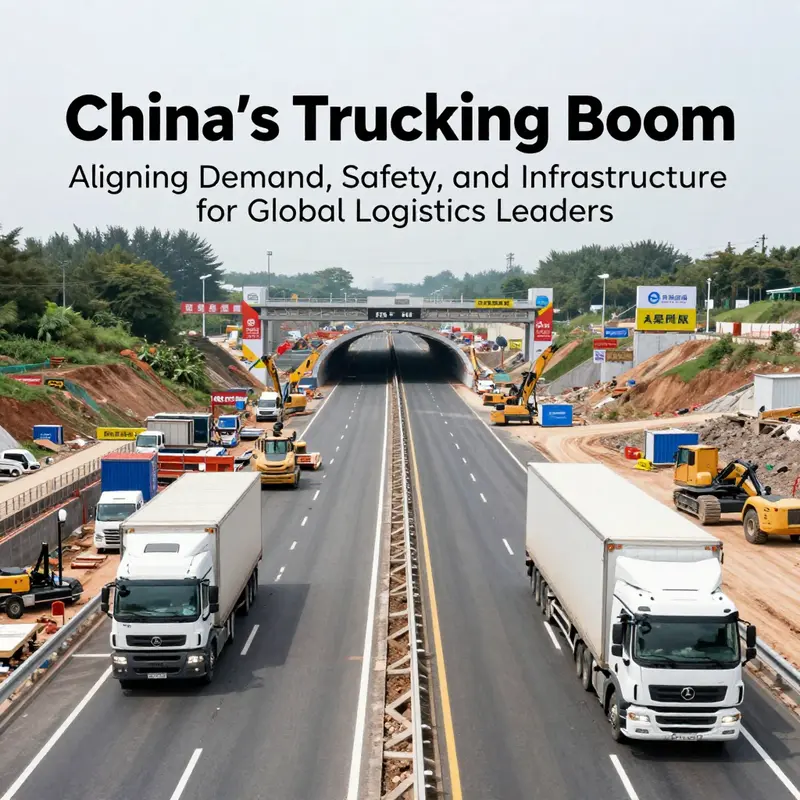
Across the vast expanse of modern logistics, the trucking business stands at a pivotal intersection where tangible improvements in physical infrastructure meet the accelerating power of digital technology. The Chinese context reveals a clear pattern: upgraded road networks, smarter terminals, and cross-border corridors are not just about moving goods faster; they are about creating resilient, data-driven supply chains that can adapt to demand surges, regulatory scrutiny, and evolving service expectations. This fusion of road and data infrastructure is redefining what it means to operate a fleet, to plan routes, and to guarantee on-time delivery in a sector that is simultaneously expansionary and safety-conscious.
The current momentum in demand is a driving force behind these changes. Recent figures show a logistics ecosystem that remains highly active across modes. National railway freight transport for a single week in January 2026 stood at 77 million tons, up 3.8 percent from the prior week, while highway freight traffic reached 56.1 million vehicles, rising 1.87 percent. Taken together, these numbers illustrate sustained throughput and a market that rewards efficiency gains across the board. Inside this environment, the logistics business activity expectations index hovered at a strong 54.9 percent in November 2025, signaling optimism about continued growth, especially in air cargo and express delivery services. In other words, demand is not a temporary spike but a consistent driver that pushes carriers to embrace tools and infrastructure that reduce risk and improve reliability.
The infrastructure story in this chapter is not abstract. It is expressed in concrete projects that directly influence trucking operations. The expansion of a major highway system from six lanes to twelve lanes is emblematic of the scale at which road quality and capacity can impact service levels. Such expansions relieve bottlenecks, reduce dwell times at key chokepoints, and smooth the cadence of deliveries along corridors that truckers rely on every day. The completion of the world’s longest highway tunnel through the Tianshan Mountains—transiting through challenging terrain by December 2025—stands as a landmark achievement in resilience, enabling more predictable routes and fewer weather- or terrain-induced delays. A new international highway freight service between Zhejiang and neighboring markets further signals a deliberate push to knit local supply chains into broader regional networks, bringing time savings and cost stability to cross-border flows. Together, these developments translate into tangible advantages for fleet operators: lower maintenance costs thanks to smoother surfaces and fewer speed-induced shocks, reduced wear and tear, and ultimately tighter, more reliable schedules that customers have come to expect in an era of constant miniaturized logistics and real-time updates.
In parallel with these physical upgrades, digital infrastructure is redefining the operating playbook. The trucking sector is moving from a world of stand-alone vehicles to a maritime-like network of connected devices—vehicles, traffic-management systems, and central command centers exchanging data in near real time. Low-latency, high-speed networks underpin autonomous capabilities and remote coordination. A robust digital backbone is no longer optional; it is foundational. With real-time data exchange, fleets can implement AI-driven route optimization, telematics-based performance monitoring, and predictive maintenance with a level of confidence that facilitates scaling. The practical implications are immediate: more consistent transit times, better adherence to delivery windows, and a sharper ability to foresee and mitigate disruptions before they ripple through the network. The same digital shift that makes a truck aware of changing traffic conditions can also help planners re-sequence loads, reallocate assets, and communicate with drivers about evolving priorities without sacrificing safety or efficiency.
This convergence is also closely tied to broader logistics trends, especially the explosive growth in e-commerce and express services. 2025 witnessed record volumes in courier service, and projections for 2026 point to roughly 145 billion packages handled by year-end. That level of parcel traffic places premium on last-mile efficiency, where trucking fleets act as the essential feeder conduits that bridge macro-level demand with end customer delivery. Multi-modal logistics, integrating rail, sea, and air freight, has grown more complex but more capable, with trucking serving as the indispensable flex point that links each leg of the chain. The result is a more intricate but more efficient supply network in which physical upgrades meet digital intelligence to optimize every mile traveled and every dollar spent. In this context, the strategic value of infrastructure—both roadways and digital fabric—becomes clearer. A highway that moves more vehicles per hour, a tunnel that opens a shorter, more reliable path, or a terminal that uses automated systems to process trailers faster all contribute to a smoother, more scalable operation that can absorb demand shocks without collapsing into delays or service degradation.
Among the most compelling aspects of this transformation is the emphasis on safety and regulatory compliance, which remains a critical constraint even as efficiency improves. The Dongguan Transportation Bureau’s week-long scan in early January 2026 identified a troubling spectrum of violations: speeding, distracted driving, driver fatigue, and malfunctioning monitoring equipment. These findings are not simply statistics; they illustrate the friction that can arise when rapid growth outpaces safety culture and oversight. They also underscore the central role of technology in strengthening accountability. Telematics packages that monitor speed, fatigue indicators, and device health become not just optional add-ons but essential tools for licensure and operation in a modern marketplace. In a newly convergent environment, regulators are signaling that continued operation will hinge on the company’s ability to demonstrate consistent compliance and robust safety management. The implication for fleet operators is clear: invest in technology not as a luxury but as an operational necessity that sustains both performance and permission to operate.
Beyond safety and compliance, the strategic implications of infrastructure and technology convergence point toward resilience and scalability. Operators who embrace the fusion of physical improvements with digital capability report a cycle of benefits: lower fuel consumption through smarter routing, higher driver productivity via better work planning and real-time communication, and deeper fleet visibility that turns data into actionable management insight. The early adopters are already realizing these advantages, translating capital investments in smarter terminals, better road surfaces, and more capable data platforms into more reliable service. This is not merely about cutting costs; it is about building an operating model that can flex with demand, withstand regulatory scrutiny, and maintain competitiveness as the industry continues to urbanize, digitize, and globalize.
For fleet operators, the practical takeaway is clear. Success rests on a dual investment strategy: improving the physical networks that trucks travel and building the digital capabilities that orchestrate their journeys. Faster, more predictable highways and tunnels reduce route risk and maintenance expense, while real-time data, AI-driven analytics, and predictive maintenance create a proactive approach to fleet management. The result is a more resilient, scalable operation that can accommodate autonomous concepts, optimized routing, and smarter maintenance planning while delivering superior customer service in an era of growing expectations. As this ecosystem evolves, the trucking business will increasingly depend on aligning infrastructure investments with technology adoption, ensuring that every mile traveled contributes to measurable outcomes in safety, reliability, and value for customers.
Internal link note: As the industry tests these capabilities, innovations in autonomous truck technology and data-driven management are being explored across sources. See how autonomous truck advancements are shaping the next generation of fleet operations advancements in autonomous trucks.
External resource for broader context: for a comprehensive view of how logistics infrastructure performance is measured globally, the World Bank’s Logistics Performance Index provides useful context and benchmarks that complement regional developments like those described here, accessible at https://lpi.worldbank.org/.
Chapter 4: Weaving the Road into the Chain — The Trucking Business Within Modern Logistics
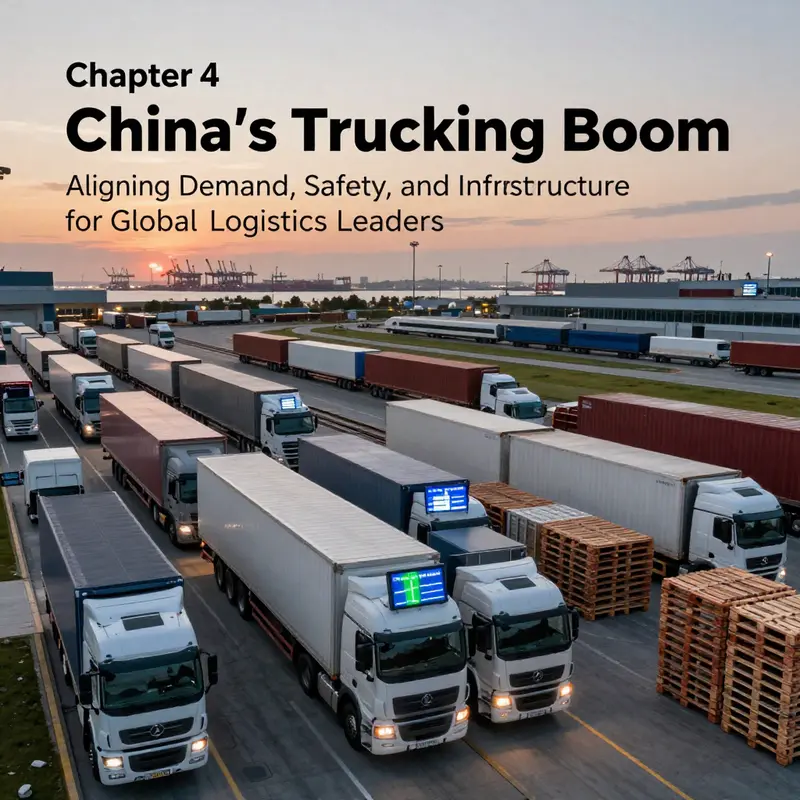
The trucking business in the United States does not stand alone on a line of cargo; it threads through an intricate web of logistics that connects manufacturers, distributors, retailers, and consumers across vast geographies and shifting demand. In a system that prizes speed and reliability, trucking acts as the essential connector between longer, capital-intensive modes like rail and ocean and the granular cadence of last-mile delivery. This perspective frames trucking not as a singular service but as a critical enabler of end-to-end supply chains. When a factory schedules a production run and a retailer plans an assortment for the next week, the truck becomes the physical thread weaving those plans into real-time movement. The broader logistics ecosystem relies on trucking to fill gaps between warehouses, distribution hubs, and the increasingly urbanized points of consumption, ensuring goods arrive where and when they are needed with consistent quality and predictability.
That dependence has amplified the importance of integration across modes. Rail and water transport move large quantities across long distances with efficiency, but they require trucking to translate that bulk flow into flexible, timely delivery. Air and sea freight, for their part, rely on trucking to provide the crucial feeder and last-mile services that complete the chain. The result is a logistics orchestra in which trucking parts play the rhythm and tempo. The real value comes from visibility: real-time data feeds from telematics, warehousing systems, and customer interfaces synchronize operations, reduce idle time, and enhance service levels. In practice, this means route planning that anticipates congestion, weather disruptions, and demand surges, and a fleet equipped to respond promptly rather than react belatedly to changes en route.
Technology has become the backbone of this integration. Real-time tracking, automated alerts, and sophisticated route optimization software allow carriers and shippers to see a freight’s status across the entire journey. Data analytics turn daily movements into actionable insights, revealing patterns in demand, maintenance needs, and energy use. With this information, fleets can shift capacity quickly, schedule maintenance before a fault becomes costly, and align staffing with peak periods. Such capabilities also empower smaller operators to compete by delivering predictable performance, even within a highly fragmented market where fleets range from single-truck outfits to large, multi-regional carriers. The overarching benefit is a more resilient supply chain, better able to absorb shocks—from seasonal spikes to unexpected port backlogs—without crippling delays.
The last-mile dimension deserves particular attention. As e-commerce expands and consumer expectations rise for speed and flexibility, the final leg of the journey has become the most visible and demanding portion of the network. Last-mile delivery is where efficiency translates into customer satisfaction; it also tests urban logistics constraints, including curbside access, parking, and last-block navigation. To meet these challenges, the industry increasingly leverages micro-fulfillment concepts tucked near or within metropolitan areas. These mini-hubs shorten travel distances, accelerate replenishment, and enable precise delivery windows. The shift toward micro-fulfillment is not about replacing traditional warehouses but about augmenting them with nimble, city-adjacent capabilities that make same- and next-day delivery feasible at scale. In this context, trucking expands its role from a bulk mover to a precise, adaptive service that coordinates closely with retailers’ inventory strategies and customers’ expectations.
Sustainability and efficiency also shape how trucking integrates with broader logistics trends. Pressure to reduce emissions and lower fuel consumption has steered fleets toward energy-efficient technologies and alternative powertrains. Although the path varies by operator, the direction is clear: increase miles per gallon, reduce idle time, and optimize routes to minimize empty or backhaul trips. This push toward greener operations is closely linked to cost discipline, as fuel remains a dominant expense and maintenance demands shrink with smarter, well-maintained equipment. Fleets are adopting predictive maintenance, telematics-enabled monitoring, and data-driven scheduling to extend asset life and lower total cost of ownership. In parallel, shippers reward reliability and transparency with longer-term contracts and performance-based incentives, reinforcing the link between responsible practice and economic viability.
Technology’s corrosive influence on traditional workflows also reshapes workforce models. As data becomes central to performance, the need for skilled operators who can interpret analytics and manage complex, multi-modal shipments grows. Talent is no longer confined to cab facilities; it spans planning centers, maintenance bays, and customer interfaces where cross-functional collaboration determines whether a shipment arrives on time. This evolution underscores a broader truth: investing in people—training, safety culture, and leadership within fleets—can deliver outsized returns when paired with the right digital tools. In turn, improved workforce practices amplify the value of integrating trucking with rail, sea, and air, creating a more cohesive, responsive logistics network.
Another frontier in integration is the progressive adoption of autonomous and electric technologies. The idea is not to eliminate human drivers but to reframe their roles around planning, supervision, and exception handling while routine movements become more autonomous and energy-efficient. The industry’s trajectory in this area is visible in ongoing demonstrations and pilot programs, with fleet operators testing how automated capability can complement human oversight to boost throughput and safety. The potential benefits extend beyond efficiency: higher uptime, safer operations through consistent vehicle behavior, and the opportunity to route around labor shortages in a tight market. For readers curious about these developments, one may explore the evolving landscape of autonomous truck technologies through ongoing industry insights such as advancements in autonomous LT-series trucks. This ongoing exploration reflects the broader aim of trucking to stay adaptable while meeting rising service expectations.
To appreciate how deeply trucking nests within the larger logistics framework, it helps to consider policy and macro shifts. Public investment in infrastructure, alongside evolving regulations on emissions and safety, sets the stage for smarter, more connected networks. Infrastructure improvements, from expanded highway capacity to smarter terminals, reduce friction and enable more reliable scheduling. At the same time, safety mandates and compliance requirements push carriers to adopt better monitoring, driver training, and cyber-resilience. The net effect is a dynamic balance: firms seek to push throughput and service levels higher while controlling risk and cost through better design, governance, and technology. In this sense, the trucking business is less about moving goods in isolation and more about orchestrating a complex, interconnected system where every link—from highway lanes to data streams—contributes to performance and resilience.
Ultimately, the trucking industry’s integration with broader logistics trends is a story about becoming more anticipatory and more capable. It is about moving beyond the idea of a single mode as a stand-alone service toward a coordinated network that treats time, uncertainty, and customer expectations as shared parameters. Fleets that succeed do so not solely by increasing truck count but by enhancing visibility, coordinating with partners, embracing smarter energy choices, and maintaining a workforce equipped for rapid adaptation. The road cannot function in isolation when the chain’s strength depends on each link performing in concert. By weaving trucking into the fabric of modern logistics, the industry not only supports commerce more effectively; it also shapes how goods travel through markets, how cities manage congestion, and how societies respond to changing demand with speed and responsibility.
External resource: https://ata.org/research-and-data/industry-trends
Balancing Growth, Costs, and the Human Angle in China’s Expanding Trucking Boom
The trucking business in China today resembles a broad river that carries more water every year even as its banks tighten around the edges. Demand remains high, spurred by ongoing infrastructure expansion, a resilient manufacturing base, and a logistics network that keeps tightening its feedback loops around every node from port to warehouse to storefront. Yet that surge comes with intensifying strains: fuel and maintenance costs rise, insurance premiums climb, and compliance demands grow more complex. The mood in the industry is a cautious optimism. Fleet operators sense that the tailwinds—the need to move goods quickly and reliably, the push to reduce transit times, and the spread of e-commerce—will persist. But they are also acutely aware that every mile now carries a higher price tag, and margins will only stay robust if growth is paired with smarter spending and tighter execution.
The most visible economic pressure point is cost. Fuel costs, even when weighed against broader commodity trends, bite into bottom lines because fuel remains a variable, sometimes volatile, portion of operating expenses. Equipment maintenance and tire wear rise as fleets push harder to pull longer distances and heavier loads through aging infrastructure. Insurance premiums follow a similar arc; as risk exposure grows with higher asset utilization, carriers pay more to shield themselves from accident payouts, cargo claims, and regulatory penalties. These cost increases ripple through the system, widening the gap between freight rates and true operating costs. To close that gap, carriers are leaning into efficiency with a multi-pronged approach. They’re adopting more precise routing that cuts blank miles, investing in fuel-saving technologies and aerodynamic upgrades, and renegotiating terms with shippers to reflect the true cost of service in a tight labor market. In some cases, the strategy also involves smarter utilization of assets—ensuring trucks spend more time delivering and less time idling or sitting in congestion-prone corridors.
With demand rising, the industry also faces the inevitable twin pressures of safety and compliance. The same Dongguan bureau reports that a sizable share of commercial vehicles still breach speed limits, engage in distracted driving, exhibit driver fatigue, or run with imperfect monitoring equipment. The regulatory stance is clear: repeated failures to address these issues risk losing operating licenses. In other words, growth cannot outpace governance. Tech-enabled safety practices—telematics that monitor driver behavior, fatigue management systems, real-time diagnostics, and more stringent maintenance schedules—have moved from optional add-ons to essential baselines. The financial calculus now includes penalties avoided, insurance differentiation, and the reputational premium that comes with a fleet known for reliable safety performance. In this setting, every investment in technology and training serves a dual purpose: it protects people and cargo while stabilizing costs by reducing accidents, detentions, and insurance headaches.
Infrastructure and technology intertwine to reshape the cost-to-service equation. China’s commitment to expanding lanes, building longer tunnels through formidable terrain, and launching international freight corridors does more than shorten routes. It lowers fuel burn per ton-kilometer, reduces tire wear, and squeezes transit times that previously created buffers in supply chains. The opening of larger highway sections and new cross-border services creates a backbone that supports leaner, more reliable schedules. Yet even as physical networks improve, the digital layer becomes more important. Telematics, route optimization platforms, and fleet-management systems increasingly act as the first line of defense against rising costs. They help carriers move with purpose through peak traffic, weather disruptions, and port-handling bottlenecks. In this environment, the goal shifts from simply moving goods to moving them with precision—minimizing delays, maximizing utilization, and extracting more value from every asset. Automation and semi-autonomous functions play a growing role here, but the reality remains that full autonomy is still years away for most operations. The smarter path today is a measured mix of human judgment and intelligent systems that reduce fatigue, shorten dwell times, and gently shift the burden of repetitive tasks away from drivers.
The human element, meanwhile, remains the most acute and the most expandable point of leverage. The industry’s chronic driver shortage is not merely a headline; it is a lived constraint that shapes everything from route design to equipment investment. An aging workforce, demanding schedules, and the lifestyle trade-offs of long-haul life all contribute to turnover and discourage new entrants. In response, fleets are rethinking compensation structures, benefits, and work-life balance. Some are prioritizing regional or local routes that shorten continuous stretches on the road, enabling drivers to return home more frequently. Others are retooling recruitment and retention with targeted training programs, mentorship, and wellness initiatives that address fatigue, stress, and long-term health. These changes are not only about attracting talent; they are about sustaining it. A more stable driver pool translates into fewer disruptions, more predictable service levels, and, paradoxically, a lower overall cost of operation when you account for reduced turnover, training time, and onboarding expenses.
A related strand of this evolution focuses on human capital as a strategic asset. Fleet operators increasingly view people not as a cost to be managed but as a core source of competitive advantage. Training programs are becoming more sophisticated, blending hands-on coaching with simulation-based practice to shorten the learning curve without compromising safety. Wellness programs are expanding to cover fatigue management, mental health support, and scheduled downtime that helps drivers stay alert and productive on the road. This people-centric approach aligns with broader logistics trends, including the surge in e-commerce and the expansion of last-mile services that demand reliable, locally attuned drivers who understand regional markets and customer expectations. It is no accident that many fleets are linking capabilities in driver development to broader strategic aims—lower turnover, higher service reliability, and stronger partnerships with shippers who value consistent performance.
Technology remains a critical accelerator of this balance between growth and cost, while human-centered strategies ensure the work remains attractive and sustainable. Fleet operators are weaving together automated data capture, predictive maintenance, and real-time route optimization with disciplined training, fair wages, and predictable schedules. The result is a more resilient operating model that can weather price volatility and regulatory shifts while continuing to scale. The practical implication is clear: growth will be sustainable only if it is paired with disciplined cost control and a deliberate, humane approach to workforce management. The industry is learning to tune three levers in concert—cost discipline, service reliability, and talent development—so that each supports the others rather than competing for scarce resources.
For readers seeking a deeper dive into the people-focused side of this transition, there is a dedicated exploration of investing in human capital as a driver of trucking performance. See Investing in People: A New Path for Trucking Fleets. This perspective underscores how people-first strategies can translate into measurable gains in safety, retention, and efficiency, ultimately helping fleets navigate the cost and capacity challenges described above. In addition to these insights, the broader industry context—rising costs and the driver shortage—has been extensively analyzed in major financial coverage, which highlights the systemic nature of these pressures and the need for coordinated responses across regulators, shippers, and carriers. External commentary emphasizes that the balance will depend not only on better engines and smarter routing but also on creating a work environment that respects drivers as essential partners in the supply chain. External resource: https://www.bloomberg.com/news/articles/2024-09-18/trucking-industry-faces-growing-costs-and-driver-shortage-as-demand-rises.
Taken together, the Chinese trucking sector is not simply expanding; it is transforming. Growth is increasingly managed through precision—precision in routing, precision in maintenance, and precision in scheduling. Costs are being domesticated through smarter procurement, better fuel economy, and tighter risk control. And the workforce, once seen largely as a variable expense, is being redefined as the central driver of performance and resilience. The forward path looks like a continuous, integrated loop: demand pulls investment in better equipment and smarter networks; those investments, in turn, reduce risk and improve service, which strengthens relationships with shippers and supports further demand growth. The cycle will not end soon, but its quality will hinge on how well the industry can harmonize technology with people, policy with practice, and ambition with humane, sustainable work.
Final thoughts
The trucking business in China is navigating a convergence of elevated demand, reinforced safety standards, and expansive infrastructure that collectively propel efficiency, reliability, and competitiveness across logistics networks. For Logistics & Freight Companies, Construction & Engineering Firms, Fleet Management Companies, and Food & Beverage Distributors, success hinges on embracing real-time visibility, standardized safety protocols, and scalable multi-modal strategies. By synchronizing fleet operations with ongoing capital projects, digitized compliance, and the evolving e-commerce landscape, organizations can reduce risk, optimize costs, and accelerate service levels in a highly dynamic market.