

As the demand for on-the-go services continues to grow, establishing a mobile truck business offers significant opportunities for logistics and freight companies, construction firms, fleet management, and food and beverage distributors. This article provides a strategic roadmap to help you navigate the complexities of starting a mobile truck business, focusing on defining your niche, conducting market research, formulating a solid business plan, obtaining necessary legal licenses, and effective performance monitoring. Each chapter delves into crucial elements that build towards a successful mobile truck operation, tailored to address the specific needs and challenges faced by industries reliant on mobility.
Finding Your Lane on Wheels: Defining the Niche and Services for a Mobile Truck Venture
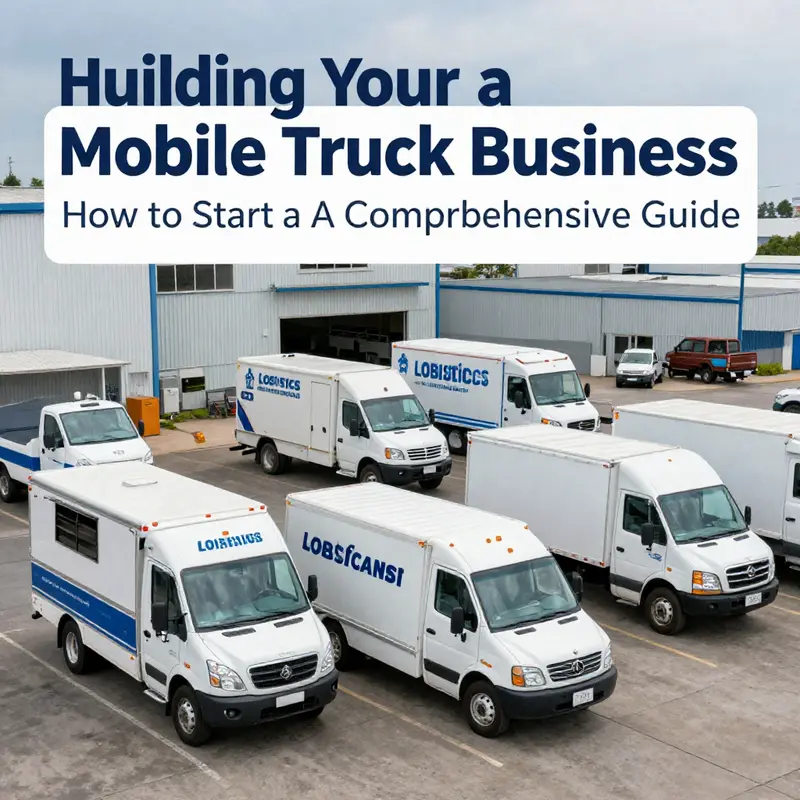
Defining your business niche is not a luxury in the crowded world of on‑the‑move services. It is the compass that points every resource toward a concrete customer need. The type of mobile service you choose determines the truck you buy, the equipment you install, the routes you run, and the kind of permits you must obtain. When you start with a clear niche, you can design a service model that fits your strengths and the realities of your market, rather than chasing every opportunity and ending up stretched thin. Think of your niche as the frame of a house; it supports every room you add later—whether that room is a new service line, a secondary location, or a cross‑selling opportunity with partners.
From there, you gain a competitive advantage. A well-defined niche makes your marketing sharper and your sales conversations more efficient. Instead of describing a long list of potential offerings, you speak to a single, compelling promise: we serve a specific need in a specific way, with reliability and speed. This focus helps you price appropriately, justify the cost of specialized equipment, and recruit staff who share the same vision. Market research becomes less about chasing trends and more about confirming a real gap and a sustainable buyer segment. The result is a business that can scale without losing its core identity.
Consider several viable niches that align with the mobility of a truck business. A mobile food truck targets busy urban professionals with quick, quality meals and signature items. A mobile truck washing service caters to owners of premium cars or fleets who want immaculate conditioning without visiting a shop. A game truck enters the home or community setting, delivering an immersive entertainment experience for families and events. A mobile pet grooming operation serves neighborhoods where access to grooming salons is limited. Each option carries distinct requirements for space, power, water, and safety, yet all share one thread: the truck becomes a purpose-built tool to solve a clearly defined problem.
Tailoring services to fit a niche means more than selecting a label. It means shaping the entire physical footprint of the business around customer expectations. The food truck case demands a kitchen setup with cold storage, careful waste management, and strict adherence to health and safety standards. The wash service prioritizes water efficiency, a compact yet powerful cleaning system, and eco-friendly products. The game truck relies on soundproofing, reliable projection or screens, and comfortable seating so that a family night can unfold without disruption. The pet grooming unit benefits from a hydraulic lift, a dependable water supply, efficient heat management, and space to keep grooming tools organized and sanitary in mobile conditions. The point is not to imitate others but to design a mobile unit that embodies your niche’s promise while staying within practical limits of skill, capital, and regulatory compliance.
In practical terms, your niche should inform every early decision—from the truck’s configuration to the routes you plan and the partners you pursue. A niche that targets evening and weekend events, for instance, will push you toward a vehicle with quick setup, ample electrical capacity, and a dependable generator plan, rather than a high‑volume, day‑time service footprint. A niche that aims at remote or underserved communities may require a larger payload and better fuel efficiency to maximize miles between refueling, along with portable equipment that can be deployed with minimal site infrastructure. When you design the truck around a niche, you also shape your pricing strategy. You can justify premium pricing for specialized capabilities or swift, on‑site service, while still offering value to price‑sensitive customers through packages that bundle maintenance, parts, and response times.
Aligning the business with people and culture is essential, too. The right niche attracts customers, of course, but it also attracts the right team. You don’t hire merely for skill but for a shared understanding of the niche’s realities. The emphasis on people and process is echoed in industry discussions about staffing and service quality, such as the emphasis on people‑first strategies in trucking. Building a team that can reliably deliver your niche promise means investing in training, safety, and a shared language about why a customer should choose you over a generalist competitor. For leaders, that means articulating a clear mission, setting expectations about on‑the‑ground behavior, and cultivating a culture where problem‑solving and accountability are the norm. See how these principles translate into scalable outcomes in the broader trucking context: People-first strategies in trucking.
When you are ready to test a niche, start with a light validation that respects cash flow. Run a small pilot in a defined radius or at a handful of events. Gather feedback not only on price and service quality but on the fit between what you promised and what the customer actually experienced. Use the data to refine equipment, optimize routes and schedules, and adjust marketing messages. This iterative approach minimizes risk while building a portfolio of validated niches you can grow or combine. You may find that one niche proves exceptionally resilient during seasonal swings, while another remains a steady, year‑round contributor to revenue. Either way, your ability to adapt becomes a strategic asset, because the niche defines not just what you do, but how you do it, and why customers should care.
Choosing a niche also has ripple effects on partnerships and sources of demand. Local businesses, venues, and event organizers become natural channels when you align with a niche that addresses a specified problem in a specific context. A mobile food operation might partner with office buildings or hospital campuses; a mobile wash service could collaborate with fleet operators or luxury car clubs; a game truck could link with schools and communities hosting youth events. These relationships don’t just feed you work; they help you refine your service proposition through real customer interaction. And because you are focused, you can scale partner programs more efficiently, dedicating resources to meaningful collaborations rather than chasing scattered opportunities. As you map these connections, keep your niche in the center of the diagram, guiding decisions about marketing, staffing, equipment, and even potential expansions.
In sum, a well‑defined niche is the backbone of a mobile truck business. It clarifies what you offer, for whom, and how you deliver it with excellence. It sharpens your value proposition, streamlines operations, and makes growth more likely rather than more risky. It also shapes your culture, guiding how you hire, train, and empower your team to live up to the promise you make at the curb. The next step is to translate this clarity into a concrete plan—one that aligns service design, capital equipment, permits, and route strategy with the customer problem you have committed to solving. That alignment is what turns a idea about mobility into a sustainable, scalable business.
For a broader perspective on the human side of trucking and how staffing supports the niche, you can explore insights on People-first strategies in trucking.
External resource: For a broader framework on identifying and refining your niche, see Shopify’s How To Find Your Niche: Complete Guide for 2026 at https://www.shopify.com/blog/find-your-niche.
Market Intelligence on Wheels: Conducting Thorough Research to Launch a Mobile Truck Venture

Market research is not a side task for a mobile truck startup; it is the navigator that keeps the venture from veering off course. In a field where mobility meets service, understanding who needs the service, where they live or work, and how they prefer to access on‑the‑spot solutions is as critical as the truck you choose. Recent patterns in the transportation, warehousing, and logistics sectors point to steady growth, driven by the boom in e-commerce and the demand for rapid, flexible delivery. A 2024 snapshot from the U.S. Bureau of Labor Statistics confirms this momentum, underscoring that the broader ecosystem surrounding mobile operations—delivery networks, last‑mile services, and on‑site support—continues to expand. This backdrop matters because it signals where opportunities cluster and where competition is likely to intensify. For an aspiring mobile truck entrepreneur, the first task is to translate this macro momentum into a locally relevant offering that solves a real problem in a specific community. The most successful ventures are not simply mobile; they are remarkably attuned to the times and the place they serve.
To begin, a clear view of growth contours helps sharpen your niche. Think about whether you want to deploy a mobile repair unit that plugs gaps in rural or underserved commercial corridors, a mobile convenience or grocery model that brings essentials to neighborhoods with limited access, a mobile storage or moving service that targets small businesses and households with tight schedules, or a nimble on‑demand logistics hub that can flex with seasonal demand. Industry growth signals hint at where a mobile presence can be most impactful. If you map your offering to rising needs—such as convenient, on‑site services for busy professionals or remote-area support for fleet operators—the odds of sustainable demand rise. The goal is not just mobility but the alignment of mobility with a ready buyer base. In practical terms this means identifying a service that reduces a client’s friction: less time spent chasing repairs, less back‑and‑forth in deliveries, or quicker restocking in areas where traditional storefronts are sparse. It is a subtle but powerful shift from “What can I move around?” to “What problem can I solve on the go, reliably and repeatedly?”
A centerpiece of market research is understanding the local landscape. Demographics matter, not as abstract statistics but as indicators of who will buy your service and when. Age, income, household composition, and commuting patterns shape demand for different mobile offerings. A high‑income neighborhood with limited grocery access may respond well to a mobile convenience model offering time‑saver essentials, while a zone with a dense cluster of small businesses might reward a mobile service that supports fleet maintenance on a rotating schedule. Beyond demographics, traffic patterns and commercial activity illuminate where a truck can operate efficiently. Proximity to industrial parks, business corridors, or residential hubs often signals routes with predictable demand. Observing where people congregate—market days, construction zones, or large office complexes—helps forecast peak periods and design service windows that maximize utilization without sacrificing quality. The empirical pull of these factors is strong: when you locate your truck where demand concentrates, you minimize wasted miles and you shorten the path to profitability.
Another essential stream of insight comes from studying existing mobile vendors in the area. A vibrant ecosystem of food trucks, repair vans, mobile storage units, and on‑demand delivery services can reveal both gaps and opportunities. Look for underserved niches or times of day when current offerings fall short. Are there long wait times for on‑site repairs or maintenance in certain neighborhoods? Is there a lack of mobile options for safe, reliable home furniture or appliance delivery in mid‑sized towns? A 2025 study highlighted by market researchers notes that a sizable majority of consumers—over 60 percent in many regions—now prefer on‑demand, flexible delivery options. That sentiment translates into a practical cue for mobile operators: the preference for immediacy and convenience is not a fleeting trend but a sustained behavioral shift. The key is to translate that preference into a practical service design—routes, scheduling, and coverage areas that deliver on that on‑demand promise with reliability, transparency, and fair pricing.
The digital tools at your disposal amplify the precision of this research. Start with Google Trends to gauge local search interest over time for services similar to yours. A rising search volume for “mobile repair near me” or “on‑site delivery” in a targeted ZIP code can foreshadow underserved demand. Yelp and other review platforms offer a snapshot of customer sentiment toward comparable on‑the‑go services. Analyzing what people praise or complain about in existing offerings can shape your value proposition—from response time and pricing transparency to service quality and reliability. Social media analytics further enrich the picture by revealing real‑world conversations, needs expressed in comments, and the typical complaints that a well‑timed mobile service could address. The objective is not to imitate others but to learn where expectations are unmet and where your strengths—speed, convenience, price, or specialization—can fill those gaps. Networking with local chambers of commerce or small business associations adds another layer of clarity. These organizations understand zoning quirks, permitting requirements, and community sentiment toward new mobile enterprises. They can connect you with potential partners, pilot opportunities, and early customers who can provide candid feedback about your proposed model.
A disciplined approach to market research also keeps you honest about regulatory realities. Your findings should feed into a broader risk assessment that covers licenses, insurance, and safety standards. For a mobile operation, the shadow of regulation is never far away. The initial research should identify the permits you’ll need, the likely costs, and the typical timelines for approval in your jurisdiction. This isn’t a detour; it’s an essential filter that prevents later surprises. Understanding regulations early helps you design a service that is both appealing and compliant. It also informs your pricing and route planning. When you know the regulatory scaffolding, you can schedule inspections, align insurance coverage, and establish standard operating procedures that meet or exceed safety expectations. In practice, this means integrating regulatory checkpoints into your market validation process so that your chosen niche is not only desirable but also executable within established rules.
All of these threads—demographics, traffic dynamics, competitor analysis, digital signals, stakeholder networks, and regulatory awareness—should converge into a concrete service concept and a tested geographic footprint. The test phase is where the research becomes actionable: pilot the service in a defined district, track engagement, measure time‑to‑service, and collect customer feedback about what’s working and what isn’t. Pricing experiments, limited‑time promotions, and pilot routes can yield data that translates directly into a scalable model. The most robust market research doesn’t end with a map of opportunities; it ends with a plan you can execute with confidence. To emphasize the broader economic frame, consider the trend line discussed in recent industry analyses: ongoing demand for flexible, convenient delivery and service options often translates into capacity constraints that mobile operators can exploit by thoughtful route design and targeted service windows. These decisions should be anchored in data rather than gut feel, and they should adapt as conditions change—seasonally, regionally, and as new competitors enter the scene. For readers who want to connect data to a broader economic narrative, economic trends impacting trailer orders offers a concise lens on how market forces complicate capacity decisions and create opportunities for nimble operators.
As you close this phase of research and move toward planning, keep a keen eye on the interplay between demand signals and the operational reality of running a mobile fleet. The insights you gather about who buys, when they buy, and how they prefer to receive service should guide the design of your service package, the geography you cover, and the hours you keep. Your market intelligence becomes the backbone of your business plan, shaping marketing messages, pricing strategies, and partnership opportunities that can produce a steady stream of early customers. It also helps you forecast cash flow more realistically by tying revenue potential to observable conditions—resident demographics, commercial activity near your routes, and the cadence of deliveries or repairs across the week. In short, thorough market research transforms uncertainty into a structured pathway. It anchors decisions in real behavior and observable outcomes, ensuring that your mobile truck venture has a solid footing before you take the next step toward financing, fleet acquisition, and regulatory readiness.
External resource: https://www.bls.gov/
Plotting the Route to Profit: Crafting a Solid Business Plan for a Mobile Truck Venture

A mobile truck business can move quickly from idea to impact, but only if you start with a map that guides every decision. A solid business plan is that map. It does more than tell you what you will do; it clarifies why you will do it, how you will win customers, and when you will know you’ve succeeded. In the context of starting a mobile truck venture, the plan becomes the framework for choosing a niche, defining your service footprint, and anticipating the financial rhythm of operations. The plan should illuminate a clear path from concept to steady cash flow, and it should do so in terms that lenders, partners, and your future self can understand. The act of writing the plan is, in itself, a strategic exercise that forces you to translate intuition into measurable milestones, to test assumptions against real market signals, and to design a business model that can adapt as conditions shift on the street, in regulatory corridors, or across changing customer expectations.
Begin with the core question of niche. Your mobile truck venture will thrive only if it serves a defined need better than the alternatives. Food trucks, repair services on wheels, mobile storage or moving assistance, on-site freight and logistics solutions—each represents a different client base, cost structure, and route logic. The plan should articulate your niche not as a vague idea, but as a precise proposition: what you will deliver, to whom, at what price, and with what level of convenience or speed. This clarity is the backbone of your marketing, pricing, and operations strategy. Once you name the niche, you can craft a service description that aligns every other element of the plan with that chosen focus. This alignment matters because it determines your fleet configuration, your hours of operation, and the geographic footprint you will target. While it may be tempting to become a jack-of-all-trades, the most resilient mobile truck businesses concentrate their energy on a tightly defined service model, offering a reliable, repeatable experience that teams can master and customers can trust.
Market research is the next rite of passage. The plan should summarize how you will validate demand, who your customers are, and where they will be found. Are you serving businesses that will require regular on-site service or individuals who crave convenience at the curb? What are the price points that reflect value in your community, and how do those prices compare with similar mobile operations nearby? Look for gaps in local coverage—areas with high demand but limited responsive providers, or specific times when customers struggle to access essential services. An honest assessment of competition helps you position your offering with a unique selling point, whether that’s faster response times, lower prices, specialized expertise, or a combination of these advantages. The plan should also map potential locations and routes, not as a theoretical map, but as a practical plan that shows how often you will visit particular neighborhoods, what seasonal fluctuations you expect, and how you will adjust service levels during peak periods.
The executive summary of the plan functions as your pitch to lenders, partners, and internal stakeholders. It should be concise—one to two pages—that captures the essence of your business, the scale of your ambition, and the financial trajectory. In a single breath, it should describe your niche, your target customers, your competitive advantage, and the key milestones you aim to reach in the first year. The executive summary anchors the entire document, so write it last, after you’ve tested the logic of your assumptions and quantified the costs and potential returns. The company description that follows should flesh out the story further: the legal structure, ownership, and the mission that fuels day-to-day decisions. It should describe the service model in practical terms—what the truck will look like, what equipment and tools are on board, what safety standards you will uphold, and how you will maintain the vehicle to minimize downtime.
Marketing and sales strategy in a mobile context is as much about relationships as it is about advertisements. Rather than relying solely on ads, your plan should emphasize a pipeline of partnerships with local businesses, venues, and service networks that can supply recurring opportunities. It should outline the channels you will use to reach customers—digital ads, social media, and local events—while also detailing how you will convert inquiries into booked work. A simple, scalable approach often works best: a clear value proposition, transparent pricing, predictable scheduling, and reliable service so that repeat customers become ambassadors. The plan should include pricing strategies that reflect the realities of moving equipment, fuel, maintenance, and compliance costs. It should also describe how you will package services—for example, bundled offerings for businesses needing scheduled maintenance or for event organizers seeking on-site accommodations—so customers perceive clear, tangible value.
Organizational and management structure need not be complex, especially in the early stages. The plan should define who is responsible for what and how you will staff as demand grows. Even a one-truck operation benefits from a lean, capable team with defined roles, since your ability to scale rests on your capacity to replicate success across additional units. Outline recruitment and training plans, safety protocols, and performance expectations. Acknowledge that as you grow, you will need to formalize governance, implement standardized operating procedures, and establish a culture of reliability and accountability. This section should also address how you will manage compliance and record-keeping as the business expands, ensuring that data capture, insurance, licensure, and safety checks stay current across a rotating fleet.
The financial plan is the heart of the document because it translates strategy into numbers and timelines. Start with startup costs: vehicle purchase or lease, any necessary modifications, tools, insurance, licenses, initial inventory, and the first months of working capital. Then forecast operating expenses—fuel, maintenance, insurance premiums, permits, payroll, and ongoing marketing investments. Your revenue forecasts should be anchored in the reality of your defined niche and market research, with scenarios that cover optimistic, base, and conservative outcomes. A careful break-even analysis tells you how many service hours or how many jobs per week you must achieve to cover costs and move into profitability. Cash flow projections help you anticipate shortfalls and plan for contingencies, while a balance sheet mindset helps you assess asset value and debt management over time. The plan should also identify funding sources and a timeline for securing them, whether through owner investment, a bank loan, or a small business program. If you intend to pursue partnerships or investors, include a section that demonstrates how the plan aligns with their expectations for risk, scale, and exit strategy.
A practical operational plan ties every piece together into a coherent daily routine. It should describe routing logic, scheduling cadences, and maintenance workflows that minimize downtime. Technology can play a central role here: route optimization, GPS tracking, and customer relationship management to keep engagements tidy and traceable. Document how you will handle regulatory compliance at the local, state, and federal levels, including licensing, insurance, and safety standards. Your plan should reflect a commitment to reliability and professionalism, because the reputational capital of a mobile truck business grows from consistent performance as much as from clever branding. The narrative should acknowledge risks—market volatility, fuel price spikes, regulatory changes—and outline concrete mitigations, such as diversified service lines, contingency schedules, and robust record-keeping.
As you write, consider the value of drawing on established guidance. For instance, you might explore insights from industry voices that emphasize people as a critical driver of success—investments in training, leadership development, and a culture oriented toward service excellence. Investing in People: A New Path for Trucking Fleets offers a lens on how workforce investments translate into operational discipline and scalable growth. This link can serve as a touchstone as you refine hiring plans, safety training, and leadership roles within your growing organization. The plan should also maintain a practical, non-glamorous focus: you are building a working organism that must perform daily, week after week, year after year.
Finally, remember that a business plan is not a static artifact. It is a living blueprint that changes as you learn more about customers, routes, and your own capacity. Your goal is to produce a document that invites feedback, guides decision-making, and reduces the guesswork that plagues new ventures. The most compelling plans tie aspiration to operational reality, showing how a lean fleet can deliver reliable service, steady margins, and room to scale. They demonstrate that you understand not just what you want to do, but how you will do it, how you will measure progress, and how you will pivot when market signals shift. In this sense, the plan becomes your compass and your engine—a dual instrument that helps you steer toward profitability while maintaining the flexibility to adapt as opportunities arise on the road ahead.
For those seeking additional authoritative guidance, consider the SBA’s resources, which provide templates, market research guidance, cost estimates, and step-by-step instructions to estimate costs and project profits. These tools align with the practical needs of a mobile truck venture and help ensure your plan is grounded in real-world finance and regulatory considerations. To learn more, visit the SBA website: https://www.sba.gov
Licensing the Route: Navigating Licenses and Permits for a Mobile Truck Business
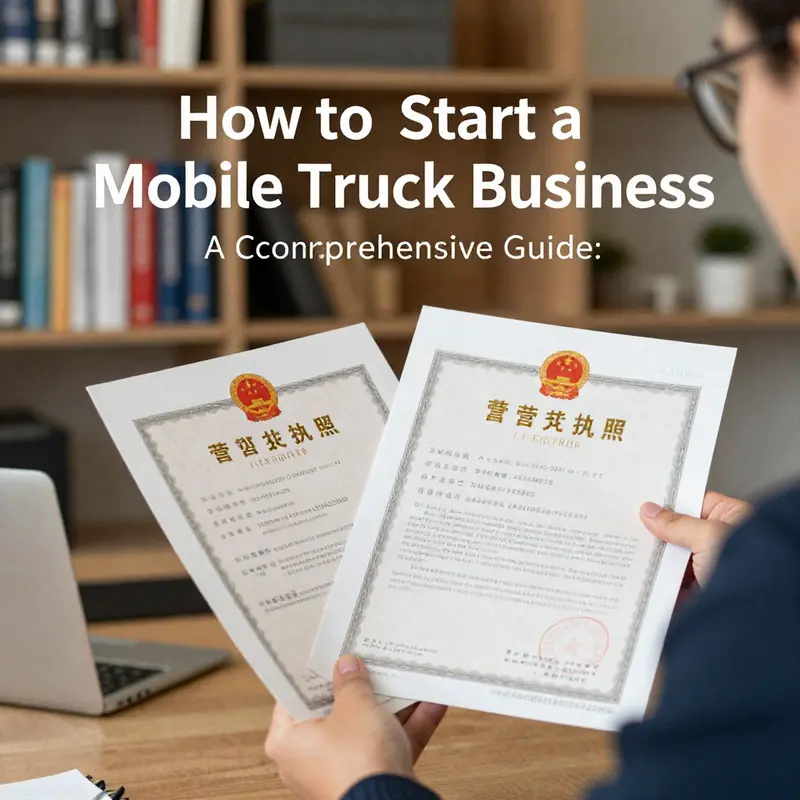
The moment you decide to turn a truck into a mobile business, you enter a field where legality and practicality move in step with every mile driven. A mobile truck operation—whether it’s moving goods, performing on-site services, or delivering a compact retail experience—lives or dies by the licenses, permits, and regulatory frameworks that govern it. The core idea is simple: you must prove you can operate safely, responsibly, and transparently within the jurisdiction where you run. The complexity comes from the fact that requirements vary by location, service model, and whether you cross borders. A cohesive start hinges on treating licensing not as a hurdle to overcome after you buy a truck, but as an integral part of the business plan from day one. The good news is that the path is navigable if you approach it with a clear sequence, an honest assessment of your operations, and the discipline to keep records straight from the outset.
First, define the scope of your operation with precision. A mobile truck business can take many forms: on-site repair or maintenance, a mobile storefront, a moving or storage service, or a last-mile logistics node that travels to its customers. Your niche determines which layers of licensing matter most. For interstate freight, federal authority is non-negotiable; for purely local service, state and local permits may suffice. Even within a single state, the rules can differ between urban centers and rural areas, and between transporting goods for hire versus using a vehicle for business services. The practical takeaway is that your niche informs the licenses you pursue, while the licenses, in turn, shape the structure of your business entity, insurance, and operational plan.
At the foundation lies business registration and tax identifiers. Most operations start with forming a legal entity—an LLC, corporation, or sole proprietorship depending on risk tolerance, ownership structure, and financing needs. Alongside entity formation, you obtain a Federal Employer Identification Number (EIN) from the IRS. This combination—legal entity plus EIN—enables you to open a business bank account, sign contracts, and apply for permits in a professional, auditable manner. The certainty of a formal structure also improves credibility when you approach lenders or investors to fund fleet expansion. Even if you begin small, structuring properly from the start pays off when you scale.
When your operation involves moving goods or transporting others’ cargo, federal authorities demand more. If you intend to operate across state lines, you must secure a USDOT number from the Federal Motor Carrier Safety Administration (FMCSA). In many cases, a Motor Carrier (MC) number is also required for for-hire transportation across state lines. These identifiers are not mere paperwork; they underpin safety audits, insurance requirements, and compliance recordkeeping. The USDOT number signals that you intend to meet federal safety standards and to subject your fleet to inspections and performance monitoring. The MC number, where applicable, indicates that your business engages in interstate for-hire transportation and thus falls under additional regulatory nuance.
State and local licenses fill in the remaining gaps. Within a state or locality, you typically need a State Road Transport License or an equivalent credential to operate as a mobile carrier. The exact name of this permit varies, but the underlying purpose is consistent: it confirms you meet vehicle standards, financial responsibility (via insurance), and organizational criteria set by the state transportation authority. Local permits may also regulate where you can park, operate, and load or unload. In practice, this means checking with the city or county where you intend to operate to determine if there are curbside restrictions, designated loading zones, or time-based operating windows that affect your routes and schedules.
Preparation for these requirements hinges on a robust safety and compliance framework. Vehicle maintenance becomes a preventive discipline, not a reactive fix. Regular inspections, ongoing servicing, and tire management are standard expectations. Insurance coverage must cover General Liability, Cargo, Commercial Auto, and, if you hire employees, Workers’ Compensation. The goal is to place yourself in the strongest possible position to absorb the costs of incidents without crippling your cash flow. If you run with drivers, you must confirm they hold valid CDLs where required, maintain clean driving records, and receive safety training. The last element—training—often evolves into a formal Safety Management System (SMS) that tracks risk, incidents, training completions, and corrective actions.
A crucial practical step is mapping out the exact permitting pathway for your state and service model. For interstate work, expect a sequence that begins with registration and insurance, then the FMCSA checks, followed by state-specific permits, and finally any local authorizations. Some regions offer a streamlined, “one-stop” approach to applying for multiple permits at once. This is not a universal feature, but where it exists, it can save weeks of back-and-forth. In fact, many operators encounter a portal that consolidates several permit applications. For those curious about such streamlined options, consider the portal 开办运输企业“一件事”—a one-stop application pathway that encompasses Road Transport Operation Permit, Vehicle Road Transport Certificate, and Driver’s Operating Permit. See 开办运输企业“一件事”. This kind of portal can dramatically reduce the friction of starting, especially for first-time operators who are building a compliance baseline from scratch.
Even with a streamlined process, expect documentation to be exacting. You’ll need to provide proof of your business license, entity identification, copies of driver licenses and any CDL credentials, and a clear safety management plan. Insurance documents must reflect the scope of your operations, including cargo, liability, and auto coverage. The safety plan should detail vehicle inspection cycles, maintenance schedules, driver training, incident reporting, and a commitment to acquire or modify vehicles within a specified timeframe if your fleet needs to scale. In some jurisdictions, you may be asked to demonstrate a capacity to purchase qualifying vehicles within 180 days, which is a practical indication that you are serious about growth and capable of meeting regulatory expectations.
The cross-border or interstate element adds another layer of accountability. When traveling beyond state lines, you are required to keep meticulous trip data and ensure your carriers are in good standing with the state and federal regulators. Data retention rules may demand you retain records for several years. The rationale is straightforward: regulators need to verify that hours-of-service, insurance, vehicle inspections, and safety events are properly managed over time. A modern operations system—combining GPS-enabled fleet tracking, a CRM for scheduling, and accounting software for invoicing—becomes not just a productivity tool but a regulatory ally.
As you assemble the licensing puzzle, bear in mind the role of ongoing compliance as you scale. Your initially issued licenses do not guarantee a long runway unless you maintain good standing. Regular vehicle inspections and maintenance must be continued, insurance kept current, and driver qualifications updated. Periodic audits or spot-checks by regulators can precede or accompany growth phases, so you need a cadence of internal checks, not last-minute scrambling. The most resilient mobile truck businesses are those whose people, processes, and paperwork move in tandem. They treat compliance as a living element of daily operations rather than a one-time hurdle at launch.
For businesses that operate within a single state, the regulatory path may be simpler but still demands scrutiny. A typical workflow involves obtaining a State Road Transport License, ensuring your fleet is properly registered, and securing appropriate state-level insurance. In contrast, interstate ventures require USDOT and possibly MC numbers, which trigger federal safety inspections and more expansive report obligations. The driver component cannot be neglected: every driver must have a valid license category appropriate to the vehicle and cargo, a medical certificate where necessary, and, where applicable, additional credentials such as a Transportation Worker Identification Credential (TWIC) for access to secure facilities. The exact combination of requirements varies, so prioritize a formal check with the state department of transportation and the FMCSA before any vehicle hits the road.
The ultimate objective is to place your licensing decisions within a broader, formally scheduled plan. Your business plan should reflect the timing of permit applications, the sequencing of fleet readiness, and the anticipated impact on capital needs. A well-structured plan includes a realistic timeline, a clear budget for permit fees, insurance costs, and any modifications to the vehicle to meet safety standards. It also anticipates the potential for delays and builds in contingency buffers. When you align your legal and operational thinking this way, the pathway from permit to profit becomes less about chasing compliance and more about enabling reliable, scalable service delivery.
For readers navigating the federal and state sources, remember that the official channels remain the best sources of truth, and they evolve with policy changes. The U.S. Department of Transportation provides current guidance and application portals that help operators stay compliant as laws shift. A practical habit is to bookmark these resources and regularly review updates as you plan expansions or new service lines. For broader federal guidance, visit the USDOT portal and related FMCSA resources. USDOT.
In sum, licensing and permits are not simply bureaucratic steps; they are the backbone of trust in a mobile truck business. By defining your service niche, forming a solid legal entity, securing the appropriate federal and state authorities, and maintaining rigorous safety and recordkeeping practices, you set a foundation for durable growth. The licenses you obtain are not just permissions; they are signals to customers and partners that you operate with integrity, that you care about safety, and that you can be counted on to deliver consistently, mile after mile. The road to success in a mobile truck enterprise runs through this landscape of licenses, permits, and dependable compliance—and the more thoughtfully you approach it, the more smoothly every subsequent milestone unfolds.
Performance on the Move: Real-Time Monitoring and Strategic Scaling for a Mobile Truck Business
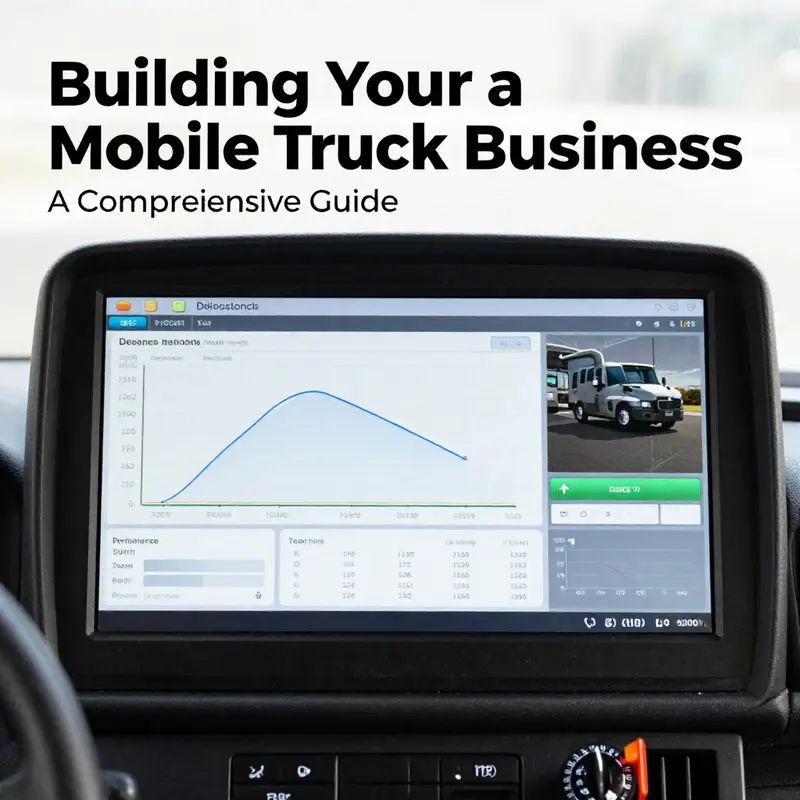
A mobile truck business thrives on momentum, but its true texture is found in the data that travels with every mile. Real-time monitoring turns movement into a disciplined practice, turning guesswork into evidence and routine into a scalable system. When a single truck office operates with a lean crew, say two or three people, every action—from order intake to delivery confirmation—has the potential to become a bottleneck or a lever. The chapter that follows treats performance as an asset you manage, not a facade you hope to maintain. It blends the practical rhythms of daily dispatch with the longer arc of growth, insisting that effectiveness now must be matched by a plan for tomorrow. This is the logic of a mobile operation that refuses to drift; it is performance that moves as smoothly as the truck itself.
Operational efficiency in a mobile context begins with process clarity. Start by tracing every touchpoint a customer experiences, from the moment a service request lands to the moment the job is signed off. In a small crew, even tiny delays ripple outward: a late arrival compresses service windows, a mismatch in paperwork slows invoicing, and a simple miscommunication can cascade into dissatisfied clients. The cure is not heroic—it is simple, repeatable routines. Map workflows on one page, identify the natural choke points, and design standard responses. A dispatch cue that automatically assigns the nearest available truck, generates a loading checklist, and pushes a digital note to the customer can shave minutes off each step. When this becomes a routine, the operation feels like a well-coordinated dance rather than a set of improvised moves. The gains compound as the same team handles more jobs without sacrificing accuracy or speed.
Vehicle health and maintenance sit alongside daily workflows as a non-negotiable pillar of performance. Telematics and onboard sensors are not luxuries; they are predictive tools that keep your trucks reliable and compliant. Real-time location tracking, fuel consumption data, and engine health alerts create an early-warning system for breakdowns. Scheduled maintenance hues into the day-to-day: oil changes, tire checks, brake inspections, and safety-system calibrations. A proactive schedule reduces unexpected downtime, extends the life of the asset, and preserves service reliability in the field. The real payoff comes when the data informs maintenance windows that align with your routes, minimizing idle time and keeping customer commitments intact. In practice, this means a maintenance calendar that triggers reminders, a simple dashboard to flag urgent issues, and a culture that views routine checks as a competitive advantage rather than a cost center.
Customer service and satisfaction emerge from the speed and transparency of communication as much as from the quality of the work performed. Real-time feedback loops—via mobile forms, SMS updates, or in-app notes—allow clients to rate responsiveness, track status, and flag concerns as they arise. Fast response times become a market signal: customers measure trust by how quickly you acknowledge a delay and present a clear next step. Even when a hiccup occurs—an unexpected detour, a piece of equipment that needs more attention than anticipated—proactive alerts to customers reduce frustration and preserve goodwill. The aim is not merely to meet a deadline but to create a communication rhythm that reassures clients, making them feel informed and valued even when the situation changes. This relational discipline often translates into repeat business and referrals, which are the most reliable forms of growth in a service-driven field.
The performance conversation extends to the software and tools that stand behind every mobile operation. If your business relies on a suite of apps for invoicing, route planning, inventory checks, or customer management, those tools must perform as reliably as the trucks themselves. App performance monitoring becomes a core capability, ensuring that a slow page, a crashing form, or a lagging map doesn’t derail a day’s work. The exact mechanics of end-to-end monitoring are technical, yet the principle is straightforward: detect failures before users notice them, alert the right people, and provide actionable diagnostics. Connecting stability to customer satisfaction, you can defend service levels with data about latency, error rates, and uptime. This is where the broader field of mobile performance monitoring intersects with field operations, offering a disciplined framework to keep digital interfaces as dependable as the people and trucks that use them. For practitioners, this means prioritizing dashboards that show real-time health across dispatch, billing, and field apps, and designing incident responses that are rapid, transparent, and tangible for clients.
As performance data accrues, the scaling conversation begins to emerge from the data itself. Scaling a mobile truck operation is not about chasing rapid expansion; it is about expanding in a way that preserves safety, quality, and customer trust. The first move is standardization. Develop clear, written SOPs for every recurring task—opening a new service location, handling a customer complaint, or initiating a multi-truck deployment. When SOPs exist, a single manager can oversee more territory and more vehicles without surrendering control. A cloud-based fleet management platform can weave GPS, scheduling, billing, and reporting into one coherent fabric, reducing manual tasks and enabling oversight across a growing fleet. The idea is to shift from a startup mentality—where improvisation is common—to a scalable model where decisions are anchored in data, process, and accountability. One manager supervising several trucks becomes feasible when routines are codified, data flows are consistent, and the organization speaks a common language about performance.
Growth, however, must be grounded in data, not desire. Expansion should be data-driven, guided by indicators such as vehicle utilization, route efficiency, and service mix in high-demand areas. Rather than a timetable of geographic spread, think in terms of density: where is demand most reliable, and where can you sustain service levels with minimal marginal cost? This approach helps prevent overextension and preserves quality in the face of growing complexity. The scaling framework also calls for a more capable team structure. As operations scale, you need mid-level managers who can supervise crews, monitor compliance, and maintain the customer experience while the original founders focus on strategy. Clear KPIs for each role—response time for dispatch, on-time completion rate, maintenance compliance, and customer rating—allow leadership to track progress without micromanaging. It is a shift from reaction to anticipation, from heroic fixes to steady, controlled growth.
Strategic partnerships and, where appropriate, franchising can accelerate growth without forcing a business to absorb all the risks of rapid expansion. Partnerships with local businesses, suppliers, and logistics networks create a pipeline of recurring jobs and shared resources. Franchising, in particular, introduces a tested model that can be replicated in new regions with reduced risk and shared standards. The core condition for any scale-up through partnerships or franchising is the ability to replicate success: you must be able to train, assess, and support new operators to maintain the same level of performance you expect from your original unit. That capability ties back to the earlier emphasis on SOPs, standardized training, and continuous performance monitoring. If the data show consistent outcomes across multiple units, scaling becomes a matter of governance and replication rather than improvisation.
The path to scale also recognizes the human factor as a strategic asset. As emphasized in broader discussions of fleet management, investing in people—the way you recruit, train, and retain operators, dispatchers, and supervisors—yields outsized returns. A mobile operation cannot rely solely on technology; it must cultivate teams capable of turning data into reliable service and confident customers. This is where the link between performance and culture becomes visible: a disciplined approach to data, safety, and customer care reinforces a culture of accountability that travels with the truck. See how the broader literature frames this as a compelling case for investing in human capital within fleet operations: transforming fleet management—the case for investing in human capital. transforming fleet management—the case for investing in human capital.
The interplay between monitoring and scaling comes full circle when you consider the customer’s experience as the ultimate performance metric. A well-monitored operation delivers consistency in every job, which translates into trust and an expanding referral network. The leader who can read the same dashboard that a field technician uses, and translate those readings into clear, strategic moves, is the leader who will steer a mobile business from a handful of trucks to a resilient, multi-location operation. Every decision—whether to add a route, adjust an SOP, or reallocate a technician—should be justified by data that ties to reliability, profitability, and peace of mind for customers. In practical terms, this means ongoing valuation of fleet utilization, maintenance costs per mile, and the ratio of on-time deliveries to promised windows. It means maintaining a frictionless customer experience even as the business diversifies its offerings or expands into new markets. It means recognizing that scaling is not just a growth metric but a guarantee that your service remains dependable, compliant, and safe.
External resource: Real-Time App Performance Monitoring: How It Works and Why It Matters – Google Cloud. This resource provides a structured view of how to implement end-to-end monitoring for mobile operations, including network, startup, page load, and crash events, ensuring your digital tools support rather than hinder field work. https://cloud.google.com/solutions/mobile-performance-monitoring
Final thoughts
Establishing a successful mobile truck business requires thoughtful planning, strategic execution, and adherence to industry regulations. By defining your niche, conducting thorough market research, crafting a detailed business plan, obtaining necessary legal licenses, and continuously monitoring performance, you position your business to thrive in a competitive landscape. Being proactive in these areas not only ensures compliance but also promotes scalable growth and operational efficiency, enabling you to deliver exceptional service to your clients.