
Starting a Box Truck Business: Opportunities and Challenges
The logistics and freight industry offers a multitude of opportunities for entrepreneurs looking to start a box truck business. As e-commerce continues to thrive, with projections indicating an increase in demand for freight services, there has never been a better time to enter this sector. Box trucks are particularly sought after for their versatility; they can be used for everything from local deliveries to larger-scale logistics operations. This presents exciting prospects for starting a business that meets the ever-growing needs of clients in transportation and distribution sectors.
However, potential business owners must also navigate a series of challenges. Managing operational costs can be daunting, as expenses for fuel, maintenance, insurance, and vehicle acquisition can erode profit margins if not carefully controlled. Additionally, establishing a steady client base can prove difficult for newcomers, as securing regular freight requires solid marketing strategies and networking within the industry. Moreover, compliance with local regulations and licensing is crucial; any failure in this area can result in significant legal repercussions.
To surpass these hurdles, prospective box truck business owners must develop strategic plans and lean into innovative logistics solutions. Market competition is fierce, and new entrants must find ways to differentiate their services to attract clients. For an in-depth guide to this multifaceted industry, consider exploring insightful resources like How To Start A Box Truck Business In 5 Steps and 5 Common Challenges When Starting a Box Truck Business. By understanding both the opportunities and challenges that lie ahead, entrepreneurs can position themselves for success in the dynamic world of logistics.
Importance of Market Research Before Starting a Box Truck Business
Market research serves as a foundational element for any business venture, particularly for those entering the box truck industry. As logistics and transportation needs evolve, understanding market demand and competition becomes crucial for success. Here’s why conducting detailed market research is vital:
Understanding Target Demographics
Identifying the right target demographics is essential for effective marketing and service offerings. In the box truck industry, the primary clients typically include:
- Logistics Companies: Demand for efficient transportation solutions.
- E-commerce Businesses: Increased shipping needs driven by the boom in online shopping.
- Construction & Engineering Firms: Require reliable transport for equipment and materials.
- Food and Beverage Distributors: Need for temperature-controlled transport for perishable goods.
A strategic focus on these sectors allows aspiring box truck businesses to tailor services that meet specific customer requirements, ensuring better engagement and sales.
Assessing Demand and Growth Potential
Recent statistics show that the box truck market is projected to grow from $12.60 billion in 2023 to approximately $17.73 billion by 2030, reflecting a compound annual growth rate (CAGR) of around 5% (source: Verified Market Research). Additionally, demand for last-mile delivery services is expected to surge by 78% by the end of this year, driven significantly by e-commerce (source: Serchen). This growth indicates that a market opportunity exists for businesses ready to meet these demands effectively.
Competing Effectively
Understanding the competitive landscape is essential in any business sector. Leading players in the box truck industry include Hino Motors and Nissan, among others. By analyzing competitors’ strengths and weaknesses, businesses can discover their unique selling propositions, whether that be pricing strategies, superior service levels, or innovative logistics solutions. For a detailed view of competitors, one might refer to reports on Global Market Insights for insights on major players and market dynamics.
Best Market Practices
To effectively carve a niche in this competitive landscape, implementing best market practices is essential:
- Leverage Technology: Using tracking and routing software can enhance service efficiency.
- Focus on Sustainability: As regulations tighten globally, adopting green practices could differentiate your business and attract conscientious consumers.
- Customer Feedback: Regularly collecting and acting on customer feedback ensures that services evolve with market needs, fostering loyal partnerships.
Conducting comprehensive market research helps new box truck businesses to strategically position themselves, understand customer expectations, and refine their offerings to respond dynamically to market changes. Such practices are not merely best practices but essential strategies for thriving in this competitive industry landscape.
Sources
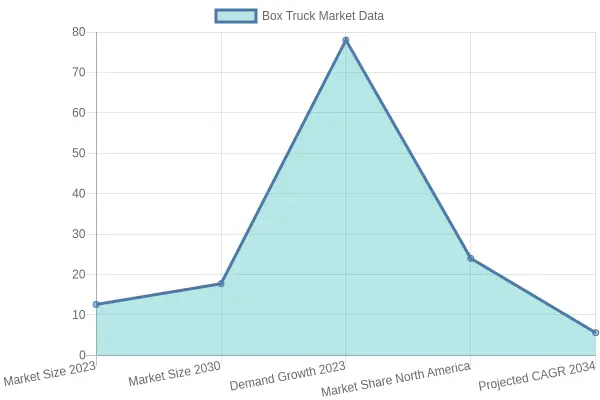
Chart: Box Truck Market Overview 2023 – 2030
This chart visualizes the key statistics regarding market growth, demand estimates, and competitors, providing insights vital for making informed decisions in this sector.
Key Statistics
| Category | Data |
|---|---|
| Market Size | Valued at $12.60 billion in 2023 and projected to $17.73 billion by 2030 (CAGR of 5%) source |
| Demand Growth | Increasing demand for last-mile delivery services expected to grow by 78% by 2023 source |
| Market Share | North America holds approximately 24% off the box truck market revenue source |
| Target Demographics | Commercial, industrial, and logistics sectors driving growth; influenced by the rise of e-commerce source |
| Competitor Landscape | Major players include Hino Motors, Nissan, and other logistics firms source |
| Projected CAGR | Expected CAGR of approximately 5.6% through 2034 source. |
Necessary Licenses and Permits for Operating a Box Truck Business
Establishing a box truck business involves navigating a variety of licenses and permits that vary by state and region. Below is a comprehensive list detailing the essential requirements for running a box truck business:
-
Business License: Most states mandate a general business license for operations. This license typically costs between $50 to $400, depending on the state.
-
Commercial Driver’s License (CDL): If your box truck has a gross vehicle weight rating (GVWR) that exceeds 26,001 pounds, a CDL is required. The cost for obtaining a CDL can range from $50 to $200, alongside training expenses that may exceed $1,000.
-
Special Permits: If your operations involve transporting hazardous materials or if you’re crossing state lines, additional permits are necessary. The fees for such permits can vary widely; hazardous materials permits may carry a fee of up to $300.
-
Insurance: Every box truck operation requires commercial vehicle insurance, which can cost between $1,200 to $4,500 annually, depending on various risk factors.
-
State-Specific Regulations: Regulations can differ substantially; for instance, California has stringent emissions standards while Texas may have looser regulations. It’s crucial to verify specific requirements in each state you operate in. Consulting local business agencies can provide clarity.
-
Tax Permits: Depending on your business structure, you may be required to obtain certain tax permits. These permits help ensure compliance with state tax regulations and can involve fees of $50 or more, depending on the state.
Steps to Obtain Licenses and Permits
- Research Local Requirements: Investigate specific requirements in your operating states through their Department of Transportation or Small Business Administration offices.
- Gather Necessary Documents: Prepare the necessary documents, including identification, proof of business registration, and any other specific documents required by the state.
- Complete Applications: Fill out applications accurately and submit them to the appropriate authorities.
- Pay Applicable Fees: Ensure timely payment of any fees associated with the licenses and permits.
- Renewal and Compliance: Stay updated with renewal requirements and compliance regulations to avoid any potential fines or penalties.
Navigating the process can be intricate; for more assistance, consider checking out resources on obtaining the needed permits, such as the Federal Motor Carrier Safety Administration top guidelines. Properly securing these documents will ensure you operate legally and efficiently, setting a sound foundation for your business growth.
| Box Truck Model | Maximum Payload Capacity (lbs) | Size (Length) | Fuel Efficiency (MPG) | Ideal For |
|---|---|---|---|---|
| Ford E-Series | 2,000 – 4,000 | 12-26 feet | 10-14 | Local deliveries, logistics |
| Freightliner M2 | 2,500 – 8,000 | 12-26 feet | 10-12 | Freight transportation, construction |
| Isuzu NPR | 3,000 – 5,000 | 12-20 feet | 12-15 | Urban deliveries, beverage distribution |
| Hino 268 | 5,000 – 7,000 | 20-26 feet | 10-12 | Heavy-duty freight, logistics |
| Chevrolet Express | 2,000 – 4,000 | 12-16 feet | 11-15 | Small businesses, catering |
Top Choices for Logistics and Freight Companies:
- Freightliner M2: Known for its durability and larger payload capacity, making it suitable for heavy-duty transportation.
- Hino 268: Offers a good balance between payload and efficiency, often preferred in the logistics sector.
For more detailed strategies on how to successfully penetrate the box truck business, you may find it helpful to learn more about industry expansion strategies and innovations in logistics.
Starting a box truck business requires substantial financial investment. Understanding various financing options is crucial for ensuring that you have the resources needed to succeed in this competitive industry. Here, we discuss three primary financing options: loans, leasing, and grants, along with their eligibility criteria and application processes.
1. Loans
Business Loans are a common method to finance a box truck business. Both traditional banks and online lending platforms offer a variety of loans tailored to business needs.
-
Eligibility:
-
A strong credit score (typically above 650).
-
Established business history or a detailed business plan for startups.
-
Revenue projections to demonstrate your ability to repay the loan.
-
Application Process:
-
Prepare necessary documentation, including business plans, financial statements, and tax returns.
-
Submit the application along with supporting documents.
-
Await approval, which can take a few days to several weeks.
By securing a loan, you can maintain ownership of your trucks and build equity in your business. For more insights on how companies successfully expand their operations, consider reviewing UPS’s healthcare expansion initiative.
2. Leasing
Leasing is another viable option for acquiring box trucks. This method allows businesses to use trucks without committing to full ownership upfront.
-
Eligibility:
-
Generally requires a good credit score and may involve lower thresholds compared to loans.
-
Leasing companies often consider your business revenue and history.
-
Application Process:
-
Provide financial information and possibly personal credit details.
-
Review leasing agreements carefully to understand terms, mileage limits, and maintenance responsibilities.
-
Sign the agreement and begin using the truck immediately.
Leasing can be advantageous by preserving cash flow, allowing you to invest in other areas of your business.
3. Grants
Grants are less common but still a financing option. They are typically provided by government agencies or non-profit organizations aimed at promoting small business growth and innovation.
-
Eligibility:
-
Varies significantly by grant; often requires you to meet specific criteria related to industry, business size, or geographic location.
-
Many grants are aimed at women- or minority-owned businesses or sustainable and eco-friendly initiatives.
-
Application Process:
-
Research available grants and their requirements.
-
Prepare a detailed application, often requiring a business proposal and justification for funding.
-
Submit your application before the deadline and await a decision, which could take several months.
While highly competitive, grants are a form of funding that does not require repayment, making them highly desirable.
In conclusion, the choice among loans, leasing, and grants depends on individual business needs, creditworthiness, and long-term goals. For further insights into economic conditions affecting the trucking industry and financing solutions, consider exploring economic challenges in the trucking industry.
By carefully evaluating these options, aspiring box truck business owners can secure the necessary funding to launch their operations effectively.
Best Practices for Managing Logistics and Operations in a Box Truck Business
In the box truck business, effective management of logistics and operations is crucial for maintaining efficiency, reducing costs, and providing high-quality service to clients. Here are recognized best practices for managing these complex areas.
Optimizing Routes
- Use Route Optimization Software: Leverage technology such as GPS-based route optimization software. This can help identify the most efficient routes, minimizing travel time and fuel consumption, which is essential for supporting fleet profitability.
- Regularly Review Routes: Regularly analyze and update routes based on traffic patterns, seasonal changes, and customer feedback to ensure that transportation remains efficient.
- Consider Load Optimization: By understanding cargo weight and volume, businesses can maximize truck space effectively, ensuring that deliveries are completed in fewer trips.
Performance Metrics
To monitor the efficiency of your logistics operations, consider these key performance indicators (KPIs):
- Delivery On-Time Rate: This metric measures the percentage of deliveries completed on schedule, reflecting driver efficiency and route planning.
- Fuel Efficiency: Track miles per gallon (MPG) or kilometers per liter to assess fuel consumption across your fleet, using this data to predict costs and make improvements.
- Accidents and Incidents Rate: Monitoring safety metrics helps in managing driver performance and ensuring safety protocols are followed, which is crucial for reducing insurance costs and maintaining fleet integrity.
Managing Drivers
- Driver Training Programs: Continuous training not only secures compliance with safety regulations but also boosts driver morale and job performance. Implement programs focusing on safety, customer service, and efficient driving techniques.
- Regular Performance Reviews: Conduct regular reviews to assess driver performance, providing them with constructive feedback and incentives for outstanding performance, which encourages loyalty and improved service.
- Flexible Scheduling: Understanding the importance of work-life balance can improve driver retention rates. Implement a scheduling system that respects drivers’ time and provides adequate rest periods.
Leveraging Technology
Incorporating technology into logistics operations can aid in achieving better efficiency and tracking:
- Telematics Systems: These systems offer real-time data on vehicle location, driver behavior, and logistics management, allowing for informed and instantaneous adjustments to operations.
- Fleet Management Software: Utilize software solutions that facilitate real-time tracking and management of logistics tasks, enhancing coordination and reducing delays.
By implementing these practices, a box truck business can enhance its operational logistics, paving the way toward greater profitability and improved customer satisfaction. For those looking to expand or optimize their fleet operations, learn more about industry innovations that can further support growth.
Make informed decisions regarding operational management, and embrace these best practices to cultivate a successful box truck business environment.
Conclusion
Adopting thorough and well-documented logistics practices will not only boost operational effectiveness but also foster better relationships with clients, ultimately ensuring the long-term success of the box truck business.
“The increasing reliance on e-commerce has propelled the growth of the box truck market. Box trucks are versatile and cost-effective, aligning perfectly with the demands of last-mile delivery. Their flexibility and adaptability make them an essential component in logistics and fleet management strategies.”
This quote summarizes the industry’s recognition of box trucks as a growing asset in logistics, reflecting their advantages in efficiency and cost. For further reading on the economic trends related to the trucking industry, check out our article on economic challenges and federal measures.
Box Truck Industry Growth Trends
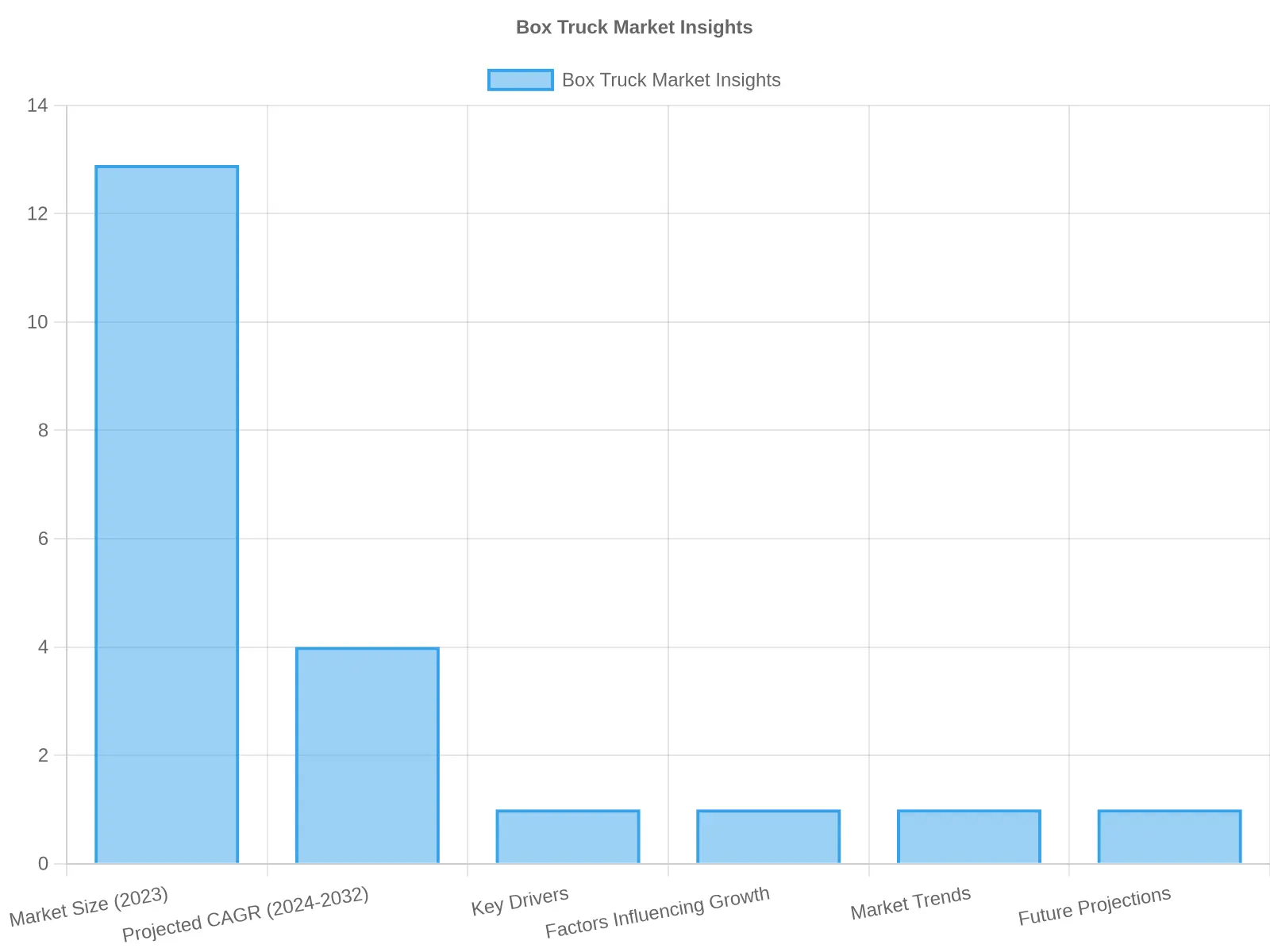
The box truck industry has witnessed significant growth over the past five years, driven primarily by factors such as increasing e-commerce demand, urbanization, and advancements in vehicle technologies. An analysis of industry statistics reveals that the market size is projected to reach approximately USD 12.9 billion by the end of 2023, with a compound annual growth rate (CAGR) of about 4% from 2024 to 2032.
Key Drivers of Growth:
- E-commerce Demand: The boom in online shopping has necessitated better last-mile delivery solutions, where box trucks play a crucial role.
- Urbanization: Expanding urban areas have increased the need for efficient transportation methods, further promoting box truck usage.
- Technological Advancements: Innovations in vehicle design and powertrain technologies have led to more efficient and spacious box trucks that meet modern logistical demands.
Factors Influencing Growth:
- Government Incentives: Initiatives for clean transportation are encouraging the adoption of newer, fuel-efficient box trucks.
- Consumer Behavior Shift: More businesses are choosing box trucks for delivery and logistics, prompting a change in supply chain processes.
Market Trends:
- Rise in light-duty box trucks.
- Growing demand for refrigerated transport.
- Innovations in vehicle technology and design.
Future Projections:
The box truck industry is expected to continue its growth trajectory driven by advancements in technology, ongoing urbanization, and the persistent rise of e-commerce operations.
For those interested in an in-depth analysis of industry development, check out this article on UPS’s significant revenue growth to understand how logistics companies are adapting to market changes.
Conclusion and Call to Action
Starting a box truck business is not just an endeavor; it’s a strategic move that can redefine your operational capabilities in the logistics sector. As discussed, preparation and execution play crucial roles in successfully entering this industry. Having a solid business plan, understanding the nuances of operating a box truck, and recognizing market demands can propel you towards success. The advantages of running a box truck business extend beyond just lowering overhead costs; they encompass flexibility, various market opportunities, and the ability to diversify your service offerings, making it an attractive option for entrepreneurs.
Furthermore, the importance of a well-structured strategy cannot be overstated. Identifying your niche, comprehending your target audience, and developing customer relationships are core to your success. Engaging in thorough research, as well as keeping abreast of industry trends, will support your business’s sustainability and growth in an increasingly competitive landscape.
Moreover, as the logistics sector continues to evolve-especially with the rise of e-commerce-the demand for box trucks remains robust. By preparing strategically, you can position yourself to not only enter the market but thrive within it. The financial viability linked with the box truck business model highlights its potential return on investment compared to traditional models.
In conclusion, if you are contemplating starting your own box truck business, do so with a strategy that integrates preparation and market understanding as pivotal elements. To further explore how you can enhance your box truck business with high-quality equipment and solutions, visit Summit Fairings, where you can find resources tailored to meet your fleet management needs. Don’t wait any longer-take that first step towards transforming your logistics capabilities today!