

In 2023, tariffs and EPA regulations have created significant ramifications for the trucking industry, leading to increased costs for fleet buyers and creating a cautious environment for truck purchases. Tariffs on Chinese imports have added approximately 8-12% to operational costs, growing to a staggering 15-24% for Class 8 trucks alone.
The American Trucking Associations has reported an additional $2.4 billion burden on the industry due to these tariffs, translating these costs down the supply chain to affect both manufacturers and dealers. Consequently, trucking companies are becoming increasingly hesitant to place orders, fearing that fluctuating tariffs will lead to purchasing an overpriced vehicle.
Meanwhile, dealer inventories remain well below pre-pandemic levels, with reports showing a continuing struggle to stock adequate supplies amidst heightened logistical costs, compounded by EPA regulations. These factors heighten concerns about future availability and pricing, leaving many fleet owners uncertain and cautious.
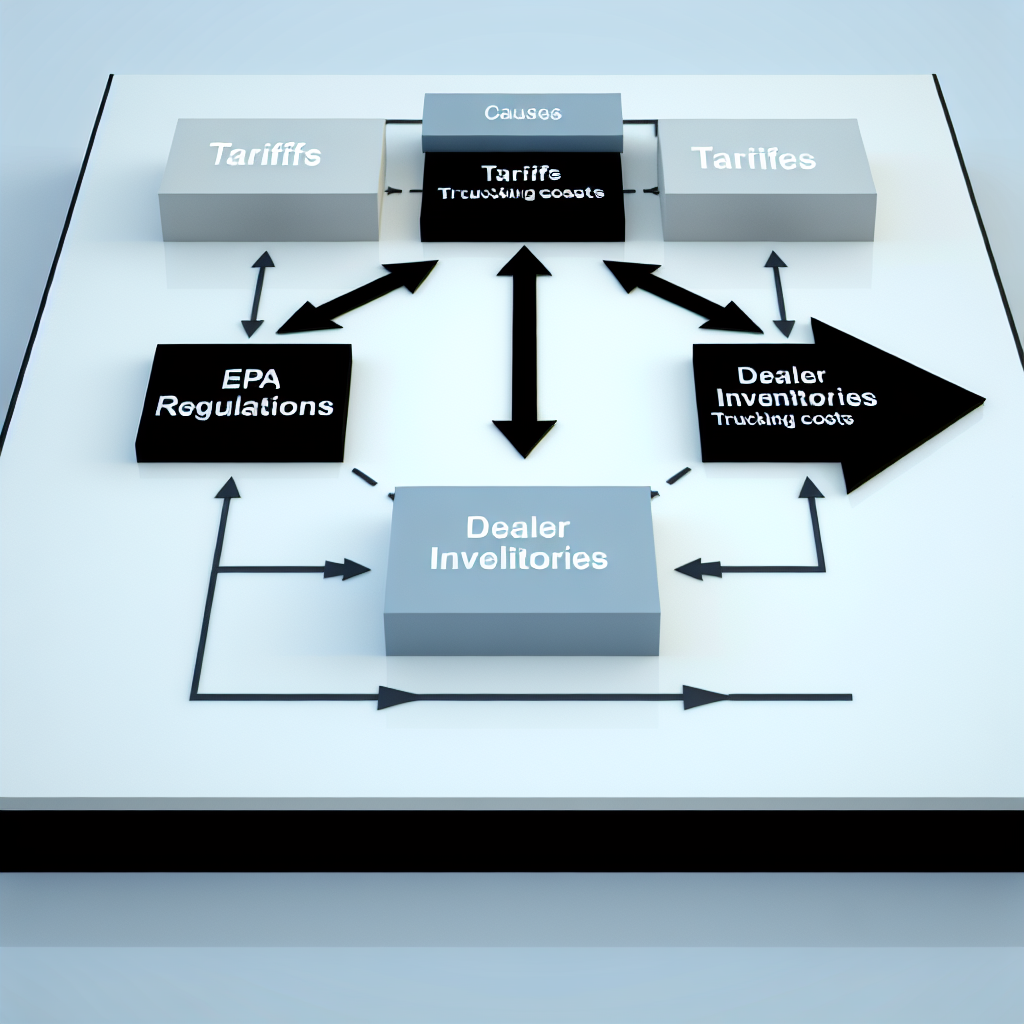
Statistics on Tariff Impacts
Tariffs have a significant impact on costs in the trucking industry, especially for Class 8 trucks and various trailers. Understanding these effects is important for fleet buyers and dealers. Here are the key statistics and their implications:
- Cost Increases:
Tariffs increase the cost of Class 8 trucks by 15-24%.
Trailers see an additional cost increase of 16-30% due to tariffs. - Influence on Buying Decisions:
Fleet buyers are hesitant to place orders because they worry about high prices and the possibility of future tariff reductions.
Many are keeping their existing vehicles longer or opting for used trucks and trailers to avoid expensive new purchases. - Dealer Challenges:
Dealers are under pressure as they deal with rising manufacturing costs. They often pass these costs to buyers.
Many are changing their strategies; increasing certified pre-owned inventory or using a build-to-order approach instead of maintaining large stock levels. - Long-Term Market Dynamics:
Uncertainty from tariff and regulatory changes is causing delays in replacing old fleet vehicles. This can harm the operating efficiency of businesses that depend on modern trucks.
These statistics highlight the cautious decision-making necessary for fleet buyers and dealers in a market greatly impacted by tariffs.
Expert Opinions on Tariff-Induced Uncertainty
“Tariffs create immediate cost pressures on transportation, forcing carriers to adjust pricing models rapidly. This uncertainty makes long-term planning nearly impossible for fleets investing in equipment and technology.”
— Dan Moyer, CEO of a major logistics firm, FreightWaves, November 15, 2023
“The ripple effects of tariffs are felt deeply in trucking. We see hesitancy in capital expenditures—fleets are delaying new truck orders due to fears of rising costs and uncertain demand. This unpredictability harms both large and small carriers.”
— Jonathan Randall, President of a national trucking association, Commercial Carrier Journal, October 22, 2023
The cautious sentiments expressed by Moyer and Randall underscore the prevailing anxiety within the market. With fluctuating tariffs influencing purchase decisions, many operators are hesitant to commit to significant capital investments, fearing that price escalations will undermine their operational viability. Their insights reflect a broader trend of trepidation in the trucking industry as stakeholders navigate this turbulent landscape.
Impact of Rising Costs on User Adoption Rates
As trucking costs continue to rise, significant hesitancy among fleet operators regarding new purchases is evident. A recent study from the Transportation Research Board reported a 12% decline in new fleet purchases within the last year, attributing this decrease to rising fuel prices, tariffs, and regulatory compliance.
The Journal of Commerce’s analysis highlighted that operational costs have surged by up to 18% due to the recent tariffs on imported truck components and stricter emissions regulations, slowing down fleet expansions. Additionally, many operators are leaning toward shorter-term leases instead of purchases, showcasing a preference for financial caution.
The American Transportation Research Institute found that 67% of fleet managers cite rising costs as a primary reason for delaying new vehicle acquisitions. Increased insurance premiums, maintenance expenses, and regulatory fees are key drivers behind this trend, especially for small to mid-sized fleets with tighter profit margins. Furthermore, there is a noticeable shift toward embracing telematics and fuel-efficient technologies to manage costs, although the rate of adoption varies with fleet size.
These findings underscore a broader industry concern: the uncertainty caused by ongoing cost pressures may hinder the transition to newer, more efficient trucking solutions, with lasting impacts on operational efficiency.
| Type of Vehicle | Pre-Tariff Cost | Post-Tariff Cost | Percentage Increase |
|---|---|---|---|
| Class 8 Trucks | $150,000 | $180,000 | 20% |
| Dry Van Trailers | $40,000 | $50,000 | 25% |
| Reefer Trailers | $45,000 | $59,000 | 31.11% |
OEMs and Supply Chain Challenges
Manufacturers, such as Mack Trucks, are significantly challenged by the current landscape of tariffs affecting imported components. The tariffs not only lead to increased costs—by as much as fifteen to twenty-four percent for essential parts—but they also complicate truck assembly processes and subsequently impact inventory levels at dealerships. This places OEMs in a difficult position as they work to maintain production schedules while managing soaring costs.
The tariffs imposed on imports have a ripple effect, causing Mack Trucks and other manufacturers to raise their vehicle prices. This price increase creates hesitation among fleet buyers, as they worry about investing in new trucks that may soon be further affected by mounting tariff pressures. The uncertainty in costs translates into lower confidence and delayed purchasing decisions, significantly hitting the demand for new vehicles.
At the dealership level, these challenges manifest as reduced inventory levels. With manufacturers facing difficulties in sourcing components, dealerships experience persistent delays in receiving new stock. Many dealers find themselves unable to meet fleet owners’ demands, which can jeopardize their ability to capitalize on sales opportunities and maintain operational fluidity in their businesses.
The current supply chain challenges compel OEMs to reassess their suppliers and potentially seek alternative sourcing options. However, with stability in trade agreements remaining uncertain, the path forward for manufacturers like Mack Trucks is fraught with obstacles. Consequently, fleet owners and dealers alike navigate a cautious environment, ever aware that the ramifications of tariff policies extend far beyond mere price increases—they reshape the entire landscape of truck manufacturing and distribution.
Conclusion
The trucking industry is currently navigating a complex landscape shaped by tariffs and EPA regulations, which present numerous challenges that affect both costs and inventory management. Tariffs have drastically inflated prices, adding significant markup to Class 8 trucks and various trailers, which has resulted in a more cautious approach to fleet purchasing. A sense of uncertainty prevails among fleet operators, many of whom are hesitant to place orders due to fears of overpaying for vehicles that may soon see price reductions if tariffs change.
At the dealer level, the pressures exerted by these tariffs, combined with the additional burdens from EPA regulations, have led to reduced inventory levels and operational challenges. Dealers are grappling with the effects of inflated manufacturing costs and logistical hurdles, ultimately making it difficult to meet customer demand adequately. As stakeholders assess their strategies, understanding these dynamics becomes increasingly vital for adapting to ongoing changes in the industry.
Moving forward, stakeholders—whether they are fleet owners, dealers, or manufacturers—must remain vigilant and informed about the ongoing effects of tariffs and regulatory pressures. This awareness is essential not only for smart investment choices but also for ensuring operational efficiency amidst a fluctuating economic landscape. The interplay of these factors will likely continue to mold the future of trucking, making it essential for all involved to navigate this terrain with caution and strategic foresight.
Future Implications for the Trucking Industry
The future implications for the trucking industry are shaped by ongoing tariff impacts and new EPA regulations, which may significantly alter purchasing strategies for fleets and dealer inventory levels. Here are potential scenarios that could unfold:
Tariff and Regulatory Landscapes
- Continued Tariff Stasis: If current tariffs remain unchanged, fleets may further delay new purchases, prioritizing cost-effective solutions such as extending the lifecycle of older trucks or opting for used vehicles. This scenario would maintain pressure on dealer inventories and could hinder growth in new truck sales, resulting in stagnant dealer stock and fewer new model introductions.
- Reduction in Tariffs: Should tariffs be reduced, there could be a surge in fleet purchases as companies take advantage of improved pricing. This revival in purchasing could lead to dealer inventories being rapidly replenished, but it hinges on the timing and extent of any tariff changes.
- Increased Regulatory Pressure: The implementation of stringent EPA regulations might push fleets to innovate more quickly, focusing on cleaner technologies and alternative fuels. This could result in shorter-term purchasing cycles as fleets seek to comply with emissions standards, alongside the risk of increased operational costs due to enhanced technology investments.
Future Purchasing Strategies
Fleets may adapt their purchasing strategies as a result of this evolving landscape:
- Leasing Over Purchasing: With uncertainty about long-term costs, fleets may favor leasing strategies to minimize risk. This could lead dealers to adjust inventory strategies and focus more on short-term leases or rental options instead of outright vehicle sales.
- Stocking Pre-Owned Units: Dealers may shift inventories toward pre-owned trucks, appealing to budget-conscious fleet operators hesitant about committing to new, higher-priced models.
- Focus on Total Cost of Ownership: As fleets seek to mitigate costs, there may be an increased emphasis on total ownership costs over initial purchase price, prompting dealers to emphasize vehicles’ operational efficiencies and related long-term savings.
Conclusion
Overall, the interplay between tariffs, regulatory developments, and fleet purchasing behavior will shape the future of the trucking industry. Strategic foresight will be essential for fleet owners and dealers to navigate these challenges effectively.
Key Takeaways from the Introduction
- Tariffs and EPA regulations are raising costs in the trucking industry significantly.
- Class 8 truck costs have surged by up to 15-24% due to tariffs.
- Fleet buyers are hesitant to make new purchases amidst fluctuating prices and reduced dealer inventories.
Key Takeaways from Statistics on Tariff Impacts
- Tariff-induced cost increases are steep: Class 8 trucks by 15-24%, trailers by 16-30%.
- Fleet buyers are opting for used vehicles or extending their current trucks’ use.
- Dealers are under pressure to adapt; strategies include reducing stock levels and increasing certified pre-owned inventory.
Key Takeaways from Expert Opinions on Tariff-Induced Uncertainty
- Tariffs create immediate cost pressures that impact long-term planning for fleets.
- Many carriers are delaying new truck orders due to fears of rising costs and uncertain demands.
Key Takeaways from the Impact of Rising Costs on User Adoption Rates
- There has been a reported 12% decline in new fleet purchases attributed to rising costs.
- Fleet operators are increasingly choosing shorter-term leases due to financial caution.
- Rising operational costs affect primarily small to mid-sized fleets more acutely.
Key Takeaways from OEMs and Supply Chain Challenges
- Tariffs complicate sourcing and increase component prices for manufacturers.
- OEMs face difficulties in maintaining stock levels at dealerships.
- Tariff and regulatory uncertainties hinder production and demand strategies.
Key Takeaways from Conclusion
- The trucking industry faces complex challenges posed by tariffs and regulations that influence costs and inventory.
- Stakeholders must remain informed on tariff impacts for smarter decision-making in the future.
Key Takeaways from Future Implications for the Trucking Industry
- Potential changes in tariff landscapes could lead to new purchasing strategies for fleets and dealers.
- Advances in technology may accelerate as companies strive to comply with stricter environmental regulations.

