
The trucking industry plays a pivotal role in the U.S. economy, linking producers with consumers. However, recent trends indicate that many trucking companies, particularly small and mid-sized firms, are facing insurmountable challenges that lead them to close their doors. The confluence of a persistent driver shortage, high operational expenses, and competitive pressure has created an unstable environment, causing hundreds of businesses to exit the market annually. This article will explore the complexities surrounding trucking company closures, starting with the profound effects of the driver shortage, followed by a discussion of financial pressures and rising operational costs that further exacerbate this crisis. Understanding these dynamics is crucial for logistics, construction, fleet management, and distribution firms looking to adapt and thrive amidst these changes.
The Quiet Exodus on the Open Road: Tracing How Many Trucking Companies Are Leaving the Industry and Why It Matters
The question of how many trucking companies are going out of business rarely yields a neat, official census. Instead, the road to understanding is paved with signals rather than stop signs: a steady drift in the number of small and mid-sized carriers, a thinning of new entrants, and a growing concentration of freight capacity among larger fleets and asset-light operators. As of early 2024, federal data showed more than 120,000 motor carriers still active in the United States, a sizable pool by any standard. But the same streams of data also traced a different current beneath that mass: the rate at which small and medium firms exit the market has been rising, and the rate at which new entrants reappear has slowed dramatically. Put simply, the industry is in a mode of consolidation, and the “how many” question is less about a fixed tally than about structural shifts that reshape competition, service reliability, and the very texture of daily operations for anyone involved in freight transport.
In this scene, two threads stand out. The first is a labor story that has not yet found a clean fix. The trucking industry has been grappling with a persistent driver shortage and a retention crisis for years. Demand for freight remains robust, even during some cyclical slowdowns, but attracting and keeping qualified drivers has proven harder than many observers anticipated. The workforce is aging, with many veteran drivers nearing retirement, while younger workers often express concern about the profession’s demanding schedules, high stress, and time away from home. Even when fleets succeed in hiring, high turnover erodes the benefits of that investment, forcing continuous training and reducing peak fleet efficiency. Inside this dynamic, owner-operators frequently exit corporate fleets to strike out on their own, drawn by the appeal of higher per-mile pay. They assume greater personal financial risk, yet they also seek the flexibility that can be scarce in a company environment. The net effect is a battering ram against steady, scalable capacity, which makes it harder for smaller carriers to sustain profitability in a market that prizes efficiency and reliability over all else.
The second thread is cost—intense, persistent, and unevenly distributed. Fuel, insurance, maintenance, and regulatory compliance costs have all moved higher in a climate of rising risk and tighter financial controls. Margins breath shallowly even in good years, and many smaller operators simply cannot absorb sudden spikes in operating expenses without cutting services, trimming maintenance, or raising rates—a move that can trigger a spiral of lost customers and diminished revenue visibility. The administrative burden of compliance, from electronic logging to routine inspections, adds to overhead and reduces the cushion available for weathering economic shocks. In a market where every decision is a trade-off—truck utilization vs. downtime, on-time performance vs. driver satisfaction, price competitiveness vs. long-term contractual relationships—the smallest players often face the sharpest penalties for miscalculation.
Against this backdrop, a common refrain among industry observers is not just about counting exits but about understanding what those exits reveal about the health and direction of the sector. Some analysts describe a “regionalization” of capacity, with trucks migrating toward more favorable routes, lanes, and customer bases where rate structures feel more predictable and cash flow is steadier. Others describe a quietly evolving business model, in which surviving firms invest more heavily in cost control, technology, and people. It is not an either/or scenario; rather, it is a spectrum in which the bottom tier of operators—those with thin buffers, narrow revenue diversity, and limited access to capital—tends to depart sooner, while more resilient players adjust, adapt, or convert strategies to weather inhospitable conditions.
The data from the U.S. Department of Transportation’s Federal Motor Carrier Safety Administration (FMCSA) offer a nuanced portrait. While the number of active motor carriers remained substantial in 2024, the rate of new entrants has sharply declined, and the number of companies exiting the market has accelerated. This pattern points to a sector undergoing consolidation, where scale, financial resilience, and the ability to navigate compliance and risk become decisive determinants of survival. The implications extend beyond the balance sheet; they ripple through service reliability, regional capacity, and the ability of shippers to move goods with predictable timetables. In practical terms, when a cluster of small operators disappears from a lane, the market’s response is immediate: capacity tightens, rerouting becomes more costly, and relationships with carriers—a pattern established over years—must be renegotiated with new fleets that may have different service profiles, reliability metrics, and response times.
When we add the labor angle to the cost calculus, the picture thickens. The driver shortage is not a temporary hurdle but a structural challenge with multiple roots. Retirement waves intersect with a shrinking pool of younger workers attracted by the perceived path of other industries. The profession’s reputation for long hours, high stress, and limited time at home shapes the pipeline that feeds fleets with new talent. For fleets that rely on precise scheduling and dense, multi-stop routes, even modest turnover rates can degrade fleet productivity and increase per-mile costs. The result is a cycle: difficulty in recruiting and retaining drivers translates into higher recruitment and training costs, longer downtime for new hires to reach full productivity, and more expensive insurance and maintenance as risk profiles shift upward. These dynamics are especially painful for small operators who lack the geographic diversification and cash buffers of larger, asset-heavy carriers.
Within this ecosystem, the strategic choices that fleets make to survive become more telling than any single price metric. For some, the answer lies in tighter financial discipline: renegotiating coverage, auditing spend across suppliers, and pursuing group purchasing options through industry associations to reduce the per-unit cost of insurance and other critical inputs. For others, success hinges on technology—telemetry, route optimization, predictive maintenance, and data-driven fleet management—that squeezes efficiency from existing equipment and reduces costly downtime. The broader trend is toward a more deliberate, risk-aware form of scale: not simply bigger, but better insulated against the shocks that periodically rattle the sector.
In this context, a deliberate emphasis on human capital becomes central. At its core, trucking is a people business. The puzzle of driver shortages cannot be solved by price signals alone; it requires investment in the very people who keep freight moving. Several fleets have turned to programs that strengthen the employment experience, from more predictable schedules and improved home time to better pay structures and clearer career ladders. In the long run, such investments tend to improve retention, lower training costs, and raise the quality of service. The narrative around “going out of business” often obscures a subtler transfer of capacity from fragile, under-resourced operators to more resilient, people-centered organizations. When smaller operators fail to adapt, capacity leaves the market in a way that can be abrupt and destabilizing, but it also creates room for other players to grow more thoughtfully.
To illuminate this arc, consider the practical pathways that seem most associated with firms that survive while others depart. Some companies have pursued aggressive audits of their insurance programs, seeking out coverage structures that align with actual risk rather than historical assumptions. Others have formed collaborative purchasing groups to secure more favorable terms and more predictable pricing in an environment where insurance costs can swing with claims experience and regulatory expectations. These are not mere cost-cutting tactics; they are acts of strategic risk management designed to preserve service continuity and protect wage and maintenance investments that keep the fleet productive. When we connect these moves to the labor equation, the logic becomes coherent: stabilize the workforce, reduce the friction of compliance costs, and you create the conditions under which the remaining capacity can support a stable and reliable network of customers.
One way to anchor this discussion is to view the industry as a living system rather than a ledger of firms. Each exit ripples through the driver market, the fleet mix on a given lane, and the willingness of shippers to commit capacity well in advance. The exits themselves are not an indictment of the entire sector; they reflect a reckoning with structural pressures that have been building for years. The smaller the operator, the more acute the exposure to a single shock—an uptick in fuel prices, a sudden regulatory fee, a spike in insurance premiums, or a major maintenance setback. By contrast, larger fleets with deeper capital and more diversified customer bases can set boundaries around risk, reallocate assets to high-return routes, and absorb volatility that would otherwise force the trade-off between service quality and profitability.
This is not to romanticize a handful of giants that supposedly hold all the cards. It is to acknowledge that the industry’s health depends on the interplay between capacity, reliability, and resilience. The firms that endure tend to combine a disciplined cost structure with strategic investments in people and technology. They avoid overreliance on a single revenue stream or geography and instead diversify exposure across lanes, customers, and service profiles. They also invest in the culture of safety and continuous improvement that underpins a low-accident, high-utilization fleet. In practical terms, this means more consistent maintenance, better driver training, and a more transparent relationship with customers about lead times, variability, and contingency planning. When shippers experience fewer service disruptions and more predictable costs, the incentive to consolidate capacity around larger operators grows stronger.
It is crucial to avoid treating the “exits” as a uniform verdict across the entire industry. The fabric of trucking is not a monolith; it is a mosaic of regional realities, fleet sizes, and market niches. Some regions may see more exits as capacity tightens on specific corridors or as regulatory burdens accumulate in particular states. Others may prosper as mature markets for last-mile or regional hauls offer resilience even in tougher macroeconomic cycles. The challenge for readers—whether you are a carrier executive, a broker, a shipper, or a policy analyst—is to translate these macro signals into actionable risk assessments. What matters is not only the number of firms leaving but the speed, direction, and texture of capacity movement across lanes and regions. And that, in turn, informs strategic choices about hiring, pricing, service design, and partnerships.
From a policy and industry-structure perspective, the current trajectory foreshadows a future in which capacity is more concentrated and more specialized. The companies that survive are those that can couple strong cash flow with the flexibility to adjust to demand fluctuations, the willingness to invest in people and technology, and a governance framework that values safety, compliance, and continuous improvement. In the short term, smaller operators who struggle to meet these standards face outsized risk, and their exits will be felt in rate volatility, service reliability, and the cadence of freight movements across key supply chains. In the longer term, the consolidation trend could yield a more resilient core of carriers that can sustain critical freight networks through uncertain times. The question remains not just how many will exit but what this consolidation means for the price, speed, and reliability with which goods move from producers to consumers—and how the industry will adapt to sustain growth while maintaining service standards that freight buyers depend on.
To those who manage fleets, plan logistics, or freight budgets, these dynamics carry a straightforward implication: prepare for variability as a lasting condition rather than a temporary blip. Build capacity that can weather a range of demand scenarios, not just the most favorable ones. Prioritize people: recruiting, training, and retaining drivers will be the most durable competitive advantage in an era of shifting capacity. Seek partnerships that reduce risk—whether through shared services, group purchasing, or co-op arrangements that compress insurance costs and maintenance expenses. Invest in technology that yields measurable gains in utilization and reliability, but do so with clear governance about cybersecurity, data ownership, and the human aspects of digital transformation. In a business where a single bad week can erase weeks of profits, these are not optional luxuries; they are survival tactics wrapped in the language of efficiency and customer service.
For readers seeking more depth on the structural forces shaping carrier closures and labor dynamics, technical analyses and regulatory context continue to point in the same direction. A broader, evidence-based frame is essential because the question of “how many” is, at its core, a proxy for how the industry is adapting to a world of elevated risk, evolving work norms, and the emergence of new operating models. The FMCSA data, the industry press, and the experience of individual carriers converge on a single truth: this is a period of strategic recalibration more than a simple cyclical downturn. Those who persevere will do so by aligning cost discipline with capabilities that other operators cannot easily replicate—most notably, a committed and well-supported driving workforce, a robust safety culture, and a carefully managed network of customers and partners who share the value of predictable service.
If there is a practical takeaway for executives and managers, it is this: the exit rate among small and mid-sized carriers is a signal, not a verdict. It signals where inputs are insufficient to sustain a given business model, and it signals which leverages—people, technology, and disciplined risk management—have the power to reshape outcomes. The industry’s future will likely feature fewer, but stronger, regional players who can deliver dependable capacity and stable service levels in the face of volatility. Those who remain committed to people-centered practices, precise cost control, and intelligent deployment of technology will be best positioned to translate the macro shifts into sustainable, day-to-day competitiveness. The road to that future runs through a more intentional understanding of risk, a more deliberate investment in human capital, and a willingness to rearchitect networks so that capacity aligns with demand in a way that preserves reliability for shippers and fairness for drivers.
To connect the dots between strategy and practice, consider the path of leadership within fleets that have chosen to invest in people as a core capability. The argument is not simply that happier drivers perform better; it is that a workforce that feels valued is less prone to churn, requires less retraining, and contributes to a tighter, more predictable operation that can weather external shocks with greater composure. There is growing evidence that this approach translates to measurable outcomes in safety, maintenance scheduling, and on-time performance—outcomes that, in turn, influence customer satisfaction and contract stability. The real payoff is durable capacity: the ability to maintain a reliable backbone of trucking service even when the wider market is volatile. In the end, the quiet exodus is not only about losses. It is also about how much of the industry’s long-term capacity is preserved through disciplined, human-centered leadership, and how much is recaptured by those who learn to blend cost discipline with the kind of investments that elevate the work and the people who do it.
For readers who want to explore a concrete pathway to strengthen a fleet in this environment, a practical step is to engage with resources and communities focused on people-first leadership in trucking. A notable example is the emphasis on investing in human capital as a cornerstone of strategic resilience. Investing in People—A New Path for Trucking Fleets offers a perspective on how fleets can reframe workforce development as a revenue protection strategy, not merely a cost center. By elevating recruitment, training, and career development, fleets can build a more stable and capable driver pool, better maintenance discipline, and more predictable service delivery. This approach also has the potential to soften the negative feedback loop that drives small operators out of business, by providing a clear, attainable ladder from entry to experienced roles, with measurable improvements in safety and reliability along the way.
As readers digest these dynamics, it remains essential to anchor expectations in data and in the evolving regulatory landscape. The broader policy and planning context—specifically, the way transportation networks are envisioned to adapt to growth, technological change, and environmental considerations—remains a key framework for interpreting ongoing shifts in carrier counts and market structure. In that regard, the broader literature and official analyses consistently encourage a balanced view: exit rates tell a story about risk, but the same data also point toward opportunities for more resilient, customer-focused, and driver-centric models that can endure through cycles of volatility. The challenge is translating that insight into concrete action within a fleet, a broker network, or a shipper’s procurement strategy. When this translation occurs, the industry can pursue growth that does not come at the expense of service quality, safety, or the well-being of the people who move goods across the nation every day.
For those who want to place these trends within a larger strategic frame, the transportation community continues to reference comprehensive planning and evaluation resources that examine capacity, demand, and the evolution of freight movements over time. The ongoing dialogue among policymakers, industry stakeholders, and researchers remains essential to shaping a policy environment that supports stable, capable, and safe trucking capacity. In that sense, the “how many” question evolves into a more meaningful inquiry: how can the industry construct a supply chain that is resilient to shocks, fair to workers, and capable of delivering consistent value to customers? In the near term, the indicators suggest a continued consolidation trend, but one that does not condemn the entire sector to decline. Rather, it points toward a more selective, strategic path forward where the operators who combine disciplined cost management with a people-centered operating model are the ones most likely to endure—and to thrive when the economy shines again.
For further context on the regulatory and operational backdrop that shapes these outcomes, see the broader transport planning and policy resources at https://www.fhwa.dot.gov/operations/transportation_2030/, which underscore the long-range thinking industry leaders use to guide investment, capacity, and efficiency in the decades ahead.
Counting the Brink: How a Driver Shortage Is Reducing the Number of Trucking Companies
The road tells a story that numbers barely keep up with: fleets disappear, margins shrink, and the pipeline of new drivers remains stubbornly thin. In a sector that moves the economy forward, the question of how many trucking companies survive—let alone thrive—has become a headline issue rather than a niche concern. This chapter threads together the best available signals about closures, paints a clear picture of the forces behind them, and explains why the driver shortage sits at the center of a broader existential challenge for the industry. It also looks beyond the raw counts to reveal what those numbers mean for shippers, for communities that rely on freight-delivery jobs, and for policy makers trying to stabilize a vital but volatile backbone of commerce.
Across the United States, the trucking industry is wrestling with a crisis that feels both persistent and structural. Industry observers have long warned that the driver shortage is not a temporary lull but a systemic mismatch between supply and demand. The most cautious read of the data suggests that hundreds of trucking companies have closed or declared bankruptcy in recent years, a trend that intensifies when economic headwinds tighten. The American Trucking Associations (ATA) and other respected voices in the field point to a stark reality: more firms shutter each year than most people expect, with smaller and mid-sized operators bearing the brunt of the pain. This is not a statistic about a single quarterly blip; it is a pattern that has emerged from a complex interplay of labor dynamics, operating costs, and competitive pressures that can overwhelm even well-managed businesses.
To grasp the scale of the challenge, it helps to anchor the discussion in the context of the driver shortage itself. Drivers are aging out of the workforce at a rate that outpaces new entrants. A profession historically associated with independence and enterprise has grown less attractive to younger workers who weigh long hours, time away from home, and the high-stress nature of route logistics against the payoff. The shortage is reinforced by a widening gap between demand for freight and the supply of qualified drivers, a gap that widens in tight labor markets yet stubbornly persists regardless of broader economic cycles. It is this structural shortfall that magnifies the vulnerability of small and mid-sized carriers, which often operate on thinner cash buffers, tighter fuel hedges, and smaller fleets that cannot absorb shocks as readily as their larger peers.
Add to the driver gap a constellation of cost pressures that have become a near-permanent feature of the business landscape. Fuel prices move with global dynamics and regional refineries, while the cost of insurance—historically one of the largest line items on a trucking balance sheet—has risen in ways that complicate even careful budgeting. Maintenance costs, regulatory compliance expenses, and the depreciation of aging equipment all squeeze margins. In a market where price may be dictated by spot freight rates, capacity constraints can convert a mild downturn into a meaningful revenue reduction. In this setting, a single unfavorable turn—a fuel spike, an inspection-related downtime, or a regulatory cost shift—can be the difference between covering overhead and slipping into the red.
The consequences are cascading. When driver turnover is high, fleets must continually recruit and train new hires, a cycle that introduces training expense, lowers average productivity, and raises the risk of safety incidents if new drivers lack sufficient experience. The cost of onboarding is not merely a one-off expense; it compounds through the life of a driver’s tenure, affecting hours-of-service compliance, equipment utilization, and maintenance planning. For smaller firms, where every dollar counts, persistent turnover can eat into the very fabric of profitability. The operational model that once allowed lean operators to profit from large mileage and minimal idle time is now under pressure from both ends: fewer drivers to move more freight and more fixed costs to sustain the same level of activity.
What does all this mean in terms of the actual count of companies leaving the market? The picture is nuanced. Official, exact tallies are elusive because there is no single, centralized register that captures every closure, bankruptcy filing, or market exit in real time. Industry reports, trade publications, and analysis from associations converge on a sobering message: hundreds of small to mid-sized trucking firms have exited the market in recent years. The trajectory is not a uniform cliff; rather, it resembles a series of gradual pulls that accelerate when economic conditions tighten. In some years, the shuttering rate reflects seasonal or cyclical pressures; in others, the headline reading is driven by the cumulative effect of long-term structural forces. Several observers note that the sheer volume of closures over the last half-decade signals more a rebalancing of capacity than a one-off disaster, yet the human and regional consequences are real and immediate.
Part of the difficulty in pinning down a precise number lies in how exits are defined. A fleet may “go dark” by reducing the number of active tractors, switching to owner-operator models, or dissolving a formal business entity after years of operation. Another layer of complexity is added by the ongoing consolidation in the industry. As larger carriers absorb specialized services and regional fleets, the market becomes more centralized, leaving a thinner landscape at the local level where small operators once thrived. This consolidation is not merely a corporate trend; it reflects how the economics of freight and the realities of driver recruitment shape strategic choices, including the decision to stay in business, pivot to new service lines, or exit entirely.
From the perspective of communities that rely on trucking as a source of livelihoods, the numbers translate into tangible realities: fewer local employers, reduced access to opportunities for family-owned businesses, and greater vulnerability for independent operators who lack the capital cushion to weather adverse shocks. The closures often ripple through related sectors—maintenance shops, fuel suppliers, independent dispatch services, and other small businesses that serve trucking ecosystems. The consequences extend beyond payrolls; they affect regional competitiveness, the reliability of last-mile delivery, and the resilience of supply chains that must function with greater precision as demand fluctuations slam logistics networks during peak periods.
Against this backdrop, the case for urgent, targeted responses becomes clear. Policy makers and industry leaders face a dual mandate: stabilize the current operating environment and lay the groundwork for a more resilient future. On one front, there is a need to address the structural reasons driving the driver shortage. On another, there is a need to reimagine the economics of running a small fleet so that they can withstand shocks without being driven to close doors.
One of the most compelling entry points for addressing both sides of the problem is investing in people. If the driver shortage is structural, then the industry must rethink how it attracts, trains, and retains workers. The argument is not merely about wage levels, though compensation remains central. It is about the entire employment experience—from accelerated pathways into credential attainment to safer, more predictable routes that reduce burnout and improve work-life balance. In this sense, the industrial question intersects with a broader conversation about work quality, career progression, and the social value of skilled, road-tested professionals who keep commerce moving. Companies that prioritize people can build stronger cultures, reduce turnover, and begin to invert the cycle of cash burn that so often accompanies recruiting costs and training inefficiencies. For readers looking for concrete examples of what workforce investments look like in practice, a useful synthesis lies in the broader narrative about people-first strategies in trucking. See Investing in People: Key to Trucking’s Success for a deeper exploration of how employers are rethinking recruitment, retention, and development to build more sustainable operations.
Yet even with a focus on people, the economics remain stubborn. A single driver’s absence can disrupt an entire chain of scheduled deliveries. When a small carrier loses a key customer or cannot fulfill a dedicated regional route, the immediate financial consequences multiply, not only in lost revenue but in the long tail of customer dissatisfaction and service unreliability. The friction between capacity and demand becomes most acute in a market that rewards reliability and speed. In such a market, small operators who cannot maintain consistent driver rosters, who face recurring maintenance issues on aging equipment, or who can’t absorb fluctuations in fuel costs are more likely to exit the field. The cumulative effect of these exits reshapes the competitive landscape in ways that can be all too visible to shippers who depend on dependable service and to communities that rely on stable freight access for essential goods.
In contemplating the future, several patterns begin to emerge. First, the persistence of driver shortages will continue to tilt the playing field toward operators who integrate people-centric practices with disciplined cost management. It is not enough to hire more drivers if turnover remains high or if training pipelines produce new hires at a rate that still lags behind demand. Instead, fleets must invest in talent pipelines that shorten onboarding times, increase the probability that a new driver reaches safe, productive performance quickly, and embed a culture of safety that reduces risk and insurance costs over time. This is not merely a social objective; it is a business imperative that has the potential to improve load reliability, reduce downtime, and stabilize operating margins. Second, the market will likely favor firms that adopt more sophisticated risk management and cost-control practices. The intersection of volatile fuel markets, insurance pricing, and compliance costs requires fleets to employ more robust forecasting, hedging strategies, and maintenance planning that can buffer the impact of shocks. Third, technology and process innovations that strengthen driver retention and streamline operations will become differentiators. Automation may not replace drivers in the near term, but digital tools that optimize routing, enable better load matching, and reduce idle time can significantly improve cash flow and asset utilization. While these developments do not eliminate the driver shortage, they can blunt its impact by enhancing productivity and enabling smaller operators to compete more effectively with larger providers.
For many readers, the most important takeaway is the moral and economic momentum behind these shifts. The driver shortage is not simply a headline about labor markets; it is a structural feature of the freight economy that hurts small businesses and regional economies the most. When a significant share of small and midsize trucking firms exits, the consequences are both immediate and long-lasting: jobs disappear, local suppliers lose customers, and the reliability of essential freight services becomes more sensitive to macroeconomic tremors. This is precisely why the industry, along with policymakers and researchers, must pursue comprehensive solutions that address both labor supply and the economics of running a small fleet.
In this context, the evidence gathered from industry reports and expert analyses suggests a convergent storyline. While exact counts may vary and no single official statistic captures every closure in real time, the pattern is clear: a substantial number of trucking companies have left the market in recent years, with smaller operators bearing the first and most visible scars of a broader structural challenge. The combined weight of driver shortages, rising operating costs, and high turnover has created an environment in which careful financial management, strategic workforce investments, and adaptive operating practices are not optional but essential for survival. The path forward will likely require a blend of policy supports, industry-wide best practices, and ongoing innovation that optimizes how people, equipment, and routes come together to move freight with greater predictability and less strain on the balance sheet.
Ultimately, the question of how many trucking companies are going out of business is a proxy for a larger story about the resilience of the freight system. The road ahead will hinge on whether firms can translate the current pressures into durable improvements—improvements that help more operators stay in business, invest in their people, and deliver reliable service even when the world around them is volatile. As readers navigate the next chapters of this article, they will see how different strategies—from workforce development to regulatory relief to technology-enabled efficiency—interplay to shape a trucking industry that can sustain itself through cycles of pressure and opportunity alike. The driver shortage is not merely a challenge; it is a litmus test for whether the U.S. freight ecosystem can adapt quickly enough to preserve both the livelihoods tied to trucking and the critical infrastructure that keeps the economy moving. For those seeking a broader perspective on workforce investment as a driver of industry resilience, the conversation about people-first strategies remains central to any credible plan for stabilizing and growing the trucking sector. See the external resource for a wider industry framework: https://ata.org/research-and-statistics/industry-trends.
Counting the Doors: Financial Pressures, Operational Costs, and the Quiet Exodus in Trucking
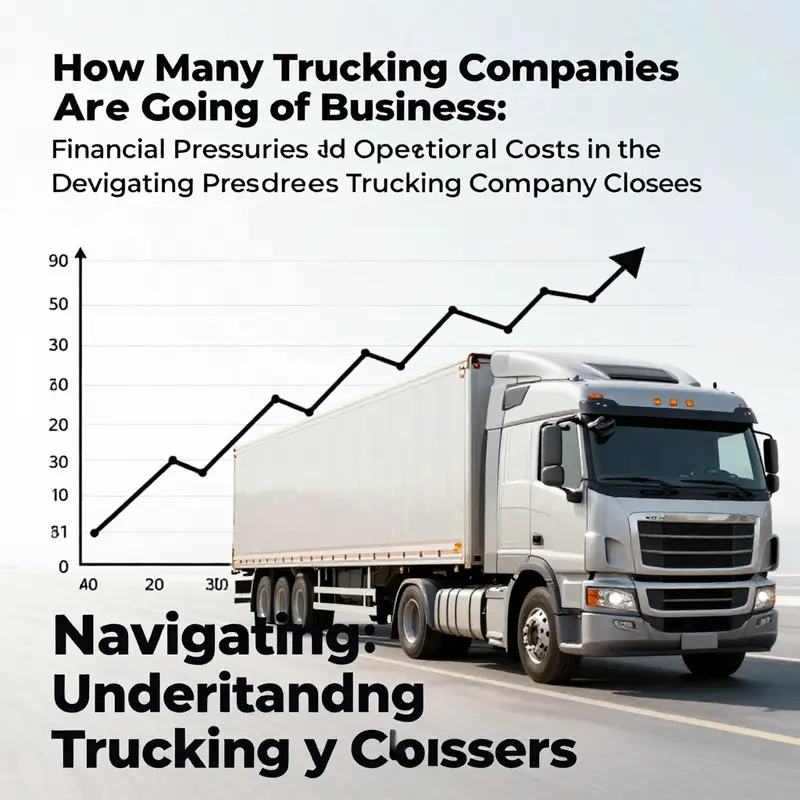
The question many readers ask about the trucking sector—how many companies are going out of business—does not yield a single, official tally. No national registry announces a tidy annual tally of closures that captures every small operator fading from the road. Yet the reality behind the numbers is unmistakable: a steady, troubling erosion of survival margins among the smallest and most vulnerable participants in the supply chain. Industry observers describe a landscape where a steady drumbeat of financial strain pushes companies to the brink, and where the rhythm of life on the road becomes a careful weighing of risk against return. In recent years, this tension has become a defining characteristic of the sector, shaping decisions at the fleet level and reverberating through shippers and customers who depend on reliable, timely service. While one can argue about precise counts, the signs are clear enough to suggest that the industry is undergoing a period of selective pruning, with thousands of small and mid-sized carriers facing existential questions about cash flow, debt obligations, and the capacity to absorb shocks without cutting routes, compromising service, or surrendering to insolvency.
A closer look at the available data confirms that the pace of company closures has accelerated. For example, annual data compiled by national statistics and industry authorities show a rise in the number of motor carriers ceasing operations, with a notable jump in 2023. Reports indicate that roughly 12,000 motor carriers ceased operations in that year, marking about a 14% increase from the year before. These figures point to a trend in which many operators—especially the smaller, family-owned, and financially lean fleets—face a combination of tight profit margins and high fixed costs that push the calculus toward exit or consolidation rather than expansion. In other words, the question of “how many?” becomes less a precise statistic and more a reflection of the broader economic and regulatory forces pressing on the sector. The motor carrier census data, while not a perfect tally of every business drop-out, provide a credible signal that the industry is rebalancing toward a smaller, more capability-concentrated set of operators who can weather volatility with adequate liquidity and strategic resilience.
Among the strongest signals driving the closures is the persistent mismatch between costs and prices. The operating costs of trucking have grown in the face of several converging pressures. Fuel costs, always a volatile component of the cost structure, have not only fluctuated with global crude markets but have been amplified by geopolitical events, refinery outages, and transportation-demand cycles. For many small operators, fuel represents a substantial portion of total expenses, and even modest price swings can translate into meaningful swings in profit margins. Insurance premiums have also risen sharply in response to claims experience and the broader liability environment. A higher cost base erodes the cushion that small fleets rely on to absorb unforeseen events such as weather-related disruptions, breakdowns, or late payment cycles from customers. When combined with stiff competition for loads, these costs compress margins and raise the frequency with which operators must decide whether to accept lower-rate contracts to stay active or to walk away from work that is no longer financially viable.
Another critical factor shaping closures is labor. The industry continues to face a driver shortage of more than 100,000 qualified professionals, a figure reported by the American Trucking Associations and echoed in multiple analyses. The shortage is not simply a matter of aging workforce or retirement; it stems from broader issues around work-life balance, compensation competitiveness, training capacity, and the path for new entrants to qualify as professional drivers. The result is a constrained capacity environment that raises the cost of obtaining and retaining drivers, intensifies scheduling pressures, and makes it harder for small operators to meet customer expectations for on-time performance. When a carrier cannot recruit and retain enough drivers to sustain operational tempo, the cost of recruiting and training rises, and the likelihood of costly disruptions increases. In turn, these disruptions ripple into service reliability, shedding light on why some operators choose to exit rather than persist through periods of tight capacity paired with uncertain pricing, longer cycles for equipment maintenance, and the risk of higher accident or incident exposure that can drive insurance costs even higher.
The competitive environment compounds these challenges. Large carriers and more efficient operators often enjoy scale advantages that translate into better fuel efficiency, access to broader load networks, and more favorable terms with insurers and equipment providers. At the same time, the rise of digital freight platforms and new matchmaking methods has given customers and shippers more visibility into capacity and pricing. For smaller players, this creates greater price pressure, as buyers can more easily source rates from a larger pool of carriers with varying risk profiles. In such a context, small operators frequently face a difficult choice: accept lower rates to remain active and protect market presence, or decline opportunities that may be essential to maintaining cash flow. Either path tends to compress profit margins and accelerate the decision to exit when liquidity is already stretched thin.
The consequences of these dynamics extend beyond the balance sheet. When a significant number of small and mid-sized carriers fail or withdraw from capacity, service reliability can decline, and transit times can lengthen, particularly in markets that rely on regional and local fleets for last-mile delivery and regional distribution. Shippers may shift volumes toward larger, more integrated carriers that can absorb disruptions, but this often comes at a higher overall cost or with reduced flexibility. In other words, the closures do not occur in a vacuum; they reshape the competitive and operational landscape in ways that can alter the cost and reliability of a national and regional logistics network. Communities tied to smaller carriers—whether rural shippers or regional manufacturing hubs—may feel the impact through reduced service levels or higher transportation costs, underscoring that the question of how many carriers are leaving the market is also a question about the resilience of supply chains themselves.
The broader policy and macroeconomic environment matters as well. Regulatory compliance—covering hours-of-service rules, safety mandates, and environmental standards—adds to the operating fabric that small operators must navigate. Compliance costs may seem abstract, yet they land squarely on cash flow explained by insurance premiums, maintenance and inspection protocols, and record-keeping obligations. The combined effect of higher compliance costs, volatile fuel prices, and elevated insurance rates can push a marginal business into the red. When a fleet is already marginal, any disruption—such as a delay in a payment cycle from a customer, a vehicle in the shop longer than planned, or a handful of weeks of above-average fuel costs—can be enough to push it toward insolvency or closure. For many operators, the decision to continue or exit is not a dramatic, headline-grabbing event but a sequence of incremental compromises that add up until the business can no longer sustain itself.
The central takeaway from these interconnected pressures is that the industry is not simply shedding a handful of marginal players; it is undergoing a structural recalibration. The exit of one operator often reflects a cumulative risk exposure that can also be shared by neighboring operators facing similar realities. In some areas, this can lead to a more concentrated market with fewer, larger players that can negotiate more favorable terms with lenders, insurers, and customers. In others, it may produce service gaps that complicate the flow of goods for specific regions or commodity groups. Either outcome has real-world implications for how supply chains are planned, how shipments are priced, and how the public perceives the reliability of essential freight networks in the years ahead. The data do not yield a precise “how many,” but they do reveal the underlying tempo of a market wrestling with fundamental questions about profitability, access to capital, workforce stability, and the value of operational discipline.
From this perspective, the chapter’s central inquiry—the number of trucking companies going out of business—reads as a proxy for a larger question: how robust is the ecosystem that moves goods across the country when the costs of doing business outpace the prices carriers can earn? The answer, at present, is not a single statistic but a portrait of ongoing attrition among the smallest players, punctuated by occasional waves of consolidation and adaptation. It is a dynamic landscape where the survivability of a business depends on its ability to manage costs, attract and retain talent, and navigate a market that increasingly rewards efficiency and resilience. For policymakers, transport planners, and industry observers, the key is to track not only closures but also the conditions that produce them and the countermeasures that can prevent a broader cascade of failures.
A practical takeaway emerges from this synthesis. If you are assessing risk or planning strategic investments in the trucking space, you must look beyond a simple headcount of bankruptcies or shuttered fleets. You should examine the quality of cash reserves, access to flexible financing, the efficiency of cost structures, and the ability to adapt to pricing volatility. Strategic cost management—such as periodically reviewing insurance programs and seeking cooperative purchasing arrangements through trade associations—becomes not merely a financial nicety but a survival skill. Fleet management improvements, including enhanced maintenance scheduling, route optimization, and technology adoption that improves utilization and reduces idle time, can provide the margins needed to persist through downturns. These measures are not silver bullets, but when combined with a disciplined approach to growth and risk, they can help incumbents withstand adverse cycles and reduce the risk that market pressures translate into premature exits.
Ultimately, the broader narrative is one of adjustment. The trucking industry is in a phase where the economics of operation are more delicate, and the thresholds for staying in business are higher. The ongoing closure of smaller carriers represents both a financial reality and a strategic reconfiguration of capacity. It highlights the need for targeted interventions—whether through policy relief on fuel and insurance costs, more stable access to capital, or approaches that enhance workforce development and retention. It also underscores the importance of resilience planning for shippers and brokers who depend on reliable capacity. The data and the lived experience of operators alike point toward a future where surviving fleets adopt more disciplined financial governance, more precise operational discipline, and a willingness to collaborate within networks that share risk and opportunity. In that sense, the chapter’s core question becomes less a tally of losses and more a diagnostic of the factors that determine who remains on the road and who does not, in a market where costs and competition continue to outpace traditional pricing models.
For readers seeking authoritative, up-to-date metrics on the scale of carrier closures, the U.S. Bureau of Transportation Statistics Motor Carrier Census data from 2023 offers a foundational reference. It documents a notable uptick in closures during that year and serves as a credible barometer of market stress across the carrier landscape. As the industry evolves, these metrics will continue to matter for understanding whether the exodus is a temporary phase or a longer-term recalibration that shapes competition, capacity, and the future structure of freight mobility.
External resource: BTS Motor Carrier Census 2023. https://www.bts.gov/content/motor-carrier-census-2023
Internal link to companion discussion on costs and regulatory pressures: Impact of tariffs and EPA regulations on trucking costs. This link provides a framing for how macro policy levers filter through to fuel, insurance, and operating costs that affect a carrier’s viability on a day-to-day basis.
In the end, the question of how many trucking companies are going out of business may not have a single, definitive answer. What the data and the lived experience of operators reveal is a sector in transition, where the fewest resources are absorbed by the most volatile inputs. The closures reflect not just a moment in time but a pattern: small and midsize operators confronting a constellation of cost pressures, working harder to optimize every mile, and weighing survival against growth in a market that increasingly prizes efficiency, liquidity, and resilience. The challenge for industry participants is to translate this understanding into practical strategies—cost containment without compromising safety, capital planning that cushions the shocks of fuel and maintenance, and talent strategies that turn the driver shortage from a pure constraint into a source of competitive advantage. Only by aligning operational discipline with strategic flexibility can smaller carriers navigate the headwinds that currently define the business of moving goods and keep the vast network of the nation’s freight moving despite the odds.
Final thoughts
The steady decline of trucking companies highlights critical issues within the industry that demand immediate attention. From a chronic driver shortage to rising operational costs, the pressures on these firms are acute and multifaceted. As logistics and distribution partners, understanding and adapting to these changes is vital for long-term sustainability. Stakeholders must collaborate to develop solutions that address these challenges collectively, ensuring the trucking industry remains a cornerstone of the American economy.