

Introduction to Trucking Entrepreneurship
In the current landscape of global commerce, the logistics sector is experiencing unprecedented growth, creating a fertile ground for those considering a venture in trucking entrepreneurship. As e-commerce expands, demand for efficient freight transportation has surged, underscoring the vital role of trucking in maintaining supply chain integrity. This rise presents an enticing opportunity for aspiring entrepreneurs to capitalize on a sector buoyed by technological advancements and increasing market needs.
However, embarking on the journey of starting a trucking business requires careful consideration of various costs and regulatory hurdles. This article aims to explore the financial landscape of launching your own trucking enterprise, helping you navigate the intricate web of expenses involved. To learn more about the broader context of this industry, read about the healthcare expansion’s impact and the innovative shifts in fleet operations in today’s logistics environment.
Primary Startup Costs for Establishing a Trucking Business
Starting a trucking business demands careful financial planning. Here’s a breakdown of the primary startup costs you should anticipate:
- Vehicle Costs:
- New Truck Purchase: $150,000 – $180,000 (e.g., a Peterbilt 579)
- Used Truck Purchase: $60,000 – $125,000
- Licensing and Permits:
- USDOT Number: about $250
- MC Number: may also require an application fee
- Insurance:
- General liability insurance: $10,000 – $15,000 annually
- Cargo insurance: typically $5,000 to $15,000 annually
- Operating Capital:
- Initially recommended to have at least $5,000 – $10,000 for operational expenses.
- Equipment:
- Trailer costs: $20,000 – $40,000 depending on type.
- Other equipment, like GPS systems and electronic logbooks, may range from $1,000 – $5,000.
Each cost listed contributes significantly to your overall investment as you strive to establish a successful trucking operation, making it crucial to budget accurately.
For deeper insights on setting up your trucking operations, read about the trucking industry and economic challenges.

Average Costs for Trucks in 2023
The cost of trucks varies significantly, depending on the type, brand, and whether they are new or used. Here’s a summary of the average costs for different types of trucks that are suitable for starting a trucking business in 2023.
New Trucks
-
Light-Duty Trucks: New light-duty trucks, such as small box trucks or delivery vans, typically range from $30,000 to $50,000. For example:
-
The 2023款江铃顺达116 has a starting price of about 9.8万 (approximately $14,000).
-
Medium-Duty Trucks: Costs for medium-duty trucks, like larger box trucks, usually start from $50,000 and can go up to $80,000 depending on specifications and configurations.
-
Heavy-Duty Trucks: Heavy-duty trucks, suitable for long-haul transportation, are priced higher, with new models like the 解放JH6系列460 costing around 36万元 (approximately $51,000) to 38万元 (around $54,000). Others, like the 斯堪尼亚重型卡车, can cost about 95万元 (around $15,000).
Used Trucks
The used truck market offers a more affordable starting point:
-
Light-Duty Used Trucks: Prices can start from as low as $5,000 to $15,000, depending on the age and condition. A 2019福田奥铃110马力 truck may cost around 2.97万元 (approximately $4,300) if it is well-maintained.
-
Medium-Duty Used Trucks: These trucks generally fall in the range of $15,000 to $30,000.
-
Heavy-Duty Used Trucks: For heavy-duty trucks, prices typically range from $20,000 to $45,000. High-end options, like a barely used 一汽解放J6L, are priced around 11.9万元 (approximately $17,500).
Conclusion
Overall, when budgeting for a trucking business, it’s crucial to evaluate both new and used options and factor in the specific needs of the business, such as payload capacity and operational range. Investing in either category requires considerable financial planning, especially given the variability in price depending on brand reputation and equipment specifications.
To learn more about the challenges and opportunities within the trucking industry, check out our insights on the economic challenges faced by trucking companies.
If you’re considering the long-term value of electric vehicles in your fleet, read our article on Coke Canada’s expansion into electric fleets.
This summary can guide you in making informed decisions about your initial investments as you embark on your trucking business journey.
Financial Planning in Trucking Business
Financial planning and budgeting are pivotal aspects of launching a successful trucking business. Understanding your financial landscape helps in managing cash flow effectively, enabling entrepreneurs to allocate resources efficiently and safeguard their investments. A comprehensive budget serves as a roadmap, outlining projected revenues and expenses, which is essential for long-term sustainability.
Importance of Financial Planning
For trucking companies, careful financial planning can significantly mitigate risks and enhance profitability. According to the American Trucking Associations, structured financial planning directly correlates with improved cash flow stability. Implementing a budget not only allows trucking businesses to forecast revenues but also helps in tracking essential expenses such as fuel, maintenance, insurance, and employee wages.
Cash Flow Management and Expense Tracking
Effective cash flow management involves regularly updating and reviewing financial forecasts to identify variances between budgeted and actual figures. This proactive approach enables early detection of cash shortages, allowing businesses to make informed decisions swiftly. Additionally, expense tracking is crucial-by recording all costs meticulously, companies can identify areas of overspending and optimize operational efficiencies. Regular evaluations lead to better decision-making and enhanced preparedness for seasonal fluctuations in freight demand.
Integrating strong financial practices not only supports compliance and tax preparation but also fortifies your strategic planning initiatives. To delve deeper into the revenue growth and economic outlook for the trucking industry, you can explore insights on trucking industry economic challenges and financial performance.
Financing Options for Starting a Trucking Business
When starting a trucking business, understanding your financing options is crucial. With the right financial strategy, you can effectively manage operational costs and capitalize on growth opportunities. Below is a detailed comparison of three primary financing options: loans, leasing, and grants.
1. Trucking Business Loans
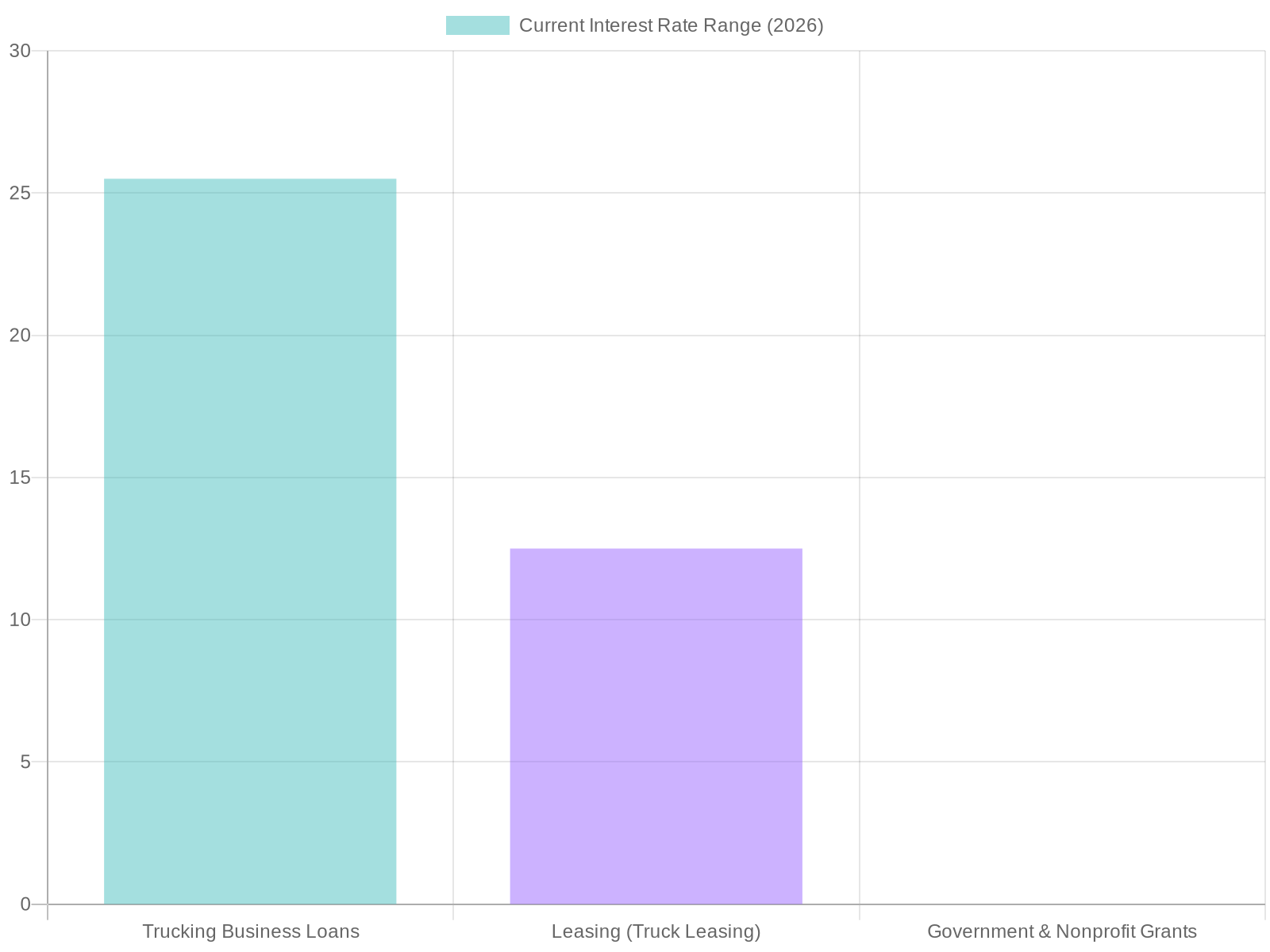
- Current Interest Rate Range: 6% – 35% (varies based on credit and lender)
- Pros:
- Full ownership of the vehicle
- Potential for long-term equity buildup
- Flexible use of funds (e.g., for equipment, working capital)
- Fixed repayment schedule
- Cons:
- High upfront cost
- Requires strong credit history
- Collateral may be required
- Higher interest rates may apply to subprime borrowers
- Best For: Owners seeking full control and long-term asset ownership.
Learn more about SBA loans
2. Leasing (Truck Leasing)
- Current Interest Rate Range: 0.5% – 1.5% monthly lease fee (approximately 6%-18% APR)
- Pros:
- Lower initial cash outlay
- Predictable monthly payments
- Access to newer trucks with warranties
- No risk of depreciation
- Cons:
- Higher total cost over time
- No ownership at end of lease
- Limited customization and potential penalties for excess wear
- Best For: New entrepreneurs with limited startup capital or those wanting to avoid maintenance risks.
Learn more about leasing strategies
3. Government & Nonprofit Grants
- Current Funding: $0 (non-repayable)
- Pros:
- No repayment required
- Can cover significant startup costs (equipment, training)
- May include technical assistance
- Cons:
- Highly competitive with strict eligibility criteria
- Long application and approval timelines
- Limited to specific business models or regions
- Best For: Minority-, woman-, or veteran-owned businesses; rural operators; environmentally focused fleets.
Learn about state and local grant programs
Summary Table Comparing Financing Options
| Financing Option | Current Interest Rate Range | Pros | Cons | Best For |
|---|---|---|---|---|
| Trucking Business Loans | 6% – 35% | – Full ownership of vehicle – Long-term equity buildup – Flexible fund use – Fixed repayments |
– High upfront cost – Strict credit requirements – Possible collateral |
Owners seeking control and ownership |
| Leasing (Truck Leasing) | 0.5% – 1.5% monthly fee | – Lower initial cash outlay – Newer trucks – Predictable payments |
– Higher total cost – No ownership – Limited customization |
Entrepreneurs with limited capital |
| Grants | $0 | – No repayment – Covers startup costs – Technical support |
– Highly competitive – Strict eligibility – Limited |
Minority-, woman-, or veteran-owned businesses |
Visual Representation
Below is a chart illustrating the current interest rate range for the different financing options available for starting a trucking business.
In conclusion, selecting the appropriate financing option for your trucking business depends on your specific needs and financial situation. Whether you opt for loans, leasing, or grants, each has unique advantages and drawbacks. It’s essential to evaluate your options thoroughly to ensure the success of your venture.
Trucking and Logistics Industry Growth Trends
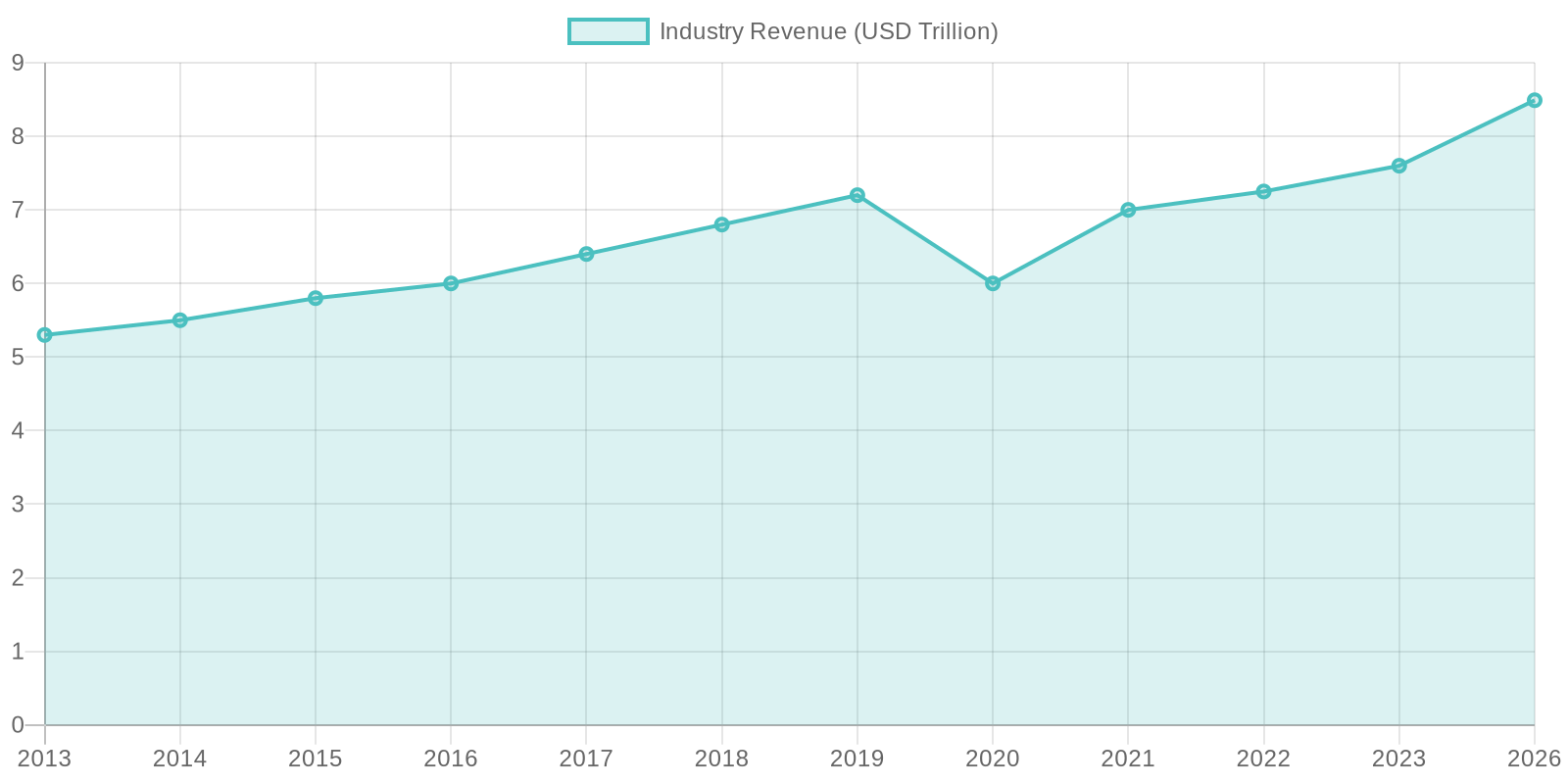
The trucking and logistics industry has seen significant growth over the past decade. The industry is projected to continue this trend, reflecting its potential profitability and relevance in the global economy.
Here’s a summary of the industry’s revenue growth over the past decade:
| Year | Industry Revenue (USD Trillion) |
|---|---|
| 2013 | 5.3 |
| 2014 | 5.5 |
| 2015 | 5.8 |
| 2016 | 6.0 |
| 2017 | 6.4 |
| 2018 | 6.8 |
| 2019 | 7.2 |
| 2020 | 6.0 |
| 2021 | 7.0 |
| 2022 | 7.25 |
| 2023 | 7.6 |
| 2026 | 8.49 (Projected) |
*Note: Data for 2026 is projected based on industry estimations.
Industry Revenue Growth Chart
Below is a visual representation of the growth trends in the trucking and logistics industry:
View more about industry projections and learn about the impact of digitalization on this sector.
Regulatory Requirements for Operating a Trucking Business
Starting a trucking business involves navigating a complex landscape of regulatory requirements, licenses, and permits. Compliance is not just a bureaucratic necessity; it is a critical factor for the sustainability and legality of your operations. Below are the fundamental requirements to consider:
1. Federal Requirements
- USDOT Number: Any trucking company must obtain a USDOT Number from the Federal Motor Carrier Safety Administration (FMCSA). This number is essential for tracking safety and compliance data. Learn more about the USDOT number.
- MC Number: If your business plans to transport goods across state lines or if it’s engaged in interstate commerce, you will need a Motor Carrier (MC) Number. This is vital for regulatory compliance and operational authority.
- Commercial Driver’s License (CDL): All drivers must possess a valid CDL. The type required depends on the vehicle’s weight and the nature of the cargo. Additionally, periodic medical examinations are necessary to maintain the license. More on CDL requirements.
2. State-Specific Regulations
- Individual states may impose their own regulations, which can differ significantly. You may require additional permits for overweight or oversize loads, and a state-specific business license might be necessary. It’s crucial to familiarize yourself with local regulations for a comprehensive guide.
3. Insurance Requirements
- Trucking companies must secure appropriate insurance. This includes a minimum of $1.5 million in liability insurance for interstate operations, cargo insurance, and physical damage insurance for vehicles. Non-compliance can lead to heavy fines and operational suspensions. Read more about required insurance.
Conclusion
Compliance with regulations is a non-negotiable aspect of launching and operating a trucking business. Failure to adhere to these guidelines can result in severe penalties, including fines and the potential loss of operational authority. Investing time and resources into understanding these requirements can safeguard your business and contribute to its success.
Expert Insights on the Trucking Industry
“The future successful fleets will not only be the carriers of logistics but also intelligent networks driven by data.”
- Industry Expert, source
This statement underscores the dual challenges and opportunities currently facing the trucking sector. As operators navigate the intricacies of stricter carbon emissions regulations and economic fluctuations, they must also embrace technologies that facilitate real-time data integration, ensuring competitive advantage. For more insights on tackling these challenges, learn about the economic challenges in trucking.
Conclusion and Call to Action
Starting your own trucking business is a complex endeavor that requires meticulous planning and an understanding of various critical components. From assessing startup capital to complying with regulations, the entire process demands a strategic approach. Key factors, such as operational costs, licensing agreements, and logistics management, all play a pivotal role in establishing a successful venture. Failure to properly plan can result in unexpected challenges that may hinder your progress, making the importance of thorough planning even more pronounced.
Analyzing market demand ensures that you not only meet customer expectations but also remain competitive in a rapidly evolving industry. Additionally, staying abreast of regulatory changes can help you avert potential legal complications, ensuring a smoother operation from the outset.
For those ready to take the next step in launching their trucking business, we at Titan Business Trucks are here to assist. Explore our resources on industry standards and regulations to better equip yourself for this entrepreneurial journey. Furthermore, if you are considering the operational side of your business, look into how companies like Coke Canada Bottling are adapting their fleets and navigating economic challenges.
Don’t wait any longer-embark on your journey today, and let us help you write the next chapter of your business success!

