
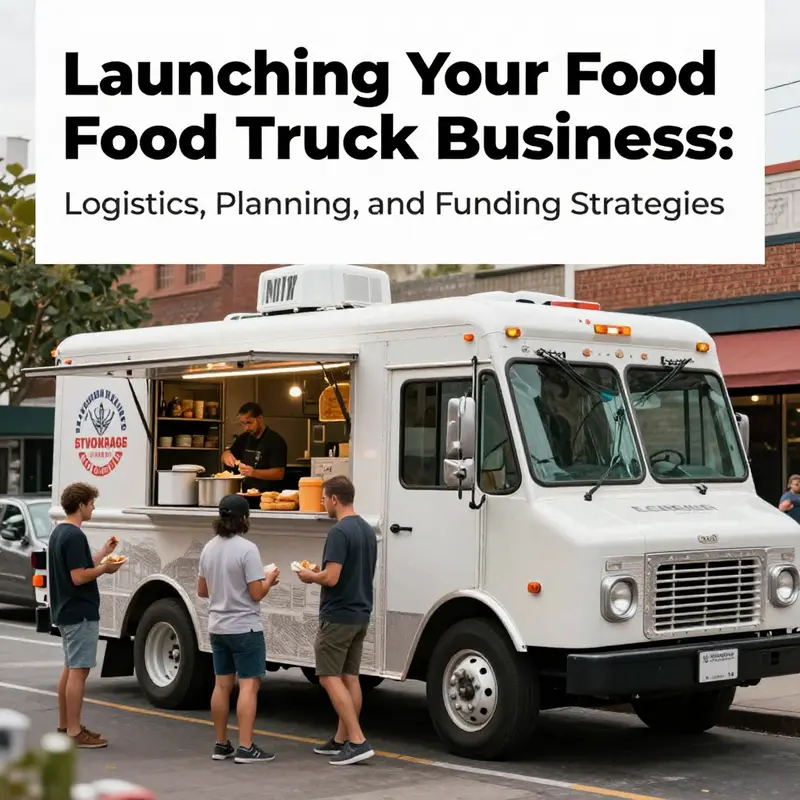
Starting a food truck business presents unique opportunities and challenges, particularly for companies involved in logistics, construction, and fleet management. With the potential to serve gourmet meals, healthy options, and local favorites, food trucks have evolved as essential components in various dining experiences. This article delves into three crucial aspects for establishing a successful food truck venture: researching local food trends, crafting a robust business plan, and securing necessary funding. By understanding market demands, creating a viable operational blueprint, and exploring diverse funding avenues, stakeholders can ensure their food truck endeavors not only take off but also thrive in an increasingly competitive market.
Listening to Local Palates: Translating Food Trends into a Winning Food Truck Concept
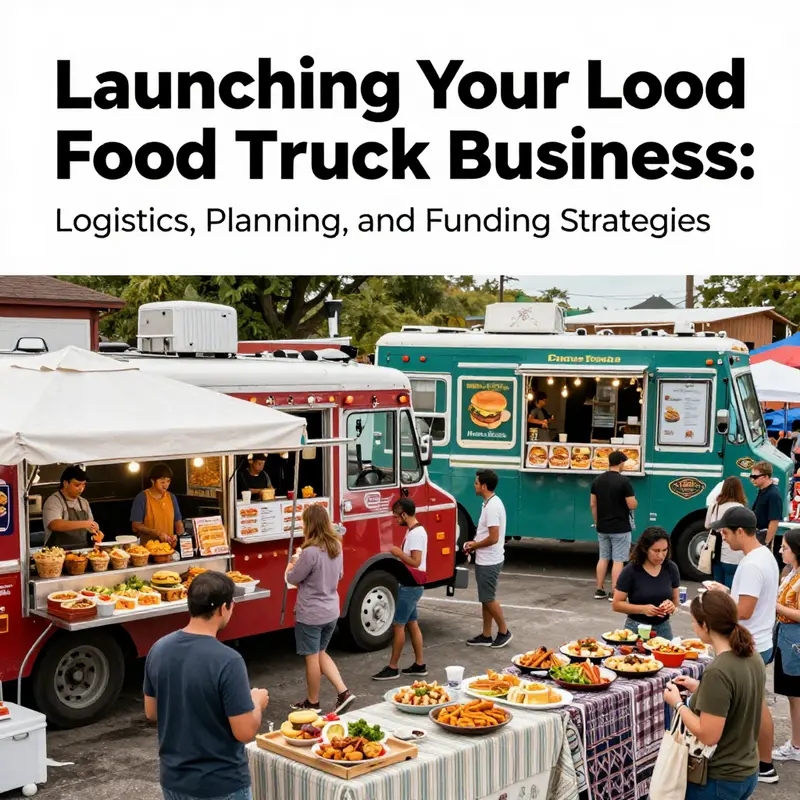
Launching a food truck is as much an exercise in listening as it is in cooking. The fast pace of street food culture means trends emerge, disperse, and reassemble themselves in neighborhoods with almost musical timing. The core idea of researching local food trends for starting your own food truck is not simply to copy what’s popular; it is to read the living map of your city’s tastes, to identify the blanks in cuisine, and then to fill those gaps with a concept that resonates, while staying true to your own culinary identity. This chapter invites you to see local trends not as a snapshot you chase, but as a dynamic chorus you harmonize with your own voice. The benefit of this approach is twofold: it grounds your venture in what people already crave, and it frees you to innovate within a framework that has proven appeal in your community. In practice, this means embracing a few steady currents—regional tastes, foot-traffic patterns, seasonality, sustainability, and health-conscious choices—and weaving them into a cohesive offering that feels anchored in place yet unmistakably your own. The result is a food truck that does more than serve meals; it becomes a small but meaningful engine for local economy and culture, capable of testing ideas with low risk and high visibility.
To begin, map the most active rhythms of your target area. Market research in a mobile format starts with the simple questions of where people work, study, exercise, and socialize. High-foot-traffic corridors near offices, parks, universities, and transit hubs can generate dependable lines if your concept matches the moment. The neighborhood coffee shop crowd at rush hour, the late-night crowd near a cinema or music venue, the weekend午 market wanderers who seek a quick, flavorful bite—each of these profiles suggests a slightly different menu tilt and service cadence. But there is a common thread: people want something worth paying for, something they can feel good about eating, and something that respects their time. Your observations should be grounded in data as well as instinct. What are the recurring questions customers ask? What are the most used phrases on social posts about food in your area? Where do people linger, chat, and share recommendations? These signals help you craft a concept that fits rather than clashes with the local mood.
Regional tastes matter profoundly because they shape the baseline expectations customers bring to a truck window. In many cities, a strong appetite for comfort foods sits alongside curiosity about lighter, plant-forward options. In others, spice and salsa-driven intensity command attention, while a third set of neighborhoods prizes clean labels and sustainable sourcing. You don’t have to chase every trend, but you do want to acknowledge the broad taste currents in your area. If you are in a city known for seafood, for example, your offerings can incorporate seasonal catches, coastal flavors, and coastal-inspired sides that speak to local cravings without losing your overarching concept. If the city prizes farm-to-table values, emphasize local produce, seasonal menus, and transparent sourcing. The goal is to translate these regional dispositions into menu architecture that feels earned rather than opportunistic. The better you align with the prevailing palate, the more likely you are to gather a loyal following quickly, which in turn fuels word-of-mouth growth and repeat visits.
Seasonality is a practical amplifier of trends. Local producers and farmers markets become your early warning system for what is ripe, affordable, and vibrant at any given time. A shifting calendar can turn a simple menu into a living map of your community’s seasonal economy. For instance, spring leafy greens and early fruits invite lighter, fresher bowls and wraps; late summer tomatoes and peppers invite bolder, heartier options; autumn squashes and root vegetables encourage comforting, roasted, and slow-cooked preparations. By tying your menu to the seasonal pantry, you not only optimize cost and freshness, but you also tell a story about locality and care. Customers increasingly respond to narratives about where ingredients come from and who grew them, and a truck that reflects those stories can foster a deeper connection with passersby who are scanning for authenticity as much as for flavor.
Sustainability and health are not merely buzzwords; they are practical design constraints and stories you can deploy with clarity. Consumers today often want to know that their meals align with their values—where ingredients come from, how waste is managed, and how the business respects the environment. This shifts the emphasis toward locally sourced produce, seasonal menus, minimized packaging, and transparent waste-reduction practices. It also nudges menu engineering toward healthier options, not as a tribute to a fad, but as a natural extension of curation. If a customer can spot that your salad option uses greens from a nearby farm and your protein is sourced from humanely treated livestock or plant-based alternatives, the trust you build becomes a durable asset. When sustainability is interwoven with flavor, your truck becomes a platform for positive choices rather than a debate about what counts as indulgence. You may find that such a frame broadens your audience to include health-conscious diners, families, and office workers who appreciate quick meals that feel responsible and satisfying.
Health-centric trends dovetail with global street food fusion in compelling ways. The mobile kitchen is uniquely suited to test and remix ideas from different cuisines without committing to a full brick-and-mortar footprint. A concept might begin with a few core staples and then pivot to include limited-time offerings that explore a different regional flavor every quarter. This approach allows for experimentation while controlling risk, because you can retire a fading concept and replace it with something fresh with relatively low overhead. The fusion mindset also invites a wider set of partnerships with local producers and suppliers who are drawn to experimentation and collaboration. The goal is not to chase novelty for its own sake but to create coherent plates that tell a story, celebrate ingredients, and invite social sharing. In practice, this means mindful menu development that balances texture, temperature, and nutrition, so that customers experience a satisfying meal even as the concept evolves with the seasons and the crowd’s mood.
Beyond the kitchen, trends shape the way you operate and engage with customers. The mobile format enables a leaner cost structure, which can empower you to innovate more freely than a traditional restaurant. You can adjust your hours, experiment with a rotating menu, or partner with local events without the burden of a fixed storefront. This flexibility has a direct impact on how you recruit and retain staff, how you train them, and how you allocate inventory and equipment. It also invites a more intimate form of customer interaction. A truck is a stage on wheels, a place where the cook and the guest can see each other’s hands at work, where the scent of seasonings and the sizzle of pans create an atmosphere that draws crowds and turns first-time visitors into regulars. In this light, your marketing strategy should emphasize not just the food, but the experience: the chef’s story, the sourcing narrative, the efficiency of service, the energy of the crew, and the visible care that goes into every plate.
A practical thread runs through all of this: how to translate trend awareness into a durable concept. The answer lies in a disciplined playbook that includes market research, brand storytelling, and a clear plan for your supply chain. Start by building a simple, testable menu that can flex with the seasons. Use data from location hotspots and customer feedback to tweak ingredients and portions without compromising your brand. Reserve a portion of your budget for experimentation—perhaps a rotating weekly special or a small set of tastings that allow you to gauge interest and pricing. Track what sells, what doesn’t, and how customers react to new flavors and textures. This data-driven approach helps you avoid overextension while maintaining a dynamic presence that keeps locals curious. It also creates a reproducible pattern you can scale as you add more trucks or expand your operations.
Community and collaborations further anchor your concept in the local fabric. Food trucks often serve as incubators for culinary innovation, giving up-and-coming cooks a platform to test ideas with far lower overhead than a brick-and-mortar restaurant. Because your truck travels through different neighborhoods, you can build cross-pollination with nearby producers, farmers, and other small businesses. When possible, design partnerships that reflect your audience’s values—seasonal farmers for produce, small-batch producers for condiments, or local bakers for bread and pastry components. These relationships should be reciprocal, offering mutual visibility and shared marketing efforts. A restaurant-on-wheels can become a hub for community events, pop-ups, and collaborations that elevate the city’s street food culture. In this sense, your research becomes not just a tool for menu planning but a lens on how your truck can contribute to a living economy. To illustrate this broader community impact, many trucks engage with initiatives like Trucks for Change Community Support, a program that demonstrates how mobile kitchens can support vulnerable communities while enriching the local landscape. Learn more about these collaborative efforts and their potential to deepen your brand’s social footprint at Trucks for Change Community Support.
As you weave these threads together, your chapter in the evolving story of your city’s food scene gains texture and credibility. The most successful concept will feel inevitable in hindsight: a natural extension of what the neighborhood already loves, enhanced by your curiosity, your respect for quality, and your peculiar point of view. The aim is not to imitate a trend so much as to embody it through care, conversation, and consistent execution. And because the street itself is the ultimate test, let the truck become a moving mirror of your community—reflecting its tastes, its aspirations, and its appetite for something well-made, faster than a traditional dining room and more personal than any takeout app could ever offer. In the end, research about local food trends is a compass, not a map. It points you toward opportunities, while your own hands, palate, and aspirations chart the precise route. When you align those elements with strategic planning, your food truck becomes not only a business but a vibrant part of the city’s food culture—an approachable, adaptable, and beloved conduit for communal meals.
External reference for broader context: Street to Scene: How Food Trucks Are Redefining Urban Food Culture. https://www.bbc.com/news/business-68017453
For a sense of how community-driven mobile ventures can expand their impact and sustain momentum, you can explore a related discussion on community support and collective growth through a mobility-driven platform: Trucks for Change Community Support. https://titanbusinesstrucks.com/trucks-for-change-community-support/
As you carry these insights into your planning, remember that trend research is not a one-time checklist. It is an ongoing practice of listening, testing, and refining. The neighborhoods you serve will change with the seasons, with new residents moving in, with shifts in work patterns, and with evolving social conversations about food, health, and sustainability. Your job is to stay attuned to these shifts without losing your core purpose: to offer food that is delicious, responsibly sourced when possible, and delivered with warmth and efficiency. With a camera, notepad, and a willingness to adapt, you can translate local flavor into a resilient concept that travels well, appeals across demographics, and remains true to your culinary voice. As you prepare to secure permits, assemble your team, and finalize your vehicle, let your research-informed understanding of local trends be your north star—guiding not only what you serve, but how you serve, how you connect with customers, and how you contribute to the city you call home.
From Vision to Viability: Crafting a Winning Business Plan for Your Food Truck
A food truck is more than a portable kitchen; it is a compact business crafted for the road. The plan you write today becomes the compass that keeps you on course when tiresome days, seasonal shifts, or new competition test your resolve. A well-made plan does more than describe your dream; it translates it into a practical blueprint that guides every decision, from where you park to how you price a sandwich. It acts as a roadmap for operations, growth, and resilience, and it speaks to lenders, partners, and potential collaborators with a clarity that can turn appetite into investment. In this chapter, the process of building that roadmap is presented as a cohesive narrative, not a checklist of isolated sections. You will see how each element—your concept, your market, your menu, your operations, your marketing, and your finances—interlock to form a single, living document that can evolve with your business.
The executive summary is the door to your plan. It should distill your concept into a compact story that resonates with someone who has never tasted your food. What are you selling, and why now? What makes your truck different from a dozen other options on a crowded curb or a bustling festival? This section should convey your mission and your unique selling proposition in a way that invites curiosity rather than demands attention. The best executive summaries answer three questions in a tone that is confident but grounded: What problem are you solving for customers? How will you deliver a remarkable dining experience on wheels? What is your plan to achieve sustainable profits while staying true to your brand? The mission is not just about flavor; it is about consistency, speed, and reliability, because a hungry line of customers is unforgiving and time is money.
Beyond the door, the company description anchors the plan in a practical legal and geographic reality. Decide early how your business will be structured—sole proprietorship, partnership, or an incorporated entity. This choice affects liability, taxes, and access to capital. Your location strategy matters just as much as your street food philosophy. Will you operate primarily in fixed-service zones like business districts and college campuses, or will you chase events, markets, and launch pop-ups in diverse neighborhoods? The vision should align with a scalable approach: a truck that can adapt to different venues, a schedule that balances peak times with off-peak events, and a team that can handle rapid turnover without compromising safety or quality. Your operational tempo becomes a core part of the description, including the pace you expect to maintain during lunch rushes, how you manage peak event weekends, and how you handle the steady drumbeat of daily prep, service, and post-service cleanup.
A robust market analysis is the heartbeat of the plan, because it tells you who is eating and where, and it reveals gaps you can fill before someone else does. Start with a clear profile of your target customers: their tastes, their spending levels, and their preferred channels for discovering new bites. Identify events that attract the kind of audience you want to serve, whether they favor quick, flavorful options, chef-driven concepts, or healthier, more sustainable choices. Look at competitors not as obstacles but as benchmarks. What are they doing well, and where are their weaknesses? This analysis should extend beyond present conditions to consider seasonal fluctuations, local cultural trends, and the evolving expectations around delivery, digital ordering, and curbside pickup. The aim is not to copy a rival but to identify a sweet spot where your menu and your service style uniquely satisfy demand. The plan should also acknowledge the practical realities of a mobile business: permit landscapes, permit timelines, and the likelihood of changes in local events calendars. By mapping demand against your hours of operation and your vehicle’s capabilities, you can forecast where you’ll find customers and how often they will return.
Linked to market insights is the menu and operations plan, which anchors taste to quantity and quality. The menu should reflect what you do best while allowing for consistent execution under the constraints of a mobile kitchen. This means menu item design with portion control, sourcing strategies that balance cost and quality, and a kitchen layout that supports a smooth workflow. The plan must spell out where you source ingredients, how you store them, and how you maintain the cold chain and hot line with minimal waste. Food safety is non-negotiable; the plan should outline the permits and certifications you will pursue, the daily checks that keep the operation clean, and the protocols your crew will follow to prevent cross-contamination and foodborne illness. You’ll describe your equipment setup—griddles, burners, refrigeration units, water supply, and waste handling—and explain how each element supports both speed and safety. A thoughtful operations plan also details staffing needs, shift patterns, and training programs that ensure consistent quality and a positive guest experience. When framed within a plan, these details become a clear investment rather than an afterthought, because you can quantify how efficient layouts translate into shorter service times, fewer mistakes, and happier customers.
Marketing and sales strategy in a food truck plan is not lip service to trends but a practical engine for growth. The plan should describe your brand identity—the name, the story, and the visuals that will appear on your truck wrap and in your digital presence. It should explain how you will reach customers through social channels, partnerships with events, and participation in local markets. Your strategy should blend digital outreach with real-world touchpoints: email lists or SMS updates for loyal customers, a simple loyalty program, and a calendar of collaborations with nearby businesses or pop-up venues. Consider the power of emotionally resonant storytelling tied to your dish philosophy and origin. If your concept centers on a culinary technique or a cultural tradition, articulate how that heritage informs menu development, guest interactions, and seasonal rotations. The sales plan asks for concrete milestones: the expected number of daily transactions, the average order value you’re aiming for, and the mix between walk-up sales, digital orders, and pre-booked events. It should also address pricing strategy, including food costs, labor margins, and contingency plans for price volatility without sacrificing value or consistency.
The financial plan is where dreams meet numbers, and this is where many plans either justify a leap or reveal the need for further refinement. Start with startup costs, itemized and defended with vendors’ quotes and realistic delivery timelines. A well-documented cost baseline paints a transparent picture for potential lenders or partners. From there, you project income statements, cash flow, and balance at key milestones. The plan should include a break-even analysis that factors in your fixed costs, variable costs per meal, and the cadence of revenue you expect from different venues. Build scenarios to understand how changes in foot traffic, event calendars, or supplier prices might affect profitability. The more you can quantify in this section, the more credible your plan becomes. Don’t ignore working capital needs; trucks require fuel, maintenance, insurance, and a buffer for slow periods. A robust financial section also calls for key performance indicators you will monitor over time—labor cost as a percentage of sales, food cost per dish, and the gross margin per menu item. These metrics transform the plan from a static document into a living dashboard you can revisit monthly or quarterly. When you tie the financial projections to your marketing calendar and operations calendar, you create a synchronized rhythm where growth feels intentional rather than accidental.
Incorporating people into the plan is essential because a mobile business lives and dies by its team. A plan that reserves energy and resources for hiring, training, and developing staff is not only humane; it is financially prudent. Skilled team members speed service, safeguard food safety, and elevate guest experiences. A practical approach to staffing anticipates turnover, cross-training needs, and the necessity of reliable backup options for festival weekends or peak events. A useful reminder in the planning process is that a strong people strategy pays dividends in customer satisfaction and operational resilience. For leaders who want to prioritize people as a strategic asset, see investing-in-people-key-to-truckings-success. This reference points to an approach where hiring, training, and culture are treated as capital investments with measurable returns, not mere line items.
As you thread these elements together, your business plan becomes more than a document; it becomes a living contract you have with your future self and with your customers. It invites feedback from mentors, peers, prospective lenders, and potential partners, and it invites revision in response to real-world tests. The best plans are honest about risk while bold about opportunity. They recognize that the food truck ecosystem is both a culinary stage and a logistics challenge: customers want great food served quickly, in a clean and safe environment, from a vehicle that is dependable and well cared for. The plan therefore places operational reliability at the center, supported by a realistic marketing engine and a disciplined financial framework. It also acknowledges that the mobile dining concept thrives on flexibility—being able to adapt menus, locations, and service modes to shifting tastes and circumstances without losing core brand identity.
The process of drafting or refining your plan should feel iterative rather than ceremonial. Gather your market data, test a few menu items at pop-ups, map your routes, and revise your projections as you learn. The goal is not to have a perfect plan on the first draft but to cultivate a living document that grows with your truck. You can begin with a lean version that highlights your executive summary and the essentials of the market and finances, then expand as you secure funding or as you gather more precise cost data. The exercise itself clarifies priorities: where you will park, which events you will target, what your first six months of purchasing looks like, and how you will measure success week by week. The path from concept to launch can feel long, but a strong, coherent plan shortens the journey by turning uncertainty into structured action. And when the plan is clear, it becomes easier to attract partners, investors, and customers who understand your vision and trust your execution.
To keep the narrative coherent and useful across chapters, think of your plan as a bridge between concept and execution. The executive summary invites readers in; the company description frames the enterprise; the market analysis and operations plan anchor feasibility; the marketing and sales strategy energizes growth; and the financial plan provides the accountability you will rely on as you scale. The discipline of assembling these pieces into a single document ensures that your dream is not merely appetizing but also actionable. It is the difference between a great recipe and a successful, repeatable business. When you walk into a lender’s office, step onto a festival lot, or recruit your first crew member, your plan will be your most persuasive advocate because it shows you have thought through not just what you’ll cook, but how you will cook it, whom you will serve, and how you will keep the doors open for the long haul.
External resources can complement your internal planning process. For a comprehensive guide with templates and real-world examples, refer to Shopify’s official resource: https://www.shopify.com/blog/food-truck-business-plan. This external guide can provide additional templates and frameworks to supplement what you have built, helping you tailor your plan to the specifics of your local regulations and market conditions while preserving the core logic of your own document.
Funding the First Mile: Practical Pathways to Launch Your Food Truck
Securing funding for a food truck is more than lining up a few dollars to cover a vehicle and a stove. It is the strategic scaffolding that holds up your entire concept—from menu development and permitted operations to supplier trust and guest experience. The modern food truck entrepreneur learns to blend creativity with disciplined finance, turning culinary ideas into a mobile, compliant, and economically sustainable business. In this chapter, we explore practical pathways that transform a concept into a rolling kitchen, drawing on proven approaches that go beyond the traditional loan. The aim is not to extol a single magic funding source but to illuminate a menu of options that fit different stages of your build, different risk tolerances, and different networks. You’ll see how incubator environments, scalable capital platforms, formalized banking structures, and disciplined financial management come together to launch and sustain a thriving operation.
One of the most effective entry points for a new food truck is a restaurant incubator program. These initiatives offer more than just money. They provide mentorship, shared kitchen spaces, and a collaborative ecosystem where you can test your concept with guidance from seasoned operators and kitchen professionals. The value of mentorship cannot be overstated: advice on cost of goods, menu planning, compliance with health and safety codes, and even the rough edges of daily service can shave weeks off your learning curve. Shared kitchens reduce upfront overhead by offering access to equipment, permits, and operational gravity—resources that can be prohibitively expensive if you try to assemble everything from scratch. If you approach an incubator with a clear plan, a credible menu concept, and some traction—perhaps a pop-up presence or a small following—you can secure a low-cost entry point that minimizes risk while maximizing learning. The goal here is not merely to borrow space; it is to tap into a network that accelerates your path to a profitable operation. For readers anchored in the broader logistics of starting a mobile food business, incubator programs can serve as a practical bridge between an aspiring concept and a fully equipped, compliant, and customer-ready truck.
Beyond incubators, there is a spectrum of capital options designed to move you from concept to crust without crippling your cash flow. Business capital platforms, which provide fast, flexible financing aligned with small businesses, have emerged as a practical alternative to traditional bank loans. These platforms often tailor products to the cash-flow realities of food businesses, recognizing that a truck’s income is typically seasonal and highly variable. A key feature many of these arrangements share is a repayment model tied to daily or weekly sales. Rather than a fixed monthly installment that can become a pinchwrench during off-peak periods, repayment scales with performance. This structure protects your cash flow during slow periods and preserves working capital for marketing, inventory, and maintenance when demand surges. What to watch for, of course, are the terms and the potential for hidden costs. A disciplined approach starts with an honest forecast: project daily sales by month, overlay a conservative cost of goods sold, and map the breakeven point under various weather and festival conditions. When you can demonstrate a clear, data-driven plan, you improve your odds of negotiating favorable terms and avoiding options that lock you into a strained financial posture when seasonal lulls arrive.
To anchor this approach in practical steps, begin by outlining a lean funding mix. Determine your essential startup costs—vehicle purchase or lease, kitchen equipment, initial inventory, health and safety compliance fees, license fees, insurance, branding, and a buffer for the first 90 days of operation. With that figure in hand, identify three primary funding channels: an incubator or shared-kitchen path for overhead relief and mentorship; a capital platform or revenue-based financing line for working capital; and a formal banking relationship that validates your business as a creditworthy venture. Each channel has its own preconditions. Incubators often require a strong concept, a plan for traction, and a willingness to participate in a structured program. Capital platforms need a robust forecast and a track record of revenue, even if modest, to calibrate risk. Banks look for a formal entity, a clean tax history, and a credible plan to service debt. The orchestration of these pathways is where practical judgment comes in: you might start with an incubator to test and refine, secure a modest line of credit tied to daily sales to cover equipment upgrades or marketing, and then formalize your financials with a business banking setup that supports continuous growth.
An important phase in this journey is learning how to position yourself to access funds while preserving control over your business. While debt is a common tool, it is not the only option, and being selective about where you apply can shape your trajectory. In the early stages, grants and microfunding opportunities can offer non-dilutive capital that keeps equity intact while you prove your concept. Grant pathways often come with reporting requirements and performance metrics, but they can be worth the effort for the right alignment between your menu, your market, and the fund’s mission. If your concept has a social or community focus—such as providing affordable meals in under-served neighborhoods or partnering with local farmers—these grants may align closely with the values of the funder and your own business philosophy. When in doubt, sketch a two-page executive summary of your concept, a 12-month financial forecast, and a plan for how you will measure impact. This blueprint helps you communicate succinctly to incubators, platforms, banks, and grant programs, and it can be the difference between a cold application and a warm invitation to join a program.
No discussion of funding is complete without acknowledging the role of people. Capital is essential, but the people who run and operate the truck—the cooks, the front-of-house staff, the drivers, the partners who handle permits and compliance—are the most important asset. This is where investing-in-people-key-to-truckings-success comes in. Building a capable, reliable team reduces turnover, maintains consistent quality, and expands the capacity of the business to scale. When you present your funding case, include a plan for staffing, training, and retention. Investors and lenders are not merely evaluating your idea; they are evaluating your ability to execute it through people. A narrative that ties three elements—clear market demand, a viable financial plan, and a well-supported team—tends to resonate more deeply than a pure projection of sales. Your plan should articulate who you hire, how you train, and how you keep your crew aligned with food safety and customer service standards. The human capital story is, in many cases, the backbone of a financing conversation, because it predicts the probability of hitting your milestones and sustaining growth once the truck is on the street.
The path to funding also benefits from a disciplined approach to banking and financial administration. Establishing a dedicated business bank account, and, if possible, a formal legal entity, sends a signal to lenders and suppliers that you are a serious operator with accountability. A clean separation between personal and business finances reduces confusion come tax time and enhances the credibility of your financials when you seek credit, line-of-credit, or even vendor terms for larger orders. There are services designed to simplify this step—helping you set up the legal structure, obtain tax IDs, and open the appropriate accounts. While the specifics vary by jurisdiction, the underlying principle is universal: professionalization of your financials improves access to capital and strengthens vendor relationships. In practice, this means maintaining accurate, up-to-date books, tracking daily revenue and expenses, and forecasting cash flow with scenario planning for peak seasons and slow periods. A well-kept ledger becomes your most persuasive argument when negotiating terms with suppliers or lenders and it makes insurance, permits, and compliance checks smoother.
As you assemble and compare options, keep your decision-making anchored in a simple forecasting framework. The plan should reflect not only the up-front costs but also ongoing operating costs, inventory cycles, and the volatility of base demand. A practical rule of thumb is to reserve at least 10 to 15 percent of startup costs as a working capital cushion, with a separate contingency for unexpected compliance or equipment repair. Some operators use a rolling forecast, updating projections monthly or quarterly based on actual performance. This discipline helps you see gaps between your desire to grow and the reality of your cash position, providing early warning when a funding source might strain your operations. In addition to the numbers, cultivate a narrative that explains how each financial instrument will be used to protect quality, ensure compliance, and deliver consistent guest experiences. A plan that couples financial rigor with kitchen culture—quality, reliability, hospitality—builds confidence among partners and customers alike.
Finding the right balance between debt, non-dilutive funding, and equity-like instruments is a matter of strategic taste, risk, and timing. Some operators are happy to rely on a mix of incubator support, a small but flexible line of credit, and a solid banking relationship. Others chase a larger infusion upfront to accelerate growth, accepting a larger debt load in exchange for rapid scale. Neither approach is inherently superior; what matters is alignment with your goals and your operational cadence. When you present a funding plan, it helps to map how each funding event will unlock a milestone: a kitchen upgrade, a wider service area, additional staff, or a larger promotional campaign. Each milestone should translate into measurable improvements in guest volume, average order value, or repeat visitation. Demonstrating a cause-and-effect relationship between funding and performance reinforces the case for investment.
It is worth noting that the funding landscape for food trucks is not static. Market conditions shift with seasons, local policy changes, and consumer tastes. The most resilient entrepreneurs build funds for flexibility into their models. They diversify their funding sources so that a temporary drop in one channel does not stall the entire operation. They build relationships with mentors, potential investors, and local business leaders who can provide guidance or introductions during a downturn. The goal is a funding ecosystem that sustains your truck through the inevitable bumps on the road—from permit delays to supply chain glitches to weather that dampens a weekend crowd. The stronger your relationships and the clearer your forecasting, the more resilient your funding strategy will be when the next curveball arrives.
As you move toward a decision, you will likely test the concept in stages. A staged approach aligns with the learning curve of a new venture and reduces the pressure of needing a perfect, fully funded plan from day one. Start by validating your menu and service model in a few high-traffic pop-up locations or at community events. Use the revenue and feedback from those trials to refine your costs, your supplier terms, and your staffing plan. Then pursue incubator or shared-kitchen options to shrink upfront costs and gain mentorship. If those channels prove beneficial, layer in a flexible funding line tied to sales to keep the engine running through growth spurts. With a robust internal process, you can align your capital stack with your operational realities—slashing risk while preserving the energy and creativity that make mobile food compelling.
Funding is not the end of the journey; it is the ignition switch for the next chapter of your business. Once you secure sufficient support, you can advance to choosing and customizing your vehicle, assembling your team, and building your brand in earnest, all with the confidence that you have a practical, defendable plan behind you. The steps you take now to map funding toward concrete milestones will influence your margins, your ability to weather volatility, and your capacity to serve a growing audience. In other words, your first mile of funding becomes the foundation for the many miles of service, flavor, and community impact that follow. As you step forward, keep the balance between ambition and discipline in view, and let the money follow the plan rather than the other way around.
Note: For a broader look at how funding strategies intersect with other operational decisions, consider resources that discuss the role of investment in people and the downstream impact on performance in fleets and mobile kitchens. The conversation about funding for a food truck is not purely a financial one; it touches culture, mentorship, and the shared commitment to delivering high-quality meals in a way that respects both customers and the crew. When you place people at the center of your funding strategy, you often unlock a sustainable competitive advantage that money alone cannot buy.
External resource: For a deeper dive into a variety of funding options for food ventures, see the external guide on food-truck funding that explores grants, incubators, and revenue-based financing models. Food Truck Funding
Final thoughts
Navigating the food truck business landscape requires careful consideration of local trends, meticulous planning, and accessible funding sources. By embracing the insights shared in this guide—researching market demands, creating a robust business plan, and understanding funding opportunities—stakeholders can position themselves strategically within this dynamic sector. A well-prepared approach not only elevates the chances of success but also ensures a lasting impact within the food and beverage community.

