
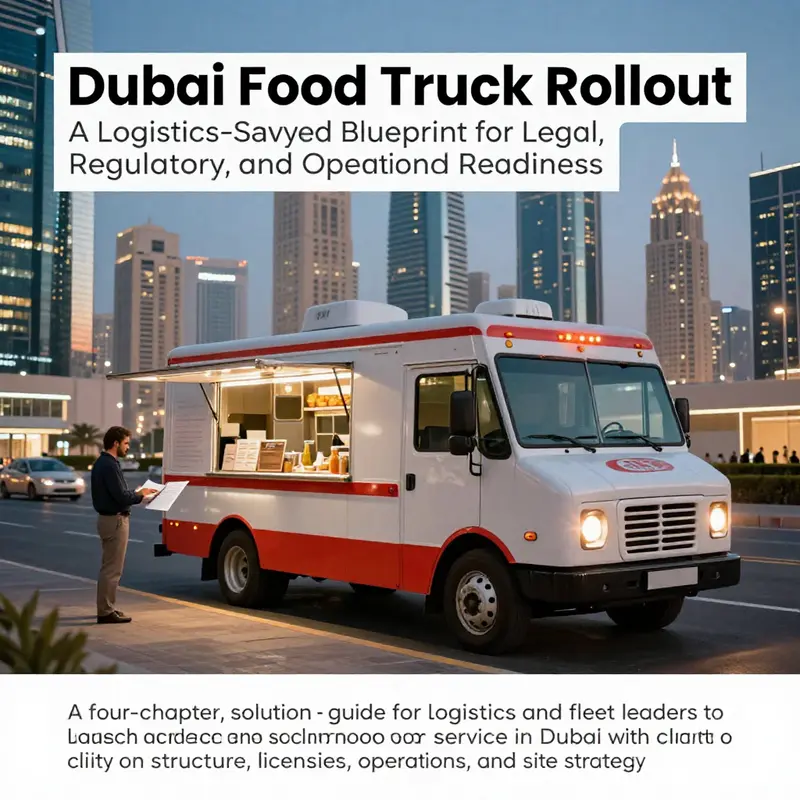
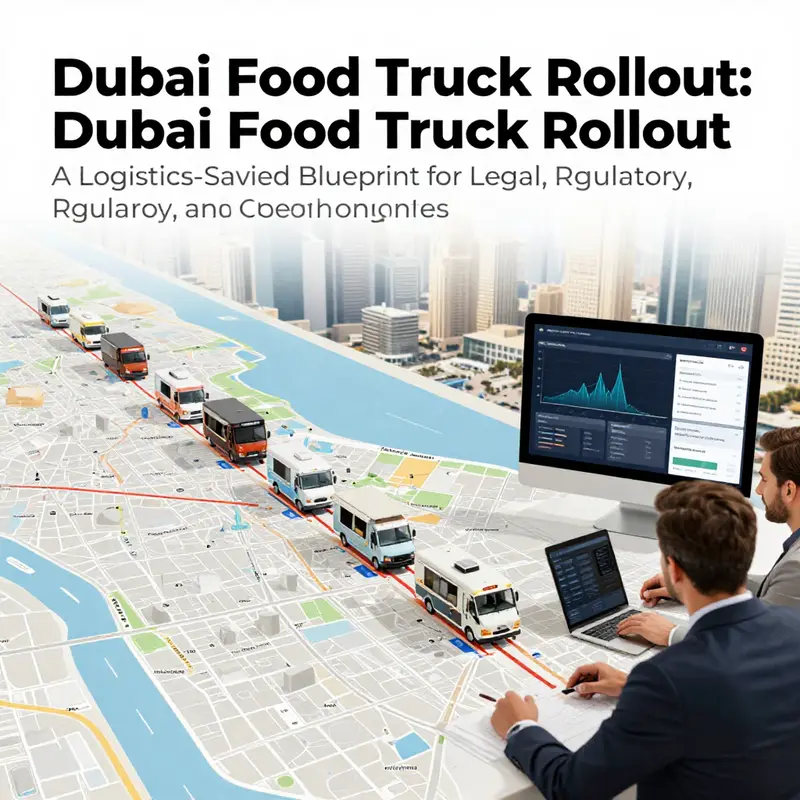
Dubai presents a dynamic intersection of demand for mobile food services and a robust regulatory ecosystem. For Logistics & Freight Companies, Construction & Engineering Firms, Fleet Management Companies, and Food & Beverage Distributors, a food truck can extend on-site catering, support site-based concessions, and unlock new revenue streams without committing to a stationary venue. Success hinges on disciplined alignment across four pillars: governance and ownership, licensing and regulatory compliance, disciplined mobile operations, and a strategic location and marketing plan that supports growth. This blueprint translates the complex Dubai requirements into four integrated chapters. Chapter 1 clarifies how to structure ownership for foreign and local partners, weighing Free Zone advantages against LLC options. Chapter 2 maps the full licensing and permit landscape (DED, DHA, Dubai Municipality) and explains how to secure a compliant operating framework. Chapter 3 focuses on the mobile kitchen—the vehicle, equipment, food safety protocols, and staffing practices needed to sustain quality and uptime. Chapter 4 translates market access into location strategy, branding, launch sequencing, and ongoing compliance. Read together, the chapters provide a cohesive path from founding decisions to a scalable, compliant, mobile dining operation tailored for industrial and commercial ecosystems in Dubai.
Dubai on Wheels: Mainland vs Free Zone Ownership for Your Food Truck
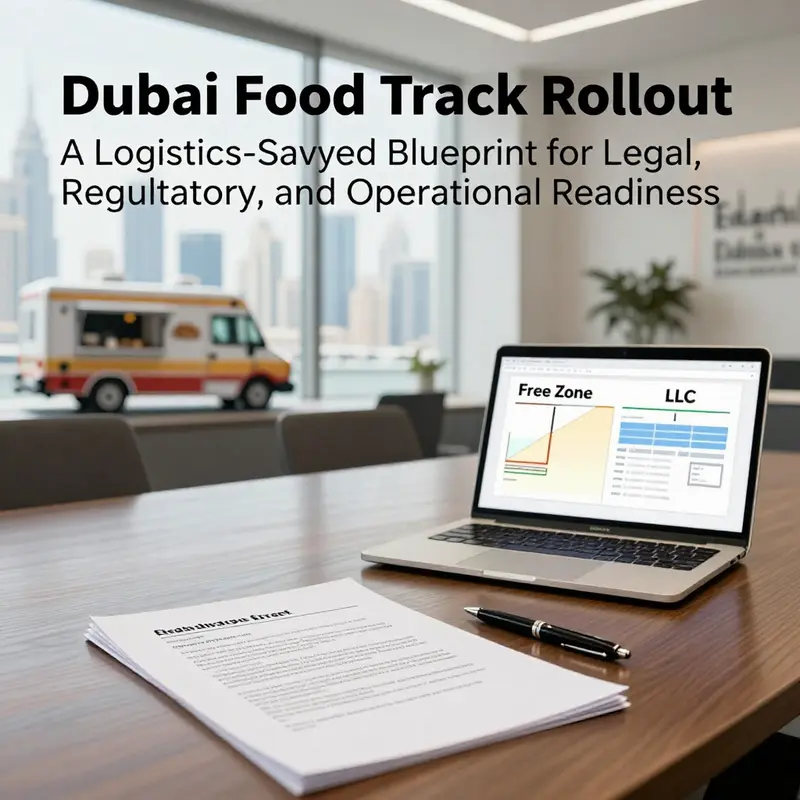
Dubai’s dynamic dining scene has embraced mobile dining as a high-impact, flexible route to reach residents, workers, and visitors. Choosing the right legal structure—Mainland or Free Zone—shapes licensing, ownership, and daily operations more than the recipe itself. This chapter compares the two paths, highlighting how ownership control, tax considerations, visa processes, and venue access influence startup plans and growth.
Mainland: Onshore companies can target the wider Dubai market and beyond, with licenses tied to activities across the emirate. Historically, ownership required a local partner or service agent, but reforms now allow more 100% ownership for many activities. Still, activity type and licensing authority matter, and process times can vary. Mainland setups often involve local service arrangements, office or flexi-desk requirements, and closer coordination with municipality rules for street vending and events.
Free Zones: Free Zones offer 100% foreign ownership, streamlined visa quotas, and bundled licenses designed to ease setup. They can be ideal for rapid market entry, but using a Free Zone license to operate outside Zone boundaries frequently requires additional permissions from municipal authorities or event organizers. Free Zone structures can also simplify capital repatriation and banking, but costs can be higher upfront, and the path to scaling across Dubai’s venues may require strategic partnerships.
Licensing and compliance play central roles in both paths: you’ll need a business license, a health/safety clearance for food activities, vehicle and fire-safety certifications, and, if operating on public streets, permissions from the municipality or venue managers. The decision often comes down to your priorities—full control and direct access to venues (Mainland) versus speed, simplicity, and 100% ownership (Free Zones). Hybrid approaches, specialized consultants, and careful budgeting can help you design a phased plan that aligns with your target markets and events.
Bottom line: define your concept, map two parallel roadmaps (Mainland and Free Zone), assess ongoing costs, and build a regulatory calendar that tracks licenses, inspections, and permits. With clarity on ownership, licensing, and compliance, your Dubai food truck can move from concept to a compliant, scalable operation.
Chapter 2 — Licenses, Permits, and Regulatory Compliance: Charting Your Dubai Food Truck’s Legal Path
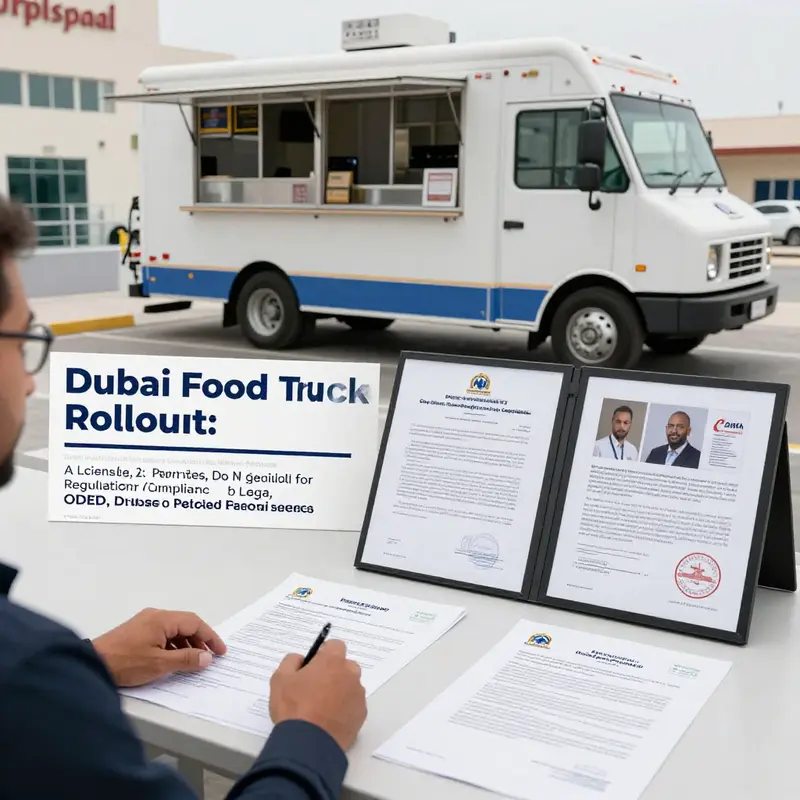
Turning a food truck into a legally operating business in Dubai is less about a clever recipe and more about aligning with a network of regulators that safeguard health, safety, and public space. This chapter takes you through the core licensing and permitting landscape you must navigate, weaving together the practical realities of choosing a legal structure, securing the right licenses, and staying compliant as city rules evolve. The aim is not to overwhelm but to illuminate a clear path: your truck’s wheels can spin freely once the paperwork is in place, but that paperwork is the backbone that keeps operations steady amid Dubai’s vibrant, high-standards food scene.
First, the choice of legal structure acts as the anchor for everything that follows. In Dubai, you can set up as a Free Zone Company, a Local LLC, or a Sole Proprietorship. For many foreign investors, a Free Zone offers the advantage of 100% foreign ownership and favorable tax treatment, which can be particularly appealing for a mobile venture that plans to scale or partner with suppliers and events across the emirate. Yet, because a food truck is fundamentally a service and retail activity that interacts with public spaces and health authorities, you will eventually synchronize your licensing with the Dubai Department of Economy and Tourism, often via the Free Zone or a local licensing route that accords with food service requirements. The bottom line is simple: your chosen structure determines the type of trade license you pursue, the authorities you engage with, and the level of due diligence you must satisfy from day one.
Once the legal shell is chosen, the next layer is the actual license that legitimizes your ongoing operation. In practice, that means securing a Trade License from the designated licensing authority—typically the Department of Economy and Tourism or a Free Zone entity aligned with your structure. But a food truck doesn’t stop at a trade license alone. The nature of your activity—selling meals from a mobile unit—triggers additional, specialized permissions designed to protect consumers and the urban environment. A Food & Beverage License is mandatory for any food-related activity. This is not a single document but a bundle that requires credible documentation about your menu, sourcing practices, kitchen equipment, and the training standards you enforce among your staff. The Dubai Health Authority is explicit here: your food operation needs a Food Hygiene License, a credential earned after a review of your processes and facilities and often accompanied by on-site or desk inspections. In short, you will present your plan for safe handling, storage, cooking temperatures, and cleaning routines, and the DHA will verify that your truck’s kitchen design and operations meet the city’s high hygiene benchmarks.
A critical but sometimes overlooked layer is the regime for operating in public or semi-public spaces. Dubai Municipality’s role extends beyond issuing a stall permit; it oversees the use of public space, environmental compliance, and the safe interaction of mobile food vendors with the urban fabric. If you intend to park in parks, beaches, or heavily trafficked shopping districts, you will likely need a Temporary Stall Permit or a street vending permit issued by the municipality. The permit is not merely a stamp of approval; it comes with location constraints, seasonal windows, and, in some cases, limitations tied to demand and the availability of approved spots. Because these permits can be competitive and location-sensitive, early engagement with the relevant municipality office and a readiness to adapt your planned locations is a practical strategy.
In parallel with the license and permit stack, several specific certificates ensure you meet fire safety, water management, and waste disposal expectations. A Fire Safety Certificate is a standard requirement for any food establishment, including mobile units. It verifies that your vehicle carries the appropriate firefighting equipment, is wired to meet applicable safety codes, and can respond effectively to emergencies. Health and safety standards extend beyond the DHA’s hygiene checks. You should anticipate periodic inspections and a need to demonstrate that your vehicle, cooking equipment, and waste handling comply with Dubai’s environmental and public health requirements. Water and waste management approvals complete the circle, ensuring that your operations do not inadvertently strain public utilities or create unsanitary conditions in your chosen operation areas.
Documentation, process, and timing naturally follow. Your path begins with deciding the business structure, then filing the core trade license with the appropriate authority. While a Free Zone might host your registration, you will still align with DHA for the hygiene license and with Dubai Municipality for the street or stall permits tied to public space usage. The sequence matters because many approvals are interdependent; without the DHA license, for instance, a Food & Beverage permit lacks practical value, and without a suitable stall permit, the ability to operate in a preferred high-traffic area is constrained. The preparation phase should therefore focus on compiling clear, consistent documentation: a well-defined menu with clear sourcing policies, equipment specifications validated for hygiene and safety, staff training records, and a robust waste management plan. These documents are not merely bureaucratic hurdles; they communicate your commitment to standards and, in turn, ease the authorities’ review processes.
Operationally, the regulatory framework also shapes resource planning and risk management. Insurance, a critical but sometimes overlooked line item, provides a safety net for both the business and the customers you serve. Comprehensive coverage should reflect your mobile nature—vehicle liability, product liability, and perhaps workers’ compensation if you hire staff. Labor laws in Dubai govern how you recruit, compensate, and train your team; they also influence the way you structure employment contracts, scheduling, and leave. Understanding these requirements early on reduces the risk of penalties, work stoppages, or reputational damage that could arise from non-compliance. Training is another recurring theme. The DHA’s oversight of food safety dovetails with ongoing staff education on hygiene practices, cross-contamination prevention, correct handling of allergens, and safe food storage practices. A well-trained crew not only satisfies regulatory expectations but also enhances your brand’s credibility with customers who increasingly seek assurance about where their meals come from and how they are prepared.
The frequency and velocity of Dubai’s events calendar—pop-up markets, food fairs, and corporate functions—shape how you approach permits and licensing. Seasonal demand means you may need to pivot to different venues or adjust operating hours; regulatory bodies recognize this reality and often provide flexibility through temporary permits or district-level approvals. Yet flexibility comes with responsibility: you must maintain up-to-date licenses, renew approvals ahead of expiry, and keep your documentation current to reflect any menu changes or updates to equipment. A practical mindset is to treat compliance as an ongoing operational discipline rather than a one-time milestone. This means establishing internal checklists, scheduling periodic reviews, and maintaining a transparent line of communication with regulatory contacts. When questions arise about whether a specific location is permissible or what documentation DHA requires for a new dish, proactive outreach is wiser than reactive scrambling.
Another layer worth noting is branding and customer experience, which, while not regulatory themselves, interact closely with compliance. The regulatory ecosystem expects consistency and honesty in how you present your concept, ingredients, and sourcing. Clear labeling for allergens, accurate menu descriptions, and adherence to local advertising guidelines help reduce disputes and build trust. Digital payment capabilities, increasingly a customer expectation, should be implemented with security and data protection in mind, aligning with consumer protection norms and financial regulations. These considerations, though not statutes themselves, become operational features that regulators appreciate for reducing risk and elevating public welfare.
All of this culminates in a practical, integrative approach: engage the right authorities early, assemble a complete and accurate dossier, and maintain an adaptive posture that can respond to both regulatory updates and market opportunities. Coordination among the DED (or the chosen licensing authority), the DHA, and Dubai Municipality is not a ritual but a strategic alignment. By approaching licensing, permits, and compliance as an interconnected system, you create a robust platform for growth that can withstand the tempo of Dubai’s competitive food scene. The core message is that success in legal terms is not about ticking off boxes; it is about building a credible operational model that can consistently deliver safe, high-quality food to a mobile audience while respecting the city’s standards for health, safety, and urban life.
For those ready to take the next step, the official guidance on licensing and licensing processes is available through the Dubai Department of Economy and Tourism portals. As you prepare, keep a running file of all approvals, renewals, and contacts to streamline future expansions or relocations. With clarity on the regulatory path, your food truck can traverse Dubai’s streets with confidence, turning every curbside moment into a potential long-term relationship with customers, venues, and communities across the city. The road to a compliant launch begins here, but the road to a thriving, repeatable business depends on your commitment to maintaining the standards that Dubai’s regulators expect—and your customers deserve.
For official guidance and up-to-date information, you can consult the Dubai Department of Economy and Tourism portal: https://www.ded.gov.ae.
null
null
null
null
Final thoughts
Launching a food truck in Dubai requires a disciplined, four-paceted approach that links governance, compliance, operations, and market access. By choosing an appropriate ownership structure, securing the necessary licenses, building a compliant and efficient mobile kitchen, and deploying a strategic location and partnership plan, logistics and industrial firms can extend their service footprint while preserving brand integrity and cost controls. The integrated chapters provide a repeatable framework to scale from a single mobile unit to a fleet that serves on-site projects, distribution hubs, and event-driven opportunities across Dubai and beyond.