
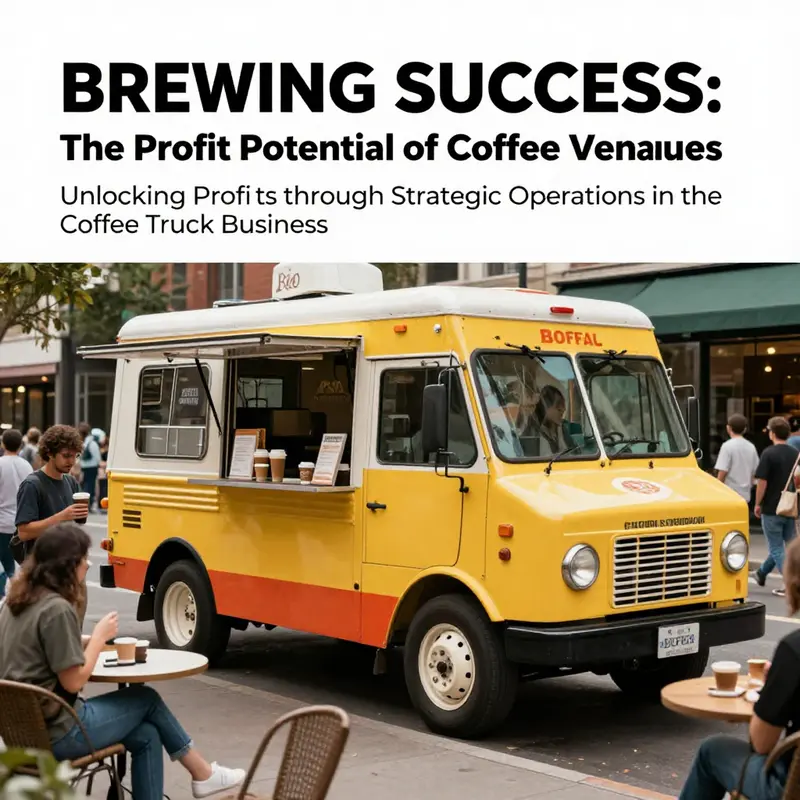
The coffee truck business represents a lucrative opportunity for entrepreneurs, especially in high-traffic urban areas. As logistics and fleet management companies seek innovative ways to enhance operations and provide additional services, understanding the profit potential of this venture becomes critical. In this article, we will analyze the financial opportunities coffee trucks bring, the key drivers of success, and the long-term market outlook, providing a comprehensive guide to maximizing their earnings.
Rolling Profits: Charting Monthly Earnings and the Growth Path of a Mobile Coffee Truck Business
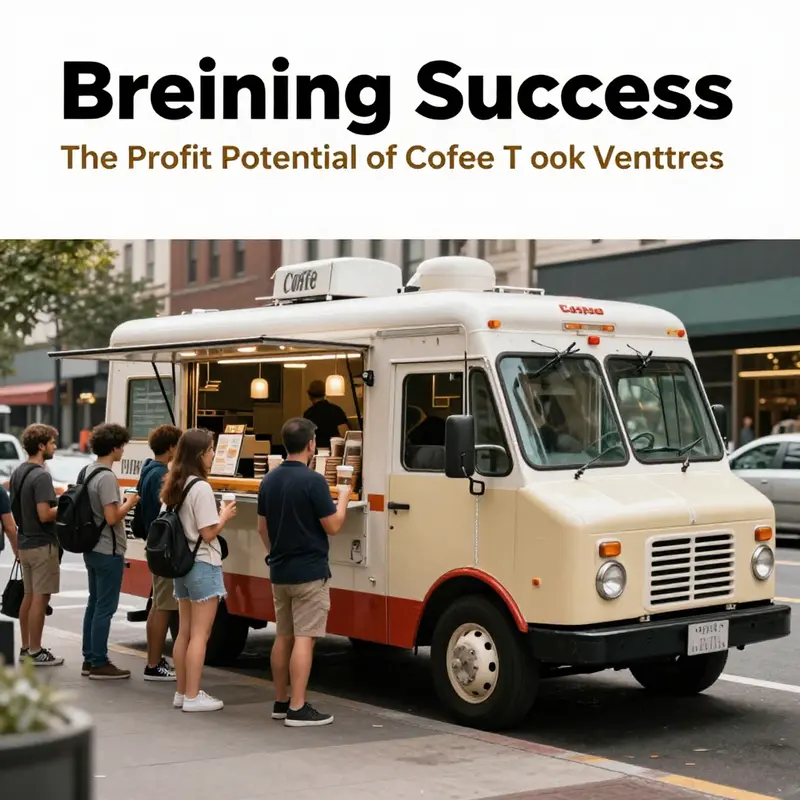
A coffee truck is more than a sleek vehicle with a coffee grinder and a bright logo. It is a portable, disciplined business engine designed to flourish where people live, work, and unwind. In the most practical terms, a mobile coffee operation can deliver a steady stream of revenue by aligning appetite, timing, and location. The latest benchmarks from March 2026 show a single mobile unit capable of generating meaningful monthly revenue, with real upside when the model scales. On a baseline level, operators report monthly revenue in a corridor of roughly fourteen thousand to twenty-one thousand dollars, a figure that rests on selling around two to three hundred cups a day, depending on pricing strategy and daily operating days. If you assume a five-day workweek, that equates to roughly twenty-two to twenty-three operating days in a typical month. At a weighted average price of about three dollars to four dollars per cup, the math looks straightforward: the truck reaches a steady cadence in high-traffic zones, and the daily sales add up quickly. Yet the reality of earnings is not simply the arithmetic of cups sold; the real story is how a driver’s schedule, location, and product mix translate into sustainable cash flow over five or ten years of operation. For many entrepreneurs, the joy of a coffee truck lies in knowing that daily activity compounds into consistent monthly results, while the novelty of mobility invites experimentation with locations that others cannot easily reach.
To frame this discussion clearly, consider the daily rhythm that often drives the top-line. In busy urban corridors—office parks during lunch hours, transit hubs during morning commutes, and weekend markets in cultural districts—neighbors become regulars, and regulars become steady revenue. One widely cited operational pattern emphasizes maximizing “high-traffic windows”: the 11:00 AM to 2:00 PM pulse in corporate settings, extended service at night markets or pop-up events, and early-morning storefront-like service in residential clusters. Under this pattern, a typical day can yield a robust stream of orders, especially when the menu is streamlined for speed but layered enough to satisfy diverse tastes. The essential takeaway is that location and timing—not merely the quality of the beans—drive the cadence of sales. A truck that can be first into a busy park, stay ready for the lunch crowd, and pivot to a popular festival or market later in the day can capture a larger slice of the day’s coffee demand, often well beyond what a stationary kiosk would accumulate in the same footprint.
Another pillar of the earnings story concerns the menu and the margins. A balanced approach combines the reliability of core espresso-based drinks with the allure of premium beverages and high-margin accompaniments. The base lineup—lattes, cappuccinos, and darker espressos—delivers dependable volume, while iced and cold-brew variations capture the attention of a different crowd, particularly in warmer seasons or in markets with a preference for craft beverages. Seasonality offers a natural avenue to introduce limited-time flavors that command higher price points, potentially boosting average ticket size. The most successful operators also diversify revenue by offering premium products that command higher margins, such as signature drinks priced above standard offerings, and by pairing beverages with light snacks, pastries, and artisanal bites. This approach increases the average spend per customer and helps smooth demand across peak and off-peak hours.
In the context of these expectations, the core revenue figure for a single truck rests in a narrow but meaningful range. The data show monthly revenue generally landing between fourteen thousand and twenty-one thousand dollars, a result driven by selling roughly two hundred to three hundred cups per day at an average price around three to four dollars per cup, over about twenty-two operating days in a month. It is worth noting that these figures sit within a broader landscape of performance. In some markets with aggressive pricing and a mix of high-margin products, operators can push the top line higher, while in more price-sensitive areas or during lean months, the revenue figure may trend lower. The variability is not just about cups per day; it also reflects differences in location strategy, the number of hours of operation, staffing efficiency, and the degree to which a mobile unit can command premium prices through branding and customer experience. The takeaway for a first-year operator is clear: establish a repeatable daily routine, optimize the most dependable locales, and keep a tight leash on variable costs to ensure the monthly revenue you generate translates into actual cash flow.
What does that translate into in terms of profitability? The cost structure for mobile coffee operations tends to be lean relative to a brick-and-mortar café. A conventional breakdown cited in several industry benchmarks assigns roughly 35% of revenue to ingredients, 15% to venue or permit-related fees, and 10% to labor. In practice, this creates a 40% to 50% gross margin band on typical sales, with additional fixed costs for things like vehicle maintenance, insurance, and payments on equipment. In a straightforward, cost-conscious model, that means a single truck combining these inputs can achieve a modest but meaningful net profit within the five-thousand-to-eight-thousand-dollar range monthly, given the fourteen- to twenty-one-thousand-dollar revenue band. That is not an extraordinary number, but it is striking when you consider the level of capital required relative to a stationary coffee shop. The initial investment for a mobile setup—vehicle modification, coffee equipment, and basic licensing—often falls in the fifty-thousand-to-eighty-thousand-dollar range. With disciplined financial management and a strong schedule of repeat customers, break-even can arrive within a matter of months, sometimes in as little as five months if the operator locks in low fixed costs and maximizes volume from the early days.
The horizon, however, expands dramatically as the model scales. A high-performance example from a major market demonstrates how the combination of a commercial district operation and proximity to affluent residential communities can unlock far larger monthly profits. In that scenario, monthly revenue rose to the vicinity of eighty-seven thousand dollars, with operational costs around twenty-three thousand dollars, yielding a net figure on the order of sixty-four thousand dollars. While extraordinary, this case illustrates an important principle: the multiplication effect of adding more trucks, expanding authorized service areas, and diversifying the revenue stream can tilt the math decisively in favor of higher profitability. If one truck can deliver a steady baseline, two or three trucks can begin to capture a wider daily footprint, serving more campuses, office clusters, and nightlife venues, and the incremental cost of each additional unit falls due to shared procurement, branding, and back-office efficiencies.
That sense of scale leads to a simple, compelling question: how far can you take a mobile coffee business, and what does the journey look like in practical terms? The most direct answer is that growth is a function of three connected levers: location density, product velocity, and revenue diversification. Location density means building a web of high-traffic zones where the truck can park, operate, and rotate through the day as customer demand shifts. In addition to traditional office parks, these sites include apartment complexes with strong resident turnover, university campuses with permit access, and curated public events such as farmers markets, art fairs, and neighborhood festivals. Product velocity refers to the speed at which orders move from order to pickup, a measure affected by barista workflow, the efficiency of the espresso machine, and the speed of the payment process. Velocity improves when you streamline the menu to a core set of items that can be produced quickly during peak periods, while still offering enough variety to keep customers engaged. Revenue diversification involves creating multiple streams that complement the core coffee offering. Corporate contracts, where a company signs up for a subscription-style service or on-site catering, can provide reliable recurring revenue. Pop-up events and themed experiences broaden the audience, while premium products—such as signature beverages priced above the standard menu—help raise the average ticket and add margin. The convergence of these strategies can transform a single truck from a modest local fixture into a scalable platform for sustained profitability.
For operators seeking a longer-term trajectory, the financial picture becomes even more actionable when translated into a growth roadmap. Projections that model three trucks under a shared management framework suggest revenue growth from roughly five hundred thirty-five thousand dollars over five years to a potential three-point-five-five million dollars in the same period. The range reflects differences in market density, the pace at which new routes are secured, and the degree of standardization achieved across the fleet. A critical part of this growth is the expectation of a relatively rapid break-even for each new unit, typically within the first twelve to eighteen months after launch. This timetable rests on a disciplined approach to the capital investment, the deployment of efficient operations, and the proactive management of labor, supply chain, and regulatory considerations. In other words, scale is not simply about adding more cups per day; it is about orchestrating a cohesive system where each truck reinforces the others, extends the brand presence, and accelerates customer referrals through consistent quality and dependable service.
From a strategic point of view, the way forward combines a lean operational philosophy with a carefully staged expansion plan. The cost structure of mobile coffee operations remains a powerful driver of profitability. Because rent and extensive build-outs are avoided, startup costs stay within a manageable band, often cited as fifty thousand to eighty thousand dollars, with the upside of a rapid return on investment. Even with a modest initial footprint, the right lineup of locations, seasonally adjusted menu items, and a steady cadence of repeat customers can deliver a reliable monthly cash flow. The more nuanced angle is in the product mix: real value comes not just from the number of cups sold but from how much customers are willing to pay for a given combination of quality, convenience, and experience. A strategic blend of high-margin drinks, convenient ordering processes, and on-trend flavors can push the average spend higher, while premium pastry and snack offerings further improve margins without disproportionate increases in labor or overhead.
To illustrate how this works in practice, consider a scenario in which a truck operator introduces signature beverages priced at twenty-two dollars or more and pairs them with carefully chosen light snacks. The incremental effect on average customer spend can be substantial, potentially boosting the total revenue per day by a meaningful margin. While not every market will support such pricing, the concept demonstrates how a mobile coffee business can leverage product design to create a more favorable margin profile. In this framework, the importance of a focused menu is clear: it enables speed, keeps waste low, and makes it easier to train staff to deliver consistent quality under pressure during peak hours. It also creates opportunities to offer themed experiences—such as seasonal flavors or collaboration drinks—that attract attention and generate additional word-of-mouth referrals. The net effect is a more predictable, repeatable revenue engine, with the flexibility to adjust pricing and menu composition as the market evolves.
The market backdrop for these dynamics is favorable and continues to expand. The global coffee cart market is projected to grow from about $3.1 billion in 2025 to roughly $4.5 billion by 2033, a compound annual growth rate of around 4.5%. In a country like China, the coffee market has shown extraordinary scale and appetite, with projections of a multi-hundred-billion-dollar market in the near term, propelled by consumer demand for convenient, high-quality, and experiential beverages. For an entrepreneur with a mobile platform, these macro trends translate into a practical sense of opportunity: coffee on wheels is no longer a novelty but an established channel for delivering daily caffeine and social experience among urban professionals, students, and busy families. The challenge remains operational discipline—maintaining consistency, controlling costs, and continually refining the route map to sustain growth as the fleet expands. In that sense, the mobile coffee truck business is less about chasing moonshot profits and more about building a durable, scalable system that can adapt to changing urban rhythms and consumer tastes.
As you consider whether to pursue this path, one practical invitation is to study how people and teams sustain such ventures beyond the initial launch. The connective tissue that binds every successful operator is a disciplined approach to people—how they are recruited, trained, and retained; how their roles evolve as the fleet grows; and how leadership communicates a clear mission that customers can feel every time they walk up to the window. For a deeper dive into investing in the people who keep a fleet thriving, see the discussion on investing in people as a foundational strategy for trucking fleets. This focus on the human element complements the mechanical and financial aspects, ensuring that the business remains resilient even as it scales. Investing in People: A New Path for Trucking Fleets
Of course, prospective operators should anchor plans to tested resources and formal guides. The Small Business Administration maintains a comprehensive guide on mobile coffee truck profitability and startup considerations, outlining typical costs, revenue patterns, and the longer-term implications of scaling. This external reference provides a useful frame for owners to calibrate their expectations with the realities of licensing, financing, and the steps required to optimize operations as the fleet grows. For readers who want a structured, external overview of the financial planning process, the SBA resource offers a rigorous baseline that complements the experience-based insights presented here. You can explore that guide at the following URL: https://www.sba.gov/business-guide/plan-your-business/mobile-coffee-truck-profitability.
In summary, the rolling profits of a coffee truck are a function of cadence, location, product strategy, and scale. A typical single-truck operation can establish a steady monthly revenue in the mid-teens of thousands of dollars, with a more conservative interpretation that places net profit in a more modest range after accounting for cost of goods and labor. Yet the potential upside is undeniable when a fleet expands and a well-constructed playbook anchors the business in multiple high-traffic venues. The narrative that emerges from the data is not a promise of instant wealth but a credible blueprint for building a resilient, cash-flow-positive venture that can grow with the owner’s appetite for expansion, investment in people, and commitment to delivering a reliable, high-quality coffee experience on wheels.
Fuel on Four Wheels: Four Driving Forces That Make a Coffee Truck Profitable
A coffee truck operates at the intersection of momentum and simplicity. It thrives where people are moving, pausing, and seeking a quick, satisfying moment in their day. In this sense, the path to profitability is less about grand gimmicks and more about orchestrating four fundamental drivers that compound over time: location, product quality and differentiation, operational efficiency, and marketing plus community engagement. When these elements align, a mobile coffee concept can translate into reliable daily revenue, a compelling monthly bottom line, and a rapid return on initial investment. The figures backing this reality are not abstract. They reflect a spectrum—from a lean, conservative model that captures the essentials to a high-performance blueprint that maximizes every minute of exposure. In practical terms, a well-managed coffee truck can produce a daily gross of roughly six hundred to eight hundred and fifty dollars, depending on foot traffic, pricing, and the mix of offerings. Multiply that across a month, and the math becomes even more persuasive: a robust operation can pull in substantial net profits after ingredient costs, venue fees, and labor. The journey from first sale to sustained profitability hinges on how well the four drivers are executed and how continuously they are refined. It is not just about pushing coffee; it is about maximizing time, choice, and trust in a way that fits a mobile format and the rhythms of a city.
Location is the first lever, and it matters more in a truck than in any other retail format. The most successful operators position themselves where lines form and windows of opportunity open. Office parks during the late morning rush, transit nodes before the workday begins, and popular cultural or recreation zones on weekends yield the most consistent streams of customers. The logic is straightforward: if you can catch people when they have time to pause and spend money, you improve your chances of converting attention into purchase. In practice, this means mapping the day as a living calendar—time blocks where foot traffic surges, and the cadence of movement supports repeat visits or impulsive buys. A 2023 report from a national restaurant association corroborates this approach, noting that mobile vendors in prime commercial zones tend to see meaningful revenue uplifts compared with less accessible locations. The implication is clear: location selection is not a cosmetic choice but a strategic one that determines baseline revenue capacity and the ceiling of monthly profit.
Within the broader geography of a city, the vehicle’s proximity to decision-makers and daily habits matters. A truck that parks near office clusters can ride the lunch-hour surge, while a weekend pop-up at a bustling market or festival opens the door to a different, highly engaged audience. The data behind this shift are not merely anecdotal. In the scenario of a one-day, high-traffic push—such as a two-hour window during a mid-day break—sales can reach the upper end of expectations when the mix of drinks and the tempo of service align. A typical model might sell around fifty cups during a two-hour peak at an average price that sustains healthy margins, translating into a daily gross of roughly six hundred dollars. A premium approach—raising average price points and expanding the product lineup—can push daily gross toward eight hundred and fifty dollars or more, illustrating how location and timing, paired with a thoughtful product strategy, unlocks greater daily and monthly profitability. This is where the first driver becomes a multiplier: the more precise the targeting of peak windows and the more deliberate the route or site selection, the greater the potential to stack profitable days throughout a month.
The second driver is product differentiation and quality. A coffee truck is not a bakery-on-wheels, yet it sits in a crowded marketplace where many customers are willing to pay extra for something that feels distinctive and worth the price. The differentiation strategy rests on two axes: the beans themselves and the experience around them. Single-origin options, seasonal specials, and plant-based milk alternatives are not mere buzzwords; they are levers that can lift the perceived value of every cup. The Specialty Coffee Association has documented a strong willingness among consumers to pay premium for coffee that is ethically sourced and of specialty-grade quality. This isn’t about chasing every micro-trend but about curating a reliable, compelling lineup that respects taste diversity while maintaining consistency. When customers trust that they will receive a beverage that tastes the same, or better, than what they enjoyed last time, they are more likely to return, to tip, and to tell friends. The value proposition grows when a shop tiers its offerings—signature drinks that command higher margins, limited-time seasonal items that create urgency, and a few high-margin accompaniments such as small bites or pastries designed to complement coffee without driving cost. The result is a higher average order value and a better overall margin per customer. This is not mere embellishment but a proven path to elevating the unit economics of a coffee truck. Consumers’ readiness to pay more for quality is not a license to charge whatever the market will bear; it is a call to deepen the craft, to invest in small-batch roasting, to emphasize freshness, and to align product attributes with the preferences of the local community.
Operational efficiency is the third driver and perhaps the most practical of the four. A mobile cafe must be nimble and precise. The core advantage of a truck business is its lean structure—no rent for a storefront, minimal build-out, and the ability to relocate quickly in response to demand. Yet that agility becomes real value only when internal systems are crisp and repeatable. Operational efficiency starts with ordering and inventory: a streamlined process for taking orders, a tight cycle for receiving ingredients, and a disciplined approach to waste control. Digital payment platforms and mobile ordering apps do not merely facilitate transactions; they provide a data-rich feedback loop that informs staffing, stock levels, and future location choices. Operators who embrace integrated digital systems report measurably higher customer retention, a measurable 22 percent uplift in loyalty when the process is frictionless, and better forecasting accuracy as sales patterns emerge across different days and venues. Streamlining service speed is another practical aim. Training staff to execute repeatedly precise steps—hot water at the right temperature, correct milk ratios, clean equipment, and efficient cup handling—reduces errors and accelerates service. The math is simple: fewer errors, faster service, and higher throughput translate into more cups sold per hour and more dollars in revenue with less incremental labor cost. The result is a healthier bottom line that scales as operations mature.
The fourth driver is marketing and community engagement. In a mobile business, a strong brand and local attachment are the engines that convert occasional customers into regulars. Social media is not just an channel; it is a city-wide billboard and a personal invitation. The most successful coffee trucks treat their presence as a neighborhood micro-brand. They post real-time updates about locations, menus, and special items; they engage with followers through polls, behind-the-scenes glimpses, and stories that humanize the team. The payoff is measurable: Shopify’s 2024 survey highlighted that a majority of small food truck owners attribute growth to active social media engagement and localized promotions. But engagement alone is not enough. The truck must become an expected part of the community rhythm—seasonal promotions tied to local events, partnerships with nearby businesses for cross-promotions, and participation in markets that attract a diverse crowd. Event-based pop-ups and on-site catering for corporate teams magnify the customer base and open opportunities for longer-term contracts. In this sense, marketing and community engagement become a virtuous loop: better visibility drives more traffic, loyalty strengthens, and the density of recurring customers lowers the cost per cup sold by reinforcing repeat business. The modern coffee truck, then, is a small but mighty marketing engine that compounds the impact of the other three drivers by turning great location, superior product, and efficient operations into enduring customer relationships.
Together, these four drivers do not merely add up; they compound. A well-chosen site with a strong line can deliver the raw volume needed to support a higher-margin, differentiated product. Efficient processes keep that volume profitable by controlling costs and ensuring quick turnover. A marketing strategy that anchors the brand in the community converts one-off buyers into steady patrons, increasing the lifetime value of each customer. When each driver is calibrated to the others, the business can not only reach the attractive daily and monthly revenue figures seen in case studies but also maintain resilience across seasonal demand shifts and competitive dynamics. The beauty of this framework is its adaptability. A truck operator can begin with a lean, location-rich setup and a compact menu, then layer in premium drinks and light snacks as the customer base grows. The incremental cost of adding a high-margin item is often small relative to the uplift in profit per cup when the item aligns with customer taste and brand identity. It is also worth noting that the initial investment for a coffee truck—typically between fifty thousand and eighty thousand dollars when vehicle modification and startup costs are included—can be recouped in as little as five months if the four drivers are executed with discipline. In other words, profitability in this mobile format is less about chasing a single blockbuster idea and more about building a reliable engine that can be tuned and expanded over time.
One practical way to keep these drivers aligned is to view the operation through the lens of people and process. The human element—baristas who understand the mission and customers who feel seen—turns routine transactions into meaningful experiences. A team that shares a clear purpose will wield the efficiency tools more effectively, as coaching and standard work become part of the culture rather than administrative burdens. This is where the internal knowledge of industry practices intersects with the craft of coffee service. Operators who invest in people, training, and a positive work environment tend to see higher retention, better service consistency, and more creative milk-foam artistry that captivates customers. The emphasis on people matters not only for day-to-day sales but for long-term performance. In the mobile context, where the setup can be hurried and the schedule demanding, a crew that communicates well and cares about the customer experience is a competitive advantage that scales with growth.
To connect these ideas back to the practical, consider a veteran operator who treats the four drivers as a single, living system. Location scouting becomes a regular practice, with assessments of foot traffic, nearby competition, and accessibility. Product development is anchored in seasonal rotations and customer feedback, with the core menu providing reliability while the premium offerings create aspiration and excitement. Operations are continuously optimized through data-driven adjustments: inventory levels revised after each shift, labor schedules aligned with expected demand, and digital payments prioritized to shorten lines and capture data for marketing. Marketing efforts are measured by engagement metrics, event participation, and the density of repeat customers, with a focus on community relevance rather than mass advertising volume. When these components are in harmony, the result is not a one-time spike in profit but a stable, growing bottom line that can withstand changes in the local economy and shifts in consumer taste.
In terms of how this translates to the overall profitability narrative of a coffee truck, the four drivers explain why some operators achieve consistently strong monthly net profits while others plateau. The conservative model, which emphasizes steady location choices, reliable but not extravagant product lines, disciplined cost management, and targeted local promotions, can still produce a compelling monthly net profit—often in the lower to mid range of the spectrum described in the research. The high-performance example demonstrates what is possible when the same four drivers are pushed to their limit: a combination of premium products, strategic site pairing, and a marketing engine that sustains a constant conversation with the audience. Importantly, the viability of this model is reinforced by the capital efficiency of a coffee truck in comparison with a traditional storefront. The absence of rent for a fixed space and the relative affordability of vehicle modification reduce the barrier to entry, while the potential for rapid ROI makes it a particularly attractive option for aspiring entrepreneurs who want a quicker ramp to profitability without sacrificing long-term growth potential.
For those exploring the best next steps, a practical approach is to begin with a clear plan that articulates how each driver will be executed from day one. Map at least two peak locations for daily testing across a month, curate a core menu with one or two signature drinks that can command higher margins, implement a simple but reliable point-of-sale and inventory system, and design a lightweight marketing calendar that leverages local partnerships and social storytelling. The aim is not to chase a single silver bullet but to build a resilient, scalable model whose four drivers reinforce one another. In parallel, consider a phased introduction of premium offerings and light snacks that complement coffee without overwhelming the kitchen and supply chain. This approach preserves cash flow during the early growth period and sets the stage for the more ambitious profit targets described in higher-performance scenarios.
An integrated example of how these drivers marry practice to profit can be seen, in essence, as a well-placed unit that begins with a lean, dependable setup and grows into a brand anchored in the community. The local market will determine the pace and direction of this growth, but the underlying architecture—the combination of location, product, operations, and marketing—remains constant. The chapter’s overarching message is that the profitability of a coffee truck is less about a single clever tactic and more about orchestrating these four forces as a cohesive system. When the system works well, the numbers that once seemed aspirational—monthly net profits in the upper range, sustained daily revenue, and a fast payback on startup costs—become reachable realities for operators who commit to disciplined execution, continuous learning, and community-minded engagement. This is how the coffee truck moves from a promising concept to a sustainable, profitable business in the modern urban economy.
For those who want to explore further into the mindset that underpins successful, people-centered mobile operations, there is value in examining how teams in related mobile industries cultivate reliability, culture, and continuous improvement. The linked resource on people-first strategies in trucking offers a perspective on investing in people as a path to performance, reminding readers that the most effective efficiency gains stem from the people who execute the daily routine with care and expertise. people-first-strategies-in-trucking. This line of thinking reinforces the chapter’s core idea: profitability is an outcome of disciplined, human-centered operations as much as it is of product choice or site selection. The broader literature on mobile food trends provides additional context for the market dynamics that shape these decisions, underscoring the value of alignment with consumer expectations and local rhythms. A comprehensive reference for practitioners seeking to connect practice with market realities is the National Restaurant Association’s food truck trends research, which documents evolving consumer behavior and industry opportunities in this space. For readers who want to explore that external perspective, see the industry trends discussion at https://www.nationalrestaurantassociation.org/research/food-truck-trends-2023.
In summary, the profit story of a coffee truck rests on four interlocking drivers that, when executed with discipline and humility, can yield meaningful monthly earnings and a rapid time-to-profit. Location provides the demand structure; product differentiation elevates the offer; operational efficiency converts demand to margin; and marketing and community engagement convert customers into loyal advocates. Together, they form a blueprint for sustainable success in a mobile business that is both simple in its core idea and powerful in its capacity to scale. Against the backdrop of rising interest in flexible, low-overhead ventures, the coffee truck stands out as a practical route to entrepreneurship—one that rewards strategic thinking, relentless execution, and a deep connection to the places it serves.
Market Momentum and the Portable Brewwave: Projecting Growth and Profit for the Coffee Truck Frontier
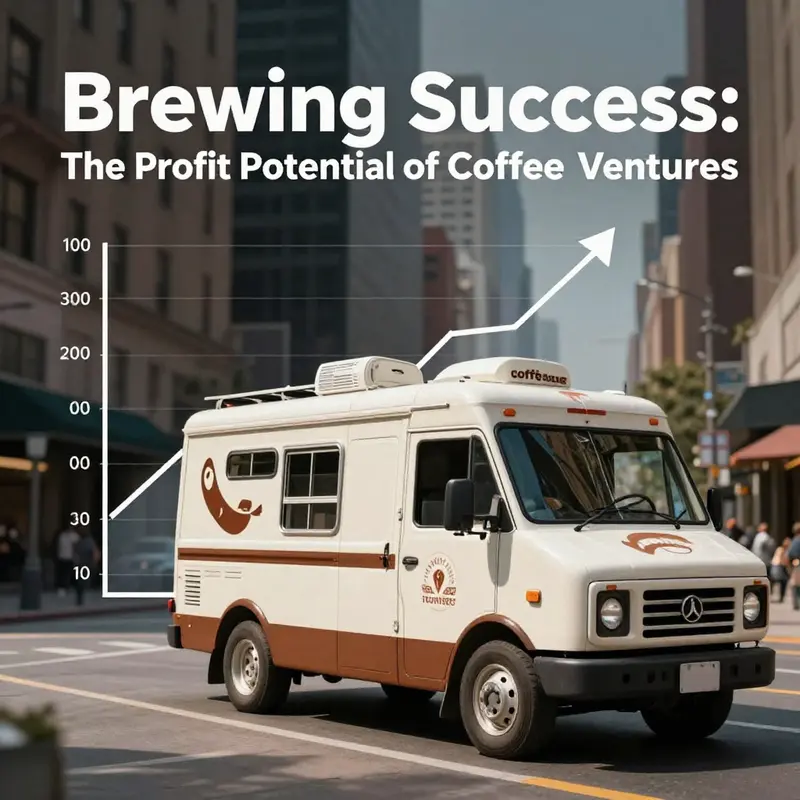
The street mornings where a coffee truck threads through traffic and footfall offer a laboratory of possibility. A small, mobile vessel, gliding from one high-traffic node to another, can become a steady machine for revenue when it aligns with city rhythms and the evolving expectations of modern coffee drinkers. The broader market signals are clear: the mobile coffee segment is expanding, not shrinking, and the sources of its growth are not merely the whims of caffeine culture. They are the practical outcomes of urbanization, the desire for speed without sacrificing quality, and a suite of enabling technologies that makes a small, mobile operation feel almost scalable by design. The global mobile coffee market, projected to grow at a CAGR of about 8.7 percent from 2024 to 2030, is poised to reach roughly $14.6 billion by the end of the forecast period. Those numbers are not abstractions; they map onto streets, office parks, transit hubs, and festival grounds where people want their coffee fast and well made. They also reflect a shift in consumer behavior toward on-demand, personalized experiences for beverages that can be enjoyed en route or at a moment’s pause.”
The appeal of the coffee truck model rests on its combination of mobility and lean operations. Compared to a traditional brick-and-mortar cafe, the initial capital outlay is significantly lower, and the ongoing overhead remains tightly controlled. Startup costs typically fall in a range that many aspiring entrepreneurs can access: roughly $50,000 to $100,000, encompassing vehicle conversion, equipment, permits, initial inventory, and a modest cushion for early marketing. This affordability translates directly into a quicker path to profitability. In practical terms, a well-planned coffee truck can begin generating noticeable cash flow within months, not years. The arithmetic of mobility matters here: the vehicle is a fixed asset with dynamic usage. It travels to where customers congregate, avoiding the long lead times and lease pressures that burden many storefronts. With the right route structure and a disciplined cost model, the financial scale of a small fleet can surprise even seasoned operators who started with a single truck.
Location, timing, and product mix function as the trifecta of profitability. The most successful operators optimize time in the most lucrative windows: the late morning rush near office campuses, the lunch hour in corporate parks, weekend events, and early mornings in residential neighborhoods where households begin their days with a quiet cup before the commute. A quick analysis of daily performance suggests that a conservative, steady model can yield around $600 in gross profit per day, while premium pricing and a carefully curated product mix can push daily profits toward $850. These figures aren’t mere theory. They reflect real-world cases where volume and price synergy drive margins, underscoring how a mobile unit, properly positioned, can outpace some fixed-store peers in a comparable market.
Profit, of course, is a function of margins and volume. A structured approach to costs—ingredient costs, venue or permit fees, labor, and maintenance—shapes the net profit story. Across a cross-section of observed models, monthly net profits can range from about $18,000 to $64,000. The lower end often reflects the simpler schedule in moderate-traffic settings or markets that impose higher per-venue fees or tighter competition. The higher end emerges when an operator executes a dual-location strategy, blending a busy commercial district with a high-end residential community, and leverages premium drinks or a compelling snack offering that nudges the average ticket upward. In one notable example, a combined district and community model delivered a revenue of approximately $87,000 per month and net profits near $64,000 after costs. The lesson is not merely the upside of a single sunlit month; it is the demonstration that, with a scalable plan and disciplined execution, the profitability of a coffee truck can exceed cautious projections while maintaining the flexibility that makes the model so attractive.
From the perspective of daily operations, the math follows a simple, repeatable rhythm. If a truck sells about 50 cups per day at an average price around $20, with a per-cup cost of roughly $8, the daily gross hovers near $600. If the product mix allows for higher-priced items—signature drinks at $22 or more, plus light snacks—the daily gross can climb toward $850. Each incremental dollar of price on premium beverages translates more than proportionally into margin when the incremental cost remains constrained, a dynamic that emphasizes the importance of menu design and upsell opportunities. The real opportunity, however, lies not in a single day but in the consistency of daily performance across weeks and seasons. Urban markets produce predictable surges—office parks during the week, cultural or food markets on weekends, and special events that attract crowds. In those moments, a single truck, properly scheduled and supported by a lean back-office workflow, can generate significant monthly cash flow with relatively modest marketing investment.
What sustains and accelerates this growth is a blend of revenue diversification and operational efficiency. The best operators go beyond selling drinks and move toward a multi-pronged value proposition. Corporate contracts emerge as a reliable stream: coffee subscriptions or on-site catering to offices, where a fixed monthly spend covers a set of daily or weekly beverages and a rotating menu of seasonal offerings. Pop-up events, themed tastings, and collaborations with local bakers or artisans add novelty and attract crowds that may have never encountered the truck before. These events also create a halo effect—people learn about the brand, return at social occasions, and bring new business through word of mouth. Importantly, premium products become a lever for higher margins and higher average ticket amounts. By introducing a couple of high-margin beverages or specialty preparations—crafted, say, with single-origin beans or unique flavor profiles—operators can lift the per-customer contribution by a meaningful margin, often in the neighborhood of a 28 percent uplift in average spend when executed thoughtfully.
Technology and sustainability reinforce the profitability arc. Digital payments, mobile ordering, and social media marketing have become not optional amenities but essential tools. A customer who can place an order in advance and pick up at a predetermined window experiences frictionless service that translates into repeat business. Data analytics, even at a rudimentary level, helps operators optimize routes, forecast demand, and calibrate staffing. The ability to anticipate busy windows—knowing which days and which locations are most productive—turns a mobile unit into a near-precision instrument rather than a guesswork venture. Sustainability concerns, too, are shaping consumer preferences. Eco-friendly packaging, ethically sourced beans, and energy-efficient equipment align with values held by an expanding cohort of customers. A truck that reduces waste, minimizes emissions, and integrates sustainable practices communicates a brand story that resonates in both urban centers and progressive neighborhoods.
Market dynamics at scale reinforce the strategic case for the coffee truck. The broader mobile coffee market is a beneficiary of urban growth and changing lifestyles. The suburban-to-urban shift in work patterns, the rise of mixed-use developments, and the proliferation of events in urban cores create an almost perpetual demand cycle. The numbers speak to a sustained expansion: the global market is expected to continue its upward trajectory, not merely in aggregate revenue but in the dispersion of opportunities across markets that were previously overlooked by traditional cafe operators. The regional variation in demand matters as well. In megacities, the density of potential customers supports aggressive daily volumes but also intensifies competition and the need for tactical placement. In growing urban corridors with evolving mixed-use plans, coffee trucks can establish a first-mover advantage by occupying strategic corners, collaborating with property managers, and weaving into the fabric of daily life. Those who anticipate and adapt to this terrain—balancing speed, quality, and reliability—are best positioned to harvest the long tail of demand.
Looking ahead, growth in the coffee truck sector is likely to be accelerated by a convergence of technology adoption and a continuing emphasis on experience. The mobile model benefits from a suite of innovations that lower friction and raise satisfaction. Ordering apps, contactless payments, and loyalty programs drive repeat purchases and higher reach with minimal incremental cost. Social media platforms amplify word-of-mouth in a way that is disproportionately efficient for a small business on the move. Sustainability remains a differentiator, with operators who prioritize responsible sourcing and greener logistics earning goodwill and attracting a customer base that is willing to pay a premium for alignment with values. These trends are not speculative forecasts; they are already shaping decision-making for new entrants and seasoned operators alike. The market’s trajectory suggests an ecosystem in which a single truck can leverage partnerships, a growing slate of high-margin offerings, and a streamlined operations framework to sustain profitability across seasons and events.
To the entrepreneur evaluating entry, the implication is clear: the coffee truck is not a fragile niche but a durable option for a scalable venture. The low entry barrier combined with the potential for rapid return-on-investment makes this an attractive corridor for capital deployment. In practical terms, even in markets with intense competition, the combination of strategic location choices, diversified revenue streams, and a disciplined cost structure can yield a compelling business case. A thoughtful plan may begin with a single truck, built around a core menu, and a targeted schedule designed to exploit office-day peaks and weekend gatherings. As credibility and brand recognition accumulate, expansion becomes a natural next step—adding a second unit, optimizing a shared operations hub, and diversifying into related services. The fundamental drivers remain consistent: proximity to customers, speed and quality, and the willingness to iterate on the product and the route map until the business learns to anticipate demand with a high degree of accuracy.
The market outlook is not just about profit numbers; it is about resilience and adaptability. Regulators, permitting processes, and local policies can either smooth or slow expansion. A prudent operator studies the regulatory landscape early, forming relationships with local authorities and venue managers to secure favorable terms and predictable access to high-demand locations. The cost of entry, while modest, should be planned with an eye toward contingencies—permits, vehicle maintenance, fuel costs, and the inevitable downtime for repairs. Yet even with these considerations, the path to building a durable mobile coffee business remains compelling. The combination of flexibility, a favorable cost structure, and a strong, measurable demand signal creates a scenario in which long-term profitability can be achieved faster than many traditional food-service concepts.
For those contemplating the journey, the narrative of the coffee truck aligns with broader shifts in how people consume coffee and how small businesses organize themselves around a mobile, customer-centric model. It is a model that benefits from the ability to pivot with market signals, to calibrate the menu to local tastes, and to invest in people and systems that reinforce reliability and quality. The narrative is not about chasing the biggest city’s volume alone but about designing an operating blueprint that thrives in diverse settings—office parks, transit hubs, universities, festivals, and neighborhood markets. The potential is not only measured in dollars but in the degree to which a lean, mobile approach can deliver consistent, high-quality beverages to an urban audience that increasingly values speed, customization, and sustainability. In that sense, the coffee truck is less a simple business venture and more a rotating gateway to repeat customers, reliable cash flow, and scalable growth.
As a final lens, consider the trajectory of this sector within the broader food-service ecosystem. Mobility reduces the fixed costs that can choke growth for a traditional cafe. It also invites experimentation: temporary installations, seasonal offerings, and collaborative formats that create fresh reasons for customers to visit. The long-term potential is anchored in the combination of repeatable daily routines and the opportunity to capture new relationships through events and corporate partnerships. The city is a moving marketplace, and the coffee truck—when it is designed with discipline, customer focus, and strategic ambition—acts as a portable, customer-centric engine for value creation. This is not merely about selling a cup of coffee; it is about delivering a reliable, delightful experience at the moment customers want it most, and then using that experience to unlock broader revenue opportunities as the brand and the route map mature.
External resource: Statista – Global Mobile Coffee Market Size & Forecast (2024–2030)
Internal link reference for broader context on people strategy in mobile operations: Investing in People: Key to Trucking’s Success
Final thoughts
In summary, the coffee truck business can yield significant monthly profits through strategic planning and execution. With insights into the potential earnings and the drivers of success, logistics and fleet management companies can realize the benefits of this venture in enriching their service offerings and enhancing customer satisfaction. As the market continues to grow, now is the time to consider exploring the coffee truck industry.