
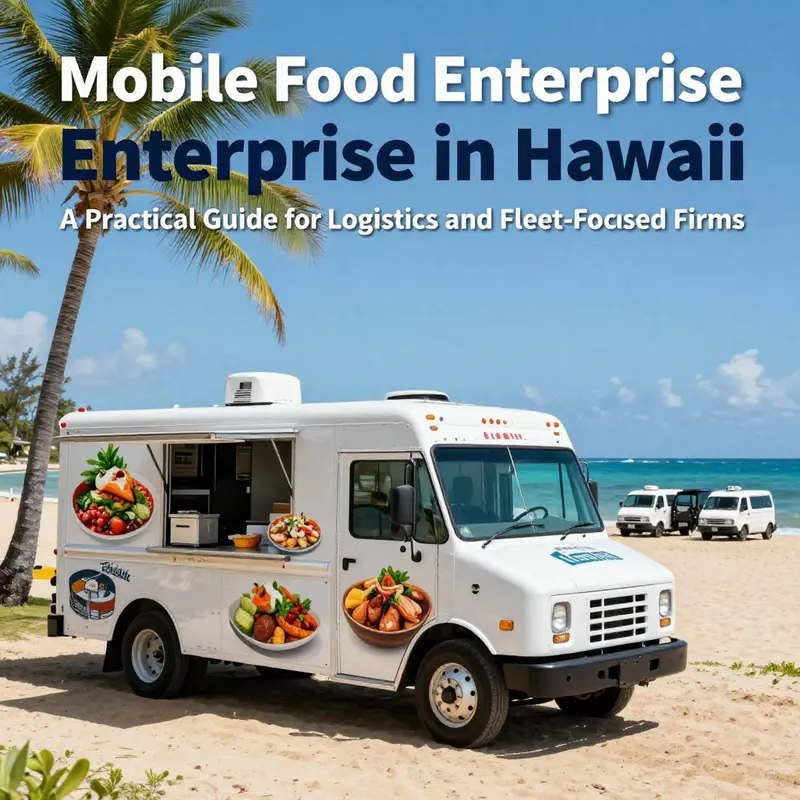
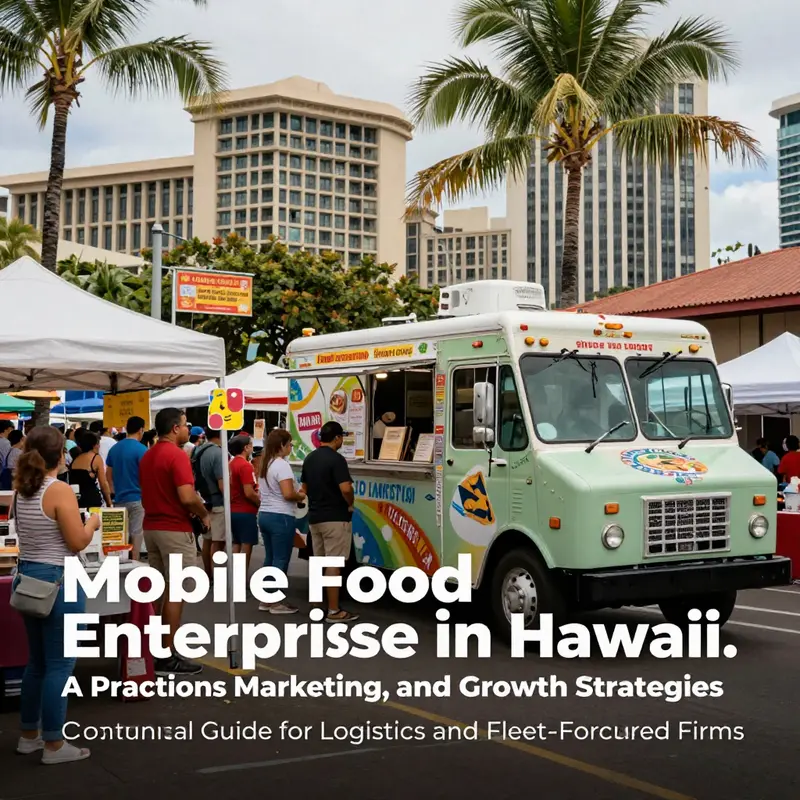
Across Hawaii’s dynamic business ecosystem, mobile food ventures offer a compelling fusion of culinary culture and operational agility. For logistics and fleet-minded organizations, a Hawaii food truck provides a flexible, low-overhead platform to extend services, test demand, and engage communities at construction sites, corporate campuses, events, and markets. The core concept rests on three pillars: authentic, high-quality menu offerings aligned with local tastes; a delivery and service model designed for peak volumes and quick turnover; and branding that communicates reliability, safety, and local authenticity. When the concept is sound, the next frontier is regulatory readiness—securing permits, health compliance, and zoning alignment before the truck hits the road. A well-designed vehicle and streamlined workflow minimize downtime while maintaining hygiene and safety in humid, fast-moving environments. With clear operations and performance metrics, a strategically placed truck can capitalize on beaches, business districts, farmers’ markets, and cultural events, all while digital channels amplify reach. The result is an asset-light, scalable model that aligns with the risk tolerance and growth objectives of logistics teams, construction firms, and fleet operators seeking new revenue streams without heavy capital investment. The four chapters that follow connect concept development, regulatory enrollment, vehicle design and operations, and location-based growth into a cohesive playbook for managing a Hawaii-based food truck within a modern fleet or logistics portfolio.
Chapter 1: Concept and Menu – Crafting a Hawaiian Food Truck Identity That Feels Like Home
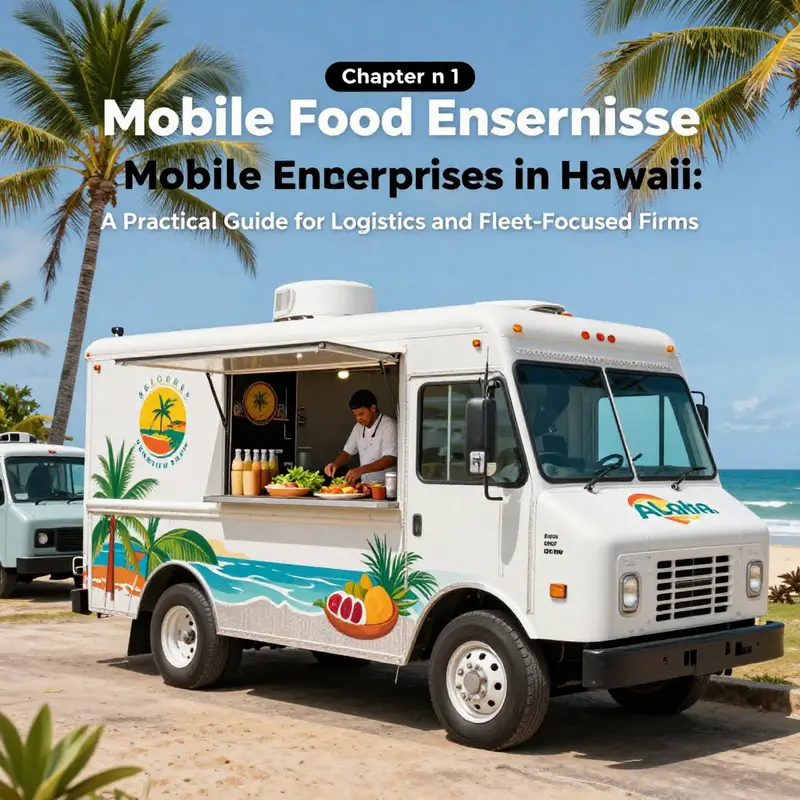
Starting a food truck journey in Hawaii means building a concept that serves as a compass for every decision. Your concept should reflect the islands’ mosaic of cultures, the rhythm of local markets, and the day-to-day realities of life on the road. It should feel authentic, adaptable, and ready to evolve with seasons, events, and the energy of the islands. Begin by listening to the land you’re serving. Hawaii’s culinary landscape is a tapestry of native, Japanese, Filipino, Portuguese, Chinese, and Pacific Island influences that have woven into modern street food. Your concept can honor that heritage while inviting contemporary techniques and health-conscious choices. The result is a concept that travels well and appeals to locals and visitors alike, while staying true to the place you love.
Next, a strong concept defines a culinary voice. Decide whether you’ll reinterpret Hawaiian classics with bold modern finishes or blend island flavors with a global influence – a seafood-forward menu with tropical salsa and citrus reductions, or plant-forward options showcasing locally grown produce. These choices shape your menu structure, brand visuals, and the feel of your truck’s interior. The best Hawaii concepts balance authenticity with practicality, celebrating abundance—taros, sweet potato, kukui nuts, pineapple, mango, and leafy greens—without gimmick. Your concept should consider accessibility: menus should offer satisfying portions, quick cooking times, and easy cleanup. In a busy lunch-hour circuit through business districts, a streamlined lineup of bites that can be prepared in a small kitchen and served fast can win over customers more than a flashy but unwieldy menu.
Storytelling matters: people come for flavor and stay for narrative – the origin of ingredients, the people behind the food, and the sense of place your truck embodies. The story can be local and personal: sourcing from nearby farms, honoring traditional methods, and adapting recipes to seasonal availability. In Hawaii, seasonality is both a reality and a creative spark. Pineapple brightens a salsa in spring and may become part of a glaze later in the year when mangoes peak. A concept that honors seasonality feels dynamic and inviting, encouraging customers to return for new flavors rather than a static rotation.
Menu design should follow from concept: a concise set of signature dishes that travel well and maintain quality, with seasonal riffs to keep the palate curious. It should be flexible to local supply fluctuations: what if a preferred supplier misses a delivery window? Can you pivot without sacrificing taste? Are there reliable substitutes during hurricane season? These questions become part of your menu DNA.
To honor Hawaii’s diversity, craft a base framework—fresh fish, taro, tropical fruits, island-grown vegetables—paired with customizable toppings, sauces, and heat levels. Allow dietary customization (gluten-free, dairy-free, vegan) and label allergens clearly. This signals respect for customers and safety.
Sourcing is a central pillar: whenever possible, prioritize small-scale farmers, seasonal produce, and products with minimal transit. Communicate your sourcing story on boards and social channels; people love to know where their meal begins and how it travels to their plate. Focus areas might include taro, sweet potatoes, leafy greens, tropical fruits, and responsibly sourced seafood.
Brand consistency acts like an invisible apron: color palettes inspired by sun, sea, and earth; readable typography for bright outdoor light; packaging that keeps food warm and portable. Use language that reflects place—inviting and clear—so customers grasp what’s on offer without confusion. Short item names with vivid descriptions can spark appetite without overwhelming someone standing in sunlit queues.
Operationally, ensure the truck’s size, kitchen setup, and workflow enable fast service and reliable quality. Plan equipment around your primary methods, provide a clean hand-washing station, and arrange ingredients so popular items can be assembled quickly. Simple habits—pre-portioning sauces, organized toppings, and efficient utensil placement—affect speed, cleanliness, and guest satisfaction.
At the emotional level, aim for warmth, hospitality, and a sense of community. A concept that invites guests to linger, share meals with friends, and tell others about their experience builds lasting loyalty. Narratives should extend beyond the plate to people behind the food, local partners, and events you attend. A consistent story across service, packaging, and social media fosters trust and repeat visits. In this way, concept and menu form a continuous loop: the menu informs the concept, the concept shapes the menu, and customer feedback refines both.
As you chart your path, consider the broader ecosystem: local councils, agriculture offices, and community associations can provide guidance, resources, and networks to test ideas, pilot menus, and adjust operations before a full rollout. The island environment rewards thoughtful, patient collaboration. If you want leadership guidance applicable to teams on wheels, see resources such as Investing in People: A New Path for Trucking Fleets, which, while broader than food service, highlights building a team aligned with a shared vision. The core principle—that a strong team enables consistent execution—applies to any mobile kitchen in Hawaii too.
Ultimately, your concept and menu should carry the island voice wherever you go, becoming a promise that each bite reflects the land and people. It should invite locals to return, and visitors to remember, your truck as a part of their Hawaii experience. Because Hawaii’s cultural landscape is always evolving, keep the concept open to adaptation while staying true to core flavors and your island sensibility.
External resources for reference and official guidelines are available from the Hawaii Department of Health and related agencies, which provide the formal framework that supports creative, safe, and compliant mobile food service. For official health standards and permit guidance, see Hawaii Department of Health – Mobile Food Establishments. https://health.hawaii.gov/environmental-health/food-safety/mobile-food-establishments/
null
null
Chapter 3: Wheels in Paradise — Vehicle, Equipment, and Smooth Operations for Hawaii’s Food Trucks
The heart of a successful Hawaii food truck lies not just in a clever menu or a sunny location, but in a dependable chassis and a thoughtfully designed kitchen that can endure the islands’ tropical rhythms. The terrain, the weather, and the ebb and flow of tourist seasons all demand a mobile operation that is durable, efficient, and compliant. In this chapter, we move beyond the spark of a great idea and into the practical anatomy of a truck that can work reliably from dawn to dusk across beaches, business districts, and island festivals. The goal is not merely to survive the day but to weave a predictable rhythm into an ever-changing landscape, so that your food, service, and brand become a trusted part of people’s Hawaii experiences. The first decision is the vehicle itself, but it quickly expands into layout, safety, power, sanitation, and a daily operating tempo that matches the pace of the islands.
Choosing the right vehicle is more than a matter of size. It is a balance between space, weight, and resilience to heat and humidity. In Hawaii, the vehicle must tolerate a climate that swings from bright sun to tropical showers, often with limited shade at outdoor locations. A compact, commercial-grade chassis offers the advantage of maneuverability, lower fuel consumption, and enough room to house a kitchen that can perform consistently. The interior should be designed with insulation and climate control that keep cold storage reliable and the cooking area comfortable for staff throughout long shifts. Space planning matters as much as style; it governs how quickly you can move from fridge to prep table to service window without bottlenecks. A well-thought-out layout reduces waste, speeds food assembly, and minimizes the chances of spills or safety hazards during transit.
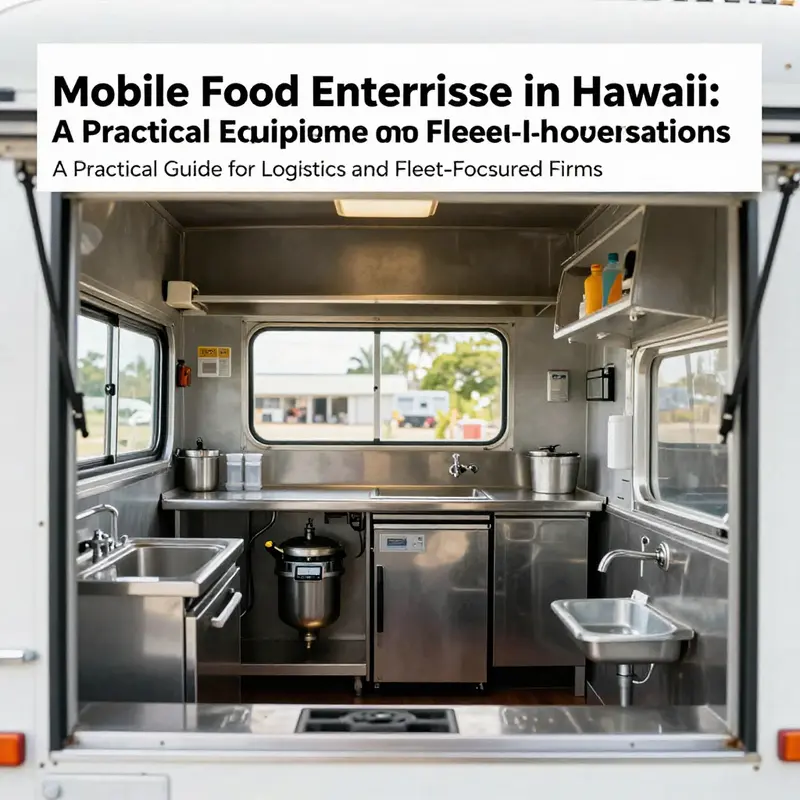
Inside the shell, safety and sanitation dictate every choice. A reputable setup includes a reliable water system with handwashing stations and a waste disposal configuration that separates gray water from wastewater. Sinks should be properly plumbed, with adequate drainage and backflow protection. Countertops must be stainless steel or other non-porous materials that are easy to clean and resistant to corrosion from salt air and citrus residues common in island menus. Flooring should be slip-resistant and easy to sanitize after busy periods. Ventilation is not optional; it protects staff from smoke and steam, preserves food quality, and keeps the truck compliant with health inspections. Because the truck moves across the islands, it is prudent to plan for vibration and road shock. Secure mounting for all heavy equipment, including refrigeration units, ovens, and grills, prevents movement that could cause dangerous shifts while driving or during quick turns on coastal roads.
Power and temperature management are the next frontier. In a place as tourist-driven as Hawaii, the ability to operate off-grid for events on beaches or in parks can be a critical advantage. Many operators equip their trucks with a combination of efficient on-board electrical systems, portable generators, and sometimes solar power supplements. The principle is simple: reduce downtime caused by power interruptions, extend the life of perishable ingredients, and ensure consistent cooking temperatures. This means selecting compact, high-performance appliances that deliver reliability without excessive heat or energy draw. Convection ovens, compact refrigerators, and efficient griddles or fryers—chosen for footprint and airflow compatibility—are common. The emphasis is on appliances that stay cool under tropical conditions and can be cleaned quickly to meet health standards. When possible, every electrical device should be securely mounted to minimize movement and reduce the risk of damage during transit.
Layout, however, is never static. Every route and location has its own rhythm, so operators build a flexible operating plan that can adapt to different venues. A sound model includes a routine that syncs prep times with peak service windows, a predictable sequence for assembly, and a routine that authors a calm, professional pace even when lines spool out. The ability to move efficiently between locations—whether a beachfront picnic area at noon or a bustling business district during the lunch rush—depends on precise routing and a reliable map of permit-backed sites. This is where the operator’s daily discipline shows up in concrete benefits: fewer last-minute location changes, less waiting time for customers, and a brand consistently associated with reliability. A well-run truck also knits together maintenance and inventory management. Simple practices like pre-shift checks on propane lines, water supply, waste bins, and equipment seals can prevent emergency repairs that derail a day’s schedule.
Equipment selection must balance capability with the realities of mobile prep. The kitchen should feature a compact but capable suite of equipment that covers core offerings while leaving room to grow. Essential components include refrigeration that maintains cold chain integrity for seafood, dairy, and produce; cooking stations capable of handling a range of methods—from searing to simmering; and a dependable means of keeping the workspace sanitary between orders. Stainless steel work surfaces, well-organized storage, and secured utensils contribute to speed and cleanliness. Because space is precious, every appliance should be chosen for efficiency as well as versatility. A small, efficient convection oven can replace multiple pieces of heating gear, reducing heat in the cabin while still delivering finished dishes. A reliable handwashing system near the prep zone signals a commitment to hygiene, which resonates with customers who are navigating both convenience and quality.
The pace of service also hinges on the human element. In Hawaii, your operations depend on staff who understand the menu, your standards, and the unique tempo of island customers. Training emphasizes not only cooking technique and food safety but also the choreography of service. Each crew member should know the sequence from order intake to plating to pickup, reducing delays and miscommunication. A well-trained team moves with intention, turning a busy window into an opportunity for consistent, high-quality meals. The opportunity to scale later hinges on this disciplined foundation: an orderly system that can absorb a second truck or a collaborative delivery model without breaking the current performance. This is where a philosophy of operations becomes essential. It is not enough to have a neat kitchen; you need a kitchen that is resilient under pressure, a crew that can adapt during events, and a schedule that aligns with the flow of customers and permits.
In practice, the vehicle, equipment, and operations are a single, living system. Every decision echoes through the day: the size of the truck affects how it will be parked, which in turn affects which sites you can realistically reach. The choice of equipment shapes the menu’s range and the speed with which you can turn raw ingredients into finished plates. The way you structure your day, route your truck, and service customers reflects your commitment to reliability and quality. All of this feeds back into brand perception—customers remember not only what you serve but how quickly and consistently you serve it. Operators who invest in a robust, well-insulated vehicle, a compact yet capable equipment lineup, and a disciplined operating rhythm create a durable platform for growth. They also build a reputation for professionalism that travels with them across the island network and into the steady stream of events that define Hawaii’s vibrant food scene.
As you refine the architecture of your truck, consider the human dimension of operations. Acknowledge the importance of investing in people who can maintain the vehicle, manage inventory, and deliver an exceptional dining experience. A practical mindset, often highlighted in industry conversations, is to adopt people-first strategies in trucking. This approach emphasizes training, safety, and team cohesion, ensuring that your kitchen stays efficient even on crowded days. The idea is simple: when your crew feels prepared and valued, the entire operation becomes more reliable and scalable. A truck built for people, with clear roles and procedures, is easier to manage and harder to derail. For those ready to pursue this path, the payoff is not just the meals sold today but the foundations laid for tomorrow’s growth.
Across Hawaii, the path from concept to street-ready operation unfolds through a sequence of careful decisions about vehicle, layout, and daily discipline. You begin with a chassis that can withstand the tropical climate and long hours, then install a compact but capable kitchen that maximizes space without compromising safety. You set up a power and water system that supports your busiest shifts and survives the demands of remote or seasonal locations. You craft an operating tempo that aligns with the island pace and the rhythm of the markets you serve. And you embed a culture of training and attention to detail that turns ordinary service into an experience customers will seek out again. In doing so, you do more than start a food truck; you build a durable platform that can evolve into a reliable brand across the diverse landscapes of Hawaii.
Finally, a note on partnerships and continuous improvement. Vendors and suppliers who understand the realities of mobile food service can be invaluable allies, helping you source compact, high-quality equipment and dependable power solutions that fit tight confines and weather conditions. Regularly reviewing your layout, safety checks, and staffing patterns after peak events can reveal opportunities to streamline and upgrade without sacrificing the day-to-day rhythm that makes your operation predictable. The island environment rewards resilience, clarity, and a willingness to iterate. With these principles, your vehicle becomes more than a vessel for food; it becomes a reliable stage where cuisine, hospitality, and culture come together for locals and visitors alike.
For operators who want a broader sense of how people and teams shape trucking success, consider the idea of adopting people-first strategies in trucking. It underscores the connection between a well-run vehicle and a well-supported crew, a combination that keeps customers satisfied and your business going strong through Hawaii’s changing seasons. In the chapters that follow, we’ll explore how to align permits, branding, and marketing with this sturdy operational backbone, ensuring that your truck not only serves delicious meals but also embodies a dependable, scalable enterprise.
External resource for deeper technical guidance and regulatory context is available at the Hawaii Department of Health. This official information grounds your plans in current standards and practice, helping you navigate the practical realities of mobile food vending in Hawaii. For ongoing reference, you can consult the Mobile Food Vending Information page.
For authoritative guidance on vehicle, safety, and sanitation specifics, refer to the Hawaii Department of Health’s Mobile Food Vending Information available here: https://health.hawaii.gov/food/
null
null
Final thoughts
A Hawaii-based food truck can be a strategic extension of a logistics-focused portfolio when approached with a disciplined, four-step framework. Begin with a concept and menu that resonate with local tastes and can scale with demand. Secure all regulatory approvals early to minimize risk and ensure consistent operation across counties. Design and equip a vehicle that meets health standards, streamlines workflows, and reduces downtime, especially in humid conditions and on active job sites. Finally, pursue high-potential locations and integrated marketing that align with fleet schedules, corporate events, and community gatherings. When these elements are synchronized, a mobile kitchen becomes a reliable, asset-light revenue stream that complements core business lines, expands service reach, and strengthens brand presence in Hawaii’s dynamic market.