
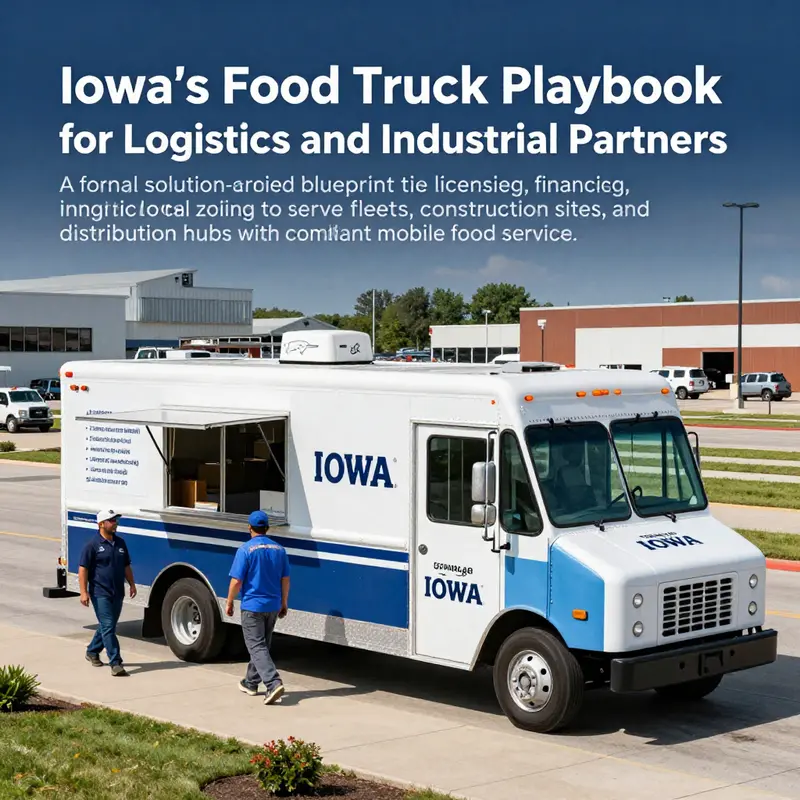
Iowa’s industrial landscape—with its expanding logistics networks, construction activity, and distributed workforce—creates a strategic opportunity for mobile food vendors positioned to serve fleets, project sites, and on-site cafeterias. For operators aiming at logistics and engineering clients, the ability to deliver reliable, compliant meals at the right time is a competitive differentiator. This guide synthesizes the essential regulatory framework, financial planning, commissary requirements, and local zoning considerations into a cohesive, action-oriented playbook. Each chapter builds toward a practical operating model: establishing the right legal structure and licenses, securing suitable facilities, and securing locations that align with clients’ workflows while maintaining health and safety standards. By integrating state guidance from the Iowa DIA and IDPH with county and municipal requirements, logistics executives and fleet managers can assess risk, forecast cash flow, and design multi-site deployment strategies that scale with demand. The result is a defensible, compliant pathway to launch and sustain a food truck operation that reliably serves industrial customers across Iowa’s diverse counties and cities.
Chapter 1: Licensing the Iowa Mobile Kitchen: From Permits to Public Health, a Path to a Successful Food Truck
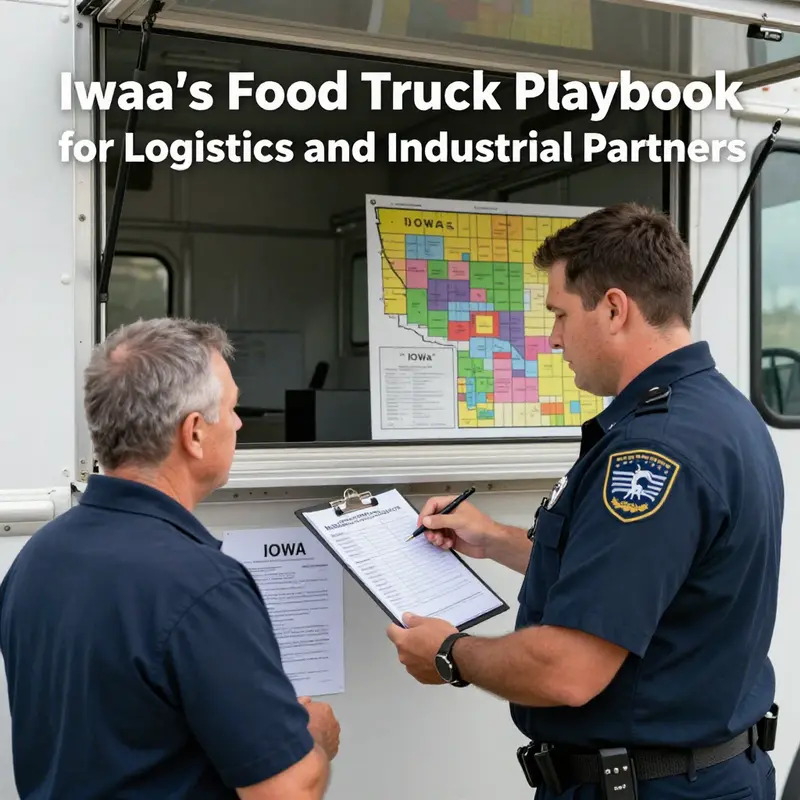
A food truck isn’t just a kitchen on wheels; it is a mobile business that must ride the rails of public health, local zoning, and state regulation. In Iowa, turning a concept into a viable, legal operation starts long before anyone places an order. It begins with understanding how mobile food units are defined, what licenses are required, and how health and safety standards shape every day on the street. This chapter follows that path, weaving together the state’s licensing framework, the role of the Department of Inspections and Appeals (DIA) and the Iowa Department of Public Health (IDPH), local nuances from Des Moines to Dubuque, and the practical realities of equipment, financing, and location strategy. The goal is a cohesive sense of how a new Iowa food truck moves from idea to compliant, profitable operation that can adapt to multi-jurisdictional crowds and markets over time.
At the core, Iowa treats mobile food units as portable food establishments under the Iowa Food Code. That designation is more than semantics: it anchors the licensing and inspection regime that keeps customers safe. A mobile food unit is a readily movable operation that can be set up and dismantled, typically operating at a single location for up to three consecutive days. The operative rule is simple in concept but exacting in practice. To legally operate, the unit must be licensed in the county where it is stored and serviced. If a unit comes from outside the state, the operator must obtain an Iowa-specific license before serving Iowans. This sometimes surprises operators who assumed out-of-state credentials would suffice; Iowa’s approach is designed to ensure consistency in health and safety practices regardless of origin.
The licensing pathway is practical and procedural. Start with the DIA, which administers the primary food-licensing functions for mobile units. The DIA’s oversight covers inspections, permits, and the license that legitimizes a unit’s presence in the field. The other side of the coin is the IDPH, which provides the Iowa Food Code and the specific health-safety standards mobile units must meet. In practice, this means documented handwashing procedures, a reliable supply of potable water, verified temperatures for holding foods, approved waste disposal, and effective pest control. A modern mobile kitchen thus becomes a small, highly regulated facility on wheels, and the operator’s daily routine must mirror that regulatory reality: trained staff, standardized cleaning and sanitization procedures, and meticulous recordkeeping of inspections, temperatures, and maintenance events.
Applicants will interact with state platforms designed to streamline entry into the regulated space. The DIA maintains online systems for licensing and permit management, while the IDPH’s standards define the operational expectations that inspectors will enforce. For most operators, this means a clear sequence: determine the correct license type, submit the appropriate forms, arrange a health inspection, and confirm facility adequacy. It is not merely about acquiring a permit; it is about building a sustainable compliance culture that persists beyond the initial approval. The result is a framework that supports safe service while allowing a mobile business to reach diverse urban, suburban, and event-driven markets across Iowa.
Local permitting adds another layer of nuance. Des Moines, Iowa City, Cedar Rapids, Dubuque, and other municipalities each set their own expectations for mobile vendors. Some cities require additional mobile vendor permits or impose location-specific approvals, while others may specify operating zones, parking allocations, or hours of operation. The common thread is that local health or planning departments are your primary contacts for current rules. A successful operator treats this as ongoing governance rather than a one-time form submission, because rules can change with city planning priorities, seasonal events, or public health advisories. In practice, a plan to operate in multiple cities must begin with a proactive conversation with each jurisdiction’s health department to align on commissary requirements, waste management, and site rules.
A core element often shared across jurisdictions is the commissary requirement. Iowa law and many local codes expect mobile units to operate in conjunction with a licensed central kitchen or commissary. The commissary serves as the hub for daily food preparation, inventory management, and waste handling. A well-structured commissary arrangement supports sanitation controls, proper storage for ingredients and finished products, and access to handwashing and warewashing facilities. It also ensures there is a defined schedule for daily cleaning, inventory checks, and equipment maintenance. The legal and practical implication is that a food-truck operator cannot simply pull up in a parking lot and cook; there must be a licensed facility that meets health and safety standards and provides the necessary infrastructure to maintain hygiene, waste disposal, and compliance records.
Within the health-and-safety spectrum, the day-to-day demands extend beyond a single inspection. All mobile units must meet the health-code requirements for sanitation, temperature control, and safe food handling. It is common for state or local health authorities to conduct regular inspections, and the outcomes—pass or fail—shape a truck’s ability to operate in that jurisdiction. To prepare, operators should implement standard operating procedures that cover training, food handling, cleaning, sanitization, and recordkeeping. Documentation should include sanitation logs, equipment maintenance records, temperature logs for cold and hot holding, and proof of staff training. A disciplined approach to compliance creates a predictable path through inspections and reduces the risk of disruptions to service.
Financial planning underpins every operational decision. The upfront costs of a mobile kitchen in Iowa vary with vehicle choice, layout complexity, and branding ambitions. A typical new or custom-built unit can run from fifty thousand dollars to well over one hundred fifty thousand dollars, with higher-end configurations offering more extensive workflows and branding opportunities. Kitchen equipment, including grills, fryers, refrigeration, plumbing, and ventilation, can push the start-up tab toward the fifty-thousand-dollar range or higher. Permits and licenses are variable but generally modest relative to the vehicle and equipment, while insurance costs reflect risk factors and coverage levels. General liability, commercial auto, and property insurance are essential, and workers’ compensation becomes necessary if staff are employed. Beyond the hard costs, most operators invest in signage, branding, a user-friendly website, online ordering, and initial promotional events to generate demand. This blend of fixed costs and ongoing expenses requires a carefully constructed financial model: startup costs, a break-even analysis, and revenue projections that consider the seasonal nature of events and the cadence of farmer’s markets, festivals, and peak hours in downtown cores.
The location strategy ties the whole venture to real places where people gather, eat, and socialize. Iowa’s vibrant food scene extends beyond brick-and-mortar restaurants into university campuses, office parks, farmers markets, festivals, and park-adjacent venues. The right locations combine high foot traffic with a workable regulatory framework, allowing a unit to operate legally and profitably. Proactive scouting, using local business directories and event calendars, helps in identifying recurring venues and building a predictable schedule. Most operators aim to work out a mix of locations that balance stable, routine earnings with the excitement of one-off events. Noise, waste management, parking duration, and proximity to prevailing eateries are all factors that require advance planning and permits. In multi-jurisdiction operations, the challenge increases as each locale may have different parking rules, permit cycles, and reporting requirements. Yet this complexity also offers the opportunity to diversify revenue streams by serving diverse communities and events.
This is where branding and customer experience intersect with licensing. Operators should plan a brand that travels well across districts, with a menu design that suits limited kitchen space and food-safety constraints. A strong brand helps drive repeat customers across different locations and events, which is essential given the variability in daily foot traffic. Online presence is part of the operating system, not an afterthought, and could include social media updates, location schedules, and, where feasible, online ordering to reduce queue times and improve service speed. Cashless or mobile payment options add another layer of efficiency that customers increasingly expect, while also simplifying reconciliation for the operator. The licensing framework complements, rather than restricts, good branding and customer experience by encouraging standardization of service, which in turn aids in maintaining safety and quality across locations.
Given the complexity of operating under multiple jurisdictions, operators must become adept at regulatory navigation. Iowa’s structure does not adopt a single statewide zoning standard for mobile food units; instead, counties and cities set the rules. This decentralization allows local tailoring but requires careful coordination. If a truck is planning to operate in Des Moines one week and Iowa City the next, the owner should build a regulatory calendar that tracks each locale’s licensing cycles, permit renewals, health inspections, and any zone-specific restrictions. The risk of misalignment is real: a unit can be parked legally in one jurisdiction yet face fines or closure in another if cross-border compliance is not managed. To mitigate this, operators should maintain a compliance calendar, keep copies of relevant permits, and designate a point person responsible for local liaison with each health department and planning office.
In terms of ongoing relationships and professional guidance, operators should prioritize official sources. The Iowa Secretary of State provides the online systems for business formation and fast-track filings, while the DIA and IDPH host the licensing and health-safety documentation that govern mobile units. Local codes, whether in Des Moines, Iowa City, or Cedar Rapids, spell out the precise steps for permits, zones, and health inspections. When planning networks across several jurisdictions, consider engaging a local advisor who understands the nuances of commissaries, waste handling, and pad-site locations, as well as the differences in licensing cycles and reporting requirements. This investment pays off in smoother operations and fewer regulatory surprises as the business scales.
To stay grounded in the practical, many operators develop a quick-start mindset: write a detailed business plan, select a legal structure, register with the Secretary of State, and secure a license in the proper county. Then they acquire a compliant mobile unit and a licensed commissary, arrange for a suitable insurance package, and budget for ongoing permits and inspections. Alongside this, a deliberate marketing and branding plan, together with a pragmatic approach to payment systems, can turn a compliant enterprise into a recognizable local option with broad appeal. The key is to keep compliance as an ongoing discipline rather than a one-time hurdle. This mindset makes it possible to adapt to new events, new neighborhoods, and the inevitable regulatory updates that accompany food-safety science and public health guidance.
As a practical note, the official guidance and application procedures are available on the Iowa Department of Inspections and Appeals website. Operators who want a clear, up-to-date view of licensing requirements should consult the DIA portal directly, and cross-check the Iowa Food Code issued by IDPH to ensure all sanitation, temperature control, and facility standards are met before submitting applications. The combination of DIA’s licensing framework and IDPH’s safety standards creates a robust platform for responsible growth of mobile food services, ensuring that as the concept expands—from a single truck to a fleet that serves multiple neighborhoods and events—the core commitment to public health remains intact.
For those seeking a concise orientation to related regulatory considerations in mobility-focused sectors, regulators often describe a similar balancing act between speed to market and safety. For a broader perspective on regulatory relief and how it can influence move-fast, stay-safe operations, you can read a related discussion here: Regulatory relief during winter storms for trucking.
Finally, for official guidance and application procedures, visit the Iowa Department of Inspections and Appeals directly. The DIA site houses licensing information and portal access, while the IDPH’s resources describe the specific health and safety expectations mobile units must meet. The combination of these state resources, plus the local codes in each city or county, provides a practical map for navigating the licensing landscape. When planning cross-jurisdiction operations, always confirm current rules with the relevant municipal or county offices and keep a vigilant record of inspections, maintenance, and staff training. This approach is essential to sustaining a compliant business that can grow with demand and without disruption.
External resource: For official guidance and application procedures, see the DIA portal and related state resources at the Iowa government site: Iowa DIA portal.
Chapter 2: Financing the Dream, Insurance Shields, and the Commissary Foundation for Iowa Food Trucks
The path to launching a food truck in Iowa begins long before the first burner fires up or the first bell rings for customers. It starts with a coherent financial plan, the right insurance protections, and a solid commissary arrangement that keeps the operation compliant, efficient, and scalable. In a state where regulatory requirements ride alongside market opportunities, the financial architecture of a mobile kitchen must be sturdy, flexible, and grounded in real-world costs. This chapter walks through the core elements of that architecture, weaving together funding strategies, risk safeguards, and the central role of a licensed commissary, all while keeping the practical realities of Iowa’s licensing landscape in view. A well-designed plan does more than map numbers; it aligns your ambition with regulatory steps, operational rhythms, and the courage to invest in people and processes that will carry your truck from one busy corner to the next.
Start with the big picture: what you want to serve, where you want to serve it, and who will do the work day to day. A precise concept helps shape a credible financial model. In Iowa, as in many states, a food truck is not a stand-alone kitchen; it is a mobile business that must be backed by a licensed commissary, proper vehicle and equipment, and a compliance-focused operations plan. Your business plan should detail startup costs, ongoing expenses, revenue projections, and a realistic path to break-even. Begin by itemizing the largest line items: the vehicle itself, whether new or used, and any custom layout that optimizes workflow and safety. The costs here can range widely—from fifty thousand dollars for a practical, well-equipped unit to well over that for a custom, branded kitchen on wheels. Add a careful estimate of kitchen equipment, which covers grills, fryers, refrigeration, ventilation, plumbing, and a reliable point-of-sale system. Don’t overlook smaller, fast-moving line items such as branding, a website, online ordering capabilities, and the initial inventory that keeps your first weeks from stalling.
Financing such a venture requires clarity about available options and the inherent trade-offs. Traditional bank loans can be suitable, but many new operators turn to Small Business Administration (SBA) loan programs, which often provide favorable terms for equipment and working capital. A personal investment might be paired with a small business loan to reduce debt-service pressure during the early months. The loans themselves are less a magic wand and more a structured tool: they demand a solid business plan, credible cash-flow projections, and a track record or collateral that lenders find reassuring. As you assemble this package, think not only about the money you need to buy the truck and stock initial inventory but also about the cash you’ll require to cover operating costs during the ramp-up: fuel, maintenance, insurance premiums, permit renewals, and payroll if you hire staff for peak periods at markets or events.
A realistic financial model anchors every other decision. This means building a month-by-month forecast for at least the first year, with scenario planning for best-case, expected, and conservative demand. Consider location strategy as a lever in your financial plan. Higher-traffic sites can accelerate revenue generation, but they often come with higher permit costs, time restrictions, and competing vendors. A robust projection incorporates occupation of reliable sites like farmers markets, festivals, airports or universities, and municipal zones where you are allowed to operate. In Iowa, the variability across counties and cities matters just as much as the variability of weather and consumer appetite. A linear, one-size-fits-all forecast won’t survive a first season of lessons learned in Des Moines, Iowa City, or Cedar Rapids. The plan must capture both the opportunities of diverse Iowa communities and the complexity of cross-jurisdiction compliance.
If you have a partner or investors, the structure matters. An LLC is commonly recommended for liability protection and tax flexibility, and it helps clarify ownership and profit distribution while keeping personal risk manageable. You’ll register with the Iowa Secretary of State, ideally using online fast-track filings when available. From there, you’ll handle state and local taxes—sales tax and business taxes—through the appropriate channels. The licensing landscape underscores the need for a careful, staged approach: you will secure a Mobile Food Unit license in the county where the unit is stored, and you’ll need Iowa-specific licensing if the unit originates from outside the state. The DIA and IDPH provide the backbone of the regulatory framework, and you’ll navigate local permits and health inspections that vary from Des Moines to Iowa City to Dubuque. This is not a hurdle to be endured once; it is a recurring cycle of renewals, inspections, and documentation that must be planned for in cash flow and staffing.
As you map expenses, it’s essential to separate start-up capital from working capital. Start-up costs cover the truck, upfit, initial licenses, first month of insurance premiums, marketing, and the commissary agreement. Working capital covers ongoing costs—rent at the commissary, monthly insurance premiums, fuel, maintenance, and payroll if you onboard staff. The commissary itself is a pivotal, recurring cost and a cornerstone of compliance. Iowa and many local jurisdictions require a commissary or central kitchen where you can prepare food, store perishables, clean equipment, and handle waste with processes that meet IDPH standards. A commissary is not a luxury; it is a regulatory necessity that ensures sanitation, fleet reliability, and consistent food safety across your operations. In practice, you will need to evaluate a few facilities: do they provide licensed, hygienic storage for ingredients and finished products? Do they offer appropriate handwashing and warewashing facilities? Is there proper ventilation and fire-safety infrastructure? Are waste handling and drainage arrangements compatible with local codes, including grease disposal and wastewater management? And crucially, do they align with the daily schedules you anticipate—prep sessions, inventory checks, and post-service cleaning?
Choosing the right commissary is more than a convenience; it is a compliance decision that can influence your health inspections, insurance needs, and even the ability to secure certain lenders who want to see a structured operating model. Work with facilities that can provide documentation of licensing, health ratings, and ongoing compliance. A well-documented commissary relationship helps with insurance underwriting, as insurers look for predictable boundaries around food handling, equipment protection, and storage conditions. In your financial plan, you should also account for the possibility of commissary-related variability—some facilities charge monthly rent, others bill by use; some may require a minimum number of hours or days of facility access. Build contingencies into your forecast for seasonal market fluctuations, especially given Iowa’s diverse climate and the seasonal rhythm of farmers markets, fairs, and college campuses.
Insurance is the next critical pillar, and it deserves careful, proactive work rather than a rush to purchase. General liability insurance protects against third-party claims of bodily injury or property damage. This is not only a prudent precaution but a common requirement from vendors, event organizers, and the loan community. Commercial auto insurance is mandatory for the truck itself; it protects the vehicle and its cargo against accidents, theft, and damage. If you employ staff, workers’ compensation coverage is often a requirement, and even for sole operators, some lenders or partners may expect a basic level of risk transfer. In practice, insurers who understand mobile food businesses can tailor coverages to your realities: the risk profile of a high-mileage vehicle, kitchen equipment that travels between sites, and the potential for slip-and-fall incidents in uneven outdoor environments. When you solicit quotes, prepare a robust package: a description of your truck’s layout, a list of equipment with approximate values, the expected number of daily transactions, anticipated locations, and the hours of operation. Policies and premiums will correlate with risk factors such as the type of cuisine, the complexity of the menu, the presence of deep fryers or grills, and the proximity to high-traffic events where crowds can be both a signal of opportunity and a risk of incidents. For mobile operators, it is often wise to seek a carrier who has explicit experience with food trucks or mobile food vendors, as they will understand the nuances of route scheduling, on-site power and water needs, and the special considerations for waste disposal.
The practical mechanics of insurance also connect to your risk management practices. Communicate clearly with your insurer about your commissary arrangements, the scope of your daily operations, and the specifics of your supply chain. Maintain thorough records of maintenance, inspections, and staff training. Health inspections, record-keeping, and adherence to standard operating procedures feed directly into your risk profile and, by extension, your premium levels. The Iowa licensing and inspections framework, overseen by the DIA and IDPH, is built to work in tandem with your insurance strategy. A well-organized file of health inspections, equipment maintenance logs, and sanitized cleaning schedules can keep your operations moving smoothly through routine audits and periodic checks. In practical terms, this means you should implement a disciplined schedule for cleaning and sanitization, document every handwashing and temperature check, and maintain accessible records for the health department and for your insurer. It is not merely about meeting minimum requirements; it is about building a culture of food safety that reduces risk for customers and for your business—the kind of culture that lenders and insurers reward with more favorable terms.
The financial and regulatory pieces also hinge on a thoughtful approach to location strategy and ongoing operations. Your financing plan should reflect the realities of operating in multiple jurisdictions within Iowa. There is no uniform statewide zoning standard for food trucks; rather, operators must comply with the local codes of the counties and cities where they operate. This decentralized framework means that your business plan needs to anticipate not only the cost of entry into a single market but the cost of scale across several, potentially overlapping jurisdictions. In many cases, running a multi-site operation requires more sophisticated scheduling, inventory management, and staffing, all of which have direct implications for cash flow and working capital. You will be balancing the desire to be visible in high-traffic venues with the practical constraints of license timing, permit issuance cycles, and the necessity of maintaining a compliant operation at each site. A uniform approach may not be possible, but a cohesive, documented approach is essential. This is where a well-structured financial model, supported by a dedicated administrator or manager, pays dividends in consistency and speed of scale.
To bring these pieces together in a practical, actionable way, consider how a few core decisions will shape your path. First, decide the type of mobile unit: a food truck or a food cart. Each has its own regulatory nuance and cost profile, and knowing this early can save you time and money in the planning phase. Second, secure a commissary that not only fits your workflow but also provides reliable access to essential services like waste management, equipment sanitization, and storage. Third, approach insurance as a strategic asset rather than a compliance checkbox. Build a package that reflects your risk profile and that provides room to grow as you add staff, extend operating hours, or expand into new sites. Fourth, approach financing with a clear plan for the loan’s purpose, repayment structure, and how the funding will translate into revenue. Lenders will look for evidence that your cash flow supports debt service and that you have a credible plan to capture demand at multiple Iowa locations, including both established markets and emerging opportunities.
You may find it helpful to anchor your decision-making to a practical touchpoint: a single, well-chosen internal resource that bridges regulation and finance. For example, you might explore how capital, people, and process intersect in mobile operations by consulting resources that focus on investing in human capital as a driver of operational excellence. Investing in people: a new path for trucking fleets offers a perspective on how training, staffing, and leadership development contribute to the resilience and adaptability of a fleet. While the context is trucking, the underlying principle applies just as powerfully to a food truck operation: skilled staff and experienced managers enable you to navigate the uncertainties of markets, maintain consistent service during peak periods, and sustain quality as you scale. The link serves not as a direct blueprint for food trucks but as a reminder that the human element—the people who prepare, serve, clean, and manage—often determines whether the numbers add up in the long run.
As a practical matter, then, your short-term milestones should include securing a commissary agreement, obtaining the initial round of insurance quotes, and filing the necessary licenses in the first target county. You may schedule a pre-operational health inspection during the permit window to anticipate the kinds of questions inspectors will ask. Align these steps with a realistic construction timeline for the truck and with a phased revenue plan for the first few markets. It’s not unusual for operators to approach the first season with a conservative estimate in year one and a more aggressive plan for year two, provided that the base infrastructure—licensing, commissary, and insurance—remains solid. In Iowa, the regulatory clarity you gain through a careful, documented process will become your strongest asset. You’ll know what to expect at the health department, which permits to renew, and how to track the status of your licenses across jurisdictions where you operate. That clarity helps lenders see your business as a legitimate, organized venture with a sustainable path to profitability.
Finally, keep in mind that the process is ongoing, not a one-off event. Ongoing compliance means renewing licenses on schedule, updating insurance policies as your operation grows or changes, and maintaining a rigorous record-keeping system for inspections, maintenance, and staff training. The day you receive your first permit is not the end of the journey but the beginning of a disciplined operating rhythm that supports safe food handling, reliable service, and the capacity to respond to opportunities in Iowa’s diverse communities. If anything in this chapter bears repeating, it is this: in a field where flavor and speed attract customers, the difference between a good season and a great one often comes down to the quiet, steady work of budgeting wisely, protecting your assets, and operating within a framework that keeps you compliant, competitive, and ready to grow.
For readers seeking the most authoritative, up-to-date guidance on the licensing and health standards that drive these decisions, official state resources remain the best starting point. The Iowa Department of Inspections and Appeals (DIA) and the Iowa Department of Public Health (IDPH) collectively shape the rules you’ll follow as you launch and expand. The DIA site covers licensing processes, while IDPH publishes the Iowa Food Code and related safety standards applicable to mobile units. Local codes in Des Moines, Iowa City, Cedar Rapids, and Dubuque add further detail, and each jurisdiction may have unique permit requirements, designated operating zones, and inspection schedules. Always verify current rules with the relevant municipal or county offices and keep a running log of required filings and inspections so your business can stay ahead of renewals and potential compliance gaps. To explore the official portal where many of these documents and forms are hosted, visit the state resource at https://www.iowa.gov/inspections-and-appeals.
External resource: For official documentation and the latest guidance on licensing, inspections, and health standards, refer to the Iowa state portal on inspections and appeals: https://www.iowa.gov/inspections-and-appeals.
Chapter 3: From Ordinances to Busy Corners: Navigating Iowa’s Local Regulation and Location Strategy for a Food Truck
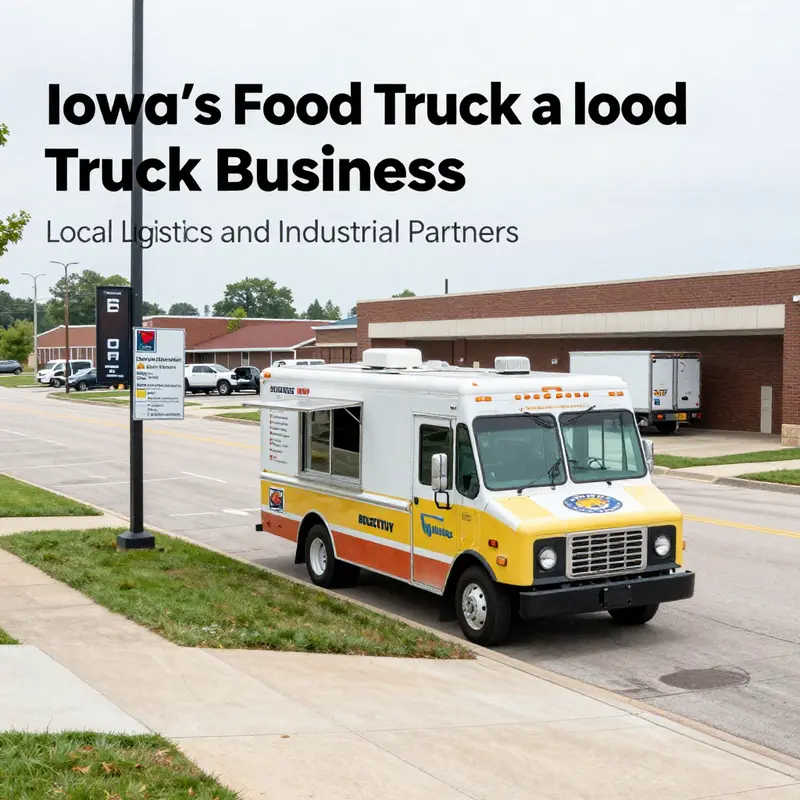
Launching a food truck in Iowa is as much a test of navigation as it is of cooking. The state’s regulatory landscape is intentionally granular, built from a mosaic of county rules, city ordinances, health codes, and local zoning decisions. That complexity can feel daunting at first, but it also offers a clear path to building a compliant operation that thrives in high-traffic spots. The core idea is simple: start with the state-wide framework, confirm the county and city requirements where you plan to operate, and then design a location strategy that respects those boundaries while maximizing customer reach and brand presence. When you connect these dots early, your concept moves from an idea into a scalable venture with predictable costs, smoother inspections, and the ability to grow across multiple zones in Iowa’s diverse communities.
The first thing to decide is how your concept will exist on the street. In Iowa, there is a meaningful distinction between a traditional food truck and other mobile formats, and the licensing pathways reflect that reality. A mobile food unit must be licensed in the county where it is stored and serviced. If your unit originates from outside Iowa, you will need an Iowa-specific license to operate within the state. This requirement anchors your planning in local geography from day one. You are not just chasing a permit; you are aligning with a local authority that will expect your vehicle to be kept in a designated, inspected space, with a kitchen that meets established hygienic standards. The licensing platforms you’ll use are the state’s pathways for food service permits, typically administered by the Department of Inspections and Appeals (DIA) and supported by IDPH’s food safety standards. The online portals exist to centralize oversight, but they also reflect a simple, practical rule: the closer you map your kitchen, your truck, and your resting place to an approved ecosystem, the smoother your compliance journey will be.
That ecosystem includes more than a license. It often depends on a commissary or central kitchen arrangement. The commissary is not merely a storage site; it is a licensed facility that provides a sanctioned environment for daily meal preparation, inventory management, and waste handling. In Iowa and many local jurisdictions, operating a mobile unit without a compliant commissary is not a realistic option. A fully licensed commissary should provide, at minimum, a clean kitchen, proper sanitation controls, hygienic storage for ingredients and finished products (including cold storage for perishables and dry storage for non-perishables), handwashing and warewashing stations, and appropriate ventilation and fire-safety measures. It also needs to accommodate waste handling and drainage in a manner consistent with local regulations, grease disposal, and pest-control practices. This is where the health-and-safety requirements translate directly into day-to-day operations: if your commissary can’t support your workflow, your unit won’t pass inspections, and your schedule will suffer.
Health and safety compliance sits at the center of every decision. The Iowa Food Code and the standards published by IDPH govern the safe handling of food, the maintenance of temperatures, and the procedures that prevent cross-contamination. A handwashing station with a potable water supply is not optional; it is a non-negotiable part of your daily routine. You’ll need to document your cleaning and sanitization procedures, maintain logs, and ensure that staff training is current. Regular inspections occur at both state and local levels, and the outcomes—pass or fail—will hinge on your ability to demonstrate consistent adherence to procedures, temperature controls, and pest management. In practice, this means drafting standard operating procedures that are clear enough for any employee to execute, training your team to follow those procedures, and keeping detailed records that can be produced during a health review. The aim is not merely to avoid penalties but to create a reliable, repeatable service experience for customers who expect consistent food quality and safety.
Beyond the health code, the local layer of regulation—zoning and permitting—shapes where you can operate and when. Iowa’s 99 counties and dozens of cities each set their own rules, which is why a location strategy must begin with a thorough review of the local ordinance in your target zones. Some municipalities designate specific food-truck zones or grant event-specific permits that streamline the process for temporary sales. Others may impose tighter restrictions on proximity to brick-and-mortar restaurants, schools, libraries, government buildings, or parks. This means that the same truck with the same menu can face different constraints on different blocks. Early in your planning, you should talk to the local planning or health department to understand any designated operating windows, parking duration limits, required permits, and any site-specific approvals. It is common to encounter a mix of business licenses (often a general business license), food-handler permits, proof of liability insurance, and, in some places, additional mobile-vendor permits. These requirements are designed to protect public health and safety but also to encourage responsible use of urban and community spaces.
As you weigh sites, the experience you want to create for customers should guide your choices as much as regulatory clarity does. High-traffic sites—downtown districts, office parks, university campuses, and popular event venues—generate visibility and impulse purchases. They also tend to involve higher permit fees, greater competition, and stricter timing rules. In that sense, the location decision is a balance between the quality of foot traffic and the cost and complexity of staying compliant in that area. Conversely, less saturated neighborhoods can be more forgiving on price and permit costs, but they demand more intentional marketing, community engagement, and brand-building to pull in repeat customers. The smarter operators use data—whether from local event calendars, foot-traffic patterns, or anecdotal feedback from nearby retailers and office managers—to identify peaks in demand and to align their own schedules with those rhythms. The goal is to create a flexible operating model that can respond to what the market wants while staying within the boundaries of local vetoes and approvals.
Location strategy also requires a willingness to cultivate relationships with local businesses and event organizers. A recurring pop-up at a farmer’s market, a steady slot near a thriving office complex, or a trusted position outside a busy campus can be worth more than a single, glamorous location if it yields predictable hours and consistent customers. The ability to operate across multiple jurisdictions adds complexity and risk, but it also offers scale and resilience if managed with discipline. Each jurisdiction has its own licensing cycles, permit renewal dates, and reporting expectations. A smart operator keeps a regulatory calendar, sets reminders for license renewals, and maintains a centralized file with the essential documentation: proof of insurance, inspections, commissary contracts, vehicle registrations, and any site-specific approvals. The time you invest in setting up this infrastructure pays dividends when you begin to chase peak moments—lunch rushes, late-afternoon snacks, or weekend festival windows—without fear of a last-minute compliance snag that could derail a sale.
For anyone mapping a multi-site strategy, the idea is to think beyond a single truck and a single street corner. A well-planned approach views the state as a set of connected markets, each with its own appetite for cuisine, its own permit cost structure, and its own approval cadence. A practical way to start is to list target zones by traffic potential and by regulatory complexity, then build a phased rollout plan that begins with one or two core sites where you can prove the model. As you expand, you’ll need to double-check each new site’s alignment with health codes and commissary requirements, because a move from one jurisdiction to another can trigger different standards for wastewater, waste disposal, and even the minimum ventilation specs you must meet in the cooking area.
One subtle but important point is the interplay between regulation and branding. Your branding should reflect both the concept you want to project and the practical realities of operating legally in a given space. A brand promise of “fresh, local, responsibly prepared” carries more weight when the operation can demonstrate clean facilities, proper food-handling procedures, and timely compliance with health inspections. It also signals to customers and partners—such as event organizers, coworking spaces, and local farmers—that you are a dependable operator committed to safety and reliability. The branding strategy, therefore, is not only about a logo and a menu; it is a living contract with the community that you are willing to follow the rules that keep people healthy and confident in your product.
A practical takeaway for someone starting today is to begin with the official channels. The Iowa DIA and IDPH publish the rules, the food code, and the processes for licensing and inspections. The state’s online portals are the quickest route to a credible start, and they provide a roadmap to the local offices you will need to contact. The local offices, whether in Des Moines, Iowa City, Cedar Rapids, or Dubuque, will confirm whether you need a separate mobile vendor permit, designate operating zones, or require an offsite commissary location. When your plan involves operating in multiple communities, you will learn to navigate the decentralization of regulatory authority with care. It may feel like extra work, but it is precisely the discipline that preserves your capacity to operate across a larger geographic area without surprises.
To keep your momentum, these are the practical steps you can implement as you move from concept to rollout. First, assemble a detailed business plan that outlines your concept, target customers, pricing strategy, and a robust financial model that includes startup costs, break-even analysis, and revenue projections. Second, decide on a business structure—an LLC tends to offer liability protection and tax flexibility—and file with the Iowa Secretary of State through online channels. Third, secure all licenses: obtain a Mobile Food Unit license in the relevant county and, if your unit originates out of state, ensure an Iowa-specific license is in place. Fourth, source a compliant vehicle and equipment package, then arrange for a commissary that meets IDPH and local health-code standards. Fifth, develop your health-and-safety SOPs, train your crew, and establish a documentation system to track inspections, cleaning, and maintenance. Sixth, map out your location strategy with a clear picture of target sites, permit costs, and the logistics of moving between zones. Finally, create a marketing framework that integrates an online presence, social engagement, and a customer experience that reinforces your reliability and local flavor.
As you implement these steps, remember that cross-jurisdiction operations require ongoing attention to local rules. The decentralized nature of licensing means a plan that works in one city might not directly translate to another without adjustments. This is not a flaw, but a feature that can empower you to tailor offerings to neighborhood tastes while maintaining consistent standards of safety and service. If you feel overwhelmed, it can be helpful to visualize the process as a stack: the base is state licensing and health compliance, the next layer is the commissary and facility readiness, and the top layers are site selection and customer experience. Each layer supports the others, and a misstep in one layer can ripple through the rest. A deliberate, well-documented approach reduces that risk and makes growth in Iowa both possible and sustainable.
To connect this approach to broader industry conversations, consider how regulation adapts under pressure and how operators respond to new requirements. This is a topic that transcends any single state and extends into the practical realities of keeping a mobile kitchen compliant during weather events, festival surges, or unexpected population shifts. For those curious about how regulatory frameworks evolve and what that means for on-the-ground trucking and mobile operations, a broader discussion on regulatory relief and crisis-ready compliance offers valuable context. See the extended discussion here: Regulatory relief during winter storms.
The path ahead is navigable when you anchor your plan to the rule of law, not just the allure of a good location. Iowa rewards operators who do the upfront work—investing in the right license mix, a compliant commissary, robust health-and-safety practices, and a well-mattered list of operating sites. The result is not only a restart-ready business but a credible, scalable platform that can adapt as communities grow and tastes change. When you couple regulatory diligence with a thoughtful location strategy, you create a business that is resilient to the quirks of local governance and the realities of daily street-level commerce. The journey from concept to recurring lunch rushes and weekend markets becomes a sequence of informed choices, guided by official resources, local voices, and a pragmatic sense of what customers in Iowa want and are willing to pay for.
If you want a concrete entry point for the process, consult the state resources first to map out the licensing trajectory, then reach into the specific municipal codes for your top target areas. A clear, organized packet—covering your commissary arrangement, food-safety plan, insurance, and site permits—will smooth conversations with health departments and planning offices. With discipline and patience, your truck can become a familiar, welcome presence on Iowa’s streets, a mobile kitchen that respects the rules while delivering an experience that keeps customers coming back.
External resource: For official licensing guidance and the most current procedures, the Iowa Department of Inspections and Appeals site is the definitive reference point. Access their information at https://www.iowa.gov/inspections-and-appeals.
Final thoughts
Launching a food truck business in Iowa for logistics and industrial clients requires a deliberate alignment of licensing, financing, and site strategy. By integrating state licensing pathways through the DIA and IDPH with local permitting and commissary requirements, operators can build a compliant operating model that scales across multiple sites and jurisdictions. A disciplined approach to risk management, insurance, and location planning reduces downtime and accelerates contract fulfillment with fleet, construction, and distribution partners. The payoff is a dependable, scalable mobile service that fits the cadence of industrial operations while protecting brand integrity and customer satisfaction.