
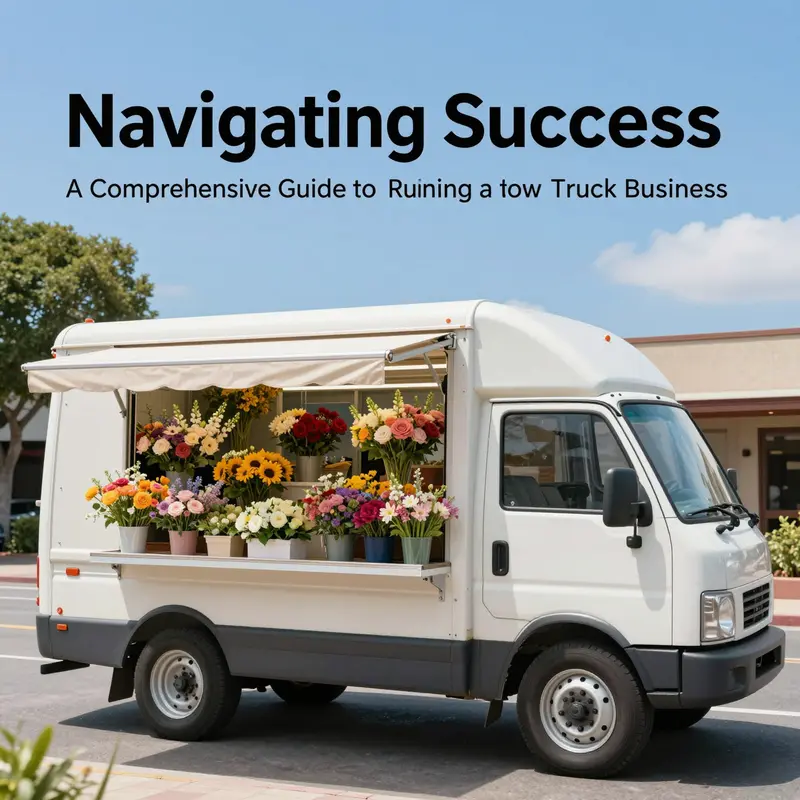
The flower truck business represents an innovative frontier within the retail sector, combining mobility with unique consumer engagement. It presents distinct opportunities for logistics and freight companies, construction firms, and fleet management entities to explore a new segment in a traditionally stable market. Legal compliance underpins operational integrity and customer trust, while vehicle setup ensures efficient delivery and product preservation. Strategic sourcing coupled with effective inventory management can bolster profitability, while keen location selection and vibrant customer engagement tactics can maximize visibility and sales. This detailed exploration will equip stakeholders with actionable insights into navigating this burgeoning business landscape.
On the Road to Blooming Compliance: Navigating Licenses, Vehicle Standards, and Safe Operations for a Flower Truck Business

The flower truck isn’t just a mobile storefront; it is a moving assertion of trust. Every mile traveled on busy city streets tests more than the bouquet you’re carrying. It tests the willingness of customers to buy from a truck that arrives on time, smells right, looks polished, and operates within a clear, predictable set of rules. The legal and regulatory landscape around a flower truck business can feel dense, but it is best understood as a practical framework designed to protect customers, workers, and the business itself. In this chapter, we explore the core elements of that framework in a way that blends with daily operations rather than pausing the workflow. The aim is not to bog you down with bureaucratic jargon but to show how compliance becomes a competitive advantage—reducing risk, improving reliability, and building long-term partnerships with vendors and venues.
First comes the baseline reality: you must establish a legal presence that aligns with your city, state, and, where relevant, federal requirements. A flower truck typically begins as a small, individual operator or sole proprietor. This path often offers the quickest, lowest-cost lane into commerce because it allows you to register with local authorities, obtain the essential licenses, and begin parking in permitted zones without a complex corporate structure. A straightforward business license and an anticipated form of commercial zoning are the stepping stones. While the specifics vary by jurisdiction, many cities now offer online registration and same-day issuance for basic licenses, especially for low-risk mobile vendors. The essential idea is to formalize the business so that you can legally transact, report taxes, and access basic business protections.
Beyond the basic business license, consider a permit that underscores safety as much as display. A food service permit is not about serving food; it is about ensuring that any cold storage or refrigeration in your vehicle is maintained to proper standards and that staff handling perishable items—if any—are aware of hygienic practices. In many places, this permit is advisory rather than mandatory for flowers, yet it is prudent to pursue if you operate refrigeration, gel packs, or other cooling equipment. The permit signals to customers and venues that your operation respects the equipment and the environment in which your blooms are stored. It also positions you well for future expansion into more formal events or partnerships with venues that require demonstrable health and safety practices.
Vehicle permits and insurance sit at the heart of mobility. Your flower truck operates at the intersection of transportation and retail. Your vehicle must carry a valid registration and, crucially, commercial liability insurance that protects against incidents during transit and on-site setup. A commonly cited baseline in many jurisdictions is a liability coverage minimum in the range of fifty thousand dollars. This figure is not a ceiling but a floor; if you anticipate higher risk—due to high-value bouquets, nighttime operations, or busy corporate campuses—consider higher coverage. In dense urban cores, you may also encounter a requirement for a temporary street vending permit, which can vary widely in cost and term. Some spots charge monthly fees that reflect foot traffic and the exclusivity of a location. Planning for these costs in advance avoids surprise revenue shortfalls during peak seasons.
A critical but often overlooked piece of compliance is the vehicle itself. The vehicle must meet Department of Transportation (DOT) and Environmental Protection Agency (EPA) standards if it is a motor vehicle used in commerce. This means you should have current vehicle registrations and, when applicable, inspections that verify brakes, lighting, emissions control, and overall safety. If you import or use a foreign-made truck, ensure that the vehicle meets applicable emission standards and safety features for the regions you serve. Maintaining a rigorous set of maintenance records becomes not just a safety habit but a regulatory one. When a regulator asks to inspect your records, you want to respond with organized logs detailing inspections, repairs, refrigeration calibrations, and fuel efficiency measures. The simple discipline of keeping records prevents the headache of non-compliance penalties and demonstrates a proactive attitude toward risk management.
For businesses engaged in international trade or cross-border logistics, a Flower Certificate may come into play. While many flower truck operators focus on domestic service, the certificate is an essential document when shipments cross borders or when growers supply materials across national lines. This document, issued by national agricultural or trade authorities, contains information about grower details, shipment volume, and packaging methods. It serves to facilitate customs clearance and border inspections, reducing the risk of shipment rejection and ensuring smoother processing during peak export periods or seasonal surges. It is a reminder that even a small, mobile business is part of a larger supply chain. Processing times can vary between countries, so early preparation and ongoing coordination with the appropriate government agencies are prudent to prevent delays that might otherwise disrupt a busy schedule.
To stay compliant and minimize risk, establish a routine that makes legal obligations a predictable part of your business cadence. Create a simple compliance calendar that tracks license renewal dates, permit expirations, insurance renewals, and inspections. Build a lightweight checklist for each shift: verify the vehicle’s registration is current, confirm refrigeration units are operating at 4°C ± 2°C, and log any maintenance performed. These steps may seem granular, but they pay off in reliability. A vendor who can demonstrate consistency—through maintained records and on-the-ground checks—becomes a preferred partner for venues, office complexes, and event organizers who rely on dependable delivery windows and professional presentation.
A practical handoff between compliance and day-to-day operation happens through staff onboarding and role definition. Even if you are a one-person operation at first, define clear responsibilities for any assistants or seasonal staff. Where to park, how to display bouquets, and what health and safety practices the team should follow must be part of an orientation packet. This reduces the risk of accidental non-compliance and reinforces that every interaction with customers—every bouquet, every receipt, every receipt scan—occurs within a well-managed framework. If you choose to integrate digital ordering, the compliance mindset extends to data handling, privacy, and consent for marketing communications. Even these modern tasks can be governed by simple policies that protect both customer information and the integrity of your brand.
The reassurance you convey through compliance translates into tangible business advantages. Venues and local authorities prefer operators who can show you understand the rules and respect them. A well-documented approach to compliance becomes part of your brand promise. It signals to customers that every bloom is handled with care and that the business stands on solid administrative ground. It also reduces the likelihood of abrupt disruptions due to inspections or permit suspensions, which, in the worst-case scenario, might close you down during a busy season. The result is a more predictable revenue stream, better inventory planning, and a stronger platform for growth.
As you map this regulatory terrain, consider how the pieces fit together with your broader strategy. The flower truck business thrives when compliance is integrated with operations, sourcing, and customer experience. A well-timed permit renewal can coincide with the start of a high-sales season, and a refreshed maintenance log can accompany a price adjustment for premium arrangements. The interplay between compliance and opportunity is not a constraint; it is the infrastructure that supports scaling, whether you decide to expand to a second neighborhood, or to park near a corporate campus with a standing contract. In this sense, compliance is not a barrier but a competence—one that strengthens supplier relationships, lends credibility with customers, and makes it easier to secure financing if you ever seek it for expansion.
To support ongoing learning and practical navigation, you’ll encounter a variety of regulatory resources. For operators seeking a targeted, trucking-oriented perspective on staying compliant under changing conditions, you can explore guidance such as Regulatory Relief for Winter Storms in Trucking. This resource can offer context on how to adapt operations during disruption while maintaining essential compliance standards. Regulatory Relief for Winter Storms in Trucking.
Ultimately, the core message is that compliance and credibility reinforce each other. A flower truck that arrives on time, presents itself with care, and operates within a clear legal framework earns trust before the bouquet is even unwrapped. The audience for this trust is broad: customers who choose you for daily office deliveries, event planners who rely on predictable service, venues that host pop-up markets, and lenders who want assurance that the business manages risk. Each party benefits when you treat compliance not as a hurdle but as a cultivated habit, a routine that sustains growth while preserving the essence of what makes your blooms special.
As you move forward, keep an eye on the evolving regulatory landscape—state-level licensing changes, shifts in street vending policies, and updates to vehicle emission standards. These developments are not merely obstacles to navigate; they are signals about where the market is headed. Embracing these signals with proactive planning, rigorous record-keeping, and open communication with customers and partners will help you stay ahead. The result is a flower truck that remains resilient in the face of regulation, with a reputation for reliability that outpaces competitors who treat compliance as a trailing afterthought.
For readers who want a concise entry point into regulatory resources tailored to this space, the conversation about compliance should remain practical and integrated. Keep your documentation organized, your permits current, and your vehicle in top condition. When you can demonstrate that your operation is both compliant and customer-centric, you’ll find it easier to secure partnerships, avoid unnecessary delays, and keep your blooms moving—season after season, mile after mile.
External resource for broader guidance on choosing and planning a flower truck can be found here: https://www.plantcare.com/how-to-choose-the-best-flower-truck-for-your-business. This article provides practical, real-world considerations for selecting a mobile setup that aligns with the regulatory and operational framework discussed here.
Vehicle Setup and Equipment for a Mobile Floral Booth

Designing a mobile floral booth starts with selecting a weatherproof base vehicle and an interior layout that fits the workflow. The base should protect product, deter theft, and provide a consistent interior space for a refrigeration display, a display area, a prep station, and smooth loading and unloading. Ensure solid doors, secure locking, and a height suitable for customer interaction. Check local requirements for registration and liability coverage and build these costs into the budget.
The interior focuses on a compact refrigeration display kept at 4 C with a tolerance of plus or minus 2 C. The unit should fit the vehicle footprint, offer enough display depth, and be modular for daily inventory. Front lighting should highlight colors and textures without relying solely on overhead shop lighting. Integrate LED lighting to create a bright, inviting appearance.
Branding matters. An exterior wrap with a bold color and clear logo turns the vehicle into a moving billboard. Inside, a small photography zone with built in lighting can encourage social sharing without slowing operations.
Power and climate control must be reliable. The refrigeration system can run from the vehicle electrical system with a backup plan such as an inverter with a deep cycle battery or a compact generator. Consider solar supplementation if feasible, and test power arrangements during off peak periods to understand impact on battery life and cooling performance.
Layout and safety influence speed. A simple working triangle for prep, assembly, and pickup supports one at a time handling and small batch production when needed. Sturdy, modular shelving and anti slip mats help prevent movement during transit. Keep a small wall mounted toolkit for quick maintenance.
Packaging and presentation reduce waste and protect freshness. Use biodegradable wraps and minimal packaging to convey quality while keeping the display tidy. An efficient inventory system avoids overstocking or shortages.
A mobile point of sale completes the practical backbone. A rugged tablet with a card reader and a simple inventory app enables quick checkout and real time analytics. Track top sellers and adjust orders to optimize margins.
Operational strategy centers on location and timing. Rotate between 3 to 5 high footfall spots and use signage to attract attention. A smooth workflow that couples display with wrapping and handoff improves throughput and customer satisfaction.
Beyond hardware, this system supports staff experience and customer interactions. A well designed workspace reduces cognitive load, speeds service, and fosters relationships and repeat business.
Mobile Bloom Sourcing: Strategic Procurement and Fresh Inventory for a Flower Truck Business

A flower truck operates at the intersection of mobility, freshness, and storytelling. Sourcing and inventory management are the moving parts that determine reliability, waste, customer satisfaction, and profitability on the road. In a mobile floristry operation, the vehicle becomes a compact, high-frequency supply chain. What you choose to fill that chain—where it comes from, how it arrives, and how you keep it vibrant—defines your competitive edge as surely as location and branding.
To begin, the decision about vehicle and equipment is inseparable from sourcing strategy. The base vehicle should be sturdy enough for daily route wear and flexible enough to accommodate a modular interior. The goal is a compact refrigerated unit that maintains a narrow 4°C (±2°C) window while allowing rapid loading and unloading. Shelving should be adaptable for seasonal bundles or last-minute promotions. A branded exterior and bright lighting are functional elements of the sourcing and sales loop, signaling freshness to passersby. The initial cost framework should stay conservative: a well-chosen used chassis, a measured refrigeration retrofit, and a lean initial inventory create a credible path to profitability and faster payback.
Beyond the truck, the core of success rests on strategic sourcing that balances cost, quality, and reliability. The supply chain must be designed for perishability. Central to this is a vendor strategy that treats suppliers as partners, not just price points. Seek consistent access to blooms with predictable life spans, robust packing standards, and reliable delivery schedules. A small, carefully chosen group of growers and distributors who understand mobile sales can reduce lead times and improve market responsiveness. Develop disciplined supplier communication, lead times, and quality checks to minimize stockouts or waste.
A deeper layer of strategy considers regional dynamics of global supply chains. Local sourcing is ideal for freshness, but regional or international options can broaden assortments and cost efficiency during peak demand. Design your supplier network with resilience and flexibility in mind, favoring partners who can adapt to seasonality, urgent restocking, and occasional bulk promotions without compromising quality.
Inventory management in a mobile context is where art meets science. Flowers are perishable, so a FIFO rotation is essential. Temperature control is non-negotiable, with continuous monitoring of the refrigerated unit and airflow adjustments to prevent hot spots. Simple digital tracking provides real-time visibility into stock levels, sales tempo, and reorder points. A weekly sales tracker is a starting point; as you grow, deploy more analytics to guide replenishment timing, bouquet sizing, and seasonal mix. Strong supplier relationships enable a stable cold chain and lean inventory, even during disruptions.
To maintain a scalable framework, limit SKUs to a manageable core set, say twenty items, and design bundles for different market segments and times of day. Align your inventory plan with a clear calendar of markets and events, plus pre-planned replenishment baselines and triggers. The result is a mobile business that delivers consistent quality, predictable cash flow, and repeatable replenishment rhythms.
Finally, integrate customer experience into sourcing and inventory decisions. A seamless flow from QR ordering to pickup, supported by POS data and location intelligence, helps you learn what customers want and adjust procurement accordingly. The right sourcing and inventory system becomes a competitive advantage, turning the truck into a rolling platform for freshness, reliability, and growth.
For further context on global sourcing and workforce development, you can explore external resources that discuss supplier selection, risk management, and leadership in trucking operations.
Locational Intelligence for a Flower Truck: Street-Level Strategy and Customer Engagement

Locational intelligence is the core of a mobile flower business. A flower truck succeeds by meeting customers where they are and delivering a moment of color, scent, and ceremony. The path to reliable daily revenue lies in a thoughtful rhythm of places, times, and interactions. The truck must become a visible, trusted part of the city, rotating among high-footfall spots and leveraging technology to reduce friction. Location is a dynamic asset, not a fixed one. Rotate among 3 to 5 spots weekly to stay fresh without saturating any single locale. Timing matters: early mornings for commuters, late afternoons for shoppers, and surprise drops for weekend crowds. The vehicle itself should be compact, well branded, and able to display prices and inventory clearly, whether on a side screen or inside the cab. A simple digital layer can show live inventory, helping customers decide quickly. Engagement extends beyond the sale: encourage user-generated content with a branded hashtag and offer simple loyalty rewards to build repeat business. Regulars can plan a quick detour for a bouquet on the way home, while new customers discover the truck in unexpected places. The social narrative amplifies reach when posts about location are paired with timely offers near landmarks. The goal is a dependable, scalable micro-retail model that respects the city’s tempo while delivering fresh blooms to those who need them most.
Final thoughts
In conclusion, the success of a flower truck business hinges not just on the beauty of its blooms but on the structural foundation built on compliance, resource allocation, and customer relations. Stakeholders are positioned to make informed decisions that enhance revenue streams and market presence while fulfilling regulatory obligations. The fusion of effective logistics with strategic marketing can create a thriving business model that appeals to diverse demographic segments, thus encouraging ongoing innovation and adaptation in this mobile retail landscape.