
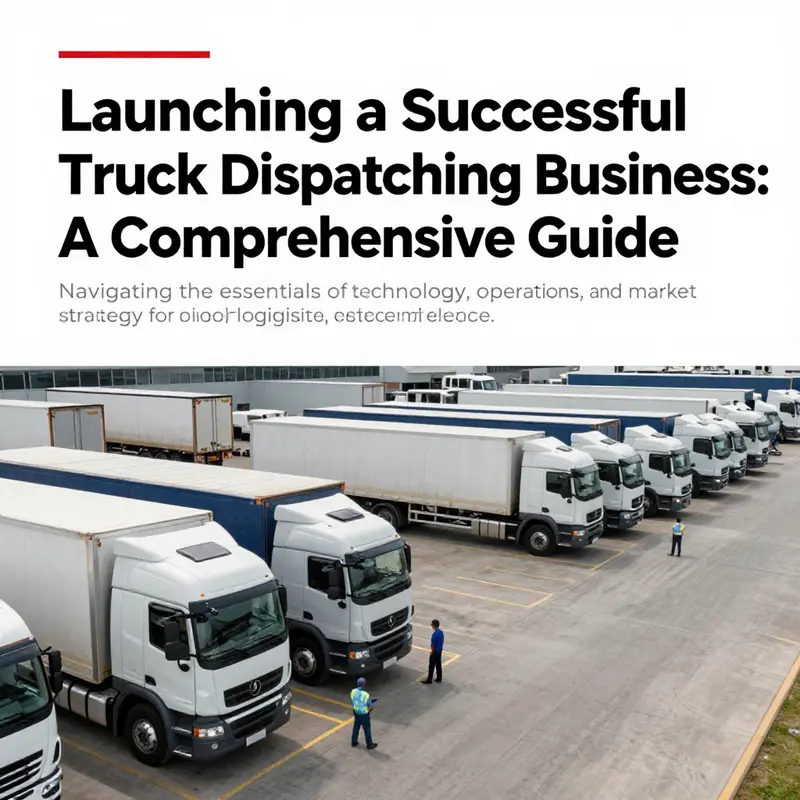
The logistics industry works as the backbone of trade and commerce, and establishing a truck dispatching business presents a critical opportunity to tap into this dynamic sector. The effectiveness of transport services hinges on seamless coordination and timely delivery, making the role of dispatching immensely significant. As logistics and freight companies, construction firms, fleet managers, and food distributors face rising demands, understanding how to establish a robust dispatching operation becomes increasingly important. Each chapter of this guide articulates key components necessary for success, from the technological foundations that support operations to strategic market positioning, potential challenges, and emerging trends. By synthesizing these elements, stakeholders can better navigate the complexities of opening a dispatching business and position themselves favorably within the competitive landscape.
Engineering the Dispatch Engine: Technical Foundations for Launching a Truck Dispatching Startup
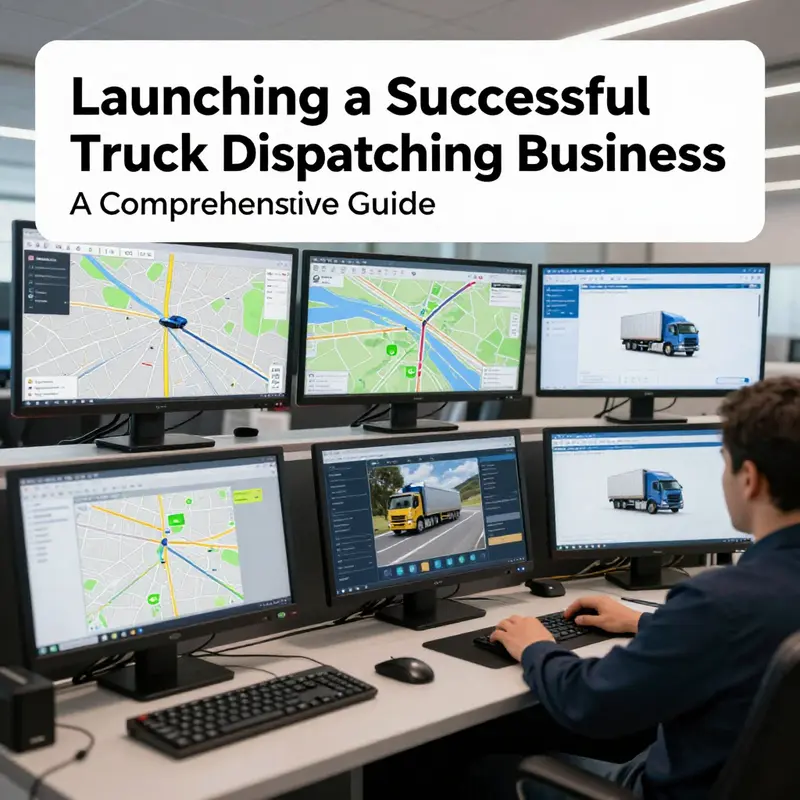
A truck dispatching business rests on more than just a desk and a phone. It functions as a dispatch engine that translates loads, drivers, routes, and contracts into reliable, trackable movements on the road. Behind every delivery is a carefully designed mix of technology, people, and processes that align to create speed, accuracy, and trust. When you start from this understanding, the path to launch becomes less about guessing and more about assembling a robust, scalable system that can grow as you learn and as the market tightens or loosens around you. The core of that system is the technology foundation, but it is inseparable from the people who operate it and the standard ways you will manage your operations. In this sense, the journey is less about choosing a single tool and more about shaping an integrated ecosystem that can absorb data, respond to changes, and continuously improve your service.
The technology backbone begins with a dispatch and load management capability that can source freight, assign it to the right drivers, and monitor progress in real time. A mature platform in this space must do more than just move boxes from point A to point B. It should automate the most repetitive tasks, such as matching loads to equipment, planning efficient routes, and scheduling drivers around constraints like hours-of-service, fuel efficiency, and customer delivery windows. You want software that can ingest multiple data streams—GPS data for location, traffic feeds, weather alerts, and road condition reports—and translate them into actionable steps on a live map. The real value comes when the system can re-optimize routes on the fly. If an unexpected delay occurs due to a road closure or a carrier health issue, the platform should propose alternatives and communicate those adjustments to drivers and customers with minimal human intervention. In practice, this means fewer missed pickups, less idle time, and tighter adherence to promised delivery times.
To operate within the legal and safety landscape, integration with electronic logging and hours-of-service monitoring is non-negotiable. The modern dispatch operation depends on real-time visibility into whether drivers are compliant with HOS rules and fatigue management requirements. An integrated ELD framework helps ensure you do not overcommit drivers, reduces the risk of violations, and improves scheduling accuracy because the system can factor in rest periods as part of the planning. Beyond compliance, this integration creates a foundation for reliability: knowing a driver’s status in real time allows you to keep shipments on track rather than letting delays propagate through the network. The aim is not surveillance for its own sake but a proactive approach to safety and consistency that also translates into fewer insurance headaches and stronger carrier credibility with brokers and shippers.
The operational heart of the business cannot function without a robust customer relationship and financial workflow. A customer relationship management (CRM) layer is essential for tracking brokers, shippers, carriers, and drivers—the people whose expectations you must meet or exceed. A well-implemented CRM captures interaction histories, contract terms, service levels, and performance metrics, giving you a single source of truth for commitments and follow-through. When growth comes, the CRM helps you maintain personal connections with partners and build trust through transparency. Closely linked is an accounting and invoicing system that handles billing, payroll, and revenue recognition with fidelity. In practice, this means you can automate settlements with brokers and carriers, generate audits, and maintain clean financial records that are essential for future funding or debt facilities. The payoff is strategic: accurate billing, faster cash flow, and the capacity to price more strategically when market conditions shift.
All data resides somewhere, and in logistics that somewhere is increasingly the cloud. Cloud-based storage and secure data management are not luxuries but prerequisites for scale. Contracts, bills of lading, compliance records, maintenance logs, and performance data need to be accessible to authorized team members wherever they are, while still protected by encryption and strict access controls. A disciplined approach to data governance helps you establish audit trails, streamline regulatory inquiries, and support business continuity through backups and disaster recovery plans. The result is not just storage but a framework that enables analysis, reporting, and learning. With secure data in place, you can start to answer deeper questions—how often do delays occur on certain routes, which clients demand the tightest service level, or which driver profiles yield the best on-time performance?
The case for adopting an established platform rather than building from scratch is not about short-term convenience; it is about risk management and speed to market. A mature system provides tested modules for routing, load matching, real-time monitoring, and integration with ELD, CRM, and accounting tools. Building your own stack to replicate these capabilities can be time-consuming, expensive, and error-prone. By leveraging a proven platform, you preserve capital, accelerate launch, and reduce the chance of early failures that derail confidence from customers and investors. This approach also leaves you free to focus on differentiators such as your service levels, your onboarding process for new brokers, and the way you communicate with customers during disruptions. In the early days, that focus on core capabilities matters more than adding every possible feature.
Operational excellence requires more than software; it requires a disciplined team and clear processes. Recruiting drivers who embody reliability and safety is foundational. Establish hiring criteria rooted in driving history, experience, and safety performance. Once on board, provide ongoing training in route adherence, customer service, and regulatory compliance. Equally important are standardized processes that cover every stage—from how you intake a task to how you handle an exception, such as a damaged shipment or a late pickup. The real-time monitoring and alerting capability keeps everyone aligned. When a deviation pops up, automated alerts prompt immediate intervention so that the delay does not multiply. Maintenance and compliance routines must be meticulously kept: up-to-date vehicle records, proof of insurance, regular inspections, and fatigue management records with clear thresholds. The goal is not to police but to create predictability. Predictability builds trust with clients and carriers and forms the foundation for long-term relationships that support growth.
The market environment rewards clarity of service and an emphasis on customer experience. Your technology should enable you to deliver on-time delivery, transparent communication, and rapid issue resolution. Real-time tracking updates keep customers informed and enable proactive communication when delays occur. You can use performance dashboards to monitor delivery accuracy, fuel efficiency, and driver utilization, translating data into concrete improvements in routing decisions, driver engagement, and pricing models. A coherent market strategy must define a niche—local deliveries, regional freight, cold chain, or specialized cargo—so you can tailor your dispatch capabilities to the unique needs of that segment. You do not need to be a generalist to win; you must be excellent within a defined space. The best new dispatch operations often win by integrating tightly with a limited set of brokers or shippers and delivering consistently high service levels that create a domino effect of referrals and repeat business.
As you think about the technology-human interface, a powerful idea to explore is the value of investing in people as part of fleet management. The interplay between software and staff matters more with every passing quarter because data-driven decisions hinge on people who understand, interpret, and act on the insights. For a perspective on augmenting technology with human capital, read about transforming fleet management and investing in people as a cornerstone of modernization. Transforming Fleet Management: The Case for Investing in Human Capital. This resource underscores how technology and people together create resilience, safety, and accountability that scale with your operations. While systems can optimize routes and automate routine tasks, people ensure that exceptions are handled with judgment, that relationships with brokers are cultivated, and that strategic decisions reflect on-the-ground realities rather than solely data outputs. The most successful dispatch startups balance automation with the nuanced leadership and communication that only humans can provide.
Scalability and future-proofing should be embedded from day one. Build for API integrations so your dispatch system can talk to other business tools—CRM, accounting, and perhaps a customer portal. Plan for AI-driven load forecasting and dynamic pricing to stay competitive as demand shifts. Consider a mobile driver app to give drivers access to schedules, logs, and issue reporting on the go. If you design your platform with these capabilities in mind, you can scale without crippling your operations with bespoke integrations that swallow consulting budgets. The goal is a lean, adaptable architecture, where the core is stable but the edges can bend to fit evolving needs—whether that means onboarding more carriers, expanding to new markets, or pivoting to new service lines.
With these components in place, you are ready to translate your planning into a live operation. A practical first phase should be a pilot using a mature dispatch platform to test the model, validate workflows, and uncover gaps before scaling. In this phase, you will refine load sourcing practices, test the reliability of routing and scheduling, and verify how well your compliance and financial processes hold up under real-world pressure. You should also map out your onboarding path for brokers and drivers so that, when you scale, you can deploy consistent, repeatable setups rather than ad hoc processes. The objective is to create a repeatable blueprint: a documented pattern that your team can execute with confidence, knowing that the system can absorb the volume you expect and that your service level commitments can be met under varying conditions.
Finally, remember that the regulatory landscape shapes how you design and operate your dispatch engine. You must stay current on federal requirements for brokers, hours-of-service, safety programs, and cross-state registrations. The external reference below provides detailed guidance on broker registration and compliance, a critical piece of the foundation for any interstate dispatch operation. For a comprehensive overview of broker registration requirements and related obligations, consult the official FMCSA resource linked here: https://www.fmcsa.dot.gov/registration/broker-registration. As you mature, you will weave compliance into every decision—pricing, partnerships, and customer communication—so that growth remains sustainable and risk is managed proactively rather than reactively.
Operational Mastery for Launching a Truck Dispatching Business: From Plan to Performance
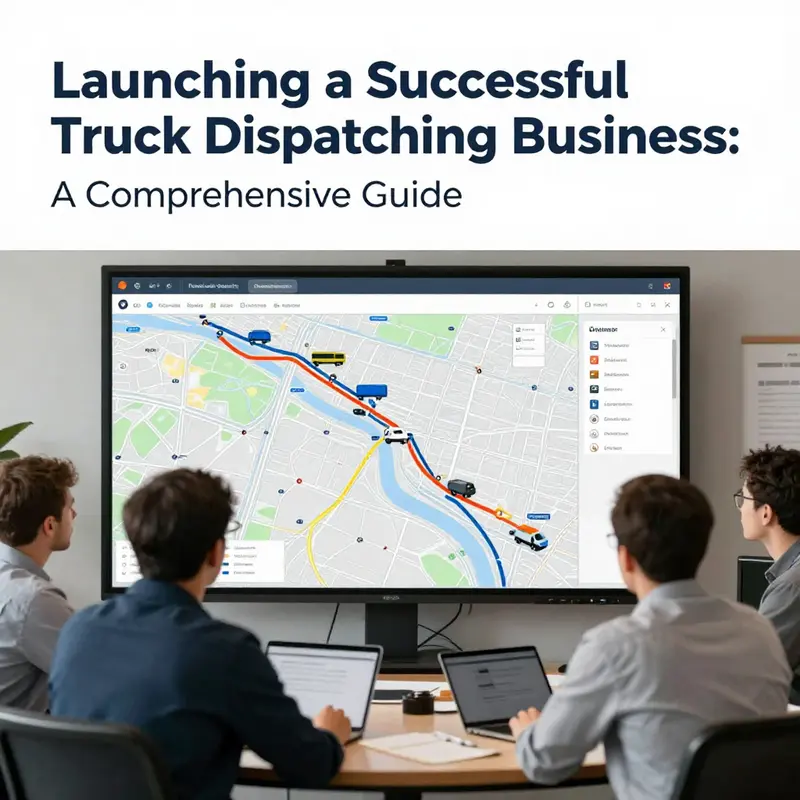
A dispatching business starts not with trucks, but with a rigorous alignment of service model, compliance, and a technology backbone that can scale. The journey toward launch demands a single thread that weaves strategy, people, and tools into a dependable operation. You must decide what you will deliver, who you will serve, and how you will measure success before you ever sign a contract. In practical terms, this means choosing a clear niche and service model, establishing a disciplined workflow, and selecting a platform that can automate routine decisions while exposing the data you need to improve. The strongest entrants treat technology not as a bolt-on but as the operating system of their business. A mature dispatching platform automates order assignment, optimizes routes, and schedules drivers with a level of precision that would be impractical to achieve through manual planning alone. It also harmonizes real-time data feeds—from GPS tracking to traffic alerts and weather updates—so you can respond to delays or last-minute address changes without sacrificing service quality. In this sense, technology unlocks reliability, which is the currency of trust in a crowded market.
Nailing your service model begins with niche clarity. Do you intend to handle local deliveries, regional cross-dock operations, or longer-haul coordination? Will you specialize in specific cargo types such as dry vans, temperature-controlled freight, or oversized freight, and will you work primarily with owner-operators or small fleets? Specialization is not about narrowing opportunity; it is about building credibility faster. It signals to shippers that you understand their constraints, can promise predictable execution, and can stand behind your commitments with data. A disciplined approach to service design also forces you to articulate the exact workflows required to move a load from intake through delivery. When a driver fails to show, or a shipment arrives damaged, or a tare weight changes, your playbook should specify who acts next, what notices are sent to customers, and how settlements are handled. Such clarity reduces anxiety for customers and carriers alike and creates a foundation for repeat business.
Compliance sits beside service design as a non-negotiable pillar. While the regulatory framework may feel abstract until a real incident occurs, the most successful dispatch operations bake compliance into every routine. Even if a state does not require a dispatcher license, federal rules govern the activity. The Federal Motor Carrier Safety Administration sets the Hours of Service, recordkeeping standards, and electronic logging device requirements that frame how you schedule, dispatch, and monitor drivers. Integrating compliance into your platform means enforcing fatigue management, maintaining accurate driver and vehicle profiles, and preserving proof of delivery and related documentation. A robust approach reduces risk, protects your clients, and avoids costly disruptions that ripple through the supply chain. This is not a compliance add-on; it is part of daily operational discipline.
Equally critical is the human dimension. Your operations will run on people—dispatchers, drivers, carrier partners, and customers who rely on timely visibility. You can compound reliability by investing in your team. Hiring criteria should go beyond driving history; they must emphasize safety mindfulness, communication skills, and the capacity to handle exceptions calmly under pressure. Training should blend routine procedures with scenario-based drills that simulate delays, misrouted loads, and weather disruption. A culture of continuous improvement—where feedback loops inform process changes and performance metrics—keeps the operation nimble and resilient. For many organizations, the real value comes from cultivating relationships with carriers and brokers who appreciate transparent communication, fair load opportunities, and dependable payment practices. These relationships turn into a steady stream of repeat business and referrals, which is the true engine of growth.
On the operating side, a robust workflow is the spine of day-to-day execution. Start with standardized processes for load sourcing, booking, scheduling, documentation, and settlement. Document everything—proof of delivery, acceptance notices, rate confirmations, and fuel surcharges—so disputes become rare and resolvable without escalation. The workflow must account for exceptions: a damaged shipment, a delayed departure, an incorrect address, or a truck breakdown. Your system should trigger automatic alerts, propose remediation steps, and preserve an audit trail. Such rigor is not glassy perfection; it is practical gravity that keeps customers informed and protects your margins. Real-time monitoring is not a luxury; it is a necessity. Live visibility allows your team to spot deviations early, reallocate assets, and communicate clearly with customers about new expectations. When a route must be adjusted due to traffic or weather, the dispatcher’s decision should be both fast and data-driven, preserving service levels without inflating cost.
Technology underpins this entire ecosystem, but it should never supplant judgment. The platform you choose must be capable of end-to-end load management while remaining adaptable to evolving business needs. A first-rate system integrates real-time location data, load status, driver status, and fuel consumption into a single dashboard. It should support dynamic rerouting and immediate driver communication, so a delay at one mile-marker does not cascade into missed appointments. Importantly, your platform should offer flexible access control and role-based views so that every stakeholder—dispatchers, drivers, and clients—sees what they need without information overload. In the early days, you may rely more on automation and dashboards, but as you scale, the analytics become your compass. Performance dashboards that track delivery accuracy, dwell times, fuel efficiency, and driver utilization reveal where to invest and where to prune.
No launch succeeds without a credible market approach. You must define who you serve and why they should choose you over a growing field of competitors. A tight niche helps you tailor your messaging and build credibility with targeted clients. However, even as you narrow your focus, you must convey a compelling value proposition: predictability, responsiveness, and transparent communication powered by technology. Your marketing should not be an afterthought; it should be integrated with your service delivery. A well-timed update—visible to the customer in real time—can transform a one-off engagement into a long-term partnership. Positive client experiences feed referrals, and a systematized approach to service recovery—clear steps for missed deliveries or late notices—minimizes revenue leakage from dissatisfied clients.
As you plan, consider the knowledge your readers will want to access quickly. Invest in pilots that test your model with a small set of clients and carriers before scaling. A pilot helps you validate the workflow, gauge the appetite for new processes, and confirm which technology configurations deliver the best balance of reliability and cost. The pilot phase should also surface regulatory questions you hadn’t anticipated, so you can shore up compliance processes before full-scale onboarding. If you want a broader view of how technology and people intersect to drive sustainable fleet performance, see Transforming Fleet Management: The Case for Investing in Human Capital, which explores how organizations balance automation with people-centered strategies. Transforming Fleet Management: The Case for Investing in Human Capital.
There is another layer worth considering: the financial scaffold that supports growth. Pricing models must be competitive yet sustainable, with margins that accommodate fuel volatility, maintenance, and platform licensing. A blended approach—a base fee for platform access plus a per-load or percentage-based component tied to service levels—offers predictability for clients and steady revenue for you. Meticulous financial discipline is essential from day one. Track cash flow, accounts receivable days, and freight costs separately to illuminate true profitability. In the earliest stages, many operators benefit from running part-time or with a minimal client roster to reduce risk while refining the workflow. This cautious approach lets you learn where to invest next: in more robust carrier relationships, additional capacity, or enhanced analytics that turn data into action.
Beyond internal operations, you shape your business by the way you present yourself to the market and to your partners. A strong dispatch operation is an ambassador for reliability. Your reputation grows when you deliver on promises, communicate openly when plans change, and resolve issues with minimal friction. Delegating early responsibility to capable team members—not just relying on you at the top—builds an organization that can scale. You must also invest in ongoing compliance education for your staff. Regulations evolve, enforcement tightens, and what seems compliant today may require updates tomorrow. The discipline you establish around documentation, audit trails, and incident response not only reduces risk but also positions you as a trustworthy partner in a complex logistical network. Regulated environments reward processes that anticipate problems and provide clear, accountable remedies.
As you prepare to launch, keep your eyes on the horizon. The pace of change in transportation technology is rapid, but the core principles remain constant: clarity of service, robust procedures, reliable data, and genuine reliability. A disciplined approach to niche focus, compliance, technology, and relationships creates a foundation on which you can build a durable business. When you couple these elements with a well-considered pilot and a pricing framework that preserves margins, you create a pathway from planning to performance. The future of dispatching lies in automation, data-driven decisions, and seamless integration—tools that empower you to deliver smarter, faster, and more reliable service. For readers seeking further insight into how these elements interlock, the discussion around investing in people as a strategic asset offers practical guidance and a compelling point of reference. See Transforming Fleet Management: The Case for Investing in Human Capital for a deeper dive.
External resource for regulatory context and best practices: https://www.fmcsa.dot.gov
Market Positioning as the Engine of a Truck Dispatching Startup: Niche, Technology, and Trust

Positioning a truck dispatching business in a crowded market means more than promising fast loads and friendly drivers. It requires a deliberate stance about who you serve, how you work, and what you stand for. In this chapter, we explore how a disciplined market position can become the engine that drives growth, margin, and long-term resilience. The right position clarifies your value in the eyes of shippers, carriers, and drivers, guiding every decision from software selection to service guarantees. Rather than chasing every lane, the most successful startups identify a clear position and then reinforce it with operational excellence, technology leverage, and a compelling promise of reliability. A strong market position is not a slogan; it is a practical framework that shapes pricing, partnerships, and the type of problems you are known for solving. When you start with a defined niche and couple it with a modern technology backbone, you gain credibility faster and reduce the friction that often slows entry in logistics markets that prize certainty and transparency.
Niche specialization is the clearest way to distinguish a dispatching business from the noise. Instead of attempting to handle every kind of freight, you carve out a zone where you can build deep expertise. This could mean focusing on specialized freight types such as temperature-controlled goods, hazardous materials, or oversized loads. It might mean concentrating on a specific industry—construction, manufacturing, or food distribution—where you can anticipate the unique timing, handling, and paperwork those customers require. Geographic focus can also be a powerful differentiator: becoming the go-to dispatch partner in a metro region or corridor helps you establish trusted relationships with shippers and carriers, which in turn fuels steadier volumes and better load acceptance rates. The logic is simple: specialization reduces complexity, accelerates learning, and creates a track record that you can systematically improve upon, not merely hope for.
Technology and data are not add-ons; they are central to a position that promises reliability and visibility. The dispatch landscape has shifted from phone calls and paper logs to cloud-based platforms that automate load matching, optimize routes, and continuously monitor whole fleets. Your chosen technology should deliver real-time updates on vehicle location, driver status, and delivery progress, while also providing dynamic rerouting when conditions change. The strongest market positions are those that can claim measurable improvements in efficiency and service levels, such as reducing empty miles, shortening dwell times, or improving on-time delivery through intelligent planning. Importantly, you do not need to build every component from scratch. A mature, proven dispatching platform can deliver the backbone you need while your team concentrates on what makes your offering unique—the niche you selected, the carriers you engage, and the customers who rely on you.
A practical approach is to select a reliable technology partner and then tailor your service model around it. A tech-forward stance communicates capability and discipline to shippers who want predictable performance and reduced risk. It also helps you manage a growing network of drivers and carriers by providing a transparent platform where loads are matched to capacity with clarity. The efficiency gains you can claim—fewer missed pickups, better route consistency, and more accurate ETAs—are not abstract; they translate directly into happier customers and repeat business. In the best cases, technology becomes a differentiator not just in operations but in the conversations you have with clients: you are no longer a middleman, but a data-driven partner who can forecast capacity, simulate scenarios, and present evidence-based solutions when disruptions occur. This is where the concept of trust begins to crystallize as a market asset.
Building a strong carrier network and driver loyalty is another pillar of positioning. Your reputation with drivers becomes part of your brand. A driver-centric platform that offers straightforward load visibility, reliable schedules, and fair, timely payments creates a network that values collaboration over transactional engagement. Incentives for on-time deliveries, backhaul opportunities, and predictable work can transform drivers from mere contractors into advocates who help you win more business through word of mouth and steady performance. In this landscape, transparency is non-negotiable. Clear policies on payments, load changes, and dispute resolution reduce friction and frustration, which in turn reduces turnover and strengthens your reputation in the local trucking community. A dependable carrier network supports your niche by ensuring that the specialized services you promise—whether it’s temperature control, hazmat handling, or oversized cargo—are delivered by a network that understands those exact requirements and can meet them consistently.
Reliability and customer service sit at the heart of a compelling market position. Shippers are looking for partners who will take ownership of the end-to-end process, not pass problems along a chain of command. Proactive problem solving—anticipating weather disruptions, traffic delays, or last-minute address changes—demonstrates that you can manage complexity without creating chaos for the customer. A dedicated account manager, who serves as a single point of contact, can provide reassurance and continuity in communications, especially during exceptions. When possible, you can offer service level guarantees or explicit performance criteria that align with a shipper’s own expectations. These commitments, backed by your technology-enabled visibility and your operational discipline, convert perceived reliability into a pricing advantage. Clients are often willing to pay a premium for certainty and for a partner who can quantify performance and stand behind it with data.
Sustainability and compliance increasingly shape market positioning in logistics. The industry faces growing regulatory scrutiny and a demand for greener operations. Positioning around responsible routing and compliance can differentiate your dispatch service in meaningful ways. Software that supports fuel-efficient routing, regulatory reporting, and hours-of-service (HOS) compliance helps you meet and document standards that matter to customers and regulators alike. If your operations reduce fuel burn or emissions, highlight these outcomes in conversations with prospective clients and emphasize how your approach aligns with their ESG goals. In practice, this means integrating environmental considerations into route planning, maintenance schedules, and driver training, while maintaining rigorous adherence to safety and regulatory requirements. The result is a brand promise that does not merely discuss cost or speed; it demonstrates accountability and forward-thinking stewardship.
Positioning also functions as a narrative that informs your market approach. It guides how you talk about capabilities, what you invest in, and how you measure success. A coherent message centers on three themes: niche expertise, dependable technology-enabled operations, and trustworthy partnerships. It should permeate sales pitches, marketing materials, and client dashboards, so that every touchpoint reinforces the same story. An aligned approach makes it easier to evaluate opportunities and to decline business that would dilute your value proposition. It also helps when you consider strategic collaborations—forming partnerships with shippers who value your specialized capabilities and with carriers who share your operational ethos. When you say yes to the right opportunities and no to others, you reinforce a brand built on consistency rather than broad, shallow coverage.
In practice, market positioning benefits from deliberate learning loops. As you gain customers within your niche, you track outcomes with disciplined metrics—on-time delivery rates, fuel efficiency, driver utilization, and the frequency of backhaul opportunities. You use these data points to refine routes, adjust service levels, and recalibrate incentives. You may also reassess your niche boundaries—some opportunities may reveal new adjacent specialties or regional markets where your capability set translates into a strong competitive edge. The most resilient dispatch startups treat positioning as a living discipline: a balance of focused expertise, robust technology, and careful alignment with the people who move freight every day. As you develop your plan, you can test your model with a pilot phase that leverages a mature system to validate assumptions before you scale. Start with a narrow, well-defined scope and grow from there, always anchoring growth in the trust you’ve earned through reliable, data-backed performance.
For readers looking to extend this discussion into practical actions, consider examining how conversations with industry peers shape positioning decisions. A thoughtful analysis of cross-border and regulatory dynamics provides broader context for whether to pursue regional dominance or national coverage. See how such insights influence your plan through discussions like Navigating Cross-Border Challenges: Key Insights, which can help sharpen your own market stance. Navigating Cross-Border Challenges: Key Insights.
The broader context of the logistics landscape also offers valuable perspectives on what clients expect from a partner who can deliver on their promise. In a field where complex operations meet urgent timelines, a position built on niche mastery, technology-enabled transparency, and unwavering reliability becomes not only a point of difference but a competitive shield against commoditization. If you are seeking deeper industry perspectives that frame these ideas in real-world terms, you can consult discussions like the one at https://www.zhihu.com/question/612345678 for broader viewpoints on market dynamics and professional practice.
In sum, market positioning for a truck dispatching startup is a deliberate choice to combine a clearly defined niche with a technology-enabled, reliability-first operating model. It is a promise that you can fulfill consistently, backed by a network of trusted carriers, transparent governance, and performance-driven culture. When these elements come together, your dispatch service becomes not just a workflow but a strategic partner that helps shippers streamline their supply chains and carriers grow with confidence. The path to this outcome starts with choosing a precise niche, embracing robust dispatch technology, and cultivating a community of drivers and customers who see you as a dependable, value-adding collaborator rather than a transactional intermediary.
From Pilot to Scale: A Practical Roadmap for Launching a Truck Dispatching Business

Launching a truck dispatching business requires more than a clever idea; it demands disciplined execution across people, process, and technology. Begin with a measured pilot that demonstrates reliability, then scale by repeating a proven pattern across lanes and clients. Establish a single source of truth for orders, statuses, and alerts, and ensure your team follows clear service expectations and escalation procedures. In parallel, invest in a modern Dispatch/TA system or TMS that can automatically match loads, optimize routes, and provide end-to-end visibility, while keeping humans focused on exceptions and relationships.
Trust and reliability thrive when you can explain delays, adjust expectations, and recover quickly from disruptions. Real-time visibility, proactive communication, and robust contingency playbooks turn uncertainty into predictable service. Complying with hours-of-service, vehicle maintenance, and documentation is non-negotiable; embed compliance into daily routines so clients feel confident you operate responsibly.
Secure carrier partnerships by offering fair compensation, transparent scheduling, and reliable payments. Onboard vetted carriers, monitor performance, and continuously optimize the carrier mix to minimize empty miles and maximize asset utilization. Differentiate through niche capabilities, consistent service levels, and a relentless focus on data quality to support shippers’ planning needs.
Technology strategy should favor a mature platform that accelerates time-to-value and reduces build risk. Use an established solution to handle matching, routing, and visibility, while investing in people and processes to exploit the data you collect. Start with a clear business model, test pricing and service configurations, and scale only after you’ve proven repeatable results. Finally, manage cash flow from the outset: align payment terms with clients, monitor working capital, and build reserves to weather fluctuations.
In short, success comes from credible pilots, transparent operations, reliable carrier partnerships, and disciplined execution on a scalable platform. With patience, discipline, and a customer-centric mindset, a new dispatch business can grow from a small niche to a durable, high-trust operation.
Dispatching Tomorrow: Building a Tech-Driven Truck Dispatching Business for the Long Run

Launching a truck dispatching operation in the coming years is less about simply pairing loads with carriers and more about conjuring a living system that adapts to a changing landscape. The future belongs to firms that treat dispatching as an intelligent workflow, powered by data, connected by real-time visibility, and guided by sustainable decisions. In practice, this means designing a platform and a process that can absorb new data streams, adjust routes in seconds, and scale without sacrificing safety or service quality. The core insight is straightforward: when you start a dispatching business with a clear technology plan, you buy speed, reliability, and resilience. The strongest foundations combine a cloud-friendly dispatching platform with a rigorous operational discipline and a market strategy that remains nimble as demand shifts and regulations evolve.
At the heart of this evolution is the shift from manual or rule-based dispatching to AI-powered systems. Modern fleets already rely on software that analyzes location, driver availability, cargo characteristics, delivery windows, and traffic. The result is smarter assignments and optimized routes that reduce idle time, improve on-time performance, and trim fuel consumption. For a startup, adopting a mature, cloud-based dispatching solution is not just a cost saver; it is a practical shortcut to market leadership. It lets you pilot a model, measure outcomes, and iterate quickly, rather than attempting to assemble a bespoke platform from first principles. This approach aligns with how leading logistics operators maximize efficiency while keeping upfront risk in check. In a landscape of tightening margins and rising customer expectations, speed to market is a competitive advantage.
The second pillar is real-time tracking and telematics. A future-forward dispatching operation integrates GPS and telematics data to monitor vehicle location, engine health, fuel usage, and driver behavior. This visibility supports proactive maintenance, safer driving, and more predictable deliveries. It also enables dynamic interventions: rerouting around traffic congestion, weather-affected corridors, or last-minute customer address changes. When a system flags an anomaly—an unexpected detour, a rise in idle time, or a driver fatigue alert—you can respond within minutes, not hours. That capability reduces costly disruptions and builds trust with shippers who rely on dependable schedules. It also lends itself to continuous improvement, as the data feeds performance dashboards that highlight bottlenecks, peak periods, and opportunities to shift capacity or adjust incentives.
As you plan for the long term, consider how the industry will address sustainability and compliance. Demand for lower emissions, smarter energy use, and cleaner operations is not a trend but a baseline expectation. Dispatching platforms can incorporate electric-vehicle routing given charging infrastructure, state of charge, and battery range, ensuring that routes align with available energy and time windows. On the regulatory side, hours-of-service rules, electronic logging devices, and cross-border documentation require robust software support. Building a system that can track compliant hours, automatically generate required records, and flag potential violations helps protect carriers and shippers alike. The outcome is a service that not only meets today’s standards but anticipates tomorrow’s requirements, reducing regulatory risk while promoting safety and reliability across the network.
Transparency is the currency of trust in a data-rich world. Clients expect full visibility into shipment status, cost breakdowns, and performance metrics. A future-ready dispatching model delivers real-time dashboards that show location, ETA, and fuel efficiency, along with historical trend analyses to illustrate improvements over time. This transparency is more than a nice-to-have; it is a differentiator that drives long-term relationships. From the shipper’s perspective, clear reporting reduces uncertainty, supports accurate forecasting, and streamlines auditing. For the dispatcher, data-driven insights reveal patterns—seasonal demand surges, routes with excessive fuel burn, carriers with consistent on-time performance—enabling smarter decisions and better incentives. In this sense, data becomes a strategic asset that informs pricing, capacity planning, and carrier partnerships just as much as it guides daily task assignment.
Beyond technology and data, the future of dispatching hinges on strategic market positioning. Niche specialization will matter more as competition grows. Some operators will excel by mastering cold-chain logistics, others by delivering high-value or time-sensitive shipments in last-mile networks, and still others by serving regional or cross-border corridors with tailored compliance and risk management. The common thread is an ability to adapt service models to the needs of specific customer segments while maintaining universal standards of reliability and communication. A practical path is to start with a platform that supports rapid onboarding of new carrier partners, flexible cargo types, and scalable workflows that cope with peak seasons. A modular, API-friendly design keeps you agile, so you can add or adjust services—such as dedicated lanes, on-demand brokerage, or digital proof of delivery—without a full rebuild.
The question for a budding dispatching business is not only what to build, but how to build it efficiently. A recommended approach is to pair a mature, cloud-based dispatching system with disciplined operations and a market-facing strategy that emphasizes service quality and responsiveness. In practice this means recruiting a small, capable operations team with clear roles in load intake, driver support, maintenance coordination, and customer communications. It also means standardizing processes for every step of the workflow—from order capture and task assignment to exception handling and post-delivery review. Real-time monitoring and alerts become daily routines: deviations trigger prompts for intervention, escalation paths, and post-event analysis. Maintenance records, insurance, and compliance documentation should be kept up to date so that when regulators or customers request proof of conformity, you can respond promptly.
As you prepare to scale, think about the carrier network you will onboard. A diverse roster of carriers with complementary strengths provides resilience, but it also requires careful governance. Clear performance criteria, transparent incentives, and consistent communication help ensure that all parties align with your service objectives. The system should support standardized rates, streamlined onboarding, and ongoing performance tracking so that you can recognize excellence and address underperformance without friction. This approach reinforces accountability and trust, both of which are essential in a crowded market where shippers compare numerous options. It also creates a natural feedback loop: as performance data accumulates, you can refine routing logic, adjust service levels, and invest in the areas that yield the greatest returns.
Innovation remains central to long-term success, and that innovation is not solely about software. It encompasses the people who design, operate, and support the dispatching ecosystem. Training and safety programs matter as much as algorithmic optimization. A forward-looking business invests in recruiting individuals who understand both the operational realities of trucking and the capabilities of digital dispatching. Ongoing coaching, safety training, and recognition programs help attract and retain talent, which in turn enhances reliability and driver engagement. In a profession where fatigue, risk, and human factors intersect, cultivating a culture of continuous improvement is a practical strategy for sustaining excellence.
As you balance technology, operations, and market strategy, you will find that the strongest launches are built around a clear, repeatable operating model that can evolve with changes in technology and customer demand. The future of truck dispatching is not a single invention but a system of capabilities: AI-driven decision making, integrated telematics, sustainable routing, transparent analytics, and flexible partnerships. The most successful startups will combine these elements with a disciplined approach to onboarding, compliance, and continuous learning. The end result is a dispatching business that not only opens doors quickly but remains viable, competitive, and responsible as the industry moves forward. For those who want a concrete sense of direction, consider exploring how advancements in autonomous truck technology can shape future capacity planning, network design, and risk management while staying aligned with human leadership and ethical considerations. advancements in autonomous truck technology.
Finally, the broader literature and practitioner discussions point to a converging view: successful dispatching businesses will be defined not by a single breakthrough, but by their ability to integrate AI, real-time data, and customer-centric service within a scalable, compliant, and sustainable operating framework. This alignment creates a durable model that can absorb regulatory changes, market shocks, and shifting customer expectations without sacrificing core principles of reliability and integrity. For readers seeking deeper technical context on intelligent dispatching systems, a detailed external perspective is available in industry analyses that explore how data-driven routing and real-time orchestration are reshaping logistics strategies. External reading: How Intelligent Dispatching Systems Are Revolutionizing Logistics.
Final thoughts
As the logistics landscape evolves, successfully launching a truck dispatching business requires a combination of the right technologies, operational strategies, thoughtful market positioning, and an understanding of the challenges ahead. By embracing innovative solutions, streamlining operations, and maintaining focus on customer satisfaction, entrepreneurs can carve out a competitive edge in the market. The roadmap outlined in this guide serves as a foundational framework, providing insights essential to navigating the complexities of the dispatching sector and securing a position of strength within the industry. Emphasizing adaptability to future trends will ensure continued relevance and success in this dynamic field.

