
Launching a box truck business demands a cohesive approach that aligns vehicle readiness with licensing, regulatory compliance, and modern operational tools. This guide is tailored for logistics and freight companies, construction and engineering firms, fleet management groups, and food and beverage distributors seeking reliable, scalable solutions. By integrating vehicle requirements, driver credentials, regulatory programs, technology enablement, and prudent growth planning, organizations can reduce risk, improve delivery performance, and unlock new business opportunities. The five chapters below build a holistic framework: Chapter 1 establishes the core vehicle, registration, and insurance foundations; Chapter 2 clarifies licensing and operating authority; Chapter 3 covers licenses, permits, and USDOT/FMCSA compliance; Chapter 4 explores tools, technology, and cargo security; and Chapter 5 combines insurance, compliance, and growth planning. Together, these elements translate regulatory requirements into practical, enterprise-grade processes that support repeatable, compliant, and cost-effective operations across diverse client sectors.
Chapter 1: Foundations in Motion—Vehicle Essentials, Registration, and Insurance for Launching a Box Truck Business
Launching a box truck business starts with a decision as tangible as the box itself: what vehicle will carry your first days, weeks, and years of work? The choice of truck shapes what you can haul, where you can operate, and how you manage costs. Box trucks, often described in the market as cargo vans or panel vans, come in a range of lengths from about 10 to 26 feet. In practice, urban deliveries and small moves tend to favor the 14- to 16-foot span, while longer intrastate routes or specialized moves may justify a larger chassis. The key is to match the truck’s size to the nature of your early work, your typical load weight, and the neighborhoods you’ll frequent. Beyond capacity, you’ll want a vehicle in solid mechanical condition, with a service history you can trace. Maintenance plans, upfront checks, and a sensible approach to fuel economy are not luxuries; they are the lowest-cost way to protect your margins when every mile counts.
Once you settle on a box truck, the next layer of foundations emerges: registration, insurance, and the licensing that permits you to operate legally and safely. Registration is more than a license plate; it is a formal assertion of ownership and a gateway to compliant operation. You’ll register with your state’s Department of Motor Vehicles, presenting documentation such as the title and proof of ownership, and you’ll pay the applicable fees to secure your plates. If your business will cross state lines, you’ll encounter interstate registration requirements that may involve the International Registration Plan (IRP). The IRP is designed to simplify multi-state registration for fleets by prorating license taxes based on miles served in each jurisdiction. The point is practical: if you intend to operate outside your home state, you’ll plan for a registration approach that scales with your ambitions and stays compliant with weight limits, emissions rules, and periodic safety inspections.
Insurance for a box truck sits at the intersection of protection and responsibility. A standard commercial auto policy is the backbone, covering liability in the event of a collision and physical damage to your vehicle. Because your truck is also a carrier of goods, cargo insurance becomes essential to protect shipments from loss or damage during transit. Given the size and exposure of box trucks, liability limits are typically higher than personal vehicle coverage, and many businesses look at a baseline of one million dollars per incident to align with common risk profiles. If your operation features employees, workers’ compensation becomes a regulatory and financial consideration, ensuring that on-the-job injuries are covered. You may also encounter non-owned auto liability and hired auto liability, which extend protection when employees use their own vehicles for work or when you subcontract driving tasks. An experienced commercial insurance broker can help tailor a policy to your risk tolerance, the types of cargo you expect to haul, and the routes you plan to run.
The licensing landscape adds another layer of complexity that you will need to navigate as you grow. A B2 Class driver’s license is the standard benchmark for operating box trucks that weigh more than two tons. If your vehicle is lighter, a C1 license may suffice, but most heavier box trucks will fall into the B2 category, making the commercial licensing framework—not just the vehicle itself—an essential component of your startup plan. If you anticipate hauling heavier loads or operating larger freight vehicles, a Commercial Driver’s License (CDL) can be optional but highly recommended, depending on the Gross Vehicle Weight Rating (GVWR). The licensing conversation expands further if you aim to transport goods across state lines: you may need the proper endorsements on your CDL, and you may face regulatory requirements for operating authority.
Interstate operations invite a formal permission structure. The Federal Motor Carrier Safety Administration (FMCSA) requires carriers to file for operating authority, commonly through a Motor Carrier (MC) number, and to maintain a USDOT number for interstate commerce. The MC number authorizes you to operate as a motor carrier across state lines, while the USDOT number is the federal identifier used for safety audits, compliance reviews, and standard recordkeeping. On the paperwork front, many operators also file Form MCSA-100 to obtain legal permission to operate as a motor carrier. If your ambitions include long-haul or cross-border work, these registrations become your backbone for lawful, scalable service. The FMCSA’s Unified Registration System (URS) is the official portal to manage these registrations and keep you current with any regulatory changes that affect your fleet.
As you advance through this regulatory landscape, practical tools and safety gear will help you keep operations smooth and professional. A cargo management system or route optimization software aids dispatch, planning, and tracking, while GPS trackers, cameras, and secure locks help protect goods and reduce risk. Loading and unloading are the moments when safety matters most, so stock your vehicle with dollies or hand trucks, straps, and tie-downs. These items are not flashy, but they are the difference between a job that goes off without a hitch and one that becomes a costly reroute or a damaged shipment.
The broader compliance framework is not merely about ticking boxes. It reflects a philosophy of responsible growth: you want to demonstrate reliability to customers and resilience to regulators. The more you invest in proper registrations, sound insurance, and solid licensing, the more you can focus on the service you provide rather than on catching up with red tape. This is why many new operators treat the early phase as a governance project as much as a vehicle procurement exercise. The vehicle you choose matters, but the agreements you secure—insurance terms, registration status, and driver qualifications—define your ability to service customers, win bids, and scale without repeated interruptions.
To ground this in a real-world texture, consider the practical rhythm of getting ready for launch. You select a box truck that meets your cargo profile, ensuring the vehicle is in good mechanical shape with attention to tires, brakes, lights, and emergency equipment. Concurrently, you assemble a compliance file: proof of ownership, registration documents, and insurance declarations that you can present during inspections or at weigh stations. You map out the licensing track for yourself and any employees who will drive. If you plan to hire drivers, you’ll setup payroll, workers’ compensation coverage, and clear safety expectations to maintain a compliant and efficient operation. And you set up the operational backbone—dispatch software, a plan for maintenance and inspections, and a security approach that mitigates theft and loss. In short, you are building a machine that can reliably move goods from point A to point B while playing by the rules that govern every mile you cover.
As you navigate this terrain, a practical reference on regulatory relief can illuminate how policy can ease compliance in tough seasons. For more on this, you can explore related guidance at regulatory relief for winter storms trucking, which discusses how changes in policy can support daily operations during challenging weather and duration-heavy work cycles. regulatory relief for winter storms trucking.
In addition to these core pieces, remember that a coherent plan for risk management, insurance adequacy, and ongoing compliance will anchor your early growth. The external landscape—emissions requirements, safety standards, and the evolving needs of customers—will shape your choices on vehicle size, route patterns, and driver qualifications. A well-structured compliance framework helps you respond to audits, pass inspections with confidence, and maintain a clean record that drivers, customers, and lenders will trust. And while it is tempting to focus on the glitz of new equipment or glossy dispatch dashboards, the quiet, steady work of proper registration, consistent insurance coverage, and credible licensing is what sustains a box truck business when demand shifts or the market tightens.
For readers who want a concrete reference point on the official process, the FMCSA Unified Registration System (URS) provides the authoritative, up-to-date portal for DOT and MC registrations, carrier operating authority, and continuing compliance requirements. Engaging with URS early in the planning phase helps you avoid missteps and accelerates your ability to start moving goods legally and efficiently. This is the backbone of scalable, compliant operation rather than a one-time compliance check.
In sum, the vehicle you buy is the tangible beginning, but the legal and financial scaffolding you erect around that vehicle—registration, insurance, and licensing—will determine how far you can take your box truck business. Think of it as laying a foundation that supports every future contract, every customer relationship, and every mile you decide to cover. The road to reliable service begins with the truck you choose and the paperwork you secure, and it ends with the confidence that you can serve clients today and grow into bigger opportunities tomorrow. With the right vehicle and the right paperwork, your box truck business can move from an idea into a trusted, continuing service that travels with you through evolving regulations, shifting demand, and the everyday demands of transportation work.
External resource: For official guidance and registration steps, consult the FMCSA Unified Registration System (URS): https://urs.fmcsa.dot.gov/.
null
null
Chapter 3: The Paperwork Roadmap for a Box Truck Venture: Licenses, Permits, and USDOT/FMCSA Compliance
The Paperwork Roadmap for a Box Truck Venture begins with a sober truth: building a box truck business is as much about regulatory literacy as it is about moving goods. The legal frame that supports your daily operations creates both the safety net and the runway for growth. From choosing the right vehicle to filing the last permit, every step connects to risk management, customer trust, and long-term viability. When you approach this map with steady, incremental steps, the journey from idea to reliable service becomes navigable rather than overwhelming. This chapter threads together the core requirements—vehicle basics, licensing, business registrations, and ongoing compliance—so you can begin with clarity and move with confidence into the work that follows.
The journey starts with the vehicle and the registrations that accompany it. Box trucks, often described simply as cargo or panel vans in the field, come in several practical sizes—commonly 12, 15, or 16 feet. The choice should align with the kind of jobs you intend to tackle: local moves, mid-range deliveries, or regional freight tasks. Size influences not only payload capacity but maneuverability in urban environments and fuel efficiency on longer hauls. Once you select a truck, you must ensure it is properly registered with your state’s DMV. Registration confirms ownership and that the vehicle is legally permitted on public roads, providing the backbone for insurance coverage and legal operation. Without current registration, the door to work remains closed, regardless of your business plan.
Insurance is the next non-negotiable pillar. Commercial auto insurance is essential to cover liability in case you or your driver cause damage, to protect the vehicle itself from physical loss or damage, and to safeguard the cargo you move. A typical package includes liability, collision, and comprehensive coverages, plus cargo protection for goods in transit. The exact limits you need depend on your state requirements, the nature of your loads, and the expectations of clients who demand a reliable risk posture from their carriers. A responsible approach is to work with an agent who will tailor coverage to your operation, updating the policy as you add more trucks or broaden your service area. The right insurance not only reduces exposure but also unlocks contracts that require a demonstrated commitment to risk management.
Redistribution of responsibility to the driver is the next critical area. A B2 class driver’s license is generally required to operate a box truck when the vehicle exceeds 10,000 pounds gross vehicle weight rating, which covers most box trucks used for commercial purposes. For lighter boxes or smaller delivery vans, a standard license may suffice, but as GVWR climbs, a CDL becomes a practical necessity. Whether you pursue a CDL depends on how often you haul heavy loads, the routes you intend to serve, and the requirements set by potential clients. If you decide to go further, endorsements—such as HazMat or Tanker—align with the cargo types you plan to transport. HazMat endorsements, in particular, trigger an additional layer of security checks and compliance, including coordination with the Transportation Security Administration (TSA). The decision to acquire a CDL or endorsements is not merely about capability; it signals to customers and lenders that you meet a higher standard of operating discipline.
Licensing and permits extend well beyond the driver’s credentials. A local business license from your city or county legitimizes your operations within the jurisdiction where you are physically conducting business. An Employer Identification Number (EIN) from the IRS is essential if you form a corporate structure, hire employees, or handle payroll. Some states require additional tax registrations or permits tied to transportation services, so a check-in with the state tax authority is prudent. The federal spine of compliance arrives with USDOT registration for interstate activity and, when applicable, a Motor Carrier (MC) number. The FMCSA governs these elements and sets the baseline for safety inspections, vehicle maintenance, and driver qualification standards. For many operators, obtaining USDOT registration is the gateway to operating across state lines, since it provides the legal authority to haul goods beyond the borders of your home state. The cadence of renewals, inspections, and documentation becomes part of your routine as you scale.
Beyond the base licenses, the professional credentials and regulatory permits become a strategic asset. A CDL with appropriate endorsements signals to customers that you are prepared for the realities of larger or more regulated loads. If your business touches hazardous materials or specialized liquids, HazMat endorsements and secure handling procedures become a demand signal from the market. The HazMat path is rigorous, including background checks and TSA clearance, but it opens access to a broader set of contracts and higher-value shipments. Even if you do not plan hazmat work today, factoring in the potential for growth helps you structure your hiring, training, and document management so that an expansion does not require a complete rework of your compliance posture.
The practical scaffolding that supports safe and efficient operations often sits just as much in tools as in licenses. A cargo management system or dispatch software can optimize routes, coordinate pick-up and delivery windows, and provide a transparent chain of custody for customers and brokers. Route optimization reduces fuel costs and improves reliability by predicting traffic patterns and estimating arrival times more accurately. Security measures—GPS tracking, cameras, and secure cargo locks—protect your equipment and your reputation, while loading gear such as dollies, hand trucks, straps, and tie-downs minimizes the risk of injury to staff and damage to cargo. The presence of well-maintained equipment and clear loading protocols becomes a selling point for clients who rely on predictable performance and careful handling of goods.
Compliance is not a one-and-done effort but a continuous discipline. Liability and cargo insurance should be revisited as your fleet grows or as the regulatory atmosphere shifts, and workers’ compensation coverage becomes relevant if you hire employees. Hours-of-service rules and driver logbooks are still central for interstate operations, and routine inspections—from daily pre-trip checks to periodic maintenance audits—keep your fleet safe and compliant. The point is not to dread the paperwork but to build a governance rhythm that aligns your people, processes, and vehicles toward reliable service. A focused compliance calendar can be your best ally here: it tracks renewal dates, training needs, vehicle inspections, and licensure expirations so that gaps do not derail your operations.
In practice, many operators begin with a lean, disciplined setup and then evolve toward growth by adding vehicles only after confirming demand and ensuring scalable processes. Telematics and digital dispatch become accelerants, not crutches, by offering actionable data about fuel usage, idling patterns, and driver behavior. Such insights enable more precise maintenance scheduling and better coaching for drivers, which translates into longer vehicle life, fewer breakdowns, and improved service levels. Partnerships with platforms that provide delivery work can also stabilize revenue as you scale, but with the caveat that you maintain your own compliance discipline so you can meet higher standards demanded by larger clients. The restraint here is simple: grow with a solid compliance backbone, and your expansion will resemble a measured ascent rather than a risky sprint.
Throughout this journey, you may encounter moments when regulatory flexibility matters, particularly in extreme conditions. The regulatory landscape can offer relief in times of stress, and understanding those levers can prevent a good business from stalling. For more on how temporary adjustments may affect licensing, hours-of-service, or access during severe weather, you can explore this topic here: https://titanbusinesstrucks.com/regulatory-relief-winter-storms-trucking/. This resource underscores a practical truth: the core framework remains constant, but smart operators stay curious about how to adapt responsibly when weather or policy shifts demand it.
As you stitch these elements together, the path from a simple idea to a functioning box truck operation becomes clearer. The steps you take in the early days—registering the vehicle, securing insurance, obtaining the right licenses, and setting up dependable systems—form the foundation of trust with customers and lenders. The road to growth, then, is paved with rigorous recordkeeping, proactive maintenance, and disciplined dispatch. You are building not just a fleet but a reputation for reliability, safety, and accountability that can weather market fluctuations and regulatory changes alike. The chapter’s core insight is simple: transform the paperwork into performance, and every mile becomes a testament to your business’s credibility, your respect for safety, and your ability to deliver on promises to customers who depend on you.
External resource: https://www.fmcsa.dot.gov
Hidden Levers of a Box Truck Business: Tools, Technology, and Cargo Security That Drive Your Moving Operation
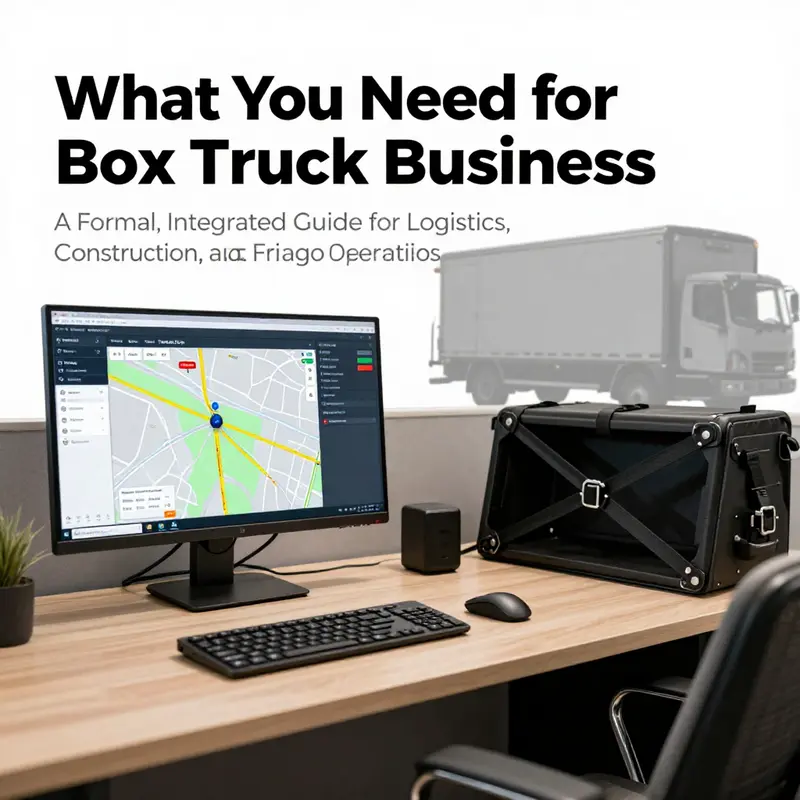
The backbone of a box truck business is not merely the vehicle or the route you choose to run. It is the quiet, well-tuned alignment of reliable tools, smart technology, and robust cargo security that supports every mile you log, every load you move, and every client you satisfy. In this chapter, a single, cohesive narrative unfolds about how these three pillars come together to create an operation that is predictable, scalable, and resilient. The right tools keep work flowing smoothly, technology turns that flow into a well-orchestrated system, and cargo security protects the value you are entrusted to transport. When you approach each part with intention, you transform a fleet of trucks into a repeatable service that can grow without losing control of quality, safety, or cost.
Tools are the first line of defense in a box truck business. A well-equipped interior is not a luxury; it is a practical necessity that translates into faster job completion, fewer trips back to the shop, and safer handling of materials. The most effective setups start with a compact, lightweight portable tool box that can be moved between jobs easily. When space is at a premium, a thoughtfully mounted tool box behind the cab—often referred to as a headache rack tool box—keeps the essential hand tools, fasteners, and small equipment within arm’s reach while keeping the interior cargo area clear. The goal is to strike a balance: make tools accessible yet secure, light enough to move without strain, and rugged enough to withstand daily use and weather exposure.
Durability and compatibility matter just as much as content. Quality tool boxes should resist corrosion, prevent moisture intrusion, and withstand the inevitable bumps of commercial driving. Mounting should comply with safety standards and road legality; an improper mount can loosen, damage cargo, or create hazards in a sudden stop. The organizing logic is simple but powerful: categorize tools by function, not by habit, and maintain a quick-access layout that reduces the time spent searching under load. The outcome is a truck that feels custom-made for your trades—whether you’re hauling general freight, repairing plumbing, or installing electrical components—without surrendering interior space or compromising load safety.
But tools are only one side of the coin. The interior layout should also consider the type of work you do and how you move between sites. A practical approach is to reserve space near the cab for frequently used items and allocate a separate area for bulk materials, spare parts, and packaging. This separation helps prevent shifting during transit, which protects both the cargo and the driver. When tools are secured and organized, you reduce the risk of injuries from loose hardware and minimize the likelihood of damage to the cargo area or the goods themselves. Such discipline at the toolbox level often correlates with more predictable scheduling, because technicians can access what they need quickly and proceed to the next job with minimal interruption.
Technology completes the transformation from a collection of gear to a streamlined service. Modern box truck operations rely on telematics and GPS-based tracking to deliver real-time visibility to dispatch, customers, and the driver. A robust location-tracking system is more than a map; it provides the data that underpins precise routing, efficient dispatch, and accountability for performance. Telematics platforms—without leaning on specific brands or names—summarize vehicle health, fuel consumption, and driver behavior in digestible dashboards. The result is a cycle of continuous improvement: you see when a vehicle runs hot, detect patterns like excessive idling, and coach drivers toward safer, more fuel-efficient practices. The goal is not surveillance for its own sake but a clearer picture of how to allocate time, keep maintenance intervals on track, and reduce avoidable downtime.
To harness this insight, cloud-based logistics software becomes the centralized brain of the operation. Scheduling, invoicing, inventory management, and customer communications can be coordinated in one secure environment. The value of such a system lies in eliminating the friction that often accompanies multiple spreadsheets, scattered emails, and phone tag. When a load is booked, the software can automatically assign the closest available truck, generate a dispatch note, and push ETA updates to customers. This kind of automation accelerates cash flow and improves reliability, two prerequisites for growth. It also enables you to scale your business without sacrificing service levels, because more data and better workflows make it easier to expand the fleet, add more drivers, or take on larger, more complex deliveries.
For operations that involve perishable goods, the option of a refrigerated transport capability adds another layer of consideration. A reefer-equipped box truck brings a different dimension of complexity and opportunity. The refrigeration unit needs to be reliable, properly sized for the payload, and covered by appropriate certifications and maintenance routines. In such cases, the integration of temperature monitoring into the telematics and software stack ensures that temperature excursions are flagged early, enabling proactive intervention before product quality is compromised. The decision to add refrigeration should be grounded in a clear demand signal—customers seeking cold-chain integrity—and supported by a plan for maintenance, spare parts, and trained personnel who can handle refrigeration equipment with the same care given to the cargo itself.
Security is the bridge that links tools and technology to the outcomes clients expect. Physical security within the cargo area becomes a daily discipline, not a once-in-a-while concern. High-quality locks, robust security straps, and tamper-evident seals are fundamental. A truck becomes more trustworthy when there are visible deterrents to theft and clear evidence of cargo integrity. Inside the cab and cargo space, cameras or motion sensors can provide a record of events in case of an incident, and alarm systems add a further layer of protection for high-value shipments. The combination of visible deterrence and verifiable records creates a confidence premium—customers feel safer when they know you are actively monitoring the security of their goods.
Equally important is the human factor of handling and loading. Even the best security equipment cannot compensate for careless loading techniques. Proper weight distribution and secure restraint are essential to prevent load shifting, which can cause damage to goods and increase the risk of rollover or loss during emergency maneuvers. Training drivers and helpers in safe loading practices, as well as conducting routine cargo area inspections, becomes a fundamental part of the daily routine. Security, in this view, is not only about locks and cameras; it is about a culture of care that permeates every interaction with the cargo—from the moment the box is loaded to the moment it is delivered and signed for.
The three pillars—tools, technology, and cargo security—do not exist in isolation. They reinforce each other in a virtuous loop that drives efficiency and resilience. A well-organized toolbox reduces friction and accelerates job completion; telematics and routing software convert that efficiency into reliable service delivery; and solid cargo security protects the value you transport while enabling tighter commitments to customers. In practice, this means your business can handle a broader mix of loads, move more predictably through peak seasons, and respond to unexpected demand with a prepared, scalable framework. You are not merely buying a truck and driving; you are building a process with repeatable, measurable outcomes.
As you plan this transformation, consider the wisdom embedded in a broader principle that resonates beyond tools and tech. Investing in people remains a core driver of trucking success. The human element—trained drivers, disciplined loaders, and a dispatch team that communicates clearly—forms the connective tissue that keeps all the other components in harmony. Investing in people key to trucking’s success is not an afterthought but a strategic prerequisite that ensures the tools, the technology, and the security systems you implement will be used effectively and consistently across all jobs. When people understand the why behind each piece of equipment and each workflow, adoption is natural and outcomes improve.
In this sense, the box truck becomes more than a vehicle; it becomes a compact, mobile operating system. Its effectiveness rests on deliberate choices about what tools to bring on every job, how to leverage technology to coordinate complex tasks, and how to protect the cargo with a security plan that withstands scrutiny and risk. The grand aim is not merely to ship goods from point A to point B but to create a dependable service that clients can rely on, season after season. The journey from toolbox to telematics to cargo seals is a continuous journey of improvement, one that rewards careful planning, disciplined execution, and a constant eye for the human element that makes those systems work in harmony. For those who commit to this integrated approach, growth is not a leap of faith but a sequence of well-timed, well-supported steps that compound over time. The box truck, in this framing, is a living example of operational intelligence in motion. As you consider your next purchase, your next hire, or your next route, return to these three pillars and let them guide decisions that compound into measurable gains. In the end, the market rewards reliability, transparency, and the ability to protect the value you move every day.
External reference for practical tool box considerations: For a practical look at tool box features and installation standards, see this automotive resource: https://www.autoblog.com/2025/11/19/mini-truck-tool-box-features-standards-performance/
Chapter 5: Insuring, Complying, and Strategically Growing Your Box Truck Business
Building a box truck business is less about the truck itself and more about the framework you put in place from day one. The road to a scalable operation runs through three interlocking pillars: insurance, compliance, and growth planning. When these are woven together, you create a resilient structure that can weather rising costs, shifting regulations, and the inevitable demand cycles of transport and logistics. The goal is not to chase quick wins but to establish practices that protect your assets, keep you legally sound, and position you for meaningful expansion as markets and opportunities evolve.\n\nInsurance is the first line of defense and the most practical starting point for any ambitious fleet. A well-considered coverage plan begins with commercial auto liability, which shields you from third‑party injuries and property damage that occur during ordinary operations. Physical damage coverage protects your trucks from collisions, weather damage, and other perils to ensure you can repair or replace assets without crippling cash flow. Cargo insurance guards the goods you transport, a critical line given the value and sensitivity of many shipments. General liability adds a broader layer of protection for incidents that fall outside the vehicle itself, such as property damage at a loading dock or a customer injury on site. If you rent or lease vehicles, non-owned or hired auto coverage can bridge gaps when you don’t own every asset in your fleet. And for any operation that employs people, workers’ compensation is not optional in many jurisdictions; it funds medical care and supports staff wellbeing in the event of on‑the‑job injuries.\n\nAs you grow, the cost of insurance tends to rise with your risk exposure. A practical approach is to partner with a broker who understands trucking and can tailor policies to your specific use case, vehicle GVWR, and hours-of-service realities. Keeping thorough records is essential: vehicle registrations, driver qualifications, maintenance logs, and evidence of coverage should be easily accessible in case of a claim or audit. Beyond the core policies, consider endorsements that align with your cargo profile or operational quirks—garage liability for service centers, equipment breakdown for important machinery, or motor cargo liability endorsements for specialized loads. Proactive risk management also has a direct payoff in the form of lower premiums: regular maintenance, driver safety programs, and telematics data that demonstrate responsible management can drive favorable terms over time.\n\nCompliance exists as a second pillar, but it permeates every decision you make, from who you hire to how you route freight. At the federal level, operating interstate requires regulatory authority from the FMCSA, and you must align with DOT rules, state registrations, and appropriate registration numbers. The driver side is equally critical: you’ll need qualified drivers with valid licenses, medical certificates, and clean Motor Vehicle Records. Hours of Service rules, enforced through electronic logging devices where required, determine how you schedule shifts and ensure fatigue management. Drug and alcohol programs, pre-employment testing, random tests, and proper certifications are essential for reliability and safety. Vehicle maintenance and inspections, proper load securing, and adherence to cargo and safety standards are not merely formalities; they are the backbone of operational integrity and insurance viability.\n\nRecordkeeping is the glue that holds compliance together. Create driver qualification files, maintenance logs, and training records, and set up standard operating procedures for onboarding, safety training, and regulatory reporting. A compliance calendar that flags renewal dates for licenses, medical cards, insurance policies, permits, and registrations helps prevent gaps that could trigger investigations or penalties. The consequence of poor compliance is not only fines but disrupted operations, policy cancellations, or even a forced shutdown. A disciplined approach to compliance—regular audits, internal reviews, and transparent reporting—also makes growth less risky because regulators and insurers see a well-managed operation.\n\nGrowth planning is the third pillar, and it is where many ambitious operators discover the art and science of scaling without sacrificing reliability. Start with a clear growth target: how many trucks, what markets, which service lines, and over what time frame? This plan should be anchored in capital availability and a realistic assessment of operating margins. Fleet expansion requires a careful balance of utilization, maintenance, and insurance cost. As you add drivers, you must evolve your training, supervision, and retention programs to maintain service levels and safety culture. Recruitment and development are not afterthoughts; they become a competitive advantage as you scale.\n\nEfficiency and adaptability drive sustainable growth. Route optimization, fuel management, and predictive maintenance help you squeeze more value from each asset and keep downtime to a minimum. Telematics data—covering speed, braking, location, and maintenance alerts—translates into tangible gains in safety, reliability, and cost control. Diversifying service offerings can also open new revenue streams. A growing box truck operation might expand from simple local moves to regional distribution, dedicated fleets for specific customers, or last‑mile services that capture a slice of e‑commerce delivery demand. Each expansion should be weighed against the incremental insurance, compliance, and administrative load it brings, with budgets updated to reflect the new risk profile.\n\nThe human element deserves special emphasis in growth planning. A robust driver pipeline supports scalability, but it requires thoughtful investment. Establish a structured recruiting process, background checks, ongoing safety coaching, and attractive retention incentives to reduce turnover. In many cases, a forward-looking leadership stance on people mirrors broader industry practices around talent development and culture. For operators who want to emphasize people strategy as a growth lever, there is a clear link to long‑term performance: safer drivers and more reliable service translate into steadier cash flow, better customer relationships, and lower insurance costs as risk profiles improve. A notable perspective on this approach can be explored through resources focused on investing in people as a core driver of fleet performance: Investing in People: A New Path for Trucking Fleets.\n\nAll of these threads—insurance, compliance, and growth—must be anchored in practical implementation. Start by assembling the core documentation you will need across insurance, licensing, and fleet operations. Engage a trusted broker early to map coverage against your fleet size and service footprint. Develop SOPs for onboarding new drivers, safety training, vehicle maintenance, and incident reporting. Install or verify ELDs where required, and establish a culture of timely, accurate recordkeeping. Build a three-year growth plan that specifies vehicle acquisitions, financing, and maintenance capacity, and pair it with a risk management plan that accounts for driver shortages, regulatory changes, and fuel price volatility. Keeping a steady cadence of reviews—quarterly insurance renewals, annual compliance audits, and mid-year progress checks on growth milestones—helps you stay aligned and responsive.\n\nFinally, the strategic integration of these elements creates a competitive advantage that is not easily eroded by short-term shocks. When your insurance programs are comprehensive, your compliance framework is meticulous, and your growth plan is disciplined, you gain both resilience and momentum. Your fleet becomes not just a collection of assets but a carefully managed system with predictable costs, reliable service, and expanding geographic reach. In that sense, insurance, compliance, and growth are not three separate tasks but three interconnected gears driving a box truck business forward with confidence. For those navigating the regulatory landscape, the official pathways and registration details remain essential anchors—such as the FMCSA Unified Registration System, which serves as the authoritative portal for motor carrier registration and authority. External resource: https:// urs.fmcsa.dot.gov/.
Final thoughts
A box truck business succeeds when vehicle readiness, licensed safety, regulatory compliance, and intelligent operations converge into a scalable process. By following the five chapters—vehicle readiness and insurance, licensing and operating authority, licenses and USDOT/FMCSA compliance, tools and cargo security, and growth planning—organizations can deliver reliable service across logistics, construction, fleet management, and distribution. The result is a compliant, efficient, and resilient operation capable of winning clients, reducing risk, and sustaining long-term growth.