
In an increasingly competitive landscape, trucking companies must adopt effective advertising strategies tailored to their unique strengths and the needs of their target market. This comprehensive examination focuses on how to effectively advertise a trucking business specifically targeting logistics and freight companies, construction and engineering firms, fleet management companies, and food and beverage distributors. The first chapter delves into defining your niche and establishing a compelling value proposition—key pillars in formulating your marketing approach. The second chapter emphasizes the importance of creating a professional online presence, showcasing how a well-optimized website and Google Business Profile can draw potential clients. Finally, the third chapter explores leveraging digital advertising strategies and networking opportunities that enhance visibility and foster long-lasting business relationships. Each chapter builds on the previous one, collectively guiding trucking businesses towards successful marketing execution.
null
null
Build a Trustworthy Digital Front Door: Crafting a Professional Online Presence for Your Trucking Business
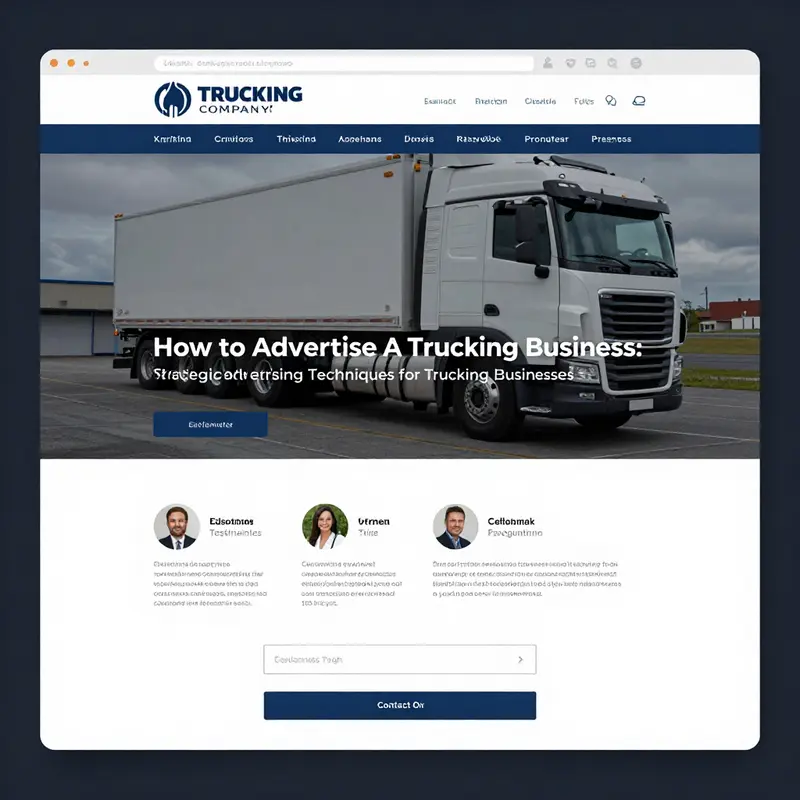
A trucking company’s website and digital footprint are often the first point of contact for potential customers. Establishing a professional online presence is not optional. It is a strategic asset that converts curiosity into inquiries, and inquiries into contracts. A well-crafted digital front door balances clear service information, visible trust signals, and easy ways to engage. The result is a continuous pipeline of qualified leads that match your niche and capacity.
Start by thinking of your website as more than a brochure. It must serve four roles at once: a sales tool, a reputation builder, an operational hub, and a recruitment magnet. Every page should answer a simple visitor question: what can this company do for me, and how do I get started? Keep content focused on the customer. Use short, direct sentences that explain the services, coverage areas, and any special capabilities such as refrigerated freight, hazmat handling, or expedited lanes. Feature a clear call to action on every page—request a quote, schedule a pickup, or call a sales line.
Design and usability matter. A clean layout, legible typography, and strong visuals build credibility instantly. Make sure the site is responsive so it works on phones and tablets. Fast loading speeds reduce bounce rates and help search visibility. Include an easy-to-use online quote form that captures key shipping details and contact information. Minimize required fields to lower friction. Consider tiered forms that start with the basics and expand only when the prospect is ready to commit more information.
Trust signals reduce friction and accelerate decisions. Prominently display your operating licenses, insurance coverage, safety certifications, and industry memberships. Add customer testimonials and short case studies that explain the challenge, your solution, and the measurable outcome. Use real names and company logos when permitted. Include a page that outlines safety protocols, driver training, and equipment maintenance schedules. These details reassure logistics managers that you operate reliably and professionally.
Search engine visibility is how customers find you when they need transportation services. Implement basic SEO practices from day one. Choose clear page titles and meta descriptions for service pages and location pages. Write concise, location-specific content such as “regional freight hauling in State X” or “refrigerated transport serving the Midwest.” Build a logical site structure so search engines and visitors can find relevant pages quickly. Use schema markup for business information and services to improve the richness of search results.
Local search matters for most trucking businesses. Claim and optimize your Google Business Profile. Keep your business name, address, and phone number consistent across all listings. Add service area details, business hours, and photos of your fleet and facilities. Encourage satisfied clients to leave reviews and respond professionally to feedback. Positive reviews improve local ranking and influence procurement decisions.
Social media is not one-size-fits-all. Choose platforms that reach your audience. Use LinkedIn for B2B outreach and thought leadership. Share company updates, safety awards, route expansions, and short articles that address shippers’ pain points. Use Facebook and Instagram for brand storytelling, showcasing your drivers, community involvement, and behind-the-scenes operational highlights. Short video clips of secure loading practices, equipment checks, or timely deliveries humanize your brand and boost engagement.
Brand consistency across digital channels cements recognition. Use the same logo, color palette, and tone of voice across the website, social profiles, email templates, and ad creatives. A consistent visual identity makes your trucks, uniforms, and marketing materials recognizable at a glance. Keep messaging clear and benefit-driven. Avoid jargon unless your audience is technical logistics professionals.
Content is the engine that fuels repeat traffic and organic growth. Create a modest editorial plan focused on customer questions and industry topics that intersect with your services. Useful content includes loading best practices, seasonal shipping tips, and short guides about regulatory compliance that affect transit times. Convert long-form content into shorter snippets for social posts and email newsletters. Use landing pages to host downloadable resources such as packing checklists or capacity planning guides. These resources create lead capture opportunities and demonstrate expertise.
Multimedia amplifies credibility. High-quality photos of the fleet, yard, and team add authenticity. Short videos that show safety procedures, refrigerated trailer checks, or driver spotlights build trust. Use captions and transcripts so content works without sound. Host videos on platforms that can embed into your site without slowing it down. Consider virtual tours of your terminals or a video walkthrough of how a typical shipment is handled.
Integrated advertising raises visibility while organic efforts take hold. Use targeted search ads for transactional queries like freight rates or urgent shipments. Run display or social ads that promote case studies, guaranteed transit times, or special offers. Ensure landing pages align with ad messaging and include a clear next step. Tracking pixels and UTM parameters help measure ad performance and feed retargeting campaigns that remind visitors to return.
Email remains one of the most efficient ways to nurture prospects and retain clients. Build segmented lists for prospects, customers, and past clients. Send concise updates: capacity alerts, seasonal scheduling reminders, and policy changes. Use email to ask for feedback and to request referrals. A simple monthly digest that highlights recent shipments and operational improvements keeps your brand top of mind.
Reputation management is continuous. Monitor mentions, reviews, and social conversations about your business. Respond promptly and professionally to concerns. Turn a complaint into an opportunity by acknowledging the issue, proposing a solution, and following up after resolution. Publish resolution stories as proof of accountability. Regularly audit directory listings and correct inconsistencies in your name, address, phone number, and service descriptions.
Recruitment and employer branding are part of a professional online presence. A careers page that highlights driver benefits, safety culture, and training programs helps attract qualified staff. Share employee testimonials and career progression stories. Prospective clients often evaluate a carrier by the quality of its people. A visible commitment to training and retention signals stability and reduces perceived risk.
Operational integration makes your online presence actionable. Link your quote forms to internal CRM and dispatch systems so leads convert into jobs quickly. Automate confirmations and follow-ups by email or SMS. Provide customers with tracking links and proof-of-delivery uploads. A portal where clients can view invoices, shipment history, and live status reduces administrative friction and strengthens long-term relationships.
Measure what matters. Track website behavior—traffic sources, time on page, and conversion rates for quote requests. Monitor local search impressions and GBP actions. Use social analytics to see which posts drive engagement and inbound leads. For advertising, measure cost per lead and cost per contracted shipment. Look beyond vanity metrics and focus on KPIs that tie directly to revenue and utilization.
Security and compliance protect your reputation. Ensure your site uses secure protocols and protects customer data. Display privacy and cookie policies. Make it easy for partners and clients to verify your credentials. If you handle regulated freight, dedicate a page to compliance practices and contact details for compliance queries.
A professional online presence requires ongoing investment. Schedule quarterly audits of site content, SEO performance, and digital assets. Update case studies and client testimonials regularly. Refresh visual elements when branding evolves or new service lines are added. Small, steady improvements compound into meaningful gains in visibility and trust.
Managing budget constraints starts with prioritization. Allocate resources to core elements first: a fast, responsive site; Google Business Profile; and one strong social platform. Add content creation and paid advertising as your capacity grows. Outsource specialized tasks like technical SEO and video production when needed. Use analytics to reassign budget from low-performing tactics to those that generate measurable leads.
Finally, connect your digital presence to real-world assets. Use vehicle wraps and yard signage to reinforce online branding. Promote your website on invoices, business cards, and driver paperwork. Train drivers and frontline staff to invite customers to visit your site for tracking and resources. When every customer touchpoint echoes the same professional image, your brand becomes a reliable choice.
For a practical framework on building a marketing plan centered on SEO and social strategy, review the industry guide that outlines step-by-step tactics and priorities for new carriers: https://www.shopify.com.au/blog/how-to-start-a-trucking-business-in-2026
For a perspective on human-centered approaches to fleet operations and employer branding, explore this resource on people-first strategies in trucking: people-first strategies in trucking
A professional online presence is a living system, not a one-time project. Treat it as a strategic channel that reflects your operational strengths and market position. With clear messaging, reliable functionality, and consistent measurement, your digital front door will convert searchers into customers and help scale your business with confidence.
Driving Credibility and Growth: Mastering Digital Advertising and Strategic Networking for Your Trucking Business
Advertising a trucking business is not a single tactic but a careful orchestration of digital presence, targeted outreach, and face-to-face relationships that together build trust, convey capability, and open new lanes of opportunity. In markets where every mile matters and every deadline is one more constraint to respect, your marketing message must be as dependable as your fleet. The core of that message starts with a clear niche and a compelling value proposition. Before you spend a dollar on ads or print mail, you must answer a simple but decisive question: what makes your operation stand apart? Perhaps you excel in refrigerated freight on short regional routes, or you handle time-critical deliveries with a track record of on-time performance. Maybe you offer more proactive communication, better damage control, or a guarantee of transparent pricing. Whatever your edges are, they must be stated plainly in your marketing and carried through every touchpoint, from your website copy to the way a salesperson explains your services on a call. A well-defined value proposition is not merely a slogan; it is the compass that guides your advertising, content, and conversations with prospective customers. When you can articulate a unique benefit—whether it’s reliability, speed, safety, or cost predictability—you create a narrative that resonates with shippers who need stability in uncertain times. Your niche then becomes a lens through which all subsequent communications pass, filtering out noise and guiding the eye to what matters most to potential clients.
A professional online presence is the next pillar in this framework. Your website, even in markets where decisions are still made in the inbox and on the phone, serves as your digital storefront. It should present a calm, confident image of your operation and offer a clear map of what you haul, where you operate, and how clients can engage with you. The information should be readily accessible: the types of freight you handle, the regions you serve, and the conditions under which you operate. Your company history, mission, and values aren’t mere background; they’re assurances that your business behaves consistently, ethically, and with an eye toward long-term partnerships. A robust About section supports credibility, while a transparent, user-friendly contact page demonstrates approachability. An online quote form, when designed with simplicity in mind, reduces friction and invites inquiries without demanding instant commitments. Testimonials from satisfied customers act as social proof, turning abstract assurances into tangible endorsements of reliability and service quality. And beneath these visible elements, search engine optimization weaves the content into a structure that matches the way buyers search for transportation solutions. Optimizing copy around phrases like “reliable trucking services in [your state]” helps you appear in the moments when a decision-maker is actively assessing options.
Beyond the website, your local visibility matters as much as your online sophistication. A local business listing that accurately reflects your name, address, phone number, hours, and services is a lifeline for local and regional buyers who want to verify you quickly and reach you without a maze of pages. Encourage customers to leave reviews, and respond to feedback with transparency and timeliness. Local listings work best when they’re kept current, consistent, and tied to your core value proposition. Your online storefront and your local profile should reinforce one another, creating a cohesive impression that says you’re accessible, accountable, and capable of delivering on promises.
With a solid online home and a credible local footprint, you can design digital advertising campaigns that are practical, measurable, and aligned with your business goals. In the realm of digital advertising, the logic is simple but powerful: meet potential clients where they are while they are actively seeking transportation solutions, present a compelling case for why your firm is the best choice in the moment, and invite them to engage with you further. Targeted search advertising, when framed around freight shipping and regional routes, positions your firm at the critical intersection of need and solution. Even without naming platforms, you can implement focused campaigns that capture high-intent queries—phrases like freight shipping in your city or state, or dedicated trucking services for specific lanes. The goal is not to overwhelm with every possible keyword but to curate a refined list that reflects real demand and your capacity. Pair that with display outreach on reputable sites visited by decision-makers in logistics departments, procurement teams, and operations managers. Display ads should be visually clean, consistent with your brand, and designed to prompt a direct action—request a quote, download a case study, or schedule a consultation. The emphasis is on quality interactions rather than sheer reach.
Social channels broaden your footprint and humanize your brand without diluting the technical credibility you must convey. On a professional networking platform, persistent, values-driven content can cultivate relationships with shippers, 3PLs, and procurement leaders. Share industry insights, safety milestones, and practical logistics tips that demonstrate your competence and your willingness to contribute to others’ success. In more consumer-oriented networks, create engaging visuals and videos that introduce the people behind the wheels—drivers, dispatchers, and maintenance teams. The human element matters; it makes a seemingly abstract service tangible and trustworthy. The visual story of your fleet, your drivers’ professionalism, and your commitment to safety and compliance can convert brand awareness into genuine interest. The key is to maintain a consistent voice across channels: the same emphasis on reliability, communication, and ethical practices that you offer your clients should radiate through every post, every video, and every reply to a comment.
Advertising, in isolation, seldom creates durable growth. The most successful trucking marketing blends digital visibility with proactive relationship-building. Networking opportunities become a second channel for conversion when they are integrated with your digital presence. Industry events—trade shows, conferences, and local chamber gatherings—offer a vivid, personal environment to demonstrate capability and establish trust. They enable you to meet potential clients and partners face to face, share your value proposition in conversation, and listen to the needs, constraints, and concerns that shape purchasing decisions in logistics. You can extend the impact of these meetings by carrying the impressions back into your digital ecosystem: update your website with event highlights, publish brief follow-ups or case studies, and weave the insights gained into your next advertising iteration. In addition to face-to-face interactions, membership in professional associations provides ongoing access to resources, advocacy, and collective learning. Being part of these communities signals that you are serious about the industry’s standards and the long-term health of the network. The relationships formed in these spaces often translate into referrals, strategic partnerships, and collaboration opportunities that extend your reach beyond what traditional ads could achieve alone.
A well-rounded program also embraces direct methods that make your message tangible in the real world. Direct mail still has a place for targeted campaigns—businesses that might need transportation services in a given region can be identified and contacted with a precise offer. The concept is simple: a clear call to action, a reason to respond, and a follow-up plan. Vehicle wrapping turns your trucks into moving billboards, amplifying your brand as your fleet travels. A professionally wrapped vehicle communicates a strong and memorable identity on the road, making every mile a marketing opportunity. Local sponsorships deepen community ties and create goodwill that can translate into business when local organizations and businesses consider which carrier to trust with regional moves. The effect is not merely brand exposure; it is a demonstration that your company participates in the community and invests in the places where your drivers live and work. When these traditional methods align with a thoughtful digital strategy, they reinforce each other. A compelling vehicle wrap that showcases a simple value proposition—be it reliability, safety, or speed—will resonate with drivers on the highway and with logistics professionals reviewing vendor profiles online.
But the heart of a successful trucking marketing plan lies in retention and referral—delivering consistently excellent service so that customers become advocates. The advertising you do to acquire a new client should be complemented by a deliberate, repeatable process for keeping that client once they have engaged with you. That means transparent communication, on-time performance, proactive problem-solving, and a system for collecting and leveraging feedback. Testimonials are not only social proof for your website; they can be repurposed into conversations with new prospects, statements in trade show handouts, and content for thought leadership pieces. A referral program, thoughtfully designed, can turn satisfied customers into a steady stream of introductions to new business. Such a program might reward clients who bring in vetted opportunities, creating a win-win dynamic—your client gains value from the referral, and you gain efficient access to a decision-maker who already has a positive view of your operations. All of this is grounded in a relentless commitment to service excellence. In trucking, where the margin of error is narrow and the cost of a misstep can be steep, execution is the ultimate form of advertising. When your operations reliably deliver as promised, every touchpoint becomes a locus of trust rather than a mere transaction.
To knit these elements into a coherent program, you can borrow a practical principle from industry thinking: the integration of online visibility with face-to-face interaction creates a more resilient brand. The most effective campaigns are not about chasing every possible channel at once but about orchestrating a rhythm that builds credibility over time. Your digital touchpoints—your website, your local listing, your ads, and your content—must tell a consistent story that aligns with what you demonstrate in person at events and in client meetings. When a shipper sees your website, attends a trade show, and later experiences a shipment that arrives on time as promised, the cumulative effect is a durable belief in your company’s reliability. It is this coherence, more than any single tactic, that converts interest into engagements and engagements into long-term partnerships.
In implementing this approach, it helps to anchor your efforts in practical, sustainable routines. Start by clarifying your niche and value proposition in a succinct way that can be quoted in conversations and featured on the homepage. Then translate that clarity into the user experience of your website: straightforward service descriptions, proof points, a simple quote flow, and accessible contact options. Expand your reach with targeted, high-intent advertising that speaks directly to the freight needs most common in your markets. Pair that with regular, valuable content on a professional platform that demonstrates expertise while keeping the door open to new conversations. Use social storytelling to highlight the people behind your fleet—the drivers, the dispatchers, and the support teams—and let those stories reflect the same values expressed in your service promises. As you attend events and join associations, collect insights that refine both your messaging and your offering. You may discover new lanes or new pain points that your marketing can address more precisely next quarter. The cadence matters: a steady rhythm of online updates, meaningful offline interactions, and prompt follow-through with leads and clients alike.
For readers seeking a compact takeaway that still carries the richness of strategy, consider how one principle translates into action: write once, speak everywhere, and deliver the same reliability in every channel. That is the essence of credible trucking marketing. It is not about loud advertising; it is about consistent performance that makes every impression trustworthy. When potential clients sense that your business is consistently able to deliver, they are more likely to respond, to engage, and to invest in a longer-term relationship. And because the industry values safety, transparency, and predictability, these traits become the foundation of your brand’s reputation in both the digital and physical marketplaces. As you continue to invest in your people and your processes, you also invest in the reputational capital that makes your marketing effective in the long run. If you want to explore a more human-centered perspective on building capability within your team, you can read about investing in people as a cornerstone of trucking success. Investing in People: Key to Trucking’s Success.
Finally, the broader landscape—emerging standards, regulatory environments, and shifting market dynamics—will continue to shape the efficacy of your advertising over time. Keep an eye on how the industry evolves and be prepared to adapt your messaging to new priorities that buyers express as they navigate supply chain challenges. The most resilient marketing plans are not static; they evolve as your organization learns from customers and as the market demands shift. In that spirit, view your advertising not as a finite project but as a strategic practice that grows with your fleet, your people, and your relationships. If you seek a practical, practitioner-tested appendix to this approach, consider resources from the leading industry association for marketing tips and best practices in trucking; they offer guidance that complements hands-on experience and real-world case studies, helping you translate strategy into actionable tactics that align with regulatory expectations and customer needs. External resource: https://www.ata.org/resources/trucking-business-marketing-tips
Final thoughts
In summary, successfully advertising a trucking business requires a structured approach that integrates a strong understanding of your niche, a polished online presence, and proactive networking strategies. By clearly defining your unique offerings and establishing a professional online identity, you position your company to attract targeted clients effectively. Moreover, by leveraging digital advertising avenues and engaging in strategic networking opportunities, you not only promote visibility but also foster valuable partnerships in key industries. Implement these strategies to elevate your trucking business and drive consistent growth.

