
In the dynamic world of transportation and logistics, bookkeeping for a trucking business isn’t just a back-office task; it’s a vital component of operational success and profitability. With rising fuel costs, fluctuating demand, and complex compliance regulations, trucking companies face unique challenges that can significantly impact their bottom line. Effective bookkeeping illuminates financial patterns, tracks expenses, and ensures accurate invoicing, which directly contributes to informed decision-making and strategic growth. Understanding the intricacies of these financial processes can empower your business to seize opportunities while navigating hurdles. By streamlining financial operations, businesses become more agile, enabling them to adapt quickly and efficiently to market shifts. In today’s competitive landscape, mastering bookkeeping not only safeguards your assets but also positions your trucking business for sustainable success and thriving in an ever-evolving marketplace. Learn more about the economic challenges in the trucking industry and understand the pathway to profitability through effective financial management.
Basic Bookkeeping Principles for Trucking Businesses
In the trucking industry, maintaining accurate financial records is vital. Here are some fundamental bookkeeping principles that are particularly relevant for trucking businesses:
1. Double-Entry Bookkeeping
Double-entry bookkeeping is a fundamental principle in which every transaction affects at least two accounts. This method ensures accuracy and balances the accounting equation, which is: Assets = Liabilities + Equity. For example, if a trucking company purchases fuel on credit, this transaction will impact both the Fuel Expense account and the Accounts Payable account, reflecting the cost incurred and the obligation to pay.
- Example: If fuel costs $1,000, the entries would be:
- Debit Fuel Expense: $1,000
- Credit Accounts Payable: $1,000
This method allows trucking companies to maintain clearer financial statements and makes it easier to identify errors.
2. Accurate Record Keeping
Keeping accurate records of income and expenses ensures that your books reflect the true financial status of the company. This includes tracking:
- Revenue from freight charges
- Operating Expenses, such as maintenance, fuel, and wages
- Assets, including trucks and equipment
- Liabilities, such as loans or credit lines
For instance, a trucking business should use an accounting software tool to regularly update and classify expenses and income. This practice supports cash flow management and financial reporting, which are crucial for business decisions.
3. Regular Reconciliation
Periodic reconciliation of accounts helps in identifying discrepancies. This process involves comparing bank statements with the company’s accounting records to ensure accuracy. Regular reconciliation helps avoid errors and can reveal areas needing attention, such as unpaid invoices or costly business practices.
Conclusion
Understanding and applying these basic bookkeeping principles can significantly improve the financial health of trucking businesses. By implementing double-entry bookkeeping along with consistent record-keeping and regular reconciliations, trucking companies can better manage their finances and sustain profitability. For a deeper dive into how successful companies manage their bookkeeping, consider referring to articles on basic bookkeeping principles and double-entry bookkeeping.
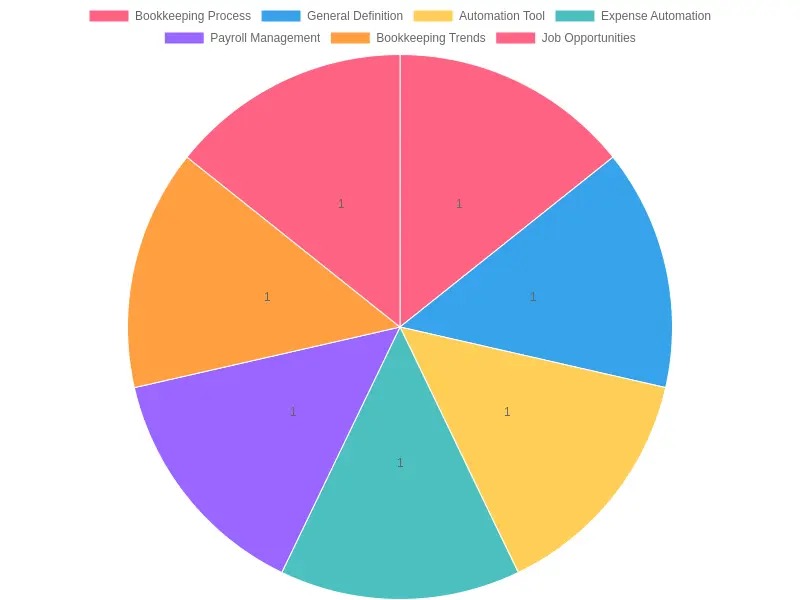
This image illustrates various bookkeeping processes essential for a trucking business, including expense tracking, invoicing, and payroll management. The interconnected nature of these tasks ensures efficient financial management which is critical for the successful operation of logistics and freight companies.
Comparison of Accounting Software for Trucking Businesses
To effectively manage bookkeeping in a trucking business, choosing the right accounting software is crucial. Below is a comparative table of popular accounting software options suitable for trucking businesses, highlighting key features, pricing, and user ratings.
| Accounting Software | Invoicing | IFTA Tracking | User Rating | Pricing (per month) |
|---|---|---|---|---|
| Samsara | Yes | Yes | 3.8/5 | Starts at $25/user + $5/vehicle |
| Alvys | Yes | Yes | Not rated | Contact for pricing |
| FreightWaves Ratings | Yes | Yes | Not rated | Contact for pricing |
| PCS Software | Yes | Yes | Not rated | Contact for pricing |
| Software Finder | Yes | Yes | Not rated | Contact for pricing |
| Tech Republic | Yes | Yes | Not rated | Contact for pricing |
| Truck Info | Yes | Yes | Not rated | Starts at $149 for 5 trucks |
Additional Resources
For deeper insights into accounting software and specific case studies related to the trucking industry, consider reading about the healthcare expansion by UPS and Coke Canada’s expansion efforts.
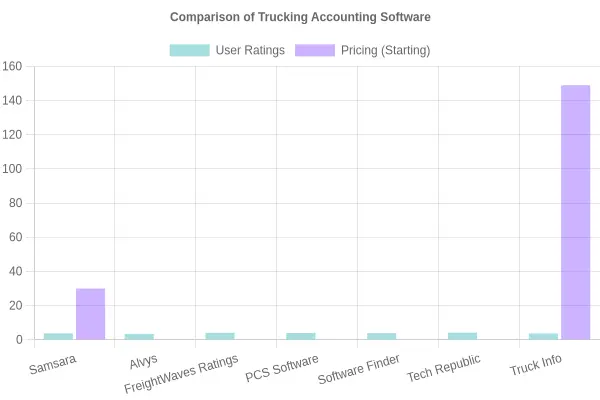
This image illustrates the software’s comparative analysis based on ratings and starting pricing to help trucking companies make informed software choices.
The Importance of Tracking Expenses in the Trucking Industry
In the competitive landscape of the trucking industry, tracking expenses is not merely a best practice; it is essential for sustainable business operations. Just as a GPS guides a truck through its route, meticulous expense tracking charts the financial course of a trucking company. Informed operational decisions depend on the clarity and accuracy of financial data, underscoring the importance of regular expense monitoring.
Key Expenses to Track
Trucking companies must account for a variety of expenses that significantly affect profitability. Some of the most common expenses include:
- Fuel: Often the largest single expense, representing 20% to 30% of a trucker’s monthly income. Fluctuations in fuel prices can dramatically impact overall profitability.
- Maintenance: Regular maintenance is crucial to ensure the longevity and safety of the fleet. Neglecting these expenses can lead to costly repairs and downtime.
- Driver Wages: Compensating drivers forms a significant part of operational costs. Understanding wage structures and associated costs helps improve budget allocations.
- Insurance: This expense is vital for compliance and risk management. Different types of insurance are crucial based on operations, affecting financial planning.
- Licenses and Permits: Necessary for legal compliance, these fees are recurring expenses that can be significant.
Operational Decisions and Insights
Accurate tracking of these expenses equips management with valuable insights, enabling better operational decisions. For instance, if a trucking company observes rising fuel costs over time, it may explore for more fuel-efficient routes or consider investing in alternative fuel technologies. Similarly, if maintenance costs are higher than average, it could prompt a review of the fleet’s age or maintenance practices to identify potential inefficiencies.
In conclusion, the practice of tracking expenses in the trucking industry is a potent tool for enhancing financial management and driving profitability. Companies that can effectively monitor these costs are better positioned to make strategic operational decisions, ensuring they remain competitive within the market. For more insights on operational efficiency, read about how UPS is expanding its revenue streams and the challenges faced by the trucking industry today as highlighted in this article on economic challenges.
Step-by-Step Guide to Invoicing Clients in the Trucking Industry
Invoicing is a crucial part of managing a trucking business, ensuring that payments are processed efficiently so that cash flow remains steady. Here’s a clear and practical guide to invoicing clients in the trucking industry, tailored to meet the needs of logistics and freight companies, and other related sectors.
Step 1: Gather Necessary Information
- Client Details: Collect the client’s name, address, contact information, and any relevant client ID.
- Service Details: Document the services provided including shipment date, route, and specifics about the cargo.
- Payment Terms: Clearly outline payment terms agreed upon with the client (e.g., net 30 days).
Learn more about payment strategies in trucking
Step 2: Create the Invoice
- Professional Format: Use a standardized invoice template that includes your company logo, contact information, and a unique invoice number. Templates can save time and ensure consistency.
- Invoice Details to Include:
- Invoice Date
- Invoice Number
- Description of services
- Total Amount Due
- Payment Methods Accepted
Access a free trucking invoice template here
Step 3: Send the Invoice
- Delivery Method: Choose a delivery method (email, postal mail, or invoicing software). Ensure the client has received the invoice.
- Follow-Up Documentation: Keep a copy of the invoice and any correspondence related to it for your records.
Step 4: Set Payment Reminders
- Automate Reminders: Use invoicing software to set reminders for upcoming payments. This can reduce late payments significantly.
- Friendly Follow-Up: If payment is near or overdue, send a polite email or make a phone call to confirm receipt and inquire about payment status.
Step 5: Track Payments and Reconcile Accounts
- Payment Tracking: Ensure payments are logged and tracked against each invoice. This aids in financial planning and reporting.
- Reconciliation: Regularly reconcile your accounts to ensure all invoices have been accounted for and payments recorded accordingly.
Step 6: Handle Disputes Professionally
- Clear Communication: If there is a dispute regarding an invoice, address it promptly and professionally. Be ready to clarify any discrepancies.
- Documentation: Maintain thorough documentation addressing any issues, including emails and notes of conversations with clients.
Invoicing may seem like a straightforward process, but incorporating good practices enhances the efficiency of your operations and improves cash flow management in your trucking business. For further insights on the challenges and strategies in the industry, consider reading about the economic challenges facing the trucking industry here.
By implementing these steps, you can streamline your invoicing process and ensure you are paid in a timely manner, increasing cash flow and supporting the sustainability of your trucking business.
Financial Flow in Trucking Businesses
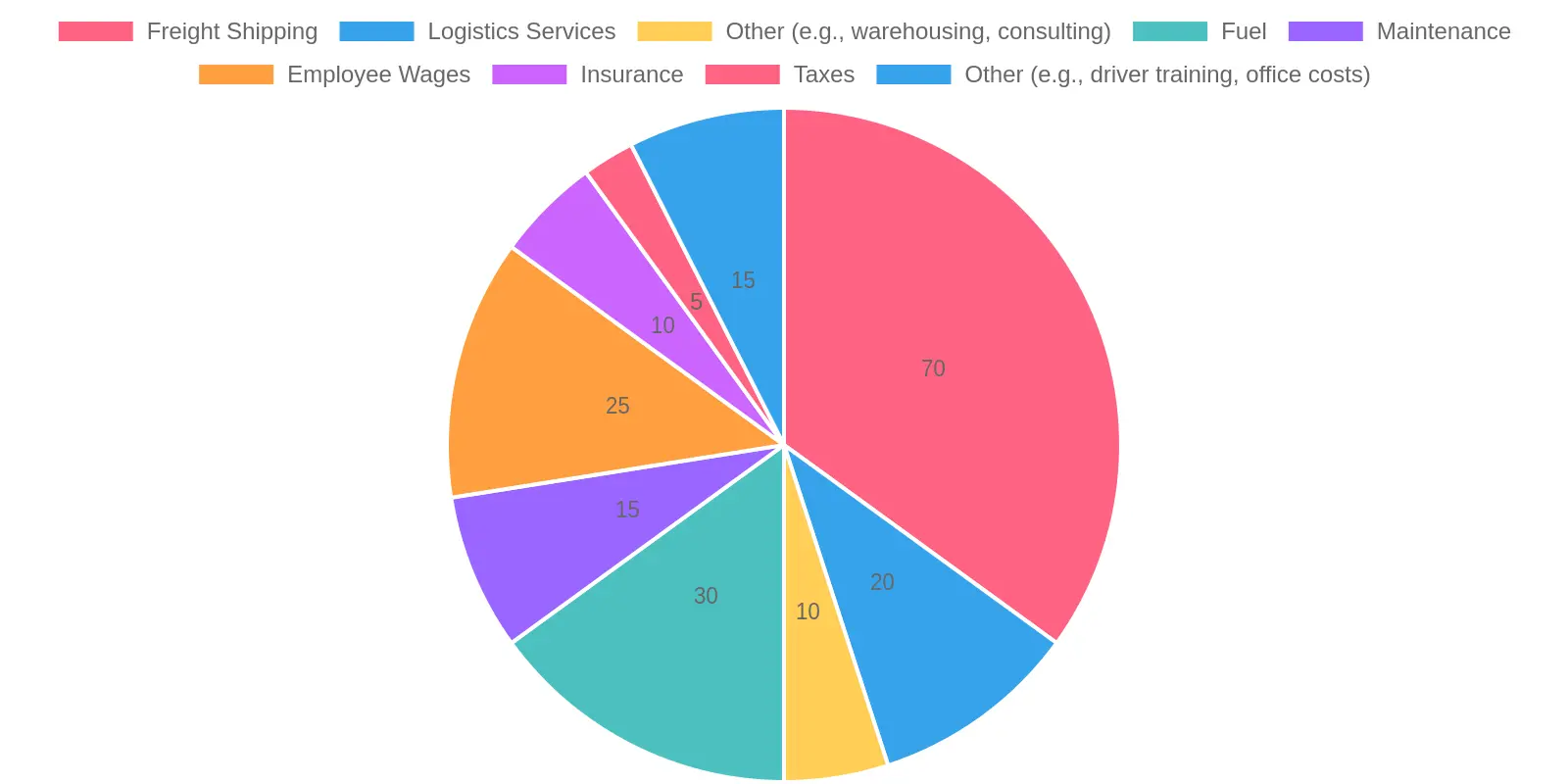
Understanding the financial flow in trucking businesses is crucial for effective bookkeeping and financial management. This chart illustrates the income streams, typical expenses, and profit calculation involved in trucking operations.
Breakdown of Income and Expenses
| Category | Details | Estimated Percentage |
|---|---|---|
| Income Streams | Freight Shipping | 70% |
| Logistics Services | 20% | |
| Other (e.g., warehousing, consulting) | 10% | |
| Typical Expenses | Fuel | 30% |
| Maintenance | 15% | |
| Employee Wages | 25% | |
| Insurance | 10% | |
| Taxes | 5% | |
| Other (e.g., driver training, office costs) | 15% | |
| Profit Calculation | Net Income = Total Revenue – Total Expenses | 14% |
For further insights into trucking financial management, consider reading our articles on trucking industry economic challenges and investing in people for trucking success.
Best Practices for Maintaining Financial Records in the Trucking Industry
Maintaining accurate financial records is critical for trucking companies to ensure compliance, improve efficiency, and enhance decision-making. Here are some actionable best practices for maintaining financial records in the trucking industry:
-
Stay Organized: Use a dedicated filing system for financial documents. Group receipts, invoices, and statements for easy access and reference.
-
Daily Transaction Logging: Record daily transactions including fuel purchases, maintenance costs, and driver wages to ensure nothing is overlooked and keep updated financial records.
-
Utilize Accounting Software: Invest in reliable accounting software tailored for trucking businesses that can automate tasks and reduce human error.
-
Keep Track of Expenses: Document all business-related expenses meticulously. Use apps or tools that allow drivers to submit expenses in real-time.
-
Regular Reconciliation: Set a regular schedule (weekly or monthly) to reconcile bank statements with financial records to identify discrepancies promptly.
-
Generate Financial Reports: Periodically generate financial statements (e.g., profit and loss statements) to track business performance and identify trends over time.
-
Consult with Professionals: Regularly consult with accounting professionals who understand the trucking industry to ensure compliance and strategic financial advice.
By adopting these practices, trucking companies can enhance their financial management, leading to improved operational efficiencies and profitability. For further insights on how meticulous financial planning can help your business, learn more about the importance of bookkeeping in trucking.
“Bookkeeping is crucial for compliance, tracking, and improving cash flow within trucking businesses, especially as the industry faces heightened regulatory scrutiny.” – Personal Truck Services
This quote emphasizes the critical role of bookkeeping in ensuring the financial health and legal compliance of trucking businesses.
Suggested Internal Links
Conclusion and Call to Action
In conclusion, effective bookkeeping is fundamentally tied to the success of trucking businesses. Throughout this article, we explored essential strategies that ensure accurate record-keeping and financial management, such as maintaining detailed logs, utilizing accounting software, and staying compliant with federal regulations. Understanding the nuances of cash flow, tracking expenses diligently, and reconciling financial statements significantly contribute to sound business operations.
For logistics and freight companies, construction firms, and fleet management organizations, these practices are not just good habits; they are critical for sustainability and growth in a highly competitive market. Integrating these bookkeeping practices enhances profitability and empowers businesses to make informed decisions.
If you’re ready to elevate your trucking business and enhance operational efficiency, consider exploring our range of powerful solutions at Titan Business Trucks. Investing in reliable trucks and innovative logistics solutions can transform your bookkeeping efforts into a seamless experience, ensuring you stay ahead in the trucking industry. Don’t miss out on the opportunity to streamline your operations and thrive in today’s dynamic market!