
Establishing a tow truck business requires navigating a regulatory landscape that varies by location. To operate legally, firms must secure a tow truck business license, which is especially relevant for logistics and transportation sectors like logistics & freight companies, construction & engineering firms, fleet management companies, and food & beverage distributors. This guide provides a structured approach to understanding local requirements, preparing necessary documentation, submitting applications, and undergoing inspections critical for license approval. By delineating the process into comprehensive sections, businesses will be well-equipped to meet licensing mandates and achieve operational legitimacy in the tow truck industry.
Local Rules, Global Readiness: Tow Truck Licenses by Understanding City-by-City Requirements
Licensing a tow truck business is not about chasing a single national form but about aligning with the exact rules that govern the place you plan to operate. Local licensing schemes reflect priorities around safety, public welfare, competition, and enforcement, so the path to a license is a tailored process. You can start with general steps such as business registration, insurance, and driver qualifications, but the specific requirements vary by jurisdiction. In major cities, licensing tends to be formalized with multi step processes. For example, in New York City, operators who handle tow services must navigate the Tow Truck Company licensing program and the Registered Tow Truck Operator license, with requirements managed through the Department of Consumer and Worker Protection. Proof of liability and garage keepers insurance is typically required, along with ongoing compliance and documentation maintained via the official portal. Application review may include background checks and vehicle inspections, and fees apply at various stages.
In contrast, licensing in Western Australia centers on vehicle safety and clear certification pathways. A vehicle inspection confirms roadworthiness, followed by submission of Form VL17 and supporting identity documents. Corporate applicants face additional documentary requirements. The WA Transport authority provides the official forms and guidance, helping applicants move from inspection to license issuance. The emphasis is on ensuring that a tow vehicle operating in the public domain meets technical standards and that the operator has legitimate governance and identification credentials.
Across these examples, the common themes are demonstrated financial responsibility, safety readiness, and verified identities. The license serves as a visible guarantee that the operator has passed through a process designed to minimize risk to the public, to vehicle owners, and to staff. Licenses are not just one‑time approvals but part of an ongoing lifecycle that includes renewals, reporting obligations, and updates to insurer credentials or driver qualifications. For someone charting a path toward licensure, a practical approach is to assemble the core documents first: business registration, proof of insurance with appropriate limits, vehicle documentation, and up to date operator credentials. Then prepare the application through the correct channel, paying attention to forms, attachments, and submission requirements.
Finally, remember that licensing landscapes evolve with safety concerns and policy changes. Stay connected to official guidance and plan for renewals and potential contingencies in your compliance strategy.
Paperwork That Powers a Tow Truck License: Building the Compliance Backbone
A tow truck license is not granted on a single form or a single signature. It is earned through a cohesive set of documents and systems that prove you can operate safely, legally, and consistently. The process begins with recognizing that many jurisdictions treat licensing as a multi-part package. At its core is a foundational permit that establishes you can move vehicles on public roads, but the package expands to cover the people, the equipment, and the internal practices that keep everything running without incident. In practical terms, that means assembling a comprehensive file long before you file a single application. It also means designing a compliance culture that stays current as rules evolve, a mindset that will serve you well whether you are starting in a big city with strict oversight or a smaller market that applies similar safety and accountability standards.
One universal anchor in this journey is the Road Cargo Transport Operation Permit, a foundational credential in many markets. Even when the exact name or scope shifts, regulators expect you to demonstrate that your operation can move vehicles responsibly under applicable road safety and commercial guidelines. To apply, you typically complete and submit the Road Cargo Transport Operation Application Form, which may be available online or at local transportation offices. Alongside the form, you provide copies of crucial documents that establish the business as a legitimate, prepared operator. These include the legal representative’s identification and, if someone else handles the filing, a signed authorization letter. You will also present a copy of your Business License or Enterprise Legal Person Registration Certificate to confirm the business structure, continuity, and authority to operate.
Vehicles sit at the center of the file because they embody the risk regulators are trying to manage. Expect to attach vehicle registration certificates and copies of vehicle technical grade assessment reports, which reveal whether the fleet meets minimum performance and safety standards. Additionally, you must show evidence that your vehicles satisfy the technical requirements outlined in the applicable road transport vehicle regulations. For larger tow units—those with substantial total mass, such as heavy-duty tows or combined tractor-trailer configurations—some jurisdictions require proof that the vehicle is connected to a dynamic monitoring positioning system. This is essentially a GPS-based tracking and monitoring capability that supports real-time safety and dispatch oversight. While the precise requirements vary, the underlying principle remains the same: regulators want visibility into how and where heavy equipment operates. For specialized jobs—oversized loads, refrigerated units, containers, or other unique towing tasks—you’ll need to demonstrate that your vehicles are equipped and maintained to perform those duties without compromising road safety or cargo integrity.
Documentation underpins a broader safety and compliance system that usually extends beyond mechanical readiness. Internal safety management systems form another core pillar. You would typically need to establish a safety production responsibility system, safe operation procedures, a safety inspection system, and driver and vehicle safety management regulations. These elements show that the enterprise has structured responsibility, clear protocols, and ongoing oversight for day-to-day operations. Regulators want to see that the enterprise does not simply own tow equipment but also actively governs risks—through procedures, checklists, drills, and accountable roles. You may be asked to attach manuals or policy documents that describe how your team handles dispatch, maintenance, load securement, incident reporting, and emergency response. The aim is a coherent, documented approach to safety that can be audited and improved over time.
People are a recurring focus in license processes, because the operator and the drivers directly influence safety outcomes. In many jurisdictions, the owner or the business entity and the drivers must complete certain examinations administered by the transportation authority. The content of these exams typically covers road transport laws, vehicle maintenance basics, and cargo handling fundamentals. In some contexts, the licensing framework calls for an Occupational Qualification Certificate that verifies that personnel have achieved a recognized standard of knowledge and competence. This is where the linkage between paperwork and practice becomes most tangible: credentials matter, but so does the demonstrated ability to apply those credentials in daily work. In certain markets, drivers operating tow trucks must possess a suitable license category, sometimes described in terms like an A2 driver’s license, and those without it may need to undergo specified training and pass a qualifying exam. The exact licensing ladder can differ, but the pattern is clear: qualification, verification, and ongoing competency.
A careful flag to note for practitioners is that not every operator will face the same thresholds. In some smaller operations where the total vehicle mass remains below a regulatory threshold—often around a mid-range weight—an explicit Road Transport Operation Permit may not be mandatory. Yet even when a permit is not required, the basics still apply: proper vehicle registration, adequate insurance, and compliance with local regulations must be in place. The upshot is simple: do not assume that a lack of a particular permit means “no paperwork.” The core discipline is to prove readiness, maintainability, and compliance in a way that regulatory bodies can audit and verify.
The practical path to gathering all of these elements begins with a careful map of your jurisdiction’s rules. Licensing rules are governed by local transportation authorities or licensing boards, and they differ widely from city to city and state to state. Where studies and practice intersect, you will find that major markets may use a centralized portal or a clearly defined set of documents that mirrors the structure described above. In New York City, for example, the Tow Truck Company license is overseen by the Department of Consumer and Worker Protection (DCWP). The NYC process emphasizes the same core areas—business registration, vehicle documentation, driver credentials, insurance, and background checks—within the city’s own regulatory framework. The exact steps, fees, and submission channels are posted on the official DCWP pages, and applicants are urged to rely on those sources for the most up-to-date requirements. Although the NYC example is specific, the underlying logic—compile a comprehensive passenger and cargo safety file, prove operational readiness, and secure regulatory approval—translates to many jurisdictions.
As you assemble this bundle, you learn that the paperwork is not merely a bureaucratic hurdle. It is a blueprint for a disciplined operation. The documents you collect and organize become the operating playbook your team will rely on for training, audits, and day-to-day safety checks. The authorization letters and IDs are more than forms; they are a record of authority and responsibility. The vehicle documents and technical reports are more than paperwork; they are evidence of the reliability of your fleet. The safety manuals and regulatory exams are more than compliance; they are the cognitive map that helps your drivers navigate complex road situations with consistent practices.
The journey from form to license is not a one-off event. It is the culmination of a process that begins with identifying what the local authority requires and ends with building a living system that remains compliant over time. That means creating a practical checklist, assigning responsibilities, and setting a cadence for updates. When rules change—new safety standards, new reporting obligations, or new licensing categories—you should have a mechanism to update the file quickly. A well-crafted file is not a static folder; it is a dynamic, living document that grows with your business. One way to frame this is to view the license file as your governance backbone. The business strategy you pursue, the teams you hire, and the vehicles you operate should all align with the standards represented in that file. Without this alignment, an application can stall, a renewal can become a negotiation rather than a straightforward process, and a regulatory violation can undermine your entire operation.
In all of this, there is value in looking beyond the immediate documents to the broader culture of compliance that supports them. A culture that prioritizes safety, clear roles, and continuous learning makes the licensing journey smoother and more sustainable. For operators who want to link compliance to broader organizational improvement, a useful reference is the concept of investing in people as a core strategy for trucking excellence. See investing-in-people-a-new-path-for-trucking-fleets. The idea is simple: ongoing training, fair and thorough competency assessments, and leadership that models safety and accountability create a workforce that both meets and exceeds regulatory expectations. When your team understands that licensing is part of a larger system of responsible practice, the process of preparing required documentation becomes not a hurdle but a natural extension of daily operations.
For operators navigating cross-border or cross-jurisdiction challenges, it helps to recognize the common threads in licensing. Regardless of where you operate, reliable vehicle documentation, clear ownership and authorization, and a robust safety management system tend to be the non-negotiables. You may not be required to obtain a Road Transport Operation Permit in every market, but you will almost always need to show how you regulate vehicles, how you train personnel, and how you monitor performance. That is the heart of the chapter you are reading: the documentation that makes a license possible is also the documentation that makes your operation safer, more predictable, and more capable of delivering consistent service.
Finally, remember that external resources can illuminate local specifics and broader best practices. The landscape changes, and regulatory portals update, so it is prudent to cross-check with the official guidelines for your jurisdiction. For a broader regulatory framework in another major market, you can consult the Official Guidelines for Road Transport Operation Permit Application – Ministry of Transport of China. This external source, while regionally specific, highlights the type of standards that regulators expect—risk controls, documented safety management, and demonstrable compliance with vehicle and driver requirements. External resource: Official Guidelines for Road Transport Operation Permit Application – Ministry of Transport of China.
In sum, the path to a tow truck license is a discipline of preparedness. Gather the business proof, collect the fleet data, codify safety practices, secure necessary driver qualifications, and document the governance systems that will guide you through inspections and renewals. When you build this foundation thoughtfully, you are not just chasing a license—you are creating a resilient platform on which a compliant, professional tow truck operation can grow. The license is the formal recognition of that platform, and the paperwork is the structural integrity that keeps it standing as the business evolves.
Licensing the Road: A Cohesive Path to Legally Operating a Tow Truck Business
Launching a tow truck business begins with a clear map of the licensing landscape. It isn’t enough to own reliable trucks or hire skilled operators; you must show regulators that your operation is legally structured, financially sound, and safety-conscious. The licensing framework is often layered, with a core road transport permit and location-specific licenses that cover towing, storage, and disposal within defined boundaries. Understanding how these pieces fit together is the first practical step toward compliant operations.
A solid business entity forms the foundation. You will typically register a corporation, an LLC, or operate as a sole proprietorship depending on your jurisdiction and risk appetite. This signals to authorities that you have a defined structure for compliance, tax reporting, and accountability. With this backbone, apply for the road transport operation permit or its equivalent, which validates your authority to operate as a commercial transport service. The permit is a high-level endorsement that you meet basic safety, financial, and operational standards.
The application phase usually requires a carefully prepared packet of documents. Expect forms for the relevant operation, copies of the business license, proof of vehicle ownership, and vehicle documentation such as titles, registrations, and inspection reports. The fleet must meet safety and equipment standards, with the ability to perform towing tasks safely and efficiently.
Driver qualifications and safety programs are a central focus. Regulators scrutinize driver credentials, training, incident reporting processes, and ongoing safety measures. For heavier or specialized operations, additional certifications may be required. The application will also request details about your company’s safety protocols and performance metrics to monitor compliance.
Equipment and monitoring requirements may extend beyond the tow trucks themselves. Many jurisdictions expect on-board safety features and monitoring capabilities such as GPS tracking or incident cameras. The documentation should describe where devices are installed, how data is stored, who can access it, and how data informs safety improvements.
Expect fees and renewal obligations. Licensing often involves administrative costs, plus periodic renewal fees or inspections. Regulators may also require proof of financial stability, such as bank statements or lines of credit, as part of a background or liquidity check. Time frames can span weeks as authorities review submissions and request clarifications.
Background checks and on-site inspections are common. Reviewers may assess personnel records, vehicle maintenance logs, fueling procedures, and the readiness of vehicles to perform recoveries without creating further risk. A well-organized docket of documents accelerates the review and reduces delays.
In some regions, rescue towing or special services require additional permits or registrations. If your plans include these services, flag them early and prepare documentation specific to recovery capabilities, response times, and staff training.
Finally, licensing is the gateway to ongoing compliance. Manage compliance calendars aligned with permit expiration, inspection windows, and regulatory changes. Maintain rigorous internal standards, including onboarding for new drivers, ongoing safety refreshers, and a robust maintenance program for your fleet. Use data from GPS and monitoring systems to improve operations while demonstrating safety and accountability to regulators.
If your operations span multiple jurisdictions, anticipate tailoring documentation and reporting to each location and plan renewals to keep the fleet in continuous service. The license is an enabling infrastructure that, when properly managed, supports reliable service and public safety.
Tow Truck Licensing in Western Australia: Inspections, Identity, Site Readiness, and Background Checks
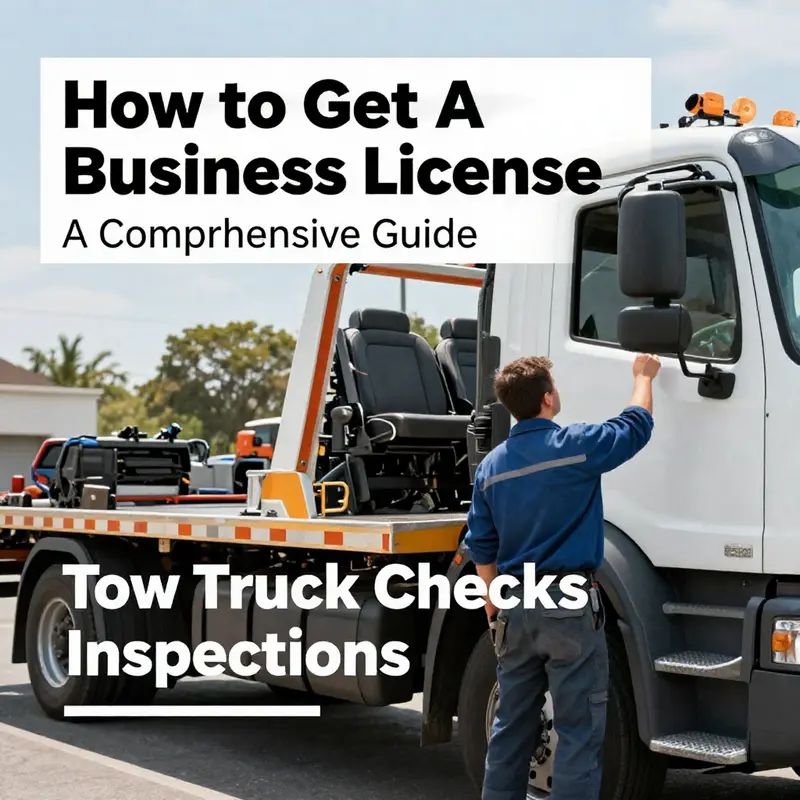
Securing a tow truck license in Western Australia is a structured process designed to protect the public and support a safe roadside‑assistance sector. The licensing journey combines technical checks, identity verification, site readiness, and background screening to ensure only capable operators are approved. The process unfolds in a logical sequence: vehicle inspection (to confirm roadworthiness); application to license the vehicle (VL17) with required identity documentation; site readiness and RTTO registration with zoning checks; and comprehensive background checks. Each stage serves a purpose and builds toward a license that signals public accountability.
In Western Australia, the vehicle inspection is conducted at the designated inspection site. The aim is to verify that the tow vehicle meets WA standards for braking, lighting, safety equipment, tires, load handling, and general mechanical reliability. The inspection is a technical audit rather than a one‑off exam. To book the inspection, applicants typically contact the inspection centre by phone. Fees apply, reflecting the public service nature of the check. If the vehicle must be moved before licensing is finalized, a temporary movement permit may be required. Passing the inspection yields a Certificate of Inspection, which accompanies the licensing package as evidence of readiness.
With the Certificate of Inspection in hand, the operator completes the Application to License a Vehicle (Form VL17) and submits proof of identity. If the applicant does not hold a WA driver’s licence, additional identity documentation may be required, such as the Proof of Identity Nominated Owner/Vehicle Licence Holder form. If the vehicle is registered under a company name, corporate documents may also be requested to demonstrate legal authority to operate on behalf of the company.
The third facet of the WA licensing journey concerns the business site. Registration Tow Truck Operators (RTTO) must obtain zoning approval and the site must pass an inspection to verify compliance with safety, access, and signage requirements. A well‑prepared site supports smoother processing and demonstrates commitment to safety and orderly operation.
The final pillar, Background Checks, assesses the applicant’s suitability for operating a tow‑truck service. While exact details may vary, checks typically cover driving history, prior licensing discipline, and any criminal history relevant to safe and responsible duties. The aim is proportional to the responsibility of operating emergency or support vehicles and to ensure honesty, reliability, and public accountability.
Together, these pillars form a licensing pathway that, when followed, yields a license reflecting a baseline of public trust. The WA example offers a practical reference point for others planning a multi‑jurisdictional tow‑truck business, with the understanding that forms, procedures, and fees differ by jurisdiction. For the latest specifics, always consult the official Transport WA guidance, as rules may evolve. External resources can provide up‑to‑date details on forms and processing times.
Final thoughts
Securing a tow truck business license is a critical step for companies wanting to operate legally and efficiently in the towing industry. By understanding local requirements, meticulously preparing documentation, submitting applications accurately, and complying with background checks and inspections, business owners can avoid common pitfalls and expedite their licensing journey. This structured approach not only enhances operational compliance but also builds a reputable foundation for your tow truck business. Ultimately, navigating the licensing process with diligence and awareness can lead to successful business operations in the logistics and transportation sectors.