
Starting a food truck business in Maryland is a multifaceted endeavor that requires careful planning and execution. With the growing popularity of food trucks, particularly in Maryland’s bustling urban scenes, aspiring entrepreneurs must grasp the essential components of launching a successful operation. This guide aims to walk you through the critical phases: establishing a unique food concept that attracts consumers, navigating legal requirements and obtaining necessary permits, ensuring compliance with safety standards and acquiring the right insurance, and finally, deploying effective marketing strategies while choosing optimal locations for your food truck. Together, these components create a solid roadmap for success in the competitive food truck market.
Crafting a Standout Food Concept for Maryland Streets
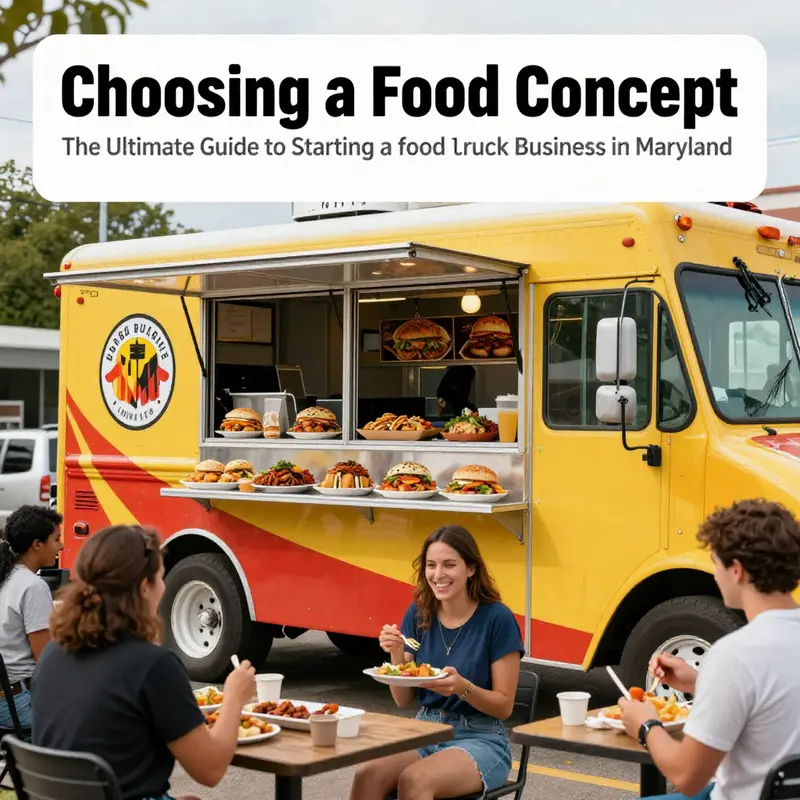
Finding a concept that fits Maryland means balancing creativity with practicality. Your food concept will shape every decision you make. It affects vehicle layout, permits, ingredient sourcing, staffing, pricing, and where you park. Start by imagining a clear, focused idea that customers can explain in a sentence. That clarity will guide menu design and branding, and it makes regulatory compliance easier when officials can quickly understand your operation.
Begin with market awareness. Walk neighborhoods where you plan to operate. Visit festivals, farmers markets, commuter corridors, and college campuses. Note what draws crowds. Track times when people eat lunch or hang out in the evening. Pay attention to recurring themes. Are customers buying regional seafood or lighter plant-based options? Is there appetite for bold fusion flavors or reliable comfort food? Observing patterns helps you avoid concepts already saturated in your area. It also reveals underserved niches, like late-night tacos near nightlife districts, portable breakfasts near transit hubs, or allergen-free offerings at family-friendly parks.
Next, connect passion to profitability. Your cooking skills and enthusiasm matter, but your concept also has to make financial sense. Map typical ingredient costs, prep labor, and perishability. A concept built around rare, expensive proteins can thrill customers, but it may fail if margins collapse. Conversely, a simple menu with one or two signature items can streamline operations and increase consistency. Aim for a menu where a handful of core ingredients appear in multiple dishes. That reduces waste and simplifies inventory. Test recipes for speed, consistency, and temperature stability. Food that travels poorly or takes too long to prepare will slow service, and slow service kills repeat business.
Design the menu with operations in mind. Small menus win on a truck. Choose dishes that are portable, easy to assemble to order, and resilient to Maryland weather. Consider seasonal adjustments, particularly for ingredients tied to local harvests or coastal seafood. For regional credibility, think about integrating local flavors. A nod to Chesapeake Bay seafood, a refined crab cake slider, or a signature Old Bay-style seasoning can anchor your identity. At the same time, offering at least one vegetarian or plant-forward item broadens appeal and meets rising demand for sustainable options.
Think visually and physically. Your truck’s layout determines what you can cook and how quickly. If you plan to fry, you need safe, permitted fryers and proper ventilation. If you want steamed seafood, you must have space for steamers and sinks for cleaning. A concept heavy on grilled proteins requires a suitable grill mount and fire-suppression systems. Work backward from your menu to the equipment list, not the opposite. That approach prevents costly retrofits and reduces delays during health inspections.
Regulations influence concept choices in Maryland. The Maryland Department of Health requires food service permits and enforces sanitation standards. Local jurisdictions add rules on mobile vending, insurance, and inspection schedules. Some counties restrict where and when trucks can operate. For instance, urban centers may limit vending near brick-and-mortar restaurants. In those places, a truck that fits into curated event spaces or works as a private-catering partner will perform better. Before finalizing your concept, confirm that your proposed operations align with local permitting. This avoids wasted investment in equipment that cannot be used where you plan to park.
Menu pricing and portion strategy must reflect both local economics and your cost structure. Track ingredient prices for a month to understand volatility. Factor in fuel costs for the truck and generator, labor, permit fees, commissary costs, and insurance. Use a simple pricing formula to set menu prices: total cost per portion times a target markup that covers overhead and profit. Keep options at several price points. A low-ticket item brings in impulse buyers. A premium signature dish drives margin and reputation. Test price sensitivity through popup events before committing to permanent locations.
Sourcing matters in Maryland. Build relationships with nearby farms, fishmongers, and specialty vendors. Local suppliers offer fresher ingredients and shorter delivery chains. Partnering with suppliers can yield favorable terms as you scale. For seafood, working with reputable suppliers helps you meet health codes and reassure customers. If your concept emphasizes sustainability or organic ingredients, secure documentation and labels you can display. Those claims attract customers but invite scrutiny. Keep records and receipts handy for inspections and for your own cost tracking.
Branding and storytelling convert curiosity into loyalty. Your name, logo, and menu descriptions should tell a cohesive story. Avoid names that require long explanations. Instead, highlight what makes you different—seasonal sourcing, family recipes, a fusion twist, or a sustainability focus. Use consistent language across your truck, menu boards, website, and social media. Photography should reflect actual portions and plating. Honest representation builds trust and reduces complaints.
Test relentlessly before full launch. Run popup events and collaborate with local vendors. Use short-term festival opportunities to measure foot traffic and gather feedback. Keep surveys simple and focused on price perception, taste, portion size, and speed of service. Log sales patterns by hour and by menu item. These tests reveal whether a dish needs a minor tweak or a complete rethink. They also expose operational bottlenecks, like insufficient prep space or difficult packaging.
Community partnerships expand reach and create goodwill. Tie your truck to local causes, and you gain visibility. Consider teaming up with community events, schools, or neighborhood associations. If part of your mission is social impact, highlight that through programming like donation nights or sliding-scale offerings. Such work builds a loyal customer base that will advocate for you. For inspiration on community-oriented initiatives and truck-based outreach, see this example of community support in the trucking world: trucks-for-change-supporting-vulnerable-communities.
Plan for seasonality and weather. Maryland experiences wide temperature swings. A menu that thrives in summer may struggle in winter. Introduce heartier options for colder months and lighter offerings for summer. Invest in insulated packaging and robust heating or cooling solutions to maintain food temperature. Check local event calendars so you can book sheltered or indoor opportunities in the off-season.
Staffing shapes consistency. Hire cooks who can work quickly and precisely. Train them on portioning and food safety. Standardize recipes with clear step-by-step procedure cards. Staff should understand the truck’s flow and limitations. Cross-training helps when the busier operator needs relief. Keep training concise and repeatable so new hires reach competency quickly.
Risk management affects menu choices. Certain dishes carry higher liability, like undercooked proteins or allergen-heavy plates. If you include complex items, maintain strict temperature controls and clear allergen labeling. Liability insurance and a surety bond are common prerequisites for permits. Factor their costs into your pricing. Also, account for the logistics of restocking and waste disposal. Frequent restocking means regular trips to a commissary for prep, storage, and disposal. That recurring cost should be part of your financial model.
Finally, plan for evolution. A successful food truck concept adapts to customer feedback and regulatory changes. Build flexibility into your menu so you can pivot quickly. Keep simple systems for tracking sales and inventory. When a new food trend hits or when a local regulation changes, you should be able to respond without a full overhaul. That agility preserves both your brand and your margins.
For specific health and permitting requirements in Maryland, consult the official Maryland Department of Health guidance. It provides current standards for food service permits, sanitation, and inspection procedures: https://health.maryland.gov/.
Legal Foundations in Motion: Charting Maryland’s Permits and Paperwork for a Successful Food Truck
In Maryland, the thrill of slinging new flavors from a mobile kitchen comes with a map of rules. The journey from concept to kickoff is as much about paperwork as about recipes. The regulatory landscape is not a barrier to creativity; it is the rails that keep a busy street corner safe, fair, and sustainable. A well-planned compliance path helps you avoid delays, fines, or operations being shut down for minor missteps. This chapter walks you through how to translate your culinary idea into a legally compliant operation that can roam Maryland’s cities and counties with confidence.
The first stop is business formation. You must register your venture with the Maryland Department of Assessments and Taxation (SDAT). Here you choose a structure that fits your risk tolerance and growth plans—most new food trucks lean toward a Limited Liability Company (LLC) for liability protection, while sole proprietorship remains a simpler path for solo operators testing the market. Once you select a structure, you obtain a state tax identification, which streamlines tax reporting and ensures you are properly aligned with state accounts. If your plan includes hiring staff, you should also apply for a Federal Employer Identification Number (EIN) from the IRS. This federal number becomes the backbone of payroll, workers’ compensation, and other employment-related filings. The moment you file with SDAT, you begin to frame your business in a way that supports branding, bank accounts, and vendor contracts, all of which will be critical when you scale from one truck to a small fleet.
Next, a consistent thread runs through every successful Maryland food truck story: health and safety are not negotiable. All mobile food operations require a Food Service Establishment Permit issued by the Maryland Department of Health (MDH). You will undergo a health inspection, and the inspectors will assess everything from food storage temperatures to handwashing stations, from cross-contamination controls to sanitation routines. The permit is not a one-and-done milestone; it is renewed and re-verified on a schedule set by the health department. The inspection process is an opportunity to demonstrate that you have robust procedures, a well-trained team, and a kitchen that can respond to common incidents like power outages or equipment failures without compromising safety. In practice, this means you design workflows that minimize time between receiving ingredients and serving customers, maintain logs for temperature checks, and train staff in safe handling practices that meet or exceed Maryland’s standards. The outcome is not just compliance; it is a culture that prioritizes the public’s health and your customers’ trust.
Operating legally also means obtaining the right local permits to use street space and to operate in parking lots or at events. The Mobile Food Vendor Permit is issued by the jurisdiction where you plan to operate, and that often means navigating a patchwork of rules across counties and cities. Some jurisdictions may require proof of liability insurance before a permit is issued, while others mandate vehicle inspections to confirm that your truck meets safe-vehicle standards. Zoning compliance is another recurring theme: where you can park, what hours you can operate, and whether you can cook on the vehicle at certain sites. These local policies reflect the community’s concerns about traffic, noise, litter, and the health of shared spaces. In practice, you will find that Baltimore City has its own flavor of requirements and pacing, while Montgomery County might emphasize zoning and site-specific approvals. The point is not to overwhelm yourself with every nuance at once but to build a phased plan that aligns with your location strategy.
Baltimore City illustrates how the system can function efficiently when approached with a clear plan. In that jurisdiction, mobile vendors register with the Office of the City Administrator, a process designed to coordinate with other city services and to monitor compliance with location and time restrictions. The operational reality is that you may Play your role in several moving parts: park in permitted zones, honor curfews, and maintain a daily log that records where you parked and when. This reality can be managed with a simple scheduling system and a communication plan with event organizers. In more suburban or rural parts of the state, rules may be simpler, but they still require you to align with county health departments and to confirm requirements for temporary events like fairs or farmers markets. The through-line is that permits and restrictions exist to protect the community, the operators, and the customers who subsequently enjoy the food truck experience.
Tax obligations complete the regulatory triad. Maryland imposes sales tax on most prepared foods sold by mobile vendors, and you must stay current on sales tax collection and remittance. If you employ people, you handle employment taxes, unemployment insurance, and payroll reporting in a timely manner. You also face annual reporting requirements that mirror the broader state’s business ecosystem. A methodical approach to taxes—keeping receipts, using a single accounting framework, and aligning with your SDAT filings—reduces the risk of misalignment and penalties down the road. You will also want to track tax codes and exemptions that may apply to your products, which can be a subtle but meaningful lever in your pricing strategy.
Beyond permits and tax codes, the vehicle itself is a legal actor in your business story. The Maryland Motor Vehicle Administration (MVA) requires you to register the truck as a commercial vehicle and to ensure it meets state safety and emissions standards. Vehicle checks, insurance obligations, and regular inspections are part of the ongoing operations that support smooth daily service. The insurance piece, in particular, should be secured early and reviewed annually; some jurisdictions require proof of liability insurance for permit issuance, and risk management becomes essential once you begin working at large events or multiple sites per week. A robust insurance plan protects your business, your staff, and your customers from potential liabilities arising from slips, burns, or other incidents. It also safeguards the assets you rely on for daily operations, including your truck, equipment, and inventory.
As you weave through this regulatory tapestry, you will encounter a practical tension between speed to market and thorough compliance. A pragmatic approach is to develop an integrated startup checklist that aligns your SDAT registration, your MDH permits, your local mobile vendor approvals, your MVA registrations, and your insurance coverage into a single timeline. The idea is to de-risk the launch while preserving the flexibility to pivot as you learn which locations and events benefit your concept. This is where the value of professional counsel emerges: a small business attorney or accountant familiar with Maryland’s particular landscape can help you avoid costly missteps. They can help you interpret zoning notices, review permit conditions, and translate legal language into operational milestones that your team can execute with confidence. You will not only reduce the risk of crunchy compliance gaps but also create a roadmap that can scale as you grow from a single truck to a multi-truck operation.
In practice, this entire journey hinges on alignment with local authorities and a readiness to adapt. You may begin by focusing on one county or city to pilot your concept, then expand to adjacent jurisdictions after you’ve demonstrated reliable compliance and a steady flow of customers. You will likely find that once you satisfy the core health and safety requirements, the other permits become more straightforward because your operational discipline is proven. Location planning remains central to profitability; decisions about where to set up shop—hot spots like near office districts during lunch hours, near universities during evenings, or at weekend festivals—must be complemented by a permits-and-insurance readiness that makes your business a reliable, lawful participant in any event. And because the landscape shifts with policy changes, you should stay proactive: set reminders for permit renewals, re-check health standards, and monitor changes in local zoning or ordinances that could affect your permitted operating hours or allowed parking areas.
The narrative of Maryland’s food truck laws is best understood as a living system rather than a static checklist. It rewards the operator who builds relationships with the right people at the local health department, the county licensing office, and the MVA. Those relationships often translate into better guidance, quicker permit processing, and clearer expectations about fees, inspections, and renewals. A practical mindset is to keep a rolling file of paperwork—copies of registrations, insurance certificates, inspection reports, and permit approvals—so that when a new event arises or a new site becomes available, you can respond quickly. The system is designed to protect public health while enabling entrepreneurs to introduce fresh tastes to Maryland streets. With patience, deliberate planning, and a willingness to engage with the process, your food truck can join the fabric of the state’s vibrant street food scene.
For readers seeking additional perspectives on the regulatory psyche that surrounds mobile operations, a broader industry lens can illuminate how similar permits and compliance structures function in related markets. That broader lens is not a substitute for Maryland’s specifics, but it can offer a framework for how to think about risk management, permits, and partnerships. And if you are wiring together a brand that will someday operate in multiple jurisdictions, you will discover that the core discipline—document control, consistent training, clear operating procedures, and proactive communication with authorities—travels well across state lines and even into neighboring counties. The steps you take today to secure licenses, build safety cultures, and demonstrate reliability will pay dividends when you scale to more locations and more complex events. By treating compliance not as a hurdle but as a competitive differentiator—one that signals trust to customers and organizers—you set your business up for sustainable growth in Maryland’s dynamic food scene. The road to launch might seem long and winding, but the payoff is a robust foundation that supports flavor, community, and entrepreneurship.
One practical note to bring home before you finalize your plan: lean on trusted resources and connect early with the local health department and licensing authorities. These offices are accustomed to guiding food vendors through the maze of requirements, and their early input can prevent delays later. With a clear understanding of the steps, a timeline aligned with the expected event calendar, and a recognition that compliance is a continuous practice rather than a one-off hurdle, you can move from concept to commercial operation with confidence. And remember to account for seasonal shifts in your location strategy. A permit that allows you to operate in a certain district during the summer may come with different constraints in winter, and a flexible plan will help you stay compliant while still seizing opportunities.
As you craft your business plan, the legal framework becomes less about fear of the penalties and more about an operating culture that prioritizes safety, service, and steady growth. The permits, registrations, inspections, and insurance you secure now are the scaffolding that supports your creativity and your ability to serve delicious food in a way that respects the community. When you stand at a crowded curb and see your truck ready to serve, you will know that every stamp, every registration, and every conversation with a regulator was a meaningful investment in your future. The artistry of your menu will shine, but the reliability of your compliance program will make the difference between a one-off success and a durable, repeatable business that can evolve with Maryland’s evolving rules and opportunities.
In this broader landscape, some operators lean on industry primers to frame risk and regulatory strategy as a holistic business discipline. For instance, a compact resource that places trucking compliance in a practical light can offer a mental model for risk assessment, contingency planning, and stakeholder communication that translates well to mobile food operations. You can explore a resource like regulatory-relief-winter-storms-trucking to see how practitioners frame regulatory readiness in a related sector and adapt those ideas to street-food commerce. This is not a substitute for Maryland specifics, but it can help you think about speed versus compliance, vendor relationships, and the cadence of renewals in a way that keeps your concept resilient.
The road map to launch is anchored by a few enduring truths. Start with SDAT to formalize your venture, secure the MDH Food Service Establishment Permit to demonstrate your commitment to safety, align with the Mobile Food Vendor requirements in the jurisdiction where you will operate, and confirm your vehicle and insurance readiness through the MVA. By weaving these threads together—structure, health, local permit, vehicle readiness, and ongoing tax compliance—you build a business that can travel with minimal friction and maximum flavor. And when the first orders roll in and the first customers leave smiling, you’ll know you did more than launch a truck; you built a legitimate enterprise that respects Maryland’s rules and celebrates the hospitality of its communities.
For readers who want a quick reference to the scope of Maryland’s permitting process, the MDH site is the anchor you will eventually consult in detail, though the relationships you establish with local officials will often guide you toward practical, site-specific steps. The pages you access, the forms you complete, and the proofs you collect will become second nature as you operate.
Finally, while the story above emphasizes compliance, the business sense remains central. The most successful operators in Maryland design a brand and menu that stand out precisely because they marry culinary distinction with dependable operations. A distinctive concept attracts customers, but dependable permits, reliable insurance, and a well-maintained vehicle keep them coming back. The path is long, but with deliberate planning and steady execution, your food truck can become a cherished fixture in Maryland, delighting locals and visitors alike while maintaining a robust, compliant foundation that reduces risk and sustains growth. In that sense, legal requirements are not simply obstacles; they are competencies you master to earn the right to serve people from a rolling kitchen. This mindset — one that treats permits as a performance indicator of reliability — is what distinguishes the most enduring mobile food businesses.
Within this narrative, the practical core remains straightforward: register, inspect, license, insure, and operate within the rules. The sequence might be re-ordered depending on your location, but the essence stays the same. The more completely you document and monitor, the smoother your early weeks will feel as you greet your first customers, greet your first event organizers, and greet the first long, satisfying line that confirms your effort has paid off. The Maryland road map is not a barrier to creativity; it is a blueprint for sustainable growth that respects the shared spaces where food trucks thrive.
And with that clarity, you are ready to connect your dream of a mobile kitchen with a process that makes that dream lawful, safe, and scalable. The plates of your future are not only about recipes; they are about compliance, community, and the confidence to bring your best flavors to Maryland streets, again and again. The cityscape awaits, your truck hums in the garage, and the next permit renewal is a reminder that momentum comes from steady practice as much as from creative ambition. The road ahead is yours to navigate, one permit, one inspection, one signature at a time.
For official guidance, visit the Maryland Department of Health’s website: https://health.maryland.gov/
Shielding Success on the Maryland Road: Insurance, Safety, and the Road to a Compliant Food Truck
Launching a food truck in Maryland is not only a test of culinary imagination and hustle; it is a careful apprenticeship in insurance, safety, and steady compliance. The state’s landscape for mobile kitchens rewards ambition with clarity about responsibilities, yet it also demands disciplined preparation. The path to a thriving Maryland food truck starts with a shield—a robust set of protections and practices that reduce risk, protect customers, and keep the wheels turning through the inevitable twists of weather, road conditions, and busy service windows. When you weave insurance seamlessly with safety standards, you aren’t just meeting rules; you are building a durable foundation for growth, repeat customers, and the peace of mind that lets your team cook with confidence and pride. The chapter that follows is not a mere checklist; it is a narrative of how to harmonize financial protection with the high standards of food safety that Maryland regulators and the public rightly expect.
First, insurance is not optional in this setting. General liability insurance acts as a financial safety net for the kinds of incidents mobile kitchens encounter—slips and falls, minor property damage, and unexpected interactions with the public. In Maryland, there is no state-mandated minimum coverage amount for food trucks, but industry practice and prudent counsel typically point to at least one million dollars in coverage. That level of protection is not about fear; it is about preparedness. It acknowledges that a busy day could bring a spill near the service window, a customer alleging a minor injury, or a mistaken delivery resulting in property damage. A policy with one million dollars in general liability provides a clear signal to landlords, event organizers, and customers that your operation is serious, responsible, and ready to absorb the financial implications of accidents that are, unfortunately, possible in the ebb and flow of street commerce.
Alongside general liability, commercial auto insurance is non-negotiable for any mobile kitchen. Your vehicle is the kitchen, the storefront, and a lawfully operating platform all at once. Personal auto policies rarely extend to business use, especially when the vehicle doubles as a high-output cooking space. A commercial auto policy should address the unique risks of a moving kitchen: collisions, theft of equipment, mechanical failures on a city street, and the potential for damage to service windows or neighboring vehicles during tight turns or parking in busy districts. Depending on how you structure your operation, you may also consider endorsements or additional coverages, such as non-owned or hired auto coverage if you rely on third-party transports or partners for certain events. The key is to speak with a licensed professional who can tailor the policy to the specifics of your truck’s layout, your menu, and your typical service locations. This is not a luxury but a practical shield that sustains operations when the unexpected arrives.
Beyond the core protections, most operators eventually build a more comprehensive risk posture through coverage extensions that reflect the breadth of a mobile kitchen’s exposure. A property or equipment endorsement can cover essential cooking gear, refrigeration units, and point-of-sale systems if a fire, flood, or theft threatens the trailer or the vehicle. A product liability addition can be prudent if you feature specialized ingredients or custom formulations, ensuring you have coverage for claims arising from the safety or quality of the food served. If alcohol is part of the concept, liquor liability becomes a critical consideration, though it is often tied to local licensing rules and the specifics of the event or venue. Finally, many operators choose an umbrella policy to extend protection beyond the base limits, especially if they anticipate rapid growth or frequent participation in high-risk events. While it is tempting to view insurance as a cost to minimize, the opposite is true: it is an investment that preserves operational continuity and preserves the brand’s reputation when the unpredictable occurs.
Yet insurance is only one side of the shield. The other side is a rigorous adherence to safety standards that govern every bite that leaves the truck. In Maryland, the Maryland Department of Health (MDH) operates the Food Protection Program, which enforces the Maryland Food Code across all food service operations, including mobile vendors. The standards are not simply bureaucratic hurdles; they codify the best practices that keep food safe to eat and operations resilient under scrutiny. At the heart of these standards is the discipline of temperatures. Perishable foods must be kept within specified temperature ranges from receipt through storage and throughout service. This means reliable refrigeration, accurate monitoring, and prompt removal of any item that drifts outside safe bounds. Temperature control is a basic line of defense against bacterial growth and foodborne illness, and it requires not only equipment but also procedures—regular thermometer checks, documented temperature logs, and clear workflows that prevent time-temperature abuse.
Cross-contamination is another critical focus. A mobile kitchen faces unique challenges: compact spaces, frequent movement, and shared surfaces. The MDH guidance emphasizes clean surfaces, dedicated utensils for different foods, and rigorous sanitation routines. Surfaces must be sanitized frequently, with emphasis on food contact surfaces that touch ready-to-eat items. The risk of cross-contamination rises when raw proteins and ready-to-eat products share cutting boards or knives without proper cleansing. A culture of cleanliness starts with the team and extends to the layout of the truck. Proper zoning inside the vehicle—clear separation between raw and prepared items, clean storage areas for produce, and an organized workflow for reducing back-and-forth movement—reduces errors and protects customers.
Another safety pillar is the certification of personnel. The MDH requires that all food handlers have valid food protection manager certifications, such as those earned through ServSafe or equivalent programs. This credential is not merely a stamp of knowledge; it signals that the leadership behind the grill understands the critical steps to prevent contamination, manage temperatures, and respond to incidents quickly and correctly. For a startup, pursuing such certification early cultivates a safety-forward culture that permeates every shift. It helps ensure consistent procedures even as your team changes with the seasons or scales up for weekends and events. The combination of trained managers and diligent staff creates a feedback loop of continuous improvement: you observe, you train, you document, you refine.
To translate these standards into daily practice, a new operation should embrace a deliberate registration and inspection cadence. Registration with the Maryland Department of Health is not a one-and-done formality; it is the formal entry into a system that monitors ongoing compliance. Food trucks are subject to regular inspections designed to verify that the permit remains valid and that conditions meet the Maryland Food Code. The consequences of noncompliance can be serious: fines, temporary suspension, or even revocation of the permit. The prospect of an interruption to service makes the case for proactive preparation even stronger. Before bustling seasons begin, a thoughtful pre-inspection checklist can be turned into a daily habit: verify that all temperatures are logged and within range, confirm sanitizer levels and cleaning frequencies, review handwashing stations or portable equivalents, and confirm that all staff members on duty hold current certifications.
In Baltimore, Montgomery County, and other jurisdictions, local rules can shape how you deploy your truck on a given day. While the MDH sets the statewide food safety framework, counties and cities implement regulatory layers that affect where and when a truck may operate. Some regions may require additional inspections, specific zoning approvals, or permits tied to particular events or hours of operation. The practical implication is that a successful Maryland food truck team builds flexibility into its planning. It keeps a calendar of permitted locations, has a clear process for securing event-specific credentials, and maintains open channels with local health departments. This approach minimizes last-minute surprises and preserves a reliable customer experience, which is the core of repeat business.
From a practical standpoint, developing a compliant operation in Maryland also means leveraging official guidance and training resources. The MDH Food Protection program provides the blueprint for what compliance looks like in day-to-day operations. Staff training, proper equipment use, sanitation routines, and incident response are not abstract concepts; they are everyday habits when you run a mobile kitchen. For operators who want a structured path, these resources offer concrete, actionable steps that align with the Maryland Food Code. A beginner should map out a training plan that covers personal hygiene, cross-contamination safeguards, temperature control, cleaning schedules, and the proper handling of high-risk foods. An experienced operator, meanwhile, can use these guidelines to audit and continuously improve a more complex operation, perhaps with multiple shifts, seasonal menus, and a growing event calendar.
The learning loop that binds insurance and safety into a successful launch is not merely about ticking boxes. It is about building trust with customers who are entrusting you with their meals, health, and time. When a truck arrives at a market or festival with a clean, well-run kitchen and staff who speak knowledgeably about safe handling, customers feel confident and are more likely to become repeat visitors. This trust translates into steadier demand, better word-of-mouth, and more predictable revenue streams. It also helps you negotiate with venues and event organizers, who look for operators with robust risk management and proven safety records. In practical terms, this means your business plan should articulate not only your concept and menu but also your safety playbook, insurance certificates, and evidence of ongoing staff training. A well-documented, safety-forward operation can differentiate you at sign-up tables, drive line efficiency during peak hours, and ease the process of expanding to new markets within the state.
As you think about the interplay of protections and practices, consider how a culture of preparedness can permeate every decision—from recipe development to vendor relationships to service design. It begins with a clear sense of responsibility. The team understands that safe serving begins long before the first customer approaches the window. It starts with sourcing quality ingredients and maintaining cold chains from supplier to truck, with proper documentation and traceability in case a product issue arises. It continues with the physical layout of the kitchen on wheels: heat sources are positioned to prevent heat shock on cold items, sinks and cleaning areas are accessible to staff, and waste streams are managed to minimize pests and odors that could impact nearby patrons. It ends with ongoing communication—a daily huddle that reviews safety reminders, a weekly check of insurance documents and permit statuses, and a system for rapid response if a complaint, recall, or suspected safety issue emerges. Such an approach ensures that when mountains of orders roll in, your operation remains steady, compliant, and trustworthy.
For readers seeking practical, concrete linkage to broader business practices, consider how the focus on people and processes mirrors broader industry commitments to operational excellence. A useful reminder can be found in industry conversations that highlight investing in people as a cornerstone of safety and efficiency. In contexts as diverse as fleets and mobile operations, the principle holds: trained, engaged staff who understand risk management contribute to fewer mistakes and faster, safer service. For further reading on this perspective, you can explore insights in more general business coverage, such as this piece on investing in people as a driver of success: Investing in People: Key to Trucking’s Success.
As you move toward the launch and growth of your Maryland food truck, keep in mind that insurance and safety are not separate domains but interconnected pillars. Insurance provides financial resilience against the unforeseen, while safety standards create the day-to-day reliability that customers notice and return for. The MDH’s Food Protection Program and the broader regulatory framework are not barriers to creativity; they are enablers of trust, quality, and long-term viability. By integrating a thoughtful insurance strategy with rigorous safety practices, you create a business that can withstand the twists of a competitive market and the unpredictable rhythms of street commerce. The path from concept to consistent service becomes clearer when you lead with protection, practice, and people who share a commitment to doing right by every bite.
External resources and further guidance can be found through official channels that oversee food safety and licensing. For official guidance on food safety, inspections, and training resources, consult the Maryland Department of Health’s Food Protection program: https://health.maryland.gov/foodprotection. This resource offers specific details on compliance expectations, inspection routines, and the training pathways that help your team stay current and prepared. In parallel, if you seek formal guidance on insurance policy structures and recommended coverage levels as you design your risk management plan, the Maryland Insurance Administration provides foundational information about protecting a business in the state: https://www.insurance.state.md.us. Together, these resources offer a practical foundation for turning a Maryland food truck dream into a compliant, resilient, and thriving enterprise.
Locating Flavor in Maryland: Marketing Momentum, Market Mines, and the Roadmap to a Thriving Food Truck
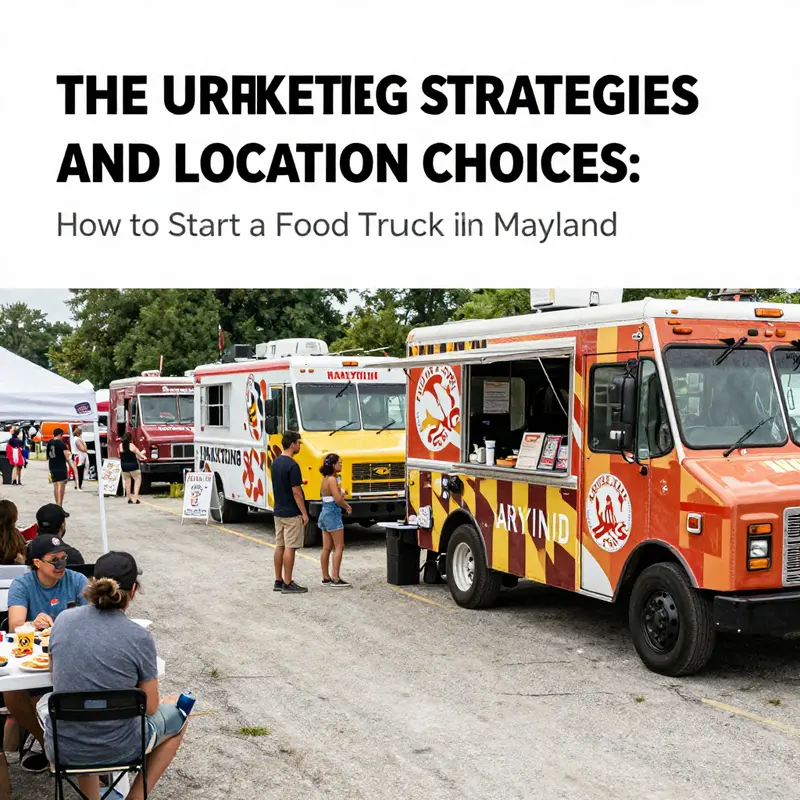
The Maryland food truck scene hums with energy, a patchwork of cuisines, schedules, and personalities that turn street corners into temporary kitchens. To stand out in this dynamic market, a new truck must do more than cook well. It must curate a concept that feels both fresh and authentic, a voice that resonates with local tastes, and a presence that compels people to seek it out again and again. This is where strategy meets daily execution. The best operators treat their marketing not as an afterthought but as a core capability, woven into every menu choice, every location decision, and every interaction with customers. The city’s diversity offers a canvas for experimentation, yet it also demands a disciplined approach to branding and outreach so that a truck’s message doesn’t get lost in the noise. The journey begins with a clear idea of who you want to serve and where they spend their time, then grows through consistent storytelling and dependable, repeatable experiences. In this sense, marketing becomes a map and a compass, guiding you toward the right spots and the right people while keeping you responsive to changing conditions on the ground. The parallels with broader business practice are instructive. In trucking circles, a people-first orientation has proven essential to building trust, reliability, and long-term loyalty. That customer-centered mindset translates surprisingly well to food trucks, where repeat visits and word-of-mouth can determine success as surely as any price or menu item. See the idea of people-first strategies in trucking as a guiding principle you borrow and adapt to a street-food context. People-first strategies in trucking remind us that consistency, communication, and care fuel durable relationships, even in fast-moving service settings. This mindset helps you design a brand experience that feels both professional and personal, something Maryland customers can trust as they plan lunch, dinner, or weekend indulgences. The marketing thread is not about flashy gimmicks but about delivering value in ways that feel natural to your audience and scalable as you grow. That starts with your audience—identifying who benefits most from your food and where they gather. Office workers in business districts, students near campuses, and families at weekend markets each demand different touches and channels. A gourmet taco concept, for example, might carve a niche in high-density urban centers where appetite and curiosity intersect with a desire for quality and speed. A dessert-focused truck, by contrast, could anchor weekends near arts districts or festival hubs where late-afternoon wanderers look for a quick, satisfying bite. The most resilient brands succeed because they tailor their approach to these micro-markets without diluting a core concept. The next layer is the story you tell every day. Visual identity, menu naming, and social posts should reinforce a coherent mood—whether that mood is playful, artisanal, or proudly local. Your branding becomes a promise to your customers: this is not a passing trend but a reliable choice that tastes as good as it looks and feels. Conducting that narrative with consistency matters just as much as the flavor profile you deliver. A consistent voice helps customers recognize your truck across locations and seasons, turning a one-off stop into a habit. Marketing in Maryland benefits from showcasing a rigorous sense of place. Highlight local ingredients, regional twists, and the stories behind dishes. People love to support vendors who understand their neighborhoods and participate in community events. Tasting menus and rotating specials can honor local farmers, artisans, and cultural celebrations, giving regulars a reason to return while inviting new customers to experience something distinctive. The social media backbone of this approach should be practical and persistent. Platforms like Instagram and Facebook offer a visual stage for your food and a real-time channel for location updates. Share close-up shots of sizzling pans, colorful plates, and the chalkboard that captures today’s lineup. Behind-the-scenes reels that feature brief kitchen moments, sourcing trips, or the rhythm of a busy lunch rush create a sense of proximity. Polls, giveaways, and location check-ins cultivate engagement, turning followers into welcome guests when you pull into a new neighborhood. Authenticity matters more than polish. Don’t pretend to be something you’re not; lean into your true strengths and let them shape the content you publish. Local collaborations extend your reach while keeping you rooted in the community. Partner with nearby cafes for cross-promotions, join market calendars, and align with event organizers who value diversity and flavor. These partnerships aren’t merely promotional; they are opportunities to share resources, expand exposure, and co-create experiences that elevate your brand. Maryland has a robust network of food truck associations and local business groups that can be silent accelerators for a new entrant. Engagement with these networks can yield introductions to venues, advice on permits, and guidance on best practices. Networking becomes a form of social capital that compounds as you prove reliability and taste. When you consider location, the calculus is intimate and practical. The most compelling spots aren’t always the most glamorous; they’re the ones where people naturally converge and linger. Downtown zones with dense foot traffic, large office parks during lunch hours, college campuses during midterms and finals, and weekend hubs near farmers markets and festivals all present meaningful opportunities. Each jurisdiction in Maryland—Baltimore City, Montgomery County, Howard County, and beyond—imposes its own rules about where a mobile kitchen can operate, when, and under what conditions. Navigating these rules demands more than a single permit; it requires a curated understanding of zoning expectations, health compliance, and parking logistics. The health and safety framework governed by the state Department of Health shapes where you can stand, how you store food, and how you manage waste and cleaning routines. You should approach location planning as a data-informed discipline. Use public information about foot traffic patterns, event calendars, and consumer behavior to identify windows of opportunity. Tools like maps and review platforms reveal where people already gather and what they crave. While technology can illuminate patterns, local knowledge remains indispensable. Speaking with event organizers, market managers, and nearby shop owners can reveal non-obvious openings, such as a relatively quiet block adjacent to a popular venue, or a park near a steady stream of foot traffic on Saturdays. The most successful operators blend data with intuition, visiting prospective spots at different times and days to observe crowd flow, dwell time, and the age and demographics of passersby. This kind of reconnaissance might reveal that a certain block near a government building buzzes at lunchtime on weekdays, while a waterfront festival draws a more diverse crowd on weekends. The reality is simple: the right location is less about marquee addresses and more about predictable rhythms. It can be tempting to chase the hottest spots always, but stability is built in steady, repeatable locations that align with your concept and staffing. Your permits and licensing road map must align with those choices. The Maryland Department of Health and local authorities publish clear requirements for health permits, operating zones, and hours. A successful operator treats the permit process as a project with milestones, timelines, and responsible steps. You don’t want to discover, mid-season, that a beloved location isn’t legally available or that a kitchen’s layout prevents compliant food handling during peak hours. An organized approach to compliance reduces disruption and lets you keep the focus where it belongs: on great food and dependable service. Another essential thread in the Maryland equation is pricing and menu design. Your pricing should reflect both costs and the willingness of the market to pay for convenience and quality. A lean menu that emphasizes a few standout items often performs better than a sprawling show of variety. Yet you can keep variety by rotating specials that reflect seasonal ingredients or local partnerships. Seasonal menus also create marketing hooks and social content, inviting customers to track changes and return for the next limited-run item. A well-priced core menu paired with strategic specials can maximize throughput during busy hours and build a per-customer value that sustains profits across the week. To support growth, invest in the operational backbone that makes marketing credible. Coordination between kitchen workflow, inventory planning, and location scheduling ensures you can deliver on promises to customers. If a line forms, you must be prepared to manage it with speed, courtesy, and accuracy. Training your crew to handle high-volume service with the same warmth you emphasize in branding creates a consistent experience across every location. This consistency is what nurtures loyalty, turning first-timers into repeat visitors who actively seek out your truck on different days and at different events. Finally, while the marketing and location pieces are essential, you should remain mindful of the broader regulatory landscape. The Maryland health system, local health departments, and city administrations are your constant partners in staying compliant while pursuing growth. For official guidance on permits, licensing, and operating zones, consult the Maryland Department of Health’s resources. This foundation not only keeps you legal but also reinforces trust with customers who expect clean practices and safe food handling. The path to a thriving Maryland food truck blends careful market targeting, purposeful branding, and location intelligence with disciplined compliance and thoughtful partnerships. It’s a dynamic, iterative process—one that rewards those who listen to neighborhoods, respond to events, and stay loyal to a clear mission. By keeping the focus on value—delicious food, reliable service, and genuine community engagement—you can build a brand that travels far beyond its first season. As you develop this practice, remember that a strong marketing backbone and a well-tuned location strategy aren’t separate from your daily kitchen discipline; they are the living fabric of your business. For authoritative health guidelines and permit information, refer to the Maryland Department of Health and related state resources. External resource: https://health.maryland.gov
Final thoughts
In conclusion, launching a food truck business in Maryland requires careful planning, from selecting an appealing food concept to ensuring compliance with legal and safety regulations. Moreover, effective marketing strategies and optimized location choices are crucial to attracting clientele and ensuring profitability. By following the guidelines provided in this guide, aspiring food truck owners can confidently navigate the complexities of this growing market and carve out a space for their unique culinary offerings. With preparation and passion, your food truck can become a beloved part of Maryland’s vibrant food culture.

