
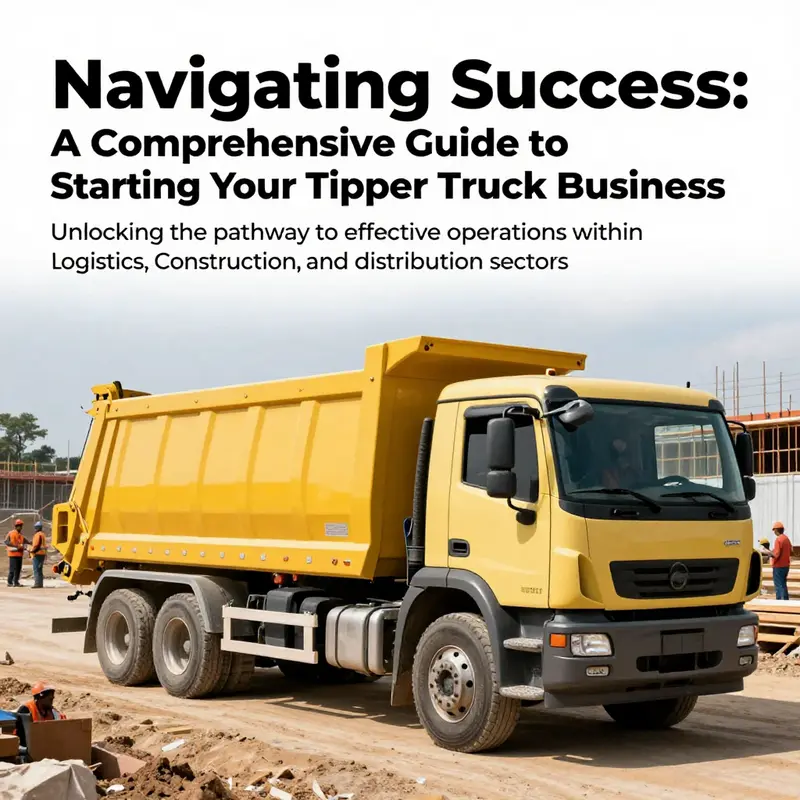
Establishing a successful tipper truck business is a multi-faceted endeavor that demands careful consideration and strategic planning. The logistics and freight sectors, alongside industries such as construction and food distribution, face increasing demands for efficient transportation solutions. From understanding local market needs to developing a robust operational framework, various elements must be carefully interwoven to create a thriving enterprise. This guide walks you through the essential phases: conducting market research, crafting a comprehensive business plan, securing financing, obtaining necessary licenses, and effectively establishing operations. Together, these components will equip you to not only launch your business but also sustain competitive advantage in a dynamic industry.
Reading the Field: Market Research as the Compass for a Tipper Truck Startup

Market research is more than a checklist before you buy a vehicle. It is the compass that steadies a tipper truck startup as it moves from idea to operation. When you set out to haul gravel, soil, sand, or debris, you enter a market that breathes with project cycles, regulatory changes, and shifting demand among contractors and municipalities. A rigorous market study not only estimates how much work exists; it reveals who will pay for your service, what their constraints are, and where your fleet fits in the competitive landscape. The aim is to create a clear picture of opportunity that translates into actionable decisions about fleet size, service scope, pricing, and growth trajectory. In practice, market research should help you answer three questions with confidence: where is demand strongest, who will be your reliable customers, and what operating model will keep you profitable through upswings and downturns alike.
Demand for tipper services typically follows the cadence of construction and infrastructure activity. An honest appraisal begins by cataloging the cargo types you expect to move—sand, gravel, soil, demolition waste, and materials like asphalt—and then tying those movements to actual projects. Construction sites require timely material delivery and removal of waste, while larger civil works can demand bulk hauling and daily coordination across multiple sites. Municipal programs can drive steady, recurring demand for road maintenance materials, regrading projects, and waste management services. Understanding these cargo patterns helps you estimate daily volumes and peak loads, which in turn informs the number of vehicles you need and the hours they must run to maintain reliability.
Geography matters as much as tempo. Do you plan to serve a compact urban belt with dense sites and frequent drop-offs, or a wider rural corridor where a single dump can service several remote projects? Market research must translate map pixels into concrete routes. You’ll want to identify high-traffic corridors near quarries, concrete plants, and recycling yards, as well as the locations where demolition work is clustered. This spatial view helps you evaluate not only travel time and fuel costs but also access restrictions, weigh station requirements, and local traffic patterns that can affect on-time delivery. It also clarifies market segmentation: large contractors with ongoing needs, smaller subcontractors with occasional but predictable requests, and municipal clients that may offer longer-term contracts but with rigorous compliance standards.
Competition is the mirror you hold up to your planned venture. Start by identifying who already moves the same kinds of loads in your target area, how many trucks they operate, and what service commitments they advertise. Price is only part of the picture. Reliability, safety records, maintenance discipline, and responsiveness shape whether customers stay with a provider across a project’s lifecycle. Your study should map not just the number of competitors but their fleet mix, typical job sizes, and the geographic breadth of their service. This helps you discover where you can differentiate—whether through faster mobilization, more precise scheduling, better material handling practices, or stronger safety and regulatory compliance—and where you must compete on price.
Alongside demand and competition, the cost structure of running tipper trucks looms large. A thorough feasibility view incorporates fuel consumption, maintenance regimes, insurance premiums, licensing and permit fees, and labor costs. Tipper trucks are heavy machines with high upkeep expectations—the hydraulic tipping mechanism, the chassis, the suspension, and the payload handling all carry maintenance risk and expense. Your cost model should estimate fixed costs such as loan payments or depreciation, and variable costs tied to each job, including fuel and maintenance per mile or per hour. This analysis not only reveals break-even volumes but also illuminates break-even pricing—an essential benchmark for negotiating with customers and planning bids.
Industry trends add texture to the market picture. Broad data suggests that the tipper truck market is growing, reflecting sustained demand in construction, mining, and infrastructure development. For a strategic edge, you should frame how these trends could influence what you buy, where you operate, and how you price services. A growth signal, for instance, might justify investing in a slightly larger or more capable fleet, while a weakening projection could tilt you toward leaner operations or a staged expansion. Understanding these dynamics helps you position your business within a growing sector while staying adaptable to regulatory shifts, financing conditions, and evolving customer expectations.
Translating market findings into strategic positioning is the practical payoff of this research. If demand concentrates around specific cargo streams and locations, you might locate your first fleet near those hubs to reduce deadhead miles and improve utilization. If competition is intense in core corridors, you may need to differentiate through service reliability, precise scheduling, or enhanced safety protocols that minimize downtime and protect your customers’ project timelines. Pricing strategies should reflect both the cost structure and the value you bring—such as guaranteed delivery windows, on-site material handling, or eco-conscious waste management practices—without eroding margins. The research should also guide marketing and outreach: which customer segments to pursue, which channels to use, and how to present your equipment and processes as a competitive advantage.
For a practical blend of data and strategy, collect input directly from the market as you build your plan. Talk with contractors, quarry operators, waste processors, and municipal procurement officers. Review public procurement portals and project schedules to capture bid opportunities and typical contract terms. Analyze permits and regulatory requirements to anticipate compliance costs and to time your financing decisions with regulatory cycles. The aim is not to chase every data point but to assemble a coherent, evidence-based narrative about where you can win, what you must invest, and how quickly you can scale. As you map the field, policy dynamics often reshape demand and operations. See Future of trucking under the Trump administration for a broader policy context that can influence demand, project funding, and regulatory expectations across regions.
All these threads—demand, competition, costs, trends, and strategic positioning—should converge into a concise picture of your initial market entry. Your goal is a plan that aligns your fleet choice, routes, and work contracts with the real-world tempo of your target area. The clearer the market signal you uncover, the less guesswork you’ll have in your business plan, financing package, and risk mitigation strategies. A well-grounded market study also strengthens your case when engaging lenders or investors, because it demonstrates you understand the landscape, have identified credible opportunities, and can forecast cash flow with a reasonable degree of confidence. In practice, this means translating insights into tangible benchmarks: the number of trucks to acquire in the first phase, the typical daily tons moved per vehicle, the expected utilization rate, and the service standards you will commit to from day one.
The market map you build should be revisited regularly as projects begin and close, as bids are won or lost, and as new regulations emerge. It is not a one-off exercise but a living framework that informs every major decision—from financing structures and insurance coverage to maintenance cycles and driver training priorities. When done thoughtfully, market research becomes a steady compass rather than a navigational gamble. It keeps you aligned with real customer needs, responsive to competitive pressure, and prepared to grow in a disciplined, sustainable way. For those who want a deeper framework, the guiding literature on starting a tipper truck operation emphasizes refining goals, aligning stakeholders, and prioritizing safety and reliability alongside growth.
For external context and broader industry perspectives, a detailed resource offers structured guidance on turning market insights into a practical plan. You can consult the linked comprehensive guide on starting a tipper truck business for an extended roadmap and actionable templates that complement this chapter. To keep your planning grounded in policy realities, consider monitoring ongoing discussions and regulatory shifts that shape trucking markets, as they can alter demand and risk profiles over time. By integrating market intelligence with a clear execution plan, you position your venture to move with confidence in a field that rewards clarity, preparation, and disciplined execution.
External resource: https://www.linkedin.com/pulse/starting-tipper-truck-business-comprehensive-guide-john-doe/
The Blueprint That Moves Dirt: Crafting a Comprehensive Plan for a Tipper Truck Business

A tipper truck business begins with a plan that is as solid as the soil you’ll move. In practice, a comprehensive business plan weaves together market realities, operational logistics, and financial forecasting into a single living document. It acts as both compass and contract: a map for day-to-day decisions and a persuasive outline for lenders or partners. For anyone stepping into this field, the plan should do more than describe what you intend to do. It should illuminate how you will win in a competitive market, stay compliant, protect your assets, and scale with confidence in the years ahead. A robust plan starts with grounded market research and feasibility. Understanding local demand means more than spotting construction sites; it means understanding who will hire you, where you will serve them, and how much they will pay. The landscape for tipper operations often centers on construction, mining, landscaping, and waste removal. Each segment has different cycles, price points, and risk profiles. By mapping demand, you can translate insights into a practical service menu, a sane pricing approach, and a service cadence that matches project timelines. In parallel, the feasibility lens gives you guardrails: what the venture will cost to launch, what a healthy operating margin looks like, and how long it will take to reach profitability. The cost picture is real and multi-faceted. Fuel, maintenance, insurance, and driver wages aren’t optional line items; they are the heartbeat of your unit economics. A 6-meter tipper, for example, is a common workhorse in bulk-material hauling, and while payloads can reach ten to fifteen tons, the true economics hinge on utilization—the number of paid trips you complete in a day, the distance you cover, and the reliability you deliver. When you translate those factors into a financial model, you gradually move from guesswork to a plan you can defend with numbers. A well-structured business plan should outline an executive summary that captures the venture’s mission, unique strengths, and keys to success. It should also offer a clear company description that covers your legal form, location, and the scope of services you will provide. Service offerings must be explicit: construction site deliveries, waste removal, agricultural hauling, or mixed bulk-material transport. The aim is not to be everything to everyone, but to be consistently reliable for a defined set of customers. Market research findings belong in plain language, highlighting target customers, unmet needs, and how you will differentiate yourself from competitors. This clarity helps you tailor your marketing and sales approach, so your outreach resonates with engineers, site managers, and procurement officers who value punctuality and predictable service. In writing the operational section, the plan should address vehicle acquisition decisions—whether to buy new or used—and the management of a small, scalable fleet. It should specify maintenance regimes, fuel management strategies, and the adoption of route planning tools or telematics to monitor truck health, fuel efficiency, and driver behavior. Regulatory compliance must be embedded into the operational fabric: licenses, permits, insurance, and safety standards that protect both your workforce and your clients. Hiring practices matter greatly here. Drivers with valid credentials and clean records are non-negotiable, and effective onboarding sets the tone for safety culture. The plan should describe scheduling systems that optimize truck utilization while honoring legal driving hours and rest requirements. A narrative on marketing and branding follows, emphasizing how reliability, equipment condition, and professional presentation translate into a strong brand impression. Your plan should outline a practical marketing strategy that leverages digital presence, local advertising, and industry networking. A cohesive branding approach—consistent with your service quality—helps you stand out to contractors, municipalities, and industrial clients. The chapter on finance is where you translate strategy into numbers. Startup costs cover trucks, licenses, permits, and insurance, but you must also budget for contingencies and working capital. Revenue projections hinge on expected job volumes, margins, and the seasonality of regional activity. A break-even analysis anchors your expectations, showing when the business should become cash-flow positive given utilization targets and price per tonne or per load. The structure of the plan should be clear yet flexible. An executive summary provides a concise rationale and early milestones; the company description sets the legal and geographic frame; and the sections on service offerings, market research, operations, and finance knit together to form a coherent pathway from launch to growth. Within the strategic weave, the marketing section should be grounded in practical tactics: turning local relationships into steady contracts, leveraging online visibility to capture inquiries, and building a reputation for reliability that generates referrals. A thoughtful chapter on scalability makes room for future expansion—adding more trucks, extending service areas, or broadening into adjacent lines like bulk-material delivery or site logistics support. It is through disciplined planning that a single truck can become the nucleus of a growing, stable operation rather than a fragile venture vulnerable to market swings. The plan should also acknowledge the human element as a core asset. People enable processes, safety, and service quality. For readers looking to deepen this dimension, consider exploring perspectives on how people management shapes fleet outcomes, such as investing in team development and leadership within trucking operations.
Smart Financing and Fleet Acquisition: Building Your Tipper Truck Business from the Ground Up
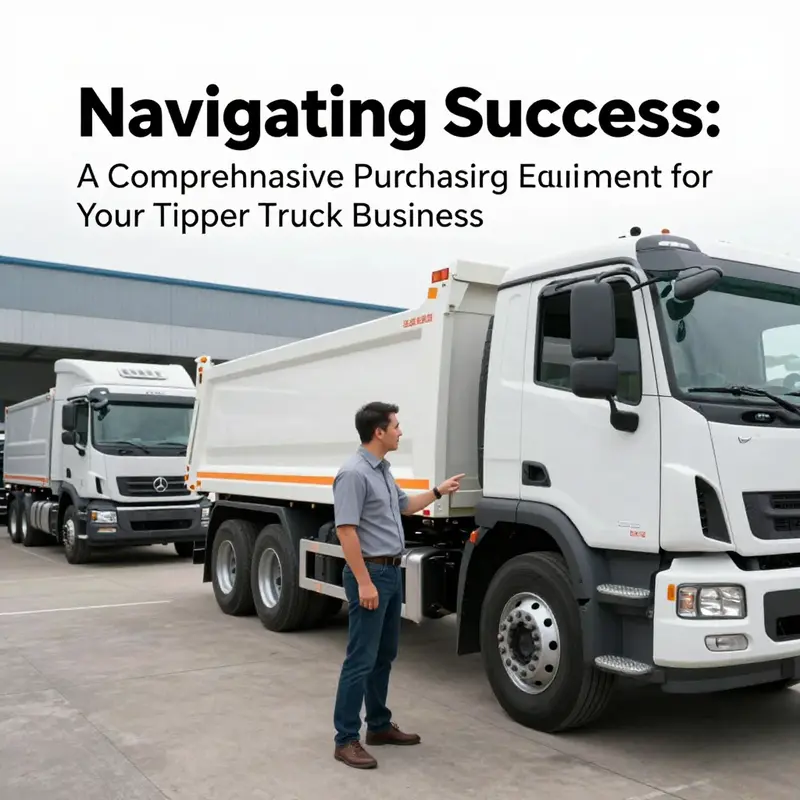
Financing and equipment purchase are the spine of a tipper truck venture. In this capital-heavy segment, the decisions you make about how to finance the fleet and which trucks you buy will shape cash flow, service capability, and resilience to market shifts. A disciplined, phased approach works better than chasing the flashiest rig. Begin with a clear plan that aligns your business model—whether you target construction, mine sites, or municipal work—with the size and mix of your fleet. Across markets, many operators start with a core, tax-efficient asset base and scale through leases or lines of credit as demand grows. A mature plan also requires honest assessments of maintenance costs, insurance, training, and the cost of compliance. In practice, the path from a single, dependable tipper to a reliable fleet is paved with careful vendor selection, predictable financing terms, and a procurement strategy that treats equipment as a service asset as much as a capital purchase.
Financing options span outright purchase, traditional loans, equipment leases, and hire-purchase arrangements. For larger entry, many founders pursue project financing or partnerships with investors who understand the long horizon of construction cycles. The idea is to match debt repayment schedules to revenue streams that peak during busy seasons. If you anticipate stable freight contracts or long-term service agreements, you can secure favorable terms by presenting a robust business plan, a clear maintenance schedule, and evidence of project load forecasts. Even when the business is small, a diversified sourcing strategy helps. Rather than relying on a single lender, approach banks, credit unions, and equipment financiers that specialize in heavy transport. Build a credit profile by starting with essential purchases, then scale your credit line in line with order backlogs and utilization.
On the equipment side, your baseline choice will often be a 6×4 tipper model built to handle heavy payloads and rough terrain. When you price a fleet, price points begin with entries around the mid-20s to low-30s thousand US dollars for bulk orders of 10 or more units, and can climb as volumes rise and specifications become more specialized. For many buyers, an additional 6-meter configuration maximizes cargo space while maintaining a compact footprint that suits urban sites. Key specifications to compare include payload capacity, hydraulic lift reliability, engine power in the 350–450 horsepower range, and drive configuration options such as 6×4 or 8×4. Crucially, ensure compliance with emission standards relevant to your region, such as Euro 6. While no two fleets are identical, understanding the tradeoffs between load capacity, fuel efficiency, and maintenance access will help you forecast operating costs and downtime. In practice, select models that offer modular components, widely available parts, and service networks that reduce the time vehicles spend off the road.
Supplier engagement is a core risk management activity. Work with audited suppliers who provide after-sales service, warranties, and the ability to customize equipment to your needs. A prudent approach is to seek warranties ranging from three months to a year, depending on the component, and to demand detailed service level agreements for maintenance and parts replacements. Before placing orders, request sample units if possible, conduct on-site inspections, and verify the availability of spare parts within your region. A reputable supplier marketplace can facilitate these steps, offering secure payments, buyer protections, and clear return policies. The procurement process should be integrated with your maintenance planning: schedule regular inspections, establish a parts inventory, and build a budget for hydraulic fluids, filters, tires, and other critical consumables. The aim is a fleet you can rely on with predictable downtime, not a batch of capital assets that sit idle after delivery.
Strategic procurement also intersects with partnerships and growth ambitions. In markets where large tender programs exist, operators often pursue consortium arrangements or project finance deals that align with the capital intensity of a 30–60 unit roll-out. This scale can unlock favorable terms, access to better depreciation schedules, and shared risk across projects. The market has shown appetite for significant capital commitments when the operator demonstrates disciplined governance, a track record of maintenance, and clear, data-driven forecasts of utilization. The parallel lesson is to treat equipment purchasing as a long-term investment, not a one-off expense. That perspective reinforces the need for a robust operating plan, a maintenance calendar, and a governance structure that can sustain growth as orders accumulate.
As you plan scaling, remember that people are as important as hardware. A reliable fleet rests on skilled operators and mechanics who optimize load planning, fuel use, and preventative maintenance. Tie your procurement to people development: train drivers and technicians early, pair onboarding with safety certifications, and align hiring with service goals. A practical reminder is in the investment article about investing in people as a cornerstone of trucking success. investing-in-people-key-to-truckings-success. This view treats equipment and staff as a single system; the better your people, the higher your uptime, the more confident clients are in your service, and the easier it is to secure favorable terms as you grow.
Finally, decide how to monitor and refine your financing and asset strategy over time. Use telematics and maintenance scheduling to quantify uptime, fuel efficiency, and repair costs. Build dashboards that translate data into decisions about when to replace older units versus when to extend their life through parts upgrades or proactive maintenance. Align maintenance windows with anticipated peak workloads to minimize disruptions. In many regions, regulatory changes and financing conditions shift with the macro economy, so set aside contingencies for price volatility, currency risk, and interest rate movements. A disciplined approach to asset management also supports your marketing and bidding strategy. When clients see a fleet that maintains high uptime and consistent service windows, you gain trust and win repeat work, which in turn feeds back into more favorable financing terms as utilization improves.
To stay informed, lean on reputable sources that cover both financing trends and supplier reliability. Regular reviews of the market help you adjust orders to seasonality and price swings, ensuring financing remains aligned with utilization. When you navigate supplier selection, remember that equipment is a tool to enable the services you promise—bulk material delivery, site logistics, and debris removal—so confirm that each unit matches your route geography and maintenance network. Build a short list of indicators for suppliers: after-sales support, warranty depth, spares availability, and their ability to tailor configurations. Where possible, request references and audit visits before committing. For broader context on investment trends and supplier reliability, see credible industry updates from major financial institutions and trade bodies. External resource: https://www.cmbchina.com/corporate/investment/Inve
Securing the Gatekeepers: Licenses and Permits That Launch a Tipper Truck Business
Securing a tipping operation on the road begins long before the first load hits the truck bed. It begins with a legal foundation that proves you are a responsible, capable operator and a trustworthy partner for clients who depend on timely, compliant service. In many markets, the licenses and permits are not mere formalities; they are the gates that protect road safety, cargo integrity, and industry reputation. This chapter looks at how the licensing landscape functions for a tipper truck business, with a practical focus on what you must secure, in what order, and how these documents shape every other step of your startup. The rationale is straightforward: a solid permission set reduces risk, increases access to contracts, and aligns operations with safety standards that clients expect. Across jurisdictions, regulators aim to balance efficiency with accountability, and your preparedness directly influences your ability to compete, grow, and weather regulatory shifts. A clear path through permits also helps you plan financing, maintenance, and staffing with confidence, turning a regulatory hurdle into a strategic asset rather than a roadblock.
For operators who want a concrete, real-world picture of what this looks like in practice, the journey begins with a foundationalRoad Transport Business License, sometimes called the Road Transport Operation Permit. This permit is the umbrella authorization that certifies the business as legally eligible to engage in road freight activities. The requirements are precise: your company must be registered with a market supervision authority and the scope of operations must explicitly include road transport. The practical implication is that your business plan, your branding, and your service commitments should mirror the regulatory language you intend to operate under. The scale of your fleet matters as well; often, regional rules specify a minimum fleet size to qualify for the operation permit—often five trucks for city delivery configurations—and a minimum total cargo capacity, such as 15 tons. These thresholds reflect a weigh-your-risk approach: smaller outfits may qualify for more limited licenses, while larger operations demand stronger governance structures to handle safety, scheduling, and compliance at scale.
Beyond registration and fleet thresholds, the Road Transport Business License imposes a formal safety and governance framework. You’ll need a systematic safety production management system, including a defined safety responsibility structure, standard operating procedures for safety, a supervision and inspection regime, and a driver and vehicle management system. This is not a mere checklist; it is a living framework that guides daily operations, maintenance planning, incident response, and the training calendar for drivers and dispatchers. The personnel requirements reinforce this emphasis on professional capability: at least one mid-level or higher transportation professional must be on the roster, and drivers must hold road transport worker qualification certificates. If your fleet grows beyond a certain size—often more than 50 vehicles—a full-time safety officer becomes a necessity. The emphasis here is not punitive; it is about creating a predictable, auditable process that reduces risk for all stakeholders and strengthens your bid when pursuing larger contracts.
The application route for this license is designed to streamline approvals across multiple agencies. In many regions, the entry point is an integrated online platform—sometimes branded as a one-stop service—where you submit company documents, safety plans, fleet details, and personnel qualifications. If online channels are not yet fully mature in your area, a service window at the local Transportation Bureau remains available. Whatever the channel, expect a careful review of the company’s business scope, fleet profile, and the safety management arrangements. As you prepare, you will need to document a parking facility that can accommodate your fleet. The requirement is often a space physical enough to hold the projected number of trucks, with a buffer—commonly around 1.5 times the total projection area—to enable safe loading, dispatch, and parking turnover.
Once the Road Transport Business License is secured, attention shifts to the per-vehicle authorization identifier: the Road Transport Certificate, or Vehicle Operating Permit. Each tipper truck you own or operate under the business license typically requires its own permit. This certificate attests that the vehicle itself meets technical and regulatory standards for road transport. The vehicle-level requirements tend to be concrete: the vehicle must pass inspections that align with national performance standards, such as GB 18565 for operational vehicle performance and GB 1589 for dimensions, axle loads, and mass limits. A satellite positioning device becomes mandatory for heavier trucks or those with certain configurations, reinforcing the ability to track and manage fleets. The vehicle’s technical grade must be at least Level II, reflecting a baseline of mechanical reliability and safety. The documentation package for the vehicle permit is substantial: the vehicle registration certificate, the vehicle driving license, the technical grade assessment report, a motor vehicle safety technical inspection report, and, for heavier trucks, a fuel consumption verification report. If a satellite positioning device is installed, proof of installation is required. The shift toward electronic certificates in many regions makes it easier to verify status via a dedicated app or portal, reducing the friction of renewals and inspections while increasing transparency for authorities and customers alike.
The driver component of the licensing framework is the Road Transport Worker Qualification Certificate, sometimes described as the driver’s license for freight operators. This credential is indispensable for ensuring that every operator in the cab possesses a solid grounding in road transport laws, vehicle maintenance basics, and cargo loading and securing procedures. The requirements are methodical: drivers must hold a valid driving license suitable for the vehicle class, be under a standard age ceiling (often under 60), and pass a written exam that covers road transport laws, basic vehicle upkeep, and cargo handling knowledge. The certification process is designed to be efficient: enrollment in an approved training course, completion of an exam that combines theory with practical skills, and a certification timeline typically within five working days after passing. In terms of access, several online channels exist to streamline the process: a WeChat mini-program branded for road transport service, an Alipay mini-program, a dedicated Dao Yun Tong app, and the National Government Services Platform. Each channel serves the same objective—rapid, verifiable proof that drivers meet professional standards and safety expectations.
The licensing landscape also includes additional permits that may be triggered by the specific business type you choose to operate. Large-object transport, for instance, can require a Large Object Transport Permit, which demands detailed vehicle outline diagrams and an escort plan when dimensions exceed set limits. Cold chain logistics introduces equipment certification for refrigerated units, ensuring proper maintenance and temperature control. Network freight platforms may necessitate regulatory considerations such as ICP licensing and cybersecurity certifications, while city delivery services can entail municipal access permits. The point is not to overwhelm but to identify the right layer of permissions that align with your service mix. As you map these requirements to your business plan, you must account for the cost, time, and ongoing obligations of each permit. You should also consider the renewal cadence, audits, and monitoring expectations that accompany license ownership. Reflecting on this, many operators set milestones within their annual planning—license renewals, safety audits, and vehicle inspections are often scheduled in the same window each year to simplify compliance and reporting.
In practice, the pathway through licenses shapes every other decision you make. Your fleet mix, for example, will be influenced by permit thresholds and the anticipated demand in regulated service lines. Your financing plan must incorporate permit fees, inspection costs, and potential investments in safety systems and tracking devices. Your operations manual will reflect the safety procedures and driver qualification requirements that underwrite your license commitments. And your brand promise to customers—reliability, accountability, and compliance—will be grounded in the transparency that comes with verified licenses and real-time fleet data. The mindset is constructive: treat permits as a framework that structures growth rather than a hurdle to clear as quickly as possible.
To stay aligned with evolving regulations, keep a steady flow of information from official sources and trusted guidance. A useful cross-reference for broader regulatory considerations is the concept of regulatory relief for trucking under challenging conditions, which you can explore here: regulatory relief for trucking during winter storms.
Finally, when you are ready to apply for the essential licenses, note the authoritative resource available for immediate guidance and processing: the National Road Transport Convenient Service System. You can access it at https://ysfw.mot.gov.cn, the central hub for road transport permit applications and related services. This portal is the primary conduit for submitting applications, tracking progress, and receiving notifications about renewals, inspections, and compliance updates. While the exact steps may vary by region, the underlying principle remains the same: accurate documentation, timely submissions, and a clear safety program turn regulatory compliance into a competitive advantage rather than a bureaucratic obstacle. As you integrate these licenses into your startup plan, you’ll find that legality becomes a platform for reliability, which, in turn, attracts the kind of customers and partnerships that sustain growth in the long run.
Building a Reliable Operation: Hiring, Training, and Running Tipper Truck Crews
Operational backbone and people strategy
Launching a tipper truck business hinges on two intertwined elements: dependable equipment and a skilled, disciplined team. Vehicles and hydraulics win contracts, but people win repeat business. Establish an operational backbone that treats drivers as professionals and assets. That mindset shapes recruitment, compliance, training, scheduling, safety, and retention. When those pieces align, daily execution becomes predictable and margins improve.
Start by defining clear operational roles and responsibilities. Route planners, dispatchers, maintenance technicians, and drivers must have written duties. Define communication protocols for job changes, delays, and incidents. Create a simple chain of command for job acceptance, customer issues, and safety escalations. These structures reduce ambiguity and make training faster.
Build driver job descriptions that are specific. List required certifications, physical demands, expected hours, loading procedures, and familiarity with hydraulic systems. Note the type of materials hauled and any site-specific rules. A precise job description attracts candidates who match your needs and reduces turnover from mismatched expectations.
Recruitment and screening should be rigorous but efficient. Use multiple channels: industry job boards, local trade schools, and word-of-mouth from suppliers and contractors. Screen candidates for valid commercial licenses and endorsements. Verify driving records, and run criminal background checks where appropriate. Implement drug and alcohol testing policies that meet or exceed legal requirements. Safety begins before the first shift.
Interview for both skills and judgment. Ask candidates to describe how they would handle tipping on a tight site, a hydraulic failure mid-job, or a delivery that runs behind schedule. Look for problem-solving, clear communication, and respect for procedures. Practical experience with tipper bodies and payload balancing carries high value.
Onboarding should move beyond paperwork. Combine a concise orientation with hands-on coaching. Provide a rider program where new drivers shadow experienced operators for at least one week. Use standardized checklists covering pre-trip inspections, load securing, safe tipping procedures, and post-trip cleaning. Document completion and competency. Proper onboarding reduces accidents and equipment wear.
Training must be ongoing. Design modular training that covers equipment basics, hydraulic troubleshooting, load distribution, and site etiquette. Add refresher sessions on defensive driving and load securement. Run toolbox talks weekly to address near misses, seasonal hazards, and regulatory updates. Your training program should be measurable; test drivers on critical skills and keep records for audits and insurance.
Safety culture is non-negotiable. Enforce a zero-tolerance policy for distracted or impaired driving. Define clear procedures for reporting incidents and near misses. Reward safe behavior with recognition or small incentives. Share safety metrics with the team weekly so everyone knows the stakes. A visible safety culture reduces downtime and insurance claims.
Fleet maintenance ties directly to driver performance. Create a preventive maintenance schedule for every unit. Include daily walk-around checks, regular hydraulic inspections, and timely tire and brake service. Use maintenance logs drivers complete at shift end. Quick repairs limit out-of-service days and protect drivers from hazardous failures.
Leverage simple technology to improve operations. Dispatch software that integrates GPS, job details, and proof-of-delivery removes a layer of friction. Telematics help monitor idling, harsh braking, and route adherence. Use data to coach drivers rather than to punish. When drivers see telematics as a tool for development, adoption improves.
Compensation and incentives should balance competitiveness and performance. Offer a base wage that reflects local market rates and the skill level you expect. Add performance incentives tied to on-time rates, fuel efficiency, customer feedback, and safety records. Consider spot bonuses for difficult jobs and pay premiums for weekend or night work. Transparent pay structures improve morale.
Driver retention grows from respect and opportunity. Provide work-life balance through predictable scheduling. Offer clear paths for advancement, such as lead operator or trainer roles. Support continued education like advanced driving courses or small equipment repair training. When drivers can see a future with your company, they stay longer and perform better.
Operational metrics keep the business healthy. Track on-time delivery rate, average load turnaround, maintenance cost per mile, fuel burn per shift, and incident rate. Review these metrics weekly with dispatch and maintenance teams. Use them to identify bottlenecks and to plan fleet expansion or route changes.
Customer-facing professionalism emerges from operational discipline. Train drivers in customer interaction, site etiquette, and documentation. A polite, punctual crew builds trust with contractors and site managers. That trust becomes the best marketing tool you have.
Scalability depends on replicable systems. Standardize hiring, training, maintenance, and dispatch procedures so you can add trucks without eroding quality. Document workflows and create a digital operations manual. When growth necessitates more drivers, you can onboard them quickly and consistently.
Legal compliance and record-keeping must be thorough. Maintain driver qualification files, maintenance records, and proof-of-delivery documents. Keep insurance certificates current and review coverage as you add payloads or expand service areas. Well-organized records simplify audits and reduce fines.
Finally, invest in your people. A business that prioritizes driver welfare, training, and clear career paths gains productivity and loyalty. For more on creating people-centered fleet strategies, see this short piece on investing in people: a new path for trucking fleets. This approach reduces turnover and builds a performance culture that customers value.
For a comprehensive, step-by-step industry guide that complements these operational recommendations, review this external resource: https://www.linkedin.com/pulse/starting-tipper-truck-business-comprehensive-guide-john-doe/.
Final thoughts
Starting a tipper truck business presents unique opportunities and challenges across various sectors like logistics, construction, and food distribution. By methodically conducting market research, crafting a strategic business plan, securing the right financing, ensuring regulatory compliance, and establishing efficient operations, you lay the foundational stones for a successful venture. As the transportation landscape evolves, stay adaptable and focus on delivering exceptional service to position your business for long-term growth and success.