
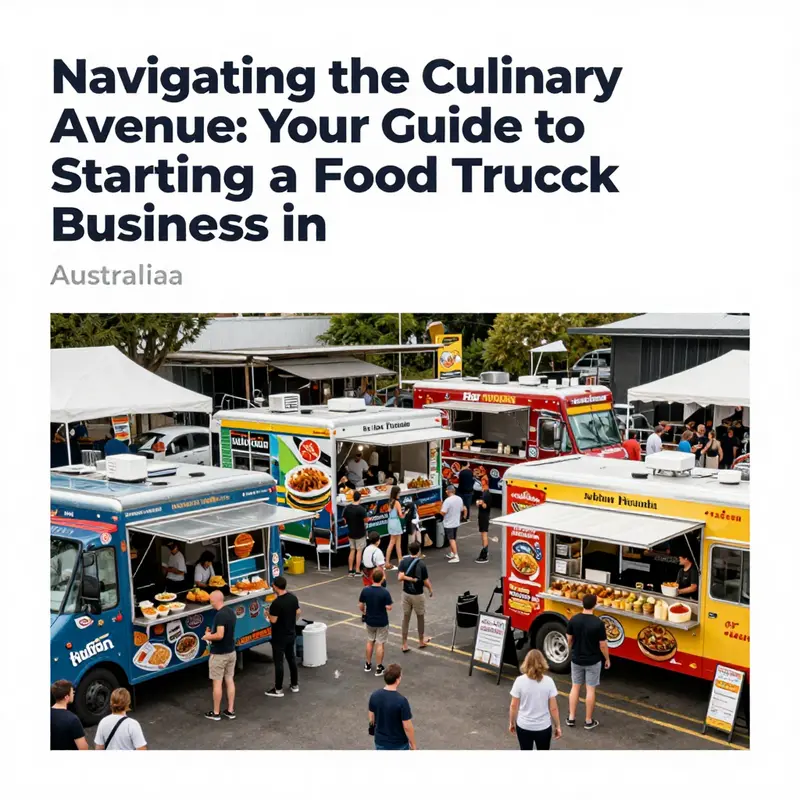
Starting a food truck business in Australia represents a unique opportunity for logistical excellence within the food and beverage industry. As consumer demand for diverse culinary experiences continues to rise, the mobile food sector becomes increasingly attractive to entrepreneurs and existing firms wanting to expand their offerings. This guide details essential processes from developing an effective business plan to navigating compliance, securing necessary permits, and implementing marketing strategies that resonate with your target market. Understanding each chapter will equip your business with the necessary knowledge to thrive in this competitive landscape by integrating logistics into the planning and operational phases of your venture.
Blueprint on Wheels: Crafting a Robust Business Plan for Launching a Food Truck in Australia
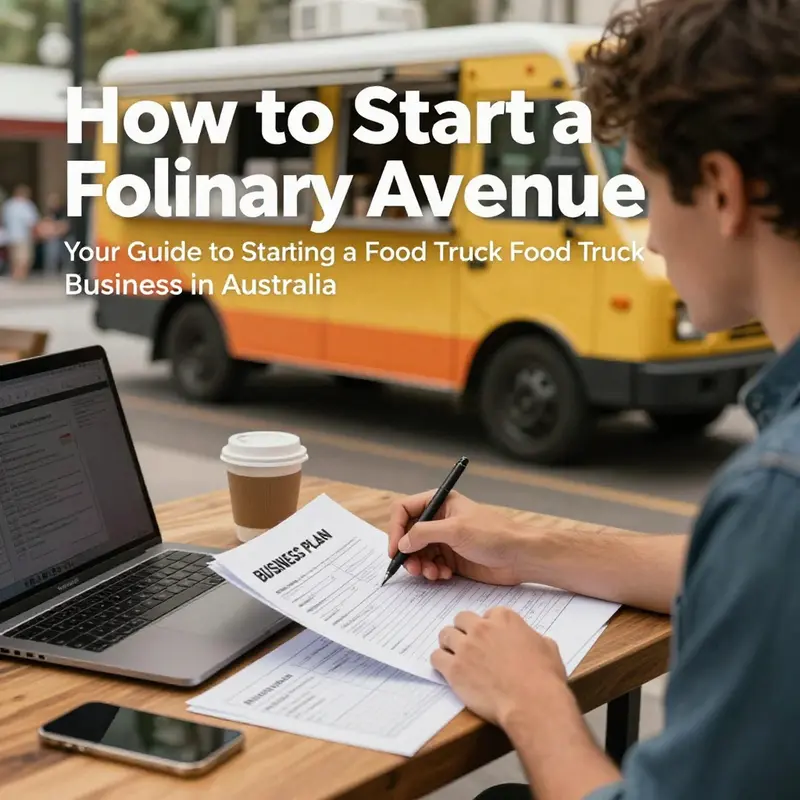
A food truck is more than a kitchen on wheels. It is a mobile business that must bridge culinary ambition with practical constraints, regulatory realities, and a shifting street-food landscape. The backbone of any successful venture in this space is a well-constructed business plan that reads like a map for both today and tomorrow. In Australia, where councils regulate location, safety, and licensing with a local lens, the plan must be precise enough to secure support and flexible enough to adapt to festivals, markets, and changing consumer tastes. The process begins with a clear concept and ends with a financial model that can withstand the daily pressures of weather, competition, and seasonality, all while staying compliant with health and safety standards.
Concept development sits at the heart of the plan. It is not enough to crave a certain cuisine; you need a story and a market fit. Start by sketching a concept that reflects your experience and your values, but test it against the local canvas. Is there demand for plant-forward street fare in your target area, or is the field more crowded with similar offerings? Identify gaps you can responsibly fill—perhaps a globally inspired menu built on locally sourced ingredients, or a focus on quick service with high-quality, consistent portions. Your concept should be specific enough to guide menu design, yet flexible enough to evolve with feedback from early customers. A rigorous competitive analysis helps—look at successful trucks in the vicinity and consider how you can differentiate, whether through ingredient sourcing, speed of service, or a distinctive brand voice that resonates with passersby.
Menu development follows concept. A menu that aligns with your brand and can be executed efficiently in a compact kitchen is essential. In the Australian mobile-food context, you should plan around non-porous, easily cleanable surfaces and a workflow that minimizes cross-contamination. The menu should balance novelty with practicality: a concise core lineup that travels well, complemented by a rotating special that tests new flavors without straining kitchen capacity. Ingredient sourcing deserves early attention because price volatility and supply reliability affect both profitability and customer satisfaction. Consider portions and waste control from the outset; small, consistent yields ease inventory management and improve your day-to-day margins. Remember that the food truck is a moving storefront, so items need to travel well, maintain quality, and be straightforward to assemble on a busy curb.
Pricing strategy in the plan cannot be an afterthought. It should reflect not only costs but the competitive context and the willingness of your market to pay for quality and speed. Build your pricing around the full cost of goods, labor, fuel, insurance, and the inevitable overheads that come with servicing events or markets. A disciplined approach to portion control helps keep margins predictable. In addition, your plan should map out pricing psychology—bundles during peak hours, loyalty incentives, and value offerings that don’t erode overall profitability. The financial section must translate the menu into a realistic forecast, including daily sales estimates, seasonal fluctuations, and a range of possible outcomes so you know when to slow, scale, or pivot.
A robust market strategy is a natural companion to your culinary plan. Your plan should articulate how you will locate customers and retain them. Social media becomes your primary storefront in a world where a post can drive a line around the corner. Build a narrative that connects with your audience—your origin story, the craft behind sourcing, and a commitment to quality and service. Timely posts about festival appearances, weekly locations, and featured items turn casual followers into repeat patrons. The plan should also designate a strategy for partnerships with local events, markets, and workplaces. High-traffic locations such as business districts or popular weekend markets offer unique advantages, but they require precise timing and permissions. Acknowledging these realities in the plan ensures you stay prepared for application windows, permit bouts, and the myriad rules each council may impose.
The regulatory dimension threads through every facet of planning. Your business plan must align with health and safety standards, licensing, and vehicle-specific requirements. It is not enough to imagine a perfect menu if the vehicle design cannot support safe food handling. The plan should reference standards under the Australia New Zealand Food Standards Code (FSANZ) and emphasize food storage temperatures, sanitation schedules, staff training, and allergen management. The document should also outline the process for achieving approval of your fit-out plans. In many jurisdictions, you will submit a scaled floor plan, equipment specifications, and vehicle dimensions for Environmental Health review before you proceed with the build. Even though the exact procedures vary by state and council, your plan should demonstrate awareness of these steps and a timeline for meeting them. A practical example from Western Australia highlights the flow: submit the fit-out plan for assessment, wait for feedback from an Environmental Health Officer, and adjust before further progress. While such examples are local, the underlying discipline—clear documentation, anticipated feedback, and a readiness to adjust—applies broadly across Australian jurisdictions.
The licensing and registration piece of the plan anchors the venture in legality and longevity. Your plan should identify the licenses you will pursue, such as a Food Business License and permits for trading in public spaces, as well as the need to register with the local council and, where relevant, your state business registry. You may also need to consider liquor licensing if plans extend to beverages with alcohol, and a permit to operate at festivals or markets. The plan should include a realistic timetable for applying for these permits and a budget line for associated fees. You will also need to map obligations like ABN registration, GST considerations if your turnover crosses thresholds, and ongoing tax compliance. In this sense, the business plan acts as a contract with regulators and financiers alike, outlining how you will meet standards and remain auditable over time.
Insurance concerns further illustrate why a thorough plan matters. Public liability insurance is a common prerequisite for operating in public spaces, and you will likely want to add vehicle and property insurance to shield equipment and stock. Your forecast should therefore include premium estimates and a strategy for maintaining coverage as you scale from a single truck to a multi-vehicle operation. The plan also needs to address risk management and contingency planning—what you will do if a key supplier fails, a critical piece of equipment breaks down, or demand spikes beyond your initial capacity. Scenario planning makes your forecast more resilient and your business more credible to lenders or partners who want to see that you have rehearsed the unknowns.
A complete business plan is not a static document. It should be a living blueprint that you revisit after your pilot period and whenever you consider growth. Start with a conservative baseline, then document learning from real-world trading—customer feedback, peak times, and event experiences. Use this feedback to refine the menu, adjust the pricing lattice, and reshape the locations you chase. As you test concepts, you may discover new opportunities to collaborate with local producers, to diversify the menu seasonally, or to pursue longer-term contracts with venues that host regular events. In short, the plan should provide a structured path to scale while preserving the integrity of your brand and the quality of your offering.
If you are curious about how regulators in related industries are responding to evolving conditions, you can explore broader regulatory conversations online, such as regulatory relief for trucking, which highlights how policymakers approach streamlining rules under pressure. This kind of perspective can inform how you frame your own compliance narrative—documenting not just what you must do, but how you will stay ahead of changes and communicate proactively with authorities. regulatory relief for trucking.
With these threads woven together, a well-crafted business plan becomes more than a document. It becomes a narrative of preparation and foresight that helps you recruit partners, secure funding, and guide daily decisions once you hit the street. The Australian market rewards clarity: a plan that translates ambition into a validated concept, a tested and manageable menu, a credible financial model, and a proactive compliance posture. The plan also serves as your first evidence to a prospective investor or council officer that you understand the landscape, respect the rules, and are prepared to deliver a reliable, high-quality service to communities that crave fresh, convenient food on the move. When built with discipline and tested through action, this living blueprint can transform a simple idea into a sustainable, cherished mobile kitchen that thrives across diverse Australian settings.
External resource: Department of Agriculture, Fisheries and Forestry – food safety standards and regulatory guidance. https://www.agriculture.gov.au/food-safety
Rolling Kitchens of Australia: Vehicle Choice and Interior Design for a Safe, Efficient Food Truck
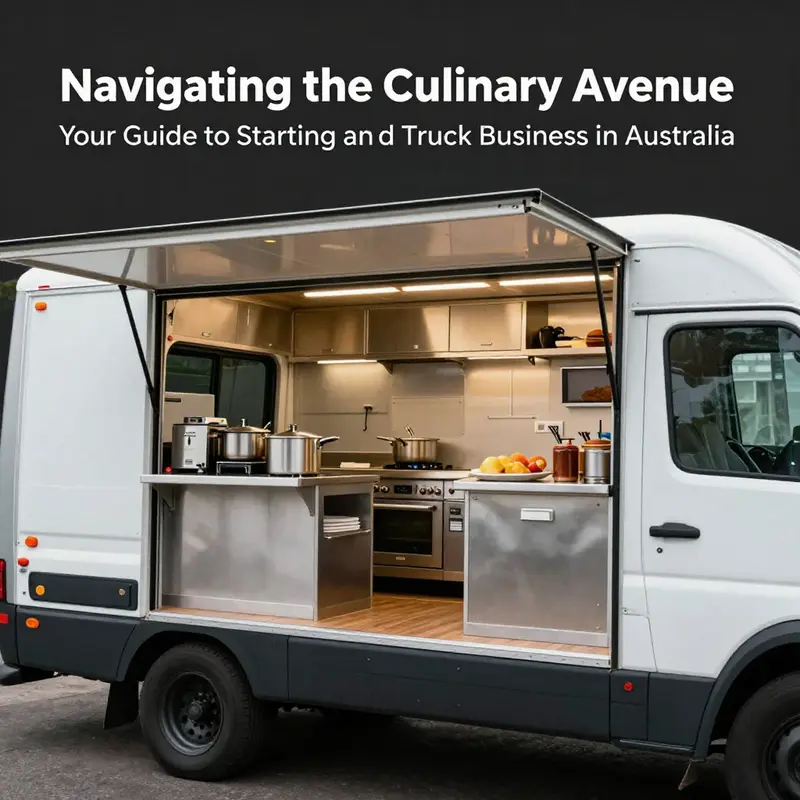
Choosing the right vehicle is more than a purchase; it is the core of your operational identity. In Australia, where councils oversee mobile food operations with a mix of state guidance and local by-laws, the vehicle you select sets the ceiling for your menu, your service speed, and your capacity to stay compliant under pressure. The decision encompasses space, fuel efficiency, maintenance, and, critically, the ability to meet food safety certifications. A converted van, a compact truck, or a purpose-built unit each carries distinct costs and advantages. The space you need will depend on your menu scope—whether you plan to offer quick bites from a grill, cold-serve items, or a more extensive kitchen lineup. Yet space alone does not determine success; it must translate into a smooth workflow and simple, safe operations. A well‑considered vehicle balances capacity with maneuverability, allowing you to reach busy locations while remaining affordable to run. In all cases, you must design with compliance in mind from the outset, ensuring that every fixture and surface can support safe food handling and easy cleaning. The interior layout should encourage a logical sequence: incoming ingredients, washing and prep, cooking, plating, and finally service, all while keeping hot and cold holding within regulation temperatures. The fixtures matter. Surfaces should be non-porous and easy to sanitize, and there must be a dedicated handwashing station with both hot and cold water, protected by a properly vented exhaust system if cooking areas generate steam or smoke. The goal is a kitchen on wheels that behaves like a compliant, hygienic, and efficient brick-and-mortar facility, but with the mobility to chase peak foot traffic across city neighborhoods and festival grounds. A practical rule is to map your entire flow on a scaled floor plan before you buy. This planning step helps you foresee equipment locations, service access, and cleaning routes, and it’s a requirement in many approval processes. In fact, a scaled floor plan showing sinks, prep benches, and refrigeration, along with the dimensions of the vehicle, is often requested during the assessment phase. For operators in Australia, this planning mindset reduces costly retrofits and aligns your design with the inspections you will face later. When evaluating vehicle options, consider not only the kitchen footprint but ongoing costs: fuel efficiency, maintenance complexity, and the availability of service networks in your operating region. A smaller vehicle can be cheaper to run but may restrict your menu or reduce your revenue during peak times. A larger, more capable vehicle, while more expensive upfront, can support a broader menu and higher daily turnover if you secure premium sites and reliable shifts. The design should also reflect your brand. The interior becomes part of the customer experience, delivering a first impression that complements the food and the story you tell about your concept. Branding considerations—color schemes, lighting, and clean lines—should harmonize with the exterior and the menu, reinforcing recognition and trust in a crowded street landscape. Beyond aesthetics, branding inside the truck should still prioritize safety. Clear labeling for food zones, dedicated waste areas, and visible allergen information all contribute to a responsible operation that protects both staff and customers. Once you settle on a layout concept, the interior must accommodate the essential equipment that enables consistent quality. This includes commercial-grade cooking equipment tailored to your menu, reliable refrigeration to maintain safe temperatures, efficient ventilation to control humidity and odors, and waste disposal systems that prevent cross-contamination. The choice of equipment should be driven by your menu’s core needs, with a mind to energy use and heat management. Even the best design can fail without proper workflow planning. A well‑designed truck organizes activities in a sequence that minimizes unnecessary movement, reduces the risk of cross‑contamination, and speeds service. Place the handwashing station and hand contact points near the entry to the food preparation zone, and position sinks, prep benches, and cold storage in a logical progression toward the cooking area. Make sure every surface you touch during service can be wiped down quickly between customers. In the Australian context, the interior must also support compliance with the Australia New Zealand Food Standards Code (FSANZ). This means maintaining safe storage temperatures, implementing regular cleaning and sanitizing routines, and ensuring staff receive appropriate food safety training, such as HACCP principles. Record-keeping is a part of this discipline, including allergen and supplier information that may be required during inspections. The interior design should make compliance straightforward rather than a afterthought. For example, having a scalable floor plan is not only about approval; it’s a blueprint for future growth that helps you add or swap equipment with minimal disruption. A neat advantage is easier training: staff quickly learn the layout, which reduces errors and boosts service speed. The buildout phase will typically involve an assessment of construction and fit-out plans by your local Environmental Health Service. In Western Australia, and several other jurisdictions, operators submit a scaled floor plan, vehicle dimensions, and equipment specifications for review. The process includes an assessment fee and a defined timeframe—often around two weeks or more—during which an Environmental Health Officer provides feedback before you proceed with the fit-out. This step is not a mere formality; it aligns your interior with safety expectations and ensures you can operate legally once you are on the road. The path from fit-out to operation continues with registration. After your vehicle is built and approved, you must register the mobile food business with the local council. The registration package typically requires updated floor plans, a site plan for events or non-designated public areas, vehicle dimensions, and equipment specifics. Councils also provide guidance on where and when you can operate, which can vary significantly between jurisdictions. You must comply with these bylaws to avoid fines or disruption to service. Permits and licenses, of course, follow. Depending on your state or territory, you may need a Food Business Licence or permit, a Trading Permit to operate in public spaces, and potentially a Liquor Licence if you plan to serve alcohol. Some councils are actively streamlining these processes to support mobile vendors, reflecting a growing recognition of food trucks as a legitimate street-food model rather than a niche. While Australia has not adopted a nationwide deregulation act, the practical effect is that some councils are making it easier to obtain approvals when the core safety standards are met. In parallel, the vehicle’s interior must withstand regulatory scrutiny and daily wear. Compliance with FSANZ is non‑negotiable: safe food storage temperatures, careful prevention of cross‑contamination, routine cleaning schedules, and staff training are the backbone of a credible operation. Documentation that tracks allergen information, supplier declarations, and rotation of stock becomes essential at audits and customer inquiries alike. Insurance and taxes are the practical support system around your operation. Public liability insurance is generally mandatory, with additional coverage for property and vehicle. Tax considerations include GST if your annual turnover exceeds the threshold, and meticulous bookkeeping to prepare for annual filings. In a country as diverse as Australia, the value of precise records cannot be overstated. They underwrite credibility with councils and suppliers while smoothing the path to expansion as your fleet grows or you take on more events. When you are finally ready to trade, your vehicle and interior must shine in the field as well as on paper. Location intelligence matters as much as cuisine. Parking near office precincts, universities, festivals, and shopping centers keeps you within reach of your target audience. Marketing efforts—social media presence, Google Business listings, and local event calendars—become tools for converting foot traffic to steady meals on wheels. Your interior, too, supports this brand storytelling. Thoughtful lighting, a clean and contemporary aesthetic, and a layout that communicates efficiency convey reliability to customers who may be sampling your food for the first time. As you grow, revisit your layout with a critical eye. Small adjustments—such as repositioning a prep bench to reduce backtracking or upgrading a hot holding cabinet for better energy efficiency—can yield improvements in speed and consistency. The beauty of a well‑designed mobile kitchen is its potential for evolution. It is both a practical workplace and a portable billboard for your culinary concept. And because rules change, keep in touch with your local council and health department. Regular consultations and periodic re‑inspections can become a routine part of your business, not a disruption. For practical reference, operators often consult guidelines such as the official Mobile Food Businesses materials provided by regional health authorities. These resources outline the expectations for floor plans, vehicle dimensions, and equipment specifications, helping you stay aligned with jurisdictional requirements. If you want to explore a standard guidance resource that addresses mobile food vendors more broadly, the Department of Agriculture, Fisheries and Forestry (DAFF) offers a detailed overview of mobile food vendors and the safety framework they encourage. This broader perspective can be especially helpful as you plan expansion into new events or regions. For more details, see the official guidance on mobile food vendors. Mobile Food Businesses – Kwinana City Council. The practical takeaways are simple: choose a vehicle that fits your menu and your budget, design an interior that supports safe, efficient operation, and align every decision with the FSANZ standards and local council expectations. The work will be iterative, but the payoff is a mobile kitchen that travels well, serves consistently, and scales with your ambitions. As you prepare to launch, remember that the most durable competitive advantage comes not only from the recipes you serve but from the disciplined clarity of your workflow, the accessibility of your space, and the trust you build through rigorous safety and reliability. For a broader regulatory perspective and additional context, consult the mobile food safety resources and guidelines offered by national and regional authorities. External reference: DAFF Mobile Vendors. https://www.daff.gov.au/food-safety/food-businesses/mobile-food-vendors
Riding the Compliance Highway: A Practical Roadmap to Launching a Food Truck in Australia
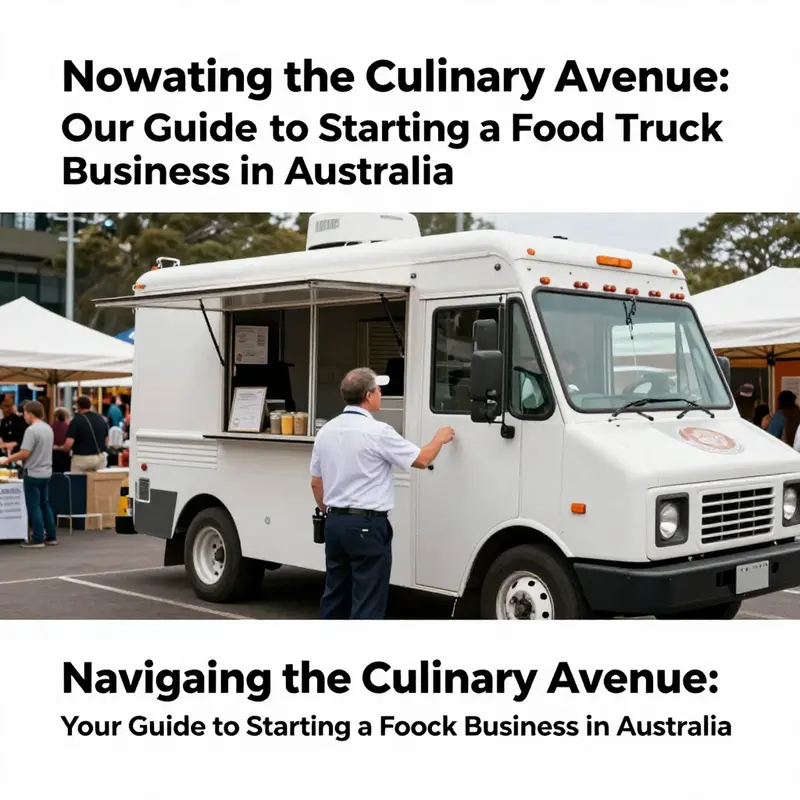
Launching a food truck in Australia is more than a clever menu and a well-tuned engine. It is a journey through a landscape of health, safety, and licensing rules that are designed to protect customers, staff, and communities while allowing hungry pedestrians to discover new flavors on the go. When you approach this path with a sense of purpose and a clear plan, regulation becomes less a barrier and more a framework that helps you build a business with credibility from day one. A thoughtful start—grounded in planning, sound design, and rigorous compliance—sets the tone for operations that are sustainable, scalable, and ready for the busy, diverse landscapes of Australian towns and city precincts. The first steps are practical, almost bureaucratic, and yet they are the soft glue that binds your concept to the real world of street food commerce. The path is not a straight line, but a well-charted route through business structure, registration, fit-out, and ongoing practice that keeps your truck safe, compliant, and appealing to customers.
The journey begins with a clear business frame. You will choose a structure that suits your circumstances—sole trader, partnership, or a company—and you will register a business name with the national business registry while securing an Australian Business Number. An ABN is more than paperwork; it signals to suppliers, customers, and partners that you are a legitimate operation. As you map finances, consider GST obligations if your annual turnover moves past the threshold. These early decisions ripple through every contract you sign, every tax return, and every supplier agreement you ink, so they deserve deliberate attention. A well-structured foundation makes it easier to open lines of credit, to invoice properly, and to manage cash flow as you grow from a single truck to a fleet or a network of pop-up stops.
Yet the backbone of a food truck is not only the corporate shell; it is the vehicle and its interior—designed to meet exacting health and safety standards. The engine room of your business is the kitchen, and the kitchen must be a clean, controlled environment. Inside the vehicle you will need proper handwashing facilities with hot and cold water, sinks for washing and cleaning, refrigeration for perishable products, and waste storage that doesn’t invite pests or cross-contamination. Ventilation and exhaust systems, if you cook on board, are essential to air quality and comfort. All surfaces should be non-porous and easy to sanitize, and the interior layout must support efficient workflows that reduce cross-contact between raw and ready-to-eat foods. A scaled floor plan showing all equipment locations—sinks, prep benches, fridges, and waste points—becomes more than a drawing; it is a required document that anchors your approval process and future inspections. The meticulous design is not cosmetic; it is a fundamental health safeguard and a practical blueprint for your daily operations.
The regulatory map continues with assessment and approval of your fit-out plans. Local Environmental Health Services review your vehicle’s design and specifications to ensure compliance with hygiene codes and food safety practices. In practice, you’ll submit a precise package that includes a scaled floor plan, vehicle dimensions, and equipment specifications, and you’ll pay a plan assessment fee. The review period—often measured in business days—gives an Environmental Health Officer a chance to provide feedback before you proceed with any installation. The purpose is not to delay your dream but to prevent costly retrofits later. When the plan passes, you move to the next stage: registration with the local council and confirmation of where you may operate. This process regularly involves a site plan, especially for non-designated public areas or events, and it may require ongoing dialogue with the council to align with local bylaws about parking, hours of operation, and consumer safety expectations. A proactive approach here saves time, money, and headaches when you begin trading.
Once your vehicle is built to standard and your plans are approved, registration with the local council follows. This step formalizes your mobile food business within the community you intend to serve. You will submit an application for notification or registration, including any updated floor plans, site plans for events, vehicle dimensions, and equipment details. The council’s environmental health department is the gatekeeper of this stage, and their review ensures you meet the community’s expectations for hygiene, traffic, and waste management. The process is not merely bureaucratic; it is a collaborative framework designed to keep high standards visible to customers and to keep the operation within the bounds of local zoning and public space usage. It is common to encounter a few iterations as plans are aligned with site-specific restrictions and neighborhood concerns. In this context, the practical lesson is simple: engage early and stay responsive. A robust line of communication with the council can prevent last-minute changes that derail a launch and complicate permit renewals.
Beyond registration lies a suite of permits and licenses that vary by state and municipality, reflecting Australia’s diverse regulatory ecosystem. A food business license or permit typically sits at the core, accompanied by a trading permit for public spaces or markets, and potentially a liquor license if your concept includes alcohol. Some councils are actively streamlining the path for mobile vendors, recognizing the economic and cultural value food trucks bring to community events, precincts, and festivals. The permit landscape may also require additional approvals for particular sites or for special events, so you must map these obligations against your planned operating calendar. The intangible but critical element here is consistency: consistency in where you trade, what you serve, and when. Establishing a predictable schedule and a transparent process with venues and event organizers helps you negotiate better locations and more reliable revenue streams over time.
Food safety standards anchor all activity. The Australia New Zealand Food Standards Code (FSANZ) sets the baseline for how you store, handle, and prepare food. Temperature control, sanitation schedules, allergen management, and supplier traceability are not mere compliance checklists; they are the day-to-day discipline that protects customers and reduces your business risk. Staff training in food safety, aligned with local requirements such as Food Handler Certificates where mandated, reinforces a culture of care and accountability. Regular record-keeping—temperature logs, cleaning rosters, and supplier information—turns into a shield against audits and a foundation for continuous improvement. High-performing operators treat these records as living documents, reviewed at least weekly, and updated whenever processes or suppliers change. A culture of meticulous compliance translates into repeat customers who trust your food and a workforce that feels secure and informed.
As you move toward launch, insurance and tax considerations enter the frame. Public liability insurance is commonly mandatory, protecting you against claims of injury or property damage. Vehicle insurance guards your investment in the truck itself, and workers’ compensation coverage may be required if you hire staff. Tax considerations—GST registration if your turnover crosses the threshold, ongoing bookkeeping, and annual tax filings—are the quiet engine that keeps the business sustainable. The financial discipline begins with simple habits: separate business and personal accounts, keep receipts, and reconcile monthly. This discipline pays dividends when you secure a loan, apply for partnerships, or pursue expansion into new locations.
With compliance anchored and your plan in place, the actual trading and marketing phase begins. Location choice matters: high-traffic office precincts, shopping centers, festivals, and pop-up markets offer visibility and footfall that align with your concept. Marketing is not an add-on; it is part of your operational rhythm. Social platforms, listing in event schedules, and partnerships with venues all contribute to a recognizable identity. Build a brand story around your menu, your origin, and your community involvement. And here is a practical note: expand your reach by tapping into community networks and social impact programs. For example, you can explore initiatives like Trucks for Change: Supporting Vulnerable Communities to align your business with broader social value while gaining exposure to networks that support local initiatives. This kind of collaboration is not superficial; it can become a meaningful part of how you connect with customers and local leaders and how you position your truck within the community you serve.
Finally, the journey is ongoing. The landscape of local rules shifts with council budgets and urban planning priorities, so stay engaged with your local council, attend relevant industry meetings, and participate in feedback opportunities when new by-laws or guidance documents are released. Regular audits from councils can be unsettling if you are unprepared, but a routine of internal checks—food safety, waste disposal, employee training, and licensing renewals—keeps you ahead of issues and positions you for smoother renewals. The most resilient operators view compliance not as a box to tick but as a competitive advantage: it signals reliability to customers, partners, and landlords, and it reduces downtime due to compliance concerns. The chapter of your business plan that reads like a regulatory checklist thus becomes the chapter that keeps your truck rolling and customers returning.
In the end, starting a food truck in Australia is less a sprint and more a well-paced journey along a well-marked highway. It requires clear planning, disciplined fit-out, proactive engagement with local authorities, and a sustained focus on food safety and customer trust. If you carry these elements with you from the first design sketch to the first week of service, you’ll create a business that not only meets regulatory expectations but also earns a lasting place in the streetscape. The path is exacting, but with thoughtful preparation and a steady cadence, your truck can become a reliable, beloved feature of Australia’s vibrant food scene. For readers seeking further official guidance on food safety standards and regional requirements, consult the Australian government’s food information portal: https://www.agriculture.gov.au/food.
Gatekeepers and Gravel Roads: Navigating Licensing, Permits, and Compliance to Launch an Australian Food Truck
The dream of launching a food truck in Australia sits at the intersection of appetite and regulation, where flavor meets form and permits. A successful start is less about a flashy concept and more about a steady channel of approvals that keeps you compliant, insured, and ready to serve. The path begins with planning, but the real work happens when you translate that plan into a vehicle, a kitchen, and a permission trail that stretches from the bench to the street. Your concept—whether a gourmet sandwich, a regional specialty, or a coffee-and-sweet-bites model—will shape the licenses you seek and the spaces where you can operate. Yet the rules are not monolithic. They are shaped by state, territory, and even by the local council that presides over your chosen streets, parks, and pop-up markets. This is not a checklist so much as a choreography: align your kitchen, your paperwork, and your location strategies so they move in concert rather than collide at the gate of a permit desk.
The first major hinge of that choreography is the vehicle and interior design. A food truck, or a converted van, must meet basic food safety standards before any appetite for your menu can materialize on the curb. This means non-porous surfaces that resist bacteria, handwashing facilities with hot and cold water, and prepared zones for cooking, cooling, and waste. Ventilation and exhaust hoods join this list when cooking is involved, because the air in a tight mobile space matters as much as the cleanliness of the counters. The interior is not a showroom; it is a working kitchen in motion. Designers and operators who map their workflow often save time and money down the line. A scaled floor plan, showing sinks, prep benches, fridges, and waste storage, is not merely helpful—it is often required for approval. The image of your kitchen must align with the reality you will build, and that alignment is what the Environmental Health Service will want to see when you apply for assessment of construction and fit-out plans.
In Western Australia, the process can feel almost ceremonial: you submit your vehicle’s design and specifications to the local environmental health authority for review, and you await feedback before you proceed with the fit-out. Consider the example of a council in a coastal development area where you must email a set of documents to a health department address, attach a scaled floor plan that highlights critical zones, provide the vehicle’s overall dimensions, and share equipment specifications. An assessment fee is payable, and you should expect a formal review period—often around 14 business days—during which an Environmental Health Officer may request clarifications or revisions. This is not a tedious hurdle; it is a check that pays dividends in the years of safe operations that follow. A clear path through this step reduces the risk of costly redesigns after you think you are ready to roll. For operators starting out, using a structured checklist provided by the council can prevent missteps and keep you moving forward toward approval rather than stalling at the sketch stage.
Once your fit-out is approved, the next decisive move is registration. You will register your mobile food business with the local council, an act that converts your concept into a legally recognized street operation. The registration process typically requires an updated floor plan if not already provided, a site plan for locations outside designated public areas, and precise vehicle dimensions along with equipment specifications. Councils differ in their exact submission requirements, but the core principle is the same: your operation must be transparent about where and how you will prepare and serve food, how customers will access it, and how you will manage waste and traffic. During this phase, you also need to learn the local bylaws: where you can operate, what hours are permitted, and what permits or restrictions apply to particular sites or events. The idea is to prevent clashes with fixed businesses, public spaces, and event organizers while giving you the maximum flexibility to reach high-traffic venues.
Beyond the council doors lies the world of permits and licenses, a landscape that can feel labyrinthine because it shifts with geography. In Australia, there is no single nationwide license for mobile food, but most jurisdictions require a Food Business License or permit and a Trading Permit to operate in public spaces. Some jurisdictions also require a liquor license if you intend to serve alcohol, while others may limit or condition participation in specific markets or events. The overall trend is toward clearer, more predictable pathways for mobile vendors, with councils gradually rolling out streamlined processes to accommodate the growing appetite for street food. The state-to-state variability means you should engage with the local council early, because some councils require inspections of the food truck itself as part of licensing, while others focus primarily on your documented food safety practices and kitchen layout. The idea is not to rush to launch but to ensure that when you do, every permit, every sign-off, and every piece of the kit aligns with the expectations of the authorities who hold the keys to your operating rights.
Compliance with food safety standards remains the backbone of all licensing decisions. The Australia New Zealand Food Standards Code (FSANZ) governs how food is stored, cooked, cooled, and handled on mobile platforms. It mandates temperature controls for storage, documented cleaning and sanitation schedules, and appropriate training for staff in food safety principles. HACCP principles—hazard analysis and critical control points—form the backbone of the operational discipline that keeps your customers safe. Documenting allergen information, supplier details, and traceability is not bureaucratic theater; it is a practical tool to manage risk and protect your reputation. In a mobile business, where spaces are compact and timelines are tight, clear records become your fastest remedy in the event of a complaint or audit. People are the point of contact for safety, and training ensures that every team member performs consistently, reducing the chance of lapses when you are juggling peak service moments, peak foot traffic, and the logistics of moving between sites.
Insurance and tax considerations are the quiet engines of legitimacy. Public liability insurance is often a non-negotiable prerequisite for licensing and for participating in markets or events. You should also consider property and vehicle insurance, as your mobile kitchen is a moving asset and a liability in transit as well as at rest. Tax compliance follows the same logic: register for GST if your annual turnover crosses the threshold, maintain clean financial records, and understand whether you need a local business number for government interactions. The registration processes that support your business structure—whether you operate as a sole trader, company, or partnership—also determine your obligations to the Australian Taxation Office and, if applicable, to ASIC. The process may seem abstract, but it translates into practical safeguards: your invoices, your receipts, and your filings all reflect your legitimacy as a business and your ability to withstand audits, disputes, or even the casual scrutiny of a concerned customer.
From there, the practical act of starting to trade becomes a test of judgment and endurance. Location strategy matters: high-traffic office districts, shopping centers, festival grounds, or pop-up markets can drive demand, but councils may restrict hours or require additional permissions for particular sites. Marketing begins early, not after you open, through social platforms, listing sites, and word-of-mouth channels. A careful operator tests a menu in a controlled environment before scaling, listening to customers and observing how the queue moves at different times of day and in various weather conditions. The best operators learn to read the rhythm of a space and to program their permits around it, rather than chasing a rush that triggers bottlenecks with authorities or with crowd control. Networking with fellow operators and participating in industry events can reveal practical shortcuts, such as preferred event organizers, venue contacts, and the subtle timing of permit renewals. It is this networks-of-regulation and networks-of-community that often determine who thrives in the mobile food space and who returns to a fixed kitchen.
As you navigate the licensing maze, you will find that many of the most thorny questions have practical answers once you view them as a sequence rather than a sprint. Start with a sound concept and a kitchen that can be safely disassembled and parked, then secure the health-based approvals that attest to your cleanliness, your workflow, and your staff training. Move to registration and site planning, ensuring your vehicle data and floor plans are precise enough to satisfy local authorities. Seek the permits that reflect your intended scale—whether that is occasional markets or permanent street corners—and be prepared for inspections that validate your readiness. Above all, keep your records precise and accessible, because the FSANZ code, your insurance provider, and the local council rely on them to verify your ongoing compliance. The journey from dream to curbside service is not linear, but with a patient, methodical approach you turn this regulatory landscape into a framework that protects customers, employees, and your business while still letting your flavor reach the streets.
For operators who want a practical shorthand while planning, consider exploring broader regulatory trends in mobility sectors as you map your own path. For instance, some readers find it helpful to review general discussions of regulatory relief and how policymakers are seeking to streamline requirements for mobile vendors and related services. While these discussions are not a substitute for local rules, they can illuminate the direction of reform and help you anticipate changes in the permitting environment. As you finalize your document pack and schedule, you can also consult official guidance tailored to your region. In Australia, local councils and health departments remain your primary touchpoints, with state agencies providing complementary oversight and resources. The most reliable way to ensure you are not negotiating from a place of uncertainty is to connect early with your council, prepare a robust fit-out package, and align your menu and operations with FSANZ expectations so that your first service can be a confident, safe, and compliant launch rather than a fix-it moment after the fact.
Internal link for broader regulatory context: regulatory-relief-winter-storms-trucking.
External resources can provide practical checks and official guidance. For a structured starting point with concrete steps and Australia-specific considerations, see the overview that distills licensing, registration, and compliance into a clear pathway: Starting a Food Truck Business.
null
null
Final thoughts
Launching a food truck business in Australia involves a multifaceted approach requiring careful planning and awareness of legal compliance. By developing a solid business plan, selecting the right vehicle, understanding regulatory requirements, obtaining necessary permits, and executing marketing strategies, entrepreneurs can navigate the challenges and harness the opportunities within this dynamic industry. Continuous adaptation and learning are key to maintaining a competitive edge in the evolving market.