
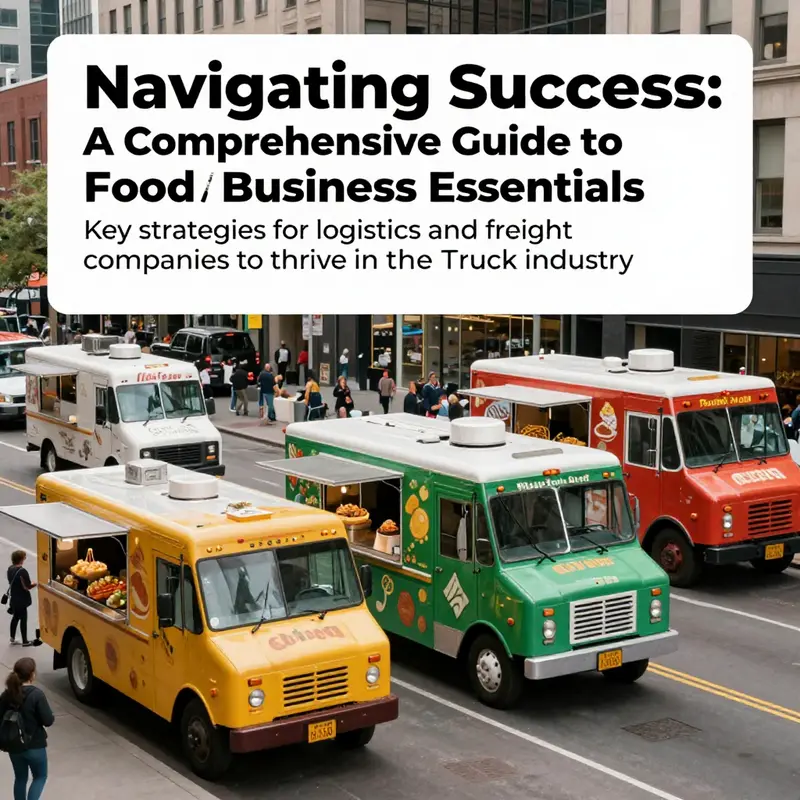
The food truck industry presents unique opportunities for logistics and freight companies looking to diversify their revenue streams and enhance service offerings. As urban areas continue to embrace this flexible dining option, understanding the essential components of starting a food truck business becomes increasingly important. The following chapters outline critical factors, including necessary licenses and permits, market analysis, menu design, and operational optimization. By grasping these elements, logistics firms can position themselves as key stakeholders in a growing market, benefiting from streamlined operations and new partnerships.
null
null
Market Intelligence as Flavor: Building a Winning Food Truck Through Insightful Market Analysis
Market analysis is not a sterile spreadsheet exercise; it is the flavor profile that guides every choice a food truck makes. In this chapter, we move beyond intuition and into a steady rhythm of data-informed decisions. The goal is simple but powerful: understand who will buy your food, where they will buy it, and why they will choose you over the competition. When this understanding is strong, licensing, menu design, location strategy, pricing, and even staffing begin to align with real-world demand rather than guesswork. In many ways, market analysis is the compass that keeps a mobile kitchen from chasing fads and instead anchors it in durable, repeatable demand.
At the heart of market analysis is the question of target customers. A food truck thrives when it can identify a primary audience and a handful of secondary ones that share compatible needs and spending power. Urban centers offer a natural laboratory for this inquiry because they present dense foot traffic and a mosaic of neighborhoods with distinct preferences. Downtown districts and business parks buzz during lunch hours, while university campuses draw students craving quick, affordable meals between classes. Creative districts attract visitors seeking novelty and quality, often with a willingness to pay a premium for a story, a vibe, or a unique flavor profile. The art of market analysis is to map these audiences not as abstract labels but as real-life patterns you can observe, measure, and respond to in near real time.
Geography matters, and so do timing and cadence. A successful food truck tests its legs in places where people congregate, but it also tests the times when demand peaks. A high-traffic area can deliver hundreds of potential customers each day, but if operating hours obscure the lunch rush or miss a festival crowd, the opportunity slips away. Seasonal fluctuations further complicate the calendar. Commuter peaks in spring and fall can be amplified by outdoor events, street fairs, and sports games. Conversely, winter weeks may demand more portable, comforting fare and quicker turnover to keep lines moving in lower outdoor temperatures. The most effective market analysis translates these patterns into a schedule—where to be and when to be there—so that your truck becomes a dependable option for hungry patrons rather than a wandering experiment.
A powerful datapoint in today’s market is the broader trajectory of the global food truck scene. Industry data point to a steady growth trajectory, with annual expansion around the mid-single digits. Although the exact figure can vary by region, the underlying narrative is clear: consumer interest in mobile, high-quality food is resilient and evolving. This resilience matters because it means you can plan with some confidence that there is still room to innovate without courting a volatile market. Growth expectations should inform your investment in both product and presence. If the market is expanding, you can justify experimenting with location density in promising neighborhoods, test new concepts in controlled settings, and leverage cross-pollination opportunities with nearby events and venues. In short, market growth is not a guarantee of success, but it is a powerful signal that a well-timed, well-executed strategy has the potential to compound value over time.
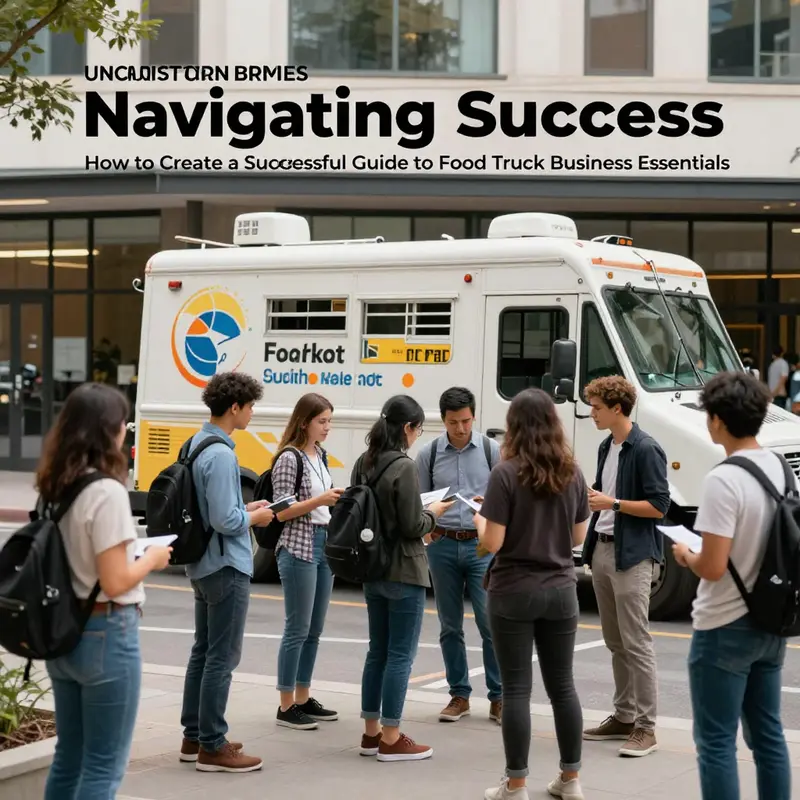
To translate market signals into tangible menu decisions, many operators lean on three complementary approaches: surveys, focus groups, and pilot testing in diverse neighborhoods. Surveys help you quantify how different demographics respond to price, portion size, and flavor preferences. Focus groups offer qualitative illumination—why a flavor or a concept resonates, or why a competitor’s offering falls flat. Pilot testing, perhaps the most practical of the trio, lets you validate ideas on a small scale before committing to a full rollout. The data from these activities can reveal unexpected affinities or gaps—insights that can refine your lean menu, pricing strategy, and even your branding. When you integrate these learnings with observations of foot traffic and event calendars, you arrive at a clear picture of where your truck should be during which windows of time.
This is where a well-constructed competitive map becomes indispensable. You want to know who else operates in your chosen service area, what they offer, how they price, and how customers talk about them. A thorough competitor evaluation looks at price points, menu breadth, speed of service, consistency, and the narrative conveyed by branding and décor. It also pays attention to the reviews customers leave—whether they praise the freshness of ingredients, the speed of service, or the warmth of the staff. The aim is not to imitate but to identify a niche that is underserved or underserved relative to the demand you can validate. For example, in a neighborhood with a high proportion of health-conscious residents, a plant-forward concept with a clear nutritional story can outperform generic quick-service offerings. In a nightlife district, a gourmet twist on a familiar staple may carve out a loyal following in a crowded space. The trick is to anchor your concept in a distinct value proposition that is recognizable at a glance and deliverable within your operational constraints.
Your lean menu, previously discussed as a best practice, should be the physical embodiment of your market insights. The constraint of limited space and the need for rapid throughput makes it essential to select a small number of core items—typically three to five—that you can execute consistently and at speed. The rationale is straightforward: a focused menu reduces complexity, speeds up the line, and strengthens the quality control needed to maintain repeatability. Data from the industry suggests that a streamlined menu can improve service speed by a meaningful margin and boost repeat visits when customers know they can rely on a few standout choices. But the lean menu is not a constraint; it is an invitation to excellence in what you offer. Each signature item should reflect a clear answer to a recognized demand pattern, whether that demand is a craving for bold flavor, a preference for budget-friendly meals, or the allure of a regionally inspired dish with a fun, shareable story.
The interplay between market insights and pricing is another critical axis. Your price strategy must reflect both the local economics of your chosen locations and the willingness of your target audience to pay for quality and convenience. A food truck often operates at the edge of price sensitivity; a few dollars can determine whether a line forms or whether customers walk away. Market analysis guides this decision by revealing what nearby vendors charge, how much value customers assign to speed, and what premium is justifiable for specialty ingredients or handcrafted preparation. The objective is not to underprice or overprice blindly but to calibrate a price point that sustains margins while preserving perceived value. In practice, this means offering value without eroding brand equity. It may involve upsell opportunities—drinks, desserts, or add-ons—that enhance the average ticket while remaining aligned with the core menu offer and the fast-service model.
Beyond the mechanics of pricing and menu design, market analysis informs when and where to operate. The scheduling question is not merely about occupancy; it is about aligning with demand cycles and complementing other local activities. Events, festivals, sports games, and university gatherings can transform a quiet weekday into a high-volume opportunity if your truck is positioned to capitalize on them. Many operators build a flexible calendar that prioritizes high-impact venues during peak seasons and rotates to maintain steady exposure during slower periods. This approach requires discipline in logistics, including permits, fuel, and staffing, so that when the crowd comes, you are ready to scale service without compromising quality or safety. In practice, this means clear operating protocols, a reliable route to stock and replenish ingredients, and a flexible staffing model that can respond to surges without sacrificing compliance and hygiene.
All these dimensions—target customers, competitive landscape, demand patterns, and agile operations—coalesce into a market-informed blueprint. It is a blueprint that guides not only where you stand tonight but how you evolve as the market itself shifts. A well-executed market analysis makes your business resilient, not because it guarantees every win, but because it reduces the risk of misalignment. You are not merely reacting to trends; you are shaping your own trajectory by making deliberate bets anchored in evidence and tested assumptions. In this sense, market analysis is the strategic core of a successful food truck: it directs your investments, underwrites your growth, and helps you build a brand that customers recognize, trust, and return to.
As you translate market insights into action, you begin to see how customer-centric thinking can cross-pollinate across related disciplines. The mindset of listening to and learning from customers, and translating those lessons into tangible offerings, aligns closely with people-centered strategies in other mobility-forward industries. For example, a people-first approach in trucking emphasizes listening to the people who use, interact with, and depend on a vehicle system every day. In the food truck context, this translates to listening to customers and neighborhoods with humility and curiosity, then letting those conversations guide menu choices, service speed, and even how you communicate your story. The important point is not to imitate a distant playbook but to adopt a mindset that treats customers as co-creators of value. People-first strategies in trucking offers a parallel lens for understanding how attention to human needs translates into sustained performance across mobility-driven ventures.
With market analysis as the backbone, your marketing instincts—your ability to tell a compelling story, leverage social channels, and build loyalty—must be rooted in observed demand rather than isolated bravado. The story you tell should reflect the actual experiences of your customers, the cadence of your best-performing locations, and the moments that convert first-time visitors into repeat patrons. In practice, this means using your data to time promotions that feel relevant to the local moment, rather than imposing generic campaigns. It means curating your online presence to mirror the neighborhoods you serve, and it means designing loyalty perks that reward the behaviors your market analysis says matter most, whether that is frequency, meal value, or social sharing.
Ultimately, market analysis is not a one-off exercise but a continuous discipline. The market evolves as people, events, and cities change their rhythms, and your business must adapt with them. This adaptability requires disciplined experimentation, rapid learning cycles, and a willingness to recalibrate your plans based on what the data reveals. A well-executed market analysis reduces risk and heightens the probability that your food truck will be seen not merely as a vendor but as a trusted, responsive participant in a dynamic local economy. The objective is not to chase every trend but to align your strategic bets with real, unmet needs that emerge from careful observation, rigorous testing, and thoughtful interpretation of the market signals around you.
For readers who want to explore further perspectives on turning market insight into practical strategy, consider resources that discuss how data-informed planning scales from concept to execution. External reading can complement your own notes and help you refine your approach as you step from market analysis into licensing, menu development, and the day-to-day realities of running a mobile kitchen. As you move forward, keep in view that the strongest food trucks are those that treat market analysis as a living, breathing compass—one that guides you toward locations with density, menus with clear value, and experiences that turn curious passersby into loyal customers.
External resource for further reading: https://www.shopify.com/blog/food-truck-business-ideas
Lean by Design: Crafting a Fast, High-Impact Menu for a Successful Food Truck
A food truck operates in a world of constant pressure: limited space, unpredictable foot traffic, and the clock ticking toward the next rush. A lean menu is not merely a means to simplify cooking; it is a strategic architecture that shapes how you source, prepare, price, and market every meal. The aim is to deliver consistency, speed, and value—without sacrificing flavor or personality. When you design a menu with these goals in mind, you create a brand experience that travels with you from a first bite to a loyal repeat visit. This approach echoes a broader design discipline known as Lean UX, where teams pilot small, testable solutions that cut waste while prioritizing real user needs. In the context of a food truck, the user is the customer on the move, and the product is not only the dish but the entire dining moment: the order flow, the aroma, the speed of service, and the memory of the brand.
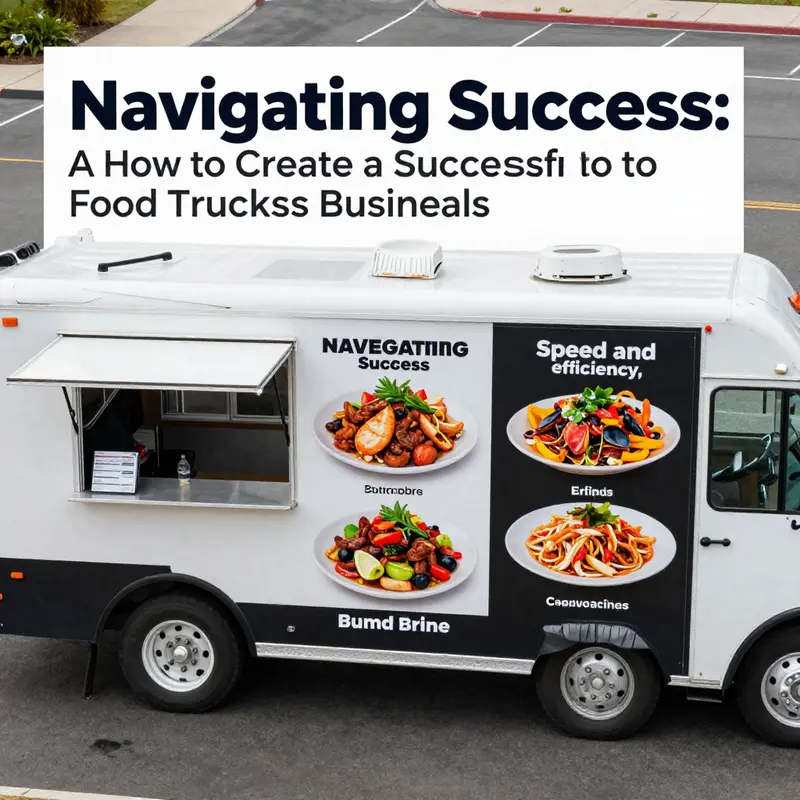
The core principle is simple, yet powerful: fewer, better items that share ingredients and cooking steps can unlock outsized value. Instead of offering a sprawling menu, you curate a compact lineup—typically 3 to 5 signature items—designed to travel well, be quick to assemble, and be easy to reproduce with consistent quality. This approach reduces the mental load on your kitchen team, sharpens training, and minimizes waste. It creates a clear promise to customers: you know what you stand for, and you can deliver it flawlessly every time. And because the items rely on a common set of ingredients, you can forecast inventory with greater accuracy, decrease spoilage, and lower the risk of costly mistakes when the weather shifts or location changes.
The lean menu is more than a list of dishes; it is a reflection of your brand identity. When a truck competes for attention alongside other vendors, a curated lineup helps you stand out in a crowded market. People remember a few standout items and the stories behind them. A lean menu reinforces this recall by enabling you to tell a tight, compelling narrative about flavor, technique, and provenance. In practice, those stories are not just about what goes into the dish, but how you prepare it: the rhythm of your cooking, the care you take with plating, and the consistency you deliver day after day. The clarity of the menu becomes a signal to customers that this truck is reliable, thoughtful, and worth following across neighborhoods and events.
Operationally, the lean menu is a force multiplier. With a limited roster of items, you can train staff more efficiently, reducing onboarding time and the chance of miscommunication under pressure. Your prep schedule can be streamlined around shared equipment and shared ingredients, which keeps the kitchen quiet during peak hours and reduces the risk of cross-contamination or delays from a crowded workspace. By focusing on 3 to 5 core dishes, you also unlock the possibility of pairing each item with a complementary drink or dessert that can be prepped in small, controlled batches. This strategy boosts the average ticket without bloating the menu, because the additional items are not complex add-ons but well-integrated extensions that rely on the same foundational steps.
A lean menu, however, does not imply sameness or blandness. It invites creativity within a disciplined framework. Each signature dish should embody a clear flavor profile, a distinct texture, and a memorable finish that customers can recognize with a single glance at the truck’s signage or social posts. The aim is to provide a concentrated flavor portfolio that scales with demand. If one item gains traction, you can expand the offering by adding a limited, tightly scoped variation that uses the same core ingredients and cooking methods, rather than introducing a whole new category. This iterative scalability is essential for sustainable growth. As demand shifts by season or by event, you can rotate in a new signature while retiring an underperformer, keeping the menu fresh without losing the efficiency gains that come from standardization.
The testing mindset is central to successful lean menu design. Rather than betting everything on a single idea, you prototype a few candidates and field-test them through pop-ups, farmers markets, or limited-run events. Real-time feedback becomes the most trusted guide for refining the menu. Customers reveal which flavors resonate, which textures surprise them in a positive way, and which portions leave them unsatisfied. The feedback loop should be fast and direct, with a simple method to capture comments at the point of sale or via quick surveys after the meal. The goal is not to accumulate opinions but to identify patterns that point toward a repeatable, scalable best set of dishes.
Market research underpins this iterative process. A lean menu still needs to be relevant to the neighborhood and the events you attend. You might discover that in a university district, budget-friendly options with robust flavors perform best at lunch, while in a creative hub, a couple of elevated, visually striking items attract attention and social sharing. The important thing is to keep the menu nimble enough to respond to those realities without losing the efficiency that underwrites profitability. The lean model gently disrupts the old impulse to chase every trend. Instead, it invites you to observe, test, and select a few trends that align with your core competency and branding. In doing so, you preserve speed, quality, and consistency, which are frequently cited as the backbone of repeat business.
From the perspective of cost control, a lean menu reduces the financial risk that comes with a large inventory. Inventory turns faster when you work with a tighter set of ingredients, which minimizes spoilage and depreciation. It also makes purchasing more predictable. Because your kitchen operates with fewer SKU variations, you can negotiate better terms from suppliers by committing to stable orders rather than sporadic, large buys that lead to waste. This does not mean you should cut corners on flavor or variety; it means you design a menu where each item is purposeful, well-balanced, and designed to maximize flavor in a single pass through the line. You can still provide diversity by weaving in texture, spice level, and presentation variations that keep customers intrigued without multiplying ingredients or cook times.
One practical way to implement a lean menu is to map out the workflow of a typical service. Begin with the prep process, which should be organized around shared equipment and common ingredients. For example, if your menu includes a protein-based item and a vegetarian option, identify shared base components like a sauce, a garnish, or a topping that can be distributed across both dishes. This approach limits waste and reduces the cognitive load on cooks who must shift between tasks. Next, design the assembly sequence so that it flows smoothly from cold station to hot line to final plating. A proven pattern is to sequence tasks so that all components requiring similar heat or cooling needs are batched together, minimizing idle time and the risk of ingredients sitting too long at room temperature. A phased prep plan can also protect you against sudden changes in demand, ensuring you always have the right amount of each ingredient ready without overstocking.
Pricing and profitability are inseparable from the lean design. The focus on 3–5 high-demand dishes helps stabilize margins by limiting the number of touchpoints where costs can drift. It also clarifies which items deserve premium positioning and which may carry a more accessible price point to broaden appeal. You can use this clarity to implement a thoughtful upsell strategy. For instance, a small, well-planned upcharge for a premium topping or a sides option can significantly lift the average ticket, provided the item is conceptually aligned with the core dishes and prepared with the same efficiency mindset. The key is to ensure that every upsell is meaningful and not a mere price add-on that bloats the menu. Upselling should feel like a natural extension of the dining experience, not an abrupt sales push.
Branding also benefits from a lean menu. A compact lineup allows you to tell a cohesive story around a few flavors, techniques, or cultural inspirations. The narrative should be easy to follow on signage, digital channels, and in-person conversations. When customers can articulate what your truck stands for in a sentence or two, they become ambassadors who remember your name, seek you out at events, and bring friends along. This is where marketing synergy emerges: your menu design, your social content, and your location strategy reinforce one another. A lean menu sharpens your brand’s identity because it demands specificity. It makes it easier to communicate your values—whether you emphasize bold flavors, wholesome ingredients, or playful presentation—without diluting the message through numerous options that blur the lane you want to occupy in the market.
Training and team development are natural beneficiaries of a lean approach. With fewer items to master, new staff can become proficient faster, which translates into fewer mistakes during busy periods. Cross-training becomes more viable; a cook can rotate through stations with clarity about which components are shared and how to execute them consistently. This not only improves efficiency but also reduces the likelihood of errors that undermine health and safety standards. The lean mindset extends to how you handle peak periods and sudden location changes. When you know exactly what your team can reliably produce in any given hour, you can adjust where you operate, how you mobilize, and how you communicate with customers without compromising quality.
The lean menu also invites a disciplined approach to experimentation and evolution. It is not about a one-time simplification but about an ongoing practice of refinement. You can adopt a lightweight protocol: prototype a new dish, test it at a limited venue, collect feedback quickly, and decide within days whether to roll it into the core lineup or retire it. This cadence mirrors the iterative learning cycles that fuel success in fast-moving businesses. It keeps you responsive to customer preferences while protecting the stability that loyal regulars rely on. In the end, the lean menu is a living system, not a fixed archive. It grows and shifts with your brand, your people, and your operating realities, always prioritizing speed, consistency, and value.
To ground this discussion in a practical frame, think of the lean menu as an investment in security and momentum. The 3–5 signature items become your anchors, the shared ingredients form your backbone, and the efficient prep flow becomes your heartbeat. When you explain your menu to a new team member, they should be able to recite the core dishes, the why behind each choice, and the operational steps that guarantee consistent results. When customers sample your offerings, they should feel the same spark of recognition that comes from a well-tuned system: a quick, flavorful, confidently executed meal that leaves room in their day for the next bite and the next visit. This is how a lean menu supports a sustainable, scalable food truck venture that can travel across neighborhoods, events, and seasons with confidence.
For anyone exploring a lean menu strategy, a useful entry point is to align the menu with a broader philosophy of team and process optimization. The literature on high-performance teams in fast-moving industries emphasizes investing in people and creating clear, repeatable workflows. In practice, this means training, feedback loops, and a shared commitment to quality above all else. The idea is simple: when cooks, cashiers, and managers share a common standard operating procedure and a common goal, the entire service becomes more predictable and more enjoyable for customers. A quick reference point for this mindset can be found in discussions about investing in people as a core driver of organizational success. As you consider the people side of the equation, you can also explore how lean practices translate to leadership, culture, and the daily rituals that keep a food truck performing at a high level. Investing in people isn’t a luxury; it’s a practical investment in the stability and growth of the business. See the discussion on investing in people: Key to Trucking’s Success for a perspective on how teams and leadership contribute to operational excellence. Investing in People: Key to Trucking’s Success.
As a closing reflection, the lean menu is not about hedging flavor or minimizing personality. It is a disciplined invitation to deliver consistent, memorable experiences with fewer moving parts. It rewards speed without sacrificing taste, it reduces waste without dulling creativity, and it strengthens trust with customers who know they can count on you to show up with the same great dish at every event. For readers seeking a deeper dive into practical lean menu guidance, there is a well-regarded external resource that distills many of these ideas into actionable steps, including menu design, testing, and iteration. This external reference offers concrete recipes for prototyping, validating, and refining menu items in ways that align with the fast cadence of mobile food service.
In sum, designing a lean menu is a strategic move that binds kitchen efficiency, brand storytelling, and financial discipline into a single, repeatable system. It creates a platform for growth that scales with your ambitions while staying grounded in the realities of street-level cooking. The lean approach respects the constraints of a mobile kitchen and uses them as a guiding compass rather than a stumbling block. It invites you to think less about how many dishes you can cram onto a board and more about how you can deliver a handful of exceptional meals with confidence, speed, and pride. When executed well, a lean menu does more than improve margins; it builds a reputation for reliability, a sense of anticipation for what comes next, and a clear path for expanding the footprint of your food truck business across markets and moments to come.
External resource for further reading: https://www.thespruceeats.com/lean-menu-food-truck-4139655
Lean Kitchens on Wheels: Mastering Costs and Streamlining Operations for a Profitable Food Truck
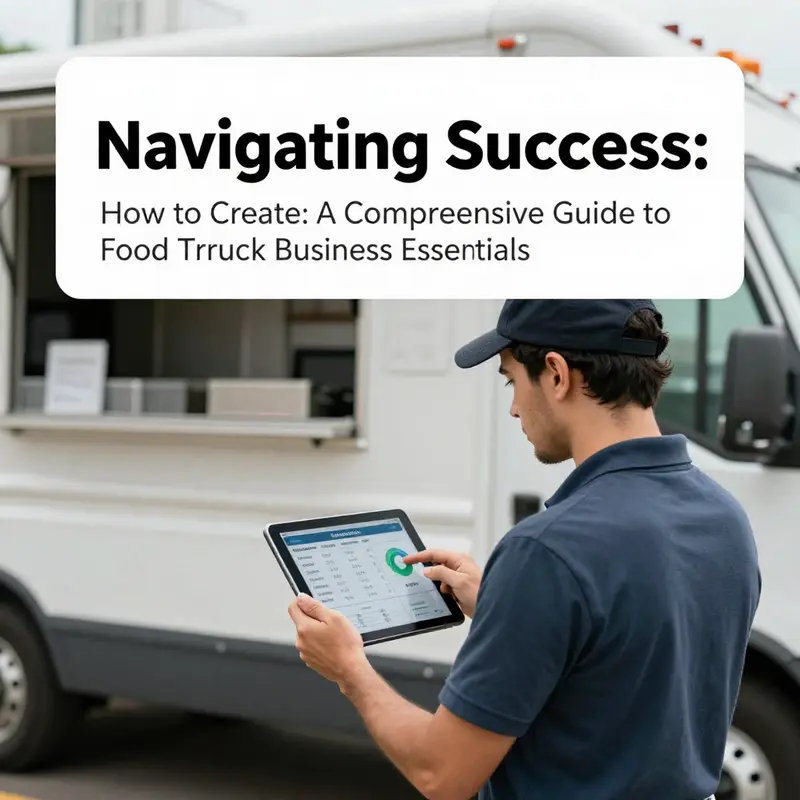
A successful food truck rests on a steady rhythm between craft and calculation. The most flavorful menu and the sharpest branding lose impact if costs spiral and operations stumble. The mindset to cultivate is continuous optimization: a disciplined, data-informed practice that treats every penny and every minute as a resource to be protected. This isn’t a one-time spreadsheet exercise. It’s an ongoing discipline that begins with a clear cost map and evolves into a living operating system that adapts as the business grows. The foundation is a thorough cost analysis that accounts for both the fixed commitments—vehicle, licenses, insurance, and equipment—along with the variable pressures that shift from day to day: fuel, maintenance, product margins, and the unpredictable swing of ingredient prices. In practical terms, this means building a cost model that can be projected, tested, and revised. It’s less glamorous than a new recipe, but it’s the engine that makes a recipe profitable. Industry guidance emphasizes that sustainable profitability comes from balancing these fixed and variable costs with a lean, repeatable workflow. The aim is not merely to trim expenses but to align expenditure with value delivered to customers—speed, consistency, and quality—that keep people coming back. As you tune this engine, you begin to see where small changes yield outsized returns. A tighter schedule, better inventory control, or a more effective loading sequence can shorten service times, reduce waste, and improve cash flow, even before you consider upsell opportunities. The work pays off when the numbers become another flavor of the business—a predictable, scalable backbone that supports growth without sacrificing the human touch that makes street food memorable.
To translate theory into practice, many operators start with a baseline cost model that explicitly separates fixed costs from variable costs. Fixed costs are the non-negotiables—the vehicle lease or purchase payments, permits, insurance, and standard maintenance contracts. Variable costs ebb and flow: energy used per service, the amount of ingredients wasted, the number of staff hours, fuel burn per shift, and the occasional emergency repair that sudden weather or terrain can trigger. The practical value of this separation is clarity. When you know which costs are fixed, you can forecast how changes in volume will affect profitability. If daily traffic rises, the incremental profit is not merely a function of more sales but also of how efficiently you convert those extra customers into meals with controlled input costs. The cost map then becomes a living document, updated with real-world data from every week of operation, so decisions are grounded in evidence rather than hunch.
A central thread in cost optimization is the meticulous management of variable expenses through measurable standards. Operators who monetize efficiency by using standardized units—measuring energy per dish, or maintenance cost per operational hour—find patterns quickly. For example, tracking energy use per unit produced helps identify whether a given dish, cooking method, or batch size is disproportionately energy-intensive. If two signature items share the same base ingredients but differ in cooking time or temperature, the one that yields the same taste with lower energy use becomes the natural default. Likewise, monitoring repair costs per machine over a defined cycle helps highlight equipment that may be overworked or nearing the end of its useful life. These granular metrics illuminate where to invest in better equipment, preventive maintenance, or revised procedures that keep quality intact while trimming waste. It’s a practical, almost detective-like process: you collect data, test a hypothesis, and validate whether the change improves the unit economics without compromising delivery speed or taste.
The logistics of getting ingredients to the truck also come under the cost lens. Direct, reliable supplier arrangements—and the discipline of just-in-time replenishment where feasible—can dramatically reduce spoilage, inventory carrying costs, and last-minute price shocks. The right approach considers the season, local market dynamics, and the predictability of demand. In industry practice, direct factory-to-truck or supplier-to-street-cart deliveries often outperform more circuitous routing, cutting distribution costs and minimizing handling steps. Of course, this requires strong relationships with suppliers, clear lead times, and contingency plans for weather or traffic disruptions. A well-structured cost model integrates these logistics choices into the overall profitability equation, showing how supplier reliability intersects with menu design and location strategy. In short, every choice—from the route you take to the way you receive produce—becomes a lever for margin, not just a convenience.
Beyond the math, there is the human element of operations. Lean, high-efficiency logistics must be paired with a labor model that is flexible yet disciplined. Scheduling must align with peak demand periods—breakfast, lunch, and dinner windows—without overstaffing. Cross-training staff so they can handle multiple roles reduces idle time and speeds up service when queues form. A lean crew not only cuts wage costs but also preserves space for quality control and customer engagement. In practice, this means designing shifts that capture the busiest windows while maintaining a buffer for peak moments, and using a simple, standardized workflow map on the truck so everyone moves in concert. The result is a smoother operation with fewer slowdowns, fewer miscommunications, and more consistent product quality, all of which support stronger margins. The model also supports proactive marketing alignment; when you know how many meals you can confidently produce in a given hour, you can tailor offers and promotions to drive customers during slower periods, thus improving utilization without eroding per-item margins.
To translate these operational insights into a reliable program, many operators adopt a data-driven decision framework. Data informs where to locate, when to push promotions, and how to price items in response to demand, without sacrificing brand integrity. A practical approach is to build a feedback loop: measure per-shift performance, compare it with your baseline, and adjust. For instance, by analyzing the costs and outputs of each location, you can identify which sites deliver the best combination of traffic, average order value, and efficiency. The goal is a flexible, scalable model that can pivot as conditions change—new neighborhoods, seasonal events, or unexpected disruptions. This is where the broader network understanding of logistics and pricing, drawn from across industries, becomes valuable. Insights about fleet optimization, client-centric pricing, and schedule flexibility—concepts often discussed in logistics contexts—can translate into dramatic gains for a mobile kitchen.
An important corollary is the role of partnerships and community engagement in sustaining profitability. A well-structured marketing approach should be treated as a cost-control tool that increases revenue without inflating input costs. Loyal customers, repeat visits, and social sharing multiply the effect of every dollar spent on ingredients and labor. Loyalty programs, first-time customer incentives, and promotions tied to calendar events or local festivals can boost the average ticket and fill capacity during peak times. But the most durable wins come from meaningful connections with local communities, event organizers, and nearby businesses. When a truck becomes a familiar, trusted part of the local food scene, demand resilience follows—transactions become less sensitive to day-to-day fluctuations, and the brand accrues goodwill that translates into long-term profitability.
The journey toward optimization is not a solitary sprint but a collaborative, cross-functional practice. Involve staff in cost-awareness efforts; their hands-on experience often reveals practical improvements that data alone cannot uncover. Train the crew to recognize waste, to report equipment anomalies early, and to follow standardized procedures that preserve quality while trimming inefficiency. Managers, too, benefit from regular reviews of performance metrics, balancing the eagerness to cut costs with the imperative to maintain or raise the standard of service. When teams share this language of efficiency—how much energy an item uses, how long a task should take, what a given batch should yield—the truck becomes a cohesive organism rather than a set of individual tasks. This cultural shift is as consequential as any spreadsheet calculation because it anchors the everyday choices that determine profitability.
A final, practical thread ties tightly to the broader business plan. Start with a living baseline—document your fixed costs, your expected variable costs, and a conservative forecast of volume. Then overlay a sensitivity analysis: what if ingredient prices rise 10 percent, or your foot traffic grows by 20 percent, or a new regulation changes operating hours? The strength of a lean operation is its ability to absorb such shocks without collapsing. The costs adjust, not the core experience you promise customers. And when you can demonstrate consistent margins under varying conditions, you unlock the confidence to expand—to add another location, extend hours during busy seasons, or test new menu items aligned with your efficient production model.
For readers who want to explore deeper strategies and case studies on operational optimization and cost management, a comprehensive resource in this space provides a detailed blueprint you can adapt to a mobile kitchen. It offers practical frameworks for energy accounting, equipment maintenance scheduling, and demand-driven logistics that align closely with the principles outlined here. regulatory-relief-winter-storms-trucking This kind of external perspective can broaden your toolkit while you tailor these insights to the street-level realities of a food truck.
As you carry these ideas into practice, keep the bigger picture in view: optimized operations enable you to deliver remarkable taste consistently, at scale, with a customer experience that feels personal and immediate. The math supports you, but it’s the disciplined execution—clear cost awareness, standardized workflows, smart logistics, and a culture of continuous improvement—that makes a food truck truly profitable. When each shift runs like a well-timed performance, every customer encounter reinforces the value you bring. Your kitchen on wheels becomes not just a place to cook, but a calculative, responsive system that turns everyday sales into sustainable growth. For operators who pursue this integrated approach, profitability follows not as a byproduct but as a direct consequence of deliberate, data-informed action that respects both financial discipline and culinary craft.
External resource: successful-food-truck-business-plan
Final thoughts
The food truck industry is ripe with potential for logistics and freight companies willing to embrace the challenges and opportunities it presents. By focusing on the essential elements detailed in this guide—licenses, market analysis, menu efficiency, and operation optimization—businesses can effectively navigate this complex landscape. This proactive approach not only ensures compliance and operational efficiency but also enhances customer engagement and profitability.

