
In recent years, cargo theft in the trucking industry has escalated to alarming levels, posing a significant threat to supply chain security and the livelihoods of countless businesses. Each incident represents not just a financial loss but also a breach of trust between freight carriers and their clients. With the increasing sophistication of thieves and the complexity of modern transportation networks, the need for effective cargo theft reduction strategies has never been more pressing. Furthermore, as the industry evolves, so too must our approaches to safeguarding valuable goods in transit. This article will delve into the importance of customizing trucks with advanced security features, as well as the collaborative efforts within the trucking sector to combat this pervasive issue. Together, these strategies not only protect assets but also enhance the overall safety and reliability of the transportation industry.
The U.S. Department of Transportation (DOT) is actively seeking industry input by stating,
“DOT invites comment and data from stakeholders on a number of questions,”
which emphasizes the importance of collaboration and contribution from various industry players in developing effective cargo theft reduction strategies.
Current Cargo Theft Statistics
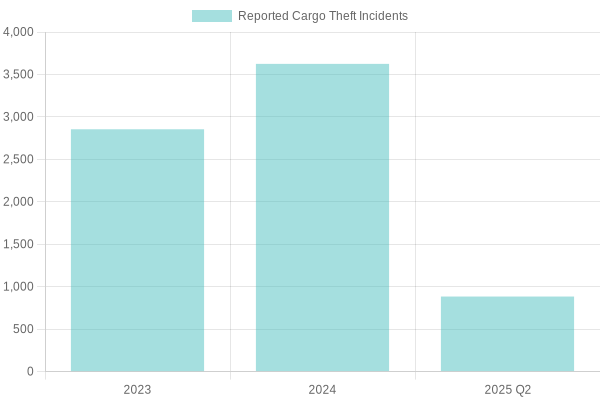
In 2023, the trucking industry faced alarming challenges with cargo theft incidents significantly increasing across the board. Here’s a summary of the most recent statistics related to cargo theft:
- Overall Incidents: In total, there were 3,625 cargo theft incidents reported, reflecting a 27% increase compared to 2022. The average value of stolen shipments was $202,364.
- Quarterly Breakdown:
- Q1 2023: There were 925 reported incidents, a sharp 46% increase year-over-year, with the average theft value reaching $281,757, leading to estimated losses of approximately $154.6 million.
- Q2 2023: This quarter saw 582 events, marking a substantial 57% rise from the previous year. Total losses exceeded $44 million, with an average loss of $260,703 per incident.
- Q3 2023: The number of incidents increased to 692, up by 59% from Q3 2022, resulting in a cumulative loss surpassing $31.1 million.
- Geographic Trends: Certain states showcased significant increases, with California reporting a 33% rise in theft incidents and Texas experiencing a 39% increase. Notably, Dallas County saw a dramatic 78% surge in thefts, while Los Angeles County reported a 50% jump.
- Targeted Commodities: Thieves have adapted, focusing on high-value items such as raw and finished copper, consumer electronics (especially audio equipment), and consumable goods like avocados, nuts, and protein powders.
- Theft Methods: Traditional theft methods, such as trailer burglaries, remain common; however, there is a troubling rise in strategic thefts involving shipment misdirection — a tactic that grew by 430% in Q3 2023.
These statistics highlight the growing need for enhanced cargo security measures within the trucking industry to combat this escalating threat.
In summary, as we shift towards discussing truck customization, it is evident that improved security measures and customization options can collectively address the challenges revealed by these statistics, leading to more resilient logistics operations.
| Feature | Mack Anthem | Peterbilt Model 579 | Freightliner Cascadia | Volvo VNL Series |
|---|---|---|---|---|
| Cargo Space | 44-inch & 64-inch sleeper configurations | Various configurations, 80-inch sleeper available | 72-inch raised roof sleeper available | Up to 77-inch sleepers available |
| Interior Features | Wide-base seats, premium mattresses, ample storage | Customizable 15-inch digital display, premium seating | Ergonomic seating, optional refrigerator & microwave | Ergonomic seats, spacious work area |
| Technology & Safety | Mack Co-Pilot™, digital mirror system, safety airbags | Advanced driver assistance systems, digital integration | Detroit Assurance® suite, digital dash display | Volvo Active Driver Assist, high-resolution display |
Impacts of Cargo Theft on the Trucking Industry
One of the primary consequences of cargo theft is the substantial financial losses incurred by trucking companies. According to the American Transportation Research Institute (ATRI), cargo theft costs the U.S. trucking industry approximately $6.6 billion annually, equating to about $18 million each day. This daunting figure underscores the economic toll that theft imposes on logistics firms, with motor carriers averaging over $520,000 in annual theft losses, while logistics service providers face losses exceeding $1.84 million per year. The burden of these costs is further compounded by the fact that 74% of stolen goods are never recovered, leading to perpetual losses for the businesses involved.
In addition to direct financial losses, cargo theft creates significant disruptions within logistics operations. The industry has observed a worrying rise in strategic theft methods, such as deception and cybertheft, which have surged dramatically, driving higher operational costs and complicating supply chain dynamics. As noted by industry analysts, these thefts disrupt deliveries, escalate insurance costs, and erode trust within the supply chain, ultimately passing increased costs onto consumers.
Furthermore, tackling cargo theft requires an urgent call to action for the trucking industry. Enhancing security measures—including improved facility security, trusted access controls, and developing a robust security culture—has emerged as a crucial strategy for firms aiming to mitigate the risks associated with cargo theft. Implementing state legislation to strengthen enforcement and providing better tools to prevent theft are also vital steps highlighted by experts.
In summary, cargo theft represents not just a financial challenge but a complex operational issue affecting the very foundation of the trucking industry’s logistics and supply chain. As we navigate this escalating crisis, the insights of industry leaders call for comprehensive strategies focused on improving security, enhancing operational resilience and fostering collaboration among industry stakeholders to effectively combat cargo theft.

Industry Responses to Cargo Theft
The trucking industry is taking strong steps to deal with the growing problem of cargo theft. Companies are using new technology and adopting security programs to better protect goods. Here are some of the strategies currently in place:
Technological Advancements and Initiatives:
- Real-Time Asset Tracking and Telematics:
Companies now use GPS tracking systems to keep watch on their vehicles and cargo. These systems provide ongoing updates about vehicle locations and alert users instantly if a vehicle changes its route unexpectedly. For example, Zonar’s ZTrak system logs a vehicle’s position every five minutes during transport. It can activate a mode designed for recovering stolen goods, which provides updates through each minute of travel. Source - Artificial Intelligence (AI) and Predictive Analytics:
AI is being used to sift through large amounts of data to spot patterns that could indicate theft. This technology allows firms to identify threats before they become bigger problems. For instance, Werner Enterprises uses AI to check the credentials of carriers and monitor freight while it is on the road, which improves their ability to prevent theft. Source - Blockchain Technology:
Some companies are starting to use blockchain technology to improve security in the supply chain. This technology records each transaction safely, making it hard for anyone to make unauthorized changes. It helps to track the movement of goods and confirms the identities of everyone involved in the shipping process. Source - Biometric Verification Systems:
Biometric systems, such as fingerprint and facial recognition technology, help ensure that only authorized staff can handle shipments. This significantly cuts the risk of unauthorized access and identity fraud. Source - Dashcams and Surveillance Cameras:
By installing dashcams and cameras to monitor their trucks, companies can deter theft and collect evidence if a theft occurs. These devices can record driver actions and capture crucial details like license plates and suspect faces, which can help recover stolen goods and catch criminals. Source
Programs and Strategies Adopted by Firms:
- Carrier Vetting and Monitoring:
Companies conduct thorough checks on carriers and drivers based on reliability and legitimacy, using AI to help in this process. This proactive approach helps reduce the risk of theft. Source - Secure Parking Practices:
Since many thefts happen when trucks are parked in unprotected areas, firms stress the importance of secure parking. They choose well-lit areas with monitoring and steer clear of high-risk spots, especially during night hours. Source - Employee Training and Awareness:
Training programs are being implemented to teach workers how to spot suspicious activities and to adhere to best practices to prevent theft. Combining human vigilance with technology creates a strong defense against cargo theft. Source - Physical Security Measures:
Companies invest in high-security locks and seals for trailers to create an additional barrier against theft. One trucking company saw an 89% drop in theft incidents after updating their fleet with advanced locks, showing how effective these measures can be. Source
Mack Trucks also emphasizes customization when they state: “Making the all-new Anthem available on our Truck Builder platform gives customers the ability to explore and customize this game-changing truck at their convenience.”
Through these technological advancements and strategic measures, the trucking industry is building stronger defenses against cargo theft, protecting goods while they are in transit.
User Adoption of Truck Customization Platforms
The trucking industry is evolving rapidly, with a growing emphasis on digital customization platforms. Mack Trucks launched its Virtual Truck Builder platform in 2024, allowing customers to personalize models like the Mack Anthem and Pinnacle, tailoring aspects such as the body, powertrain, and axles. Though specific user adoption metrics for this platform are not disclosed, it’s part of a broader movement that sees 75% of trucking companies adopting digital solutions to enhance operational efficiency.
This shift towards technology is illustrated by the fact that 55% of drivers are utilizing digital platforms for scheduling and dispatching, whereas 69% of companies employ such tools for maintenance scheduling. The response to these advancements has been overwhelmingly positive; 68% of fleet managers recognize that telematics significantly boost fleet efficiency, while a robust 74% of digital initiatives report a favorable return on investment within their first year. For trucking companies, integrating customization and digital tools not only addresses operational needs but also aids in navigating contemporary challenges in supply chain management.
Moreover, the capability to customize trucks facilitates better alignment with specific operational needs, thus enhancing the effectiveness and efficiency of trucking fleets against the backdrop of rising operational challenges such as cargo theft and supply chain disruptions.
Conclusion
In conclusion, addressing cargo theft is a critical concern that demands collaborative efforts across the trucking industry. As this pervasive issue continues to escalate, stakeholders must recognize the value of pooling resources, sharing best practices, and developing innovative solutions to enhance security measures. The active involvement of industry players, including manufacturers, logistics companies, and regulatory bodies, can lead to a unified front against cargo theft, thus fostering a more secure and resilient supply chain.
Moreover, enhancing vehicle customization options plays a pivotal role in reinforcing defenses against theft. By integrating advanced security features into truck designs, companies not only protect their assets but also cater to the specific needs of their operations. Customizing trucks empowers fleet owners to equip their vehicles with tailored security solutions that significantly reduce the risk of theft, streamline operations, and ultimately lead to increased trust and reliability within the transportation sector.
As the industry evolves, embracing collaboration and innovation in truck customization will be instrumental in carving a path forward for improved safety and operational efficiency. Together, these strategies will not only protect valuable cargo but also safeguard the livelihoods of those dedicated to delivering goods across our nation.
Enhanced Cargo Theft Prevention Strategies
To address the alarming rise in cargo theft and improve overall supply chain security, the trucking industry is rapidly evolving. Here’s how various strategies intertwine to combat this issue effectively:
-
Cargo Theft Prevention
The continuous demand for enhanced cargo security measures has spurred trucking companies to adopt robust theft prevention strategies. Over 75% of firms are now implementing real-time GPS tracking and monitoring systems to safeguard shipments. This technology allows for immediate alerts to unauthorized route changes or stops.
-
Advanced Technologies
Artificial Intelligence (AI) and machine learning are becoming vital tools in analyzing data to identify theft patterns. Companies like Werner Enterprises are leveraging AI algorithms to enhance tracking systems and preemptively detect potential threats.
-
Strengthening Physical Security
Despite advancements in technology, physical security remains paramount. Companies are increasingly investing in high-security locks, tamper-evident seals, and surveillance technology. Regular audits of security practices help address potential vulnerabilities, significantly reducing opportunities for cargo theft.
-
Cybersecurity Measures
As cargo theft techniques evolve, so do the methods to combat them. The rise in cyber threats emphasizes the need for stringent cybersecurity protocols. Data breaches can jeopardize logistics operations, leading to financial losses and damaged reputations. Specialized software and training programs are necessary for mitigating these risks.
-
Logistics Security Best Practices
Incorporating logistics security best practices involves training employees in recognizing suspicious activities and developing robust internal protocols. Fleet managers emphasize the importance of secure parking practices and employee vigilance in preventing theft incidences.
Conclusion
To effectively address cargo theft, it is crucial for stakeholders within the trucking industry to collaborate on comprehensive strategies. This involves sharing insight on best practices, leveraging advanced technologies for cargo theft prevention, and enhancing transportation safety through continuous improvement of both digital and physical security measures.