
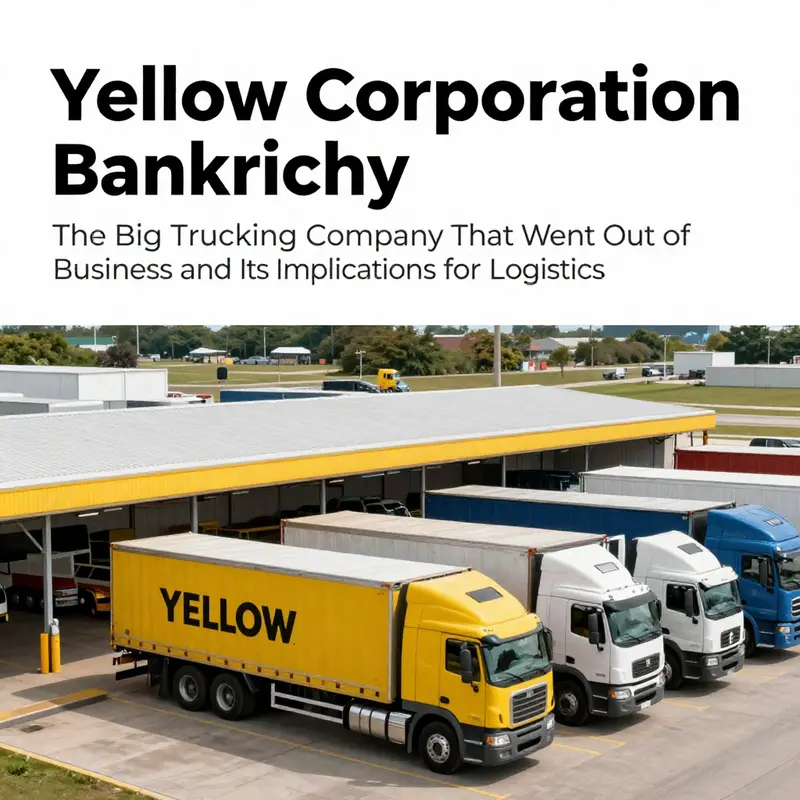
Yellow Corporation, once a cornerstone of North American trucking, entered Chapter 11 bankruptcy in August 2023 and ceased operations as assets were reorganized under new ownership later that year. The episode sent ripple effects through logistics networks, construction supply chains, and the distributors of food and beverages who depend on predictable freight capacity. The collapse illustrated how asset intensity, labor dynamics, and financial obligations can converge to destabilize even large, long-standing operators. This article dissects the event through three interconnected lenses: the timeline of Yellow’s rise, decline, and dissolution; the economic and market forces that accelerated its collapse; and the aftermath—asset sales, workforce transitions, and the industry and customer implications. By weaving these threads, readers in logistics and fleet management, construction and engineering, and food and beverage distribution can extract actionable strategies to bolster contingency planning, diversify capacity, and sustain service levels in a market that remains sensitive to shocks.
The Yellow Banner Fades: A Deep Dive into Yellow Corporation’s Bankruptcy, Timeline, and the Reshaping of U.S. Trucking
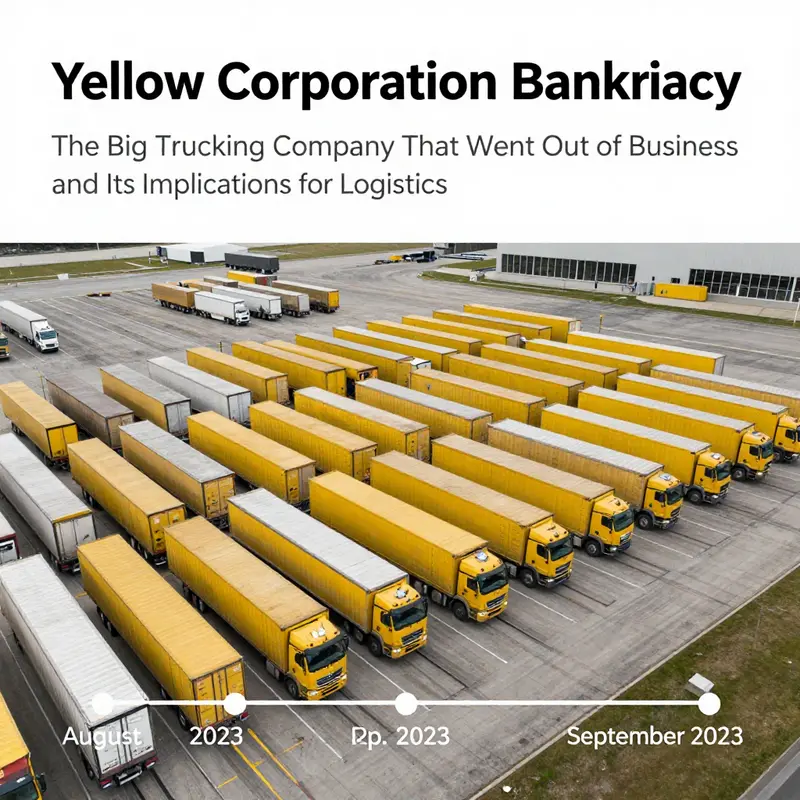
When people ask which big trucking company went out of business, the instinct is to name a single corporation and move on. Yet the story behind Yellow Corporation—once a dominant name in long-haul freight, remembered by the bright yellow branding and the vast network of terminals that stitched together the country’s supply chain—is not just a tale of a brand that disappeared. It is a story about how an industry built on massive scale, deep unions, and fixed assets faced a rapidly shifting landscape where debt, cost structures, and technological disruption collided with a market that prize-fights between efficiency and capacity. This chapter follows that collision, not merely as a chronological ledger of dates, but as a continuous line that reveals how a once-mighty trucking giant fell into bankruptcy and then dissolved as an independent entity, while its assets and capabilities continued to travel through the logistics ecosystem under new ownership. In doing so, it also clarifies a common misconception: that a single company’s failure signals a universal fragility—when, in truth, the Yellow case exposes both a specific corporate misalignment and a broader industry realignment that has altered who moves freight, how it’s priced, and who pays attention to costs that were once taken for granted.
The story begins with the fundamental truth about the American trucking sector: its scale and its fragility sit on the same axis. The nation’s freight economy depends on fleets that move goods across thousands of miles, guided by contracts that blend long-term service commitments with the volatility of fuel prices, labor expenses, and the rhythm of seasonal demand. Yellow Corporation rose in an era when the trucking industry could be accessed with a robust balance sheet, a dense terminal network, and a workforce capable of sustaining high utilization across a broad geographic footprint. The company’s trucks printed the road in bold yellow, a symbol of reliability and reach that contractors and shippers alike could recognize in moments of peak demand and crisis alike. Yet the same assets that created scale also anchored the firm to a cost structure that proved difficult to sustain when market conditions shifted away from the model that Yellow had perfected.
The bankruptcy narrative that became public in 2023 was not born from a single misstep but from a convergence of forces. A company built to operate large, fixed networks found itself contending with debt that accumulated during expansive expansion decades earlier, during periods of generous credit and aggressive capacity growth. Those debt obligations, once manageable when freight rates rose and utilization stayed high, grew burdensome as revenue streams became more exposed to the brutal arithmetic of fixed costs and variable demand. The industry’s evolution toward more flexible, asset-light models and digital marketplaces created a new form of competition that did not necessarily rely on owning every terminal or every piece of rolling stock. In practice, the market began to reward smaller, more nimble operators that could scale up and down quickly, adjust labor costs through flexible staffing, and leverage technology to optimize routes and scheduling in real time. Yellow, with its legacy network and labor agreements, found it harder to adapt to this faster, more fluid environment.
The specific chronology matters for anyone trying to understand why a firm of Yellow’s size could run aground. The firm’s decision to enter Chapter 11 protection in August 2023 reflected a recognition that constraint was not a temporary liquidity issue but a structural one. For years, the company had faced mounting costs related to labor agreements, union-related wage scales, and benefits that remained relatively fixed even as freight volumes fluctuated. The business had also contended with higher operating costs tied to fuel hedging, maintenance of an aging fleet, and the capital outlays required to sustain a vast network of terminals, yards, and intermodal connections. In this sense, the bankruptcy was less a dramatic fall from grace and more the culmination of a long-term recalibration that could no longer be contained within the existing corporate construct.
As the court process unfolded, creditors sought to maximize value by preserving what remained of Yellow’s operational heft while exploring avenues to restructure its obligations. The auction phase that followed in the wake of the bankruptcy proved decisive. Assets, terminal locations, and the Yellow brand—valued for decades as a marker of reliability—began to shift ownership, and with that shift came a realignment of service networks. A key development was the transfer of core trucking operations and much of the fleet to a rival, which, in this narrative, is a reminder that in freight, the real product is movement and service, not a logo on a signboard. The sale, negotiation, and reallocation of routes were not mere corporate theater; they shaped the practical routes that shippers would use, the levels of service they could expect, and the balance of power between buyers and sellers in a highly cyclical market.
Within this framework, the role of labor in the bankruptcy’s consequences becomes central. Large, unionized workforces carry a heavy, long-tail cost structure. When demand softens, the risk to retaining high wage scales and robust benefit programs is that the cost base outpaces the pace at which revenue can be recovered through price increases or productivity gains alone. The Yellow case underscores a broader tension in trucking: the need to balance the security and expertise that experienced drivers, terminal managers, and support staff bring with the market’s demand for leaner, more flexible staffing models. It is not simply a question of firing workers; it is a question of whether the operating model can sustainably absorb labor costs while maintaining service levels and safety standards. In Yellow’s bankruptcy, those questions crowded the courtroom and the boardroom, shaping what the restructuring could accomplish and what it could not.
While the headlines focused on the “end of Yellow” as an independent entity, the more consequential story lies in the aftereffects: the consolidation of capacity, the reallocation of intermodal and trucking assets, and the reconfiguration of the broader competitive landscape. The assets were not extinguished; they were redistributed. J.B. Hunt Transport Services, a company known for a more asset-light, technology-enabled approach to freight, acquired large segments of Yellow’s terminal network and operations. YRC Freight—already a major player in the industry—also integrated pieces of Yellow’s network into its own operations. The immediate outcome was not a single company’s demise in the sense of a complete erasure of capability; rather, it was a reshaping of capacity and a reallocation of customer relationships. For shippers, the effect was a lesson in continuity: the service was preserved, but the execution and the touchpoints shifted to new owners who brought their own priorities to bear on pricing, routing, and service standards.
This reorganization did not emerge in isolation from the broader industry dynamics. The trucking sector in the early 2020s faced a confluence of disruptive pressures: the push toward digital freight platforms that matched demand with capacity in near real time; the rise of more agile carriers that leveraged data analytics to optimize networks; and the lasting impact of macroeconomic factors such as inflation, interest rates, and fuel costs that affected every party in the freight ecosystem. The Yellow bankruptcy can be read as a cautionary tale about the risks of operating a large, asset-heavy business in an environment where the speed of change has accelerated and the takers—shippers, brokers, and asset managers—are increasingly savvy about cost and service tradeoffs.
In the years since the dissolution of Yellow as an independent entity, what remains visible in the market is the persistence of Yellow’s network through other owners, and the emergence of a more concentrated command over certain corridors of freight. The consolidation is not simply a rearrangement of assets; it is an adjustment of market power, pricing discipline, and service expectations. The industry’s supply chain resilience now depends on a blend of legacy networks that can still offer scale and reliability and newer players who can innovate on how to slice and dice capacity to meet fast-changing demand. For those studying the freight economy, Yellow’s path offers a clear case study: large, once-stable models can still experience a rapid, structural disruption if their cost structures and strategic bets no longer align with the market’s posture.
One of the less obvious, but deeply important, strands of this story concerns the human dimension. The bankruptcy process created uncertainty around thousands of jobs and the livelihoods of drivers, mechanics, dispatchers, terminal operators, and many others whose daily work keeps freight moving. Even as assets changed hands, people faced questions about their future with the company, their role in the reorganized network, and their ability to transition into related positions within the broader logistics sector. In the trucking world, where professional identities are tightly tied to the equipment they operate and the networks they serve, such transitions are not merely financial; they are personal and professional recalibrations that ripple through families and communities. The capacity to manage those transitions well often determines the ultimate social license of a bankruptcy process and the speed with which the industry can rebound from the disruption.
From an industry-watcher’s perspective, the Yellow case underscores the double-edged nature of consolidation. On one side, consolidation can enhance efficiency, standardize operations, and yield greater bargaining power with shippers who require predictable service and reliability. On the other side, it concentrates risk in fewer operators, potentially reducing redundancy in the face of supply disruption or labor disputes. The balance between these dynamics remains a live question for policymakers, industry associations, and the executives who steer fleets through uncertain times. In that sense, Yellow’s story is less a parable of failure and more a signal about strategic alignment in a sector whose very lifeblood is the relentless movement of goods across a competitive, ever-shifting terrain.
For readers who want to see the sequence with a finer-grained lens, the publicly available records from the bankruptcy proceedings, along with the trade press reporting, lay out a timeline that begins with the formal filing and ends with the reallocation of key assets and the shaping of the competitive field that remains. The filing in 2023 did not erase the Yellow name from the road; it redefined what that name could mean in a different configuration. The long-term implication is that large-scale trucking brands may survive in new forms, with new owners, and under new governance, while the core job of moving freight—connecting supply with demand across vast distances—continues to be performed by a complex ecosystem of fleets, drivers, terminals, and digital platforms.
For scholars of logistics and for practitioners watching the market, Yellow’s dissolution offers two essential, interconnected lessons. First, scale alone does not guarantee resilience. The interplay between fixed costs, labor obligations, and the flexibility of a company’s asset base will determine whether a large fleet can withstand a period of market dislocation. Second, in the modern freight landscape, the route to stability often runs through reallocation rather than replacement. Assets may move from one corporate entity to another, but the capability to move goods remains—sometimes in more specialized, more distributed, or more technologically integrated forms. The trucking world thus becomes less about the fate of a single brand and more about the durability of the system that carries America’s goods: a system that depends on people, networks, and the disciplined orchestration of complex operations.
In closing, the Yellow Chapter serves not as a cautionary taboo about big business, but as a lens into how supply chains evolve. It shows how a company that built its brand on scale and reliability faced a new ecology in which cost structures, labor realities, and digital competition redefined what it means to be a leader in freight. For readers who want to dig deeper into the industry-specific dynamics behind Yellow’s bankruptcy, a credible external resource provides a detailed, journalistic explanation of the timeline, decisions, and outcomes. The reporting highlights how the bankruptcy was not just about debts and auctions, but about a strategic reorientation that shifted the center of gravity in the U.S. trucking industry and altered the pathways through which shippers and carriers interact. As with any bankruptcy that reshapes an entire sector, the true measure of Yellow’s impact may lie in how quickly and effectively the market absorbs the changes, keeps freight moving, and preserves the reliability that customers expect from long-haul transportation.
For a detailed, industry-focused timeline and analysis of Yellow’s bankruptcy and dissolution, see the Transport Topics report, which documents the filing, the proceedings, and the subsequent realignment of assets and services. This external resource provides a rigorous, up-to-date account of what happened and why it matters for the broader trucking landscape. External resource: Transport Topics – Yellow Corporation enters bankruptcy filing
In the broader arc of the article’s exploration of “what big trucking company went out of business,” Yellow’s saga is a potent reminder that the road to resilience in freight passes through adaptation and reinvention as much as through endurance. The current channel of the industry—where large-scale operators compete with nimble carriers and where digital platforms increasingly set the tempo—has not diminished the importance of a robust, humane, and well-managed workforce. Rather, it has elevated the need to invest in people, technology, and processes that can sustain performance across cycles. This theme—people, process, and platform—will recur as the narrative continues to unfold in the chapters that follow, as the market tests new forms of capacity, pricing, and reliability in an era of rapid change. The chapter that began with a question about who went out of business thus ends by pointing toward a future where the capacity to adapt may define the next generation of industry leaders, even if the Yellow banner no longer operates as a stand-alone company on the highway.
To connect this historical thread to practical implications for fleets, managers, and policy observers, consider how the industry’s current emphasis on workforce development, safety culture, and capital allocation strategies aligns with the lessons Yellow’s experience offers. As companies navigate the post-bankruptcy environment, they increasingly emphasize the importance of sustainable labor relations, continuous improvement in fleet utilization, and a willingness to reimagine the structure of their networks. In that sense, Yellow’s legacy lives on not only in the routes that carry freight but in the strategic choices that guide how companies balance leverage, liquidity, and leadership in a sector that remains vital to the economy’s functioning. The road ahead will demand a blend of disciplined cost management, strategic partnerships, and a commitment to people who drive and manage the wheels that keep commerce moving.
In the end, the question remains, and the history makes the answer clear: Yellow Corporation did go out of business as an independent entity, but in the larger system of American freight, its assets found new life under different stewardship. The broader question for readers, students, and professionals alike is how this pivot informs the next generation of freight strategies—from how fleets are financed to how routes are optimized, and how people are engaged in a business that depends on their skill, their safety, and their commitment to moving goods across an economy that never stops demanding more.
Internal reference note: for a broader discussion on how organizations in trucking are investing in people as a foundation for future success, you can explore this related discussion here: investing-in-people-a-new-path-for-trucking-fleets.
The Freight Giant’s Fall: Economic Drivers and Market Forces Behind Yellow’s Collapse

The trucking industry often looks like a vast, interconnected machine where demand, capacity, and finance move in tandem. When one part falters, the whole system can wobble. Chapter 2 tracks a singular, telling episode in recent memory: the collapse of a once-dominant national carrier, known simply as Yellow. This was not a sudden flip of a switch, but the culmination of a complex set of forces that stretched over years. It is a case study in how macroeconomic pressures, competitive dynamics, and operational missteps can converge to overwhelm even a large and storied company. And it serves as a timely reminder that the health of the freight sector rests as much on discipline and resilience as on scale. In the pages that follow, we examine the economic engines that pushed Yellow toward bankruptcy, the market forces that intensified the strain, and the consequences for shippers, workers, and the broader logistics landscape.
To begin, it is essential to acknowledge a basic truth about the trucking business: the margins are thin, and the line between profitability and loss is razor-close. The industry has always lived on volume and velocity, on the ability to fill trucks, manage routes efficiently, and amortize fixed costs across a broad network. The collapse of Yellow did not occur in a vacuum. It arrived at a moment when capacity across the market was both plentiful and volatile. Carriers created a surplus of available trucks and drivers, driven partly by optimistic forecasts during good years and partly by competitive pricing that became the default strategy as contracts rolled in and out with little warning. When demand softened or stalled even briefly, the pricing pressure intensified, and a company with large fixed costs found itself squeezed from multiple directions. The market had become a relentless treadmill: keep costs under control, secure enough volume to cover debt service, and invest in technology to stay competitive, all at once. Yellow stumbled not because one lever failed, but because several levers failed to stay synchronized.
From the perspective of market structure, the industry has long wrestled with a paradox: the same forces that create growth—low barriers to entry in some segments, rapid capacity expansion when the economy heats up—also magnify risk during downturns. Yellow’s story reflects how this paradox works in practice. A large carrier with a broad network, extensive maintenance obligations, and a complex logistics spine cannot simply reduce capacity at the stroke of a pen without consequences. Fixed costs include debt obligations, pension liabilities, long-term leases, and the maintenance of a sprawling fleet. When revenue streams contract, those fixed costs become a heavier burden. The company’s leadership faced a difficult set of calculations: how to rightsize the fleet, when to push for more favorable contract terms, and whether to invest in a technology overhaul that would yield long-run gains but require short-term cash. The tension between short-term liquidity needs and long-term transformation often defines a carrier’s fate in times of stress.
A second layer of pressure emerged from the pricing environment. The freight marketplace had grown saturated, with more carriers vying for the same pool of business. The result was fierce competition and wall-to-wall rate pressure. In a market where rates can move in small increments, sustaining profitability requires tight control of every cost line and a robust demand for capacity that outlasts temporary cycles. Yellow battled to protect its margins against a backdrop of fuel volatility, driver costs, maintenance expenditures, and the capital needs of a modern, data-driven operation. When rates declined and volumes did not recover quickly, the company’s ability to service debt and fund necessary maintenance faltered. The outcome was a vicious circle: weak pricing eroded cash flow, which restricted reinvestment in fleet and technology, which in turn undermined reliability and customer trust, further pressuring revenue.
The broader macroeconomic landscape during the period also contributed to the strain. Fuel prices, interest rate expectations, and macro demand for goods all influence the rhythm of trucking. Even movements in consumer confidence ripple through freight volumes. Yellow’s management faced an environment in which fuel efficiency and fleet modernization could offer long-term savings, yet the near-term cash flow challenges made such investments harder to justify. In a sector that prizes reliability and on-time performance, even small slips in service quality can translate into lost contracts and diminished trust. The company’s customer base, accustomed to a certain standard of reliability, became more cautious in committing to long-term growth if a carrier’s execution appeared uncertain.
The operational side of the business provided its own set of headwinds. A large, dispersed network requires sophisticated logistics systems, capable maintenance programs, and a workforce tuned to protect uptime. In Yellow’s case, aging equipment and antiquated logistics processes increased the risk of service interruptions. The fleet’s age and the state of maintenance become not just cost considerations but signals of reliability to customers. In a world where a single missed pickup can cascade into a late delivery, reputational capital matters as much as, if not more than, price. When customers sense fragility, they respond by diversifying or renegotiating contracts to reduce exposure to risk. That dynamic compounds the financial pressures and further complicates the effort to restructure.
Workers and labor dynamics sit at the heart of any carrier’s ability to deliver. The trucking sector has wrestled with driver shortages and retention challenges for years. A carrier with a larger footprint requires a steady stream of skilled labor to match the network’s scale. During downturns or periods when morale and pay packages come under debate, turnover rises and recruitment costs spike. Yellow faced this set of pressures in a market that had grown sensitive to compensation, safety standards, and work-life balance. The human cost becomes visible in anecdotes of late shifts, missed connections, and the stress felt by dispatchers who must reroute and rebuild schedules on the fly. In the long run, labor stability is a competitive differentiator, just as reliability, fuel efficiency, and technology adoption are.
The financial architecture of a sprawling carrier adds another layer of challenge. The industry has seen a consolidation phase, with some firms attempting to scale through aggressive debt-financed growth. The risk is that a heavy debt load becomes vulnerable when revenue visibility shortens and refinancing markets tighten. Yellow’s path toward bankruptcy protection in September 2023—a process that eventually led to the sale of its core assets to Schneider National—symbolized a broader reckoning about capital structure in a capital-intensive business. The legal mechanism, Chapter 11, provided a breathing space to reorganize, but it could not insulate the firm from fundamental vulnerabilities: insufficient liquidity, mismatched maturities on debt, and an inability to secure new, value-creating investments quickly enough to restore confidence among creditors and customers alike.
All these threads—market saturation, price pressure, aging assets, and a fragile balance sheet—combine to illuminate a central discovery: the collapse of a large carrier is rarely the result of a single misstep. Instead, it is the erosion of a system over time. The industry’s resilience relies on three interlocking pillars: disciplined capacity management, continuous investment in productivity and technology, and a workforce that can scale alongside growth while maintaining safety and reliability. When one pillar bends, the others strain to compensate. If the system cannot adapt swiftly enough, the organization loses its footing and enters a cycle of losses that is hard to reverse without radical changes in strategy and finance.
What did this mean for Yellow’s customers and employees? Shippers faced fragmented service and increased risk in planning. The fear was not only about today’s shipment but about tomorrow’s commitments and fuel hedges, inventory costs, and the reliability of a nation’s freight backbone. For the company’s workers, the process of restructuring carried anxiety about livelihoods, pension coverage, and the security of retirement programs. The social and economic ripples extended beyond the walls of the company, reshaping how smaller carriers, independent drivers, and even suppliers approached the freight market. In the months that followed the bankruptcy filing, observers noted that the broader market would likely be shedding less efficient capacity and consolidating networks under different ownership structures. The sense was that a once-dominant operator would morph into something else, perhaps with a leaner asset base and an emphasis on core strengths that could be preserved and expanded under new stewardship.
The leadership challenge in such a transition is not only to manage debt and shrink the fleet responsibly but to preserve the lines of service that customers rely on. In Yellow’s case, the assets did not vanish from the map entirely; rather, they entered new hands as the bankruptcy process progressed. The sale of core assets to a prominent competitor signaled a realignment of the freight landscape rather than a wipeout of capability. The question for the industry, then, is how much of the lost scale can be recovered through smarter operations and strategic partnerships. The chapter leaves readers with a critical takeaway: the road to resilience in trucking runs through the recognition that profitability rests on a balanced blend of capacity discipline, investment in technology, and a workforce aligned to the demands of modern logistics.
To connect the thread to what researchers and industry observers have emphasized in recent analyses, consider how the market’s signals shape fleet composition and maintenance strategies. In discussions about how the industry responds to evolving demand, the theme of adaptation emerges as central. For those who want to explore how macroeconomic cues influence fleet inventory decisions, see the discussion on economic trends impacting trailer orders economic trends impacting trailer orders. This line of inquiry helps explain why a company with a sizable reach could still fail to convert market opportunities into sustainable profitability when the systemic conditions tilt against it. The Yellow episode thus becomes a cautionary tale about the fragility that can accompany scale when management choices, capital structures, and market dynamics fail to align in a timely and coherent way.
Finally, the narrative of Yellow’s collapse invites readers to look beyond the immediate drama and toward the future of the sector. The industry has new tools at its disposal—ranging from data-analytic platforms that forecast demand and optimize routes to autonomous and semi-autonomous technologies that promise additional efficiency gains. Yet these tools only unlock value when they are embedded in sound governance, prudent capital planning, and a workforce prepared to operate in a more automated and data-driven environment. The Yellow case underscores a perennial truth about large, capital-intensive industries: enduring success requires a persistent commitment to balance—between growth and debt, between price competition and service quality, and between today’s cash flow and tomorrow’s strategic investments. The story is not merely about a single company’s failure but about the pressures that shape an entire industry’s evolution in a market that prizes speed, reliability, and financial discipline as the surest path to sustainable growth.
External source for a contemporary account: https://www.reuters.com/business/autos-transportation/yellow-corp-files-bankruptcy-plans-sell-assets-2023-09-28/
The Aftermath of a Giant: Yellow’s Collapse, Asset Sales, and What It Meant for an Industry in Transition
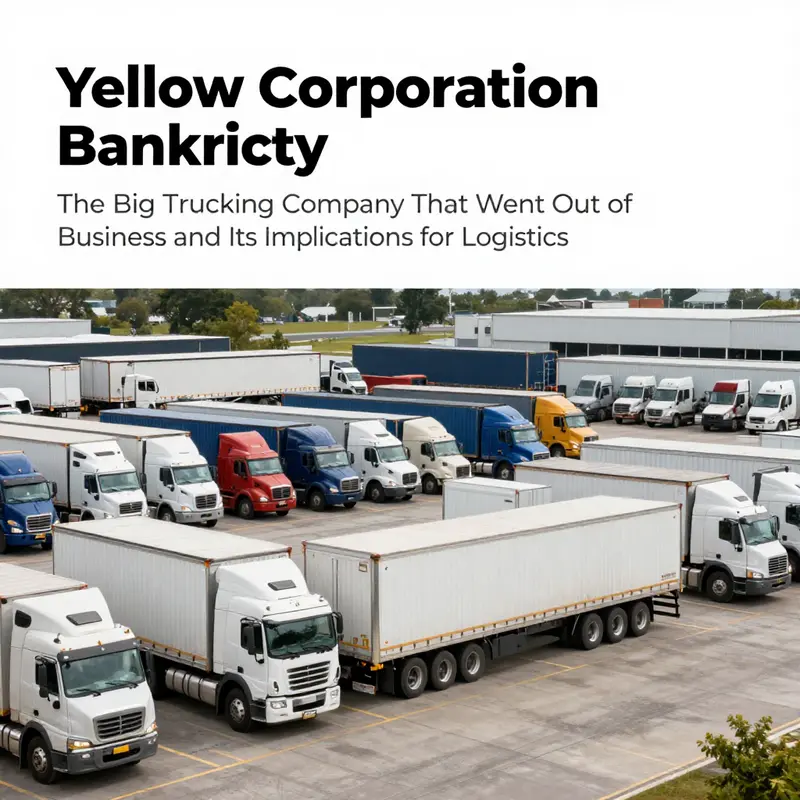
When the industry speaks in volumes of freight bills, equipment roars, and driver hours, it is easy to forget that the backbone of trucking is ultimately human. A single, once-prominent carrier can ripple through the economy with the force of a major shock, touching workers, shippers, and small fleets that depend on predictable capacity. The recent history of the United States’ trucking sector offers a stark series of reminders: a period of consolidation, abrupt exits, and a reshaping of assets that left both the workforce and the freight ecosystem looking for a new equilibrium. The case that most clearly illustrates the human and industrial consequences is the Yellow Corporation episode, which operated under the Yellow brand, and its closely watched arc through bankruptcy and asset sales in 2023. Yet even within the same arc, the memory of Celadon Group’s 2019 collapse hangs over the sector as a cautionary tale about debt, dispatch networks, and the precariousness of long-haul operations. Understanding Yellow’s collapse requires more than a retinal scan of headlines. It demands a careful exploration of the chain reactions that follow a Chapter 11 filing, the strategic choices around asset sales, and the lasting implications for the workforce and the broader market structure. It also invites reflection on how the industry learns to absorb shocks without sacrificing reliability for shippers or the dignity and livelihood of the people who drive the freight economy forward every day.
What makes Yellow’s story particularly instructive is not only the financial mechanics of its bankruptcy but the way the company’s operational footprint dissolved and reconstituted in the hands of new owners. August 2023 marked the formal entry into Chapter 11 protection, a corporate maneuver designed to reorganize debt and preserve viable operations while the court and creditors determine the path forward. By September, after the process of negotiating, valuing, and selling assets had run its course, the original entity known as Yellow ceased operations under its former management. The assets did not vanish; instead, they transferred to a new constellation of owners and carriers capable of maintaining some degree of continuity in service. Reports from industry outlets at the time highlighted that new owners, including major players in the freight and logistics network, acquired key terminals, equipment, and portions of the network. The implication was clear: capacity would be preserved in some form, yet the operating model would be reorganized under new stewardship. It was a powerful reminder that the trucking market is not a simple ledger of assets and liabilities; it is a living system sustained by people, routes, and the discipline of scheduling and dispatch that binds shippers to carriers.
The human dimension dominates the public memory of any large carrier’s exit. Celadon Group’s 2019 collapse remains a close parallel and, for many, a predictive lens through which to view Yellow’s experience. Celadon, one of the industry’s largest freight companies at the time, folded with a cascade of job losses that reached nearly 4,000 employees, including roughly 3,000 truck drivers who formed the core of its workforce. Many of those drivers were independent contractors or leased operators who depended on Celadon for dispatching and a reliable revenue stream. The abrupt termination of Celadon’s operations left a wake of financial hardship for these workers and their families, while at the broader level, it unsettled a web of affiliated companies that relied on Celadon’s network to route traffic, allocate freight, and price capacity. The disruption extended beyond the immediate payroll and payroll-related benefits. Suppliers, small fleets that interfaced with Celadon terminals, and drivers managing leased equipment faced sudden shifts in demand, price pressures, and the challenge of finding replacement work in a market that could yet surprise with volatility. The Wall Street Journal’s comprehensive treatment of Celadon’s bankruptcy underscores the scale of the human toll and the systemic vulnerabilities it exposed, from revenue volatility to the fragility of contractor-based labor arrangements. The long arc of Celadon’s decline and the way its assets were redistributed illuminate a central truth: in trucking, the health of the workforce is inseparable from the health of the fleet, the rate at which capacity can be redirected, and the discipline with which risk is managed across an entire chain of service providers.
When Yellow stepped into the bankruptcy frame in 2023, industry observers looked for how the firm would address its sprawling footprint—owner-ops and company drivers alike—and how creditors would value the network of terminals, maintenance facilities, dispatch hubs, and rolling stock. The process of asset sales often functions like a selective auction in reverse, where the ultimate aim is not just to liquidate but to preserve as much useful capacity as possible. The narrative around Yellow’s asset sales suggested a bifurcation: on one side, highly productive assets—terminals with strategic locations, modern equipment, and hard-won customer contracts—could be packaged into the stock of new or continuing operations; on the other, debt-heavy, nonessential, or underutilized assets would be shed or repurposed. The result, in many cases, was a phoenix-like re-emergence of some services under new banners or reorganized internal structures. The careful curation of what to keep and what to retire is not merely a financial decision; it is a bet on where capacity can be best positioned to serve shippers in a tightening capacity market, where demand for efficient, reliable transportation remains robust but the number of large, financially stable operators has contracted.
In the wake of these upheavals, the industry experienced consequences that rippled beyond the balance sheets. For drivers who had spent years building a pipeline of miles, the shock of discontinuity was more than a calendar event. It was a disruption in revenue streams that fed families, paid mortgages, and funded the small economies around truck stops and maintenance shops. In Celadon’s case, the dislocation highlighted how much the sector relied on a stable mix of dispatching capacity, fuel pricing hedges, and access to freight across diverse lanes. When a single carrier exits, the market must rapidly reallocate freight and re-balance fleets. That reallocation is rarely smooth. It surfaces as higher tender rejection rates in some lanes, longer idle times for equipment, and the need for other carriers to absorb displaced drivers or add capacity through temporary contracts or more aggressive recruiting. The net effect on shippers can be modest to moderate, depending on how quickly the sector adapts and how much spare capacity exists in neighboring networks. But for the people at the heart of the system—the dispatchers, planners, mechanics, and drivers—the consequences are immediate, personal, and lasting.
The Yellow episode also brought attention to the broader structural questions in the industry: How much risk can a single centralized carrier shoulder before the rest of the network bears the cost? How resilient is the freight ecosystem when a major operator’s revenue base evaporates? And what reforms, in governance, risk management, and labor relations, might prevent a similar event from becoming a permanent wound on the workforce? The answers are not simple recipes. They require a portfolio of strategies: diversified revenue streams for drivers and operators; better risk-sharing mechanisms across supply chains; more robust access to capital and liquidity buffers for large fleets; and ongoing investment in people who can adapt to shifts in freight demand, regulatory environments, and technological change. In this sense, Yellow’s bankruptcy can be read as a case study in how shocks travel through a labor market that is both highly specialized and intensely interwoven with the rhythms of global commerce.
To frame these lessons in practical terms, it helps to connect them to the idea that talent, training, and workforce stability are as important as asset efficiency. The industry has learned, again and again, that when you lean heavily on contractor models, you gain flexibility but lose a degree of predictability in income for drivers. The best-run fleets recognize this paradox and compensate for it by investing in people—training, safety, career progression, and predictable dispatch practices that reduce the risk of abrupt income loss when a partner carrier shutters. This approach aligns with the broader ethos of modern fleet management, which sees human capital not as a cost to be trimmed in a downturn but as a strategic asset that can cushion the blow of market volatility. The concept is not new, but its urgency was underscored by Yellow’s experience. The industry’s recovery pattern after a major exit depends as much on how well the surviving and new owners maintain driver engagement and retention as on how quickly they can re-harvest the freight market.
For a deeper exploration of how investing in people translates into resilience in trucking, consider the perspective offered by industry practitioners who argue that people-first strategies are central to weathering shocks. Investing in People: Key to Trucking’s Success provides a comprehensive framing of how fleet operators can build a more durable workforce, how to structure compensation to align incentives with service reliability, and how to retain experienced drivers even as the market consolidates around fewer, larger players. This lens is not a gloss over the economic reality; it is a practical approach to reducing the volatility that accompanies large-scale corporate restructurings. It is also a reminder that the industry’s capacity to deliver goods hinges on people who stay in the job, grow with the company, and carry forward knowledge and safety practices that keep freight moving smoothly across the continent.
As the dust settled on Yellow’s more visible chapter, the market faced a softer but real question: would the new configurations of capacity and the post-bankruptcy roster of operators achieve sustainable, long-term reliability? The answer was not uniform. In some corridors where demand held firm and incumbents possessed robust dispatch networks, the transition was relatively smooth. In others, especially where small shippers relied on a single carrier, the absence of a steady, well-capitalized operator created tangible frictions. Friction translates into extra costs: higher transportation prices, longer lead times, or more complex scheduling requirements for shippers seeking to guarantee service levels. It also translates into opportunity for smaller, more nimble carriers to step in, offering competitive rates and flexible terms. The risk, of course, is the potential inflation of costs across the supply chain if the market tightens and capacity remains constrained. The industry’s response has been a measured recalibration: faster throughput at terminals, more dynamic pricing models, and a renewed emphasis on reliability as a differentiator in a field where capacity often determines the difference between a shipper’s on-time delivery and a costly delay.
One of the enduring implications for the workforce, beyond immediate job losses or reassignments, is the reconfiguration of career pathways within trucking. The contraction of large, centralized operations often pushes drivers and support staff toward a more fragmented ecosystem of regional and regional-to-long-haul operators. That shift can yield improved opportunities for some workers, especially those who prefer predictable regional lanes or who seek long-term relationships with a smaller fleet that offers more stable dispatch practices. For others, the transition is more challenging, with longer searches for comparable pay and benefits, especially for independent contractors who risk losing existing revenue streams and relationships that had been built with specific dispatching partners. This is the human dimension of the asset reallocation story: people must navigate not only new terminals and routes but also new cultures, performance expectations, and performance-based incentives that may differ from those they previously knew. The extent to which workers can transfer their skills, maintain a steady income, and grow their careers depends on the clarity of pathways provided by the surviving or newly formed entities and the broader ecosystem’s willingness to offer retraining, placement support, and meaningful long-term opportunities.
The Yellow scenario, at its core, is about how an industry with enormous capital intensity and a labor-intensive backbone copes with a systemic shock. It reveals not only the vulnerabilities of a model that can over-concentrate in a single player but also the resilience possible when assets are repurposed and when the remaining networks commit to continuity of service. It invites reflection on governance and risk management: how fleets balance debt with liquidity, how they maintain dispatch capacity during turbulent periods, and how they manage the moral obligation to workers who relied on a certain job certainty. The industry’s response to this reality has included more stringent risk assessment, greater diversification of contracts, and a renewed emphasis on people-centered management that acknowledges the human costs of corporate reorganization. While these shifts do not erase the shocks of bankruptcy, they help to create a more predictable, less brittle freight ecosystem that can better absorb the next wave of disruption without sacrificing the livelihoods of the workforce that makes transportation possible.
The narrative remains unfinished, of course. The industry continues to evolve as new regulatory pressures, fuel costs, and technological innovations shape how freight moves. The presence of advanced fleet-management tools, better maintenance regimes, and cross-border cooperation among carriers further informs the capacity to rebuild after a major exit. The memory of Celadon, and now Yellow, functions as a persistent warning and a persistent prompt to value labor stability alongside fleet efficiency. It invites fleets to consider how the architecture of their networks—how many long-haul assets, how many regional assets, and how much leverage they hold in private financing—matters for both the reliability of service and the well-being of the people who keep trucks rolling. And it nudges industry observers to consider not only which giant may falter next, but how the industry can learn from the past to create a more resilient future where workers are supported, freight moves with predictable cadence, and the system as a whole remains capable of meeting the demands of a complex, evolving economy.
External resource: https://www.wsj.com/articles/celadon-group-bankruptcy-impacts-trucking-industry-workforce-11568741600
Final thoughts
The Yellow Corporation bankruptcy underscores how intertwined variables—creditors, labor costs, fuel, and capacity—can destabilize even a major carrier. For logistics and distribution professionals, the episode reinforces the necessity of diversified capacity, robust contingency planning, and clear supplier risk management. Fleets serving construction and engineering projects and food and beverage distributors should prioritize alternate carriers, transparent service-level agreements, and dynamic routing to mitigate disruption. In an industry where reliability directly affects operational timelines and margins, Yellow’s dissolution offers a cautionary blueprint: resilience is built through visibility, diversification, and proactive risk governance.