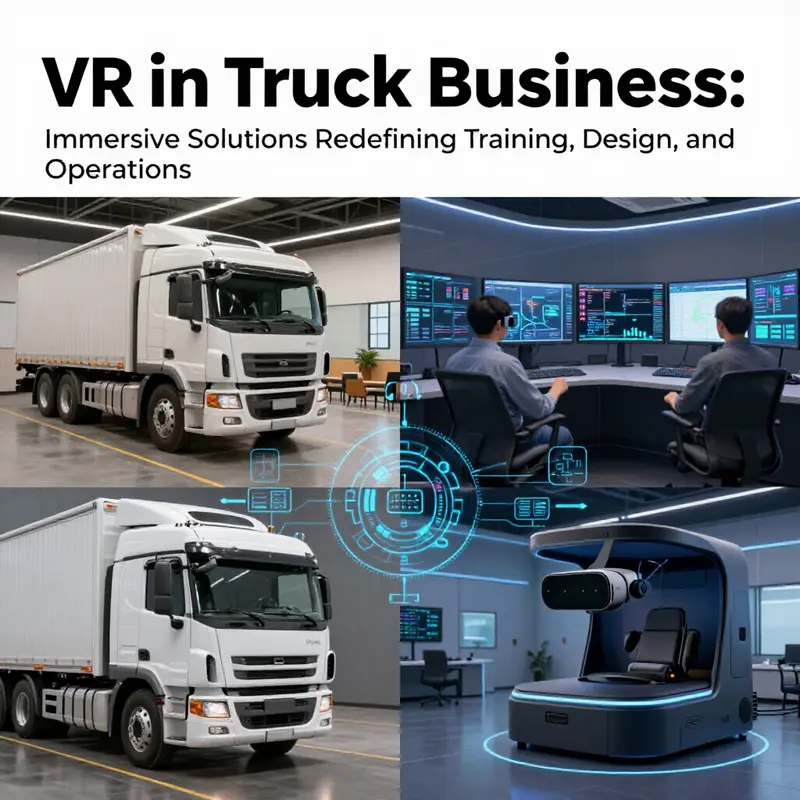
VR in Truck Business unites immersive simulations with the core operational needs of logistics, construction, fleet management, and food & beverage distribution. By recreating high‑fidelity tasks in safe, repeatable environments, VR enables safer driver training, accelerated product development, and proactive maintenance. It also supports forward‑looking testing of ADAS and autonomous features while validating cabin ergonomics before physical prototypes exist. The five chapters that follow outline a cohesive, integrated approach: driver training and skill development, product development and design, remote assistance and maintenance, future technology testing, and enhanced vehicle design and ergonomics. Together, these pillars illustrate how VR can reduce risk, shorten ramp‑up times, improve design accuracy, and drive measurable improvements in safety, productivity, and customer experience across sectors that rely on robust trucking operations.
null
null
Inside the Virtual Studio: How VR Accelerates Truck Design and Product Development
Inside the Virtual Studio: How VR Accelerates Truck Design and Product Development
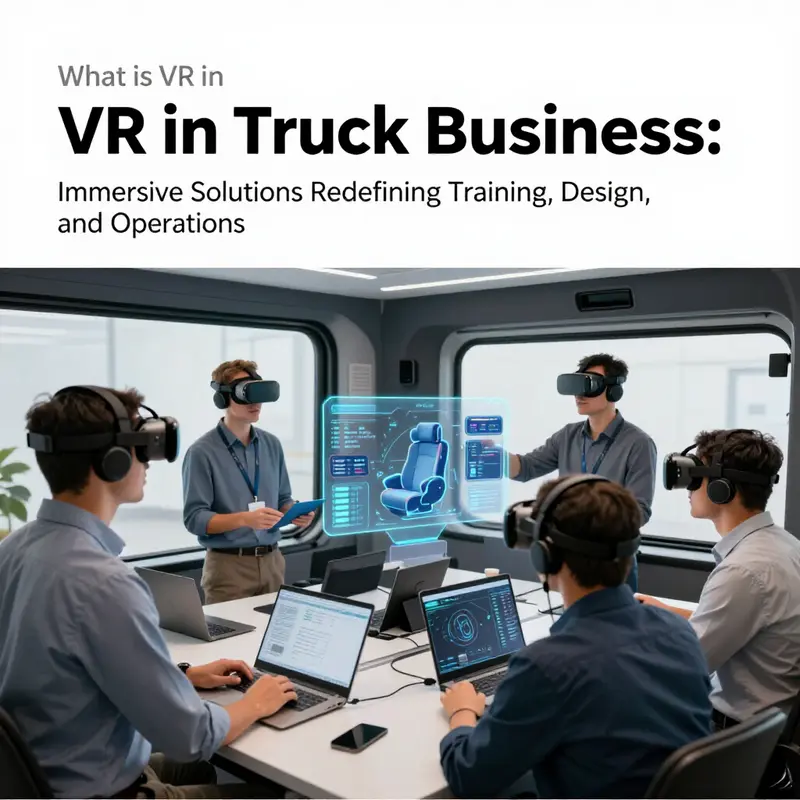
VR is more than a tool; it is a bridge between imagination and manufacturability in the trucking sector. Immersive environments turn flat CAD data into living spaces where engineers, designers, and stakeholders can visualize, evaluate, and refine trucks long before metal meets paint. The benefit is not merely novelty; it is a capability that lowers risk and accelerates time to market by creating a shared, risk-free space in which ideas can be tested, debated, and validated with speed and clarity. In practice, virtual prototyping and design review translate digital models into experiential experiences. Teams can walk through a cab, reach for switches, and assess whether the interior layout supports a driver’s endurance, fatigue, and situational awareness. The ability to switch materials, adjust dimensions, or experiment with different sightlines on demand means decisions no longer wait for costly physical builds or dozens of lab samples. The effect is a fundamental redefinition of how a truck is conceived, validated, and polished before any steel is cut.
One of the most consequential applications of VR in product development is virtual prototyping and design review. Automotive engineers and design teams transform CAD models into high-fidelity VR simulations that let participants step inside the truck. They can examine ergonomics from the driver’s seat, test visibility from different seating positions, and compare instrument panel layouts under real-world lighting conditions. The collaborative edge is especially powerful when suppliers, customers, and cross-functional teammates join a live session from different locations. Changes are made in real time, dimensions are adjusted, and the impact of those changes is immediately visible to all stakeholders. This level of shared immersion drives faster consensus and reduces the number of late-stage iterations that can derail schedules and inflate budgets. Case studies across the industry report a 60% increase in design review efficiency, a 40% reduction in design change costs, and a 25% shortening of overall design cycles. Those improvements do more than save time; they allow teams to push bolder ideas with lower risk, such as experimenting with alternative cockpit geometries, enhanced headroom in the cabin, or revised dash configurations aimed at minimizing driver distraction.
Beyond the look and feel of the interior, VR supports rigorous ergonomic and human factors testing. Engineers simulate how drivers will interact with controls, reach for essential switches, and operate the vehicle under a range of conditions—from high-stress delivery windows to night driving with glare. This approach makes it possible to validate seating comfort over long shifts, verify that displays remain legible in bright sun or low light, and ensure that critical indicators stay within easy sight. The value of such validation cannot be overstated: early detection of usability issues translates into safer, more reliable vehicles and reduces the need for expensive changes once production begins. Moreover, VR can model rare but critical scenarios—heavy loads on steep grades, sudden evasive maneuvers, or emergency stop procedures—without endangering people or equipment, creating a robust safety case for final designs.
Manufacturing and assembly planning emerge as another domain where VR yields measurable gains. A virtual factory model enables sequencing of assembly steps, testing of tooling requirements, and evaluation of material flow before any concrete construction starts. Teams can detect collisions, optimize equipment placement, and map worker movements to minimize fatigue and error. The result is a tangible reduction in design mistakes, lower construction costs, and shorter build timelines. In practice, manufacturers report an 80% reduction in design errors, a 15% decrease in construction costs, and a 20% reduction in build timelines when VR is employed for factory layout and process validation. These numbers matter far beyond a single project: they translate into faster launches, improved yield in early production runs, and better alignment with supply chain realities such as variability in component availability and assembly line pacing.
VR’s influence on training and workforce development should not be overlooked. While the telos of the technology is product design and validation, the same immersive environments serve as a safe, repeatable training ground for technicians and future operators. Trainees can practice maintenance procedures, diagnostic workflows, and even routine inspections in a controlled space that mirrors real trucks. The skills gained in VR transfer smoothly to the shop floor, reducing downtime and enabling a more capable workforce as new features are introduced. This feedback loop—designing with the driver and the technician in mind, then validating those designs in VR with real-world input—tightens the relationship between product intent and field performance. It also helps organizations build institutional knowledge, capturing best practices around ergonomics, accessibility, and serviceability that can inform subsequent generations of vehicle design.
As VR tools mature, the industry will likely see closer integration with artificial intelligence for predictive modeling and with mobile and wearable interfaces that bring virtual testing into broader teams and field environments. The overarching arc is toward a more iterative, user-centric process in which driver and operator feedback drives design decisions earlier and more reliably. VR does not eliminate the need for physical prototypes or real-world testing; it augments them. It creates a digital twin that is experiential as well as geometric, so insights are not abstract but felt by the people who will use the trucks every day. In that sense, VR is becoming a standard part of the product development lifecycle, a medium through which ideas can be explored, validated, and refined until they are robust enough for production and durable enough for long service life.
For readers seeking a concrete sense of how these workflows translate into industry practice, see advancements in autonomous LT-series testing and design review workflows advancements-in-autonomous-lt-series-trucks-2. The progression toward more capable, driver-centric control systems is inseparable from how designers validate and tune those systems in VR before a single prototype is manufactured. These internal explorations reflect a shared understanding: VR is not a side project but a core capability that aligns engineering ambition with real-world use, safety standards, and build efficiency. For further reading on how VR is reshaping product development in transportation, see the external resource: How VR Is Transforming Truck Design and Manufacturing.
Remote Eyes, Real-Time Repair: VR-Driven Remote Assistance in Trucking Maintenance
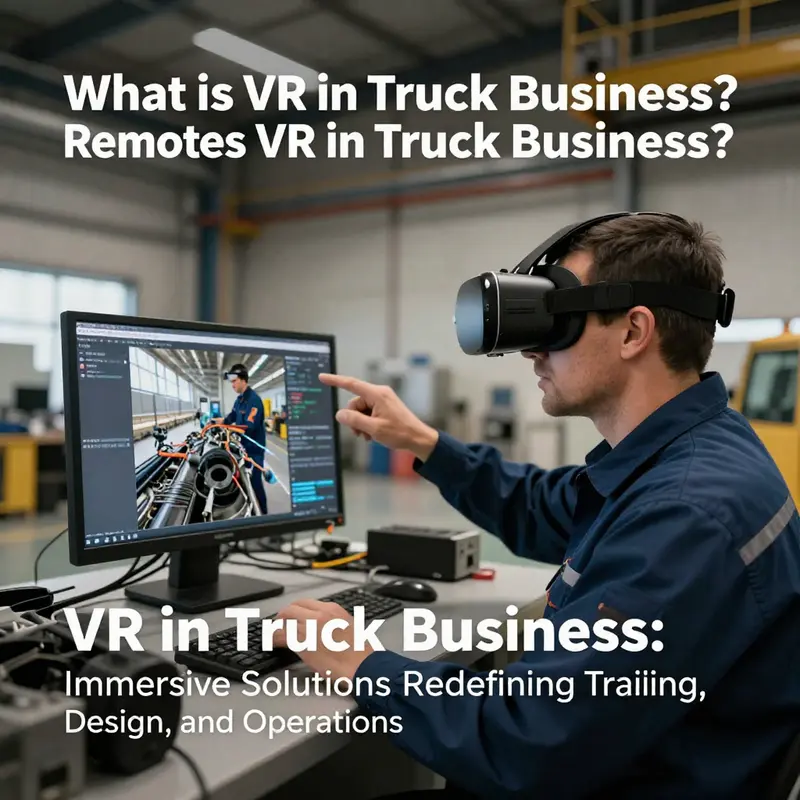
Remote maintenance and field support are no longer afterthoughts in the trucking industry; they are core capabilities powered by immersive technologies, real-time connectivity, and a relentless focus on uptime. Virtual reality (VR) and its companion, augmented reality (AR), together with remote control tools, are turning a lone technician into the extended reach of a headquarters expert. The result is not just faster fixes, but smarter fixes guided by precise digital overlays, step-by-step instructions, and live collaboration that preserves safety, reduces travel, and accelerates learning for technicians and drivers alike.
At the heart of this transformation is the ability to bridge a distant expert with an on-site operator through a shared, immersive workspace. A technician wearing an AR-enabled headset or a mobile device can start a remote session that feeds a live view of the on-site environment to a remote colleague who knows the machine inside and out. In real time, the remote expert can annotate the technician view, highlight components, and project instructions directly into the field of view. This is not mere communication; it is guided, hands-on collaboration that maintains the tactile rhythm of repair work while removing the bottleneck of travel. As issues unfold on the road a failed sensor a stubborn hydraulic leak or an obstructed access panel the remote technician becomes a second pair of experienced eyes who can validate symptoms cross-check data and steer the repair with confidence.
The practical workflows are simple and extraordinarily effective. A technician begins by connecting to the vehicle diagnostics and a live video feed from the site. The remote expert reviews telemetry in real time, cross-referencing fault codes with maintenance history, environmental conditions, and driver reports. With a few taps, digital instructions appear overlaid on the technician view guiding them through checks, component reseatings, or torque patterns. If a calibration adjustment is needed the remote advisor can demonstrate the proper technique and monitor execution from the same shared space. If tools or parts are required the system can re-check stock levels, propose alternatives, and coordinate nearby depots or mobile replacement services within minutes. The efficiency gains are tangible: fewer on-site visits, shortened downtime, and faster restoration of service, all while maintaining a high standard of quality.
Yet the value of remote maintenance extends beyond the immediate repair. The same sessions generate a rich stream of tacit knowledge. Technicians observe new techniques, hear nuanced cues from remote mentors, and capture feedback on procedure clarity and accessibility. This material feeds into updated training programs, creating a virtuous loop. VR-based repair training platforms enable apprentices to practice complex procedures in a safe, immersive environment before touching real equipment. Learners navigate a 360-degree space, manipulate interactive components, and receive real-time feedback on their grip, line of sight, and sequencing. Such training accelerates onboarding, reduces initial error rates, and builds muscle memory so that when real repairs are required, technicians perform with precision and confidence.
The benefits ripple through the fleet. In the field, every maintenance event becomes a learning opportunity rather than a one-off disruption. Remote collaboration provides situational awareness that helps the fleet manager plan around the issue, reallocate resources, and minimize the time the vehicle spends out of service. Downtime costs drop as expert knowledge travels instantly rather than via long phone calls and delayed shipments of parts. From a safety perspective, remote guidance reduces risk in hazardous environments, awkward positions, or tight spaces. The on-site technician remains protected by stepwise procedures and real-time checks, which limit the chance of error during high-stakes tasks.
VR and ARs influence extends to how maintenance teams are organized. Instead of waiting for a specialist to be physically present, teams can leverage a distributed expert network that scales with demand. This model suits trucking where fleets span diverse geographies and operate around the clock. The combination of real-time diagnostics, remote annotation, and immersive guidance multiplies the reach of every technician and supervisor. It also sets the stage for predictive maintenance tracked through VR-enabled simulations. Engineers can model failure modes visualize wear patterns and rehearse preventive steps in a controlled virtual environment before they manifest on the road. When technicians return to the real world, they are not simply reacting to failure; they are implementing preventive, data-informed interventions that extend component life and reduce breakdowns.
The research landscape mirrors these industry dynamics. Remote assistance platforms let technicians initiate sessions with headquarters-based experts who can view the mobile technician’s live feed and guide repairs with digital overlays. Remote access solutions enable fleet managers to diagnose malfunctioning in-vehicle devices from a central operations center. A broken GPS, a faulty telematics module, or a misbehaving communication link can be isolated, diagnosed, and corrected remotely. The impact is a reduction in travel-related emissions and a smaller operational footprint, alongside sharper diagnostic accuracy and faster repair cycles.
In thinking about the broader implications, it is clear that remote maintenance is not merely a service enhancement. It is a strategic lever for maintenance discipline, fleet reliability, and customer confidence. As the digital ecosystem advances we can expect deeper integration among VR/AR tools, real-time data streams, and automated maintenance planning. The next frontier includes smarter session orchestration where AI-driven triage prioritizes repair work based on severity, availability of remote specialists, and predicted downtime impact. Edge computing will further minimize latency ensuring overlays and guidance remain synchronized with real-world actions even in environments with uneven connectivity. With these advances technicians will approach every repair with the same calm, methodical precision that characterizes best-in-class manufacturing cells.
For readers curious about how these trends intersect with ongoing industry innovations consider autonomous and semi-autonomous platform research. These developments are not only shifting how trucks operate but also how technicians interact with vehicles during maintenance and upgrades. The dialogue between design ergonomics and field service becomes more immediate when virtual testing and remote collaboration are part of the daily workflow. In practice this means cab interfaces, control layouts, and diagnostic dashboards can be iteratively refined based on live feedback from remote technicians who experience the equipment in real work scenarios, not just simulated labs. As such the industry moves toward a more integrated digital lifecycle where the same VR-enabled toolkit informs engineering choices, field service, and fleet management in a single continuous loop.
There is also a practical note on how these capabilities are deployed. While the core concept remains remote visibility the success of these systems hinges on data security, user-friendly interfaces, and robust connectivity. A carefully designed workflow ensures that only authorized personnel access critical systems and that data integrity is preserved across sessions. The interfaces should be intuitive enough so a technician can begin a session with minimal disruption to the repair workflow, yet powerful enough to convey complex instructions clearly. These considerations matter as fleets scale their remote maintenance programs across multiple depots and regional hubs. The end result is a maintenance culture that marries human expertise with digital precision, delivering consistent, reliable service while opening space for ongoing learning and improvement.
As the industry charts this path a glimpse of the future can be found in the way some industry leaders discuss ongoing research and development around autonomous servicing and virtual prototyping. For those interested in seeing how virtual testing and remote collaboration ideas translate into concrete product and process improvements one can explore the ongoing work highlighted in related industry analyses and case studies. Advancements in autonomous LT-series trucks offer a useful lens into how virtual experimentation and real-world feedback converge to shape design and service practices. This ongoing dialogue between field experience and digital simulation will continue to redefine maintenance norms in the trucking world, making remote assistance not just a support tool but a central pillar of fleet resilience and customer value.
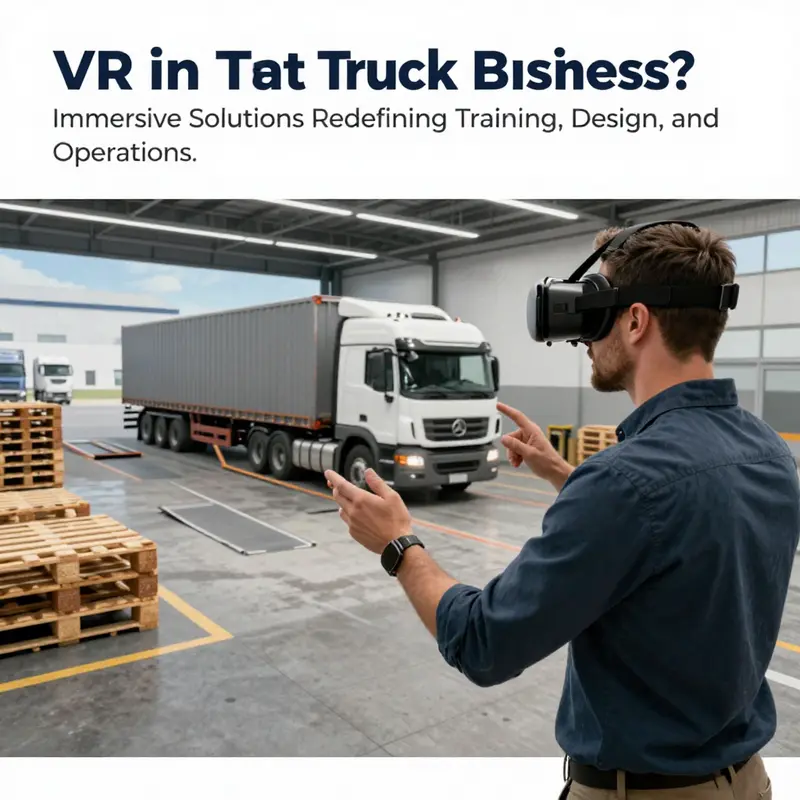
What is VR in Truck Business? Bridging Training, Design, and On-Road Innovation
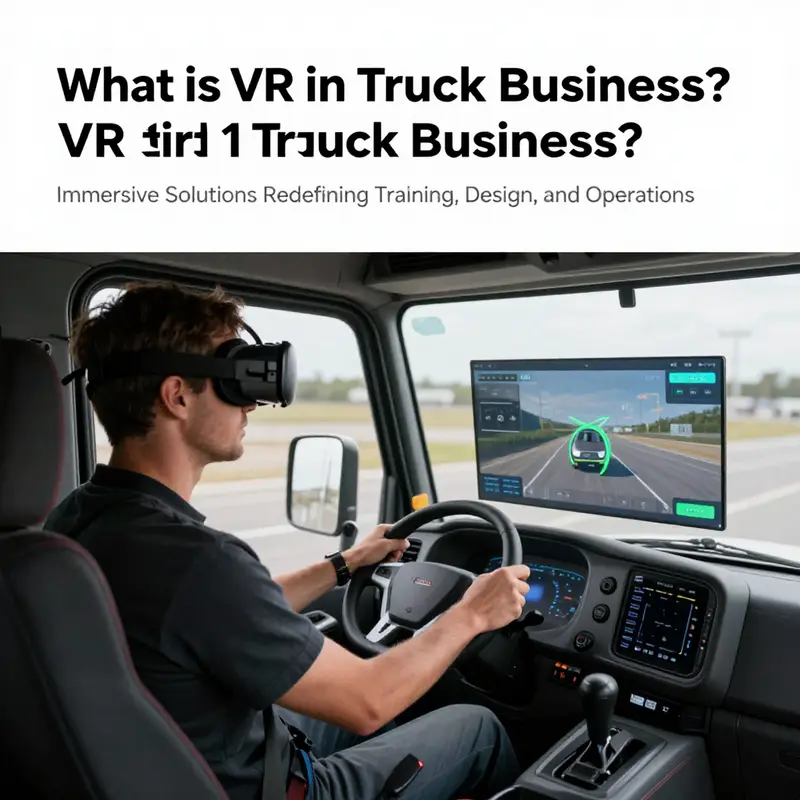
Virtual Reality is quietly remaking the trucking landscape by turning static training rooms, design studios, and maintenance bays into living laboratories. It is not merely a gadget or a demonstration; it is becoming a core method for reducing risk, accelerating learning, and validating ideas in ways that were previously unimaginable. The shift comes from a simple premise: VR can recreate the most demanding tasks with exacting fidelity, while offering the safety and repeatability that real-world exercises cannot. In the trucking world, this means drivers can practice maneuvers, cargo handling, and emergency responses in immersive rooms that feel as genuine as the highway, but without the danger or downtime associated with on-road training.
In training, the impact is immediate and measurable. A major North American logistics provider integrated headset-based VR modules to simulate loading and cargo stacking, as well as scenarios that test a driver’s response to equipment malfunctions or on-road incidents. Trainees can repeat critical sequences countless times, which helps develop muscle memory and confidence long before they stand at a real dock with a real trailer. The outcomes are tangible: fewer loading mistakes, fewer time-consuming incidents, and a smoother ramp from newcomer to fully productive operator. Importantly, the technology also provides a controlled environment for handling uncommon but high-risk events, such as skid scenarios or tire failures, enabling learners to experience gear changes, braking, and steering corrections in a safe space where errors become teachable moments rather than costly missteps.
Beyond the cab, VR is reshaping design and engagement with customers. A leading truck manufacturer has used VR to build interactive experiences that let buyers walk through virtual showrooms, open the cabin, inspect the instrument cluster, and even experience simulated driving conditions. Without stepping into a factory or sitting behind a real prototype, customers can understand the lineage of a design, assess visibility and ergonomics, and form a more informed preference. This is not a glossy demo; it is a working environment that informs engineering decisions. In a sector where a small improvement in driver comfort or line-of-sight can translate into major safety gains and operational efficiency, VR-driven prototyping accelerates iteration—shrinking the distance between concept and validated, on‑road performance.
Another area where VR proves indispensable is remote assistance and maintenance. In heavy industries that require specialized expertise, the ability to see what a technician sees and guide them in real time can dramatically cut downtime. VR-enabled remote collaboration allows a technician on site to share a live view with a remote expert who can annotate, point to components, and guide step-by-step repairs. The effect is akin to a hand-over-hand mentorship that travels around the world in an instant. This capability is especially valuable when equipment is difficult to move, or when specialists are not immediately available on-site. The result is faster fault isolation, more accurate repairs, and a safer, more efficient workflow that keeps fleets on the road.
The forward-looking edge of VR in trucking lies in testing and validating future technologies before they exist in hardware. Manufacturers and their engineering teams are developing mobile VR simulators that place drivers inside a near-realized interface for upcoming driver-assist features and autonomous concepts. By gathering immediate feedback from drivers who experience the interface, control layouts, and perceived response times, engineers gain crucial insights that steer design toward intuitive, user-centered products. This kind of testing is not just about proving a concept; it is about building a product that a driver will actually adopt and trust as it becomes integrated into daily operations. In practice, VR helps bridge the gap between lab simulations and real-world performance, enabling faster, safer, and more reliable innovation.
Ergonomics and human factors have benefited from VR in equally practical ways. The cabin is a complex space that blends sightlines, reach, seating, control placement, and acoustics. Virtual prototyping allows designers to model a variety of driver sizes, seating positions, and dashboard arrangements, and then measure how these choices affect comfort and incident risk. The advantages go beyond comfort; improved ergonomics can reduce fatigue, speed up information processing, and lower the likelihood of mistakes during long-haul trips. In this sense, VR is quietly reshaping what a “driver-friendly” vehicle looks like, guiding physical prototypes toward environments that enhance awareness and reduce blind spots without sacrificing performance.
A striking example of VR-enabled testing comes from a Chinese technology firm that introduced a VR-augmented framework designed to merge the real and the digital in high-end autonomous driving development. This virtual-physical fusion testing technology blends real vehicles, real roads, real environments, and real perception, enabling rapid generation and execution of complex test scenarios on actual public roads within seconds. The approach is more than a better simulator; it is a new kind of testing regime that makes on-road validation scalable, repeatable, and safer than traditional methods. By distributing tasks through the cloud and coordinating target objects across a simulated fleet, teams can investigate corner cases, validate perception and decision-making under diverse traffic patterns, and speed up debugging time dramatically—often by more than half compared with conventional workflows. The framework also supports challenging operations such as platooning on expressways, where precise synchronization, safe following distances, and robust perception are mission-critical. In effect, it raises the bar for what it means to bring unmanned freight closer to reliable, commercial deployment.
In this integrated picture, VR is not a standalone feature but a connective tissue that ties together people, processes, and machines. It enables a learning culture where new procedures can be tested and refined without disrupting live operations. It supports safer, smarter maintenance that keeps equipment in service longer and with less surprise downtime. It accelerates product development by letting drivers experience designs, interfaces, and control strategies early in the lifecycle, long before a physical prototype is finalized. And it pushes the boundary of what is possible in autonomous and semi-autonomous trucking by making on-road testing faster, more controlled, and more scalable—precisely the kind of testing framework that can de-risk a transition to more automated fleets while preserving human oversight and safety.
For readers who want a deeper sense of how the autonomous testing ecosystem is evolving, one can explore ongoing work in the field that emphasizes real-world testing speed and fleet-scale simulations. The trajectory is unmistakable: VR is moving from a supplementary training tool to a central platform for design validation, remote expertise, and on-road experimentation. As this technology matures, the trucking industry will likely see a feedback loop where insights from VR-driven tests continuously inform training, vehicle design, and operational practices. The result is a more resilient, adaptable, and forward-looking sector, capable of exploring ambitious capabilities without compromising safety or reliability.
For a closer look at ongoing advancements in autonomous trucking, see Advancements in autonomous LT-series trucks. The path forward is not a single milestone but a continuum of improvements—each built on immersive learning, rapid prototyping, and a testing discipline that treats the road as the ultimate classroom. And as the field expands, the interplay between human expertise and machine intelligence will become the defining feature of modern trucking, where VR helps ensure that every mile of road, every ton of cargo, and every decision is guided by safer, smarter, and more humane technology. For researchers, engineers, and operators alike, that is the core promise of VR in the truck business: a living engine of a safer, faster, and more capable transportation future.
External resource: Western Zhilian Launches Six Major Technological Innovations — a detailed official announcement that illuminates this VR-enabled testing approach and its strategic implications for autonomous driving in freight operations: https://www.westernzhilian.com/news/2025-05-18
Immersive Cab Design: VR-Driven Ergonomics Transforming the Trucking Experience
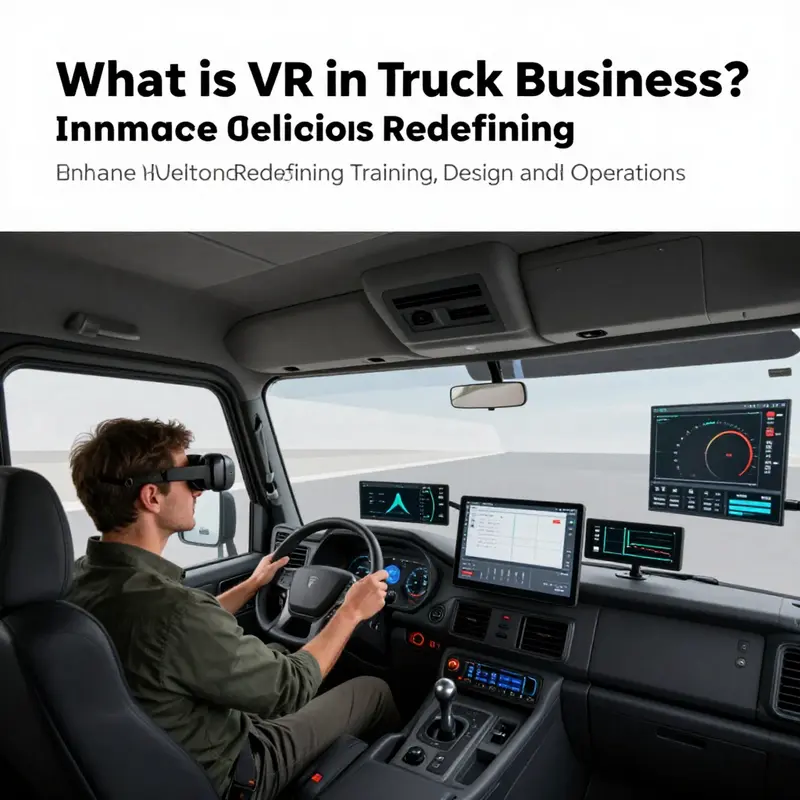
Virtual reality is not merely a feature inside the design studio; it is a strategic lens that lets engineers and operators reimagine the truck cab long before metal meets mold. In this context, VR blends immersion with precision. It creates a faithful, interactive surrogate of the cabin, complete with seating, controls, instrument panels, visibility lines, and the acoustic texture of a moving vehicle. The result is a workflow where form and function are tested together in a digital twin that mirrors the real world with compelling fidelity. Immersive environments, supported by data-rich CAD/CAx feeds and physics-based simulations, empower teams to explore a vast space of form, fit, and function. They can iterate layouts, test reach envelopes, verify control accessibility, and foresee driver experience metrics in ways that physical prototypes alone cannot deliver. The cabin becomes a living subject of study, not a fixed artifact, and that distinction matters when the aim is to reduce fatigue, improve safety, and boost long-haul comfort across diverse driver populations.
At the heart of this approach lies a set of integrated capabilities. Immersive hardware—head-mounted displays, motion controllers, and tracked devices—offers a convincing sense of scale and spatial relationship. When combined with desktop VR and augmented reality overlays, teams can carry the same analysis from early concept screens into real-space assembly planning. The digital twin concept expands VR beyond visuals; it anchors it to the dynamics of a real vehicle through data streams that describe seating reach, instrument readability, pedal geometry, steering feel, and even acoustic envelopes. Ergonomics data—drawn from broad anthropometric datasets and postural models—becomes a living constraint that guides every decision about seat positioning, dashboard layout, and control placement. In practice, designers can simulate a driver’s posture across percentile ranges, test legroom and shoulder clearance, and optimize reach without a single physical chair being moved.
This confluence of capabilities enables a driver-centric design philosophy. Early-stage exploration can rapidly surface conflicts between seating, steering wheel angle, pedal positions, and display visibility. Rather than discovering these conflicts late in a costly prototype phase, VR surfaces them in days or weeks, inviting stakeholders from design, engineering, and operations to weigh trade-offs in real time. The process often begins with broad layout scenarios—multiple seat positions, different steering column heights, varied instrument clusters—and then narrows to the most promising configurations. Crucially, the feedback loop remains tight: ergonomic findings feed the CAD model, which in turn updates the VR scene, and drivers—or driver representatives—can assess the adjustments instantly in a controlled setting. This closed loop supports what some researchers describe as a driver-in-the-loop workflow, where actual operator input steers the evolution of the interior. The value is not merely theoretical. When ergonomic risk factors are identified and mitigated in VR, fatigue and discomfort signals shrink in live operations, and the likelihood of post-delivery modifications drops significantly.
The design implications are wide. Visibility analysis becomes a core VR task: engineers verify that mirrors, instrument clusters, and head-up displays remain legible across a wide range of driver heights and seating offsets. The line of sight to critical indicators is optimized to minimize eyes-off-road time, a practical proxy for safety in real-world driving. Comfort modeling takes a similar stance. Seating and cushioning can be evaluated for long-haul viability under different road conditions, climate settings, and vibration profiles. In VR, seating engineers can swap materials, adjust cushion density, and test passive and active comfort strategies while monitoring how changes affect posture, blood flow, and perceived fatigue. The result is a cabin that feels, in perception and performance, more spacious and more intuitive—even when it is still a digital construct.
Beyond passenger comfort, VR also reshapes how control interfaces are conceived. Instrument clusters, steering controls, gear selectors, and infotainment screens can be tested for reach, accessibility, and readability under a spectrum of driver sizes. Virtual simulations make it possible to evaluate not only physical reach but cognitive load—how quickly a driver can interpret a new control scheme under varying workloads. This driver-in-the-loop dimension is particularly powerful during the transition to advanced driver assistance systems or new cab architectures, because it invites real drivers to interact with evolving interfaces and provide qualitative and quantitative feedback before any physical prototype is committed. In this way, VR helps ensure that the human-machine interface is not an afterthought but a core driver of design choices.
The benefits extend to the broader development timeline as well. By enabling rapid visual and functional prototyping, VR reduces the need for multiple physical mock-ups, trims material waste, and shortens the design cycle. It also supports customization for fleets with distinct operating profiles. A regional fleet that prioritizes stop-and-go maneuverability can benefit from tighter cabin controls and different seating adjustments than a long-haul operation that favors fatigue reduction and driver visibility. Because VR models can be tuned for regional regulations and operator preferences without producing separate physical prototypes, manufacturers gain both speed and adaptability. The cost savings and time-to-market improvements become tangible across the entire lifecycle—from concept refinement to supplier handoffs and after-sales configurability for customers.
Of course, a VR-led design program must manage its challenges with discipline. Fidelity is the first frontier: the virtual environment has to convincingly replicate steering effort, pedal resistance, seat vibration, acoustics, and the perceived weight of the cabin. If the simulation feels flat or inconsistent with physical reality, decisions based on it lose credibility. Data integration is another essential consideration. VR relies on up-to-date CAD/CAx data and accurate seating and reach databases; without robust data pipelines and version control, the VR scene can drift from the actual product plan. Adoption hurdles also exist. Engineers and designers may need to acquire new skills to author and interpret VR scenarios, and executives must justify the capital outlay for hardware, software, and ongoing maintenance. Finally, motion sickness and fatigue can affect some users; addressing these responses requires thoughtful interface design, comfort-first VR configurations, and a gradual acclimation process for new users.
To translate VR into reliable outcomes, teams embrace a few core best practices. Start with a clear objective: identify the design question you want to answer—be it seating reach, instrument readability, or driver workload under a new cab layout—and link it to measurable success criteria. Integrate VR early in the lifecycle, not as an afterthought, so that findings influence core design decisions rather than cosmetic changes. Build a driver-in-the-loop pathway from the outset, inviting representative drivers to engage with layouts and provide experiential feedback that complements quantitative metrics. Use hybrid fidelity approaches: high-fidelity VR for critical ergonomics and HMI validation, paired with broader, lower-fidelity simulations for layout exploration. Ensure VR tools connect to existing CAD/PLM ecosystems to preserve design intent and traceability. Establish a data-rich measurement framework: capture reach envelopes, visibility scores, control access times, seating comfort indicators, and subjective comfort ratings. Finally, plan for scale. Start with one cabin family or platform and extend the VR validation across regional variants and fleet configurations to accelerate learning and avoid bottlenecks.
In terms of outcomes, the VR-enabled cabin design process tends to produce faster decision cycles, more robust ergonomic validation, and higher driver acceptance of new interiors. It also fosters collaborative review sessions across disciplines and locations, since digital cabins can be shared and adjusted in real time. The path forward envisions even more realistic haptic feedback, AI-assisted design optimization that interprets driver feedback to propose ergonomic improvements, and closer integration with autonomous-truck development, where cab layouts must accommodate transitional modes and human-vehicle handoffs. As cloud-based VR and standardized ergonomic benchmarks mature, cross-company collaboration on cabin ergonomics can become more efficient, reducing misalignment between design intent and operator experience.
For practitioners taking the first practical steps, a prudent route is to launch a one- or two-cab-family pilot to validate VR’s value in ergonomics and design reviews. Assemble a cross-disciplinary team that includes design and engineering, human factors, IT/data engineering, and fleet operators or drivers. Define the data requirements clearly and ensure CAD/CAE data can feed the VR environment with version control. Choose a modular VR setup that can scale from early concept studies to more detailed driver-in-the-loop experiments. Establish concrete success criteria and quantify improvements in design decisions, time, and cost. Plan for change management with internal advocates, training, and ongoing support. This approach helps ensure VR becomes a durable aspect of the cabin design culture rather than a transient experiment.
External resource: https://www.xpo.com/newsroom/press-releases/xpo-logistics-deploys-vr-training-for-ltl-employees
Final thoughts
VR in Truck Business offers a structured path to safer operations, faster time‑to‑competency, and more precise product and cabin design. By integrating training, design, remote support, forward‑looking testing, and ergonomic validation, fleets, construction firms, and distributors can reduce downtime, improve safety metrics, and deliver consistent, high‑quality outcomes. The five VR-enabled pillars reinforce each other: skilled drivers lower risk and boost productivity; immersive design accelerates decision‑making and customer engagement; remote maintenance minimizes downtime; early feedback on future technologies informs better, user‑centered solutions; and ergonomic validation translates into tangible driver comfort and visibility gains. Adopting VR as a strategic tool positions organizations to respond more effectively to evolving regulations, rising throughput demands, and the need for resilient supply chains in a competitive market.