
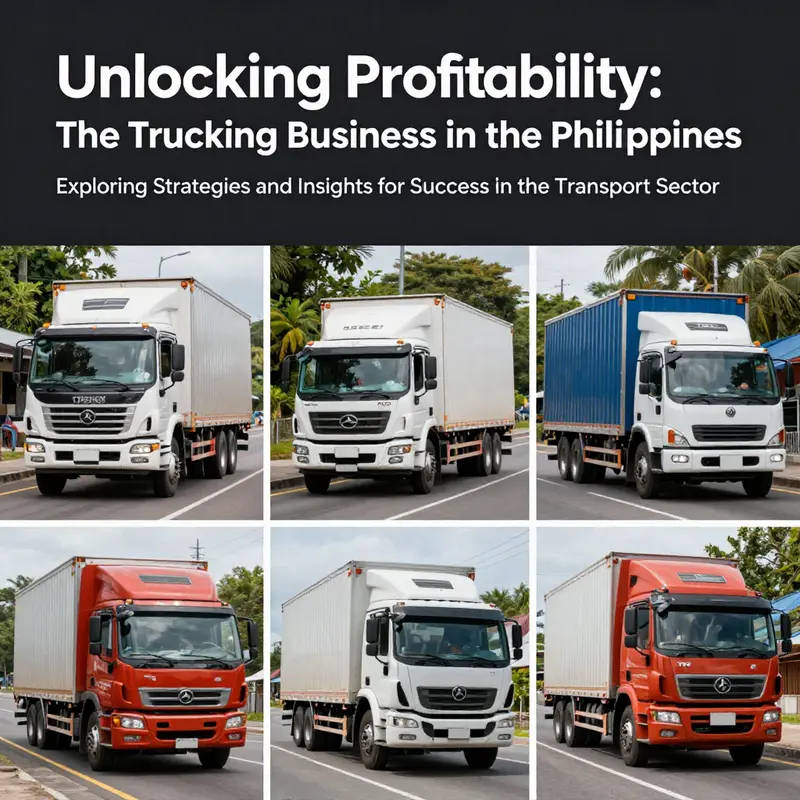
The trucking sector in the Philippines is an essential lifeline for various industries such as logistics, construction, and food distribution. The steadily growing economy fosters an increasing demand for transportation services. However, while the potential for profitability exists, success hinges on a deep understanding of market nuances, strategic operations, and overcoming inherent challenges. This article delves into the profitability landscape of the trucking business in the Philippines, investigating key factors influencing success, addressing operational hurdles, and drawing insights from real-world case studies. Each chapter provides a nuanced perspective that collectively offers a comprehensive framework for stakeholders aiming to thrive in this competitive industry.
Profit on the Road: Navigating Profitability in the Philippine Trucking Landscape
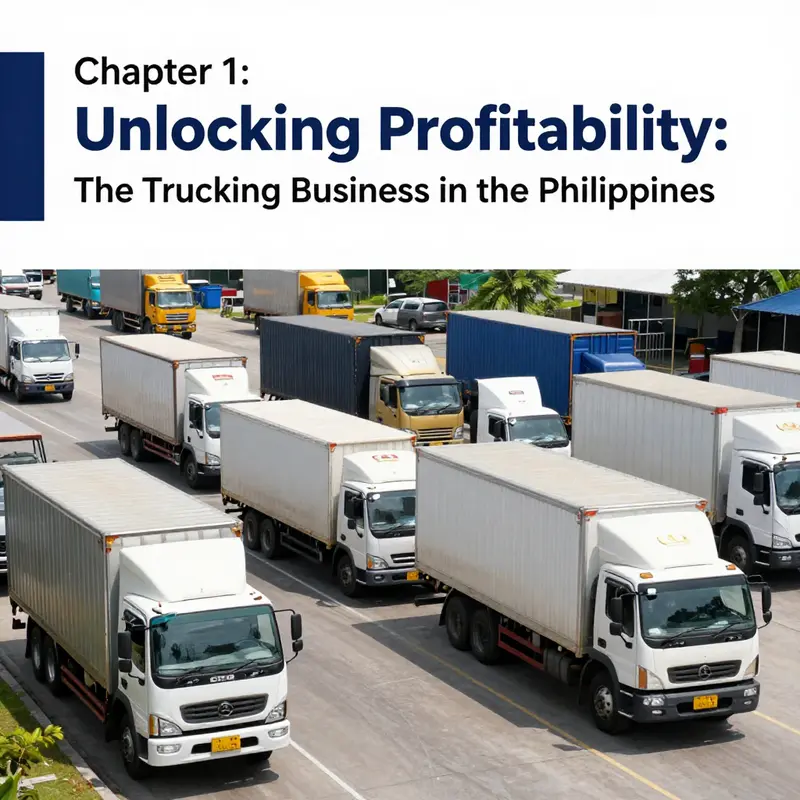
The question of profitability in the Philippine trucking sector rests on more than a single lever pulled in isolation. It sits at the intersection of demand and efficiency, regulation and risk, capital discipline and human leverage. On the one hand, the country’s steady economic expansion has steadily pulled more freight onto the road. As consumer demand rises and supply chains stretch across islands, trucking becomes not just a utility but a competitive differentiator for any business moving goods to market. On the other hand, profitability does not happen by chance. It grows from disciplined financial planning, careful cost control, and a fleet-and-people strategy that can weather the test of time, traffic, and policy shifts. The research on local trucking operations, including a detailed profitability analysis of a Surigao City service from 2015 to 2021, underscores a truth that can guide aspiring operators: sustainable margins are achievable, but they require rigorous management of costs, markets, and people.
In this context, profitability emerges from a delicate balance. Market demand supplies the fuel, but efficiency and cost discipline determine how far that fuel can push revenue toward bottom-line gains. A trucking business operating in the Philippines must manage fuel costs, maintenance cycles, and driver compensation with the same care a seasoned navigator uses when plotting a voyage. Fuel efficiency is not a mere technical concern; it is a fundamental profit driver because even modest improvements compound across a fleet and over many routes. Maintenance, too, is a strategic investment, not an expense to be trimmed. Vehicles in good repair run more predictably, avoid costly breakdowns, and hold resale value longer. When combined with fair, reliable driver compensation and predictable home time, maintenance and wages become part of a healthy operating rhythm rather than burden that erodes margins.
The Surigao City study provides a practical lens. It shows that operators who aggressively managed fuel spend, kept maintenance within planned thresholds, and structured driver compensation around performance and reliability tended to sustain profitability over years of fluctuation. The take-away is not a simple prescription but a framework: you must know your cost structure intimately and align it with the rhythms of demand. This alignment often hinges on engagement with efficient logistics practices and a culture that prizes reliability as a core value. Inevitably, that means investing in planning and control systems, even before expanding fleets or widening service areas. It also means recognizing that economics in provincial markets can differ from urban corridors, requiring nuanced route planning and customer engagement that respects local realities while preserving core profitability metrics.
A critical element shaping profitability is the labor force—specifically, the availability and retention of qualified drivers. The industry faces a persistent labor challenge: drivers are aging, many seek more flexible work arrangements, and the appeal of traditional, low-stress roles competes with the lure of independent operator paths. This labor dynamic matters because high turnover drives training costs, disrupts route efficiency, and compresses margins. The evidence suggests that the most resilient operators approach driver management as a strategic asset. They offer competitive pay, but more importantly, they build working conditions that reduce stress, shorten long stretches away from home, and provide predictable schedules where possible. The result is not just a happier workforce but a more stable fleet performance, with fewer disruptions, more consistent delivery windows, and lower replacement costs. An effective people strategy also includes clear pathways for career development and recognition, which helps attract and retain talent in a sector where job satisfaction often competes with the perceived toughness of the work.
But people alone do not guarantee profitability. Insurance costs, for instance, rise with claim frequency and perceived risk. In the Philippines, insurers have tightened some terms and pricing, driving up the total cost of risk for operators. The prudent response is proactive: regular audits of coverage, competitive bidding among providers, and even industry-level group purchasing where available. Insurance is a risk management tool, and when used strategically, it can prevent small incidents from becoming large, profit-squeezing events. The broader message is that financial resilience rests on multiple layers of protection—labor stability, preventive maintenance, route discipline, and a prudent risk-management posture. Each layer supports the others, creating a more predictable profit environment even amid macroeconomic fluctuations and regulatory shifts.
Technology and data, meanwhile, amplify profitability by turning information into action. Modern fleet management is not a luxury; it is a necessity for profitable operations, particularly in a country where infrastructure can be uneven and logistics networks must be nimble. Route optimization, fuel monitoring, telematics, and preventive maintenance scheduling help reduce waste and improve on-time performance. When these tools are used in concert, they translate into lower operating costs, higher utilization of assets, and better service levels. The technology story is not just about purchasing equipment; it is about integrating processes, data, and people. With disciplined governance, small efficiency gains can snowball into meaningful, sustainable margins. Businesses that couple route planning with driver performance analytics and real-time maintenance alerts tend to see improvements in reliability and cost control that, over time, strengthen profitability even when the market ebbs and flows.
A practical pathway to profitability also includes cultivating reliable partnerships and scalable models. In the Philippines, the geography of demand favors partnerships that can provide stable tonnage and predictable routes. Carriers may find value in collaboration—whether through shared assets, pooled equipment, or contract arrangements with manufacturers, wholesalers, or distributors who require consistent service. Such partnerships reduce the cost of idle time, improve equipment utilization, and spread risk. They also enable more precise cash flow planning, which is essential when fuel and insurance bills can swing with global markets and local policies. Importantly, partnerships must be rooted in transparent pricing, clear service level expectations, and shared incentives that reward reliability rather than only volume. A robust strategic framework of partnerships, supported by careful routing and asset utilization, can help a small operator punch above their weight and reach profitability that scales with growth.
Among the strategic elements, human capital remains central. An operator’s ability to recruit, train, and retain skilled drivers has a disproportionate effect on profitability because it influences service reliability, route efficiency, and maintenance scheduling. The reputation of a trucking operation—built through safe driving records, predictable home time, and fair treatment—makes it easier to attract drivers who stay longer and perform better. When a company creates a culture that values safety, punctuality, and driver well-being, turnover declines and the cost of training new hires diminishes. The link between people and profit becomes tangible in the daily operations: fewer disruptions, steadier delivery windows, and a fleet that runs closer to its planned schedule. It is not an abstract alignment of HR with operations; it is the practical effect of a workforce that knows the routes, understands the customers, and feels a sense of belonging to a prudent, forward-looking enterprise.
To tie these elements into a coherent picture, consider the geographic and regulatory realities that shape profitability in the Philippines. Infrastructure limitations—such as variable road quality and urban congestion—directly affect fuel consumption, maintenance demands, and delivery timelines. They raise the cost of serving certain corridors and make route optimization even more valuable. Regulatory complexity adds another layer of cost and time, with permits, licensing, and safety standards requiring dedicated administrative capacity. A successful operator must not only optimize routes but also navigate the permitting landscape efficiently, staying ahead of regulatory changes that could adjust operating costs or affect the speed of service. In this sense, profitability becomes a product of both operational mastery and regulatory literacy.
The case study from Surigao City also hints at a broader regional potential. Provincial markets may present lower competition in certain lanes, allowing for stable volumes if service quality is kept high. The key is translating that potential into sustainable margins through disciplined cost control and dependable service. It is not merely about one strong contract; it is about building a diversified portfolio of lanes, customers, and service levels that can weather seasonal or economic cycles. For operators contemplating expansion, the lesson is to couple incremental growth with a solid foundation: maintain tight control over fuel and maintenance costs, invest in people and processes, and cultivate partnerships that provide steady miles and predictable revenue.
The narrative around profitability would be incomplete without acknowledging the role of continuous improvement. This means revisiting cost structures, testing new routing approaches, and reexamining the balance between owned assets and long-term use of third-party capacity where appropriate. It also means staying informed about market dynamics and policy developments that influence freight costs and service expectations. A prudent operator keeps a close eye on insurance premiums, labor costs, and the collective bargaining power of the industry to keep overall cost trajectories in check. The alignment of these disciplines creates a sustainable margin that can endure the volatility inherent in a country with busy port complexes, island hopping routes, and diverse consumer demand.
For readers seeking concrete guidance beyond the narrative, a focal point is the importance of investing in people as a strategic asset. Building a high-performing team—through competitive pay, workable schedules, and a culture that prizes safety and reliability—reduces turnover and elevates fleet performance. The investment extends to leadership development within the organization, ensuring that future managers understand both the operational and financial levers that drive profitability. This approach does not require glamorous breakthroughs; it demands consistent, principled action over time. As one practitioner notes in industry discussions, the effort to attract and retain quality drivers can yield disproportionate returns in reliability, utilization, and net income. For those who want to explore this more deeply, see the discussion on investing in people as a driver of trucking success.
In sum, profitability in the Philippine trucking sector rests on a multi-layered architecture. It is built from demand-informed routing, cost discipline, and asset utilization, powered by a workforce that feels valued and engaged. It requires attention to regulatory and insurance-related costs and a willingness to adopt technology that makes planning and execution more precise. It rewards operators who see the business as an integrated system—where the efficiency of one part strengthens the others, and where a reliable service history converts competitive pricing into lasting customer relationships. The Surigao City case illuminates what is possible when these elements come together: a sustainable, growing profit profile even as the market evolves. By embracing disciplined cost control, people-centric leadership, and strategic partnerships, trucking ventures in the Philippines can translate freight into durable profitability.
Internal link: Investing in People: Key to Trucking Success.
External resource for deeper context: Profitability Analysis of MC Trucking Services (Scribd) – https://www.scribd.com/document/498765455/Profitability-Analysis-of-MC-Trucking-Services
Balancing Demand and Cost: How Operational Forces Determine Trucking Profitability in the Philippines
The profitability of a trucking business in the Philippines is rarely the result of a single factor. Instead, it emerges where rising demand meets careful cost control, intelligent equipment choices, and practical adaptation to local conditions. Economic growth has expanded opportunities for moving goods across the archipelago. Yet increased demand alone does not guarantee margins. Profitability depends on how a company turns market volume into reliable, repeatable revenue after covering a long list of variable and fixed expenses.
At the center of the financial picture are operating costs. Fuel is the most visible and volatile line item. When fuel prices climb, direct costs spike and margins thin. For many fleets, fuel accounts for a large share of monthly expenses. The impact multiplies for long-haul trips and heavy loads, where consumption is highest. Maintenance follows closely. Philippine road conditions and congestion accelerate wear on brakes, tires, suspensions, and drivetrains. Frequent repairs mean more downtime and more cash outflow. Insurance, driver pay, and tolls add to a durable baseline of costs that every operator must cover, regardless of load factor. When combined, these expenses can consume an outsized portion of revenue; logistics-sector studies estimate operational costs may represent nearly a third of total expenses in some scenarios.
Infrastructure constraints shape both cost and service quality. The nation’s geography—many islands and varying road standards—requires a network of ports, roll-on/roll-off links, and intermodal connections. Inadequate highways, narrow bridges, and poor pavement force slower trips and reduce the number of profitable runs a truck can make each week. Urban congestion in major cities increases idle time and fuel burn while limiting predictable delivery windows. The result is a system where time becomes currency: longer cycles mean fewer completed trips, higher per-ton transport costs, and decreased utilization of assets. Companies that cannot adjust routes or schedules to these realities often find revenue per vehicle declining even as fixed costs stay the same.
Vehicle selection is a practical lever for performance. Choosing the right truck specification for the route profile and cargo mix reduces fuel use and maintenance needs. Lighter-weight trailers and chassis help increase payload efficiency on short to medium hauls, yielding savings on fuel and allowing more cargo per trip under local axle limits. Conversely, heavier, more rugged configurations fit mountainous or off-road operations better but carry trade-offs in fuel and upkeep. Matching vehicle capability to route conditions avoids excessive repairs and costly breakdowns. It also influences insurance rates and lifecycle costs. A modern unit, sized correctly for the work, can reduce cost per kilometer and lift margins where older or misapplied equipment cannot.
Driver quality and labor management also determine the bottom line. Skilled drivers achieve better fuel economy, handle fewer accidents, and generate higher customer satisfaction. Turnover raises recruitment and training costs, while poor scheduling leads to overtime and inefficient shifts. Investing in driver training, fair compensation, and clear performance incentives reduces total labor costs over time. Human capital is an operational asset: consistent crews decrease vehicle downtime, lower accident rates, and increase the predictability that customers value. Those improvements support premium pricing for reliability and punctuality.
Operational practices form the daily margin battleground. Route planning, load consolidation, and real-time tracking increase utilization and reduce empty kilometers. Efficient scheduling that reduces waiting time at docks and ports adds trips without adding trucks. Preventive maintenance programs reduce unplanned repairs and extend vehicle life. Fuel management, from choosing economical routes to installing monitoring devices, trims waste. Administrative efficiency matters too; simpler, faster invoicing and contract management improve cash flow. Companies that integrate operations digitally and streamline workflows frequently outperform competitors who rely on manual systems.
Regulatory and compliance costs are unavoidable. Licensing, permits, and regulatory inspections protect safety but add time and expense. Compliance with weight limits, emissions standards, and driver work-hour rules requires investment in equipment and systems. While regulation raises costs, noncompliance brings fines and operational disruption that can be far costlier. Savvy operators budget for regulatory expenses and convert compliance activities into competitive advantages—by using safety records and certifications as selling points to win contracts.
Market structure and customer mix affect pricing power. A diversified customer base cushions demand swings. Dependence on one major client or sector exposes revenue to the risk of sudden contract loss. Healthy margins often come from combining steady contracts, such as long-term industrial shippers, with higher-margin spot work. Specialization can lift margins too: temperature-controlled freight, oversized cargo, or project-based hauling for construction often commands higher rates, if the company can manage the technical and scheduling demands. However, specialization requires matching equipment, training, and insurance to the task.
Scale and asset utilization are interlinked advantages. Operating more trucks can lower unit overhead through shared facilities, centralized dispatch, and bulk purchasing. However, scale only helps when fleet utilization is high. Idle trucks are a sunk cost. Smaller operators can compete by optimizing schedule density, subcontracting flexibly, and focusing on niche routes. Either approach needs tight control over costs per kilometer and a disciplined approach to capital expenditures.
Capital expenditure decisions are critical and long term. Truck purchases, financing terms, and leasing options shape monthly cash flow and depreciation. Newer vehicles often deliver better fuel efficiency and lower repair frequency. Yet higher acquisition costs and financing commitments can pressure cash flow during slow periods. Leasing or staggered fleet renewal programs can balance the benefits of modern equipment with the need for liquidity. The choice between owning and leasing also affects tax treatment and balance-sheet exposure.
Risk management and contingency planning protect profitability. Cargo theft, weather disruptions, and sudden fuel spikes create volatility. Practical measures—secure parking, vetted subcontractors, flexible scheduling, and emergency cash reserves—reduce exposure. Insurance covers certain losses, but higher premiums can erode margins if risks are frequent. Proactive mitigation lowers long-term cost and maintains customer trust, both of which support sustainable rates.
Technology offers tangible returns, not just novelty. Telemetry and fleet management systems provide data to reduce idling, monitor driver behavior, and predict maintenance needs. Simple digital tools for route optimization and load matching increase usable capacity. For freight brokers, digital platforms speed customer matching and reduce empty miles. The initial investment pays back through lower fuel consumption, fewer repairs, and higher asset turnover. Companies that embrace technology early gain operational clarity and agility, enabling faster response to market shifts.
Local market dynamics shape competitive behavior. Regions with strong manufacturing, retail distribution, and construction demand create denser freight lanes, improving route efficiency and reducing empty return trips. Remote or island markets may offer higher per-trip rates but come with higher transport and intermodal fees. Effective operators analyze these trade-offs and allocate assets where margins are best after all costs.
Finally, management discipline binds all factors into a profitable model. Successful companies forecast realistically, build conservative budgets for fuel and maintenance, and track key performance indicators such as revenue per kilometer, cost per kilometer, and utilization rates. They negotiate contracts with clear escalation clauses for fuel or tolls, reducing the impact of cost spikes. Profitability does not come from demand alone; it results from translating that demand into cost-effective, reliable service.
Operational agility is the practical outcome of all the factors discussed. A trucking business in the Philippines can be profitable, but it depends on converting the nation’s growing freight needs into efficient, resilient operations. Profit emerges where infrastructure realities are acknowledged, vehicles are matched to routes, costs are rigorously controlled, and people are managed as assets. For operators seeking deeper market insight, a detailed industry analysis provides useful benchmarks and context. Ken Research – Philippines Freight and Logistics Market Analysis Report
Companies that balance these elements will find the gap between demand and cost narrowing. Those that do not will see margins erode as hidden expenses and inefficiencies accumulate. For owners and managers, the challenge is clear: shape systems and choices so that rising cargo volumes translate into durable profits. For further perspective on workforce strategies that support operational resilience, see this piece on investing in people: key to trucking’s success.
Steering Profit in a Turbulent Archipelago: Navigating Fuel, Labor, and Routes in Philippine Trucking
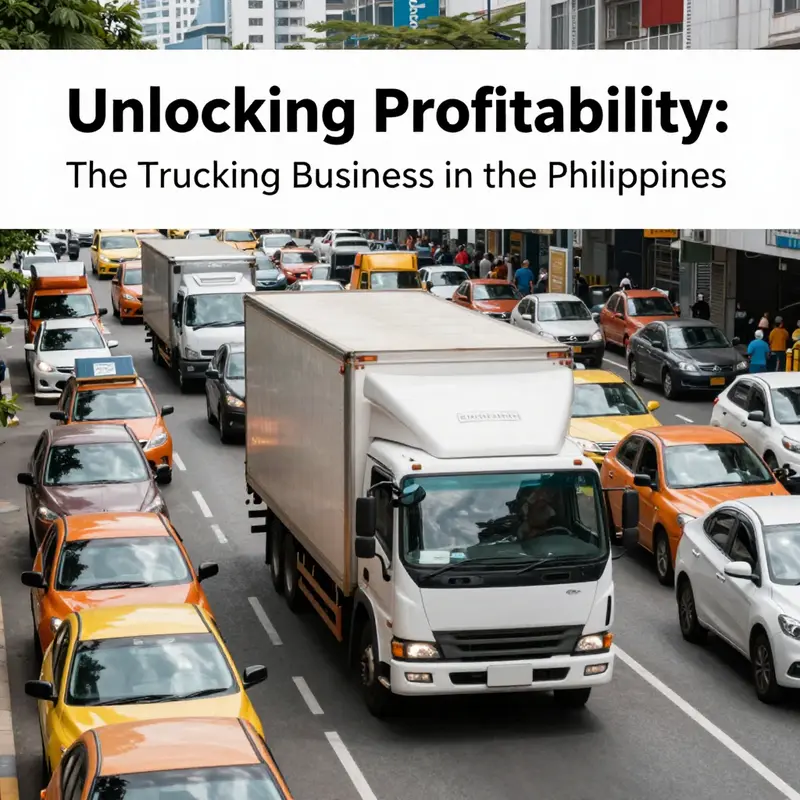
Profitability in the Philippine trucking industry is not a given; it is earned through a deliberate orchestration of assets that stretches across islands, municipalities, and market cycles. The country’s steady economic growth has expanded the appetite for freight services, yet it has not erased the friction that makes margins leaner than they appear in glossy forecasts. The demand for transporting goods, equipment, and supplies is real and persistent, but so are the headwinds—the volatility of fuel, the struggle to attract and hold skilled drivers, and the persistent inefficiencies in route planning. When viewed together, these factors shape a profit profile that rewards discipline, innovation, and patient capital more than sheer volume or price hoarding. The profitability equation thus shifts from chasing top-line growth to tightening every link in the chain from load tender to final mile delivery. In this context, a well-planned trucking operation can still deliver sustainable returns, provided the owner-operator or fleet manager treats cost control, reliability, and adaptability as core competencies rather than afterthoughts. The experience of regional players, including a detailed profitability analysis of MC Trucking Services in Surigao City between 2015 and 2021, reinforces this view: sustainable margins exist where management pairs disciplined operations with reliable partnerships and a willingness to reinvest in efficiency. The lesson is not that profitability is easy; it is that it is achievable for those who design around constraints rather than ignore them. The arc of opportunity remains real, but the path to it demands a precise understanding of the three principal pressure points that often determine the fate of a freight operation in the Philippines: fuel cost dynamics, labor availability and retention, and the frictions embedded in route optimization and network connectivity. The chapter that follows weaves these threads into a single narrative about how profitability can be built, sustained, and scaled in a market that rewards logistical intelligence as much as it rewards physical assets. With that orientation, the discussion moves from recognizing the challenges to shaping a practical, field-tested approach to navigating them.
Fuel price volatility is the most visible and persistent pressure on operating margins. Diesel costs in particular can swing on short notice due to global crude movements, local tax structures, and fluctuations in pump pricing. For a long-haul operator covering substantial miles, even a small tick upward in per-liter fuel consumption translates into thousands of pesos more per week. The impact multiplies when a fleet runs close to capacity or when fuel constitutes a large share of total operating expenses. In response, savvy players do not rely on pass-through pricing alone. They build resilience through a combination of fuel management discipline, rate design, and operational design. That includes setting transparent fuel surcharges tied to fuel indices, negotiating longer-term fuel contracts where feasible, and cultivating a culture of efficient driving and maintenance. It also means embracing routes and schedules that minimize idling and excessive speed—factors that not only cut fuel burn but also reduce wear on the powertrain. The strategic takeaway is clear: price risk cannot be eliminated, but it can be skillfully managed with data-driven discipline, not reactive pass-throughs. The research surrounding the broader market underscores the inevitability of fuel volatility in shaping profitability and the need for proactive hedging and pricing strategies to stabilize margins over time.
Labor remains the other uncontrollable variable that often sets the ceiling on a fleet’s growth potential. The trucking sector in the Philippines contends with an aging driver base and a generational shift that hastens turnover and raises training costs at a time when the demand for road freight is expanding. Even in markets with strong freight demand, high turnover creates a treadmill effect: continuous recruiting, onboarding, and retraining eat into productivity and administrative capacity. Retention strategies must go beyond higher wages to include guaranteed home time, predictable routes, and a safer, more respectful working environment. For owner-operators considering a leap into fleet work, this dynamic may tilt the economics toward partnerships that offer stable, well-managed employment pipelines rather than solitary independence. A robust people strategy—investing in driver safety, career progression, and quality-of-life improvements—becomes a core driver of profitability because it directly influences fleet utilization, maintenance scheduling, and service reliability. The literature on trucking operations points to a similar conclusion: workforce stability reduces training costs, lowers downtime, and improves customer satisfaction, all of which contribute to steadier margins over the long run. Those who design compensation and career structures with an eye toward retention will find that the cost of labor can be transformed from a fixed drag into a variable that aligns with utilization and service levels. To illustrate this transformation, consider the broader lesson from industry analyses and the Surigao case: when a fleet can count on a capable, motivated crew, the hard realities of route fragmentation and regulatory complexity become less intimidating, because the organization can adapt more readily to shifting demands and constraints.
Route optimization sits at the intersection of efficiency and reliability. In the Philippines, the geography itself—an archipelago with uneven road quality, urban congestion, and variable infrastructure investment—creates a natural tension between speed, cost, and service levels. In many operations, planners resort to shortcuts or outdated routing practices that promise immediate gains in time but cost more in fuel, maintenance, and customer dissatisfaction over the longer horizon. The result is a pattern of longer-than-necessary delivery times, higher fuel consumption, and a fragile reputation for on-time performance. Real-time data, robust routing software, and a strong network of regional hubs can overturn this pattern, but they require a willingness to invest in information systems and to integrate with regional logistics ecosystems. The most effective route optimization goes beyond “shortest distance” checks; it considers traffic patterns, road quality, seasonal constraints, and the variability of demand across markets. It also requires a peer network that shares information about load availability, equipment compatibility, and preferred loading and unloading windows. In practice, the gains from better routing accrue across the fleet: higher asset utilization, fewer backhauls, tighter delivery windows, and more predictable cash flows. When a carrier can reduce idle time and optimize tire wear and fuel burn through smarter routing, it indirectly supports more competitive pricing, because it strengthens the ability to deliver at a given service level with lower cost per mile.
The literature also highlights a broader structural challenge: a highly fragmented logistics network. In more developed markets, digital platforms and regional hubs knit together shippers, carriers, and warehouses with relative ease. In the Philippines, physical distance complicates the flow of information and goods, and digital connectivity is uneven. The result is a misalignment between where loads are generated and where capacity sits, which inflates empty miles and stretches timelines. The remedy is not just software but a deliberate alignment of network design with the geography and the regulatory environment. This alignment means investing in telematics, driver performance analytics, and a culture of continuous improvement around loading practices, vehicle maintenance, and route discipline. It also means building or joining strategic partnerships with shippers and logistics providers who value consistency and reliability as much as price alone. The narratives emerging from studies of the sector emphasize that profitability hinges on the capacity to convert scattered assets into a well-coordinated network, capable of delivering predictable performance in a volatile market.
The points above are not isolated concerns but interdependent forces that shape the real-world economics of trucking in the Philippines. Infrastructure limitations and regulatory requirements hamper efficiency and add to costs. Poor road conditions and traffic congestion increase fuel consumption and maintenance expenses while eroding delivery speed. Compliance with licensing, permits, and safety standards requires time and administrative resources that could otherwise be allocated to value-adding activities such as service development or fleet upgrades. The MC Trucking Services case in Surigao City demonstrates that even in regional markets, profitability can be achieved through disciplined management, careful capital allocation, and a willingness to partner with customers and suppliers who share a long-term view of freight flows. The takeaway is practical: profitability is not purely a function of scale, but of how well a business designs its processes around the realities of its operating environment. In concrete terms, this means pairing a fleet with a clear service proposition—whether it is speed, reliability, or specialized handling—with a cost structure that remains flexible as conditions change. It means ensuring that every mile traveled is justified by a corresponding revenue opportunity, and that every regulatory hurdle is treated as a business process to optimize rather than a bureaucratic barrier to overnight growth. It also means acknowledging that profits in trucking are rarely the result of a single adjustment; they emerge from a portfolio of changes across purchasing, maintenance, scheduling, and relationships. A practical path forward, then, begins with a careful diagnosis of where a given operation loses the most value—whether through fuel inefficiency, driver turnover, or route waste—and ends with a deliberate design of interventions that address those losses in a coordinated way. This is where the potential of partnerships, technology, and people converge to create a resilient profit model.
For operators seeking to translate these insights into action, the balance lies in choosing the right scale, the right partners, and the right investments at each stage of growth. Small fleets may gain momentum by focusing on a narrow lane or a handful of high-demand routes, deploying targeted route optimization, and building a reputation for reliability with a few trusted shippers. Larger operators, facing more complex networks, can accelerate profitability by investing in end-to-end visibility across the supply chain, integrating route planning with maintenance scheduling and driver performance management. Across both ends of the spectrum, the central logic remains: profitability is a function of how well the enterprise plans for volatility rather than simply trying to outlast it. The search for stability in costs, the recruitment and retention of talent who understand the business at a granular level, and the deployment of data-driven routing are not abstract imperatives but practical moves that shape daily operations and long-haul viability. In that sense, profitability is less about predicting every market movement and more about building a system capable of absorbing shocks, learning from near-misses, and continually refining how value is created and protected along the freight journey.
As a closing reflection, consider how the three pillars—fuel efficiency, people, and routing intelligence—must be woven into a single operating philosophy. When fuel volatility is addressed with transparent pricing and disciplined driving, when labor is nurtured through meaningful career paths and reliable schedules, and when routes are optimized through real-time data and a connected network, profitability starts to look less like a fragile outcome and more like a predictable consequence of deliberate design. The literature and case evidence converge on a simple truth: the Philippine trucking market offers genuine profit potential for those who treat resilience as a strategic asset rather than an afterthought. That attitude—one that anticipated volatility, rewarded reliability, and invested in people and technology—will be the difference between occasional profitability and sustained success. For operators, the journey is not a leap into an uncharted market but a careful navigation of a familiar terrain with better tools, clearer plans, and stronger partnerships. It is about steering with intention through the currents of fuel, labor, and route complexity toward a shoreline where service quality, cost discipline, and strategic collaboration together create enduring value.
To connect this discussion with a broader perspective on people-centered strategies in trucking, see the evolving emphasis on investing in human capital as a core driver of success. Investing in People—Key to Trucking Success. Integrating this approach with disciplined fuel management and smarter routing can turn volatility into a framework for consistent profitability, even in a market as dynamic as the Philippines. For readers seeking external validation on market dynamics and long-term profitability trajectories in regional freight, a comprehensive external reference highlights the market’s growth potential and the ongoing need for strategic risk management in the face of price volatility and demand shifts. External resource: https://www.researchandmarkets.com/reports/6897457/philippines-freight-trucking-market-2025-2031-outlook
Chapter 4: From Niche Routes to Resilience—Profitability Lessons for Philippine Trucking
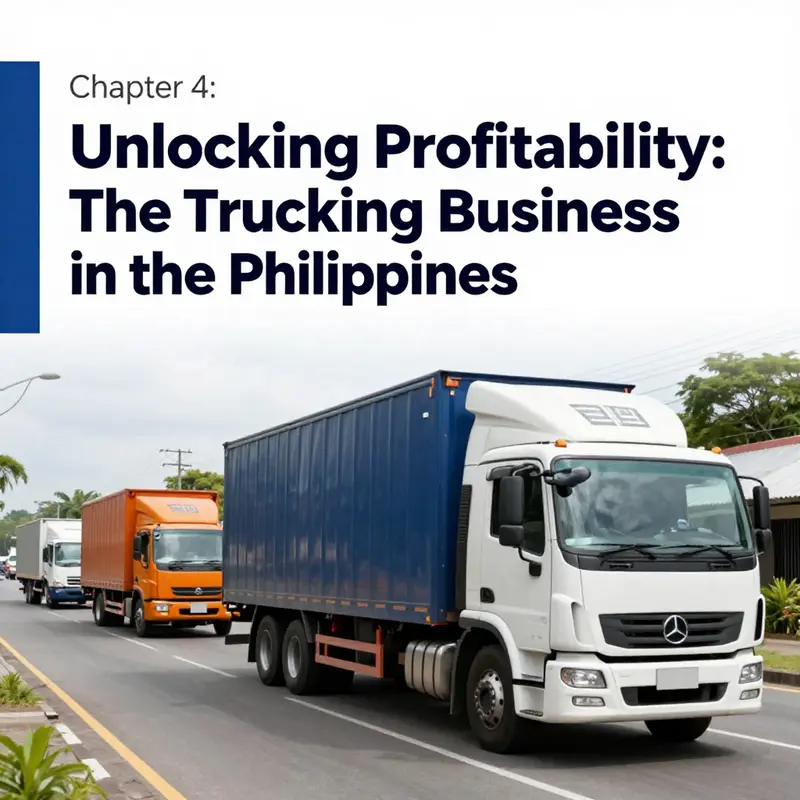
Profitability in Philippine trucking hinges on asset utilization, disciplined cost management, diversified services, and resilient planning for regulatory, infrastructural, and market volatility. The Surigao City case demonstrates how niche market focus, basic digital tools, strategic partnerships, and robust risk buffers can sustain margins across years despite fuel swings and disruptions.
Final thoughts
The trucking business in the Philippines presents a landscape ripe with opportunities for profitability, informed by a growing economy and increasing demand for logistics services. Nevertheless, the hurdles of high operational costs and infrastructure challenges require strategic foresight and sound management practices. By evaluating the key factors influencing profitability and learning from established case studies, stakeholders in logistics, construction, food distribution, and fleet management can harness the potential within this sector. In a thriving market, success favors those who diligently adapt and innovate in response to evolving industry dynamics.