
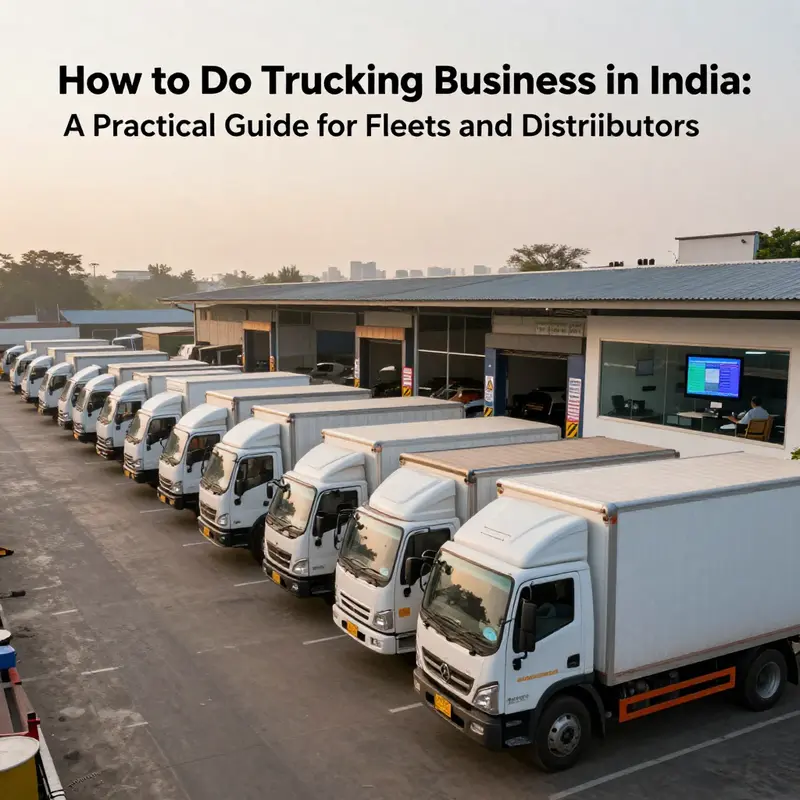
Launching and managing a trucking business in India requires precise alignment of regulatory compliance, commercial strategy, capital planning and technology adoption. This guide addresses those four pillars with industry-specific perspective for Logistics & Freight Companies, Construction & Engineering Firms, Fleet Management Companies, and Food & Beverage Distributors. Chapter 1 explains the legal framework and operational mandates that govern commercial fleets and how to embed compliance into daily operations. Chapter 2 evaluates business models, niche selection and demand signals that determine route design, asset mix and customer targeting. Chapter 3 outlines financing, vehicle procurement and fleet maintenance practices to control total cost of ownership and maximize uptime. Chapter 4 presents technology platforms and scaling strategies — from telematics to marketplace integrations — that drive efficiency and growth. Together these chapters form an integrated operational playbook for establishing and expanding a trucking enterprise in India.
Chapter 1 — Charting the Regulatory Roadmap for a Trucking Startup in India
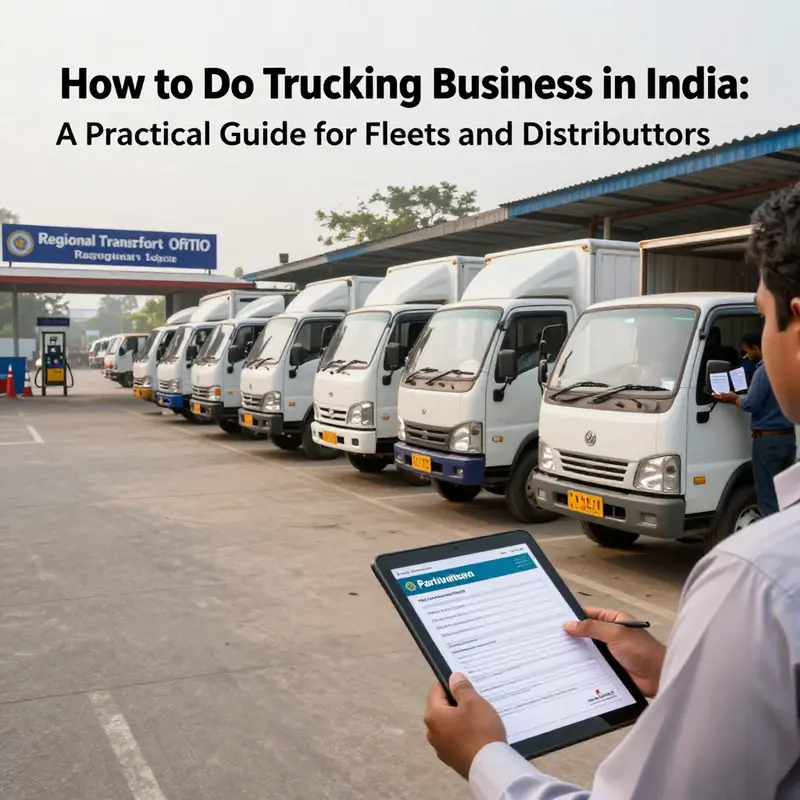
Launching a trucking venture in India begins long before depot gates swing open. It starts with a clear map of rules, permits, and records, because in freight transport the law is the backbone that keeps operations lawful, predictable, and ship-ready. The Motor Vehicles Act of 1988, as amended over the years, provides the scaffolding for what it means to move goods on Indian roads. It sets the baseline for licensing, vehicle fitness, insurance, and road-safety expectations. Yet it is not a static frame. The regulatory landscape evolves with safety concerns, environmental goals, and the growing complexity of cross-border commerce. A new entrant who understands this landscape can transform compliance from a tedious checkbox into a strategic advantage that reduces delays, cuts unnecessary costs, and builds trust with shippers and customers. In this chapter, we follow a practical thread through licensing, permits, insurance, and the digital governance that now threads through every shipment, from the moment a box truck leaves the warehouse to the moment it reaches its final destination.
Licensing and registration are the first pillars. A Transporter’s Permit is the credential that legitimizes your ability to move goods, issued by the state RTO based on vehicle class and the nature of goods. The vehicle itself must be registered under the appropriate Goods Carrier category, and you must decide early whether your operations will be intrastate, inter-state, or both. If you plan to haul across state lines, an Inter-State Permit is required, and for smoother national mobility, an All-India Permit can significantly reduce friction at state borders and route checkpoints. The administrative pathway is now complemented by a centralized e-Permit system, a digital channel designed to streamline cross-border movements and minimize on-road delays. In practice, setting up this framework means assembling a dossier of documents and securing licenses, registrations, and permits before the first load moves.
Insurance sits alongside registration as a non-negotiable spine. The law requires third-party liability insurance, a baseline that protects against liabilities to third parties in the event of an accident. Comprehensive insurance, while optional, is a prudent hedge against cargo loss, damage, and other contingencies. Regular vehicle fitness certificates every six months guarantee that the fleet remains road-ready, with emissions, braking, and structural integrity all subject to periodic checks. These checks are not merely bureaucratic hurdles; they are a way to shield operators from costly breakdowns, unplanned downtime, and reputational harm that accompany safety lapses. The continuous drumbeat of inspections, renewals, and due diligence becomes a rhythm that sustains reliability in service delivery.
Beyond the four wheels and the license plate, a broader regulatory architecture governs the movement of goods across state lines and through digital channels. The GST regime has harmonized taxation for transport services that cross state boundaries, which is particularly relevant for operators who assemble multi-state supply chains. A GSTIN is essential if the business crosses the turnover threshold, and understanding the timing and documentation of tax compliance helps maintain healthy cash flows. The e-way bill, a product of the GST ecosystem, requires digital documentation for goods movement above a prescribed value. The practical effect is smoother border clearance and transparency across borders within the country. For a new entrant, this means integrating freight documentation with tax reporting, so invoices, transport documents, and e-way bill IDs align with returns filing. When done well, GST compliance becomes a predictable cost of doing business rather than a source of inadvertent penalties or supply-chain hold-ups.
Permits are the second major lane in the regulatory highway. State permits govern intra-state operations, and their renewal and compliance become recurring operational tasks. For those who aspire to national reach, All-India Permits offer a more flexible regime that reduces the need for multiple state-level authorizations. The decision to pursue All-India Permits depends on route structure, cargo mix, and the cadence of inter-state work. In any case, the objective remains the same: maintain a valid permit suite that aligns with the chosen business model, while keeping a careful eye on the rules for each corridor you intend to serve. The journey through permits also underscores the value of staying current with regulatory updates. While digital platforms simplify many steps, permits still anchor your legal authorization to operate and are the gatekeepers that enable cross-border freight to move efficiently.
Documentation and record-keeping are not merely administrative chores; they are the operating fabric of compliant trucking. Vehicle registrations, driver licenses, insurance policies, and fitness certificates must be current, accessible, and auditable. Tax filings, GST returns, and e-way bill records need reliable digital workflows, not scattered spreadsheets. The modern trucking operator benefits from a posture of proactive documentation: a centralized system where renewals, inspections, permits, and tax obligations are tracked with alerts and escalation paths. This discipline pays dividends in the form of fewer service disruptions, less border friction, and an ability to scale without losing control over compliance. In this sense, compliance becomes a capacity builder, enabling growth without compromising reliability or trust with customers.
The regulatory framework across these domains is not static. Periodic amendments to the Motor Vehicles Act and related regulations, along with evolving safety and environmental standards, require a foundational mindset: stay informed, plan for changes, and embed flexibility in operations. There is value in cultivating relationships with the local RTOs and state transport departments; a proactive dialogue often helps illuminate upcoming changes and can yield smoother permit renewals and faster clearance at checkpoints. A practical practice is to maintain a compliance checklist that covers licensing, permits (state or All-India), vehicle registrations, insurance, fitness renewals, GST registrations, e-way bill obligations, and the latest road-safety and emission norms that apply to your fleet. Digital tools can support this discipline by digitizing documents, flagging renewals, and connecting with tax software for accurate returns.
Technology, in this context, acts not as a substitute for compliance but as an embodied extension of it. Fleet management systems that monitor fuel consumption, location, and maintenance schedules also support regulatory compliance by providing traceable evidence of maintenance regimes, driver behavior, and service intervals. Integration with e-commerce or B2B marketplaces is increasingly common, enabling a steady flow of freight and reducing idle time between loads. Digital invoicing, accounting, and tax tools help ensure that financial records reflect regulatory realities and support transparent audits. The net effect is a more reliable operation, where regulatory adherence translates into predictable service levels, improved driver welfare, and stronger relationships with customers who demand consistent compliance as part of their own risk management.
The legal framework is, at its core, a map. But the map is useless without knowing how to read it and how to travel efficiently along it. This is where a practical mindset matters. Build a compliance-centric culture in which every new vehicle, driver, and route is assessed against the same standard. Create a shared repository of permits, registrations, insurance policies, fitness certificates, and tax documents. Establish routine governance around e-way bills and GST returns, and reserve time for periodic audits of records and processes. Consider seeking expert guidance to navigate nuanced rules, especially as you add cross-border routes or specialized cargo. And remember that while the law can appear dense, it is designed to protect everyone who participates in the freight ecosystem—from drivers and fleet owners to shippers and end customers. When viewed through that lens, compliance is not a burden but a competitive capability that sustains reliability, reduces risk, and unlocks scale.
As you plan the next phase of growth, keep an eye on policy developments that align with national logistics priorities like improved interoperability across states, streamlined cross-border movement, and digital governance pathways. The National Logistics Policy and strategic programs such as PM Gati Shakti offer macro-level signals that influence the design of entry strategies, fleet composition, and regional expansion. Box-truck operations, with their nimble profile and suitability for last-mile distribution, fit well within these aspirational frameworks. They enable efficient urban delivery, connect smaller warehouses to regional networks, and serve the burgeoning requirements of e-commerce-driven supply chains. And because these pathways rely on predictable movement through regulatory channels, any new entrant who internalizes the regulatory rhythm—from licensing to e-way bills to cross-state permits—will be better positioned to capture opportunities as the market evolves.
For readers seeking practical anchors, one reliable route to current rules is the official gateway that consolidates registration, licensing, and permits under the oversight of the Ministry of Road Transport and Highways. While it is important to consult multiple sources for context and updates, this portal remains a cornerstone resource for the exact language and latest procedural steps. External guidance should always complement official sources, not replace them. In that spirit, a broader awareness of ongoing regulatory relief measures—such as temporary accommodations that ease operations during disruptions—can help operators maintain continuity without compromising compliance. See the discussion on regulatory relief for trucking during winter storms for a concrete example of how policy adapts to real-world conditions. Visit https://titanbusinesstrucks.com/regulatory-relief-winter-storms-trucking/ for details.
In summary, the regulatory framework for trucking in India is a interconnected system of licenses, permits, registrations, insurance, and digital compliance. A startup that treats compliance as a strategic asset—integrating licenses with fleet management, GST with invoicing, and permits with route planning—can build a resilient platform for growth. The road to scale is paved by clarity of requirements, disciplined record-keeping, and an adaptive approach to evolving standards. The journey is not merely about avoiding penalties; it is about securing predictable operations, enabling reliable service, and earning the confidence of customers who rely on timely, compliant freight movement every day. For those who want a definitive, up-to-date guide to the exact regulatory language and latest updates, the official portal remains the reference point to anchor every decision. More details can be found at the Parivahan portal, which aggregates vehicle registration, permits, and licensing under MoRTH and serves as a critical touchstone for anyone serious about starting or expanding a trucking business in India: https://parivahan.gov.in
Charting the Indian Trucking Frontier: Models, Niches, and Growth in a Regulated Market
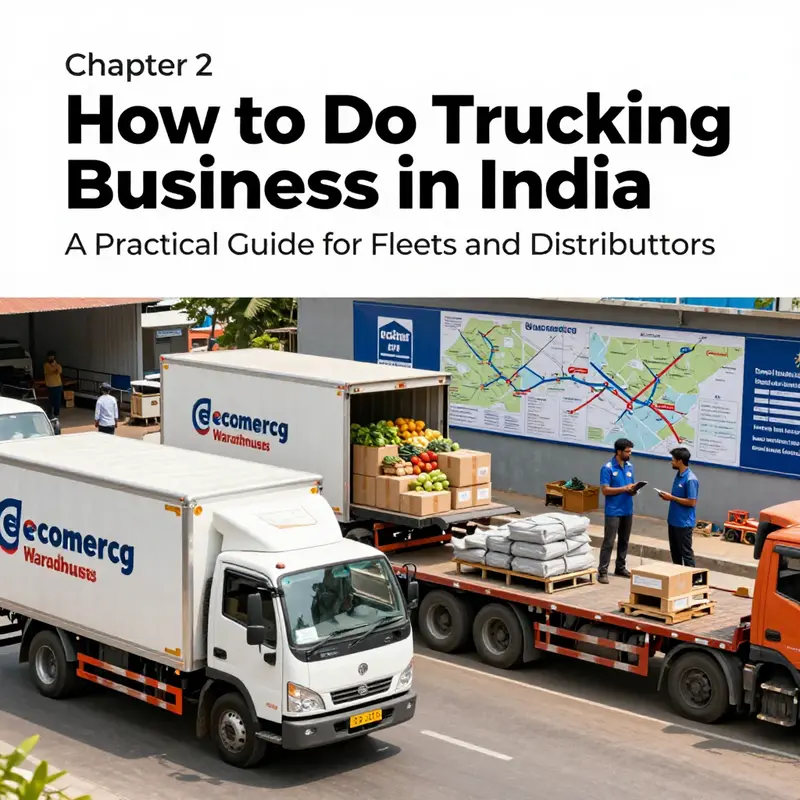
Starting a trucking business in India is less a single leap than a careful process of aligning road, rules, and routes into a competitive rhythm. The market is vast, the demand is robust, and the corridors between city markets are being reimagined by digital platforms, streamlined permits, and a push toward containerized, intermodal flows. To navigate this landscape, an entrepreneur must blend ambition with a precise understanding of regulatory boundaries, operational choices, and the technological levers that convert a handful of trucks into a scalable logistics capability. The journey begins with clarity about the regulatory framework, for it is the compass that keeps a new venture on track while it discovers its own niche. The Motor Vehicles Act of 1988, amended over the years, creates the backbone of this compass. It prescribes licensing through a Transporter’s Permit, mandates registration under the Goods Carriers category according to vehicle weight, and differentiates between intra-state and inter-state operations via permits. These are not mere formalities; they determine where a truck can travel, what documents must accompany it, and how insurance coverage is structured for both third party liability and cargo. Regular fitness certificates, required every six months, keep the fleet in a predictable safety envelope. In this regulatory maze, the practical path to compliance is found in steady, methodical actions: securing permits, maintaining up-to-date registrations, and ensuring that every vehicle bears the appropriate fitness and insurance. For inter-state operations, the system increasingly favors digital processes through e-Permit portals, linking state and central authorities in a way that reduces the friction of crossing borders. The official portal for vehicle registration, permits, and licensing remains the most authoritative touchstone, and it is wise to anchor your plans in its guidance as you scale. This foundation is not only about legality; it is also a platform for trust. When drivers, shippers, and warehouses observe consistent compliance, it becomes easier to secure longer contracts and more predictable work streams. The next layer of strategy is the choice of business model, which in India can be as diverse as the market it serves. A local or regional delivery operation can become the backbone of last-mile efficiency for e-commerce, groceries, and regional retailers. Long-distance freight connects major city hubs, moving goods between production zones and consumption centers. Specialized transport, including climate-controlled or hazardous-material handling (which brings additional certifications and safety requirements), opens doors to higher-value, margin-rich work. On-demand logistics, powered by digital matching platforms, can unlock flexible capacity and optimize utilization in ways that traditional load boards cannot. In practice, success often hinges on how well a fleet can be modularized to serve multiple niches without sacrificing reliability. A growing insight is the value of containerised solutions as the industry modernizes. Containerisation promises faster turnover, reduced cargo damage, and better integration with rail and ports. It supports standardized handling and can streamline loading and unloading at warehouses and terminals. While this is not a universal prescription, it represents a deliberate path toward higher asset utilization and lower per-ton costs. In the Indian context, where road freight carries a heavy share of surface movement, containerised models can transform margins by consolidating loads and enabling smoother intermodal transitions. A study referenced in industry analysis highlights containerisation as a transformative lever for efficiency and profitability, especially when combined with digital documentation and real-time tracking. The opportunity here is not to replace traditional trucks overnight but to augment them with modular, container-friendly configurations that adapt to varied routes and cargo profiles. The key is to design a fleet that can switch between fast, point-to-point deliveries and more structured, container-driven cycles, depending on customer needs and access to terminal networks. As you envision the right mix, funding and asset acquisition become the next strategic hinge. The initial investment typically covers purchase or lease of box trucks with adequate load capacity, routine maintenance, fuel, and working capital for the early months when cash flow can be tight. Financing options abound through banks and non-banking financial institutions, with leasing presenting a lower-entry route for operators testing the market. When selecting vehicles, the emphasis should be on reliability, ease of maintenance, and compliance with emission norms. In India, BS-VI compliance is a non-negotiable baseline, underscoring the shift toward cleaner, more fuel-efficient fleets. Given the capital intensity, prudent financial planning includes a clear view of maintenance reserves and fuel efficiency targets, along with a realistic forecast of utilization. A disciplined approach to procurement helps prevent early depreciation and keeps the fleet aligned with evolving regulatory and market expectations. Once the fleet is in motion, the human element becomes crucial. Hiring licensed drivers with valid driving licenses appropriate to the vehicle class is essential, but equally important is appointing a fleet manager or logistics coordinator who can orchestrate schedules, route planning, and customer communications. Technology is a natural ally here. GPS tracking, telematics, and fuel-management systems provide the visibility that enables you to optimize routes, monitor driver behavior, and schedule preventive maintenance. A sophisticated operations backbone reduces idle time, improves on-time delivery rates, and builds the reliability that shippers pay a premium for. In parallel with physical assets and personnel, the administrative infrastructure must be built to scale. The business entity type—sole proprietorship, partnership, LLP, or private company—shapes regulatory obligations and growth options. Goods and Services Tax registration is often mandatory once turnover crosses a threshold, with PAN and TAN forming the core of tax compliance. For a government-facing, digital-first operation, DigiLocker and e-Sign services offer a path to paperless documentation, speeding up approvals and reducing risk of misplaced records. A practical note for inter-state operations is the e-Permit system. The National Port Authority’s portal—the gateway for inter-state permits—offers a cleaner, timelier channel to secure the rights to traverse multiple states. This is not merely a regulatory checkpoint; it is also a strategic mile marker, signaling to customers and partners that your operation meets the formal standards required to participate in larger, more complex networks. To translate regulatory potential into everyday performance, technology and integration become the backbone of efficiency. Fleet management software tracks fuel consumption, vehicle location, and maintenance schedules, while integration with e-commerce platforms or B2B marketplaces opens a steady stream of work. Digital invoicing and accounting tools create transparency that builds confidence with shippers, banks, and suppliers alike. The channel strategy matters as much as the operational one. A professional online presence helps differentiate a trucking business in a crowded market. A well-designed website, coupled with Google My Business listings, can improve discoverability, while membership on logistics platforms increases exposure to load opportunities. Yet the most durable growth comes from relationships with warehouses, manufacturers, and regional distributors who value dependable, scalable service. In this ecosystem, compliance and safety cannot be treated as afterthoughts. Regular vehicle inspections, routine maintenance, and driver training in safe driving practices must be embedded in the culture of the operation. Working hours regulations, with mandated rest breaks and daily driving limits, safeguard drivers and improve performance on long hauls. Emission norms and a commitment to sustainability should guide fleet decisions and procurement choices, aligning with broader environmental objectives and the long-term profitability of the business. As the operation grows, the path to scale is rarely linear. It is more often a pattern of controlled expansion: modestly increasing fleet size, adding specialized vehicles like refrigerated units or flatbeds as demand dictates, and exploring partnerships with national logistics providers to extend reach and service levels. Branding and customer service excellence also matter, because consistent reliability compounds into reputational value that attracts larger contracts and more favorable payment terms. India’s logistics landscape is being reshaped by policy initiatives such as the National Logistics Policy and PM Gati Shakti, which aim to weave infrastructure, digitization, and policy into more integrated supply chains. The potential payoff is substantial, particularly for operators who can align capacity with corridor-level demand and participate in multi-modal flows that reduce dwell times and congestion at critical hubs. Throughout this journey, the decision to pursue containerised approaches versus traditional road-only models should be revisited periodically. Containerisation is not a universal cure, but when combined with intelligent routing, terminal access, and digital documentation, it can unlock efficiencies that are otherwise unattainable in direct road movement alone. The sector’s profitability often hinges on asset utilization—the ratio of loaded miles to total miles—and on the ability to minimize cargo damage and misrouting. With the right mix of fleet, technology, and customer alignment, a trucking venture can move from a handful of trucks to a network that covers multiple lanes, with predictable service levels that shippers can count on. As you reflect on the path forward, keep in view the broader ecosystem that supports this growth. The government’s emphasis on logistics digitization, standardized processes, and intermodal connectivity creates a favorable backdrop for container-enabled trucking. For entrepreneurs, the opportunity lies not just in moving goods but in orchestrating an end-to-end flow that reduces waste, shortens cycle times, and enhances visibility for all stakeholders. In practical terms, that means cultivating relationships with warehouses and terminals, investing in data integrity, and maintaining the discipline to invest in people and technology in tandem. The most enduring lesson is that this is a business built not only on road and iron but on trust and reliability. By aligning the regulatory framework with a clear model, an adaptable fleet, and a customer-centric approach, a trucking venture in India can turn a complex set of requirements into a competitive edge. If you are exploring how to do trucking business in India, the central question is not merely how to drive trucks, but how to design a service that scales with demand, respects the rules, and creates measurable value for clients and for your own team. To proceed, you will want to validate your model through a few anchor clients, test your route networks on a small scale, and iterate your fleet mix to reflect actual utilization patterns. As you do so, keep an eye on technology adoption, because even modest investments in tracking, routing, and digital invoicing can unlock a level of control that translates into faster onboarding of clients and better cash flow. And when the learning curve tightens, return to the fundamentals: compliance, safety, and service reliability remain the non-negotiables that unlock long-term growth. For further reading on the evolution of containerised logistics and its management implications, a comprehensive study in the public domain offers a deeper theoretical context that complements the practical roadmap outlined here: https://www.unnayan.org.in/issue/volume-xi-september-2019-special-issue/ . If you would like a practical, country-specific comparison of containerised trucking versus traditional road freight, you can also explore industry-focused resources that discuss regulatory and operational considerations in more depth. For actionable guidance on regulatory relief during emergencies and other contingencies, consider the insights available at this external resource: Regulatory relief for winter storms trucking. Together, these sources can help you refine a plan that not only survives the regulatory environment but leverages it to unlock greater efficiency and sustainability in India’s vibrant trucking landscape.
Financing the Road Ahead: Capital, Fleet Choices, and Lean Fleet Management for Indian Trucking
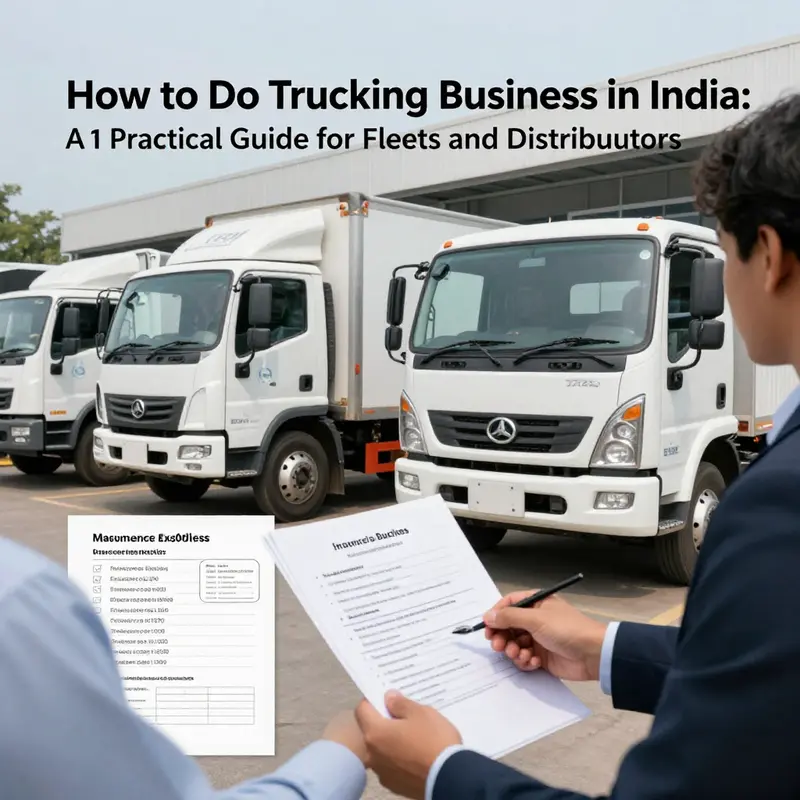
Securing the right capital, selecting the appropriate fleet, and running operations with disciplined, data-driven management form the trifecta that decides the fate of a trucking business in India. The journey begins long before the first box truck hits the road and continues long after the fleet starts rolling. It hinges on a clear view of cash flows, a sound understanding of asset costs, and a pragmatic approach to technology and people. In this landscape, the decisions around financing, vehicle procurement, and fleet management are not isolated acts but a continuous, interlocking set of choices that shape service reach, reliability, and profitability. A practical path combines solid financial framing with a fleet strategy tuned to the service model you choose—whether regional delivery, intercity freight, or a specialized cold-chain operation.
Financing a trucking venture in India is as much about managing risk as it is about securing assets. Banks and non-banking financial institutions offer traditional vehicle finance and working capital facilities, often anchored to the collateral value of the trucks themselves. But for startups and small-to-mid-sized fleets, the terrain is more nuanced. Leasing and hire-purchase arrangements can reduce upfront capex, preserving working capital for fuel, salaries, and maintenance. Manufacturer-led or specialized lenders may bundle maintenance plans or insurance into a financing package, easing the burden of administration and ensuring predictable monthly commitments. Government and quasi-government schemes can provide credit support or risk sharing, though access and terms vary by program and geography. A careful approach asks not only what monthly installment you can bear, but what the asset will return in terms of utilization and uptime over its life.
Crucially, lenders evaluate more than the asset value. A credible business plan with realistic cash-flow projections, a clear contract pipeline, and visible mileage utilization strengthens financing terms. The age, condition, and maintenance history of the fleet influence residual value and insurance costs, which in turn affect monthly payments and total cost of ownership. Insurance is not merely a regulatory box to tick; it is a risk-management tool that shapes loan terms and risk perception for lenders. Third-party liability coverage is mandatory, while comprehensive insurance for both vehicle and cargo helps minimize the impact of accidents, theft, or damage to goods in transit. In practice, partnerships with financiers often reward a disciplined approach to compliance, clean maintenance records, and transparent financial statements.
A robust cash-flow plan emerges from a clear picture of total cost of ownership. Upfront price is only the starting line. Ongoing costs include interest or lease payments, insurance, maintenance, spare parts, tires, fuel, tolls, and licensing charges. Depreciation and tax benefits can provide meaningful offsets, especially when viewed through the lens of year-on-year profitability and resale value. Startups should build a working capital buffer to cover fuel costs and driver salaries during demand lags or seasonal downturns. The most resilient models couple a disciplined capex pace with a predictable operating rhythm. Pilot fleets, short initial leases, and staged expansion help test routes, loads, and maintenance costs before committing to a larger scale.
Vehicle procurement is where strategy meets pragmatism. A clear fleet plan should align with service models: intercity freight often benefits from higher payload capacity and longer-range reliability, while regional distribution and last-mile delivery favor smaller, nimble trucks with strong urban maneuverability. New vehicles provide reliability, lower downtime, and manufacturer-backed maintenance, but require higher upfront investment. Used trucks reduce capex but can carry higher maintenance risk and shorter expected uptime. Leasing preserves capital but increases long-term cost; it also offers flexibility to scale or pivot with market demand.
Within procurement, the choice of vehicle class, engine options, and service networks matters. Buyers should assess payload requirements, route profiles, and road conditions. Engine durability, spare-parts availability, and the geographic reach of service centers influence uptime and maintenance costs. In the Indian context, BS-VI emission norms shape what can be operated efficiently on certain corridors and jurisdictions, sometimes encouraging a gradual modernization plan rather than an abrupt fleet replacement. For ventures considering energy-transition options, an early, modular approach to CNG, LNG, or electric propulsion can be attractive in dense urban corridors or regions with favorable incentives. However, the practical realities of charging and fueling infrastructure, range, and total life-cycle cost must be weighed against the current service needs and distance profiles.
Beyond the choice of new, used, or leased assets, procurement decisions should factor in maintenance contracts, warranties, and uptime guarantees. A well-negotiated service package reduces unplanned downtime, a crucial advantage in a business where even a single truck off the road can ripple through delivery promises and receipts. Operational readiness also includes a thoughtful depreciation plan that accounts for tax benefits and anticipated resale value. The smarter procurement approach blends reliability with flexibility, enabling a gradual build-out as contracts solidify and load visibility improves.
Fleet management then ties the asset and the plan together. Telematics and real-time monitoring are not luxuries but core capabilities that translate data into actions. Real-time location, speed, fuel consumption, idle time, and vehicle health feed route decisions, maintenance scheduling, and driver coaching. Onboard diagnostics enable preventive maintenance by flagging issues before they trigger breakdowns, thereby reducing downtime and extending asset life. Route optimization tools help minimize empty miles and maximize load factor, while digital load boards and marketplaces enhance utilization by matching capacity with demand across corridors. The key is to view data as a decision-support system rather than a reporting obligation.
Driver management and safety are integral to fleet performance. Training programs, adherence to hours-of-service regulations, and incident reporting frameworks safeguard people and cargo while improving reliability. A disciplined approach to driver payment, leave tracking, and compliance reduces turnover and enhances morale, which in turn sustains service levels and reduces accidental costs. The aim is a workforce that stays aligned with service commitments, understands route constraints, and participates in continuous improvement.
Maintenance discipline sits at the heart of uptime. Preventive maintenance based on hours, mileage, and manufacturer recommendations minimizes breakdowns and extends asset life. Maintenance analytics—interpreting patterns in part failures, fuel efficiency, and downtime cost per kilometer—helps optimize service intervals and inventory of spare parts. A thoughtful spare-parts strategy ensures critical components are available where needed, reducing downtime when a component fails. The broader objective is a reliable, predictable operation where asset availability supports strong on-time performance and customer trust.
Regulatory compliance remains a constant companion on the road. Vehicle fitness certificates, permits for intra- and inter-state movement, GST invoicing, and proper record-keeping ensure your operation avoids penalties and delays. Digital invoicing and accounting tools can simplify tax compliance and financial reporting, while a centralized repository for permits and licenses reduces the risk of lapses. In practice, compliance creates a foundation of trust with customers, lenders, and agencies, reinforcing your legitimacy and stability as a transport provider.
Technology, when adopted thoughtfully, amplifies human capability rather than replacing it. A well-implemented fleet-management platform integrates telematics, maintenance scheduling, driver records, invoicing, and compliance documents into a single, readable dashboard. This consolidation supports faster decision-making, clearer accountability, and improved cost control. It also opens opportunities to participate in broader logistics ecosystems, connecting shippers with carriers through digital freight marketplaces and load-matching networks. Such networks can improve load visibility and pricing, helping you keep trucks productive and driven by demand rather than idle time.
A practical path to scale blends disciplined financing with a phased fleet expansion. Start with a clear model of services, a realistic capital plan, and a pilot that validates utilization and reliability. As performance data accumulate, scale the fleet in line with proven demand, maintaining a tight control on maintenance costs, driver quality, and regulatory compliance. Partnerships with service providers, insurers, and training services can streamline operations and reduce friction as you grow. In this context, leadership emphasis on people, process, and performance matters as much as asset strength. A culture that values investment in people—drivers, mechanics, schedulers, and support staff—creates a durable competitive edge, and the idea of investing in people is not merely ethical but strategically sound. Investing in people key to trucking success illustrates this approach by grounding growth in capable, well-supported teams.
As you align financing, procurement, and fleet management, keep a forward view on policy momentum. The National Logistics Policy and related government initiatives aim to improve multimodal connectivity, efficiency, and ease of doing business in logistics. They shape incentives, modernization programs, and regulatory expectations that can influence financing terms, fleet upgrade cycles, and technology adoption. Staying connected to these developments helps you time capital expenditure, asset refresh cycles, and compliance upgrades in a way that minimizes disruption while maximizing value. For policy context, the National Logistics Policy provides a strategic framework that can inform your longer-range planning and risk assessment.
In sum, building a trucking business in India that endures requires a careful choreography of money, machines, and management. Financing must be anchored to reality—credible projections, solid collateral, and prudent risk management. Vehicle procurement should be driven by service needs, total cost of ownership, and a disciplined energy-transition plan that respects route profiles and infrastructure. Fleet management should weave together telematics, route optimization, driver training, and maintenance analytics into a single operating rhythm. When done well, this integration yields higher uptime, better utilization, stronger customer satisfaction, and a business model that can scale with opportunity rather than be overwhelmed by risk. The road ahead is long and dynamic, but with a coherent, data-informed approach to capital, assets, and people, you can turn the trucking venture into a dependable, profitable enterprise that thrives in India’s growing logistics landscape.
External reference for policy context: National Logistics Policy — https://www.morth.gov.in/ncp/national-logistics-policy
Chapter 4: Technology-Driven Growth in Indian Trucking — Platforms, Telemetry, and Scalable Operations
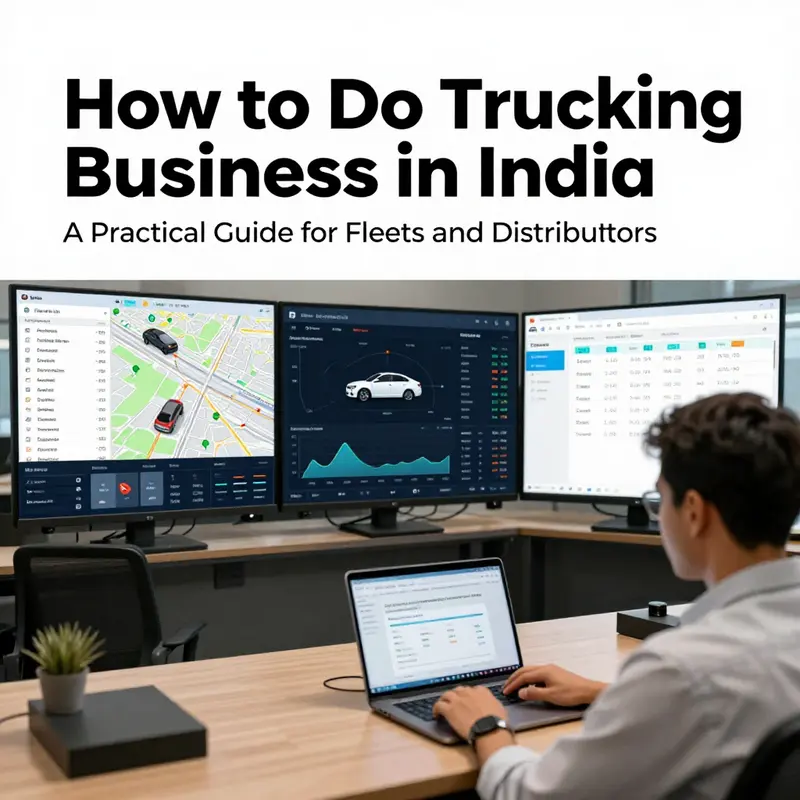
The Indian trucking sector is at a crossroads where technology can redefine margins, reliability, and growth. Road freight moves the bulk of commerce, yet fragmented fleets and paper-based processes have long constrained performance. In this landscape, the chapter of technology, platforms, and scalable operations reads not as a distant aspiration but as a practical path to unlocking value. Vehicles remain the backbone, but the real lift comes from the way data is captured, how loads are matched, and how fleets are managed in real time. As the regulatory framework evolves, especially with modernized permit systems and digital documentation, operators who blend asset ownership with digital muscle stand to gain stability and predictability. The shift is not a mere upgrade; it is a transformation in how speed, safety, and service quality are delivered across diverse geographies, from dense urban corridors to long-haul corridors linking metropolitan nodes.
The core of this transformation lies in telematics and fleet management. Telematics devices gather data from every axle, engine, tire, and driver action, and feed it into a central view of location, fuel use, and maintenance needs. When a dispatcher can see a vehicle’s exact position, its speed profile, and its fuel burn in near real time, they can reduce idle time, avoid wasteful detours, and schedule proactive maintenance before breakdowns. This data-centric discipline also makes driver performance transparent and actionable. Instead of blaming or rewarding based on memory or anecdote, teams can align incentives with measurable outcomes: on-time delivery, smooth acceleration and braking, and adherence to safe driving practices. The results show up not only in lower costs but in higher reliability, a trait that shippers increasingly prize in competitive markets.
Yet technology does not operate in a vacuum. It thrives when paired with thoughtful process design and a platform mindset. Digital freight marketplaces and cargo platforms—operating platforms that connect shippers with capacity and automate the lifecycle of a shipment—have begun to compress the long tail of freight. They enable dynamic pricing, real-time load matching, and end-to-end visibility that was once the preserve of large asset-heavy operators. In an industry historically dominated by negotiation and offline processes, these digital layers compress timelines, shrink risk, and provide a predictable revenue stream for carriers that can participate consistently in the network. This is not about chasing a single platform; it is about adopting a platform-enabled operating model where every truck, regardless of size, can access a steady stream of verified loads and trusted payment terms. For operators seeking to integrate people and technology, a compelling step is to adopt a holistic approach to fleet management that includes a human-centered, tech-enabled mindset. The strategic emphasis shifts from simply owning trucks to orchestrating the flow of work through data-driven planning, reliable execution, and adaptive service delivery. Transforming fleet management: the case for investing in human capital offers practical perspective on how people and software reinforce each other.
The potential of containerization and standardized intermodal practices also matters for Indian trucking’s future. Containerization, by providing standardized, secure, and stackable units, reduces handling variation and cargo damage while improving speed and predictability across the logistics chain. The earlier era of ad hoc cargo handling often created bottlenecks at loading docks and warehouses, inflating turnaround times. With containers, the road leg becomes a predictable segment in an end-to-end chain that can be bolstered by telematics, route optimization, and scheduled cross-docking. A peer-reviewed analysis cited in industry literature highlights containerization as a viable lever to boost margins and reliability in road freight. While the full value emerges when road, rail, and sea legs are coordinated, the road carrier’s role becomes more stable and scalable as standardization and visibility rise. This trend aligns neatly with India’s broader push toward standardized logistics processes and multimodal integration under national policy initiatives that seek to reduce friction across borders and borders within states. Keeping pace with these developments means not only upgrading engines and tires but also refining how cargo moves through the system so that every meter of road transport contributes toward what the ecosystem can collectively deliver.
Technology’s reach extends beyond hardware and platforms into the governance of scale. For a trucking operation to grow responsibly, it must connect asset deployment with demand signals in a way that sustains profitability. One practical path is to build strategic partnerships with manufacturers, warehouses, and logistics-enabled commerce channels that can deliver regular freight. Such partnerships stabilize volumes, reduce empty runs, and create a baseline revenue stream that can be buffered by dynamic pricing on the platform side. The interplay between capacity and demand is where data becomes a competitive advantage. Fleet managers who combine route optimization, predictive maintenance, and driver coaching with a disciplined sales and customer engagement program tend to outperform peers who rely on ad hoc growth. Human capital matters here just as much as hardware. The best operators invest in training for new processes, cultivate a culture of continuous learning, and re-skill employees to manage digital workflows, analytics dashboards, and exception handling during peak periods. The link between people and technology is not a compromise but a synergy that expands capacity without sacrificing reliability.
In practice, operators begin with a clear data strategy. They determine which metrics matter most for their customers and their fleet—fuel efficiency, on-time performance, cargo damage rates, and preventive maintenance compliance, among others. They establish data governance practices, standardize data collection, and ensure quality across sensors, telematics devices, and manual inputs. They then translate insights into operational changes: smarter load planning that minimizes backhauls, dynamic scheduling to adapt to traffic conditions, and proactive maintenance windows that keep vehicles healthy and available. This approach reduces variability in service levels, which is the currency of trust in logistics. It also underpins a scalable business model. A company that can predict maintenance needs and anticipate capacity constraints can seize opportunities during seasonal spikes or mass shipments around festival periods without overextending its finances.
The shift toward technology-driven scaling does not ignore the human element. Drivers remain the critical interface with customers, the face of service, and a source of operational risk if not managed well. Training that covers safe driving, regulatory compliance, and fatigue management is essential. In many Indian contexts, rest breaks and driving hour regulations create scheduling challenges that technology can help alleviate. A well-designed system uses intelligent rostering, real-time alerts for driver fatigue, and automated documentation to ensure compliance without compromising service levels. This humane approach to scaling respects drivers’ well-being while achieving efficiency gains. It also makes it easier to attract and retain talent in a sector that has historically faced high turnover, because workers experience clarity, fair treatment, and predictable routines.
Sustainability emerges as a practical, marketable aspect of scaling. Operators who explore cleaner technologies—whether electrified or gas-based propulsion where feasible—can hedge against volatile fuel prices and regulatory tightening around emissions. The cost dynamics, long-term depreciation, and maintenance profiles differ from conventional fleets, but the total cost of ownership often benefits from lower operating costs and favorable policy incentives. A tech-enabled strategy supports this transition by providing the data-driven case for when and where to electrify or adopt alternative fuels. The most successful players view sustainability not as a constraint but as a market differentiator that aligns with customer expectations, investor interest, and national objectives tied to NLP and PM Gati Shakti. The result is a scalable, responsible, and resilient trucking business that can weather disruption without sacrificing reliability.
The road to scalable growth is not a single pivot but a sequence of integrated moves. Start with a robust telematics and fleet-management foundation, layer in a platform-centric approach to demand, maintain container-aware cargo handling practices, and then build partnerships that stabilize volumes. Invest in people as much as machines, because software alone cannot carry a business through peak seasons or regulatory changes. Align maintenance with utilization so that every vehicle contributes to a predictable service curve. Track performance with clear dashboards; celebrate improvements in safety, reliability, and efficiency; and communicate progress transparently to customers and stakeholders.
This integrated approach resonates with the broader direction of India’s logistics ecosystem, where digital and physical infrastructures converge to create smarter, faster, and more reliable supply chains. It is a practical blueprint for operators who want to turn the complexity of a vast, diverse market into a disciplined advantage. The trucking venture becomes less about chasing raw volume and more about delivering consistent, trusted service—through data, through people, and through dependable platforms that knit together the entire shipment lifecycle. In this sense, technology, platforms, and scaling strategies are not optional add-ons; they are the means by which a trucking business in India becomes durable, competitive, and capable of sustained growth across changing times.
For a deeper, evidence-based exploration of containerization and road freight efficiency referenced in industry research, see the external resource: https://www.unnayan.org.in/ibme/vol11/specialissue2019/121-130.pdf
Final thoughts
Establishing a successful trucking business in India requires a coordinated approach across compliance, market positioning, capital acquisition and technology adoption. Compliance with the Motor Vehicles Act, accurate permit management and robust insurance protect operations. Selecting the right business model — whether last-mile box trucks, refrigerated trucks for food distribution, or heavy flatbeds for construction — determines asset configuration and customer targeting. Sound financing and disciplined procurement reduce total cost of ownership and ensure predictable cash flow while proactive maintenance and driver training maximize uptime. Finally, telematics, digital marketplaces and integrated accounting and invoice systems deliver the operational visibility and scalability necessary for sustained growth. By applying the regulatory, commercial, financial and technological practices outlined across these chapters, fleet owners and logistics managers can build resilient, compliant and profitable trucking operations that meet India’s expanding freight demands.