
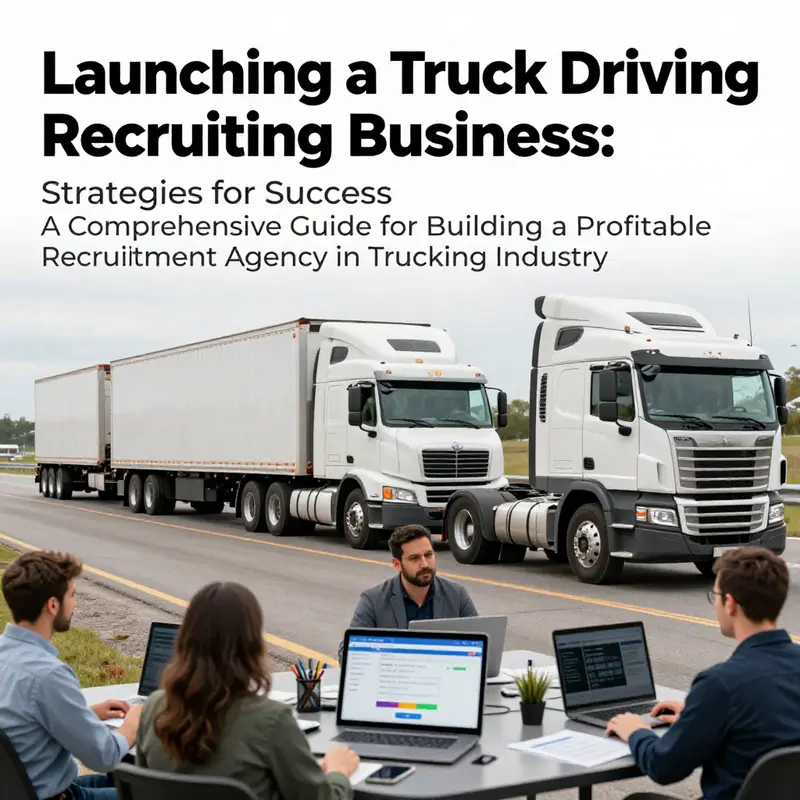
As the demand for skilled truck drivers continues to rise, launching a truck driving recruiting business has become a lucrative venture. This guide provides a step-by-step approach specifically tailored for logistics and freight companies, construction firms, fleet management companies, and food distributors. We will explore essential aspects that contribute to building a successful recruiting agency, including market research, legal frameworks, effective platforms, sourcing strategies, and crucial carrier relationships. By following these guidelines, you can establish a solid foundation and thrive in this competitive landscape.
Market Research as the Road Map: Identifying Profitable Niches in Truck-Driver Recruiting
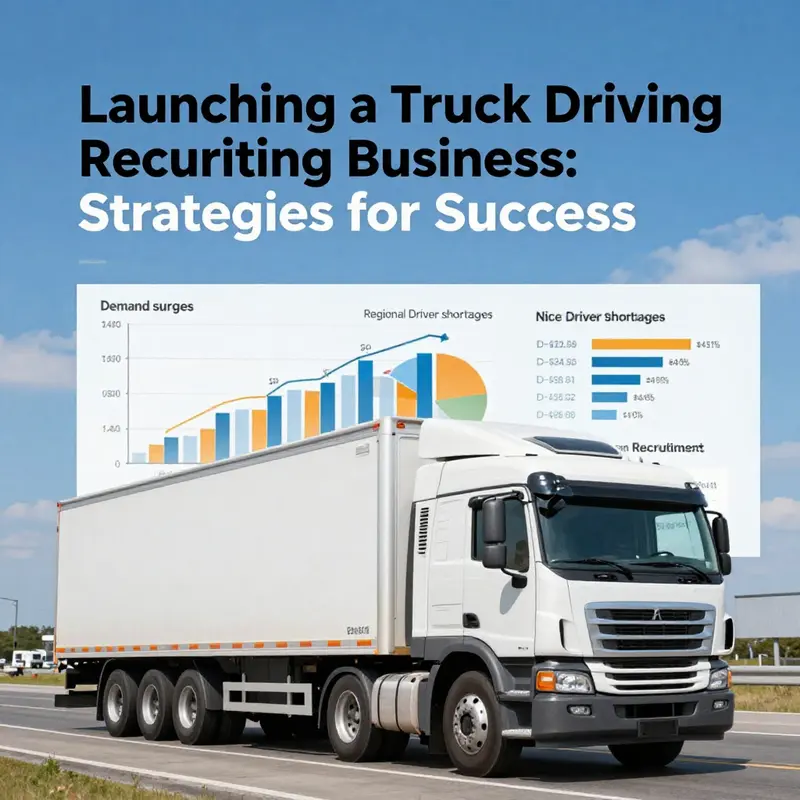
Market research is not a one-time sprint but the steady rhythm that keeps a truck-driving recruiting business aligned with reality. In this space, the road ahead is shaped by supply and demand cycles, regional freight patterns, and the evolving expectations of drivers who move goods across the country. Getting ahead requires more than a spreadsheet; it demands a disciplined process of listening to fleets, tracking shifts in regulations, and translating those signals into a clear, actionable niche. The essence of this chapter is to show how market intelligence becomes a differentiator. When you understand where the gaps are and which driver profiles matter most in your area, you can design services that feel bespoke even in a crowded market. The starting point is to map both demand and supply with an eye for nuance: not every region has the same needs, and not every job type commands the same appeal. This nuance becomes your strategic advantage and the compass for every decision that follows, from how you position your brand to how you allocate your recruiting resources.
A practical way to frame this journey is to view the market as a living ecosystem rather than a static target. Local freight volume, proximity to ports, manufacturing hubs, and distribution centers all drive the demand for drivers with particular qualifications. In addition to volume, the mix of freight types matters: long-haul dry van, regional delivery, hazardous materials, refrigerated goods, or specialized owner-operator arrangements each create distinct talent requirements. Within this ecosystem, the core question is not simply “Are there drivers out there?” but “Which drivers are most likely to stay, perform, and fit the needs of the carriers you intend to serve?” Answering this requires data, but more importantly, it requires the discipline to interpret data through the lens of a defined value proposition. When you articulate a niche, you also implicitly declare what you will not chase. This focused stance protects your margins and prevents price wars that erode value for both clients and candidates.
The research process begins with triangulating information from multiple sources. Industry reports from credible bodies give the macro signal—annual outlooks on driver demand, demographic shifts, and regional differences in compensation. The U.S. Bureau of Labor Statistics, for instance, provides data that helps you gauge where shortages are most acute and how long those conditions are likely to persist. At the same time, trade associations and logistics networks illuminate on-the-ground realities: the pain points fleets report in recruiting, training timelines, and the operational impacts of driver turnover. Pairing these macro signals with micro-level signals is crucial. Conduct short, targeted interviews with fleet managers and procurement leads. Ask what keeps them up at night in terms of driver availability, what roles they fill most often, and where they see the biggest gaps in service quality. Such conversations reveal not just numbers but the story behind the numbers—the factors that drive loyalty, speed to fill, and the cost of a vacancy.
In parallel, listening to the driver community itself completes the picture. Social platforms, CDL schools, and regional job fairs offer a bottom-up view of what candidates value. Some drivers prioritize compensation bands and predictable schedules; others seek flexibility or proximity to home bases. Understanding these preferences helps you tailor your messaging and your service offerings. It also informs the candidate experience you design—how you attract applicants, how you assess them, and how you communicate progression. A pivotal realization for any recruiter is that the driver market is not a monolith. It is a mosaic of personas: a seasoned long-haul veteran seeking stability and routing clarity; a regional driver balancing weekly home time with steady loads; an owner-operator who values autonomy yet needs reliable carrier partnerships. Each persona carries different expectations about onboarding, training, safety standards, and growth opportunities. Your goal is to match the right persona to the right carrier profile, not merely to push another bucket of resumes into an applicant tracking system.
Niche definition is where market insights crystallize into a distinctive value proposition. You might choose to specialize in one or several areas—long-haul freight for established fleets, last-mile delivery for regional players, cold-chain logistics for temperature-controlled operations, or owner-operator placements where autonomy matters most. Specialty does not mean exclusivity; it means depth. When you concentrate on a niche, you can build reputation more quickly, develop more precise screening criteria, and demonstrate measurable outcomes to clients. For instance, a niche focused on refrigerated transport will require drivers with specific endorsements and a track record of maintaining product integrity. Your sourcing channels, screening processes, and onboarding programs can then be tailored to those precise needs, reducing time-to-fill and increasing first-year retention. The deeper you go, the more you can optimize your candidate experience and your client service model, which in turn strengthens trust and repeat business.
The decision about whether to target small private fleets or large linehaul operators—or to strike a balance between the two—should flow from your market map. Smaller fleets often seek flexibility and speed, appreciating a boutique, hands-on service with a quick response time. Large carriers, by contrast, typically require scale, repeatable processes, and visibility into driver pipelines. A hybrid approach can work: offer a scalable framework for clients that need bulk placements while maintaining a dedicated, consultative service for smaller operators who value partner-led solutions. This dual path helps you avoid commoditization and preserves margins, but it also demands disciplined segment management. You must define service levels, pricing logic, and performance metrics for each segment, and you must monitor whether your capacity aligns with demand in real time. The risk of misalignment—overpromising on one end and underdelivering on the other—is real in this industry. The antidote is a rigorous market map that you revisit quarterly, not annually, and a pilot-testing mindset that lets you validate assumptions on a small scale before scaling.
The future-oriented dimension of market research is equally essential. Technology shifts, regulatory changes, and evolving safety standards constantly reshape who you recruit and how you present opportunities. As electric trucks and autonomous concepts advance, fleets will increasingly seek drivers who can adapt to new propulsion systems, telematics, and safety protocols. Simultaneously, stricter driving hours regulations may intensify the appeal of roles with predictable schedules and better work-life balance. Your niche strategy should anticipate these shifts and incorporate them into your candidate personas and employer value propositions. This forward-looking stance is not about chasing every trend; it is about forecasting where demand will cluster and ensuring you have a credible plan to meet it when it arrives. In practice, this means building a talent funnel with buffers for anticipated skill gaps, establishing partnerships with technical training programs, and communicating clearly with clients about how you will help them transition to new requirements without sacrificing reliability.
To translate insights into action, let your market map guide your recruiting architecture. Start with a clear target profile for each niche: the qualifications, experience, and behavioral traits that predict success in that segment. Then map the sourcing channels that historically yield those candidates in your region, from CDL schools and industry events to professional networks and digital communities. Your messaging should reflect the needs of each persona, emphasizing aspects such as stability, pay competitiveness, home time, and safety culture. The screening process should evolve to verify the most predictive indicators of performance: verified licenses, medical cards, crash-free records, and proven safety practices in the field. When you present candidates to carriers, you can demonstrate a data-backed rationale for why a particular driver fits a given role, which strengthens your credibility and shortens the time-to-fill.
As you implement these practices, remember that your reputation rests on two intertwined commitments: trust and reliability. Demonstrate transparency in your processes—no hidden fees, clear timelines, and open channels of communication. Build credibility through client testimonials, case studies, and safety certifications where appropriate. Your employer brand should publicly celebrate safety, professionalism, and driver development, not just placement volume. A measurable, repeatable process is what sustains growth; yet the human element remains central. Listen to feedback from both fleets and drivers, and be prepared to adjust your niche focus as conditions shift. The most resilient recruiting businesses act like seasoned partners, not transactional intermediaries, and they continuously refine their market intelligence to stay ahead of competitive pressure.
This emphasis on people-first strategies is echoed in investing in people, a cornerstone of sustainable trucking success Investing in People: Key to Trucking’s Success. When you pair rigorous market insights with a genuine commitment to growth and development for both drivers and clients, you create a flywheel effect: better niches attract better candidates, who in turn attract better carriers, which reinforces your reputation and ability to command sustainable pricing. The path from market insight to market leadership is rarely linear, but with a disciplined approach to data, interviews, and ongoing adjustment, you can establish a recruiting practice that not only fills seats but builds enduring value for the trucking ecosystem. The chapters that follow will translate this strategic foundation into concrete structures—legal, operational, and technological—that support scalable, compliant, and ethical recruitment practices.
External resource: https://www.bls.gov/emp/eptable001.htm
Laying the Legal Groundwork: Structure, Licensing, and Trust-Building for Your Truck-Driver Recruiting Venture
Choosing the right legal structure and securing the right licenses are not mere formalities; they are the scaffolding that supports every recruiting decision you make in a truck-driven economy. In a field where trust, compliance, and professional boundaries determine whether you survive the first year or scale to meaningful growth, you begin by mapping out how you will house liability, taxes, and governance. The decision between a sole proprietorship and an LLC—and the licensing steps that accompany it—will shape every contract, every invoice, and every interaction with drivers and carriers. Because there is no broad federal license for recruiting services, the structure you pick at the outset becomes the primary mechanism for risk management and business discipline. It also signals to carriers and drivers that you are serious about doing business correctly, which is a critical ingredient in the trust equation that this niche demands.
The simplest path for a small operation is a sole proprietorship. It’s straightforward to set up, involves minimal upfront costs, and gives you direct control over every decision. From a practical standpoint, income is taxed as your personal income, and there is no separate legal shield. This means that if you face a dispute or a debt, your personal assets could be at risk. That clarity can be a relief in the early days, but it also places you in a position where every legal exposure—whether from a dispute with a candidate, a client, or a regulatory inquiry—falls squarely on your shoulders. The simplicity of a sole proprietorship can be attractive for testing demand and refining your processes, yet it becomes a liability shield deficit as you begin to place drivers with carriers and handle more sensitive data.
Structured growth, however, often leads aspiring recruiters to form a limited liability company. An LLC blends operational flexibility with liability protection, shielding personal assets from most business liabilities. It also offers pass-through taxation, meaning the business itself is not taxed as a separate entity; instead, profits and losses flow through to your personal tax return. This arrangement can simplify accounting while preserving the separation between personal and business finances, a distinction that matters when you’re navigating background checks, contract negotiations with carriers, and the ongoing management of driver data. Forming an LLC generally requires filing articles of organization with the state and, in most cases, adopting an operating agreement. Even if your state does not require an operating agreement, having one is wise. It codifies ownership shares, decision rights, profit distribution, and what happens if a member leaves or if you add a partner. These documents may seem undramatic, but they deter disputes and make governance predictable when growth accelerates.
Beyond the structure, you must obtain and manage the licensing and regulatory touchpoints that apply to your operations. There is no federal license specifically for recruiting services, which means your state and local rules will likely determine a substantial portion of your compliance burden. In many states, you will need to register your business with the state government, and you may be required to obtain a state business license or local permits depending on your location. If you plan to operate across state lines or place drivers with motor carriers, you should verify whether your state requires bonding or a specific recruitment license for employment services. The landscape varies, and the stakes are high because noncompliance can undermine client confidence and trigger unexpected audits or penalties.
Another layer of compliance concerns the handling of candidate data and background checks. If your recruiting activities involve collecting and reviewing sensitive information, you must comply with the Fair Credit Reporting Act (FCRA) and any state equivalents. This means adhering to permissible purposes for background checks, ensuring accuracy, and maintaining data security. A robust compliance stance is not only about avoiding penalties; it’s a marquee trait that builds trust with drivers and carriers alike. Your documentation should reflect privacy protections, clear consent processes, and a transparent data-retention policy. In practice, this translates into consistent procedures for verifying licenses and safety credentials, maintaining up-to-date records, and promptly addressing any discrepancies that arise during screening. The more you can demonstrate disciplined process and data stewardship, the more clients will view you as a reliable partner rather than a casual intermediary.
If you are contemplating the path of an LLC, you’ll also need to consider the ongoing governance and tax considerations that accompany it. An LLC can be taxed as a partnership or as a corporation, depending on elections you make with the IRS and the preferences of your owner-structure. While many small recruiting outfits choose pass-through taxation to avoid double taxation and to keep filings simpler, it’s worth discussing your options with a qualified tax advisor or attorney who understands the trucking and staffing spaces. As you formalize your entity, you will obtain an Employer Identification Number (EIN) from the IRS. An EIN is more than a filing form; it is the gateway to opening a business bank account, hiring employees, facilitating payroll, and entering into contracts with carriers where the business is a distinct legal entity from the owner. Keeping personal and business finances separate is not only responsible bookkeeping; it also preserves the integrity of your liability protections.
Beyond the decision between sole proprietorship and LLC, practical steps begin to crystallize as you prepare to operate. You will likely need to register a legal business name with your state and, depending on your jurisdiction, possibly register a “doing business as” (DBA) name if you want to operate under a name different from your legal entity. You should also check annual or periodic reporting obligations, renewal fees, and ongoing compliance requirements such as renewed licenses or permits. These administrative duties are not burdensome when systematized from the start. Establish a dedicated set of administrative processes—document control, license renewal reminders, and a simple compliance calendar—so the legal mechanics never lag behind your commercial ambitions. This organizational discipline pays off as you begin to scale, hire staff, and recruit drivers across more carriers.
In parallel with choosing a structure, you should also internalize the boundaries around licensing and compliance as core business practices. Although there is no universal federal licensing for recruitment, the combination of state licensing rules, bonding requirements, and data-compliance standards constitutes a regulatory perimeter within which you must operate. If your practice includes conducting background checks or handling sensitive driver information, you will need to ensure that your practices align with FCRA requirements and state data-protection laws. The result is not merely regulatory fulfillment; it is the credible foundation on which you build client relationships. Carriers need to trust that you will present qualified drivers who meet safety and regulatory expectations and that you will protect confidential information throughout the recruitment lifecycle. A credible compliance posture also enables you to offer value-added services such as verifiable candidate screening results and transparent, no-surprises recruiting timelines, which distinguish a serious recruiter from a casual intermediary.
As you consolidate these structural and licensing decisions, consider the broader narrative you will present to drivers and carriers. The legal framework you establish should reinforce the professional standards you intend to uphold: rigorous verification, clear contractual terms, prompt communication, and predictable results. To weave this thread into your overall strategy, you can lean on practical resources and community see-also materials that emphasize people-centric approaches to trucking staffing. For a driver-focused, people-first approach that complements the legal backbone, see People-First Strategies in Trucking.
The choices you make about structure and licensing ripple through every client interaction and every candidate interaction. A well-chosen LLC paired with sound compliance gives you a durable platform from which to operate, scale, and weather regulatory changes. It also signals to the market that you are serious about ethics, governance, and the professional standards that the trucking industry expects from its staffing partners. As you progress, you will refine your internal controls, but the core of your legitimacy rests on these early, foundational decisions. They set the tone for how you recruit, how you report results to clients, and how you protect the people whose livelihoods you help to advance. In the next chapter, you will see how this legal backbone supports the development of a recruiting platform, the candidate experiences you design, and the systems that keep your operations efficient and compliant across growth phases.
External resource: For authoritative guidance on forming an LLC and licensing considerations, consult the U.S. Small Business Administration. https://www.sba.gov
Forging a Truck-Driver Recruiting Platform: A Niche-Driven Blueprint for Speed, Safety, and Scale
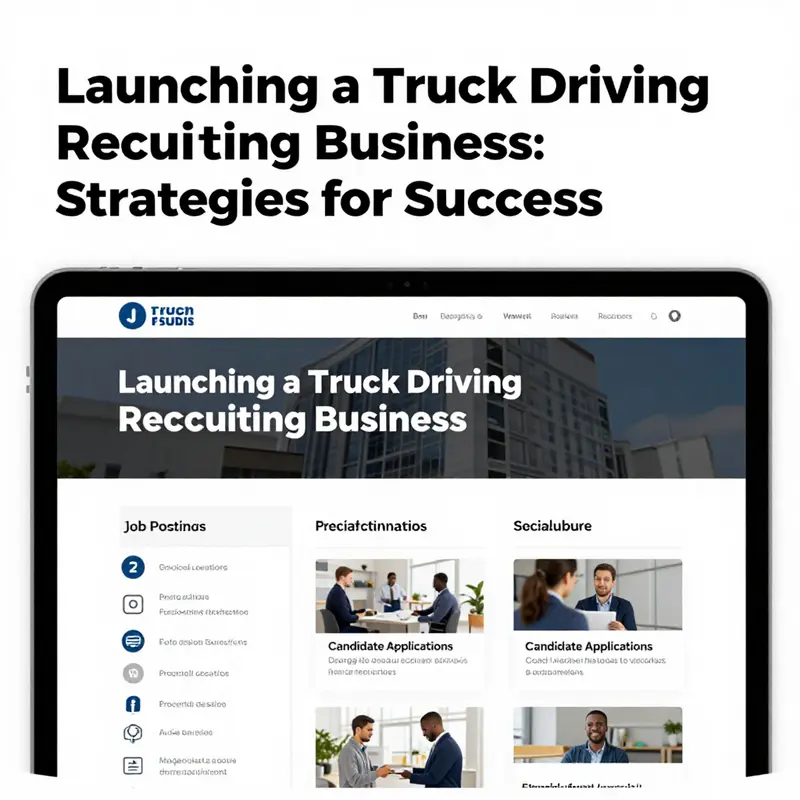
Creating a recruiting platform tailored to truck driving is more than building a better job board. It is an operational system designed to move people and freight with safety, speed, and compliance at its core. In this chapter, we move from the idea of listing openings to the craft of engineering a platform that serves two demanding constituencies—fleet operators and independent drivers—while weaving together the landing pages, verification checks, interview workflows, and dispatch links that keep the hiring cycle seamless. If the previous chapters laid out the market realities and the strategic choices, this discussion focuses on the actual platform that translates strategy into reliable hires and, ultimately, steady driver utilization on the road. A well-constructed platform doesn’t merely attract candidates; it demonstrates credibility, reduces friction for carriers, and becomes a predictable driver of growth in a sector that remains characterized by volatility and shortages.
At the heart of the platform is a driver-specific profile coupled with rigorous verification. Unlike standard resumes, driver profiles must accommodate the CDL or other professional licenses, expiration dates, medical cards, and jurisdictional endorsements. The system should allow drivers to upload license details, medical certifications, and recent driving history, including any safety incidents. Verification, ideally by a DOT-oriented data source or a compliant third-party service, is non-negotiable. This isn’t a cosmetic check; it is a guardrail for safety and a trust signal to carriers who rely on consistent performance. A platform that makes this verification transparent—showing clearance levels, expired documents, or pending checks—builds trust with both sides of the marketplace. The design purpose is to reduce the risk for carriers while providing drivers with clear, actionable feedback on their qualifications.
A second pillar is advanced job matching and filtering. Truck driving roles are not monolithic. Routes differ, equipment types vary, and work arrangements span local, regional, and long-haul models. Carriers seek drivers who fit a specific route profile, whether it’s a dry van, refrigerated trailer, or flatbed configuration, and who can meet a company’s preferred schedule. The platform should support sophisticated filters for route type, equipment, employment relationship (owner-operator versus employee), and home-time expectations. Beyond filters, the system should use AI-driven matching to align drivers’ stated preferences and demonstrated experience with postings that maximize safety and efficiency. This requires more than keyword matching; it calls for models trained on historical outcomes—time-to-fill, on-time delivery, and incident rates—to rank candidates by the likelihood of successful, compliant placement.
The third element is real-time communication and interview scheduling. Efficiency matters when you are trying to match a driver with a carrier with exact start times, route commitments, and safety requirements already in play. The platform should offer integrated messaging, video screening, and calendar synchronization, so that scheduling interviews and confirming start dates happens with minimal back-and-forth. A well-timed interview reduces no-show risk and accelerates the hire decision. For drivers, immediate feedback after a screening—whether they advance or not—helps maintain engagement and morale. The reduction in friction here translates into faster cycles, higher fill rates, and a stronger reputation in theDriving community.
To keep the flow of hires tightly integrated with ongoing operations, the platform must bridge recruitment with dispatch processes. This means linking job postings to specific routes and load details, so new hires understand their first assignment from day one. When a driver accepts a role, they can see start times, route specifics, mandatory compliance steps, and safety protocols within the same interface. For fleet operators managing large volumes, this linkage eliminates duplicative data entry and miscommunications that often derail onboarding. The closer the correlation between recruitment and dispatch, the more predictable the ramp of productivity and the less time and energy wasted reconciling mismatches between the driver’s capabilities and the carrier’s operational needs.
The technology stack supporting this ecosystem must be designed for scale while remaining accessible to a broad user base that often relies on mobile devices behind the wheel. The front end should be responsive and mobile-friendly, ensuring that drivers who primarily use smartphones can complete profiles, upload documents, and respond to postings with ease. The backend needs to be robust and scalable to handle high volumes of applications, verifications, and communications in real time. Data should sit in a relational database for structured records—licenses, endorsements, safety histories, vaccination statuses, and route eligibility—while unstructured data like messages, notes, and logs can be stored in a flexible data store. The platform should also embrace AI and machine learning to parse resumes, extract license details, and assess safety and reliability indicators from historical data. These models can help identify drivers who consistently perform well under specific route types and conditions, enabling recruiters to present higher-quality candidates with greater confidence.
Security and privacy are not afterthoughts; they are design principles. Driver data is sensitive, and a platform built for trucking recruitment must comply with applicable privacy and data protection standards. Access controls, encryption at rest and in transit, and clear consent mechanisms for background checks are essential. Transparent data governance helps protect both drivers and carriers and reduces the risk of data misuse that could undermine trust. A culture of transparency extends to outcomes as well: it should be clear to drivers what checks are being run, how long the verification will take, and what qualification milestones they need to reach to unlock the next stage of the process. Carriers, meanwhile, should be able to see the same level of process clarity, including timelines, expected start dates, and compliance readiness, so they can plan their operations with confidence.
From a market positioning standpoint, the platform should address both fleet operators and independent owner-operators. For operators, the value proposition rests on reducing recruitment time and lowering the risk of noncompliant hires while delivering higher-quality matches. For drivers, the appeal lies in finding jobs that align with their lifestyle, pay expectations, and safety standards, coupled with clear, transparent processes. Emphasizing safety, compliance, and predictability strengthens the brand and differentiates the platform in a crowded market. Content that educates drivers about safe driving practices, how to pass CDL tests, and best practices for staying compliant can also establish authority and trust. For carriers, sharing data-backed insights about average time-to-fill, candidate quality, and onboarding efficiency demonstrates operational impact beyond mere headlines.
In practice, this blueprint translates into operational discipline. The platform should avoid charging drivers any fees, aligning with legal and ethical norms while preserving the platform’s reputation. Clean, simple pricing for carriers—such as a placement fee or a retainer model for ongoing staffing support—can keep the business model straightforward and trustworthy. The emphasis must be on reliability, transparency, and value rather than extraction. Compliance training and certification programs—where applicable—can be integrated into onboarding to elevate the quality of hires and reduce risk. The platform can also offer analytics dashboards for carriers, showing metrics like driver retention, safety incidents, and route performance, which further reinforces confidence in the recruiting process.
As the platform matures, a pilot phase is essential. Start with a limited geographic area or a handful of partner carriers and a defined set of route types to test end-to-end flows: profile creation, verification, job matching, interview scheduling, and onboarding handoffs. Collect feedback from both drivers and carriers to refine the matching logic, user experience, and operational integration. This iterative approach—grounded in real-world outcomes—helps ensure that the platform delivers measurable improvements in fill rates, safety compliance, and time-to-start. A culture of continuous improvement should be embedded in the product roadmap, with quarterly cycles that prioritize updates to verification workflows, routing integrations, and the AI models that power matching.
In the broader ecosystem, the platform should be positioned as a bridge between human capital and freight readiness. The internal alignment with stakeholders—human resources teams at carriers, safety officers, dispatch managers, and the drivers themselves—drives a cohesive experience. Marketing efforts should communicate a clear narrative: this is a niche platform built for trucking, designed to reduce risk, improve efficiency, and help people find work that fits their lives while moving goods through the economy. A robust content strategy—videos illustrating day-in-the-life experiences, safety best practices, and real-world case studies—can accelerate trust-building with both drivers and carriers. The result is a platform that is not only functional but also emblematic of reliability in a space that can feel fragmented and uncertain.
To underscore the value of investing in a platform built with this mindset, consider the practical guidance offered in industry resources that map the path from recruiting strategy to platform execution. For a comprehensive treatment of how to structure and optimize a truck driver recruitment platform, see the CareerBuilder guide on creating a recruiting platform for truck drivers. It offers deeper technical and business model considerations that complement the framework outlined here. investing-in-people-key-to-truckings-success demonstrates how focusing on people—drivers and carriers alike—can translate into scalable, sustainable growth.
In the end, the chapter of building a recruiting platform for truck driving recruitment is a narrative about alignment. Alignment between safety and performance, between the speed of hiring and the rigor of verification, and between the expectations of drivers and the realities of freight operations. When these elements converge in a single, thoughtfully engineered platform, hiring becomes less about chasing scarce bodies and more about orchestrating reliable, compliant moves on the road. That orchestration—delivered through a well-designed platform, paired with disciplined process and a clear value proposition—turns recruiting from a bottleneck into a strategic capability that supports growth for years to come. The road to scale passes through a platform that understands the cadence of trucking life, and that understanding begins with the detail of profiles, the rigor of checks, and the clarity of every interaction along the way.
External resource for further exploration: CareerBuilder Guide on Truck Driver Recruitment Platforms — https://www.careerbuilder.com/resources/hiring-tips/creating-a-recruiting-platform-for-truck-drivers
Sourcing the Right Drivers: A Strategic, Multi-Channel Playbook for a Truck-Driving Recruiting Business
In an industry where demand for drivers outpaces supply, a recruiting business that serves the trucking sector must do more than post vacancies and hope for a steady stream of applicants. It needs a deliberate sourcing engine that reaches every corner of the talent landscape—schools, veteran drivers, intra-industry networks, and even drivers who aren’t actively looking but may be intrigued by the right opportunity. The core of this approach is not a single tactic but a disciplined mix of channels that can be scaled as you grow and narrowed as you refine your niche. When you operate with a multi-channel mindset, you build resilience into your pipeline. You reduce dependence on any one source and you increase the odds that you can present carriers with candidates who not only meet the required CDL credentials but also align with safety records, route familiarity, and the specific demands of a carrier’s fleet. The result is a sourcing strategy that feels less like luck and more like a repeatable, data-informed process that your carriers can trust.
Targeted outreach through industry-specific platforms and associations sits at the heart of this strategy. The transport sector has robust institutions—training schools, vocational programs, and professional associations—that shepherd would-be drivers through the early stages of certification and experience-building. Building partnerships with CDL schools and local trucking programs gives you access to pre-vetted pools of entrants who are already oriented toward safety and compliance. These relationships aren’t about a one-off job posting; they’re about sustained engagement. You can offer internship introductions, guest lectures, or apprenticeship placements that create a steady funnel of candidates who understand what trucking life requires and what carriers expect. Even when early-stage candidates aren’t immediately ready to move, the ongoing presence of your brand in these programs increases familiarity and trust, turning your firm into a preferred source when a carrier needs to fill a role quickly. In parallel, aligning with large and regional associations gives you access to industry-wide data on driver demand, salary benchmarks, and workload trends. By treating these partnerships as long-term pipelines rather than one-time recruitment drives, you position yourself to respond swiftly to fluctuations in freight volumes and regulatory shifts. This is where the strategic benefit of niche focus becomes evident: if you specialize in long-haul, cold chain, or owner-operator placements, your outreach messages and program design can be tailored to the unique motivations of those cohorts, increasing both response rates and the quality of applicants. A practical starting point is to identify one or two associations or schools that align with your target regions and begin with a formal agreement for regular speaker slots, internship opportunities, or joint marketing initiatives.
Beyond formal institutions, social channels and online communities are indispensable for modern sourcing. Platforms like LinkedIn and relevant trucking forums or Reddit communities are not just places to post jobs; they’re conversational ecosystems where drivers share experiences, safety tips, and feedback about shippers and carriers. A savvy recruiter participates with authenticity: answers questions, shares helpful content, and demonstrates an understanding of the daily realities of over-the-road life. Content should be value-driven rather than promotional—thoughtful posts about CDL test preparation, safe driving practices, or career pathways in trucking tend to travel farther and invite more engagement than hard-sell messages. Over time, a well-crafted social presence yields a pool of passive candidates who are open to compelling opportunities that fit their current goals, whether that means a better route, higher pay, or improved home time. The lesson here is incremental: the more you demystify the hiring process and demonstrate industry insight, the more drivers will consider you a credible conduit to real opportunity. To sustain momentum, develop a lightweight content calendar that alternates between career guidance, safety reminders, and employer spotlights, and monitor engagement so you can fine-tune your approach as you learn what resonates most.
Referral programs remain one of the most effective levers in candidate sourcing. Drivers often know other drivers who would be a good fit for a given carrier or route. An incentive structure that rewards successful referrals—whether through bonuses, time off, or phased payments—can widen your funnel without inflating recruitment costs. The key is to design referrals so they reinforce safety, reliability, and performance rather than merely increasing volume. Tie referrals to transparent screening steps, ensuring that new candidates are vetted with the same rigor as direct applicants. Track conversion from referral to placement and onward to retention to demonstrate the true value of the program to the carriers you serve. When done right, referrals create a self-sustaining loop: drivers who have positive experiences with your process become ambassadors who attract peers, who in turn bring more qualified applicants back into your system. This is not a gimmick; it is a disciplined, reputational approach that aligns incentives with outcomes.
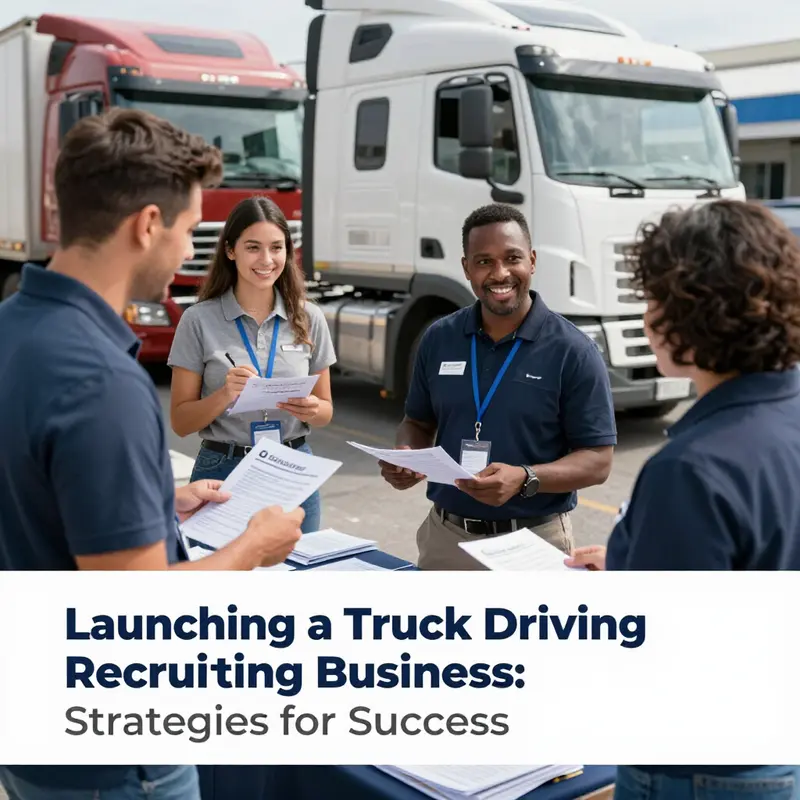
On-the-ground recruitment efforts can dramatically reduce friction in the hiring cycle. Attending truck stops, regional job fairs, and fleet events places you in direct contact with drivers who may be evaluating options in real time. Mobile recruiting units, outfitted with application stations and on-site screening capabilities, can conduct quick reviews, collect documents, and even complete certain background checks while candidates wait. This immediacy matters because it translates into a positive candidate experience and a faster path to candidate-to-carrier handoffs. The on-site approach works best when paired with a crisp value proposition: friendly, respectful interactions; clear timelines; and a transparent outline of what a driver can expect in terms of training, onboarding, and route assignment. The practical payoff is simple: you shorten the journey from awareness to placement and increase the likelihood that drivers will accept opportunities you present when carriers have urgent needs.
A growing number of recruiting teams for trucking are turning to data-driven sourcing as a way to identify high-potential candidates before they even apply. By analyzing historical hiring data, turnover rates, and driver performance metrics, you can build predictive indicators of success that extend beyond a single resume review. Patterns such as prior route familiarity, safety compliance history, or training outcomes can flag candidates who are likely to thrive in specific niches—refrigerated freight, hazmat, or long-haul sectors, for example. Predictive analytics shifts the conversation from chasing vacancies to building a pool of talent with a higher probability of long-term compatibility. It also helps you anticipate shortages in particular driver types or regions, enabling proactive outreach and pipeline diversification. It is essential, however, to balance data-driven decisions with human judgment and to maintain strict adherence to privacy and eligibility guidelines. Combined with robust screening, predictive analytics empower you to prioritize outreach to the candidates most likely to convert and remain with carriers over time.
To translate these strategies into practice, begin with a clear operating framework. Allocate a modest budget to establish one strong school or association partnership, one social-media initiative, and one referral program pilot that mirrors your niche. Track not just applications, but the journey from first contact through screening, interviews, and final placement. Use simple metrics—response rate, interview yield, time to fill, and retention after six months—to gauge momentum. As you scale, you can layer in additional partnerships and channels, always guided by data and the experience your carriers report about candidate quality and reliability. The process should be iterative: test a channel, measure outcomes, refine your message, and replicate what works. In this environment, trust is the currency you trade with both candidates and carriers. You build it by showing up consistently, delivering on commitments, and providing transparent, efficient processes that make it easy for drivers to move through the funnel and for fleets to engage with your firm again when needs recur.
A practical note on integration: as you assemble these sourcing streams, embed a culture of people-first recruitment. The broader talent approach you adopt in trucking is about more than filling seats; it’s about matching drivers to roles where they can be safe, productive, and fulfilled. This mindset translates into every stage of sourcing—from the way you design job postings to the feedback you offer after interviews, to the ease of onboarding once a candidate is placed. For a perspective on people-first approaches in trucking, see People-First Strategies in Trucking. The emphasis on relationships, transparency, and mutual benefit helps you stand out in a crowded market and supports long-term carrier partnerships built on reliability and trust. As you refine your process, remember that quick wins matter, but sustainable sourcing requires consistency, ethical practices, and a relentless focus on matching drivers to the right opportunities.
In the end, candidate sourcing for a truck-driving recruiting business is a craft grounded in relationships, data, and disciplined execution. It demands a willingness to engage across multiple channels, to measure what matters, and to iterate with purpose. When you combine targeted outreach with community-building, social engagement, referrals, on-the-ground presence, and data-informed decision-making, you create a robust sourcing engine that withstands market volatility and supports carriers with the kind of talent they can depend on behind the wheel. The work pays off not only in filled seats but in the confidence carriers gain when they know your firm can deliver vetted, reliable drivers who meet their safety and performance standards. The more you invest in each link of this chain, the stronger the overall network becomes—and the more compelling your value proposition will be to both drivers and fleets alike.
External resource: https://www.linkedin.com/pulse/art-challenge-recruiting-truck-drivers-john-doe
Trust on the Road: Establishing Carrier Relationships for a Thriving Truck-Driving Recruiting Business
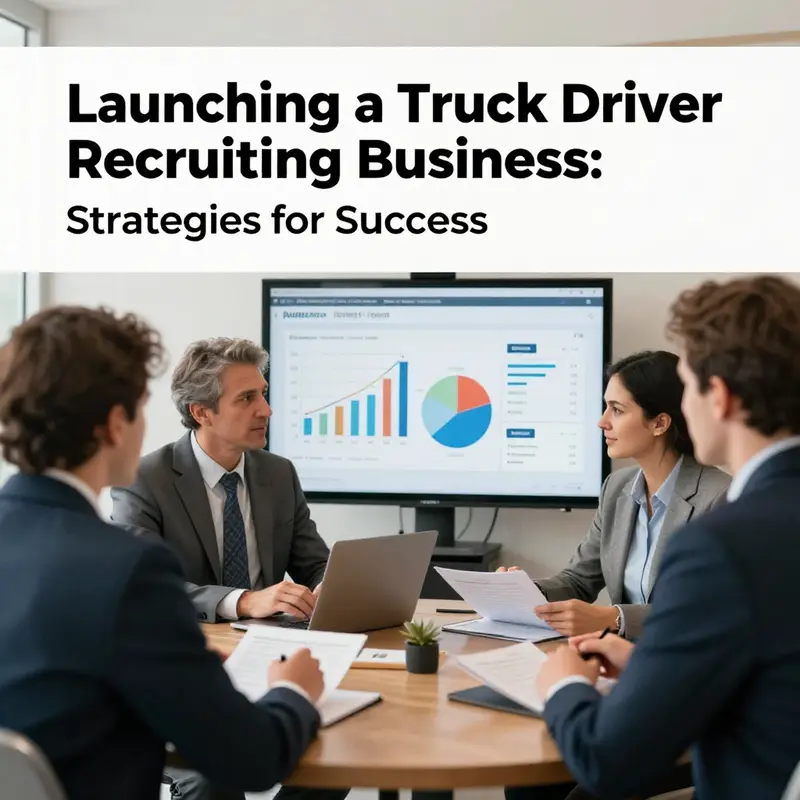
Establishing strong carrier relationships is not a side task in a truck-driving recruiting business; it is the core engine that keeps drivers on the road and fleets productive. In markets shaped by driver shortages and tight margins, trust must be earned day by day through consistency, clear expectations, and a shared commitment to safety and reliability. A recruiter, in this frame, acts less like a middleman and more like a partner who aligns the goals of carriers and drivers so routes run smoothly, cash flows stay predictable, and compliance stays intact. The pathway toward that outcome begins with a simple premise: treat every carrier as a stakeholder in your business and every driver as a critical asset whose welfare influences performance.
Reliable compensation practices are the first practical building block. The 2026 perspective that drivers stay when bosses pay on time captures a truth that is often overlooked amid pricing, margins, and staffing strategies. Delays and excuses erode trust faster than any pricing dispute. When pay is predictable and timely, drivers feel anchored; they can plan meals, family time, and maintenance windows. They treat the vehicle as an extension of their own daily discipline, which translates into better fuel economy, fewer breakdowns, and calmer, more professional communication with dispatch. In this model, compensation is not a one-off transaction but a recurring signal that the partnership will endure.
Valuing drivers as team members strengthens the relationship beyond contracts. Small acts of consideration—checking in after a long haul, offering a hot drink on a cold night, or simply listening when personal issues arise—signal that the organization sees people, not assets. When drivers feel seen and respected, they develop a sense of ownership. They are more likely to go the extra mile, anticipate issues before they become problems, and take pride in safety practices. That shift—from a tradable resource to a trusted collaborator—reduces turnover and raises the quality of driver performance, which in turn lowers carrier risk and raises customer satisfaction.
Transparency and consistency in scheduling are equally vital. Drivers juggle family responsibilities, unpredictable traffic, and the emotional toll of long stretches away from home. When routes shift suddenly or hours are renegotiated without warning, fatigue compounds and trust frays. Clear job requirements, honest timelines, and predictable lodging or support arrangements give drivers a sense of life outside the cab. Carriers, likewise, gain reliability because they know when to expect drivers, which reduces idle time and enhances on-time delivery rates. In practice, this means standardized handoffs, documented load expectations, and regular status updates that respect both sides’ time.
Technology, approached thoughtfully, becomes a bridge between people and process. Modern recruiting platforms—whether you use applicant tracking, background verification, or communications tools—should reduce friction, not replace human judgment. The goal is to provide real-time updates, rapid match quality, and clear channels for questions. A well-chosen tech stack helps you surface the most qualified drivers, capture essential compliance documentation, and send reminders for medical cards, renewals, and training. The result is a more professional experience for drivers and a more predictable flow of talent for carriers. Importantly, technology should be designed with privacy and consent in mind, ensuring drivers feel safe and respected when sharing their information.
Pilots and trial periods offer practical proof of your capability to deliver. A free trial where you supply one or two drivers to a carrier for a short window can demonstrate reliability without imposing risk on either party. Pair that with transparent performance reporting and a feedback loop. Carriers learn which drivers consistently meet safety standards, show up on time, and communicate proactively. Drivers observe how the relationship rewards consistent behavior with more opportunities, better assignments, and faster onboarding. This cycle of trust—tested through small bets, measured with simple metrics, and reinforced by honest dialogue—creates a durable partnership that scales as your recruiting business grows. For leaders who embrace people-first strategies, this approach doubles as proof that your firm is capable of managing risk while protecting reputations. Investing in People: Key to Trucking’s Success.
Beyond the mechanics of pay and scheduling, the moral calculus matters. Compliance is not a box to check but a shared routine in which both sides contribute. DOT rules, licensing requirements, and proper screening are essential, but their value multiplies when paired with a culture of transparency. Carriers should feel confident that you are not only legally compliant but also devoted to ethical practices that protect drivers as people. The bargaining power in this space comes from a reputation for honesty: clear fee structures, no hidden costs, and open communication about performance. When a driver knows that a carrier and recruiter share predictable standards, the partnership matures into a long-term relationship rather than a short-term placement. That maturity translates into lower training costs, faster recertifications, and steadier freight movement across markets.
As you build your recruiting operation, remember that every relationship you cultivate with a carrier becomes a blueprint for the next. The best agencies treat each client as if they were their own fleet, investing in people, systems, and processes that scale. You will find that the most resilient carriers are those that place a premium on trust, regular feedback, and a shared commitment to safety and service. The road to growth is not paved with aggressive pitches but with consistent, reliable performance and a steady, respectful approach to problems that arise on the road. By weaving compensation reliability, respect for drivers, scheduling transparency, thoughtful technology, and practical pilots into your daily practice, you create a recruiting business that not only fills seats but strengthens the entire trucking ecosystem.
This approach also supports the broader aim of the article: to show how a thoughtful, values-driven recruiting business can weather cycles of driver shortages and shifting regulations. The next chapter will explore how carriers decide which recruiting partners to trust when big contracts are at stake, and how to protect your reputation as you scale. For readers seeking further perspective on trust-building, see the external resource linked below.
External Resource: https://www.autohome.com.cn/tech/20250916/834175.html
Final thoughts
Embarking on a journey to start a truck driving recruiting business is an opportunity to not only meet the demands of a thriving industry but also to make a significant impact on logistics and transport sectors. By focusing on targeted market research, establishing a solid legal foundation, building an efficient recruitment platform, utilizing strategic sourcing methods, and fostering strong relationships with carriers, you can create a reputable agency that stands out in a competitive landscape. Key stakeholders will realize the immense value you bring, allowing you to scale your business effectively.