

The truck delivery business presents robust opportunities, particularly for logistics and freight companies, construction firms, fleet management professionals, and food distributors. Understanding the industry’s complexities is vital for entrepreneurs aiming to carve a niche within this competitive landscape. This article delves deeply into the essential elements of establishing your own truck delivery enterprise. Through three comprehensive chapters—Conducting Market Research, Legal Considerations, and Acquisition and Management of Vehicles—we will provide the critical knowledge needed to thrive in this sector. Armed with strategic insights, you will be better positioned to launch and scale your delivery business effectively.
Market Intelligence at the Wheel: Building a Data-Driven Roadmap for Your Truck Delivery Startup

Market research is not a distant, abstract exercise to be filed away before the first mile is ever driven. In a truck delivery startup, it acts as a guiding compass, steering decisions about service scope, fleet choice, pricing, and the very geography you will call your market. It is the difference between chasing guesswork and aligning your resources with real demand. When you sit down to map the market, you are not merely collecting data; you are translating that data into a practical roadmap that minimizes risk and increases the odds of sustainable cash flow from day one. The most successful newcomers treat research as an ongoing discipline, a constant read of the road ahead rather than a one-off checkpoint. The logic is simple: understand who buys delivery services, what they value, and how much they are willing to pay, then shape your operations to meet that precise mix of needs with reliability, clarity, and speed.
Begin with a clear picture of potential customers. In the world of truck delivery, demand spans a spectrum from small local businesses needing regular, predictable routes to larger e-commerce platforms seeking flexible last-mile capacity. Some opportunities ride on the back of rapid urban growth, others on specialized needs such as temperature-controlled transport for perishable goods, or secure handling for high-value items. Market research invites you to articulate the specific services you are equipped to offer and the customers most likely to buy them. This starts with segmentation: which customer types align with your vehicle type, driver capabilities, and service level? In practice, this means looking at the daily rhythms of a city or a region—the hours when restaurants, retailers, and manufacturers restock; the peaks of e-commerce fulfillment cycles; the seasonal spikes in construction or event logistics. By identifying where demand concentrates, you can tailor your service mix to fit those patterns, rather than trying to be all things to all people.
A critical component of market intelligence is understanding the demand for your chosen service mix. For a new truck delivery venture, the decision to specialize or keep a broad portfolio should flow from observed gaps in the local logistics ecosystem. You might discover a robust need for urban same-day deliveries, where a single vehicle can execute multiple small, high-frequency trips with impeccable timing. Alternatively, you might identify a niche in regional or last-mile refrigerated deliveries to grocers, producers, or healthcare suppliers. The key is not merely to spot demand, but to measure its stability and scalability. Is the demand predictable enough to sustain a single-vehicle operation, or does it surge and recede with the weather, holidays, or market cycles? Your research should probe the longevity of the demand, not just its momentary presence.
Competitor analysis remains essential, yet it should be approached with nuance. Count how many other players exist in your target area, what portions of the market they assault, and how they price their services. Do they emphasize speed, reliability, or price? Do they offer value-added components like packaging, white-glove handling, or real-time tracking? You do not need a full-blown competitive intelligence unit to glean meaningful patterns. Simple, disciplined observation can reveal service gaps you can fill. Perhaps most importantly, identify what competitors overlook—areas where your entry could reframe value. For instance, if most players in your city deliver within a narrow window, you might win by offering broader time slots and transparent, frequent updates to customers. If a glut of carriers serve the general market but few provide temperature-controlled options, a refrigerated service line could become your differentiator. Market research helps you locate those seams where opportunity and capability intersect.
Positioning your business around a clear niche does not mean you surrender breadth; it means you anchor your identity so customers immediately recognize what you do best. Your market study should guide decisions about vehicle type, service areas, and the specific industries you intend to serve. A practical outcome is a service portfolio that balances volume potential with manageable risk. For a starter, that often means focusing on a contiguous geographic area with a single vehicle, while building employer relationships, routine routes, and a reputation for dependability. The logic is pragmatic: establish proof of value, then scale with evidence of consistent demand. By beginning with a narrow, well-researched footprint, you reduce capital exposure and shorten the learning curve for pricing, dispatch, and customer communication.
The pricing question is inseparable from market insights. A data-driven approach aligns prices not only with costs but with the value customers place on timely, secure, and predictable deliveries. Your market research should illuminate acceptable service levels and the price elasticity of your market segment. Are customers willing to pay a premium for guaranteed delivery windows or real-time tracking? Do volume commitments from a few regular clients justify slightly higher rates due to steadier revenue? A sound approach is to model scenarios: a baseline price reflecting standard service, a premium price for high-demand windows or specialized handling, and a discount framework for long-term contracts or bundled services. In a freshly minted operation, price experimentation needs to be controlled and measured, with clear parameters for when and how to adjust.
A strong market study also informs fleet decisions. The choice between a small box truck, a larger urban delivery vehicle, or a refrigerated unit is not purely a matter of purchase price. It is a function of service type, driver capacity, fuel efficiency, maintenance costs, and regulatory constraints. If your research points to heavy urban shipments with tight time windows, a compact, maneuverable vehicle paired with an efficient dispatch system can strike a balance between service quality and operating costs. If cold chain delivery is a key client requirement, you must assess whether a refrigerated option aligns with demand density, route length, and energy costs. The vehicle you select should be a direct response to the service profile your market research validates. This alignment reduces underutilized capacity and helps sustain profitability as you scale.
Another dimension of market intelligence is regulatory and operational feasibility. Interstate operations trigger licensing, insurance, and safety requirements that shape both cost and risk. Your market research should map these obligations against your planned footprint. You may discover that a particular corridor or region favors a partner approach—where a smaller operator provides capacity to a larger logistics network—rather than attempting to own a broad, multi-state fleet from day one. Understanding the regulatory environment early helps you avoid missteps that can drain time and money. It also informs risk management strategies, such as maintenance planning, driver training, and compliance scheduling that keep your operations steady even as demand ebbs and flows.
The practical value of market research shows up in the business plan you will rely on to guide operations, funding conversations, and stakeholder alignment. A well-structured plan translates market insights into specific, testable hypotheses: the customer segments you will pursue, the service mix you will offer, the geographic area you will cover, the fleet configuration you will operate, and the pricing strategy you will apply. It becomes a living document, updated as you gather real-world data from early customers and pilot routes. Resources that help you construct such a plan—whether templates, guides, or advisory services—can provide a scaffold for your thinking. They encourage you to address executive summaries, company descriptions, services, market research sections, operational considerations, financial projections, and a marketing strategy that actually reflects what customers in your market say they want.
For those seeking structured guidance on market research and niche identification, there are industry resources that offer frameworks for evaluating opportunities and attracting high-value clients. The objective, however, remains the same: you must translate those insights into a practical path for your startup. When you couple rigorous market analysis with a disciplined test-and-learn approach, you will uncover not just what customers need, but how much they are willing to pay for it, which relationships you should cultivate, and what type of fleet and route design will deliver the highest reliability at sustainable margins.
This integration—the link between market intelligence and execution—benefits from a broader view of business planning. Even when you are starting small, a formal plan can help you navigate the early months with more confidence. The plan should be concise but robust, including an executive summary that crystallizes your target customers and value proposition; a clear description of the services you intend to provide; a detailed market analysis grounded in data about demand, competition, and pricing; operational considerations such as dispatch, routing, and maintenance; and financial projections that reflect the realities of a one-vehicle startup. The emphasis is on clarity and realism: define milestones, quantify assumptions, and create decision points that trigger a course correction if results diverge from expectations. A data-driven foundation makes it easier to communicate with potential lenders, investors, or partners and demonstrates that you have a disciplined approach to growth.
A practical reminder from the field is that market research should stay with you as you grow. The best operators continually monitor demand dynamics, customer feedback, and competitive moves. When you identify a new service need, you can test it with a limited scope before committing to a full rollout. When costs rise or regulations shift, you can recalculate feasibility rather than reacting impulsively. And when a client segment expands or contracts, you can adjust your fleet design, staffing, and pricing to match the new reality. The market is not fixed; it evolves with seasons, customer preferences, and macroeconomic conditions. Your startup gains resilience by treating market research as an ongoing practice, not a one-time exercise.
In closing, the essence of conducting market research for a truck delivery startup is the discipline of turning curiosity into a structured plan. The research guides what you offer, where you operate, how you price, and how you grow. It supports a lean start—doing just enough to validate a niche, then expanding with data-backed confidence. It also anchors your human capital strategy. As the numbers confirm the demand, you weave in people who can execute reliably, from drivers who embody safety and service to dispatchers who optimize routes and communicate clearly with customers. The end result is a business that does not drift with every market breeze but moves with intention, pace, and purpose. For those who want a concrete example of how market intelligence translates into people strategy, consider this linked discussion on investing in people as a core driver of trucking success: Investing in People—a New Path for Trucking Fleets.
As you prepare to take the first actual miles, keep one overarching idea in your mind: your market map is your operating playbook. It tells you who to serve, how to price, what equipment to buy, and how to structure your day-to-day operations so you can deliver consistently. It gives you a frame for conversations with partners and lenders. It helps you hire with purpose rather than luck. And it anchors your startup in something more durable than optimism—the disciplined, evidence-based insight that comes from looking closely at the road ahead before you step onto it.
External resource for further reading: https://www.shopify.com/business-planning
Legal Groundwork for a Truck Delivery Startup: Navigating Licenses, Insurance, and Compliance
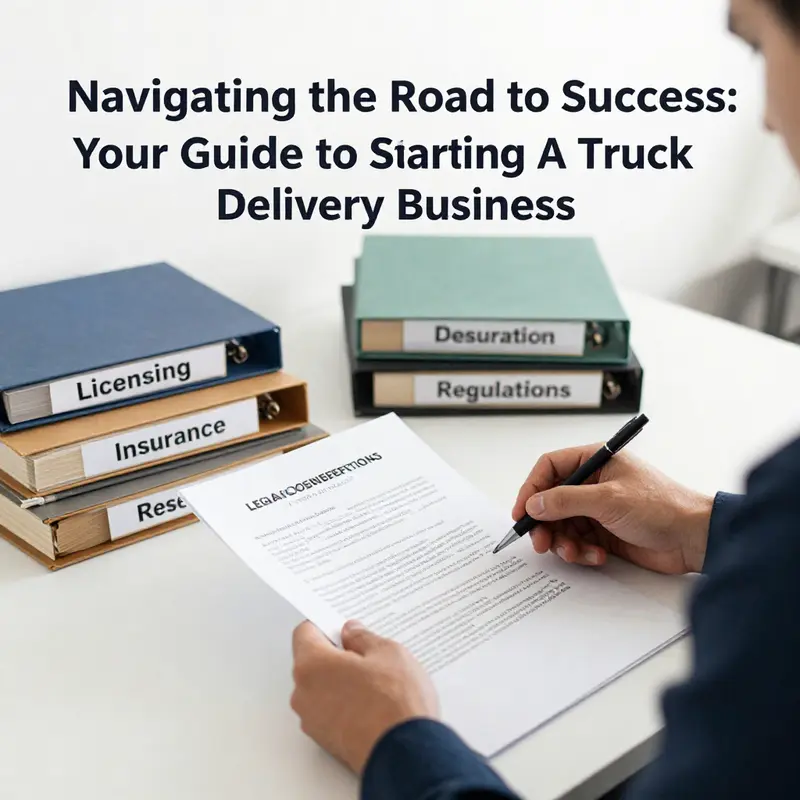
When you decide to start a truck delivery business, the road ahead looks practical and promising. Yet the most reliable path to long-term success runs on a foundation of solid compliance. Legal groundwork may not be as glamorous as securing a new truck or landing the first client, but it is the bubble-wrap that protects your assets, your drivers, and your reputation. In 2026, the regulatory landscape remains intricate, pragmatic, and highly enforceable. If you build with compliance in mind from the start, you’ll avoid costly delays, unexpected fines, and the kind of operational headaches that can derail a growing enterprise. The chapters that follow are not just about ticking boxes; they are about cultivating a culture of safety, accountability, and foresight that sustains growth well beyond the early months of launching your delivery service. To understand how regulations shape your planning, consider how cross-border and interstate requirements intersect with day‑to‑day operations and long-term ambitions. For a broader perspective on navigating cross-border challenges and the insights drawn from industry discussions, you can explore more at this resource: Navigating cross-border challenges: key insights from the TCA annual meeting.
From the moment you frame your business model, you begin negotiating a legal landscape designed to balance efficiency with accountability. The first major decision is how you structure the enterprise and how you will demonstrate responsibility for safety, financial solvency, and worker welfare. You may choose to form an LLC, an S‑Corp, or another structure that provides liability protection and favorable tax treatment. Each option carries trade-offs in terms of personal exposure, administrative complexity, and capital needs. Consulting with a qualified attorney or accountant who understands transportation law is not a luxury but a prudent investment. They can help you map out a structure that supports future growth—whether you plan to operate a single truck and a remote dispatch model or scale to a small fleet with several drivers—and ensure that your formation aligns with licensing, insurance, and employment requirements from the outset.
The licensing and permits arena is the obvious starting point. At the federal level, you must align with the Federal Motor Carrier Safety Administration (FMCSA) and the broader framework of motor carrier oversight. While some aspects are straightforward, others hinge on whether you will operate across state lines or handle hazardous materials, or if your plans involve moving people or specialized freight. If interstate operations are in scope, you will likely need a USDOT number and, depending on the weight and nature of the freight, an MC (Motor Carrier) number. Across state lines, the rules can vary, and even modest deviations in licensing or registration can trigger enforcement actions or suspension of operating authority. This is why a careful, proactive approach—documenting every registration, renewal, and regulatory interaction—pays dividends in continuity.
Alongside federal registration, you must anchor your business in a sturdy state framework. Each state has its own vehicle registration requirements, driver licensing norms, and operating authorities. The specifics can differ widely, from how often you must renew permits to whether you need additional state-level endorsements for certain types of cargo. The work you invest here is not bureaucratic filler; it is a crucial map for avoiding gaps in authority that could ground your trucks.
Beyond these authorities, your business will rely on a robust insurance program. Liability insurance remains a baseline obligation for carriers that operate for hire. The commonly cited range for federally regulated operations suggests substantial coverage, with limits designed to bear the risk of property damage and bodily injury that can arise from routine deliveries and incidents on the road. Cargo coverage is essential because it protects goods in transit against loss or damage, while physical damage insurance helps offset the cost of repairs or replacement if a vehicle is damaged in an accident. The combination of these policies forms a safety net that protects your balance sheet and the financial viability of your enterprise if the unforeseen occurs. The consequences of under-insuring are not theoretical; they manifest in legal liabilities, regulatory penalties, and, in severe cases, the loss of operating authority.
As you map the insurance landscape, you should also anticipate a rigorous approach to driver management. If you decide to hire employees or contract with drivers, employment law becomes a daily reality. The wage and hour rules defined by the Fair Labor Standards Act (FLSA) come into play when you set wages, overtime, and time-tracking practices. Payroll taxes, workers’ compensation insurance, and proper classification of workers into employees or independent contractors carry significant financial and legal implications. The IRS and the Department of Labor scrutinize classification, particularly in small transportation operations that transition toward a larger fleet. Misclassification can trigger penalties, back taxes, and audits that divert attention from core operations.
Hours of Service (HOS) regulations, enforced in large part through electronic logging devices (ELDs), further shape your scheduling, dispatching, and safety culture. The objective of HOS is not to curtail opportunity but to prevent fatigue-related accidents and to maintain a predictable standard across the industry. Implementing compliant recordkeeping, aligning dispatch practices with allowable hours, and training drivers to understand the regulations are foundational actions that protect your business from enforcement actions and build trust with shippers who demand reliability. Blemishes in hours-of-service compliance can ripple through a customer base, affecting pricing, service levels, and the willingness of partners to engage with your operation.
A cohesive compliance strategy also touches how you perceive risk and how you allocate resources to mitigate it. If your plan involves more than a single truck, you’ll need a disciplined approach toDriver qualification files, drug and alcohol testing where required, and ongoing safety training. A well-designed compliance program includes clear roles and responsibilities, periodic audits, and a mechanism for continuous improvement. It also means documenting safety policies, maintenance standards, and incident reporting procedures so that every participant in the operation understands expectations and consequences. The goal is not merely to avoid penalties; it is to create an operating environment where drivers, dispatchers, and administrative staff share a common understanding of safety, legality, and accountability.
The conversation about corporate governance and compliance would be incomplete without attention to contracts and risk allocation. Your relationships with shippers and customers should be anchored in written agreements that define responsibilities, performance standards, payment terms, and the allocation of risk. These contracts typically require proof of insurance and the acceptable terms for liability, cargo, and property damage. They also establish the framework for dispute resolution and service-level commitments, making it easier to protect margins and forecast cash flow. When you issue or receive a certificate of insurance, it’s more than a formality—it’s a signal to clients that your operation is organized, solvent, and prepared to meet obligations as agreed.
Throughout this landscape, documentation becomes your most trusted ally. Your physical and digital files should chronicle registrations, license renewals, insurance certificates, driver licenses, vehicle maintenance logs, and compliance training records. Taken together, these documents enable rapid responses to inquiries from regulators, customers, or potential partners. They also enable a smoother passing of audits and surprise inspections, which are not rare in the trucking sector. By keeping meticulous records, you reduce the risk of operational disruption and create a foundation for scalable growth.
An integrated approach to compliance begins with a plan, but it cannot stop at planning. It requires a culture in which every worker understands the importance of regulation, safety, and professional conduct. A simple, enduring practice is to assign responsibility for compliance to a specific role or team, even in a small operation. It could be the business owner, the fleet manager, or a designated compliance officer who coordinates training, maintains files, and keeps the leadership informed about regulatory developments. The presence of this role—whether formal or informal—sends a clear message across the organization: compliance is non-negotiable and woven into every operational decision.
As you contemplate the path from a solo operator to a potential fleet, bear in mind that the regulatory environment is not static. Rules shift with evolving safety priorities, new technologies, and changing market dynamics. Staying current means integrating regulatory updates into your strategic planning process and building flexibility into your operations. It also means recognizing where your business and your capabilities align with those changes so you can adapt rather than react when new guidelines come into force. The dynamic nature of trucking regulations can be a competitive differentiator for a disciplined operator who anticipates shifts, plans for contingencies, and communicates proactively with customers about compliance and safety standards.
To make this concrete, you begin with foundational registrations and structures, but you also embed ongoing education. You educate yourself and your team about the essential elements that sustain compliance: the minimum insurance levels that protect your freight and your people, the proper use of licensing authorities to operate within legal boundaries, the critical significance of accurate driver records, and the necessity of keeping pace with hours-of-service requirements. You also cultivate relationships with regulators, brokers, and insurance professionals who can translate regulatory changes into practical implications for your daily workflow. In other words, you do not treat compliance as a one-time checklist; you treat it as an operating discipline that underpins every service commitment you make to clients and every financial decision you take as a business owner.
The legal landscape has a measurable impact on how you price your services and how you schedule capacity. Compliance costs, which include insurance premiums, licensing fees, maintenance standards, and required training, must be accounted for in your pricing model to maintain profitability. At the same time, your commitment to lawfulness can become a differentiator in a crowded market. Customers value reliability and risk management, and a demonstrable commitment to regulatory compliance can justify premium pricing for high-stakes deliverables, fragile freight, or time-sensitive contracts. In that sense, legal readiness is not a constraint; it is a strategic asset that enhances trust, expands your network of reputable customers, and improves your negotiating position with shippers who require robust risk mitigation.
As you near the practical execution stage, consider how your legal foundation informs your day-to-day operations. You will need to assemble a suite of documents that you can rely on at a moment’s notice: up-to-date registrations, proof of insurance with appropriate coverage levels, driver qualification files, maintenance records, incident reports, and safety training logs. You will also want to have consistent processes for onboarding new drivers, verifying credentials, and ensuring ongoing compliance with evolving regulations. The goal is not to overwhelm your team with dozens of procedural steps; it is to embed a few core routines that yield dependable outcomes, every day, across every route.
Ultimately, the legal considerations chapter is not a standalone lecture but a living element of your business model. It shapes how you recruit, how you operate, how you engage with customers, and how you project future growth. The legal framework you choose to embrace becomes a quiet driver of efficiency, a shield against risk, and a signal to the market that you are serious about delivering on promises with consistency and accountability. If you take this seriously from the start, you position yourself to scale with fewer disruptions and more confidence, knowing that the fundamental rules of the road are clear, enforceable, and aligned with the safety and reliability your clients expect.
For readers seeking direct references to regulatory authorities and guidance beyond the general overview, official sources provide the most reliable foundation for ongoing compliance. The FMCSA site is the authoritative reference for federal registration, safety standards, and compliance requirements for motor carriers. As you advance from concept to operation, keep the conversation with regulators, insurers, and legal counsel active, routine, and collaborative. A proactive stance on licensing, insurance, employment law, and recordkeeping will pay dividends as your business grows from a single vehicle into a trusted carrier capable of meeting diverse customer needs with professionalism and integrity.
External resource: For official federal guidance on motor carrier regulations, visit the FMCSA website: https://www.fmcsa.dot.gov/.
null
null
Final thoughts
Establishing your own truck delivery business involves meticulous planning and adherence to legal guidelines while simultaneously understanding the market landscape. Successfully managing your fleet will further enhance operational efficiency. This comprehensive approach empowers you to create a resilient business capable of adapting to evolving industry demands. By focusing on these critical aspects, you’ll lay a solid foundation for growth and success, ensuring your delivery service stands out in a competitive field.