
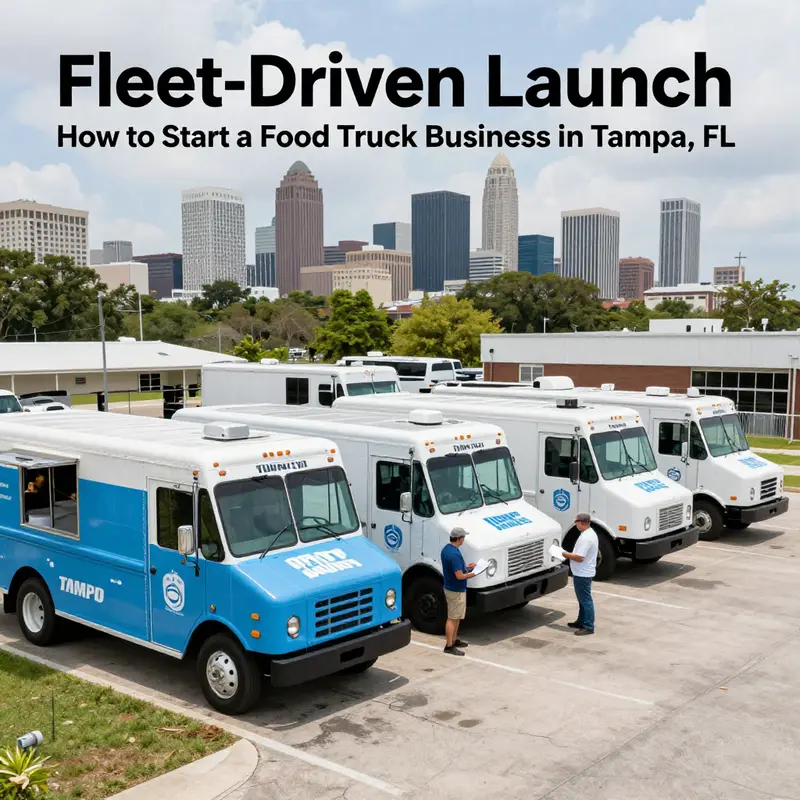
In the Tampa market, mobile food services intersect with dynamic logistics, fleet utilization, and regulatory scrutiny. For logistics and freight professionals, construction and engineering firms, fleet managers, and food and beverage distributors, launching a Tampa food truck requires more than a recipe: it demands a fleet-minded approach to permits, planning, vehicle readiness, risk management, and market engagement. This five-chapter framework translates core fleet and supply chain practices into a practical playbook for mobile vending—from regulatory foundations and permit mastery to business planning, vehicle compliance, financing, and market activation. Each chapter builds on the previous, creating a cohesive path from regulatory alignment to a scalable, go-to-market fleet operation that can serve downtown workers, job sites, universities, and events. By embedding fleet discipline into every decision, organizations can minimize risk, optimize utilization of the truck as an asset, and deliver reliable service within Tampa’s vibrant, ever-evolving urban landscape.
Chapter 1: Flavor on Wheels in Tampa—Building a Regulatory Foundation for a Successful Food Truck Launch
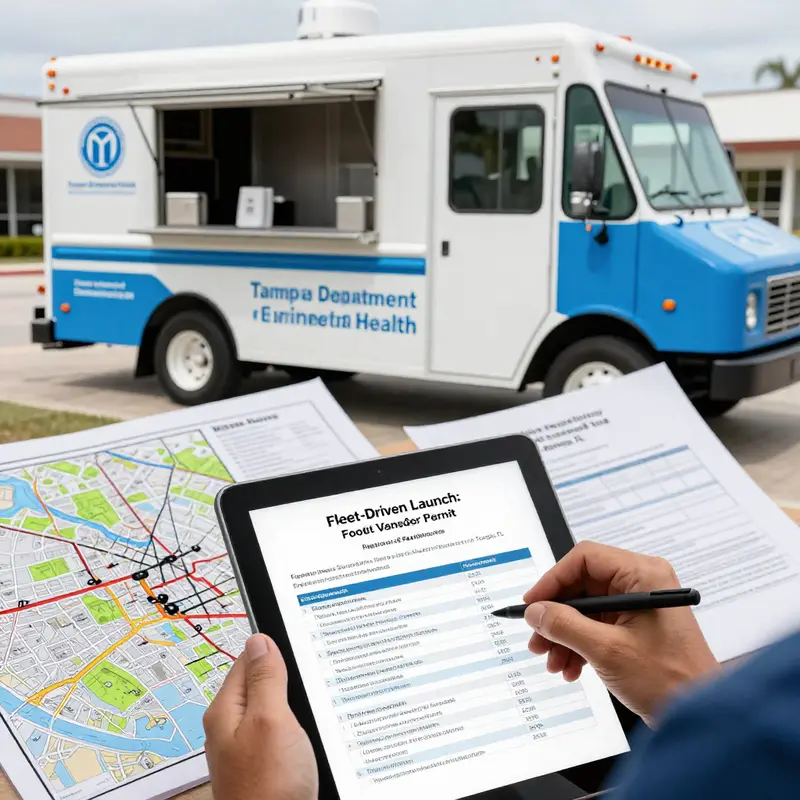
Launching a food truck in Tampa begins long before a single sizzling interaction with a customer. It starts with understanding the regulatory landscape, because clear compliance creates credibility, smooth operations, and room to grow in one of Florida’s most vibrant culinary scenes. In Tampa, the path to wheels-on service is paved with permits, inspections, and thoughtful alignment with zoning rules. A practical way to frame this is to imagine the truck not just as a kitchen on a chassis but as a mobile business that must pass through several gates before it can legally and confidently roll into high-traffic neighborhoods, festivals, and office clusters. The first gate is the Mobile Food Vendor Permit, an essential credential that signals the city and health officials that the concept, the vehicle, and the personnel meet minimum standards for safety and service. The permit is tied to the broader framework administered by the City of Tampa’s regulatory apparatus, and obtaining it requires more than enthusiasm. It requires documentation, verification, and a demonstrated commitment to cleanliness and safe handling of food. In practice, entrepreneurs begin by submitting an application through the city’s online portal. They must provide proof of insurance—commonly a commercial general liability policy with a baseline coverage that signals financial resilience against potential incidents. The application, accompanied by appropriate fees, is the first formal step toward authorization to operate in the city’s sanctioned spaces. Yet the permit does not stand alone. A mandatory health inspection from Hillsborough County Environmental Health Services scrutinizes the truck’s interior workflow, storage and refrigeration capabilities, and the sanitary design of preparation areas. It is this inspection, conducted by trained environmental health professionals, that validates the kitchen’s ability to keep food safe from “field to fork.” Only after a passing score is earned does the permit progress toward issuance, aligning the operator with public health expectations that protect both patrons and the brand’s reputation. While the health check guards the public, other licenses secure the business’s legal and fiscal footing. A Business Tax Receipt from the City of Tampa is required for all business ventures operating within city limits; this receipt confirms local compliance with business privilege obligations at the municipal level. In parallel, a Florida Seller’s Permit from the Florida Department of Revenue provides the sales tax identification essential for routine transactions, especially in a market crowded with events, pop-ups, and daily curbside service. The sequence may appear bureaucratic, yet it is a necessary scaffolding that supports sustainable growth, reduces the risk of fines or shutdowns, and signals to partners and customers that the operator understands the responsibilities of serving food in public spaces. The regulatory web broadens further when you consider specific menu plans. If alcohol will accompany the offerings, a separate liquor license from the Florida Alcoholic Beverage Control (ABC) agency becomes a distinct, operable condition. Each layer—health, business, tax, alcohol—speaks to different aspects of compliance, and the chain of permissions needs to be navigated with patience and precision. A practical piece of wisdom is to seek counsel from a small business advisor or a lawyer specializing in food service law. Tampa offers workshops and personalized consultations designed to illuminate the permitting timeline, signage requirements, and route planning to avoid restricted zones around schools, parks, and other sensitive areas. This proactive approach reduces missteps and accelerates the journey from concept to street-ready operation. It also creates an opportunity to learn the city’s expectations for signage, customer flow, and waste management—areas that, if neglected, can become recurring operational friction. In fact, much of the early success hinges on how well a prospective operator translates regulatory compliance into a reliable daily routine. The process is not merely about ticking boxes; it is about building a foundation that supports brand reliability, consistent food safety practices, and predictable service in a city where competition is intense and local support networks are robust. The best operators view the regulatory phase as a learning period that clarifies location strategy and risk management. For instance, zoning considerations determine where a truck can park and serve customers, a factor that naturally influences menu pricing, staff scheduling, and the ability to collaborate with events, farmers markets, and pop-ups. The conversations with inspectors and permitting staff often reveal practical insights about space planning, grease disposal, and refrigeration maintenance that extend beyond compliance into daily efficiency. In this sense, the foundations of regulation become a blueprint for operational discipline. As you prepare to move through the gates, a few strategies help maintain momentum. Build a detailed file that includes all required documents, insurance certificates, inspection reports, and permit confirmations. Create a calendar that marks renewal dates and anticipated inspections so nothing falls through the cracks. Establish a relationship with a local broker or insurer who understands the food service sector; the right coverage, including general liability and commercial auto, will not only satisfy requirements but also provide a safety net that supports rapid recovery from unforeseen events. The community dimension should not be overlooked. Joining local networks such as the Tampa Bay Food Truck Association or connecting with other vendors at city-sponsored events can yield timely updates on policy changes, queue management at festivals, and best practices for maintaining clean operations while staying compliant on busy nights. These relationships often translate into practical tips about placement, peak hours, and the rhythms of the city’s event calendar, which in turn informs branding and menu planning. The inner logic of compliance and the outer reality of customer demand converge when an operator invests in continuous learning and process improvement. The same health standards that govern a Hillsborough County inspection also shape the layout and workflow of the kitchen. A well-designed truck minimizes cross-contamination risks, automates waste handling, and streamlines the cooking process without compromising food quality. In this sense, the regulatory foundations act as a living framework—one that evolves with the business as it scales, expands to new neighborhoods, or experiments with new offerings. The narrative of compliance is not a wall but a doorway to better systems, stronger partnerships, and a resilient brand. For readers seeking a direct route to the official guidance, the City of Tampa maintains detailed resources on food-truck-specific permits and related requirements. A practical step is to consult the city’s permit page to confirm the exact names and sequencing of licenses relevant to your concept, and to align your plan with the city’s stated expectations. The broader takeaway is straightforward: Tampa rewards operators who pair culinary ambition with disciplined regulatory navigation. By treating permits as a structured, proactive practice rather than a one-off hurdle, you cultivate credibility with customers, investors, and municipal staff alike. The result is not just a piece of paper but a reliable operating rhythm—one that supports consistent service, safer food, and a scalable foundation as the business grows beyond the first cart, tent, or festival footprint. In that spirit, remember that the permitting landscape is dynamic; periodic reviews of requirements and engagement with city resources will keep a new venture aligned with the latest rules and opportunities. The long view matters as much as the launch. And with regulatory clarity in place, the road to successful Tampa flavor-on-wheels becomes a more navigable, less risky journey, leaving room for creativity, community, and steady growth. For official guidance, see the City of Tampa permits page. People-first strategies in trucking. External reference: https://www.tampagov.net/business/food-truck-permits.aspx
null
null
Vehicle, Kitchen, and Compliance: Building a Tampa Food Truck That Rolls Safe, Legal, and Ready to Serve
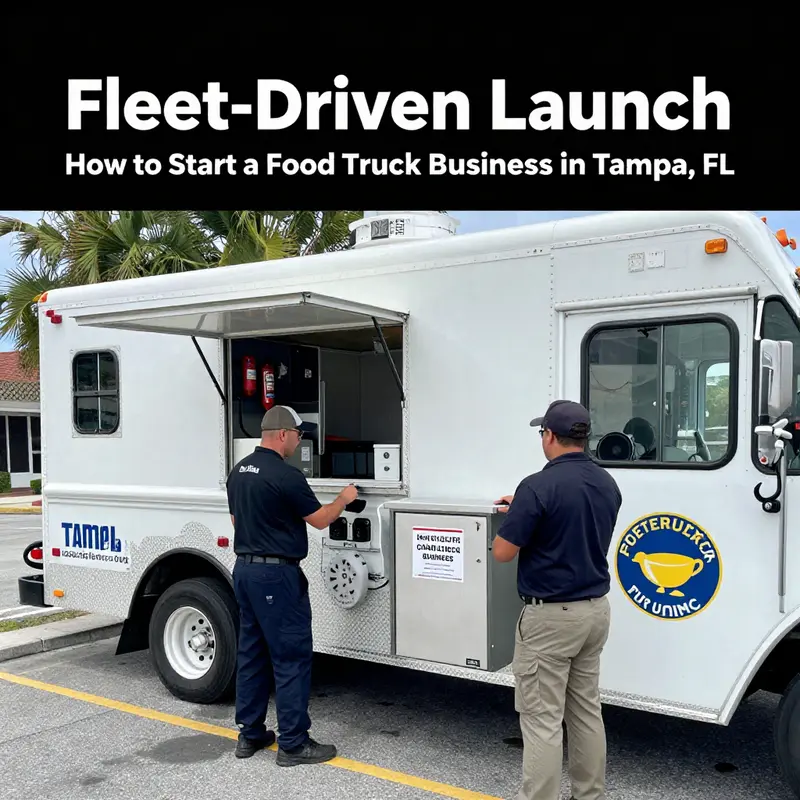
In Tampa, a successful food truck launch hinges on more than a clever menu. It hinges on a vehicle that is technically sound, a kitchen that functions efficiently in a compact space, and a compliance framework that passes inspections without drama. Local and state regulations set expectations for vehicle integrity, sanitation, and proper documentation. The Florida Food Code guides sanitation, equipment, and safe handling, emphasizing a kitchen that can be cleaned, sanitized, and maintained. When these layers align, the operation becomes legal and trusted by customers who see your truck roll onto a parking lot or festival grounds.
The first critical decision is the vehicle itself. A Tampa food truck is not just a vehicle with a grill; it is a certified mobile kitchen on wheels. It must be licensed as a commercial vehicle and insured accordingly. The chassis, body, and equipment must meet standards for cleanliness and durability. A well designed kitchen starts with a layout that minimizes cross-contamination and maximizes workflow. Refrigeration units must be appropriately sized, with reliable cold holding. Cooking appliances should be able to reach required temperatures, and ventilation must remove heat, odors, and grease before they reach the outside environment. Waste disposal and a non-slip flooring are essential. Electrical and plumbing should be robust to withstand daily use. In short, the vehicle is a working kitchen that must be clean, compliant, and resilient.
Alongside the vehicle, your equipment list should be deliberate and purpose-built. The Florida Food Code guides sanitation, and you should design around those requirements from day one. A handwashing sink with a reliable water supply is nonnegotiable, as are hot and cold water systems. A three compartment sink is commonly required for utensil sanitation, with a space for sanitizing solutions. The cold chain must be preserved with a dependable refrigeration system, and a separate prep area minimizes cross-contact. Food storage should be organized and protected from the outside. Surfaces must be nonporous and easy to clean, and food contact surfaces should be routinely sanitized. The waste system requires secure containment, routine disposal, and a plan for spill response. These elements are not optional; they are core to daily operation.
The permitting layer tightens the regulatory picture. A Florida Seller’s Permit and a City of Tampa business tax receipt are typically needed, along with a Mobile Food Vendor Permit from the local health department. Each permit has its own documentation and inspection steps. The Seller’s Permit ties you to the state tax system, while the business tax receipt confirms authorization to operate within city boundaries. The Mobile Food Vendor Permit often requires a vehicle inspection, proof of insurance, and confirmation that your setup adheres to the Florida Food Code and local ordinances. Many operators also register a business name with the Florida Division of Corporations and obtain an EIN from the IRS if you hire employees. Compliance includes zoning checks to ensure your truck can operate at chosen locations and times. The goal is a smooth system where the business and vehicle footprint align with city rules.
Insurance serves as the financial safety net that helps your venture weather the unexpected. General liability protects against bodily injury and property damage at events or in markets; commercial auto insurance covers the vehicle in transit; product liability guards against claims related to your food. Financing options can help outfit the truck, cover initial inventory, and fund early marketing. A disciplined approach to financing paired with solid insurance supports growth from first popups to a steady schedule of events.
Compliance should be treated as a living system. Regularly validate gas lines, electrical wiring, and vent hoods for safety and performance. Train staff on hygiene, safe food handling, and sanitation routines. Maintain maintenance logs for equipment, cleaning schedules, and inspections. A proactive approach to testing concepts through pop-ups can reveal workflow gaps and help refine your setup before a big launch.
Finally, connect with the broader regulatory community. Networking with other vendors can offer practical tips on inspections and permits; stay informed about city and state updates that could affect operations. In Tampa, aligning vehicle readiness, kitchen design, and compliance yields a solid launch and a durable platform for growth. The synergy between build quality, sanitation, and regulatory alignment turns a mobile catering concept into a reliable business.
For readers seeking a broader view, explore regulatory trends that affect mobile operations, and consult your city permits and licenses page for the most current requirements. Keeping a steady cadence of inspections, renewals, and documentation reduces friction at events and helps build trust with guests who expect clean, safe service.
Chapter 4: On Wheels in Tampa — Insurance, Financing, and Reading the Local Food Truck Economy

Launching a food truck in Tampa is as much about navigating risk and securing capital as it is about crafting a delectable menu. The city’s bright tourist seasons, steady urban foot traffic, and a lively events calendar create real upside, but they also demand a disciplined approach to insurance, funding, and financial planning. This chapter weaves those threads together in a cohesive way, showing how to build a solid financial foundation while staying compliant with local requirements. The aim is to help you move from concept to cash flow with clarity, so your truck can compete in neighborhoods like the riverfronts, the historic streets of Ybor, and the busy corridors near universities where hungry bellies and entrepreneurial energy meet.\n\nInsurance is the quiet backbone of any mobile kitchen. It protects you from the unpredictable and keeps your business standing when the unexpected happens. At a minimum, you should secure general liability insurance to cover common claims of bodily injury or property damage that might occur during a service. Because a mobile kitchen operates from a vehicle, commercial auto insurance is no longer optional; it protects the truck itself as well as your business operations on the road. As you build your policy, think beyond the basics. Equipment coverage helps safeguard stoves, prep tables, and refrigeration units that hold your ingredients and ready-to-sell items. Inventory coverage adds a safety net for the stock that can be lost to spoilage or theft, especially in crowded festival grounds or busy urban blocks. If you plan to hire staff, workers’ compensation becomes a prudent choice to protect both your people and your operation, even if your initial team is just a small crew. A reputable, local-friendly insurer can tailor a package to reflect the seasonal variability of Tampa’s markets, ensuring you’re not underinsured during peak weekends and events.\n\nFinancing a mobile concept is a different kind of art. The typical startup cost for a Tampa food truck venture tends to fall in a broad band, often between thirty-five thousand and a hundred thousand dollars, depending on the vehicle’s age, the kitchen fit-out, and branding investments. For many entrepreneurs, personal savings, family support, and friends remain the primary fuel. Traditional banks can be cautious about collateral and the appetite for a mobile model with evolving permit costs and uncertain early revenue. That is not a dead end; it simply shifts the strategy toward a broader mix of funding sources. The U.S. Small Business Administration and state-level small business development centers offer guidance and sometimes access to low-interest loans or guaranty programs that align with smaller operations. A proactive route is to assemble a concise, evidence-based business plan that illustrates how the truck will generate cash flow, how much working capital is needed to bridge lulls between events, and how location decisions will impact revenue. Local business assistance networks can be particularly helpful. The Hillsborough County SBDC, for instance, offers counseling that helps translate a great concept into a credible financial plan, teaching you how to model costs, pricing, and capital needs against Tampa’s market realities.\n\nWhen you begin to translate plan into practice, the economic texture of Tampa must inform your decisions. The city benefits from a steady stream of visitors drawn to its waterfronts, museums, and vibrant neighborhoods, alongside a large student population and a robust festival circuit. This mix creates both opportunities and competition. A successful operator looks for geographic pockets with consistent foot traffic and complementary competition that allows for differentiated offerings. The Channelside and Riverwalk corridors, the historic lanes of Ybor City, and near-campus pockets around USF and other colleges can provide reliable streams of potential customers on different days of the week. But with high demand comes price sensitivity; it is essential to design a menu with value in mind, while ensuring your cost of goods sold remains controlled through reliable supplier relationships and careful portioning. Tampa’s climate and event-driven calendar also emphasize the importance of flexible staffing and a lean, repeatable service model that keeps lines moving during peak moments and shortens the downtime when crowds wane.\n\nA sound financial plan places cost control at the center of strategy. In a mobile business, nearly every element has variability: raw ingredients linked to seasonality and vendor specials, fuel and maintenance for the truck, licenses and permits that require annual renewal, packaging choices that affect waste and affordability, and the rhythm of staffing around events. The simplest path to stability is to forecast the weekend cash flow against the baseline of a few predictable markets—perhaps a downtown lunch crowd or a weekly farmers market—then layer in seasonal events and tourism peaks. This approach helps you estimate break-even points and determine the minimum daily revenue necessary to cover fixed costs such as insurance, permits, loan repayments, and a baseline wage bill if you hire. A practical mindset is to cultivate a reserve for surprise expenses—an engine repair, a permit hiccup, or a disrupted event schedule—so a single bad weekend doesn’t derail the venture. In this setting, branding and pricing play crucial roles. A strong brand with a clear identity can command a premium at festivals or waterfront nights, while a consistent logo and menu item descriptions translate into faster service and higher average checks. The city’s appetite for variety also makes limited-time menu items a powerful tool to attract repeat visitors while testing new flavors and formats.\n\nBeyond the numbers, the regulatory environment shapes how you launch and grow. The state’s regulatory framework defines the permits and standards your truck must meet to operate, from the Mobile Food Vendor Permit to Florida health and safety requirements. The city of Tampa requires coordination with the Department of Environmental Health and other agencies to ensure the vehicle remains compliant as it serves food in public spaces. These requirements, while sometimes daunting, also create a competitive moat: new entrants must invest not only in equipment but in knowledge and compliance systems that translate into safer, more reliable dining experiences. The most disciplined operators treat regulatory tasks as ongoing commitments rather than one-off hurdles. They maintain up-to-date operation manuals, calibration logs for equipment, and a routine for inspecting and replacing worn parts. This discipline reduces the risk of fines, service interruptions, or reputational damage in a market where word of mouth drives growth just as powerfully as a prime festival slot.\n\nTo connect practical steps with broader wisdom, consider how the broader trucking and mobile operations ecosystem frames the food truck experience. The world of mobile operations rewards teams that invest in people as a core asset. Training, safety culture, and a willingness to adapt to shifting schedules translate into consistent service quality that customers remember. For insights into people-focused growth, see the resource on investing in people as a pathway to long-term success in the trucking context: investing-in-people-key-to-truckings-success. This emphasis on people and process reinforces the idea that insurance, funding, and economics are not merely checkboxes; they are the framework within which you hire, schedule, train, and serve. As you build toward your first launch and beyond, nurture relationships with local business groups, chambers of commerce, and event organizers. These connections help you forecast demand, secure recurring gigs, and weather downturns in revenue by maintaining a flexible calendar of opportunities.\n\nFinally, remember that knowledge and planning are your best protection. While a robust insurance plan reduces risk, a well-structured financing strategy reduces financial stress, and a realistic grasp of Tampa’s economic tempo informs pricing, menu design, and location choices. Begin with a clear understanding of upfront costs, anticipated monthly burn, and a path to profitability, then layer in the specifics of permits, vehicle compliance, and driver training. In parallel, cultivate a network of mentors, peers, and service providers who understand the unique rhythm of Tampa’s street-food scene and can offer guidance as you scale from a single truck to a multi-vehicle operation. The city rewards those who pair practical risk management with a bold, locally tuned value proposition. For official licensing and regulatory guidance specific to Florida, visit the state’s agriculture and consumer services resources as you finalize your regulatory plan. External reference: https://www.fdacs.gov.
Chapter 5: Lighting the Sizzle in Tampa — Marketing, Launch, and Community Engagement for Your Food Truck
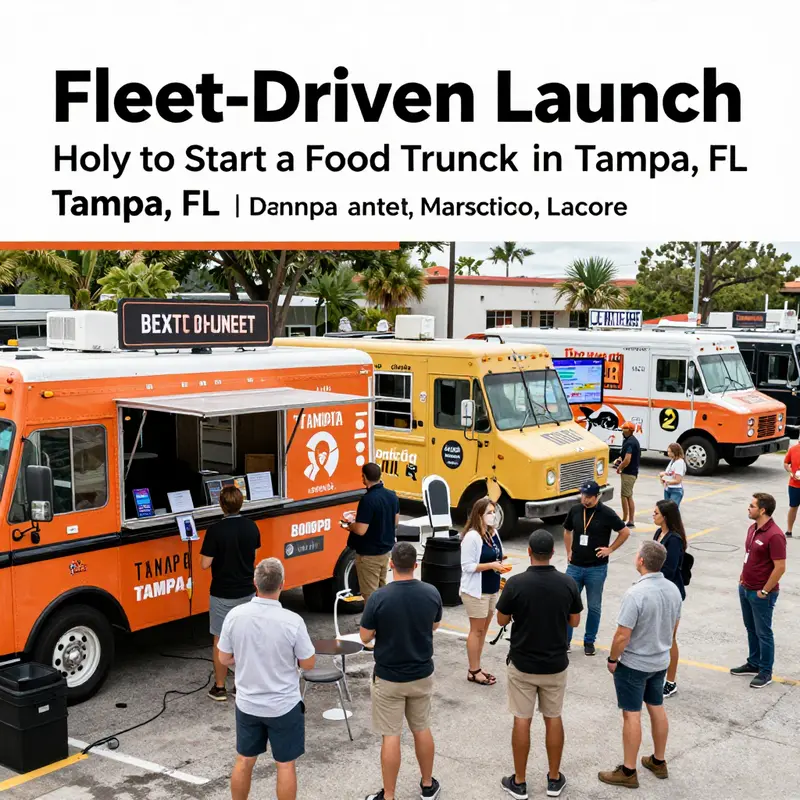
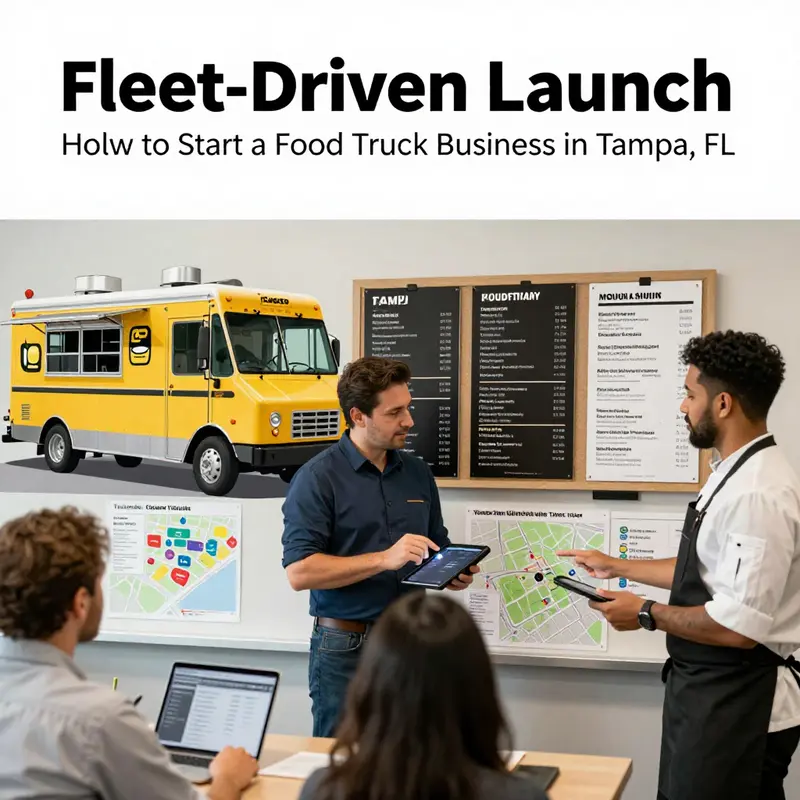
Marketing, launch, and community engagement are not add-ons here; they are the engine that makes a Tampa food truck endure, evolve, and thrive. In a city where the flavors of decades past mingle with today’s inventive palate, how you tell your story, where you park, and how you show up for neighborhoods can turn a casual passerby into a regular. The marketing mindset for a mobile kitchen starts before the first mile is rolled. You craft a clear brand narrative that ties your menu concept to Tampa’s street life, tourism rhythms, and the daily routines of downtown workers and students near campuses. The menu concept should be executable in a compact mobile setting, balancing crave-worthy staples with a respectful nod to local tastes. The aim is not merely to attract a crowd for a single bite but to invite repeat visits by delivering a dependable, shareable experience that people want to talk about with friends. This is how a first bite becomes a habit, and a habit becomes a neighborhood favorite.
Branding in a mobile context is more than a pretty logo. It is signage legible from a distance, a color story that travels across stickers and napkins, and a voice that feels local yet polished. The branding should echo Tampa’s energy—whether you lean into coastal freshness, culturally inspired flavors, or plant-forward innovation. When done well, branding helps a truck be recognized in a sea of options, which is essential in busy districts, near stadiums, and at campus events. The storytelling should be consistent across every touchpoint: a concise origin tale, the meaning behind each dish, and a transparent commitment to quality. The tests you run—short pop-ups in park spaces, corporate gatherings, or private celebrations—are not just about tasting menus. They are about validating your narrative, your pacing, and your service quality. The insights from these tests shape pricing, portion size, and the speed of service needed to keep lines moving smoothly while maintaining quality under the pressures of a rotating location.
Launching a Tampa-based food truck demands a calm, strategic rollout. You map high-visibility corridors and pedestrian-rich zones, but you also leave room for adaptability. A soft-launch sequence—limited days in a few carefully chosen sites—lets you observe demand, refine throughput, and adjust the menu in light of real-world feedback. You keep track of what sells, what recurs, and how long customers wait, then tune quantities, refrigeration loads, and service tempo accordingly. The launch plan must include a solid compliance spine: secure the required Mobile Food Vendor Permit through the local health authority, ensure the kitchen practices meet sanitation standards, and prepare your staff to handle food safely under time pressure. In Tampa, consistency matters as much as character. A truck that delivers steady portions, steady timing, and a steady appearance will earn trust and word-of-mouth momentum. The launch, therefore, unfolds as a sequence of experiences: a couple of weekday lunch pop-ins, a few weekend festival appearances, and select university events, each building toward a reliable schedule that customers can anticipate and plan around.
Visibility extends beyond the window of your truck. It is about being found when hungry and curious. You design an online footprint that is accurate, easy to navigate, and mobile-friendly, with clear hours and a clear map of where you will be each day. The goal is to be discovered by locals and visitors alike who want a quick bite that speaks to Tampa’s flavor profile. Your online presence should be complemented by a steady, thoughtful on-ground cadence: regular posts about daily specials, a peek behind the scenes, and short endorsements from happy guests. A simple loyalty mechanic and rotating specials help convert first-time visitors into repeat patrons. Strategic partnerships amplify reach—collaborating with event organizers to secure regular appearances at festivals, farmers markets, and concerts can create predictable foot traffic. Those partnerships are not purely transactional; they are opportunities to gather feedback after events, which informs both the menu and the service flow, ensuring the operation learns and improves with every appearance.
Community engagement is more than a marketing tactic; it is the backbone of sustainable growth. Tampa residents respond to authentic involvement. Beyond chasing festival slots, you sponsor or participate in neighborhood cleanups, school fundraisers, and community programs that align with your values. These acts create goodwill and supply authentic content that resonates with local audiences. By weaving in small, meaningful collaborations with other local vendors, you can offer bundled menus at events and cross-promote without irrigation of the ordinary. The aim is to be a consistent, welcome presence in the life of the city, not just a mobile kitchen that appears for a moment and vanishes. A shared approach to community service reinforces trust, makes collaborations easier to secure, and makes your brand feel like a local partner rather than a transient vendor. The concept of community-focused operations is well illustrated by the idea of Trucks for Change, a movement discussed in industry conversations about community support for vulnerable populations. See the discussion here: Trucks for Change: Community Support for Vulnerable Communities.
If you want a practical loop rather than a one-off sprint, treat marketing, launch, and engagement as an ongoing engine. Keep a pulse on neighborhood rhythms and adjust your plan to align with Tampa’s seasonal shifts, festival calendars, and campus terms. Refresh your menu with a small, crowd-pleasing core and a rotating special to sustain curiosity. Invest in a kitchen layout that is clean, efficient, and portable, so that a single crew can move from park to park with minimal downtime. Build a routine for scouting new pop-up sites, cultivating relationships with local event producers, and sharing your story with community bulletins and local press that cover food events. The most successful operators blend reliability with novelty, so customers feel they know what to expect and still anticipate something fresh with each appearance.
Finally, keep the regulatory ground weaves at the heart of your marketing and growth plan. Knowledge of permits, inspections, and local rules changes over time, so dedicate time to staying informed and to adjusting operations accordingly. A well-planned path to legality supports every marketing narrative you craft, every launch you execute, and every community partnership you nurture. For official regulatory details and step-by-step instructions, see the regulatory overview linked here: https://floridasunshine.org/2024/05/17/tampa-food-truck-permits-hillsborough-county/
Final thoughts
A disciplined, fleet-centric approach underpins a resilient Tampa food truck venture for logistics and industrial clients. By integrating regulatory mastery with precise planning, vehicle readiness, disciplined financing, and targeted go-to-market strategies, organizations can convert a mobile food concept into a reliable, scalable asset class. The model emphasizes regulatory alignment as a foundation, menu and location optimization as a route to utilization efficiency, and rigorous risk management as a competitive differentiator. In practice, partnerships with city authorities, insurers, lenders, event organizers, and local distributors turn a mobile kitchen into a flexible, revenue-generating component of a broader logistics and site-services ecosystem. The result is not merely a food truck; it is a deployable, fleet-enabled platform that supports workforce welfare, client hospitality at job sites, and on-demand catering for distribution networks in the greater Tampa region.