
Toronto sits at the heart of Canada’s supply chains, a dynamic gateway for goods moving across the country and beyond. For logistics and freight companies, construction and engineering firms, fleet managers, and food and beverage distributors, launching a trucking business here is both opportunity and a disciplined undertaking. The city’s breadth and the ongoing growth of e-commerce sustain demand for reliable freight services, while strict regulatory expectations reinforce the need for professional setup and ongoing compliance. A successful startup must address four dimensions: licensing and regulatory readiness; legal structure and financial planning; equipment strategy and maintenance; and market entry supported by technology and networks. This four-chapter guide translates regulatory steps into practical actions, linking licensing with insurance, fleet decisions, and a scalable growth plan. Chapter 1 clarifies licensing, permits, and provincial–federal compliance. Chapter 2 covers business structure, insurance, and budgeting. Chapter 3 anchors operations in dependable equipment and maintenance routines. Chapter 4 maps customer acquisition, partnerships, and digital tools that enable visibility, routing, and scale. By following these steps, your organization can establish a compliant foundation, minimize risk, and unlock revenue opportunities across Toronto’s freight corridors. The guidance is tailored for players across logistics ecosystems—from shippers and brokers to distributors and construction firms—ensuring every action supports a resilient, growth-oriented trucking business in the Greater Toronto Area.
Chapter 1: Laying the Groundwork for a Toronto Trucking Startup — Licensing, Permits, and the Regulatory Roadmap
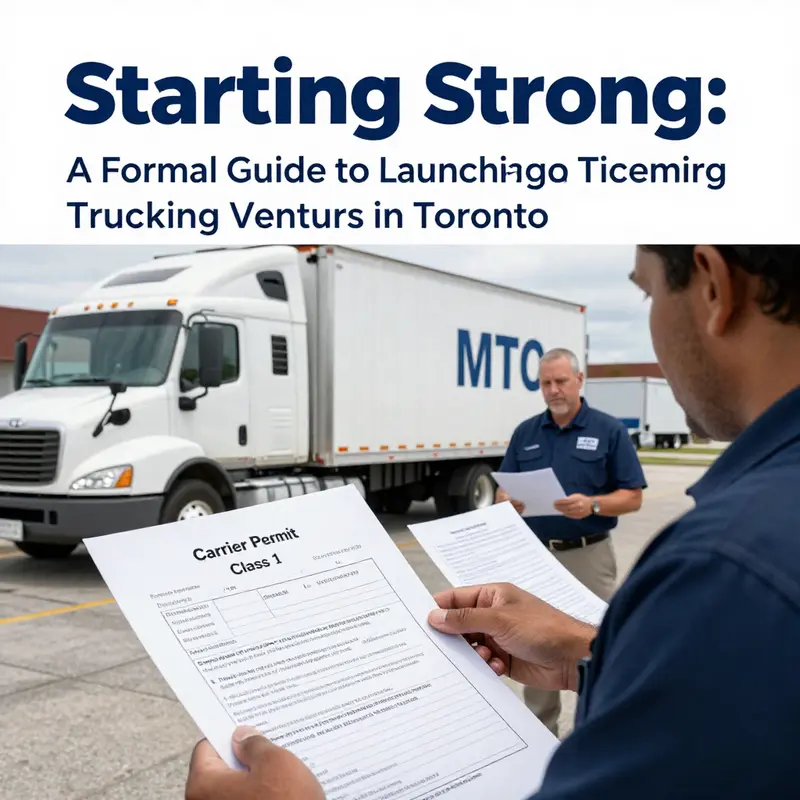
Toronto sits at the heart of Canada’s supply chains. Its ports, rail yards, warehouses, and a dense network of highways create a natural field for a trucking venture. Yet that opportunity comes with a layered set of rules designed to keep roads safe, cargo secure, and commerce fair. A new trucking operation does not begin with a flashy truck or a bold business name; it begins with understanding and aligning with licensing, permits, and regulatory requirements that span provincial, municipal, and federal levels. This chapter takes you along that regulatory path in a steady, practical way, showing how compliance becomes your foundation rather than an afterthought.
At its core, starting a trucking business in Ontario means engaging with three broad categories of authority. First, the provincial framework governs who may operate a commercial vehicle, what kind of company can run such a vehicle, and how safety is demonstrated in everyday operations. Second, municipal rules in Toronto shape where, when, and how you can move goods within city limits, especially for operations that involve loading zones, curbside deliveries, and large vehicle parking. Third, federal rules come into play when cross-border work or interprovincial duties are involved, affecting drivers, hours of service, insurance, and cross-border documentation. The interplay among these layers creates a practical roadmap: obtain the right licenses, secure appropriate insurance, maintain compliant equipment, and build systems that support ongoing compliance.
Begin with the licences and permits you must hold to lawfully operate a trucking business in Ontario. The province maintains a licensing regime designed to ensure operators have the necessary business structure, insurance, and professional capability. One of the central elements is a carrier’s licence tied to the Motor Carrier Operations framework. This is not just a business registration; it is a formal acknowledgment that your operation meets the standards set by the provincial regulator for commercial trucking. The process requires a clear business plan, evidence of insurance, and a demonstration of financial responsibility. It is a step that signals to shippers and brokers that your operation is credible and prepared to meet obligations around safety, reliability, and timely delivery. In practice, this licensing acts as a gatekeeper: without it, legitimate freight work is off limits.
A notable development in Ontario’s licensing landscape is the introduction of an Automated Movement of Trucks (AMT) specific licence. Beginning July 1, 2022, Ontario began implementing a requirement that employers operating registered trucks hold an AMT-specific licence. This change is aimed at strengthening road safety and ensuring that trucking operations have the right professional credentials to manage a fleet. The AMT framework sits alongside, and in some cases supplements, other provincial licensing requirements. For a new entrepreneur, the AMT licence represents a concrete signal that your business is aligned with modern regulatory expectations and that your drivers, managers, and the fleet meet elevated standards for safety and accountability. The exact regulatory text is accessible through Ontario’s official channels, and the practical implication is clear: your licensing package should reflect not only how you run today but how you will scale responsibly as you grow.
Even when you have the provincial pieces in place, there is more to the licensing puzzle. The Ontario Commercial Vehicle Operator Registration (CVOR) program is a foundational element for any operation that drives a heavy load on Ontario roads. CVOR applies to operators who manage vehicles with a gross vehicle weight rating of 4,500 kilograms or more, or who transport hazardous materials. The CVOR framework emphasizes responsible safety management, compliance with hours-of-service rules, accurate insurance coverage, and timely reporting. In effect, CVOR is the systemic backbone of ongoing regulatory compliance. It is not a one-time badge; it is a living registry that tracks your company’s safety performance, vehicle maintenance discipline, and adherence to procedural standards. When you look ahead to growth, build your business processes with CVOR compliance as a continual objective rather than a quarterly checkbox.
Right alongside provincial licensing and CVOR, Toronto’s municipal landscape imposes its own requirements. The City of Toronto administers a commercial vehicle permit program that governs operations over certain thresholds of size, weight, and duration within the city. For many operators, a commercial vehicle permit is essential when operating vehicles above specific GVWR thresholds or when maneuvering within dense urban corridors. These permits are designed to ensure that commercial activity is compatible with city traffic, environmental standards, and land-use regulations. The application is typically completed online through the City’s portal, and the permit may be required for various services—from freight hauling to construction logistics and waste-related activities. As a practical matter, it is prudent to check early whether your planned fleet and routes intersect with municipal permit requirements. The permit process also ties into driver licensing expectations, as some city operations require drivers to hold appropriate Class licenses and endorsements for particular cargo or vehicle configurations.
The licensing and permit matrix does not stop at language on paper. It translates into concrete operational disciplines. Insurance coverage, for example, is not a mere formality but a crucial pillar of risk management. Commercial trucking insurance must cover liability, cargo, and vehicle damage. Given the high value of many shipments and the potential exposure in urban environments, robust coverage is not optional; it is a condition of doing business. Insurers will want to see your fleet plan, maintenance schedules, driver qualification files, and safety programs. They will also assess your hours-of-service compliance and incident history. The broader point is simple: regulatory compliance and insurance are two sides of the same coin—one demonstrates capability, the other cushions risk. A thoughtful insurance strategy aligns with your licensing plan so that when a shipper asks for proof of coverage, you can respond with confidence and clarity.
With the regulatory scaffolding in place, the practical next steps are anchored in three core themes: registration and corporate structure, vehicle acquisition and maintenance, and operational systems. First, registering your business with the provincial authorities and choosing a suitable legal structure—whether sole proprietorship, partnership, or corporation—sets the stage for everything that follows. The choice affects taxation, liability, and governance, and it will influence the way you approach insurance, licensing, and even your relationships with drivers and contractors. Second, the fleet decision—whether to purchase, lease, or a combination of both—must harmonize with regulatory requirements and with a practical plan for scaling. The Ontario framework does not demand a large fleet from day one; it favors thoughtful risk management, maintenance discipline, and predictable cost control. Starting small, with one or two reliable vehicles, can be a prudent path to learn the regulatory rhythms, establish cash flow, and build a client base in the GTA. Yet every vehicle you add must be integrated into CVOR, insurance, and municipal permit considerations, and each must meet safety standards that inspectors will verify through routine inspections and compliance checks.
Alongside asset management, you need a robust operating backbone. Fleet management software becomes an essential ally here. It helps you track GPS location, monitor fuel usage, schedule maintenance, and administer billing. In a regulatory frame, such systems support compliance by providing auditable records for CVOR and for safety programs. Contracts, too, deserve careful attention. Clear terms pertaining to responsibilities, payment terms, and delivery timelines reduce disputes and improve accountability. When you sit down to craft these contracts, you will find it useful to align clauses with the expectations embedded in licensing regimes. The result is a lighter regulatory footprint multiplied by stronger operational discipline. This alignment also makes it easier to work with brokers and shippers who routinely validate a carrier’s licensing status and safety record before awarding freight.
Staying compliant is not a one-off effort but a continuing journey. Regulations evolve, and authorities periodically refine requirements for licensing, permits, and safety oversight. Ontario’s AMT framework, CVOR, and the City of Toronto’s permit rules illustrate the dynamic nature of the landscape. The prudent operator keeps pace by building a culture of compliance within the business. That culture starts with meticulous record-keeping: driver qualification files, proof of insurance, vehicle maintenance logs, and training records. It extends to proactive risk management—regular safety audits, driver coaching, and a clearly articulated incident response plan. The best way to prevent compliance gaps is to embed regulatory considerations into everyday operations, not to treat them as a separate activity when a regulator asks for a file or an inspection is scheduled.
For anyone contemplating cross-border possibilities, the regulatory map expands further. While Toronto is an inland hub, many operators in the GTA explore cross-border work with the United States. In that context, understanding how Canadian requirements interface with U.S. rules becomes essential. The Federal Motor Carrier Safety Administration (FMCSA) governs cross-border trucking and sets standards for driver licensing, hours of service, and safety programs that affect drivers entering or operating in Canada. Canadian operators must ensure their licenses, vehicle registrations, and regulatory records remain coherent with both nations’ requirements. In practice, this means maintaining a harmonized approach to driver credentials, cargo endorsements when applicable, and an auditable trail that demonstrates your fleet’s safety and reliability.
Bringing all these elements together, the path from a schematic business idea to a compliant, operating trucking company in Toronto looks like a sequence of deliberate, well-documented steps. Start by obtaining the provincial licences and the AMT-specific endorsement where required. Secure the CVOR registration to formalize ongoing compliance with Ontario’s safety and accountability standards. Then secure the City of Toronto’s commercial vehicle permit if your planned fleet triggers municipal thresholds. Build your corporate structure with a clear registration, and establish an insurance program that covers liability, cargo, and physical damage. Finally, implement systems that document maintenance, safety training, hours of service, and dispatch practices. When you approach prospective clients, you present a credible package that signals not only capability but responsible governance and ongoing compliance.
It is worth noting that the official channels provide the definitive guidance you will rely on as you move forward. For the licensing, permit, and safety framework, consult the Ontario government sources that articulate the AMT licensing expectations, CVOR requirements, and the broader regulatory context. For municipal specifics and permit application steps, the City of Toronto’s licensing portal offers the operational details you need to plan routes, schedules, and vehicle configurations that fit city rules. In practice, your best work happens when you integrate regulatory awareness with operational planning, so the business you launch in Toronto has a sturdy platform for growth rather than a fragile compliance posture exposed to audits or delays.
If you want a concrete starting point in your research, consider visiting the City of Toronto’s business licensing page to understand the municipal requirements and application process. This page helps you align city regulations with provincial and federal rules so you won’t be surprised by hidden permits or unexpected conditions. As you prepare, keep in mind that your licensing package will evolve as your operation expands. A cautious, forward-looking plan that anticipates CVOR renewals, AMT endorsements, and potential municipal permits will serve you well in the competitive Toronto market. And as you prepare to scale, remember that stronger compliance translates into stronger relationships with shippers, more predictable cash flow, and a lower risk profile for both your drivers and your customers.
External resources for authoritative guidance remain essential. For a detailed regulatory overview and the precise language of the relevant rules, refer to the Ontario government’s CVOR regulations and related material. This external resource provides the definitive framework for ongoing compliance and the mechanics of registration, reporting, and enforcement that shape every trucking operation in Ontario. By anchoring your planning in these official texts, you create a resilient foundation that can adapt to regulatory updates while you pursue growth in a dynamic, urban freight environment.
Internal link reference: For a step-by-step starting point on municipal licensing, explore the City of Toronto’s licensing portal here: City of Toronto Business Licensing.
External resource reference: Ontario Government – CVOR and related regulations, including updates to hours-of-service and safety-management responsibilities: https://www.ontario.ca/laws/regulation/970162
null
null
The Right Rig for a Toronto Start-Up: Equipment, Maintenance, and Seamless Operations
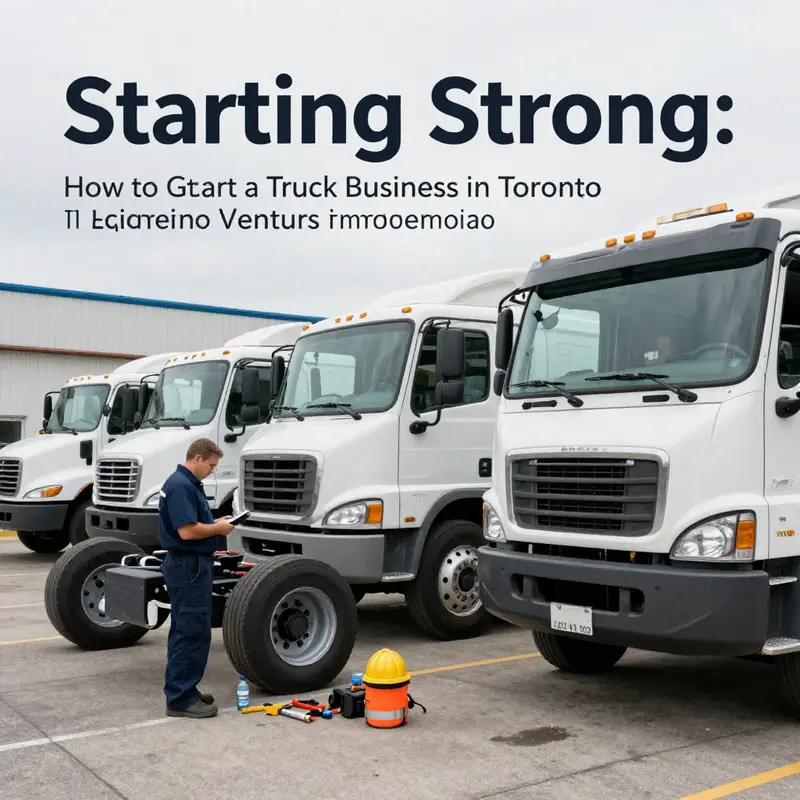
Choosing the right rig for a Toronto start-up is more than a purchase decision; it is a decisive lever that shapes service types, cost structure, and the daily rhythm of your business. In a city that functions as a logistics hub for the region, your fleet becomes a living reflection of your reliability, speed, and adaptability. The equipment you select—from the size and configuration of the truck to its fuel efficiency and maintenance cadence—must align with your intended operations, whether you are handling local urban deliveries, regional shuttles across Ontario, or specialized freight that requires controlled temperatures or extra security. Toronto’s streets are dense, its climates are demanding, and its emissions rules are strict enough to demand thoughtful planning. The first question you should answer is not only what you can buy but what you must have to deliver on your promises to clients, brokers, and partners with minimal downtime and maximum safety.
Your business model must drive the equipment decision. If your plan centers on tight urban windows, a maneuverable, fuel-efficient tractor-trailer combination with a well-suited trailer type can reduce dwell time at warehouses and city intersections. Dry van configurations satisfy many general freight needs, but if you expect regular temperature-sensitive loads, a refrigerated setup becomes a necessity rather than a luxury. Flatbeds find favor with certain construction or heavy equipment movements, while specialized carriers may require vented or insulated options to handle particular cargoes. Each configuration carries its own maintenance footprint and regulatory considerations. Environmental realities in Toronto, including municipal emissions standards under by-laws, further influence permissible equipment choices and operation tactics. Making a disciplined choice here helps control fuel costs, maintenance frequency, insurance premiums, and the complexity of dispatch. It is not only about the sticker price of the truck but about total cost of ownership across years of operation, the likelihood of timely repairs, and the speed at which you can scale.
As you assess options, market realities matter. Toronto’s demand for reliable capacity remains resilient, especially for firms that can offer predictable service windows and consistent on-time performance. Your equipment strategy should therefore emphasize reliability and longevity. Leasing often makes sense for a new enterprise, allowing you to conserve capital while you test routes, customer segments, and driver performance. A lease also provides flexibility to upgrade to newer technologies or different configurations as your business grows. If you pursue ownership, plan for a staged approach: start with one or two trucks to prove your model, then reinvest profits into a gradually expanding fleet. In both paths, it is essential to conduct due diligence on the vehicle condition, service history, and regulatory compliance. Buying used can offer substantial savings, but only when the vehicles have clear maintenance records, verifiable inspections, and current regulatory clearance. The Ontario Truck Dealers Association is a valuable resource for locating reputable sources and assessing the overall condition and market pricing of used assets. A careful, methodical evaluation reduces the risk of unexpected downtime and costly repairs that can erode early profits.
Beyond the base vehicle, you should design a standard for trailer types, hitch configurations, and loading gear that match typical loads and routes. A dry van pair may serve many general freight requirements, but ensure compatibility with your intended customer base’s handling practices. If you anticipate frequent palletized shipments or commodity-specific requirements, plan for appropriate loading equipment, dock levelers, and appropriate securing devices. In Toronto’s operational reality, fleet versatility often translates into a more robust service offering. A well-considered equipment mix can absorb demand variability and keep your dispatchers adaptable when markets shift due to weather events, construction bottlenecks, or regulatory changes. The right mix also reduces the risk of truck idling and unnecessary trucking miles while maintaining the pace your customers expect.
From a safety and maintenance perspective, a proactive discipline is non-negotiable. Maintenance is not merely a preventative measure; it is a competitive advantage. Establish a routine that treats preventive checks as essential business processes rather than as a schedule you might overlook. Regular oil changes, brake inspections, tire rotations, and battery health checks should be embedded in your service calendar. Fleet telematics and onboard diagnostics can provide real-time signals about wear, fuel efficiency, and potential faults before they escalate into breakdowns. Real-time data helps you schedule preventive attention during downtimes rather than during peak demand, preserving service levels and client satisfaction. In a city where delays can cascade into missed windows and penalties, a disciplined maintenance culture translates into dependable delivery times and fewer deferred shipments. You should partner with certified mechanics at authorized service centers to ensure the maintenance work meets regulatory standards and that warranties remain valid. After all, a warranty is not only a policy on paper—it is a practical guarantee of reduced downtime and predictable costs when the unexpected happens.
A growing fleet benefits from a structured operations backbone. Fleet management software that consolidates GPS tracking, fuel usage, maintenance scheduling, and billing creates a single source of truth for your entire operation. When you can monitor each vehicle’s location, speed, and route performance, you gain the ability to optimize dispatch decisions in real time, reducing empty miles and improving overall efficiency. As you accumulate trips across the GTA and beyond, you’ll start to recognize patterns in routes, loading times, and peak traffic windows, enabling smarter scheduling and better customer communication. A formal contracting framework for every shipment, with clearly defined responsibilities, payment terms, and delivery timelines, reduces disputes and speeds the path from quote to cash. Even with strong relationships and competitive pricing, the texture of your operations is often defined by how reliably your equipment performs and how cleanly your fleets can navigate the city’s traffic and port terminals.
The human element is inseparable from equipment and systems. You will need drivers with clean records and the appropriate licenses for the vehicle type you operate. In Ontario, Class 1 licenses are typically required for larger tractor-trailers, while Class 4 may apply to smaller configurations with certain passenger or service duties, depending on the exact vehicle and operation. Your driver onboarding should include a safety culture that aligns with provincial and federal expectations, as well as a practical emphasis on fuel-efficient driving and proper use of telematics data. Hours of service rules, part of the Canada Labour Code framework, should be explained clearly and enforced using your dispatch and telematics system. Educating drivers on efficient routing, safe braking practices, and how to handle urban delivery challenges can substantially reduce wear on your equipment and sharpen customer service. The goal is to create a team that treats equipment as a shared asset and routines as the backbone of dependable performance, not as constraints.
If you are tempted to push the envelope on the equipment side to pursue a quick cost advantage, pause and run the math. An unfocused push to max out capacity can backfire through higher insurance costs, more frequent repairs, and complex maintenance demands. Toronto’s environment rewards predictability, reliability, and compliance more than sheer scale. A measured strategy that prioritizes high-quality equipment, a clear maintenance cadence, and robust safety practices often yields steadier margins and longer business life. Within that frame, you may explore targeted investments in technology that yield dividends in uptime, service quality, and customer trust. For instance, adopting modern diagnostics and inspection approaches can flag issues before they escalate. As one example of industry innovations in vehicle safety and inspection, advanced techniques like X-ray inspection technology in Ontario are increasingly used to verify structural integrity and cargo-securement reliability. The integration of such capabilities, when available through reputable service providers, can help your shop and fleet stay ahead of the compliance curve while enhancing overall fleet resilience. X-ray inspection technology in Ontario
When equipment, maintenance, and operations align with regulatory expectations, your Toronto start-up can move from a fragile pilot to a scalable business. Build a maintenance-first culture, invest in flexible financing or leasing that preserves capital for growth, and maintain a disciplined approach to route planning and driver development. Invest time in understanding the regulatory landscape that governs trucking in Ontario and Canada; the Ontario Ministry of Transportation and Transport Canada publish the rules that ultimately shape feasibility and risk. A practical example is the carrier’s permit process and the ongoing safety standards mandated by federal and provincial authorities. Keeping current with regulatory changes helps you avoid fines, operating permit suspensions, or unexpected downtimes that derail schedules and strain client relationships. For enterprises aiming to scale, the combination of a reliable equipment platform, a defined maintenance program, and a disciplined operations model translates into a sustainable competitive edge—one that Toronto rewards with steady demand and a growing base of loyal customers.
As you navigate the early phases of equipment selection and maintenance strategies, your aim should be to prove your system with a minimal but capable fleet, then expand as your cash flow and client roster justify it. Build your maintenance calendar around predictable cycles, create a data-driven approach to preventive care, and design your dispatch procedures to maximize equipment utilization. The details matter: truck configurations must fit your service geography, maintenance intervals must align with manufacturer recommendations and regulatory guidance, and your fleet management tools must deliver actionable insights rather than data for its own sake. When you combine these elements with a culture of safety and reliability, you transform a modest beginning into a resilient operation that can thrive in Toronto’s demanding market.
For those seeking broader regulatory context, several official resources outline the standards you will be expected to meet. For a broad regulatory perspective and current safety standards, you can consult Transport Canada – Commercial Vehicle Safety. This external resource provides authoritative information on safety regimes, inspections, and compliance considerations that affect trucking across Canada. Transport Canada – Commercial Vehicle Safety
Chapter 4: From Market Entry to Scalable Growth in Toronto’s Trucking Scene
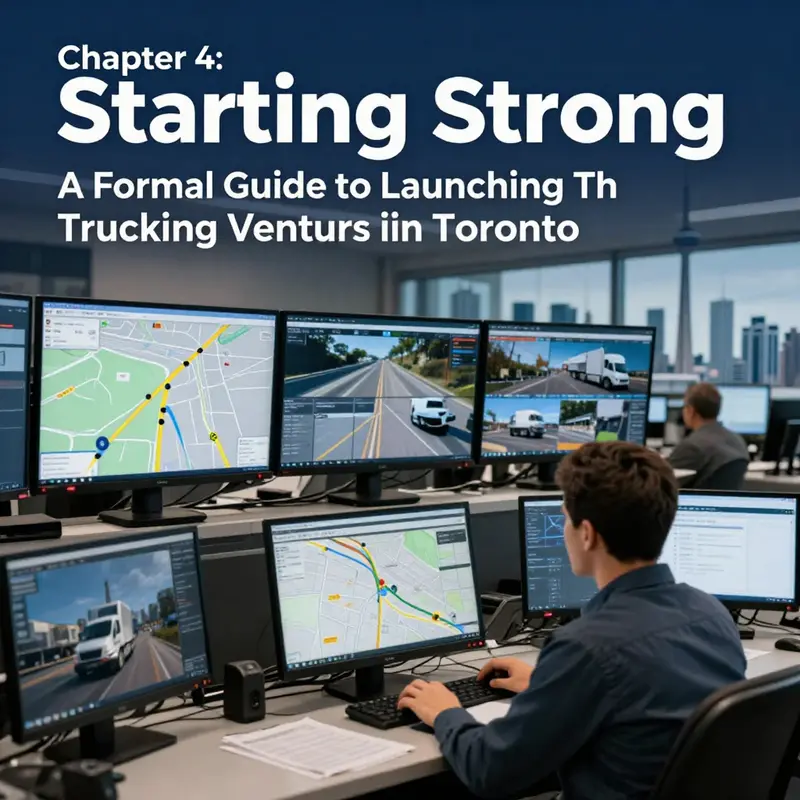
Toronto sits at the heart of Canada’s trade and distribution network, a place where highways braid into warehouses, cross-docks, and urban delivery corridors. The Greater Toronto Area is not just dense traffic; it’s a living system of logistics that pulses with regional manufacturing, omnichannel retail, and cross-border flows into the U.S. Midwest. For a new trucking business, this reality offers both opportunity and responsibility. Opportunity because there are lanes that matter—dense urban last-mile for e-commerce, regional shuttles between GTA hubs, and specialty services such as refrigerated or flatbed work that lean on dependable partners. Responsibility because success hinges on a precise blend of compliance, capital discipline, customer trust, and disciplined growth. The chapter that follows weaves market entry with network development, the right technology backbone, and a plan to scale without outpacing cash flow or safety standards. It’s a narrative about building a credible platform in a fiercely competitive market where every mile must earn its keep and every relationship is a long-term investment.
First, market entry begins where many overlooked opportunities lie: regulatory readiness that translates into credibility with shippers and brokers. In Ontario, you must align with provincial requirements and federal expectations for interprovincial and cross-border operations. A Class 1 driver’s license is the entry ticket for operating large trucks, but your business also needs a carrier’s permit and compliance under federal safety rules. The Ontario CVOR program is a safety fitness regime that affects whether you can legally operate a commercial vehicle above certain weights. This is not a box to check once; it’s a continuously managed program that matters for your insurance pricing, your ability to attract big shippers, and your overall risk profile. Alongside licensing, you will need robust insurance that covers liability, cargo, and vehicle damage. In a city where a single late delivery can cascade into warehouse dock delays and penalties, the financial cushion and risk controls you establish early are a signal of reliability as strong as any sales pitch. You’ll discover that the most successful new entrants treat regulatory compliance as a competitive differentiator rather than a sunk cost. They build programs—driver training, vehicle maintenance, and safety audits—that demonstrate to clients that their operation is safe, predictable, and capable of expanding with confidence as volumes grow.
Second, the structure of your business matters deeply in Toronto. Decide how you will register—whether as a sole proprietorship, a partnership, or a corporation—and set up your accounting and banking with growth in mind. Insurance needs are more than a line item; they’re the framework that supports your entire service model. Cargo coverage is essential when transporting high-value goods, and workers’ compensation or WSIB coverage protects both your team and your clients. In this market, credibility flows from organization: clean books, transparent contracts, and a safety-first culture. Once you have your legal entity, you’ll want a lean fleet that you can manage well while you learn the ropes. Starting with one or two reliable trucks allows you to prove your value before committing to a larger asset base. This approach reduces the risk of overextending cash reserves and gives you a learning curve to optimize routes, maintenance, and driver onboarding. The equipment decision—dry van, refrigerated, or flatbed—should align with a clear service niche and lane strategy. A focused start helps you balance utilization against debt service and maintenance costs, which is critical in an area where fuel, insurance, and driver wages are ongoing pressure points.
A practical reality of Toronto’s market is that success is not just about what you haul, but how you haul it. Market entry is a balance between direct shipper outreach and broker relationships. A direct approach to working with local manufacturers, distributors, and e-commerce fulfillment centers can yield long-term contracts and predictable utilization. At the same time, brokered loads provide a stabilizing cushion as you ramp up. Your go-to-market plan should articulate a service niche that differentiates you—whether it’s disciplined on-time performance, specialized handling, or reliability in cross-border lanes. You’ll need a simple yet rigorous pricing framework that accounts for fuel, driver wages, maintenance, and the variable costs of cross-border clearance if that lane is part of your plan. In this Toronto context, the ability to present a clear value proposition—on-time delivery, proactive communication, and transparent billing—can be as important as the equipment you own.
Connecting the operational backbone to growth is where technology plays an enabling role. Begin with a minimal but scalable stack: telematics or fleet management to monitor location and maintenance, routing and dispatch to match loads with available drivers, maintenance tracking to prevent downtime, and a straightforward invoicing system that ties into your customer agreements. You don’t need a Cadillac of software at the outset; you need a reliable set of tools that can grow with you. The driver’s mobile experience matters, too. A simple app that shows schedules, routes, and safety reminders improves on-road performance and reduces disruption. Data governance should be built in from day one: protect sensitive customer information, track maintenance history, and ensure your drivers’ personal data is secured. As you scale, you’ll appreciate the value of interoperability—your dispatch data should feed into your accounting, your maintenance logs, and your safety dashboards. A practical approach is to adopt a minimal viable tech stack and then layer in additional capabilities as utilization increases and service lines expand. The aim is to gain visibility into every mile, every fuel dollar saved, and every maintenance dollar avoided, so you understand where to invest for incremental gains.
In Toronto, the path to steady growth requires a network that extends beyond your own doors. Networking and partnerships are not add-ons; they are lifelines. Industry associations like the local trucking and logistics communities offer educational programs, regulatory updates, and introductions to potential customers. You should aim to build relationships with shippers who value dependable, compliant providers and with brokers who can stabilize utilization during ramp-up. The most enduring partnerships are built on a track record of safety, reliability, and clear communication. A practical strategy is to create a compact sales toolkit: a crisp service summary, references or testimonials from early pilot clients, and a straightforward quote process. While personal outreach and warm introductions matter, a robust online presence helps you scale your reach. A LinkedIn profile with regular, professional activity and participation in relevant groups can generate warm introductions and referrals that are often harder to secure through cold outreach alone. In this context, it’s wise to pursue capacity partnerships with third-party logistics providers to fill gaps as you grow, while you concurrently secure direct contracts with shippers for long-term stability.
Looking ahead to technology again, a well-chosen fleet and software system should deliver a consistent, safe, and transparent experience for drivers and customers alike. The core elements are familiar: fleet tracking, load matching, driver apps, preventive maintenance reminders, and integrated invoicing. You can also introduce safety dashboards, incident tracking, and training modules that align with provincial safety requirements and the expectations of larger shippers. The goal is not to chase every new feature but to implement what increases reliability, reduces downtime, and improves cash flow. You’ll want to design a plan that supports phased scaling: begin with one or two trucks, establish core service lanes in the GTA and nearby corridors, and then test cross-border opportunities if they align with your capital and risk appetite. The emphasis should be on discipline—pricing, route optimization, and safety—and on a culture that values continuous improvement rather than quick wins.
A crucial element of scale is people. Growth accelerates when you invest in your team and embed a learning culture. Recruitment, onboarding, and safety training are not administrative tasks; they are competitive differentiators. You can weave this into your operating rhythm by establishing clear onboarding checklists, safety certifications, and continuous improvement processes. In the trucking world, the human asset often determines whether a plan stays on track under peak demand or when a late-hour surge arrives. The idea is to treat your drivers, dispatchers, and maintenance technicians as valued partners whose engagement translates directly into reliability and customer satisfaction. This is where a phrase you may encounter in industry conversations resonates: investing in people is a path to long-term fleet performance. A concise articulation of that idea appears in a resource that emphasizes people-first strategies in trucking. It is worth revisiting this idea as you scale, because your success will ultimately hinge on the quality of your team as much as the efficiency of your processes.
With a clear market-entry framework and a growing toolkit of capabilities, you can begin to map a practical growth trajectory. A phased rollout helps you maintain service quality while expanding capacity. In the first quarter you establish the business, obtain CVOR and insurance, secure 1–2 reliable trucks, and set up the core digital stack. By months four to six you should have begun to diversify lanes, deepen broker relationships, and refine maintenance routines. By months seven to twelve you could operate a small fleet with multiple service lines, while intensifying safety programs, and tightening back-office processes to improve cash flow. After the first year, you assess which lanes deliver the strongest utilization and margins, and you decide how to adjust pricing, expand equipment types, and possibly pursue cross-border opportunities. The end of the year becomes a checkpoint for capital planning: whether to lease or buy, how to finance the next fleet, and whether to add warehousing or dedicated contract carriage as a complement to your trucking service. This staged approach helps you avoid the traps of overexpansion and keeps the business aligned with demand in a market that remains the country’s busiest logistics hub.
To support these decisions, keep a focused set of KPIs that reflect both asset efficiency and service reliability. Track utilization, cost per mile, and revenue per mile across each lane. Monitor gross margin per mile after fuel and maintenance. Record on-time delivery rates, the level of service disruption, and fuel efficiency with idle time metrics. You’ll also want drivers’ turnover rates, the time it takes to recruit and onboard new drivers, and training completion rates. Maintenance cost per mile and preventive maintenance adherence reveal where capital is being spent and where downtime can be prevented. Finally, monitor accounts receivable and cash conversion cycles to ensure growth does not outpace liquidity. A practical 15- to 24-month rollout plan translates these metrics into a rhythm of milestones: from initial licensing and asset acquisition to a multi-tractor, multi-lane operation that can sustain growth while keeping safety and compliance at the forefront. The journey is not a sprint; it is a deliberate, data-informed ascent that aligns with the realities of Toronto’s demanding logistics landscape.
If you want a structured synthesis that pulls together public regulatory guidance with practical, field-tested steps, I can tailor this plan to your budget, your chosen service lines, and the lanes you want to serve—local, regional, or cross-border. I can also craft a phased, 12–24 month roadmap with concrete milestones, budgets, and KPI targets you can track in your first year. For readers seeking a direct path to regulatory specifics, consult a primary source on the Ontario side and be mindful of changes that can affect licensing, insurance, and CVOR requirements.
Resources and next steps are practical, not abstract. Start with regulatory and compliance references to Ground Your Plan: check the Ontario Ministry of Transportation pages on CVOR and commercial vehicle operator responsibilities, and explore Transport Canada guidelines for cross-border transport if you intend to operate across the border. Industry associations—such as the Ontario Trucking Association—offer education and networking that can accelerate your progress. For local market intelligence, map GTA distribution centers, retailer networks, and manufacturing clusters to identify high-potential lanes. When it comes to technology, request trials or demos from telematics and dispatch providers, but emphasize ease of use, maintenance integration, and data exports. And always build your approach around the core idea that growth must be sustainable, compliant, and grounded in a strong people-and-process foundation.
External resource: Ontario Ministry of Transportation – Motor Carrier Licensing provides current regulatory guidance and requirements that underpin every practical decision you will make as you enter Toronto’s trucking market. Ontario MTO Motor Carrier Licensing
Final thoughts
Launching a truck business in Toronto requires disciplined execution across licensing, structure, equipment, and market strategy. By establishing regulatory compliance first, selecting a robust legal and insurance framework, investing in reliable equipment with proactive maintenance, and pursuing a strategic market entry supported by technology and networks, a new operator can build a resilient, scalable presence in GTA corridors. The path is clear: start with regulatory readiness, then solidify your corporate footing, equip and maintain a dependable fleet, and finally expand through targeted client acquisition and digital optimization. With prudent planning and disciplined execution, your trucking venture can become a trusted partner for logistics, construction, and distribution players across Toronto.