In the competitive landscape of the logistics and freight industries, the significance of naming your trucking business cannot be overstated. A strong business name serves as the first impression for potential clients and partners, encapsulating what your brand stands for. It is not just a label; it is a fundamental element of your marketing strategy that influences perceptions and decisions. A well-chosen name can convey reliability, professionalism, and innovation, which are critical attributes in a sector where competition is fierce. Moreover, a memorable name can help you stand out amidst a sea of similar services, enhancing brand recognition and loyalty over time. As you embark on the journey of establishing your trucking business, consider the lasting impact of your name-a decision that may very well shape your company’s future success and reputation in this ever-evolving industry. Learn more about the trucking industry’s future and how it ties into brand perception.
Key Considerations for Naming Your Trucking Business
Naming your trucking business is a crucial step that can significantly impact its marketability and success. Here are some essential factors to consider:
-
Marketability: Your business name should resonate with your target audience. Names that evoke speed (e.g., “Rapid Freight”) or reliability (e.g., “Secure Transport”) can create a strong first impression.
-
Memorability: A catchy and easy-to-remember name can help potential clients recall your services. Consider names that are short, unique, and convey the nature of your business directly.
-
Relevance: Ensure that your name is relevant to the trucking industry. Including terms related to logistics or freight can help set the right expectations for customers.
-
Legal Considerations: Verify that your desired business name complies with local regulations and does not infringe on existing trademarks. It’s also important to ensure that the name is not misleading or offensive.
-
Branding Potential: Think about how the name will fit into your branding strategy. A strong name can be an essential part of your marketing efforts, helping you develop a recognizable brand identity.
-
Domain Availability: In today’s digital age, it’s vital to check if a suitable domain name is available for your business. This will help establish a robust online presence.
-
Social Media Compatibility: Ensure that your business name can be used across various social media platforms without major alterations. This will help maintain brand consistency online.
Consider these factors carefully to select a name that not only reflects your business values but also appeals to your target market. For insights on the broader context of trucking in the industry, learn more about the future of trucking.
Importance of Branding in Trucking
Branding plays a crucial role in the trucking industry, influencing customer perception and shaping how logistics and freight companies operate in a competitive market. A strong brand not only differentiates a trucking business from its competitors but also fosters trust and reliability in the minds of customers and partners. In an industry where efficiency and safety are paramount, effective branding can significantly enhance a company’s credibility.
Customer Perception and Branding
Brand perception is vital in the trucking sector, as it directly affects how potential clients view trucking companies. Research from the American Trucking Associations indicated that 78% of shippers prioritize established brands when choosing carriers, predominantly associating strong branding with reliability and transparency. Companies that emphasize safety, timely delivery, and sustainability-such as utilizing eco-friendly vehicles-are more likely to attract and retain clients. These brands promote a message that resonates with customers’ values, leading to stronger relationships and repeat business.
Impact of a Strong Name
A trucking company’s name is a fundamental aspect of its branding strategy. A compelling name provides a first impression that can captivate potential clients and convey professionalism. Names that are memorable and reflective of the company’s core values can significantly impact the brand’s identity. For instance, a name that evokes speed and efficiency can suggest that the company is timely in deliveries, which is paramount in logistics. This initial perception is often what encourages customers to consider a brand when making logistics or freight decisions.
Moreover, effective branding strategies create a cohesive visual identity across all platforms, including fleet livery, marketing materials, and online presence. Consistency in branding helps reinforce the company’s values and assures customers of its operational reliability.
In conclusion, logistics and trucking industry branding is not simply about aesthetics; it deeply influences customer loyalty and market presence. By investing in a strong and clear brand identity, trucking companies position themselves as trustworthy partners within the logistics ecosystem. To learn more about how you can leverage branding for success in transportation, check out this article on building a strong brand identity.
Additionally, understanding brand credibility is essential, as the trucking industry increasingly sees carriers invest in brand trust to enhance their reputational strength.
| Trucking Business Name | Meaning | Branding Strategy |
|---|---|---|
| Prime Mover Logistics | Emphasizes leadership and core transportation capability | Conveys authority in logistics and positions as a primary force. |
| Evergreen Transport | Suggests reliability, sustainability, and partnership | Appeals to clients seeking dependable and long-term service. |
| SwiftLine Freight | Implies speed and efficiency in delivery | Perfect for time-sensitive deliveries using a continuous network. |
| HaulMaster Inc. | Combines ‘Haul’ with ‘Master’ for expertise | Signals authority and skill in the hauling sector. |
| Reliable Rides LLC | Directly communicates brand promise of dependability | Builds trust with clients through straightforward naming. |
| ClearPath Carrier | Evokes clarity and ease of service | Reduces anxiety about shipping processes for customers. |
| FastTrack Express | Uses ‘Fast’ for urgency and ‘Track’ for transparency | Appeals to clients needing real-time service control. |
| CargoShield Logistics | Implies safety and protection for valuable goods | Attracts clients concerned with security and timeliness. |
learn more about naming strategies | learn more about branding in trucking
Common Pitfalls to Avoid in Naming Your Trucking Business
Naming your trucking business can set the tone for your brand, affect customer perceptions, and even impact your marketing efforts. To help you make the best choice, here are some common pitfalls to avoid when selecting a business name:
-
Complex Names
Choosing a name that is difficult to spell or pronounce can confuse potential customers. Names should be memorable and easy to communicate. Complexities can hinder word-of-mouth referrals and minimize online visibility. A name should represent your business while being simple enough for others to recall easily. -
Names That Don’t Resonate with the Target Audience
It’s essential to consider the values and preferences of your target market. Names that may seem attractive could be culturally irrelevant or inappropriate. Conduct market research to ensure your business name aligns with the expectations and norms of the demographics you aim to serve. -
Neglecting Domain Name Availability
In today’s digital age, ensuring that the corresponding domain name is available is crucial. A name that requires complex domain variations may restrict your brand’s online presence and hinder your marketing efforts. According to recent studies, 43% of businesses face failure due to domain unavailability associated with their chosen name. -
Ignoring Trademark Issues
Before finalizing a name, verify that it doesn’t infringe on existing trademarks. Similarity to an established brand can lead to legal issues and confuse customers. Approximately 29% of startups face complications due to trademark-related disputes, emphasizing the need for thorough research. -
Following Trends
While trendy names might be appealing, they can quickly become outdated. It’s important to consider the longevity of your brand. A name that reflects current trends might not resonate in a few years, leading to consumer disconnect.
Avoiding these common pitfalls in naming your trucking business can significantly enhance your brand’s effectiveness and longevity. For further insights on the trucking industry, check out this article on combating cargo theft or learn more about regulatory challenges in trucking.

The table below highlights common pitfalls in business naming:
| Pitfall | Percentage |
|---|---|
| Domain Name Unavailability | 43% |
| Complexity & Hard to Spell | 38% |
| Lack of Cultural Resonance | 32% |
| Similarity to Existing Brands | 29% |
| Poor International Scalability | 26% |
Having a well-chosen business name is crucial for logistics and transport companies, as it significantly impacts their success in a competitive market. A memorable and relevant name not only builds brand recognition but also fosters trust and loyalty among customers.
Key Insights and Statistics:
-
Brand Goodwill: A powerful name can contribute to brand goodwill, enhancing profitability and trustworthiness. A study found that companies with strong, memorable names often see improved customer perceptions, which correlates with higher revenue. In the logistics sector, where reliability is essential for success, a business name that is trustworthy can help differentiate a company from its competitors (Quora, 2017).
-
Customer Experience: According to a report by PwC Strategy&, customer experience is a decisive factor for success in logistics. Companies that emphasize reliability and transparency tend to build stronger relationships with clients. The report highlighted that leading firms utilize digital tools for tracking and customer engagement, with brand names playing a vital role in encouraging customer loyalty (PwC Strategy&, 2023).
-
Operational Efficiency & Naming: Research from Best Logistics Ltd indicates that operational excellence, which includes economies of scale and inventory management, is often reinforced by a reputable business name. Successful logistics companies tend to achieve significant operational cost reductions, and their names help portray their capabilities to potential clients. A well-recognized brand name can often lead to a 15-30% reduction in operational costs in the first year of outsourcing logistics (Best Logistics Ltd, 2025).
-
Market Strategies: Studies have shown that internal branding, including the company’s name, affects customer perception and loyalty. In emerging markets, particularly in the Asia-Pacific region, a solid business name is notably important as it influences marketing effectiveness and customer retention in logistics enterprises (ResearchGate, 2030).
In conclusion, the correlation between a business name and its success in the transport and logistics sectors cannot be overlooked. A strategically chosen name enhances brand perception, promotes customer loyalty, and can lead to significant operational efficiencies. For logistics and freight companies, ensuring that their business name embodies reliability and professionalism can provide a competitive advantage in the marketplace.
For more insights into operational excellence in logistics, you might find the article on transforming fleet management through investment in human capital particularly illuminating.
The Significance of a Strong Business Name in Trucking
A strong business name and branding are essential in the trucking and logistics industry. According to Mark Thompson, CEO of TransGlobal Freight,
“Your brand is your promise to the customer-consistency, reliability, and transparency are what build trust.”
This statement underscores the vital role that a well-defined brand plays in differentiating a company from its competitors.
A succinct, memorable name can help improve visibility in a saturated market, while strong branding enhances credibility and customer retention.
When establishing a trucking business, consider how the name and brand identity reflect the services you offer. A professional image supports effective marketing strategies in both digital platforms and carrier networks, ultimately positioning your business for success.
For more insights on the trucking industry, learn more about the future of trucking and discover cargo theft reduction strategies.
Conclusion
In summary, the significance of naming and branding your trucking business cannot be overstated. A thoughtful name not only lays the foundation for your brand identity but also communicates your core values to potential customers. As we discussed, effective branding elements-such as logo design, consistent messaging, and a robust online presence-have proven to lead to substantial business growth. For instance, companies like Travco Logistics have seen a 25% increase in customer inquiries following a rebranding that emphasized their reliability.
Investing time in the naming process is truly a pivotal step towards establishing a strong foot in the logistics and freight industry. As you contemplate your trucking business’s future, consider enlisting experts like Summit Fairings to assist you in creating a memorable brand that can stand the test of time. Your name is your first impression-make it count!
Chart of Naming Trends in the Trucking Industry
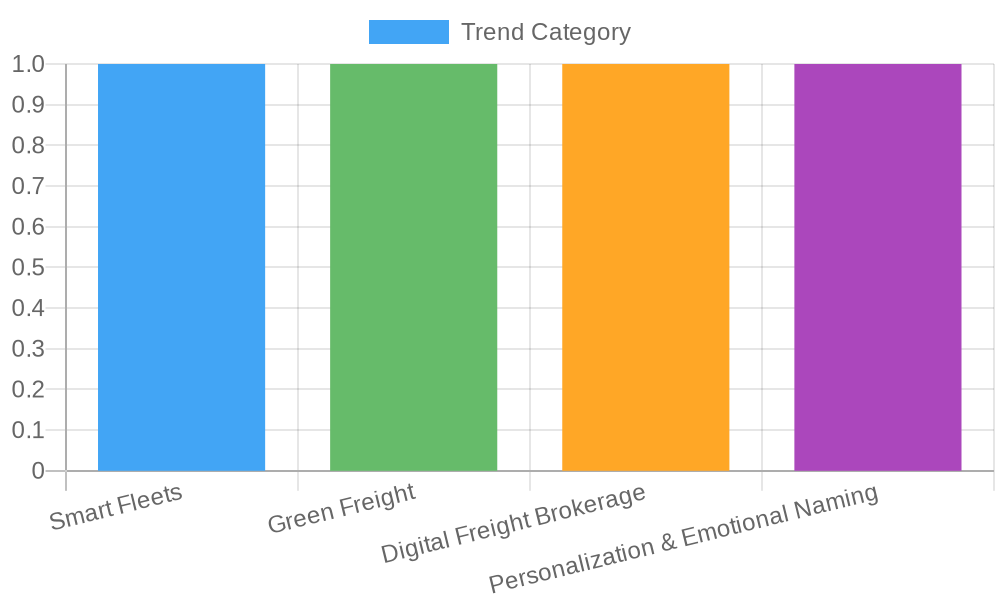
As the trucking industry evolves, naming conventions also shift to reflect consumer preferences and branding strategies. The chart below illustrates the significant trends observed in the naming of trucking businesses over the past decade:
Key Trends Highlighted:
- Smart Fleets: The emergence of technology-driven fleet management leads to branding that incorporates terms like “smart” and “connected.”
- Green Freight: Many companies are adopting names emphasizing sustainability, such as ingredients like “eco” or “zero-emission.”
- Digital Freight Brokerage: Platforms are using terms that stress technology and immediacy, representing a shift towards flexibility in logistics.
- Personalization & Emotional Naming: Smaller fleets are increasingly favoring names that connect on a personal level with customers, building trust and loyalty.
To explore more about how these trends shape the future of the industry, check out the article on the Future of Trucking.