

Profitability in a dump truck operation hinges on aligning revenue opportunities with disciplined cost management, asset utilization, and strategic planning. For Logistics & Freight Companies, Construction & Engineering Firms, Fleet Management Providers, and Food & Beverage Distributors, the question is not simply whether trucks can carry load, but whether the business model consistently converts utilization into margin. This guide synthesizes industry dynamics—market demand cycles, fleet configuration, pricing discipline, and the role of technology—into a cohesive framework. Each chapter builds on the last to show how an operator can convert volume and uptime into predictable cash flow, while mitigating volatility from seasonality, project cycles, and regulatory shifts. By examining cost structure, equipment choices, contract strategies, operational efficiency, financing options, and risk controls, readers will gain actionable insights to improve margin, resilience, and scale. The chapters below translate high-level drivers into practical steps, ensuring the topic remains central to profitability across varied market contexts and organizational roles.
Profit from the Ground Up: Cost Structures, Pricing, and the Profit Drivers of a Dump Truck Business

Profit in a dump truck business comes from a disciplined blend of cost control, pricing discipline, and effective capacity management. The starting point is understanding your cost per hour, which typically includes fuel, maintenance, depreciation, insurance, labor, and overhead. A practical benchmark helps set a floor, but margins move with utilization and the mix of fixed and variable costs. The goal is to price so that the hourly rate exceeds the cost per hour by a cushion that covers downtime, downtime risk, and taxes, while remaining competitive in your markets.
Smart profitability starts with cost structure clarity. Fixed costs such as vehicle financing, insurance, and core overhead create a baseline that must be absorbed even when work is light. Variable costs scale with activity: fuel burn, maintenance due to wear, tires, and driver wages during peak periods. Closing the gap between cost per hour and price per hour is the practical path to profit, and tech tools like telematics can reveal waste, optimize routes, and schedule maintenance to prevent costly downtime.
Revenue and pricing strategy shape the top line. Revenue models for dump trucks are typically hourly, daily, or per-load, with high utilization and reliable payloads driving the most margin. Pricing should reflect cost floor plus value: reliability, speed, and scope. Bundled services, longer term contracts with predictable volumes, and efficient project selection can raise effective rates and stabilize cash flow. Opportunistic spot work can fill capacity but should be managed for revenue volatility and contingency planning.
The optimal asset mix matters. A flexible fleet that can perform across segments reduces risk from sector swings and helps sustain utilization. Fleet management, route optimization, and disciplined maintenance scheduling improve uptime and lower per-hour costs. Financing decisions—combining owned, leased, or financed assets—affect cash flow, taxes, and depreciation benefits. A conservative approach to cash reserves for maintenance and replacement cycles strengthens resilience through cycles of plenty and shortfall.
In short, profitability is driven by cost discipline, prudent pricing, and capacity alignment. By measuring cost per hour, pricing with margin resilience, and investing in the right people, equipment, and processes, a dump truck business can earn steady profits across market cycles.
Is a Dump Truck Business Profitable? How Equipment Selection and Configuration Drive Profitability
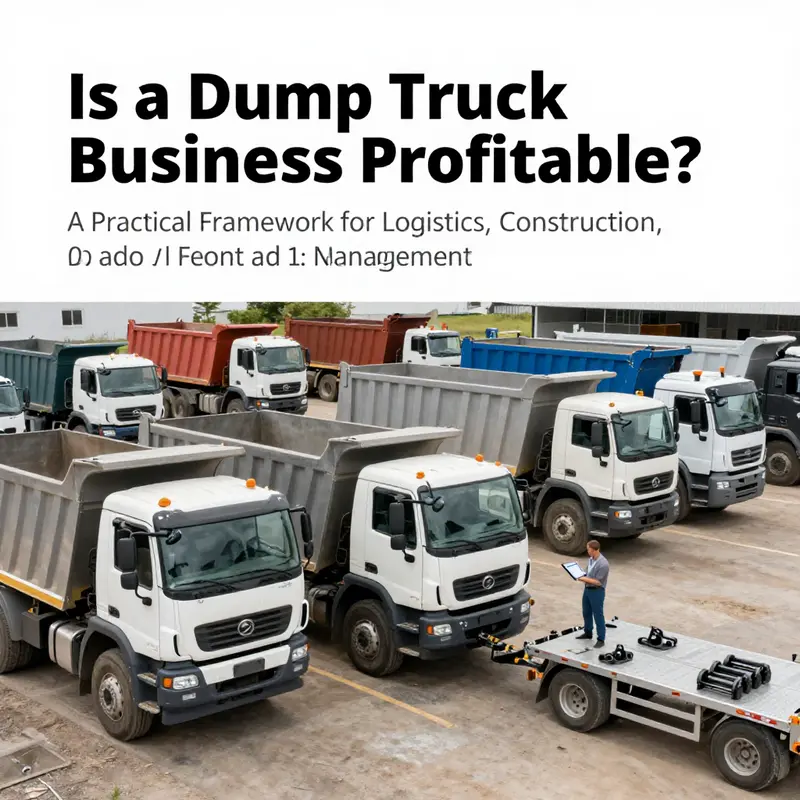
Market demand and utilization form the backbone of any profitability plan for a dump truck operation. Projects in road construction, bridge work, mining support, and aggregate haul demand different equipment capabilities and different load profiles. A fleet that matches capacity to projected workload avoids two costly extremes: underutilization when demand stalls, and overextension when project activity surges. Diversification across multiple segments helps smooth cash flow, because seasonal peaks in one market can be offset by steadier volumes in another. Contract-driven work, especially long-term arrangements with stable volumes, improves revenue visibility and reduces the revenue volatility inherent in spot-bid work. The emphasis is not simply on having enough trucks, but on aligning the fleet mix with the anticipated mix of jobs and the cadence of project cycles. In practice, this means a careful market assessment that translates into a fleet plan—one that specifies how many trucks, what configurations, and how they will be allocated across segments. A well-tuned plan keeps the fleet at or near its optimal utilization rate, a foundational step toward consistent margins.
Equipment selection and configuration have a magnified effect on throughput and operating costs because they determine how much material can be moved per trip, how quickly trips can be completed, and how much fuel is burned per ton of material. In many markets, a mid-range capacity class—think trucks in a versatile range that handle road construction, small- to mid-scale excavation, and bridge projects—offers the best balance of upfront capital, maintenance costs, and payload flexibility. Heavier-duty configurations are reserved for the largest, high-volume operations where a higher upfront investment can be justified by very high throughput and longer asset life in demanding environments. The choice is not simply about one truck model or one body type; it is about the entire system: the chassis family, the dump body design, interface with hauls, and the maintenance schedule that sustains uptime. A practical example is the transfer dump concept, where a primary truck unloads into a detachable trailer, enabling higher payloads per cycle and potentially reducing downtime associated with load handling. This configuration can yield meaningful gains in large civil or road projects where scale and schedule pressure demand high productivity. The math behind such choices rests on aligning payload per trip with fuel per mile and cycle time, so that each trip delivers the maximum possible material moved within a given hour while keeping wear and tear within acceptable limits. The alignment of equipment with project demands also shapes maintenance planning. Predictive maintenance, guided by telematics and engine hour tracking, helps avoid breakdowns during critical windows and reduces expensive downtime. In turn, uptime and reliability feed directly into the ability to quote accurate load forecasts, secure dependable contracts, and price with a margin buffer for contingencies.
Cost discipline remains central to profitability even when equipment choices are optimal. Upfront capital expenditure, financing terms, depreciation schedules, and interest costs all influence the bottom line. Fuel is a dominant variable cost, but it is one that can be meaningfully controlled through route optimization and speed management enabled by fleet software. Maintenance and parts costs are the next major levers; a preventive maintenance regime reduces unexpected downtime and extends the life of the asset. Labor costs—drivers, supervisors, and benefits—also shape margins, particularly in regions with high wage baselines or where turnover affects training costs. Insurance, permits, and regulatory compliance add layers of fixed and variable costs that must be modeled into pricing. The most profitable operators actively manage these costs with dashboards that flag outliers in fuel efficiency, tire wear, and downtime. They also deploy disciplined procurement practices for parts and tires to maintain predictable maintenance bills. The integration of telematics with maintenance calendars and parts supply chains creates a feedback loop where performance data informs procurement, which in turn sustains uptime and reduces total cost of ownership. Modern fleet tools are not optional luxuries; they are core enablers of margin, capable of turning a tight cost structure into a durable advantage even when external market conditions soften.
Revenue modeling hinges on how the work is priced and scheduled. Hourly and daily rates remain common, but the real margin comes from how well those rates reflect the actual productivity of the equipment and the reliability of the service. A mix of long-term contracts and flexible spot work is often necessary to balance revenue visibility with upside potential. In practice, the business adopts a pricing model that incorporates expected fuel consumption, maintenance downtime, and a contingency for regulatory changes or market downturns. The stronger the project forecast and the better the track record for on-time performance, the more room exists to negotiate favorable terms and stable volumes. The interplay between utilization and revenue is the fulcrum: higher utilization can justify higher rates for peak windows, while steadier utilization makes it possible to offer competitive pricing anchored by predictable cash flow.
Technology and safety are not only compliance requirements; they are profitability instruments. Telematics provide real-time visibility into fuel economy and asset health, enabling proactive maintenance and more informed dispatch decisions. Route optimization reduces mileage and idle time, while automated invoicing streamlines cash flow. Driver coaching and safety programs improve productivity and lower accident-related costs, often translating into lower insurance premiums and fewer maintenance surprises. When combined, these capabilities shrink downtime, improve payload efficiency, and keep the fleet operating closer to its theoretical productive capacity. The economic payoff is a tighter cost envelope and steadier margins, even in the face of market softness.
Ownership structure and financing choices shape cash flow and tax outcomes. Operators range from single-owner operators to small fleets and larger, bank-financed acquisitions or leases. Leasing can reduce upfront capital needs, provide access to newer equipment, and offer favorable uptime through maintenance-inclusive terms, but it changes long-run cost of capital and depreciation benefits. Conversely, traditional purchase arrangements maximize ownership flexibility and tax depreciation but require greater upfront liquidity and simpler maintenance economics to capture the full benefit. The best decisions strike a balance between liquidity, risk exposure, and the expected profile of utilization across market cycles. Beyond purely mechanical considerations, regulatory and incentive environments influence equipment choices as well. Incentives for certain project types or for cleaner technologies can tilt the calculus in favor of particular configurations or maintenance plans that support those goals.
Profitability is not a static outcome; it is a function of disciplined planning and continuous optimization. It begins with a precise market assessment to size demand and identify competitive gaps, followed by a fleet plan that translates that insight into capacity and utilization targets. It then requires a disciplined approach to asset management, leveraging telematics and data analytics to drive uptime and fuel efficiency. The equipment mix must balance capital cost with expected utilization, ensuring that every asset contributes to a predictable yield. Finally, conservative cash flow planning must underpin maintenance and replacement cycles, shielding the business from moderate downturns and enabling quicker ramp-up when demand rebounds. For operators seeking actionable guidance, industry discussions emphasize the value of data-driven decision-making, fleet management practices, and careful alignment of asset choices with project demands as the clearest path to higher margins. This integrated approach—market-driven planning, intelligent equipment selection, and proactive cost control—forms the core of profitability in a dump truck business.
The practical takeaway for builders, contractors, and fleet managers is to treat equipment selection and configuration as strategic levers rather than mere procurement decisions. Start with a market-backed forecast of workload by segment, then translate that forecast into a concrete fleet plan with specific configuration profiles tailored to each segment’s needs. Use predictive maintenance to extend asset life and minimize downtime, and embed telematics into daily operations to turn data into actionable actions. Price with visibility into cost and performance, not merely with competitive bids, and cultivate long-term contracts that provide a stable backbone for margins. And as you pursue efficiency, keep a watchful eye on the broader forces shaping the industry—regulatory shifts, commodity cycles, and the evolving expectations around safety and workforce development. For a deeper dive into implementing fleet-management strategies that support profitability, see the resource linked here: Transforming Fleet Management: The Case for Investing in Human Capital.
External resource for further reading: https://www.truckstop.com.my/dump-truck-price-malaysia-types-structure-and-how-to-optimize-performance-in-industry
Profit on the Haul: Market Demand, Contracts, and Diversification in a Dump Truck Venture
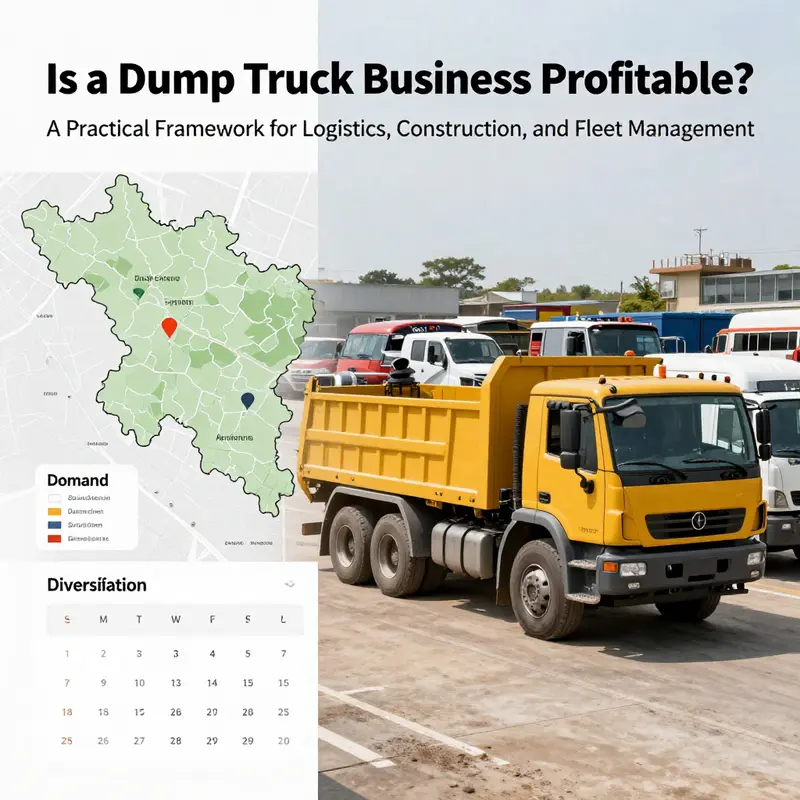
Profit is not a one-off win on a single job. In a dump truck business, it accrues when revenue reliably outpaces the costs of capital, fuel, maintenance, and people. This balance hinges on market demand, how a fleet is deployed, and the ability to secure contracts that bring predictable volume. When these elements align, a fleet can achieve healthy margins even as cycles shift. The chapter that follows invites a deeper, cohesive view of what makes a dump truck operation profitable, emphasizing how demand, contracts, and diversification work together to smooth outcomes across seasons and uncertain markets. It is a narrative of discipline and adaptation rather than a simple calculus of price per load.
Market demand sits at the core of profitability because it determines utilization, uptime, and the ability to sustain a steady cash flow. The primary demand drivers are construction activity, road and infrastructure programs, mining and quarry operations, and waste or landscaping projects that require regular movement of material. In regions with active urban development and large-scale civil works, demand tends to be more resilient, with longer project cycles that improve load forecasting and scheduling. Conversely, in markets tied to cyclical or single-project work, revenue can swing dramatically, making diversification across segments essential. From the operator’s viewpoint, the task is to translate macro demand into daily utilization. That means forecasting workload, aligning fleet capacity with expected volumes, and resisting the urge to overextend during peak periods or underutilize during lulls. A practical approach is to pursue contracts that balance visibility with flexibility, so revenue streams remain robust even as project pipelines wax and wane.
The shape of demand also dictates the optimal fleet configuration. A mid-range, flexible fleet—think a mix of standard-capacity dump trucks geared for a variety of job sizes—tends to perform well across road projects, urban construction, and mid-size excavation. The selection of equipment directly influences both operating costs and payload efficiency. Larger, heavier trucks may move more material per trip but drive higher capex and maintenance costs, while smaller units offer lower upfront burden and greater maneuverability. The key is to tailor the fleet to the target market: the body size should fit common workloads, the chassis should support durable dump bodies, and the maintenance schedule should be aligned with typical usage patterns. In this regard, the job is less about chasing the biggest machines and more about creating a reliable, predictable service that clients can count on week in and week out.
Contracts are the second pillar of profitability because they convert market demand into predictable revenue. Long-term or framework contracts with government agencies, utilities, or established contractors offer visibility that spot bids cannot guarantee. When a fleet secures such terms, it can plan maintenance, financing, and hiring around a known workload. Winning and retaining contracts hinges on a track record of safety, on-time delivery, and consistent compliance with regulatory standards. Prequalification processes, bonding requirements, insurance, and safety certifications are not mere formalities; they are the gatekeepers that open or close access to lucrative work streams. Diversification of contract types—government projects, private sector initiatives, and repeat-client arrangements—helps to modulate exposure to any single market segment. Bundling services, such as combined hauling with site logistics or earthmoving support, can augment contract value and create retainer-like income that smooths cash flow during downturns.
Diversification extends beyond contracts into market and geographic expansion. Service diversification lowers dependence on a single project type and widens the pool of opportunities. A dump truck operation that can provide site preparation, earthmoving support, or material staging has more levers to pull when demand softens in one sector. Industry diversification—targeting civil construction, mining, landscaping, and waste management—also matters. Each sector has its own cycles, and a diversified client base reduces reliance on any one client or market condition. Geographic diversification can unlock access to regions with growing infrastructure programs or more favorable project pipelines. The overarching idea is resilience: if one market contracts, others may buoy the business, maintaining utilization and stable margins.
Operational discipline is the third pillar that turns market and contract attractiveness into real profitability. Efficiency is the invisible engine behind every successful dump truck operation. The most straightforward levers are capacity planning, fleet management, and preventive maintenance. Telemetry and data-driven routing help minimize idle time and optimize fuel use, while predictive maintenance reduces downtime and extends asset life. In practice, this means establishing a disciplined maintenance calendar, monitoring engine hours and tire wear, and coaching drivers to maximize payload efficiency and safe, consistent performance. Real-time visibility into fleet health translates into fewer unexpected outages, steadier invoicing, and higher reliability in the eyes of customers. In an era of rising fuel costs and tighter insurance markets, even small efficiency gains can translate into meaningful margin improvements.
Pricing and revenue recognition form the bridge between demand and profitability. Revenue is typically earned through hourly or daily rates, per-load charges, or a mix of both depending on contract terms. The challenge is to forecast utilization and downtime with accuracy, then build contingencies for fuel price volatility and maintenance needs into the pricing model. Long-term contracts provide better cash flow predictability, but opportunistic work can fill capacity gaps. Margin discipline requires careful estimation of fuel burn, maintenance and tire costs, driver labor, and downtime. When contracts incorporate performance metrics and on-time delivery guarantees, the pricing must reflect the added value and risk protection those terms provide both sides of the table.
Technology, safety, and people management are the unseen but powerful drivers of profitability. Technology—ranging from route optimization and fuel management to automated invoicing and driver coaching—creates a more predictable and efficient operation. Telematics, in particular, gives managers a window into fuel efficiency, uptime, and equipment health, enabling proactive maintenance and better scheduling. Safer operations reduce incident costs, lower insurance premiums, and preserve productivity by minimizing disruptions. This is where people come in: investing in the right team, training, and culture matters as much as hardware and software. A well-trained driver force, backed by a safety-first mindset and ongoing skills development, translates into reliable service, fewer reworks, and stronger client relationships. For teams seeking practical alignment between people and profitability, consider approaches that emphasize continuous learning, performance feedback, and clear safety incentives. For a fuller perspective on building the operating core, see the discussion on investing in people as a key driver of trucking success. investing in people key to trucking success.
Financing and ownership structure intersect with profitability in meaningful ways. Ownership models range from sole operators to small fleets, with varied financing arrangements—bank loans, leases, or owner-equipment financing. The choice influences cash flow timing, depreciation benefits, and risk exposure. Leasing, for example, can reduce upfront capital needs and provide newer equipment with higher uptime, though the total cost of capital must be weighed against purchase options. Depreciation, interest deductions, and fleet incentives shape after-tax profitability, so prudent tax planning and budgeting are essential parts of the profitability equation. The financial structure should support a sustainable asset replacement cycle, ensuring that the fleet remains reliable enough to meet contract commitments and market demand without forcing awkward financial maneuvers during downturns.
Risk, policy, and incentives remind operators that profitability lives in context. Broader macro cycles in construction and mining, commodity price swings, and financing conditions can alter the shape of demand and the cost of capital. Regulatory changes—emissions standards, safety rules, or permitting processes—can alter operating costs and technology choices. Local incentives or subsidies for infrastructure programs can lift demand in some regions, while stricter environmental rules may push equipment toward newer, cleaner technologies. Societal expectations around safety and workforce development influence training investments and labor costs. The prudent operator plans for these variables, building buffers for downtime, fuel spikes, and equipment failures, and leaning on a diversified client base and multi-market exposure to weather sector-specific downturns.
A practical roadmap ties together market assessment, service design, and capital planning. Begin with a clear market picture: regional demand, typical job sizes, seasonality, and target sectors. Define offerings that fit the market’s gaps—core hauling complemented by value-added site services if there is demand. Build a contract pipeline that includes a mix of small, medium, and large projects, with a preference for recurring or repeat work. Develop capabilities for bidding, bonding, and compliance, and invest in fleet management and driver training. Establish maintenance schedules and routing practices that maximize utilization, and implement a cash flow model that contemplates equipment lifecycles and replacement costs. When evaluating financing options, consider total cost of ownership and how financing interacts with depreciation and tax planning. Finally, maintain resilience through diversified revenue streams and modest reserves for downtime or fuel spikes.
If you are weighing whether to enter or expand a dump truck operation, these threads converge: demand quality, contract reliability, and disciplined operations. The strongest opportunities arise where market need aligns with a plan to optimize utilization, control costs, and sustain a capable crew. For practitioners, the path is not a single leap but a sequence of deliberate steps: size the market, tailor the fleet, secure stable contracts, invest in data-driven management, and cultivate a workforce that can consistently deliver on time and on budget. This integrated view—demand, contracts, and diversification—provides both the guardrails and the propulsion needed to navigate the uncertainties of the trucking business.
External resource for deeper profitability tactics: https://www.truckpaper.com/blog/7-ways-to-boost-your-dump-truck-business-profits
Profit on the Payload: Operational Excellence, Technology, and Fleet Management in a Dump Truck Business

Profitability in a dump truck venture is not a fantasy built on a single lucky bid. It rests on how effectively you deploy your assets—the trucks and the people who operate and support them—against the realities of demand, seasonal cycles, and cost pressures. When revenue generation outpaces total costs over a sustained period, margins emerge; when costs outrun revenue, even a busy fleet can bleed cash. The central lever, in practice, is utilization: the amount of time each truck spends actively earning while minimizing downtime, empty trips, and unexpected repairs. Utilization is driven by market demand across core hauling segments—construction, road projects, mining support, aggregate movement, and municipal waste or landfill services—and by how well capacity matches workload. Contracts and long-term commitments can stabilize revenue visibility, while spot work can offer upside but with higher volatility. The healthiest operators pursue diversification across several segments to smooth cash flow and avoid overreliance on a single project cycle or commodity price swing.
The fleet strategy is where planning and discipline pay off in measurable ways. A practical approach starts with the fleet mix: a mid-range class of dump trucks often serves a broad spectrum of projects, from roadwork to medium-scale excavation, offering a favorable balance between payload, maneuverability, and operating cost. Heavier configurations justify themselves only when the market presents large-scale open-pit work or major infrastructure programs that demand high throughput. The choice of chassis and dump body should align with the target market’s loading profiles, terrain, and typical haul distances. Beyond capacity, the resilience of the fleet hinges on reliability, ease of maintenance, and resale value, so longevity and common-sense compatibility with a range of bodies and aftermarket parts matter just as much as payload per trip.
Capex decisions cascade into financing terms, depreciation schedules, and the rhythm of replacement cycles. The total cost of ownership extends beyond the sticker price to include financing costs, insurance, tires, and routine maintenance. Fuel is a leading variable cost, but so are scheduled services, unexpected repairs, and downtime caused by breakdowns or bad weather. The prudent operator uses data to minimize both fuel burn and downtime: telematics illuminate idle patterns and route inefficiencies, while preventive maintenance programs prevent costlier failures. Modern fleet tools can tighten controllables and translate into meaningful margins, not as a gimmick but as a disciplined execution of maintenance, routing, and driver behavior.
Revenue generation in dump-truck operations often comes from a mix of hourly or daily rates, per-load charges, or a blended model shaped by contract terms. Utilization rates, average revenue per hour, and payload efficiency determine gross margins. Pricing must balance the need to win work with the reality of load forecasts and reliability metrics. Long-term contracts provide predictable volumes and smoother cash flow, a fundamental advantage when financing fleet investments. Opportunistic, short-term work can fill capacity gaps but requires careful risk assessment and contingency planning for fuel, downtime, and maintenance costs. A rigorous margin discipline means forecasting fuel, maintenance, and downtime with buffers for regulatory changes or sudden market downturns.
Technology and safety are central to translating planning into profit. Telematics and GPS-enabled fleet management platforms deliver real-time visibility into location, speed, idling, and trip history. This data feeds routing optimization, load planning, and driver coaching, enabling faster response to demand shifts and tighter control of cost drivers like fuel and wear. Predictive maintenance uses sensor data and historical trends to forecast failures before they happen, reducing unplanned downtime and extending asset life. Digital records and automated invoicing streamline cash flow and improve accuracy in billing and fare recovery. Compliance becomes less burdensome when inspections, hours-of-service logs, and regulatory reporting are automated and auditable. The effect on safety, insurance costs, and worker productivity is often as meaningful as the impact on uptime.
Access to capital and ownership structure shape how aggressively a business scales and how resilient it is to downturns. Options range from solo owner-operators to small fleets and up to larger entities backed by bank financing or structured leases. Leasing can lower upfront capital needs and provide access to newer equipment with higher uptime, but the long-term cost of capital must be weighed against purchase and depreciation benefits. The tax and accounting treatment of depreciation, interest deductions, and fleet-related incentives influence after-tax profitability. In an era of evolving emission standards and stricter safety regimes, financing strategies must consider not just today’s cash flow but also the expected technology trajectory and the potential need for upgrades.
Profitability is also about risk management: macro cycles in construction and mining, commodity price volatility, and the cost of capital can alter demand and the real value of contracts. Local incentives for infrastructure can boost workload in some regions, while stricter environmental rules can raise equipment costs or shift the mix toward cleaner technology. Workforce development and safety culture shape labor costs and productivity. The prudent operator builds scenario plans for different demand environments, maintains liquidity buffers to cover maintenance and insurance, and keeps a flexible mindset about fleet composition as projects come and go.
To translate these realities into a practical path, consider a few actionable steps that align with the core levers of profitability. Begin with a rigorous market assessment that maps demand across segments and regions, identifies capacity gaps, and estimates bid win rates for the projects most likely to sustain utilization. A fleet plan should then translate that assessment into a concrete mix of trucks, dump bodies, and support equipment that matches the expected workload, including spare capacity to absorb downtime without compromising service levels. Securing contracts with favorable terms and predictable volumes is a cornerstone of stable cash flow; where possible, pursue longer-duration engagements or framework agreements that reduce the volatility of monthly revenue.
Investing in asset management and telematics is not a luxury but a core capability. A disciplined maintenance calendar, intelligent parts stocking, and proactive alerting for wear trends can drastically reduce emergency repairs and extend the useful life of the fleet. Route optimization and load planning, powered by robust data, help minimize deadhead miles and maximize payload per trip. Fuel-management programs, driver coaching, and performance dashboards create accountability and measurable improvements in efficiency. Systems that integrate fleet data with dispatch, invoicing, and bidding tools close the loop from operation to cash, enabling more accurate forecasts and quicker revenue realization.
A practical way to begin is to run a focused pilot: select a region or a subset of trucks to test telematics, route optimization, and preventive maintenance routines. Use the pilot to establish baseline KPIs such as asset utilization, idle time, maintenance cost per mile, and fuel efficiency. Then scale with confidence, applying the lessons learned to the broader fleet. Change management is essential; dispatchers, drivers, and maintenance staff must be trained and bought into the new workflow, while data governance should define who owns what information and how it is reported. A clear ROI narrative—quantified savings from reduced idle time, lower fuel burn, fewer breakages, and improved bid acceptance due to reliability—will sustain momentum.
Among the levers, people deserve special emphasis. The industry increasingly recognizes that human capital—reliable drivers, skilled maintenance technicians, and engaged dispatchers—can be the decisive factor in profitability. Investing in training, safety culture, and career development reduces turnover, improves performance, and delivers a measurable uptick in uptime and customer satisfaction. For operators exploring the strategic value of people in fleet performance, see the discussion on transforming fleet management and investing in human capital. Transforming Fleet Management: Investing in Human Capital.
Interlinked with people is data-driven decision-making. The best operators run quarterly reviews of utilization, bid accuracy, and maintenance effectiveness, then iterate on routes, load patterns, and fleet composition. Benchmarking against peer performance—how other fleets achieve higher utilization, lower maintenance costs per mile, or better on-time delivery rates—can sharpen strategic choices. In practice, this means cultivating a culture where pilots, tests of new routes or software features, and periodic repricing of bids are governed by a disciplined governance process rather than ad hoc tinkering. The result is a more predictable business with a stronger moat against cycles in construction or mining demand.
For readers seeking additional practical context, a broad industry resource highlights several concrete strategies to lift profits through process improvements, disciplined cost control, and better pricing discipline. The emphasis on actionable steps—ranging from route optimization to fleet maintenance and pricing discipline—aligns with the trajectory described here and reinforces the value of a data-driven, people-centered approach to profitability. External insights about the mechanics of boosting profits in dump-truck operations can be explored at this external resource: https://www.truckpaper.com/blog/7-ways-to-boost-your-dump-truck-business-profits
In sum, a dump truck business becomes profitable when a coherent strategy ties demand to capacity, cost discipline, and intelligent use of technology to protect uptime and reliability. The practical path blends fleet design with preventive maintenance, route and load optimization, disciplined pricing, and an unwavering focus on people and process. The objective is not to chase every possible efficiency gain at once but to prioritize the most impactful levers—utilization, maintenance, and driver performance—and then scale those gains through a well-architected technology stack and a culture of continuous improvement. As the market evolves, the operating blueprint should remain flexible enough to adjust fleet mix, contract terms, and investment pace while preserving the core discipline that makes profitability possible: predictable, value-driven service delivered efficiently and reliably to customers who rely on steady, timely payload movements.
Profit by Design: Financing, Risk Management, and Scalable Growth in a Dump Truck Operation

Profit in a dump truck operation is not automatic; it is engineered through a careful integration of market reality, asset discipline, and disciplined cash flow planning. The question, is a dump truck business profitable? The answer rests on how well you align demand with capacity, control risk, and scale without breaking the cost structure that sustains margins over cycles. The core truth is simple: profits come from reliable utilization, predictable revenue, and a cost base you can systematically tether to performance data.
Market dynamics and demand form the first frontier. Construction activity, road projects, mining, and municipal waste work create a tapestry of opportunities. In regions where infrastructure spending remains robust, utilization can stay high for longer stretches of the year; in others, activity is highly cyclical and seasonal. The wise operator builds a plan that hedges against these swings by diversifying across segments. A firm that depends on a single segment may see revenue volatility ripple through the bottom line when a project ends or when a policy hurdle slows the pipeline. Diversification across road-building, excavation, aggregate hauling, and waste disposal smooths cash flow because different segments have different project calendars and regulatory rhythms. Long-term contracts with steady volume offer the most reliable visibility; opportunistic, spot-bid work can add upside but should be treated as a hedge against underutilization rather than a primary driver of growth. The planning discipline is to size fleet capacity to projected workload, not to peak on a best-case forecast. When maintenance and downtime eat into output, margins crumble quickly, so capacity planning must be tethered to real utilization projections.
The asset and fleet strategy flows directly from that market logic. A mid-range dump truck configuration, commonly deployed in road and small-to-medium excavation work, can deliver a useful balance of payload and agility. Heavier heavy-haul configurations make sense only where volume justifies larger capital outlays and higher maintenance demands. The fleet should be selected with an eye toward high uptime, ease of maintenance, and resale value. When the chassis and dump body are chosen for reliability and compatibility with common maintenance ecosystems, the fleet becomes a more predictable cost envelope. Importantly, the mix should adapt to the markets served. If the operator targets busy urban corridors and trunk routes, shorter trips with higher payload efficiency can reduce idle time and increase trips per shift. If the focus is mining or large-scale open-pit work, upgrading payload capacity and strengthening service contracts may pay off in throughput, even if capital cost is higher. Across the board, disciplined maintenance scheduling and a robust preventive program are non-negotiable. Telematics unlocks the next layer of value by turning raw hours, fuel burn, and tire wear into actionable insight. Fleet managers who watch engine hours, monitor fuel consumption per mile, and flag patterns of excessive downtime can intervene before a small issue becomes a costly outage. The payoff shows up as increased uptime, lower maintenance surprises, and improved ability to honor delivery promises.
Cost structure and margins are where profitability either tightens or expands. The overarching rule is that every dollar spent should contribute to uptime, reliability, or revenue generation. Capex and financing terms set the baseline for cash flow. A cash-intensive purchase must be justified by the loan terms and the expected life of the asset. Interest rates, depreciation schedules, and residual value all feed into after-tax profitability and risk posture. Fuel dominates variable costs for most dump truck operations; the challenge is to manage it through routing, speed discipline, and load planning. Even small improvements in fuel efficiency can compound into meaningful margin gains over a year. Maintenance and repair constitute a second major pillar of cost control. Preventive maintenance reduces unexpected breakdowns and minimizes expensive emergency repairs, but it requires discipline and planning. Labor costs, including drivers and supervisors, are a meaningful piece of the margin equation, especially in markets with tight labor supply or high benefits expectations. Insurance, permits, tolls, and regulatory compliance complete the cost stack. The modern operator uses data-driven processes to optimize these levers: fuel telemetry, tire management, and maintenance scheduling converge with route planning to minimize wasted miles and downtime. Industry voices consistently emphasize that modern fleet tools, used well, can materially expand margins by tightening controllables in ways that were not possible a decade ago. The synergy between technology and disciplined operations often translates into margins that withstand modest demand dips.
Revenue models and pricing reflect how the business converts capacity into cash. Most operators earn revenue through a mix of hourly or daily rates and per-load charges, with terms that may reward consistency and on-time performance. Utilization rates and payload efficiency figure prominently in gross margins. A well-structured contract with guaranteed volume provides cash-flow visibility that can support more cost-effective financing and safer long-term planning. Price discipline matters too: bid too aggressively and you invite unprofitable load forecasts; price too conservatively and you waste capacity discipline. The most resilient businesses balance fixed commitments with flexible capacity, using telematics and scheduling to honor service level agreements even when demand shifts. A diversified revenue approach, paired with a disciplined forecasting framework for fuel, maintenance, and downtime, becomes a protective moat against downturns while keeping doors open for opportunism when market demand heats up.
Technology, efficiency, and safety interlock with the economics of profitability. The objective is not to chase technology for its own sake but to embed it where it yields measurable returns. Real-time visibility into fuel usage, uptime, and component health allows teams to schedule maintenance at the right time, avoiding costly downtimes and extending asset life. Automated invoicing and digital record-keeping improve cash flow and reduce error-ridden workstreams. Driver coaching and safety programs reduce the risk profile of the operation, which translates into lower insurance costs and easier access to credit. In turn, these improvements reduce the total cost of ownership and create a more predictable earnings stream. The safest and most productive fleets transform data into action: they plan routes that minimize empty miles, optimize load sequences at sites, and reduce idling, all while keeping a sharp eye on compliance requirements. The end result is a leaner operation that delivers more loads per day without sacrificing reliability or safety.
Financing and ownership structure shape the capital reality behind profitability. Whether owned outright, financed through a lender, or leased to reduce upfront cash, the choice affects cash flow, depreciation benefits, and risk exposure. Leasing arrangements can lower the barrier to entry and provide newer equipment with uptime advantages, but they demand careful comparison of total cost of capital, maintenance responsibilities, and end-of-term options. Financing decisions should be rooted in a clear plan for asset replacement cycles and tax treatment, recognizing how depreciation deductions and interest deductions influence after-tax profitability. The broader takeaway is that financing should be a strategic tool, not a reaction to a liquid market. A well-documented fleet plan, supported by telemetry data, helps secure favorable financing terms by demonstrating predictable utilization and risk controls. It is in this space that the research lines up with practical experience: lenders favor operators who show discipline in asset management, clear revenue visibility, and a plan for ongoing renewal.
Risk, geopolitics, and incentives remind operators that profitability sits within a larger system of external forces. The industry remains sensitive to cycles in construction and mining, commodity price swings, and regulatory shifts—especially around emissions standards and freight safety rules. Local incentives or subsidies for infrastructure can tilt the math in favorable directions, while stricter environmental requirements may prompt capital upgrades and higher maintenance costs. While these factors are outside a single operator’s control, they influence project pipelines, insurance costs, and long-term asset quality. Operational safety and workforce development become part of risk management, not optional extras, reducing liability exposure and creating a more resilient business model. The pragmatic path is to build buffers into forecasts for regulatory changes and to maintain flexibility in the fleet’s composition so it can pivot with demand without becoming overextended. The most successful operators season risk by combining diversified revenue streams with prudent capital planning and robust safety programs.
To tie the thread together, profitability in a dump truck business is best pursued as a deliberate design problem rather than a reaction to price swings. Begin with a rigorous market assessment to size demand and competition, then translate that assessment into a fleet plan that aligns service offerings with target segments. Secure contracts that offer predictable volumes and favorable terms, while maintaining the flexibility to adjust capacity when cycles shift. Invest in asset management and telematics to maximize uptime and fuel efficiency, and choose an equipment mix that balances capital cost with expected utilization. Keep cash flow conservative enough to cover maintenance, insurance, and replacement cycles. In practice, the margin between success and failure often comes down to disciplined decision-making, data-driven planning, and a willingness to adapt your footprint as markets evolve.
As part of a broader strategic conversation about growth, many operators are exploring how to integrate people-centered approaches into the business model. For example, a path that emphasizes investing in people—training, safety culture, and career development—has shown to improve productivity and retention while delivering steadier performance over time. You can learn more about this approach here: Investing in people—a new path for trucking fleets. This emphasis on human capital complements the technology and process discipline described above, creating a more robust, scalable foundation for profitability.
For readers seeking practical, field-tested strategies, industry notes point to actionable guidance on profit optimization through technology and disciplined operations. An external resource with broader strategies can be found here: https://www.fleetmanagement.com/7-ways-to-boost-your-dump-truck-business-profits.
That combination of disciplined market sizing, asset optimization, cost control, and prudent financing creates a profitable path for operators who treat the dump truck business as a design problem with a quantifiable return on capital. The aim is not to maximize revenue alone, but to maximize the value generated per hour of asset time, across a diversified portfolio of projects and regions, while maintaining a safety and compliance posture that sustains growth over multiple cycles.
Final thoughts
Profitability in a dump truck business emerges from disciplined cost management, strategic asset choices, and the ability to convert utilization into predictable revenue. By balancing fixed and variable costs with market demand, constructing a robust fleet plan, and embracing technology for maintenance and optimization, operators can improve margins, reduce volatility, and scale sustainably. The integrated approach outlined here—covering cost structure, equipment configuration, contract strategy, operational efficiency, and financing—provides a practical roadmap for logistics, construction, and fleet-management stakeholders aiming to optimize profitability in diverse market environments.