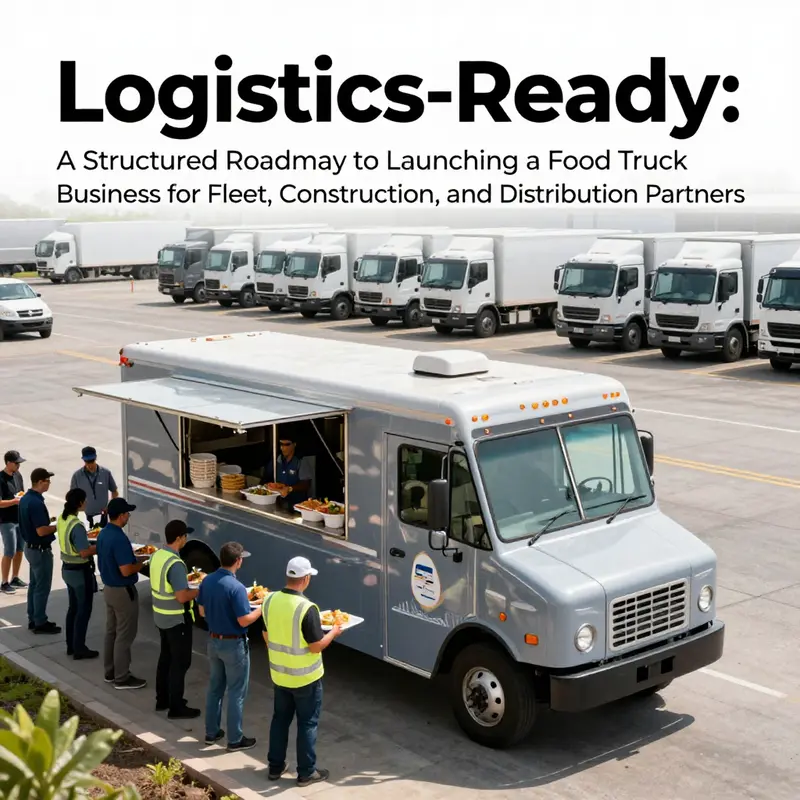
The opportunity to deploy a food truck within logistics and industrial ecosystems has grown as firms seek practical, on-site amenities that boost crew welfare, productivity, and contractor satisfaction. For Logistics & Freight Companies, Construction & Engineering Firms, Fleet Management Teams, and Food & Beverage Distributors, a mobile kitchen offers a reliable, scalable option to serve crews during long shifts, project sprints, or remote site visits, while also providing a path to diversified revenue. Real-world success hinges on combining market insight with disciplined planning, compliant operations, and a digitally enabled brand. This guide distills a market-driven, enterprise-focused approach into three interconnected chapters. Chapter 1 reveals how to conduct market research and trend analysis that speaks directly to industrial buyers and on-site crews. Chapter 2 translates those insights into a rigorous planning framework, permitting navigation, and a financially sustainable strategy. Chapter 3 concentrates on design, branding, and an online presence that resonates with procurement teams, site managers, and fleet partners, then ties these elements together with a robust digital footprint. Across chapters, the emphasis remains practical, scalable, and aligned with the operational realities of large organizations and distributed supply chains. By integrating market signals, regulatory diligence, modular design, and a professional online profile, your food truck venture becomes a predictable, repeatable add-on to existing logistics or site-based workflows rather than a standalone novelty.
Chapter 1: Reading the Market in Motion—Market Research and Trend Analysis for a Food Truck Startup
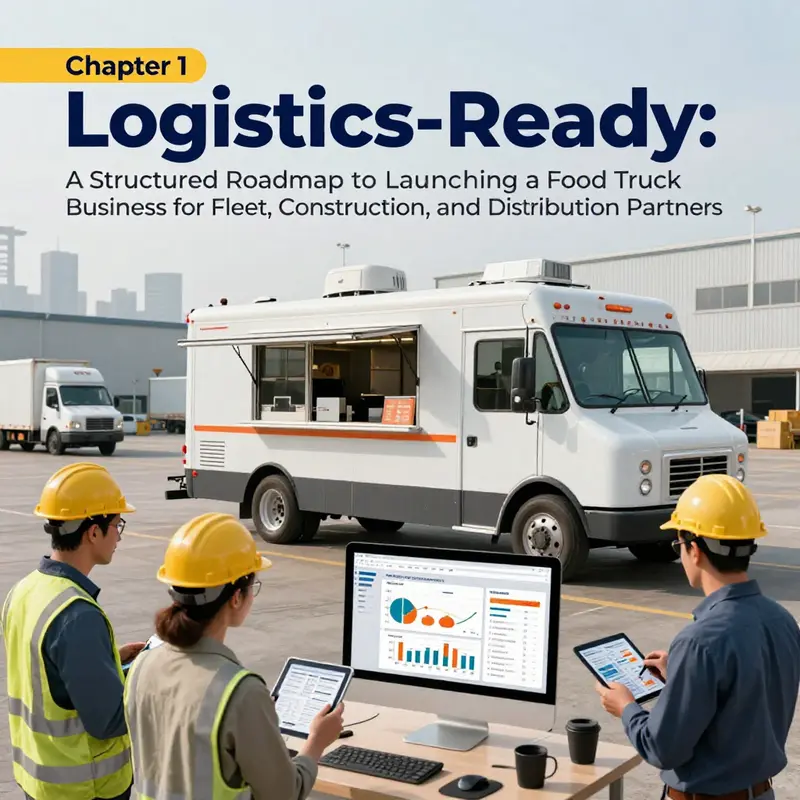
Market research for a food truck startup is more than a checklist of data points. It is a practice of listening to the street, deciphering what people want before they know they want it, and turning that insight into a concept that moves with the city’s rhythms. The market isn’t a static board to tick off; it is a living dialogue between your plan and the crowds that will taste, judge, and share your story. To begin, you must imagine the market as a story you are joining rather than a problem you must solve alone. Who are your neighbors, where do they work, and what moments of the day do they crave a quick, satisfying bite that feels personal and fresh? If you can answer those questions with enough nuance to shape a memorable dish, you have laid the groundwork for a strategy that can survive the inevitable twists of weather, foot traffic, and taste evolution.
The core objective of this phase is not to lock in a single dish, but to illuminate the landscape in which a mobile kitchen can thrive. You start by defining a target audience you can truly serve well. Consider neighborhoods with high concentrations of office workers seeking a fast, delicious lunch, or campus corridors where students crave affordable meals that feel adventurous but not risky. You look for clusters of potential customers who value convenient options that align with their daily routines and values. In practice, this means building a picture of who is most likely to visit your truck, when they are most receptive, and what constraints shape their choices. Do they want plant-based options because of health or ethics, or do they crave bold global flavors that travel well in a hand-held form? Do they prioritize speed, price, or a sense of culinary discovery?
Trends do not replace local insight; they illuminate it. A growing appetite for plant-based dishes, a preference for locally sourced ingredients, and an interest in globally inspired street food have become persistent currents in many markets. These trends matter because they suggest potential pathways for a concept that can scale with integrity. If plant-based options are rising in popularity, a truck that can pivot between meat-based favorites and robust plant-based plates will have a broader seasonal appeal. If customers increasingly seek dishes that tell a story about place—seasonal produce, nearby farms, regional spices—your menu can reflect that narrative while still staying efficient and cost-conscious. Insights like these help you frame a concept that resonates with today’s diners and remains adaptable for tomorrow’s tastes.
The data point that anchors this chapter comes from a broad consumer trend: convenience paired with health. A 2025 snapshot of U.S. consumer preferences highlights that more than six in ten people now prioritize meals that are both convenient and healthy. This pairing creates a ripe opportunity for a food truck to offer fast-cabulous options—food that feels elevated enough for a quick bite, yet casual enough to be eaten on the go. The implication is not merely to offer salad jars or protein bowls, but to craft a menu that balances speed, flavor, and nutritional value in every item. The fast-casual ethos, when translated to a mobile kitchen, means a menu that can be prepared quickly, plated with minimal waste, and presented with a sense of care that customers can feel in each bite.
Beyond the broad trend line, market research thrives on listening. People don’t always articulate what they want until they see it. That is where tools like Google Trends become a practical ally. The rise of searches for terms such as vegan burgers, gluten-free desserts, or globally inspired street food signals where interest is growing and where a city’s appetite may be shifting. It also helps you validate ideas you are considering before you invest heavily in one direction. You might discover that a neighborhood’s appetite for Korean-inspired flavors is rising in the evenings, while daytime demand leans toward lighter, contemporary comfort foods. This kind of insight is invaluable for shaping a menu slate that remains legible to customers while offering the flexibility to pivot as tastes evolve.
However, trends are not a call to chase every new fad. They are signals that invite you to design a concept with a core spine that can bend without breaking. A truck benefits from a modular mindset: you start with a flexible core menu anchored in a few signature items and then layer in seasonal or trend-forward dishes as the market dictates. If the city experiences a wave toward plant-based street food, your core could feature a couple of plant-forward staples. If spice-forward, globally inspired snacks gain traction, you add options that travel well and stay affordable. The key is to build a concept with a clear value proposition—delicious, convenient, and responsibly sourced—so that even when trends shift, your storytelling and integrity remain intact.
Market research also extends into the physical places where your truck will show up. You map out high-footfall zones: office districts during lunch, university campuses at peak hours, and neighborhoods known for weekend markets or street fairs. You study weather and seasonality, noting how rain or heat affects outdoor dining, and plan for shade, shelter, and queue management. The logic is simple: locate where the story you tell about your food matches the daily activities of your audience. If your dishes celebrate local ingredients and global flavors, you want a setting that values provenance and curiosity. If your concept centers on quick, comforting bites, you prefer areas with time-constrained crowds who still demand flavor and quality. Your research informs where you park, how you schedule your routes, and how you design your service model to maximize reliability in those spaces.
The data you gather is a foundation you will reuse throughout the life of the business. You collect demographic patterns, competitor activity, pricing benchmarks, and social engagement signals. You listen for feedback on prototype dishes and the overall experience. You test concepts in a controlled way—offering a small pilot menu at a local market, for example—and you learn from the results. The feedback loop becomes a compass for menu development, branding, and even your equipment choices. A market that favors convenience and health, for instance, may reward streamlined prep, lighter portions, and sustainable packaging. Observing how customers respond to these small experiments helps you refine your offering without overextending your budget.
When thinking about sustainability, research nudges you toward practices that can differentiate your truck in a crowded market. Eco-conscious packaging, waste reduction strategies, and transparent sourcing can become part of your narrative. The market rewards authenticity: customers who see that you care about the footprint of your food and your business model are more likely to become repeat customers and advocates. This alignment does not have to be perfect from day one, but it should be visible and verifiable. You can communicate your decisions clearly on your menu, your social profiles, and your truck’s branding. A coherent story about where ingredients come from, how they are prepared, and how waste is minimized can transform a simple meal into a preferred experience.
In practice, market research becomes a rhythm you maintain as you grow. You review findings, update your hypothesis, test a small batch of new items, and watch how customers react. You compare outcomes across locations, times of day, and event-driven settings. You develop a baseline for pricing that reflects the value you offer and the costs you incur, then adjust it as you expand to new corners of the city or as supply costs shift. The beauty of a food truck lies in its ability to respond quickly; an agile concept that understands its audience—in real time—can outpace more static concepts that require longer lead times to adjust. The most successful operators constantly ask: What is this neighborhood craving right now? How can we deliver it better tomorrow? And how does our story align with the values customers hold when they choose what to eat on a lunch break or after a long day?
The chapter’s most practical takeaway is simple: use market research not as a one-time pass but as an ongoing practice. Build a living brief that describes your audience, your city, and your trends in plain language. Document the questions you want to answer and the thresholds you want to reach. Track what you learn, and let those insights drive decisions about your menu, your routes, your partnerships, and your branding. A food truck that operates with this kind of disciplined curiosity is more likely to connect with people, to stand out in a busy street scene, and to turn first-time customers into loyal regulars. In the next steps of launching, your solid understanding of the market will guide you toward a rigorous business plan, a modular and practical truck design, and a brand story that convinces lenders and customers alike that you are in this for the long haul.
For anyone preparing to turn a spark of idea into a rolling kitchen, the market’s message is clear and actionable: be curious, stay connected to the community, and let trends illuminate rather than dictate. When you listen well, you can design a menu that travels with the city’s appetite, park where your story will be heard, and present your food in a way that makes busy people pause, smile, and decide to take a chance on you. This is how market research becomes not a barrier but a bridge to a thriving food truck journey.
External resource: Statista 2025 report on healthy and convenient food preferences for U.S. consumers, illustrating the enduring demand for meals that are both easy and health-conscious. https://www.statista.com/statistics/1438975/us-consumer-preferences-healthy-food-trends/
Rolling Out On the Street: A Practical Roadmap for Planning, Permits, and Financial Success in Your Food Truck Venture
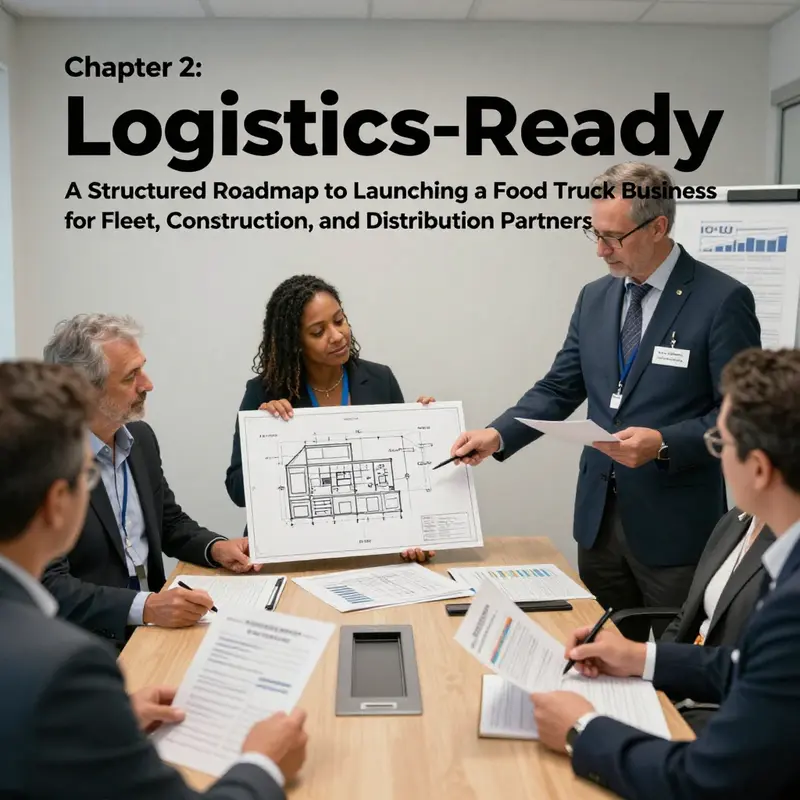
Launching a food truck is more than a tasty idea and a bright banner. It is a plan brought to life on wheels, a business that must balance culinary creativity with disciplined execution. The journey from concept to street corner unfolds most reliably when you build a solid road map that covers planning, permitting, and a robust financial strategy. Start by embracing the realities of risk and opportunity in parallel. You will need to translate your kitchen passions into a market-ready menu, a legally compliant operation, and a financial model that shows you how to turn a first week of sales into a sustainable business. The best planners do not treat these threads as separate. They weave them together early so your truck can roll with confidence, pivot if tastes shift, and grow without collapsing under misaligned pricing or hidden costs. As you shape this plan, think of it as a living document: updated as you learn from markets, suppliers, and the realities of daily service. That adaptability, paired with rigorous cost control and a clear path to profitability, is what keeps a mobile kitchen on the road rather than stuck in the driveway of uncertainty.
Central to this chapter is the recognition that a thoughtful business plan is not a mouthpiece for your enthusiasm alone. It is a practical toolkit that clarifies who you serve, what you serve, and how you will operate when the lines form and the grill sings. The executive summary, however concise, should capture a compelling concept that aligns with a real customer need. Market analysis is not a ceremonial exercise; it shapes your menu, your price points, and even where you park. When you study your local scene, you uncover gaps you can fill with a distinctive offering—perhaps a vegan twist on street classics, or a regionally inspired menu that travels well and stays tasty after a short ride. A well-considered concept reduces the friction between your dream and the produce you put on the plate. Menu and concept development then feed directly into your equipment choices and workflow design, which in turn influence operating costs and the speed of service that customers expect in a crowded lunch or dinner rush.
Operational clarity matters as much as flavor. Your plan should describe daily routines, staffing needs, inventory management, and the supply chain you will rely on to deliver consistent quality. Will the truck run with a solo operator in the early days, or will you run a small crew that handles cookline, service, and support tasks? Each choice creates different cost structures and revenue possibilities. A robust forecast includes scenario planning: what happens if a peak hour crowd doubles, or if a staple ingredient spikes in price? Including these scenarios helps you design a flexible kitchen layout, a resilient schedule, and a pricing model that preserves margins. The financial section of the plan should be grounded in realistic assumptions about customer traffic, average spend, and the number of operating days per week. It should show the path to break-even and the timeline to profitability, typically within a 12–18 month horizon when you account for the learning curve and the time needed to build a loyal customer base.
To translate this planning into action, you will need a comprehensive structure for resources and risk. The business plan acts as your internal compass and a persuasive document for lenders or investors if you pursue external capital. It should include an executive summary that communicates your core concept in a sentence or two, a market analysis that pinpoints who you’re serving and why they will choose you over existing options, and a menu and concept section that clearly articulates your USP. The operational plan then presents the day-to-day mechanics: staffing, shift patterns, procurement processes, and inventory controls that keep waste low and freshness high. Financial projections tie everything together with startup costs, ongoing expenses, revenue forecasts, and cash flow analysis. This is where the plan earns its keep, turning curiosity into a structured model that reveals whether your venture can meet its financial targets under a range of conditions.
A realistic financial mindset begins with honest calculations about startup costs. A new, purpose-built food truck can exceed six figures, while a well-kept used vehicle may fall into a more affordable range. Beyond the vehicle, you must allocate funds for kitchen equipment, plumbing, electrical systems, and health-safety upgrades. The initial inventory is a foundational cost, and you should plan for insurance—liability and property, along with workers’ compensation if you employ staff. Marketing materials, branding, and a modest digital footprint should also be included, because a strong launch often depends on visibility in the first weeks. Allow for permit and licensing fees, which vary widely by city and can sometimes be a source of friction if you encounter backlogs or lottery-style permit allocations. The importance of permits cannot be overstated: without the proper licenses, even the best menu cannot legally operate on public streets. While the letter of the law must be followed, you can streamline the process by engaging with local health departments and small-business offices early, gathering the necessary documents, and scheduling inspections well in advance of your launch date. In many places, permits require proof of insurance, a designated parking zone, and evidence of compliance with health and safety standards. The specifics are local, but the discipline is universal: know what you need, budget for it, and plan a timeline that accommodates delays rather than letting them derail your launch.
With those foundations in place, the conversation naturally moves to the financial architecture that sustains growth. A practical approach begins with a cost-conscious mindset that values efficiency without compromising quality. Start by detailing startup costs with transparency: the cost of the truck or trailer, kitchen equipment such as grills, fryers, refrigeration, and sinks, plus the ancillary items that keep the operation compliant and sanitary. Then forecast ongoing costs—fuel, maintenance, insurance, and staff wages. Ingredient prices, packaging, and disposables must be accounted for alongside the cost of parking and licensure renewals. The goal is clear: forecast monthly revenue based on expected customer volume, price points, and average ticket size, and then compare that against the sum of ongoing costs to determine when you reach profitability. In many cases, new entrants find it prudent to begin with a streamlined menu to minimize complexity and capital outlay. A lean start also reduces the risk of overstocking or waste and makes it easier to adjust the concept based on customer feedback and on-the-ground realities.
If capital is scarce, there are several routes to consider that preserve long-term viability while keeping the initial investment manageable. Starting small with a minimal but high-impact menu is a common and sensible path. Using older, reliable equipment that is in good condition can reduce upfront costs, provided safety and efficiency standards are still met. You can also explore partnerships with local suppliers who offer credit terms or welcome pre-orders that secure cash flow in the early days. Crowdfunding remains a viable option for those who want to test community interest while building a customer base before the first cook fires up. The core idea is to understand your numbers inside and out before you step into the street. A precise, data-informed forecast will guide decisions about where to park, how to staff, and what to serve. When you can demonstrate a credible path to cash flow and profitability, lenders and investors are more likely to sign on with favorable terms that reduce the pressure during growth.
The role of a modular, adaptable design for your vehicle ties the planning to practical operations. A flexible truck that accommodates multiple service modes—not only coffee or burgers but also quick, portable offerings like pastries or cold beverages—can protect you from market dips. A well-thought-out interior that features removable modules and stainless steel work surfaces streamlines transitions between menus and speeds up cleaning, saving time and labor costs. This adaptability is not a luxury; it is a strategic hedge against changing consumer preferences and seasonal demand. When you anticipate that your brand may evolve or that you may pivot to different offerings, you reduce the friction of capital redeployment, equipment swaps, or fleet changes.
As you refine your plan, the importance of people in sustaining a food truck business becomes evident. You must consider how you will recruit, train, and retain capable team members who share your standards for service and food safety. A well-conceived staffing plan addresses not only the number of people you need but also their roles, scheduling, and development paths. And because your operation will likely hinge on a mix of speed, consistency, and personal touch, you cannot overlook the culture you cultivate. A people-first approach in trucking, for lack of a better phrase, translates well to a mobile kitchen: it means investing in training, recognizing hard work, and maintaining clear lines of communication. For those who want to dive deeper into this aspect of operations, see the resource on People-first strategies in trucking. This internal reference reinforces the principle that strong human capital is as essential as a clean grill and a dependable vehicle. The combination of a solid plan, a clear permitting path, and a prudent financial framework creates a linchpin for growth that is harder to loosen than a late-night schedule on a busy block. When you bind these pieces together from the outset, your food truck becomes an instrument of consistent value delivery rather than a fragile project that depends on luck and last-minute decisions.
Permit realities often shape not only where you park but how you design your operation. You may discover that certain neighborhoods or events require special permits or have different time windows for operation. In some jurisdictions, there is a competitive process for limited vending zones, and you may need to participate in public hearings or lotteries to secure a permanent spot. The lesson here is to plan for regulatory variability and to approach licensing as a project with milestones. Early engagement with the local health department and the small business administration office helps you map out the permits you will need, create a realistic timeline, and avoid expensive delays. An integrated approach to planning—where your financial projections and licensing milestones inform one another—saves time and money and reduces the chance that an excited launch turns into a scramble to recover missed requirements.
The final thread in this chapter ties the planning and permitting discipline to ongoing growth. A sound financial strategy does not end at profitability; it expands into capacity planning, brand development, and the scale you envision for the coming years. As your experience grows, you may seek to diversify your offerings, acquire a second vehicle, or relocate to a more energetic market. Each such step will demand fresh due diligence—new permits, updated equipment configurations, and revised cost structures. The core disciplines you cultivate now—rigorous budgeting, careful market interpretation, and disciplined operations—will keep you nimble as your truck becomes a familiar sight on streets and at events. In short, a well-constructed plan is not a static document. It is a dynamic blueprint that travels with you, shaping decisions while you adapt to changing tastes, regulations, and opportunities.
For readers who want a structured, step-by-step method to translate this planning into a tangible process, keep the emphasis on three pillars: a compelling, executable business plan; a permits-and-compliance framework that you can navigate without surprises; and a financially grounded strategy that targets profitability within a practical horizon. The synergy of these elements is what transforms a kitchen-on-wheels into a lasting business with the resilience to weather a market that is as variable as the weather on an open street. With a clear road map, you can confidently move from concept to operation, knowing that you have built the foundations that will carry your brand through busy lunch shifts, weekend events, and the inevitable twists and turns of entrepreneurship.
External resource note: The SCORE guide offers a step-by-step approach to constructing a successful food truck business plan, including templates and real-world examples to help you tailor your plan to your own concept.
Internal link reference: For practical insights on the people side of scaling a fleet and workforce, see People-first strategies in trucking. This resource provides a framework you can adapt to your mobile kitchen team as you expand and refine your operation.
External resource (for further reading): The Ultimate Guide to Starting a Food Truck Business | SCORE. https://www.score.org/resource/ultimate-guide-starting-food-truck-business
Chapter 3: Designing the Vehicle, Crafting a Brand, and Building an Online Presence for Your Food Truck

In the market of mobile meals, your first impression arrives long before customers place an order. It begins with the truck’s silhouette, the mood of its visuals, and the ease with which someone can find you online. The design, the brand, and the online footprint are not three separate gears; they form one continuous engine that propels traffic, trust, and repeat business. When you synchronize the vehicle’s form with a distinctive brand and a reliable digital presence, you create a cohesive story that travels with you—from the moment a passerby notices the wrap to the moment a late-night order lands on a doorstep. The practical truth is that people do not just buy food; they buy a promise of consistency, personality, and accessibility. Your design signals that promise, your brand earns the trust to keep it, and your online presence extends that trust into the real world, turning casual onlookers into regulars.
Design is more than aesthetics; it is a blueprint for speed, safety, and scalability. A visually bold yet legible vehicle wrap communicates the concept at a glance, which matters when a truck is a few seconds from a curb or weaving through a festival crowd. Choose a color palette with 1–2 primary colors and a restrained accent. High contrast matters, because readability from a distance makes a difference as crowds form and traffic slows. A strong logo should be simple enough to be recognized in a rush and adaptable enough to scale on windows, cups, and napkins. Typography should favor bold, uncomplicated letterforms that read well on both large signage and small screens. The vehicle wrap should prioritize branding on the sides and rear, leaving the front relatively clear for visibility and safety. This is not vanity; it is a practical duty to ensure your name travels with you everywhere you go.
Beyond the wrap, the board and the wall around your service window carry essential information. Menu boards should be large, with high-contrast text, and kept concise. Digital boards offer flexibility for rotating specials and seasonal offerings, while printed boards provide reliability even when power is scarce. Accessibility matters here—clear allergen icons, legible pricing, and simple sections help customers decide quickly. Packaging and branding collateral ought to reinforce the same line of identity: color, logo, tone, and the promise embedded in the menu. The unboxing experience—the way a bowl or a taco is opened and carried away—becomes additional branding, a micro-interaction that customers remember and share. Thoughtful packaging is not wasteful; it is a consistent touchpoint that communicates reliability, sustainability, and care for the customer.
The chassis of the operation—the kitchen layout—must align with the brand’s values and with the realities of a mobile space. The best layouts embrace a practical design philosophy known as the work triangle: the distance from the hot line to cold prep to the service window should minimize unnecessary movement. Separate zones for cooking, assembly, and order pickup reduce cross-contamination risks and keep the line moving. A compact but efficient setup must still provide room for safety zones around hot equipment and easy access to fire suppression, water, and waste lines. Compliance is not a stereotype; it is a foundation. Ventilation, grease management, and proper waste disposal aren’t decorative details; they determine how long you can operate, where you can operate, and how you can scale. A modular approach—removable interior modules that can swap from coffee service to fried snacks to baking—gives you flexibility without requiring an entirely new vehicle for each unit of the menu. This design principle supports growth, enabling you to test new concepts in a single chassis and pivot without a substantial capital outlay.
Permits and licenses sit at the base of the design pyramid. They ensure that the vehicle you love and the kitchen you configure can operate where you want, when you want, and under the rules you must follow. A well-planned SOP for food safety, cleaning, and pest control supports both compliance and brand integrity. The most successful operators aren’t just compliant; they are proactive—keeping records organized, training staff thoroughly, and maintaining an inspection-ready mindset so the truck can pivot to new markets without friction. In other words, design and compliance should feel like a single, seamless system rather than a pile of paperwork that stands in the way of sales.
Brand is the human voice of the truck. It starts with a strategy that defines who you are, what you stand for, and why someone should choose you over a thousand other options. A brand strategy clarifies mission, vision, and values, then connects those to a distinctive position in the market. If your concept is bold and playful, your voice should be warm and energetic; if you pride yourself on heritage and sustainability, your tone should feel thoughtful and grounded. Naming and logo development are not mere exercises in aesthetics; they are the anchors of your public persona. A name should be short, memorable, easy to spell, and scalable across platforms. The logo must work in color and in monochrome, on an apron as well as on a large wrap. A consistent brand voice—whether it leans into humor, expertise, or community spirit—should thread through menus, staff interactions, social captions, and customer conversations.
Visual identity extends beyond color and typography to the broader system of brand collateral. Color psychology matters: warm reds and oranges can stimulate appetite and energy, while greens can signal freshness and sustainability. Use blue sparingly to convey trust, and avoid overwhelming the eye with too many competing tones. The typography should balance a bold display font for headlines with a clean sans-serif for body copy, ensuring legibility across print, digital, and signage. Packaging, cups, napkins, loyalty cards, and uniforms all deserve to reflect the same palette and vibe. This consistency turns a single lunch rush into a moment of brand reinforcement, every touchpoint echoing the same values and offering.
Sustainability sits at the heart of many modern food brands. The packaging conversation is not a trade-off between aesthetics and responsibility; it is an opportunity to strengthen trust with the audience. Eco-friendly options, intuitive open-ability, and spill-resistant designs can improve customer satisfaction and reduce waste. If sustainability is central to your promise, make it visible in your branding—use language and visuals that communicate responsible sourcing and mindful packaging. The promise should not be hollow; it must be supported by traceable ingredients, transparent sourcing stories, and consistent practice, from the wrap to the waste stream.
Online presence is how you translate the physical experience into a digital promise. A well-crafted website acts as a storefront, an orders hub, and a schedule board rolled into one. Mobile-first design is not an option; it is a necessity. A fast load time, clear calls to action, and intuitive navigation convert curiosity into action. Local SEO becomes your streetlight in a map-driven world: optimize the site, menus, and content for “food truck near me” and neighborhood terms so that when a family plans a night out or a student hunts for a quick bite, you appear at the moment of decision. Beyond a website, a robust Google Business Profile and presence on local directories help your truck surface in search results, map views, and customer photos. Visuals matter here as well: high-quality photos of signature dishes, behind-the-scenes prep, and happy customers build credibility and appetite.
Social media demands a strategic cadence without becoming a distraction. Platforms like Instagram and TikTok reward vivid, location-based storytelling—short clips of the cook’s hands at the grill, a quick tour of the interior, or a time-lapse of a busy service. A Facebook page can support community events and longer-form posts, while real-time updates on location and hours keep people in the loop. A content calendar helps maintain consistency and aligns with weekly specials, seasonal menus, and collaborations with local partners. User-generated content, partnerships with neighboring vendors, and festival appearances create cross-pollination of audiences and extend your reach. When your crew posts with personality—sharing a bite, a victory, or a lesson learned on the road—the brand becomes more human and more recognizable.
A seamless online ordering and delivery strategy can significantly tilt the odds toward growth. Direct ordering through your own site or app preserves margins and preserves control over customer experience, while third-party platforms may expand reach, especially in crowded markets. The decision requires a careful balance: weigh platform fees against incremental order volume, and ensure your packaging holds up during transit. Clear pickup windows, accurate live location updates, and dependable packaging reassure customers that the experience will mirror the in-person encounter. Your digital channels should reflect the same pace and quality as your truck’s service window—no mismatch between what the customer sees online and what they receive on the street.
A thoughtful content strategy and community engagement deepen the relationship beyond the meal. Plan stories around weekly specials, seasonal ingredients, supplier spotlights, and local collaborations that reinforce your roots in the neighborhood. Respond promptly to comments and reviews, and use occasional polls or contests to invite customers into the brand narrative. Analytics are the compass that keeps the ship on course: monitor website sessions, menu views, and conversion rates; track social engagement and the effectiveness of location-based posts; scrutinize local search performance and feedback from reviews. The insights you gather should inform incremental improvements in menu descriptions, photography, posting times, and location choices. If you invest in a measured approach to design, brand, and online presence, you create a self-reinforcing loop: strong design pulls people in, a compelling brand keeps them loyal, and a precise online ecosystem nudges them toward repeat visits.
There is a practical rhythm to implementing this integrated design-brands-digital approach. Start with a foundation that defines your concept, audience, and unique value; then move into the tactile aspects of vehicle wrap, interior signage, and a functional kitchen layout that supports speed and safety. Simultaneously, articulate your brand’s mission, voice, and visual system so that every asset—logo, packaging, and menu—speaks with one distinct tone. Finally, build an online infrastructure that mirrors the physical experience: a mobile-friendly site with a clear menu, robust local listings, and a social engine that celebrates your community connections. The phases are not steps that happen in isolation; they are concurrent streams that feed one another. A strong concept informs the design, the design shapes the brand narrative, and the brand narrative legitimizes an online presence that turns interest into action.
As a practical reminder, the human element remains central. The best trucks feel like inviting storefronts on wheels because the people inside them embody the brand—welcoming, efficient, and consistent. Just as the best fleets emphasize people-first strategies in trucking, your food truck’s crew—drivers, cooks, and cashiers—should be built around hospitality, clarity of roles, and real-time communication. This focus on people reinforces every aesthetic decision and every digital touchpoint, ensuring that the brand promise translates into every customer interaction. If you keep your eye on the intersection of design, brand, and online presence, you will create a cohesive, scalable system that travels as confidently as you do. The road ahead will still require attention to permits, scheduling, and supply, but with a well-designed vehicle, a distinct brand, and a durable online engine, you’ll find that growth becomes a function of clarity and execution rather than luck.
For readers who want to extend these ideas into concrete action, the path is surprisingly practical. Begin with a concept brief that captures your cuisine, audience, and value proposition. Create a visual language—logo, color palette, typography—that can travel from the truck wrap to napkins and banners. Draft a lean but robust online presence: a mobile-first website with a clear menu, a Google Business Profile, and a posting plan that aligns with your location strategy. Then test, iterate, and scale by listening to customers, watching how staff interact with the layout, and measuring how digital channels convert interest into orders. The result is not merely a pretty truck; it is a living brand ecosystem that supports repeat business, growth, and adaptability as you expand to new routes, markets, or pop-up formats.
If you’d like a more tailored blueprint, I can align this framework with your city, cuisine, and budget. And if you’re ready to connect design with people, consider exploring further reading on people-first strategies in trucking as a parallel to building a customer-centric team on the ground. People-first strategies in trucking provide a useful lens for thinking about staff culture, onboarding, and daily service rhythms that directly impact the customer experience in a food truck setting. For additional guidance on planning and budgeting that underpins a strong brand and online presence, a structured, lender-friendly plan can be invaluable. A practical reference is the small business guide that outlines how to write a winning food truck business plan, which you can consult as you finalize your concept and early-stage financials: https://www.sba.gov/business-guide/plan-your-business/write-your-business-plan.
Final thoughts
Launching a food truck that serves logistics, construction, and distribution environments requires a disciplined, end-to-end approach. Ground your venture in robust market research to identify near-site opportunities, align your menu with crew schedules and site constraints, and differentiate through modular design and dependable service. Translate insights into a clear planning and permitting pathway, backed by a sound financial model that accounts for startup costs, ongoing operating expenses, and potential enterprise partnerships. Design and branding should reflect the needs and language of the industrial audience, while an online presence—featuring real-time location, digital ordering, and easy collaboration with site managers—turns a mobile kitchen into a trusted extension of your client’s operations. When these elements converge, you create a scalable platform capable of supporting multiple sites, contracts, and long-term relationships within the broader logistics ecosystem.