
The trucking industry is a vital artery of commerce, facilitating the flow of goods and services across regions. Businesses in logistics, construction, fleet management, and food distribution are perpetually challenged to optimize logistics efficiency, meet regulatory compliance, and build client relationships. In this guide, we explore essential steps—from conducting market research, navigating legal requirements for registration, securing adequate permits, to leveraging technology for operational efficiency. By understanding these chapters, you’ll be equipped to run a small trucking business that thrives in today’s competitive landscape.
Finding Your Freight Fit: Market Research and Business Planning for a Small Trucking Business
The decision to start a small trucking business begins long before the first truck leaves the lot. Market research and a disciplined business plan turn ideas into a roadmap you can follow. The box truck sector alone was valued at $12.7 billion in 2024 and shows steady growth at a 4.6% CAGR. That means opportunity, but also competition. A confident start requires understanding demand, choosing the right niche, sizing your operations, and modeling cash flow across realistic scenarios.
Begin by mapping demand in your service area. Look beyond simple shipment counts. Identify which industries in your region need frequent, reliable short-haul or same-day deliveries. Local retailers, e-commerce fulfillment centers, and construction companies each have distinct rhythms and requirements. Retailers may need small, frequent drops with tight windows. E-commerce centers demand high reliability and scalable capacity during peak seasons. Construction clients require flexible scheduling and on-site handling capabilities. Interview potential customers, join local business groups, and analyze public shipment and warehousing activity. These direct conversations reveal unmet service expectations you can exploit.
Next, define your niche. Niches reduce direct competition and improve margins. You might focus on white-glove last-mile deliveries, refrigerated food transport, small-batch B2B restocking, or heavy-equipment hauling within a city. The right niche matches market gaps with your strengths, whether that is proximity to industrial districts, knowledge of regulatory handling for certain goods, or an ability to scale operations quickly. Choosing a specialty also guides equipment purchases, staffing, and marketing. Keep the scope narrow initially; expand only after you achieve consistent utilization and stable cash flow.
Competitive analysis is not a one-time task. Create a living profile of local and regional competitors. Track their service mix, pricing signals, vehicle types, and customer reviews. Note their strengths and weaknesses. For example, a competitor offering low rates might have slow deliveries or poor customer service. Another might specialize in high-value freight but charge a premium. Your goal is to craft a compelling value proposition that stands out. That could be consistent on-time deliveries, guaranteed handling standards, or transparent online tracking for every shipment.
Pricing strategy should marry competitiveness with profitability. Build a pricing model that accounts for direct costs, overhead, and a margin that supports growth. Direct costs include fuel, driver wages, maintenance, and tolls. Overhead covers insurance, licensing, office costs, dispatch systems, and loan payments if you finance trucks. Use per-mile and per-hour rates to calculate break-even figures and to test scenarios. For local routes, consider tiered pricing: flat rates for short runs, mileage-based fees for longer hauls, and surge pricing for peak windows. Offer contract rates for repeat customers to stabilize revenue. Contracts reduce volatility and make financial projections easier.
Operational planning ties the business plan to day-to-day reality. Map a typical workday for drivers, dispatch, and maintenance staff. Plan for routing and scheduling that maximizes load factor while minimizing deadhead miles. Identify peak demand windows and build a buffer of available capacity. Decide whether you will run owner-operator models, hire employees, or use a hybrid approach. Each choice affects payroll, insurance, and compliance. Draft standard operating procedures for pickup, delivery, customer communication, and exceptions. Clear procedures reduce errors and make scaling practical.
Driver recruitment and retention appear in many parts of your plan. Hire people with the right licenses and good driving records, but also focus on reliability and customer skills. Training should cover safe driving, cargo handling, company policies, and use of any technology you deploy. Provide routine performance reviews and incentives tied to on-time performance and safety metrics. Investing in people reduces turnover and raises your reputation—two critical elements for consistent growth.
Technology decisions shape efficiency from day one. Select a transportation management system that fits the size of your operation. A simple system can handle dispatching, invoicing, and basic route planning. As you grow, integrate fleet-tracking to monitor location, fuel burn, and driver behavior. Real-time visibility improves customer communication and reduces disputes over arrival times. A customer portal or simple tracking links can be a strong selling point for contracts with retailers and fulfillment centers.
Financial projections must be realistic and conservative. Build three scenarios: conservative, expected, and aggressive. For each, model startup costs such as vehicle acquisition, registration, initial insurance, and branding. Then project monthly operating costs, including fuel, maintenance, payroll, loan payments, and administrative expenses. Estimate revenue based on route frequency, load factor, and average per-job pricing. Factor in seasonality and potential slow months. Cash flow matters more than revenue. Small trucking companies often face timing gaps between invoicing and payment. Plan for a working capital cushion of at least one to three months of operating expenses.
Regulatory familiarity is essential. Know federal, state, and local rules that apply to your operations. Licensing and insurance requirements differ by jurisdiction and freight type. Keep compliance tasks on a calendar: vehicle inspections, driver qualification renewals, and safety audits. Compliance reduces the risk of fines and operational disruptions. When planning routes, consider weight limits, special permits for oversized loads, and local access restrictions.
Risk management cannot be overlooked. Insurance is a major budget line, but it protects your business and clients. Carry appropriate liability coverage, cargo insurance, and workers’ compensation. Also, plan for contingencies in operations. Create an emergency contact list, spare vehicle plans for breakdowns, and procedures for cargo incidents. Consider theft prevention measures and secure parking solutions. A well-documented incident response system preserves client trust and minimizes losses.
Marketing and client acquisition must reflect your target market. Use direct outreach to potential customers in your niche. Offer trial runs or introductory rates to demonstrate reliability. Create a professional online presence with clear service descriptions, coverage areas, and contact options. Local networking pays dividends; attend industry events, join trade associations, and partner with warehouses or fulfillment centers. Word-of-mouth remains powerful in this industry, so prioritize consistency and communication.
Scaling should be addressed in the business plan as a phased pathway. Identify clear triggers for fleet expansion, such as utilization thresholds, steady contract wins, or consistent profit margins. Reinvestment should focus on capacity, maintenance capability, and staff development. Diversify services only when existing revenue streams are stable. Each expansion step should be supported by updated financials and clear operational adjustments.
Finally, monitor and update your plan frequently. Market conditions change, and a static plan becomes a liability. Use your initial research as a baseline and refine it with real data from your routes and customers. Tracking key performance indicators—utilization rate, cost per mile, on-time delivery percentage, and customer retention—keeps strategy grounded. If market signals shift, pivot the plan quickly and with purpose.
If you want deeper insight into regional equipment demand and directional trends, review economic analysis that covers trailer orders and industry cycles. For a focused look at how broader economic shifts affect equipment purchasing and fleet planning, see this analysis of economic trends impacting trailer orders: https://titanbusinesstrucks.com/economic-trends-impacting-trailer-orders/.
For a practical, step-by-step workbook on building a business plan specific to box trucks, consult this external guide. It breaks down the planning process into actionable tasks, templates, and examples you can adapt to your operation: https://www.shopify.com/uk/blog/how-to-write-a-box-truck-business-plan
Legal Foundations: Choosing Structure and Completing Registration for Your Small Trucking Business
Legal Foundations: Choosing Structure and Completing Registration for Your Small Trucking Business
Starting a small trucking company requires more than trucks and drivers. The legal choices you make first shape liability, taxes, and growth. This chapter walks through those choices and the registration steps you must complete. It ties legal structure to operational reality, showing how permits, filings, and compliance tasks fit together into a clear path. Read it as a practical sequence you can follow from decision to operation.
Choosing the right legal structure matters because it governs risk, paperwork, and tax treatment. A sole proprietorship is the simplest option. It is easy to form and cheap to run. Yet it leaves your personal assets exposed if a claim arises. Many owner-operators start this way for low startup costs. A partnership spreads responsibility and cash needs across two or more owners. It likewise exposes partners to shared liability unless you create a formal limited partnership or similar variant.
The most popular choice for small fleets is the limited liability company, or LLC. An LLC separates business liabilities from personal assets. It also gives you flexible tax options and moderate recordkeeping requirements. Formation typically requires filing articles of organization with your state, appointing a registered agent, and drafting an operating agreement. The operating agreement clarifies who manages the company, how profits are allocated, and what happens if an owner leaves. These terms protect relationships and simplify later decisions.
A corporation offers the strongest personal asset protection. It suits owners who plan to scale quickly, take on investors, or expect complex tax planning. Corporations have stricter governance and more formal reporting. They may also face double taxation unless you elect S corporation status, which comes with eligibility rules and limits. Weigh the cost and complexity against long-term goals before selecting this structure.
Naming the business follows structure selection. Choose several names, then check availability in your state business registry. You should also search the trademark database and web domains. A consistent name across legal filings, bank accounts, and branding prevents problems later. After choosing, file the appropriate formation documents with your Secretary of State. Most states provide online filing and charge a one-time fee. Keep copies of the certificate of formation or incorporation in your records.
Obtain an Employer Identification Number (EIN) from the tax authority. The EIN is required for payroll, taxes, and opening a business bank account. You can get it quickly online. Next, open a dedicated business bank account and keep personal and business finances separate. This separation preserves liability protection for LLCs and corporations. It also simplifies accounting and tax reporting.
With the business legal framework in place, focus on transportation-specific registrations. If you plan to operate across state lines, register with the Federal Motor Carrier Safety Administration and obtain a USDOT number. This number tracks safety records and inspection history. If you will carry regulated freight or operate as a for-hire carrier across state lines, apply for operating authority, commonly called an MC number. The MC number is the federal permission to transport goods commercially between states.
Some filings accompany USDOT and MC registration. File a BOC-3 form to designate a process agent in each state where you operate. The process agent accepts legal papers on behalf of your company. A third-party service can submit a BOC-3 for you. You will also need to file an MCS-150 baseline report and update it periodically to maintain accurate contact and operating information.
Other federal and state obligations follow the type of operations you run. If you cross borders for long-distance runs, register for the International Registration Plan and obtain apportioned plates through your state DMV. If you fuel in multiple jurisdictions, register for IFTA to simplify fuel tax reporting. Many states also require a Unified Carrier Registration, or UCR, for interstate commerce. Oversize or overweight permits, and special permits for tankers or hazardous materials, may also be necessary depending on your freight.
Insurance is both a legal and practical requirement. Most states and federal regulators require minimum liability coverage for trucks. Shippers and brokers will usually require higher limits. Obtain a primary liability policy and, when appropriate, a cargo policy. You may also need physical damage coverage and occupational policies like workers compensation. Insurers will ask for details about vehicle types, drivers, routes, and cargo. Shop policies carefully and keep proof of insurance accessible in your cabs and files.
Driver qualifications and credentials are part of registration and compliance. Ensure every driver holds a valid commercial driver’s license, or CDL, with endorsements for special cargo such as hazardous materials. Require an up-to-date medical examiner’s certificate and maintain driver qualification files. These files should include driving records, pre-employment screening, road test or skills check records, and background checks where applicable. Enroll drivers in a drug and alcohol testing program, and use a consortium service if you operate with limited administrative staff.
A practical sequence reduces mistakes. Start by forming the legal entity and getting an EIN. Open your business bank account and secure formation documents. Next, register with the FMCSA, obtain USDOT and MC numbers if needed, and file the BOC-3. Acquire required state registrations like IRP and IFTA, and apply for weight or route permits early. Purchase insurance and maintain proof. Finally, assemble the driver qualification files and implement a drug testing program.
Compliance does not stop on day one. Set up systems to handle continuing obligations. Post-trip reports, vehicle inspection logs, and maintenance records must be updated consistently. Keep a compliance calendar for registration renewals and insurance expirations. Federally required filings like MCS-150 and biennial updates follow set schedules. Missing a renewal can lead to fines or loss of authority.
Several common pitfalls slow new operators. Mixing personal and business finances erodes liability protection. Using a formation service but failing to file an operating agreement or corporate minutes weakens your legal posture. Underinsuring to cut costs risks large exposures. Hiring drivers without thorough checks invites preventable claims and regulatory violations. Waiting to register for IFTA or IRP until after operations begin creates back taxes and penalties. Anticipate these issues and build corrective steps into your startup timeline.
Costs and timing deserve attention. State formation fees vary. Expect to pay several hundred dollars for FMCSA filings and broker services like BOC-3. Insurance premiums depend on cargo, limits, and driver experience. Budget for registration fees, plates, permit costs, and possible attorney or accountant assistance. Some filings complete in days; others may take weeks. Start the process early to avoid delaying revenue-generating operations.
Recordkeeping and good governance preserve your investment. Store formation documents, insurance policies, registration certificates, and driver files in both physical and secure electronic formats. Create a simple policy manual that outlines responsibilities, safety rules, and record retention. Train staff on where to find documents and how to report incidents. Regular internal audits catch issues before regulators do.
Finally, understand how legal structure influences future decisions. An LLC keeps taxes flexible and suits modest growth. A corporation may be preferable if you plan to raise capital or sell the business. Changing structures is possible later, but conversion takes time and costs. Plan ahead and consult legal or tax professionals if you expect rapid scaling or investor involvement.
If you operate near international borders or plan cross-border routes, allow extra time for specialized permits and customs requirements. For practical guidance on cross-border operational challenges, see this resource on navigating cross-border challenges. For a step-by-step checklist and state-specific considerations when forming your company, review the detailed guidance at the external resource provided earlier (Start a Trucking Company in Eight Steps | incorporate.com).
This chapter equips you to make informed choices and complete the registrations needed to launch a lawful, resilient trucking business. With legal foundations in place, you can focus on safe operations, efficient routes, and building client relationships knowing your paperwork and compliance are handled.
Clearing the Legal Road: Navigating Permits, Licenses, and Compliance for a Small Trucking Venture
Permits and licenses are not obstacles to be cleared as a final hurdle; they are the clear path that lets a small trucking business operate with confidence, access, and resilience. The work of starting and growing a trucking operation is as much about staying within the rules as it is about building a customer base or optimizing routes. In many markets, regulators design the process to ensure safety, environmental responsibility, and economic fairness. For a small operator, the payoff is substantial: predictable access to freight, credibility with shippers, lower risk of costly interruptions, and a foundation for sustainable growth. The first time a dispatch board needs a shipment moved, it is the permits that gate your ability to bid and execute. Without them, even the best business plan cannot translate into revenue. With them in place, a fleet can scale through tighter margins and leaner schedules because compliance becomes part of the operational discipline, not an afterthought.
The chapter you are reading sits at the heart of this reality. It does not pretend to be a one-size-fits-all roadmap for every jurisdiction, but it provides a practical, grounded view of how a small trucking enterprise can approach licensing and ongoing regulatory obligations as a continuous, integrated process. The core idea is straightforward: establish a compliant legal and administrative backbone before you line up trucks or hire drivers. The benefits ripple through every part of the business, from financing and insurance to customer trust and safety culture. Consider the licensing landscape as a living system that requires regular attention, not a once-and-done check. When you treat regulatory work as an ongoing capability, you reduce risk, improve reliability, and position your operation for disciplined growth.
In many regions, the initial steps resemble a carefully staged project. You begin with a formal business presence—registration and tax configuration—then progress to sector-specific authorizations that authorize each asset and each driver to perform commercial work. The sequencing matters. You cannot operate legally without both a business entity and the relevant operating permissions, yet you should avoid rushing to obtain fleet-level authorizations before you have a credible plan for vehicle maintenance, driver training, and safety oversight. A well-designed licensing plan also helps you allocate resources more efficiently. For example, if you anticipate heavy freight or multiple routes, you can pre-emptively structure your fleet and driver qualifications to align with anticipated requirements rather than scrambling later when a shipper demands proof of compliance.
In practice, the licensing framework you face will depend on where you operate. In the Chinese context, for instance, several layered permits drive day-to-day operations. The Road Transport Business License acts as the foundational permit for any entity engaged in road cargo transportation, especially for heavier vehicles. Vehicles above 4.5 tons require this license to operate commercially. The application pathway unfolds through the local county-level or municipal road transport management authority, under the umbrella of the broader transportation department. While the threshold is a simple weight measure, the implications ripple through registration, inventory, and service scope. Even once approved, the Road Transport Business License is just the doorway; the line of approvals continues with vehicle-specific authorizations and driver qualifications.
Integral to vehicle operations is the Vehicle Road Transport Certificate. This certificate, issued for each vehicle, confirms that the asset is legally permitted to operate on public roads for freight purposes. The vehicle must be registered under the business name and classified for cargo use. It must pass technical inspections and meet a minimum technical grade, often Level II, along with adherence to vehicle standards related to size, weight, and emissions. For heavier equipment—such as semi-trailers or trucks with total mass around 12 tons or more—the dynamic monitoring system becomes a practical requirement. GPS tracking devices connect to a monitoring platform, ensuring a real-time view of vehicle location, usage, and compliance with safety standards. The certificate follows the business license, creating a sequential path from enterprise authorization to asset-level permission.
The Driver’s Professional Qualification Certificate is the human counterpart to the vehicle certificate. All drivers operating commercial freight vehicles typically must hold a valid professional qualification if they operate beyond the light vehicle threshold, and they must pass an examination administered by the city-level transportation authority. The examination covers a broad spectrum—laws, regulations, maintenance basics, and cargo safety knowledge. The age limit is also part of the framework, with the requirement generally applying to drivers under 60. For operators whose fleets are composed exclusively of lighter vehicles—generally 4,500 kilograms or less—this qualification is not mandatory. Nevertheless, most small trucking businesses recognize that investing in driver qualification enhances safety, reduces turnover, and creates a more professional service offering that can win higher-value contracts.
The sequence of steps in China—register the business, obtain the Road Transport Business License, then secure Vehicle Road Transport Certificates for each vehicle, hire drivers who meet qualification standards, and maintain ongoing compliance—offers a blueprint that emphasizes the reality of regulatory interdependencies. Yet the logic applies far beyond one jurisdiction. Regardless of where you start, the practice is to anchor operations in a solid legal entity, to ensure each asset and each driver has a clearly defined authorization, and to embed compliance checks in daily workflows. Your checklist shouldn’t be a single sheet you pull from a drawer when an auditor visits; it should be a live document that informs maintenance scheduling, driver training, route planning, and insurance programs. A robust compliance culture is a competitive advantage: it reduces the risk of shutdowns, lowers insurance premiums over time, and signals to customers that you take their cargo and schedules seriously.
Beyond the formal licenses, another essential thread runs through every successful small trucking business: the administrative rhythm that keeps licenses current and effective. In many systems, licenses are not permanent once granted. They require renewal, updating of business information, proof of ongoing vehicle inspections, and demonstrable driver competency. The penalties for noncompliance range from fines to suspension of operations, or even revocation of licenses in severe cases. This is not merely punitive; it reflects a broader truth about transportation: the industry touches public safety, environmental standards, and road infrastructure. The public benefits from well-run, compliant fleets, and regulators recognize that predictable, responsible operators create a healthier market for everyone.
To stay ahead, many operators adopt a disciplined, transparent approach to documentation. That means keeping a well-organized repository of corporate registration papers, tax documents, vehicle inspection records, maintenance histories, and driver qualification files. It also means building a routine for monitoring regulatory changes and adjusting processes accordingly. A practical habit is to align internal audits with renewal cycles. For example, you might schedule a quarterly review to reconcile vehicle certificates with fleet rosters and ensure driver qualifications remain current. The aim is not to create bureaucratic baggage but to normalize compliance as part of daily operations. When a shipper asks for proof of licensing, your answer is not a last-minute scramble but a confident, organized response that demonstrates capability and reliability.
Technology plays a crucial role in this transformation. A modern operation can leverage a transportation management system and fleet-tracking tools to document compliance in near real time. Digital records simplify audits, improve maintenance scheduling, and support accurate hours-of-service calculations where applicable. Importantly, the goal is to use technology to enhance, not replace, human judgment. Trained managers should review alerts, verify that GPS monitoring is functioning correctly, and confirm that vehicle examinations are logged. In this way, compliance becomes a shared responsibility across the organization, from the back-office team processing registrations to the driver who performs pre-trip checks.
As you consider all these requirements, you might wonder how to integrate the licensing process with your business development. The connection is natural. Licensing and permits establish your credibility with potential customers and lenders. They provide the foundation for securing contracts that involve freight corridors, scheduled service windows, or long-haul routes where reliability matters most. Shipments require predictable pickup and delivery times, and a licensed operator is better positioned to deliver on those promises. That credibility translates into better rates, longer-term arrangements, and more stable cash flow, which in turn supports continued investment in drivers, equipment, and safety programs. When you present your licensing status alongside your service capabilities, you present a compelling package to customers who demand both performance and accountability.
If you want to see how broader regulatory themes intersect with practical operations, consider a resource that explores cross-border considerations and regulatory evolution. It offers framing on how policy shifts can reshape expectations for compliance, labor standards, and border mobility for fleets that operate beyond local markets. For readers seeking a bridge between licensing discipline and strategic growth, a deeper dive into cross-border challenges can illuminate how to position a small fleet for multi-market work while staying compliant across regulatory regimes. Navigating cross-border challenges: key insights from the TCA annual meeting.
Finally, while licensing and certificates constitute a substantial portion of startup and ongoing costs, they are also an investment in resilience. The licensing framework can inform decisions about fleet composition, maintenance standards, and driver development. It can guide whether to pursue a lean operation focused on a few key routes or a broader service portfolio that includes warehousing, distribution, or specialized cargo handling. In either case, the ethical core remains: operate safely, legally, and transparently. A small trucking business that treats permits as a strategic asset—tracked, renewed, and verified—will not only survive regulatory scrutiny but earn the trust of customers who depend on consistent service and on-time delivery.
For operators who are building from the ground up, the regulatory map may feel intimidating. The practical takeaway is simple: start with your business, then attach the right licenses to your assets, and finally invest in people who uphold the standards you set. The result is a cohesive operation where documentation, vehicle readiness, and driver competency reinforce each other. The road to success is not a straight line; it is a disciplined, continuous process that rewards preparedness and reliability. By treating licensing as an ongoing capability rather than a one-off hurdle, a small trucking business gains a durable edge that can scale with confidence when demand returns or expands. In that sense, compliance is not a constraint but a strategic platform for growth.
External resource for broader regulatory context and ongoing updates can be consulted at the official transport authority page of your jurisdiction. For a global perspective on how regulatory evolution interacts with fleet readiness and policy, you can explore broader analyses and updates on regulatory trends. https://www.mot.gov.cn/
Digital Drives: Harnessing Technology and Efficiency to Elevate a Small Trucking Business
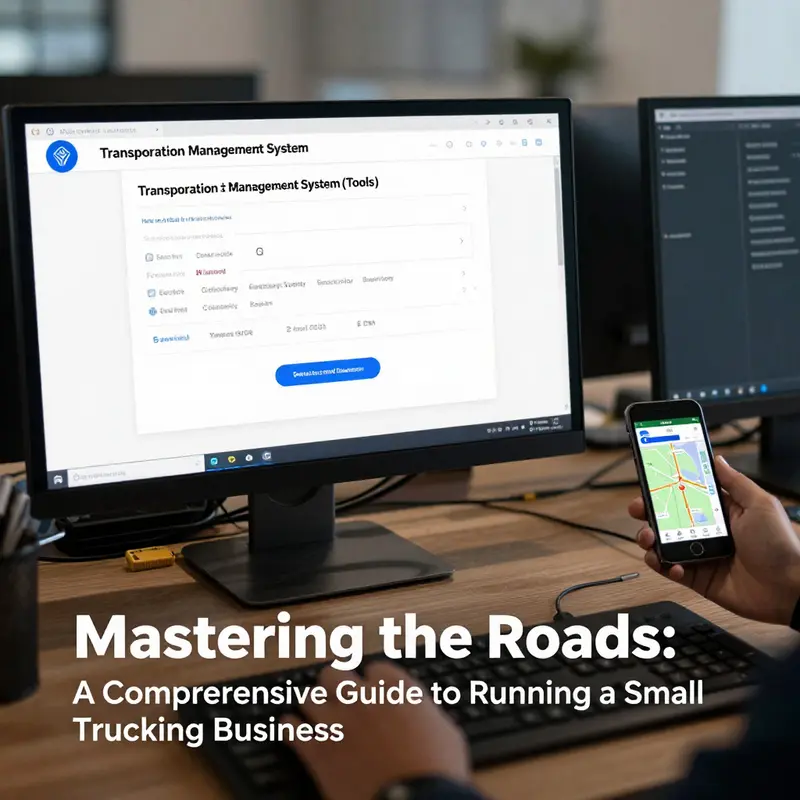
Technology is not a luxury in a small trucking operation; it is the operating system that turns a handful of trucks into a reliable, scalable service. The aim is not to chase every new gadget, but to weave a coherent, data driven approach that reduces waste, lowers risk, and sharpens the level of service delivered to customers. At the heart of this approach are tools that manage hours of service, coordinate movement across routes, and translate every mile into measurable value. When used thoughtfully, these tools turn complexity into clarity and routine tasks into strategic moves that compound over time.
Electronic logging devices and the broader ecosystem of fleet software work together to bring discipline to daily operations. ELDs, by streamlining driver logs, automates the cumbersome paperwork burden and ensures compliance with hours of service regulations. The payoff is twofold: it minimizes the risk of violations and fines and it liberates administrative bandwidth so the business can focus on planning rather than reconciling spreadsheets. But ELDs are not a stand alone solution. They gain power when integrated with a fleet management system that delivers real time visibility into vehicle health, driver behavior, and the status of shipments. A capable FMS acts like a nervous system for the operation, translating streams of data from telematics into actionable steps for dispatch, maintenance, and customer communication.
Route optimization is a practical beneficiary of this integration. Small operators often juggle tight schedules and limited backhaul options, so every mile matters. A modern fleet management setup can consider traffic conditions, weather, and load constraints to suggest efficient paths while preserving service commitments. The result is not just shorter travel times, but more predictable delivery windows, fewer empty miles, and a clearer picture of profitability by route and customer. With real time tracking, fleet managers can promptly respond to delays, reallocate capacity, and keep customers informed with accurate status updates. This transparency builds trust and reduces the back and forth that typically eats up administrative hours.
Another vital concept is load factor, a metric that helps measure how effectively a vehicle carries freight on each trip. For a small operation, improving load factor translates into greater revenue per mile and lower empty mileage, which compound into meaningful cost savings over the course of a year. One powerful finding from operational research is the potential of electronic vehicle management systems to shift load factors meaningfully, especially on backhaul legs. Studies indicate that EVMS can raise backhaul load factors by a sizable margin while the impact on fronthaul travel can be nuanced, yet the overall effect still points toward higher tonne kilometers traveled and better fuel efficiency. This is not about chasing a perfect number, but about using data to steer capacity toward loads that fit the route and the chassis effectively. The practical takeaway for a small business is to track LF alongside other indicators like dwell time, service level, and revenue per mile, then align driver schedules with the most profitable backhaul opportunities.
Digital platforms tie together dispatch, invoicing, and customer communication in a way that used to require a dozen spreadsheets and manual follow ups. A centralized digital workflow reduces the friction between getting a load, assigning a driver, and billing the customer. Dispatching becomes more predictive rather than reactive, and customers receive timely updates on where their freight is and when it will arrive. In a competitive market, this level of reliability becomes a differentiator. It is worth noting that the path to digital maturity does not depend on one expensive system, but on a coherent set of tools that share data through a single source of truth. For small operators, that means starting with the core capabilities needed to keep commitments and then layering in additional modules as the business grows. The aim is to create a seamless flow from quote to load acceptance, to pickup, to delivery, to payment.
The conversation about technology would be incomplete without considering maintenance and safety. Telematics and sensor data enable predictive maintenance by flagging when components approach wear thresholds or when performance anomalies emerge. Regular maintenance logs stay live and accessible, reducing the risk of unplanned downtime. The upshot is a more reliable fleet and steadier service levels for customers who rely on predictable deliveries. The combination of ELD compliance, real time vehicle data, and proactive maintenance creates a virtuous cycle: drivers operate within legal limits, fleet managers optimize schedules with confidence, and maintenance teams address issues before they disrupt service. All of this contributes to lower life cycle costs and a calmer, more professional operation.
The economics of adopting technology must be considered with care. Initial investments are never trivial for a small trucking operation, but the payoff comes through a steady decline in unproductive time, more accurate billing, and improved asset utilization. The path to ROI often follows a phased approach: start with a solid ELD and basic telematics, then add route optimization and a simple customer portal to improve communication. As the operation matures, a more integrated fleet management system, regular KPI reviews, and a clear data governance process yield sustained improvements in efficiency and reliability. The most successful teams treat technology as a partner rather than a replacement for judgment. Human oversight remains essential, but the tools amplify your decision making—sharpening planning, tracking, and accountability across the organization.
A practical mindset for small operators is to connect the dots between technology and real world outcomes. For example, a dispatcher who understands LF trends can prioritize loads that maximize backhaul capacity on specific lanes. A driver who trusts the platform will plan stops more efficiently, conserve fuel through smoother acceleration and braking, and adapt to changing conditions with confidence. This is not about chasing the newest gadget; it is about building a disciplined, data driven operating rhythm. In this sense, technology becomes a framework for better capital allocation, smarter hiring, and smarter growth. For those who want to dive deeper into how digital tools intersect with workforce development and strategic fleet management, there is a practical guide on transforming fleet management through smart investment in human capital that can be explored here: transforming-fleet-management-the-case-for-investing-in-human-capital.
The chapter on future trends should temper optimism with realism. Commercial vehicle electrification is on the horizon, and industry projections suggest a substantial share of new truck sales could be zero emission by the end of the decade. For small operators, that future means planning not only for new powertrains, but for the charging infrastructure, maintenance tooling, and the thermal management challenges that accompany electric fleets. Advances in battery technology and power electronics, often amplified by developments in passenger EVs, are making electric commercial vehicles more viable and cost effective. Early adoption will require careful financial planning and a robust maintenance strategy, but it also positions a small operator to compete with larger fleets on reliability and environmental compliance. The key is to view electrification not as a distant prospect but as a structured program with milestones, pilot routes, and a clear ROI framework. The overarching theme is that technology, when aligned with process discipline and driver training, can unlock a level of efficiency that keeps a small trucking business lean yet capable of competing over the long haul.
To summarize, the path to greater efficiency for a small trucking business lies in a deliberate, phased embrace of data driven tools. Start with reliable logging and basic telematics to reduce administrative drag and ensure compliance. Add a fleet management system that delivers real time visibility and route intelligence. Focus on load factor metrics to identify backhaul opportunities and optimize asset utilization. Leverage digital platforms to streamline dispatch, billing, and customer communication, while maintaining a strong human touch to interpret data and make strategic decisions. Emphasize preventive maintenance to reduce unexpected downtime and extend the life of each asset. Finally, keep one eye on the horizon with a practical plan for electrification and battery tech adoption that aligns with the company’s size, cash flow, and growth ambitions. In this way, technology becomes not a barrier but a lever that translates disciplined operations into consistent service and sustainable profitability for a small trucking business.
External reference: https://ssrn.com/abstract=1131133
Final thoughts
Establishing a successful small trucking business requires meticulous planning, adherence to legal standards, and the integration of cutting-edge technology. As you navigate through the complexities of the trucking landscape, remember that continuous market research and a commitment to compliance are paramount. Whether you target logistics companies, construction firms, or food distributors, a focus on operational efficiency and strong customer relationships will set your business apart and drive future growth.