
Operating a trucking business that serves diverse sectors—logistics, construction, fleet services, and food distribution—demands disciplined planning and precise execution. The box truck niche offers flexibility and cost advantages, yet success requires more than horsepower. This guide presents a holistic framework that aligns market intelligence with regulatory discipline, asset care, talent development, and technology-enabled workflows. By following the five chapters, executives and managers in logistics and allied industries can tailor their approach to sector needs while maintaining consistency across routes, customer service, and compliance. From rigorous market research and business planning to ongoing driver training and digital operations management, each section builds on the last to deliver a cohesive operating framework. By aligning service design with customer needs and regulatory requirements, fleets can reduce downtime, improve service levels, and optimize total cost of ownership. The resulting playbook helps you select the right fleet mix, hire and retain talent, comply with evolving rules, and leverage technology to drive efficiency. Across sectors, success hinges on disciplined planning, transparent governance, and a relentless focus on customer value. The subsequent chapters reveal concrete steps, templates, and decision criteria that operational leaders can apply today to operate trucking businesses more effectively.
Charting the Course: Market Research and a Lean, Robust Plan for a Box-Truck Operation
Every successful trucking venture begins not on the road, but in the mind: the clarity to see demand, the nerve to price against risk, and the discipline to convert insights into action. When you decide to operate a box-truck business, you are choosing a path where margins hinge on smart planning as much as on the miles you cover. This chapter threads market research with practical planning, weaving a narrative that starts with the lay of the land and ends with a plan you can measure, adjust, and grow. It is not about chasing every trend, but about building a focused model that matches visible demand with capable service, regulation with resilience, and capital with responsible execution. In a market that was worth roughly $12.7 billion in 2024 and expanding at a steady pace, the opportunity for box-truck operators remains meaningful for those who marry data to daily operations and keep a tight rein on cost, service, and compliance.
Begin with market understanding. A box-truck operation thrives where goods move quickly, and where a fleet can flex to meet varying volumes. Demand patterns matter as much as route familiarity. Look for urban delivery hubs, regional distribution centers, and small to mid-market shippers who value the speed and adaptability of a localized fleet. Seasonal fluctuations are real: holidays, promotions, and weather events can swing volumes week to week. In the current logistics climate, e-commerce continues to push demand toward flexible, mid-mile and last-mile solutions that avoid the higher costs of national carriers while delivering reliable service. Your market reconnaissance should map these demand signals across your target geography, noting where capacity is tight and where price sensitivity is acute.
Competitor analysis follows naturally from demand mapping. The practical aim is not to imitate, but to differentiate through service quality, reliability, and a sharper cost structure. Examine who is already serving your chosen niches, how they price, what service add-ons they offer, and what customers say in online feedback. Regional differences in capacity create both risk and opportunity: some markets experience vehicle shortages at peak times, while others have underutilized fleets during slow seasons. This variability means a well-timed move—such as prioritizing certain lanes or offering flexible scheduling—can yield outsized gains in load factor and customer satisfaction. The most successful operators anchor themselves in a narrow, well-understood segment rather than trying to cover every possible freight type. They also keep an eye on regulatory changes that could alter the economics of capacity—things like hours-of-service rules, insurance requirements, and vehicle emission standards that reframe the cost of doing business in the long run.
Market segmentation, when done pragmatically, pinpoints where to deploy a box-truck fleet. Traditional freight attracts steady, predictable work, but higher-margin opportunities exist in niches that reward specialized handling or rapid response. Cold-chain logistics, local moving, or targeted last-mile services for retailers and healthcare providers are examples where a small- to mid-sized operator can compete by offering reliability, transparent tracking, and a straightforward billing model. It is tempting to chase broad markets, yet the most durable businesses emerge from a clear value proposition tailored to a definable customer base. Your plan should articulate why a particular niche makes sense in your geography, what you will charge, and how you will differentiate on service rather than simply beating the lowest price.
With a clear sense of demand and a narrowed focus, the next step is translating insight into a practical business plan. A lean plan acts as both compass and budget, aligning your business model with your capacity to execute. Two models commonly surface in this space. The traditional approach centers on owning and operating a fleet of box trucks, controlled through a centralized dispatch operation, with predictable maintenance and routine driver management. The alternative, increasingly visible in more tech-enabled markets, is to participate in a digital freight ecosystem that connects shippers with independent drivers on a managed platform. While digital platforms can reduce overhead, they demand disciplined governance—clear terms with drivers, robust insurance coverage, and reliable customer service processes. Whichever path you choose, your plan should specify the revenue engine, the cost structure, and the metrics that will tell you whether you are on track.
A robust business plan also embeds financial realism. Start by outlining startup costs—vehicle purchase or lease, insurance, licensing, and the technology stack needed to dispatch, track, and bill customers. You should then project revenue based on load rates, utilization, and service mix. A vehicle utilization target around seventy percent is a commonly cited benchmark for small to mid-sized fleets, but the true driver is your own data: track your historical run rates, cycle times, empty miles, and driver productivity to set a target you can manage. Include contingency funds for fuel volatility and maintenance surprises; box trucks, while reliable, still face wear and repair cycles that can erode margins if not anticipated. The plan should also spell out break-even timing, a clear path to profitability, and risk management strategies that cover regulatory shifts, market shocks, and credit cycles.
Operational strategy sits at the intersection of market insight and cost discipline. Route optimization is not a luxury but a profit lever. An intelligent scheduling approach reduces deadhead miles, shortens delivery windows, and improves customer reliability. The anecdotal evidence from the broader logistics sector shows that when dispatch becomes data-informed, load factors improve and operating costs decline. This translates into tangible savings that compound across a growing fleet. Your plan should address daily realities: how you will assign routes, how you will monitor performance, and how you will respond to disruptions such as weather delays or last-minute shipping changes. The aim is not to chase perfect routes but to build repeatable processes that reliably move goods from shipper to consignee with visibility, accountability, and a plan to adjust when conditions shift.
Technology underpins this execution. A modern box-truck operation uses fleet-management capabilities for dispatch, location tracking, fuel monitoring, and maintenance reminders. Customer interfaces—whether a simple website or a booking portal—convert inquiries into committed work with clear expectations. Accounting integration ensures that invoices, receipts, and reconciliations flow smoothly, keeping cash flow healthy. Importantly, technology should serve people, not replace them. Drivers and dispatch teams need intuitive tools that free their time for problem-solving and service optimization rather than chasing paperwork. The goal is a cohesive ecosystem where data from the road informs decisions, and decisions improve performance on the road. In the context of a growing market, these systems become the scaffolding that supports scale while preserving service quality and compliance.
Regulatory and compliance considerations must be woven into the business model from day one. The federal and state framework governs how you operate, how you document hours, and how you insure and register vehicles. A box-truck operator must secure operating authority (the MC number) and, in most cases, register with the Department of Transportation. Insurance is not optional; it covers liability, cargo, and physical damage and shields the enterprise from costly incidents. Hours-of-service rules, if you hire drivers, mandate disciplined rest and work patterns to minimize fatigue. Electronic logging devices, where required, provide traceable, auditable records that reduce risk and support claims. Compliance is not a one-time checkbox; it is a continuous discipline that protects people, cargo, and the business as growth occurs.
Funding and licensing form the bridge from plan to reality. Start-up capital must cover more than trucks and insurance; you need working capital for fuel, maintenance, payroll, and customer acquisition. Financing options range from traditional loans to grants for green logistics or growth-stage equity for scalable models. Licensing, permits, and regulatory approvals may also require upfront effort and ongoing renewals. A practical approach is to stage investments: begin with a smaller, reliable fleet and a narrow service scope, then expand as utilization metrics prove the model and cash flow supports growth. Strategic partnerships with shippers and warehouses can smooth cash flow and provide predictable volumes, increasing your bargaining power with lenders and insurers alike.
To close this loop, integrate a front-end commitment to sustainable growth and continuous learning. The market is evolving toward smarter scheduling, better integration with digital marketplaces, and, in some regions, a gradual shift toward lower-emission equipment as policy and incentives align. Your plan should anticipate these dynamics without betting the business on unproven technologies or speculative demand. A practical roadmap ties together market insights with a disciplined operating model: a niche-focused carrier can weather variability by delivering consistent service, maintaining rigorous maintenance and training regimes, and applying disciplined financial controls. A well-constructed plan does not promise perfection; it promises a clear path, pragmatic milestones, and a culture of learning that keeps a growing box-truck operation resilient.
For readers seeking a detailed, step-by-step framework that complements these insights, consult the box-truck planning guide linked here: box truck business plan guide. It offers templates and real-world considerations aligned with the market realities outlined above. As you build your plan, remember that the most enduring advantage comes from aligning market demand with reliable execution, then protecting that edge with strong compliance, measured risk-taking, and a commitment to continuous improvement. The road ahead is long, but with a precise map and disciplined habits, your box-truck operation can move from startup to sustainable enterprise.
External resource for broader context and ongoing trends: https://www.example.com/digital-freight-report-2026
Steering with Rules: Mastering Legal and Regulatory Compliance in a Box Truck Operation
Compliance is more than a checklist; it is the engine behind a reliable operation. In a market where customers want predictable, on-time deliveries and regulators sharpen oversight to protect workers and the public, laying a solid regulatory foundation is essential. A box truck business that integrates compliance into core processes can avoid delays, penalties, and reputational harm while positioning itself to win long-term contracts. The path starts with understanding the essential authorities that govern who may haul freight, what can be hauled, where, and under what conditions. These rules define the framework within which every route, driver, and customer interaction must operate. The objective is to align operations with safety, reliability, and efficiency from the outset. With that alignment, growth becomes a natural outcome rather than a rushed afterthought.
First, obtaining Federal authority is the hinge on which the venture swings open. In the United States, the Federal Motor Carrier Safety Administration (FMCSA) governs operating authority, often referred to as an MC Number. This signals that a carrier has met minimum requirements to operate as for-hire or private across state lines. The process involves submitting an application, detailing the business, drivers, insurance, and agreeing to safety and financial requirements. Pair that with registration with the Department of Transportation (DOT) when using commercial vehicles on public roads. The license underpins eligibility for hiring drivers, entering contracts, and accessing lanes of commerce that customers require. Without it, interstate work is not legitimate and customers may look elsewhere for reliability and risk management.
Insurance is another foundational pillar. Liability, cargo, and physical damage coverage guard the business and customers against loss. Insurance choices shape risk, financing terms, and eligibility for larger or more sensitive routes. While costs vary with coverage, a thoughtful plan links levels to utilization plans, safety programs, and driver performance. In parallel with authority and insurance, operators must comply with hours-of-service (HOS) regulations and the use of Electronic Logging Devices (ELDs). The FMCSA framework promotes safety but offers flexibility in scheduling. The core principle remains: ensure drivers have sufficient rest to maintain alertness, reduce fatigue, and minimize risk. A modern box-truck operation implements clear scheduling policies, fatigue-aware onboarding, and robust record-keeping that can withstand audit.
The regulation landscape also covers interjurisdictional considerations. When operations cross state lines or into Canadian provinces, IFTA and IRP obligations become essential. These programs streamline tax reporting and license-plate costs but require precise processes. A critical component is the BOC-3 form, the process agent designation. Each carrier must appoint a legal process agent in every jurisdiction of operation, designating a local contact who can receive legal documents and forward them promptly. The agent must be located within the state or province and cannot be the carrier itself. The BOC-3 appointment is formalized through the BOC-3 form and remains valid for the license term, typically one year, with updates required if agents or contacts change. Regular reviews of agent contacts, renewals, and coordination with licensing, insurance, and operations teams help prevent penalties or delays.
HazMat regulations add further rigor for those handling dangerous goods. PHMSA’s HazMat Regulations, and HM-181 training, require safe handling, labeling, and documentation. Training is the cornerstone: drivers and handlers must classify hazards, select packaging, attach placards, understand emergency procedures, and maintain shipment records. If HazMat is in scope, invest in formal training aligned with regulatory texts and ongoing updates. Training reduces incidents, supports safety culture, and enhances readiness for inspections.
Legal compliance is a living process. Build a compliance calendar and appoint a designated compliance steward who tracks regulatory changes, driver qualifications, and document retention. Align the calendar with FMCSA updates, IRP/IFTA deadlines, BOC-3 renewals, and insurance renewals. Maintain driver records, MVR checks, CDL verification, safety certificates, and maintenance logs. Embed routine audits into quarterly planning to build confidence with customers and regulators. Include onboarding verification of CDL status (Class B for box trucks) and MVR checks for new drivers, plus ongoing safety training embedded in the culture.
As operations scale, regulatory diligence supports expansion into new markets and freight types. The discipline here helps with retention, maintenance planning, and resilience to disruptions. A rigorous approach to HOS, ELD, BOC-3, IFTA/IRP, and HazMat training is the strongest way to stay compliant while delivering high service levels. Official sources remain the FMCSA for HOS/ELD, IRP/IFTA, and PHMSA HazMat as the backbone of day-to-day compliance. The goal is an auditable compliance ecosystem that survives inspections, audits, and policy shifts. A culture where every driver, dispatcher, and manager understands why a rule exists and how to apply it becomes a differentiator in a crowded market.
From Acquisition to Uptime: Building a Lean, Efficient Box-Truck Fleet for a Sustainable Trucking Operation
A trucking operation that sustains profitability begins long before the first mile is driven. It starts with a deliberate approach to fleet acquisition and a relentless discipline around maintenance. In box-truck focused operations, where cargo distance and delivery windows shape every decision, the fleet is both a revenue engine and a cost center. The chapters of success hinge on choosing the right mix of vehicles, financing them smartly, and building a maintenance rhythm that minimizes downtime while maximizing uptime. This is not a one-off procurement exercise; it is a continuous, data-informed discipline that grows with your service footprint and customer commitments. The core idea is straightforward: lower total cost of ownership while ensuring reliability and safety, then translate those gains into faster, more predictable deliveries that beat the competition on cost and service. When you approach fleet decisions with this mindset, maintenance is not a secondary concern but an integral part of the initial design.
The first pillar is total cost of ownership. Too often, operators fixate on sticker price and monthly payments, forgetting that fuel economy, reliability, maintenance expenses, and resale value color the real cost of ownership over the vehicle’s life. Box trucks—typically 16, 20, or 26 feet in length—vary in payload, maneuverability, and fuel efficiency. A careful TCO model accounts for the payload you routinely carry, the fuel type and efficiency you can achieve on typical routes, and the expected downtime from unscheduled repairs. It also weighs depreciation and residual value; a newer model may require higher upfront cash flow but delivers lower maintenance costs and higher resale value. The art lies in balancing upfront liquidity with long-term financial health, recognizing that a lower upfront price often hides higher ongoing costs if maintenance intervals slip or fuel economy suffers.
Fuel efficiency and emissions are not cosmetic considerations; they directly influence margin per mile. The operating footprint—regional versus long-haul, urban delivery density, or cold-chain requirements—drives the optimal configuration. Heavier, longer vehicles may haul more per trip, but if they demand more fuel or require specialized maintenance, the savings can vanish. Conversely, a lighter, well-maintained fleet with modern drivetrains can deliver superior uptime and lower per-mile costs even if it means a larger fleet. The decision framework should align vehicle selection with service type and route structure, ensuring each asset is fit for purpose and not underutilized or overburdened by workloads beyond its design. In this sense, fleet mix planning becomes a quarterly compass guiding capital allocations, maintenance cycles, and driver assignments.
Financing is not merely about cash flow; it shapes the risk posture of the business. Leasing offers lower upfront costs and the ability to upgrade to newer technology as routes evolve. Loans provide asset ownership at the end of the term and may deliver depreciation benefits for tax planning. The choice between operating and capital leases matters, because off-balance-sheet treatment can affect perceived liquidity, while a capital arrangement speaks to long-term asset control. When evaluating terms, look beyond monthly payments to residual values, maintenance packages, and end-of-lease options. OEM incentives, extended warranties, and service networks near your operation can tilt the economics in favor of one path over another. The best practice is to build multiple scenarios—conservative, moderate, and aggressive—and stress-test them against projected demand, driver availability, and interest rate environments. This disciplined approach helps prevent cash crunches as you scale.
As you shape the fleet, the choice of configurations should reflect service needs and workforce realities. Payload capacity must match typical loads to minimize underutilization, while dimensions should fit common loading docks and curb spaces to avoid congestion or damage. The propulsion decision—whether traditional diesel or alternative powertrains—must consider infrastructure, maintenance capabilities, and long-term cost implications. Electric or hybrid options could reduce operating costs in dense urban routes, but require charging resilience and predictable demand that justifies the investment. The fleet plan should also address driver availability and licensing. Box trucks with Class B CDL requirements are common, but the staff plan must ensure there are enough qualified drivers to meet peak demand and surge periods. A realistic hiring and training plan, integrated with your fleet schedule, prevents capacity constraints from eroding service levels.
Maintenance, though often treated as a backdrop, deserves the same strategic attention as acquisition. A preventive maintenance program is the backbone of uptime. A systematic schedule—aligned with manufacturer recommendations and tailored to actual usage—reduces the probability of unexpected breakdowns. The best maintenance programs are data-driven: you collect service histories, sensor data, and maintenance outcomes to predict when a part will fail and when it should be replaced. This predictive approach minimizes downtime and extends asset life, thereby reducing total cost per mile. A robust maintenance plan also includes a well-stocked parts strategy, skilled technicians, and reliable service partners who understand the box-truck ecosystem. Early detection and rapid repair capabilities can transform a downtime event into a minor hiccup rather than a crippling setback.
Technology is the force multiplier that makes this maintenance discipline scalable. Fleet management platforms, telematics, and integrated maintenance systems turn data into action. Real-time visibility into location, fuel consumption, engine health, and driver behavior informs dispatch decisions and route optimization. The operator can schedule preventive maintenance around low-demand windows, preventing missed deliveries and keeping the fleet productive. Telematics also provides safety insights—harsh braking, speeding, idling—that influence driver coaching programs and fuel efficiency improvements. A well-implemented system integrates with accounting and ERP tools so maintenance and procurement costs flow into a single view of performance, rather than living in silos.
The human layer ties everything together. A fleet’s capabilities and resilience hinge on people—drivers who understand routes and customers, technicians with deep diagnostic skills, and managers who translate data into daily actions. Investing in people is not a soft add-on; it is a force multiplier that improves asset uptime, safety, and customer satisfaction. The connection between people, process, and technology becomes a virtuous circle: better training leads to fewer breakdowns, which makes telematics data more meaningful and more actionable, which in turn informs how you schedule maintenance and deploy drivers. For leaders who want to align workforce development with fleet strategy, see the emphasis on people as a strategic asset in this broader discussion of truck fleet performance. Investing in People key to trucking’s success.
Compliance and safety weave through every fleet decision. Federal, state, and local rules govern hours of service, inspections, and licensing. The box-truck segment is subject to standard regulatory oversight, and non-compliance can trigger fines, operational suspensions, or higher insurance costs. A compliant fleet begins at the acquisition stage, with proper license classifications, insurance coverage, and registrations aligned to the planned operations. It continues through ongoing maintenance and driver management, where pre-trip inspections and post-trip reviews become routine rituals rather than afterthought checks. The end goal is a fleet that not only performs efficiently but also demonstrates a track record of safety and reliability to customers and lenders alike.
The performance metrics you adopt will reflect this integrated approach. Track fuel efficiency by vehicle type and route, maintenance cost per mile, and vehicle uptime percentage to gauge reliability. A high uptime target—such as surpassing 90%—often correlates with favorable insurance terms and improved service levels. Driver safety scores, derived from telematics and incident records, offer a lens on training effectiveness and risk management. Total cost of ownership remains a north star, but it is most meaningful when tied to service outcomes like on-time delivery rates and customer satisfaction. The implementation plan should translate strategy into action in clearly defined steps: assess needs and set goals, develop a fleet acquisition strategy, select vehicles and financing, implement telematics and maintenance systems, establish SOPs, train drivers and staff, monitor KPIs, and conduct annual audits to stay compliant. This is not a one-time project but a living program that adapts as demand shifts and technology evolves.
As you embark or accelerate on this journey, keep the larger business model in view. The fleet is a competitive lever, but it only pays off when embedded in a service proposition that customers value. A lean, well-maintained box-truck fleet translates into predictable delivery times, lower costs, and a smoother customer experience. The discipline of selecting the right mix, financing thoughtfully, and maintaining assets relentlessly becomes your operating rhythm. And when you couple that rhythm with a workplace culture that treats maintenance as ongoing optimization rather than a chore, uptime and reliability become your distinctive signature in a crowded logistics landscape.
For a regulatory perspective that reinforces the disciplined approach to driver hours and vehicle readiness, consult federal guidelines on hours of service and related requirements. External resource: https://www.fmcsa.dot.gov/regulations/hours-service
Hiring and Managing Drivers: Building the Backbone of a Safe, Efficient Box-Truck Fleet
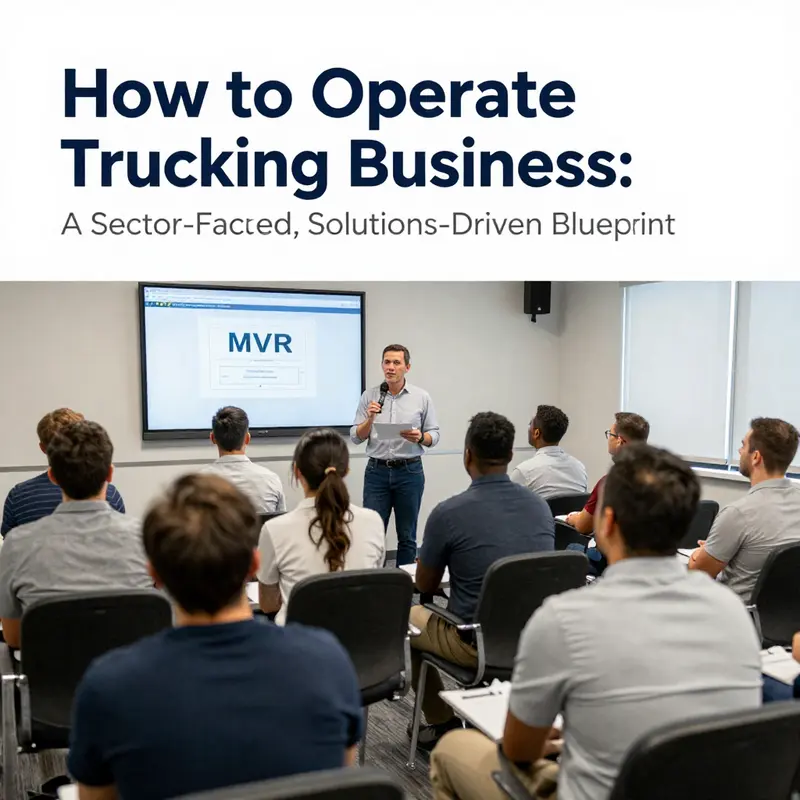
The success of a trucking operation hinges not on the size of the fleet alone, but on the people who drive it. Hiring and managing drivers is the core activity that threads safety, reliability, and customer service into every mile. A well-structured driver organization transforms a box-truck business from a mere service provider into a disciplined logistics partner that can scale with demand, control costs, and protect reputation. The objective is to cultivate a safety-first culture that aligns regulatory compliance with practical, day-to-day performance. This chapter weaves together regulatory context, people strategies, and technology-enabled operations to show how to recruit, qualify, onboard, compensate, motivate, and measure drivers so that every route becomes a dependable thread in a web of predictable service.
Regulatory clarity sits at the center of every decision about drivers. The landscape is defined by federal rules administered by the FMCSA and the Department of Transportation, with every driver qualification, testing program, and log-keeping requirement designed to reduce risk and protect both the driver and the shipper. The most immediate actions for any operator are to assemble a Driver Qualification File (DQF) before a driver begins any safety-sensitive duties and to establish a compliance infrastructure that can withstand audits. The DQF typically includes a verified CDL, a medical certificate, a current and valid road test where required, a review of the driver’s MVR within a defined look-back period, employment history, a required drug and alcohol program eligibility statement, and ongoing records such as annual medical renewals and periodic re-certifications. Beyond those basics, a robust program keeps track of drug and alcohol testing—pre-employment, random, post-accident, and return-to-duty—tied to proper chain-of-custody documentation and a clear policy communicated to every driver and supervisor. The practical takeaway is clear: build a compliant, auditable process first, and then use it as a platform to attract qualified drivers who value safety and professionalism as much as customers do.
Structuring the operation begins with governance that spans hiring, compensation, safety, and performance. A legal structure that supports scalable hiring, a transparent insurance plan, and a documented safety program creates the framework for growth. It is also essential to adopt a compliance-centric mindset in daily routines—regularly reviewing MVRs, medical certifications, and training records; monitoring ELD usage and hours-of-service adherence; and maintaining a proactive approach to vehicle maintenance and incident reporting. A safety culture emerges from consistent coaching, clear expectations, and recognition for safe behavior. It also requires a practical balance between rule-following and operational flexibility: you want drivers who can navigate real-world conditions efficiently while staying within the boundaries of law and company policy.
Hiring strategy begins with defining roles and recruitment paths. Local, regional, and owner-operator configurations may demand different profiles, endorsements, and experience levels. The recruitment toolkit should span trucking schools, industry job boards, referral programs, and community partnerships with local shippers and logistics intermediaries. A well-crafted job description communicates not only duties and compensation but also safety expectations, onboarding timelines, equipment standards, and career progression. The interview process should emphasize safety discipline, reliability, communication, and customer service. Structured interviews with scenario-based questions help identify drivers who are most likely to uphold the company’s service standards on the road and in the warehouse when loads are being picked up or staged for delivery.
Candidate screening is more than a background check; it is a comprehensive, multi-layered filtration. A preliminary screen might verify CDL class and endorsements, then a thorough MVR review in line with policy, followed by reference checks and a review of employment history. A successful screening culminates in a decision that respects both regulatory requirements and the practical realities of your routes. It is essential to ensure candidates understand the expectations for detention time, load securement, fueling procedures, and safety protocols before any offer is extended. Once a driver is on board, onboarding and training should unfold with discipline and empathy. An effective onboarding program guides new drivers through a structured orientation that covers the company mission, service levels, route expectations, and the digital tools they will use daily. It should also introduce safety training modules—defensive driving, cargo securement, load handling, and incident reporting—and provide practical, hands-on exposure to the specific equipment in your fleet.
On the topic of compliance, the drug and alcohol program deserves particular attention. A DOT-compliant program requires pre-employment testing before a driver begins safety-sensitive duties, random testing under a certified program, post-accident testing when applicable, and return-to-duty and follow-up testing after violations. Documentation and chain-of-custody procedures must be rigorous, and supervisors should be trained to recognize and report potential concerns without compromising driver privacy or morale. An explicit policy, well-communicated to every driver and supervisor, reduces confusion and minimizes the risk of non-compliance during audits. A structured, auditable system for this program makes it possible to attract drivers who value integrity and professionalism, and it protects the business from costly regulatory penalties.
Compensation and retention form a critical axis of driver management. Pay models can be blended to reflect both stability and performance. Common approaches include per-mile pay with detention and accessorial pay, hourly wages for local or regional work, and performance-based incentives tied to safety, on-time delivery, and fuel efficiency. A predictable compensation framework reduces turnover by giving drivers a clear sense of earnings and career progression. Benefits such as health, dental, and retirement plans, along with paid time off and safety bonuses, can significantly improve retention in a tight market. Detention time must be carefully defined so drivers are compensated fairly after a reasonable grace period, and accessorial charges should be transparent and consistently applied. Equally important is creating a pathway for advancement—drivers who demonstrate leadership, mentorship, and coaching skills can grow into trainer roles, route supervisors, or fleet leads, which reinforces loyalty and reduces vacancy gaps on essential routes.
Performance management rests on meaningful metrics, not vanity figures. Core KPIs should track on-time delivery rates, route efficiency, fuel consumption per mile, speed-to-load times, detention time, and load acceptance rates. Safety metrics—incident counts, adherence to preventive maintenance schedules, and CSA scores—must be part of every performance review. A data-driven approach enables real-time feedback, with dashboards that drivers and managers can access. Regular coaching conversations, ideally in a one-on-one setting, reinforce progress and identify targeted training needs. When performance gaps occur, structured improvement plans with measurable milestones and follow-up dates help drivers regain footing without souring motivation. The goal is to pair accountability with encouragement, so drivers feel supported as they work toward higher standards.
Technology increasingly sits alongside people as an enabler of efficiency and safety. Transportation management systems help with routing and dispatch, while telematics provide real-time visibility into location, speed, idling, and maintenance needs. Driver-facing apps can simplify pre-trip inspections, load verification, hours-of-service logging, and invoicing. Integrated payroll and HR systems ensure accurate pay, benefits administration, and regulatory reporting. The right combination of tools reduces administrative friction for drivers, enables better decision-making for managers, and improves customer experience through precise ETA updates and transparent communication.
Templates and documentation are not decorative add-ons; they anchor consistency and legal compliance. A starter driver job description, a Driver Qualification File checklist, an onboarding schedule, a drug-and-alcohol policy summary, and an incident report form are invaluable when scaled across a growing fleet. These documents should be customized with counsel to meet state-specific rules and the particularities of your operations. A practical step is to begin with a clean, centralized repository for all driver-related documents and a routine for periodic review and renewal. This groundwork reduces chaos and supports faster ramp-up for new hires, keeping you compliant and capable of maintaining service levels as you expand.
Implementation is most effective when it follows a deliberate, phased plan. A 6- to 12-week rollout can align hiring, onboarding, and safety training with the launch of new routes or expanded territories. Early weeks focus on formalizing the compliance framework, defining compensation models, and selecting the technology stack. Weeks 5 and 6 emphasize recruitment campaigns, MVR checks, and first-wave onboarding. In the latter weeks, you measure onboarding readiness, confirm safety certifications, and establish performance dashboards. Throughout, keep an eye on common pitfalls: incomplete driver qualification documentation, inconsistent drug-testing procedures, underinvestment in safety training, and poor communication that erodes trust. The antidote is transparent processes, fair compensation, ongoing coaching, and a culture that celebrates safe, punctual, customer-first deliveries.
If you want this guide tailored to a specific business model, the path is clear: determine whether you will rely more on company drivers or owner-operators, decide between local versus regional versus longer-haul routes, and identify cargo types that might require extra endorsements or training. The next step is to translate this framework into concrete documents and workflows that suit your geography and customer mix. For an actionable start, you can explore a structured plan that resembles a box-truck business planning approach, which can be found in practical guides such as the box-truck business plan guide. Shopify’s box truck business plan guide. Integrating that planning discipline with the driver-management framework described here creates a coherent, scalable blueprint for operating a box-truck business with skilled, motivated drivers who deliver on time, every time.
As you refine your approach, keep one eye on regulatory realities that may evolve. Hours-of-service rules, testing requirements, and insurance standards can change, and the best operators adapt with disciplined processes, timely training updates, and closed-loop feedback from drivers about on-road realities. By anchoring your operation in a people-first strategy—recruiting with care, qualifying meticulously, onboarding thoroughly, compensating fairly, and coaching continuously—you build a fleet that not only meets market demand but also sets the standard for safety, reliability, and service excellence. The role of the driver is not merely to move a load from point A to point B; it is to be the human embodiment of your brand on every shipment, a clear signal to customers that their goods are in capable hands and that your company is a partner they can depend on mile after mile.
External reference: https://www.fmcsa.dot.gov/regulations/hours-service
Tech-Driven Precision on the Road: Integrating Operations Management and Advanced Technologies in a Modern Box-Truck Business
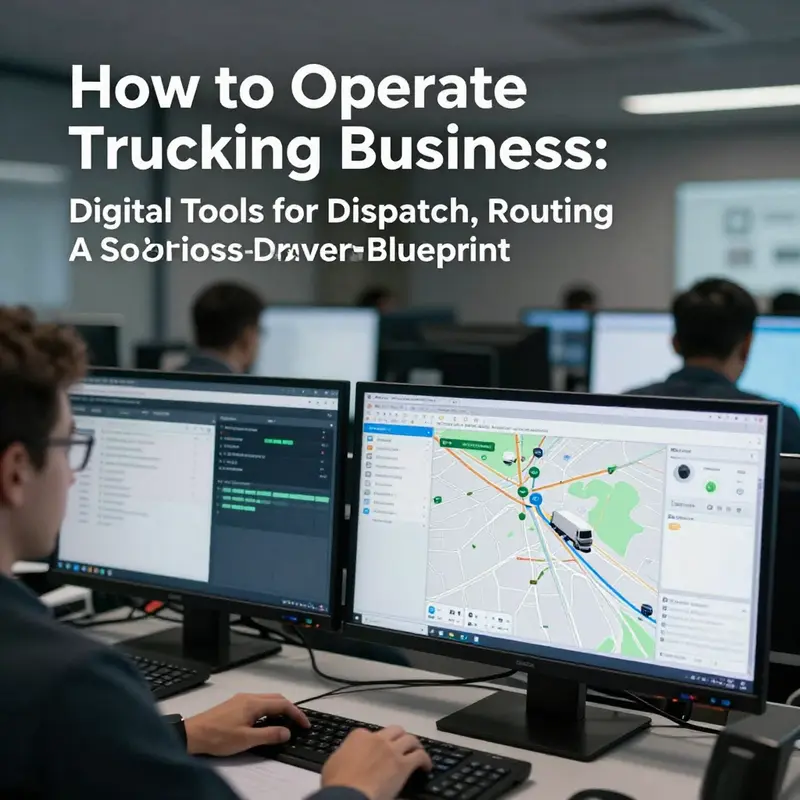
Technology is no longer an add-on in trucking; it is the axis around which every decision orbits. In 2026, the most resilient box-truck operators fuse rigorous planning with intelligent systems that translate data into efficient routes, safer driving, and steadier profits. The landscape rewards those who treat operations as a continuous loop: design around demand, execute with real-time visibility, learn from performance, and reinvest wisely in both people and technology. The foundations of this approach rest on three interlocking pillars: sound operations management, disciplined maintenance and safety practices, and a technology toolkit that enhances dispatch, driving, and customer experience without driving complexity to the point of paralysis. The practical upshot is straightforward: fewer empty miles, more precise pickup and delivery windows, and a customer feel that combines speed with reliability.
At the heart of foundation lies route optimization and load management. A box-truck business thrives when every mile counts and every load carries a predictable margin. Modern routing begins with a robust transportation management mindset, where a fleet-aware scheduling system considers factors like cargo characteristics, wrap-time at origin, loading efficiency, and the ever-present constraint of hours-of-service. The most effective operators routinely run scenario analyses that account for traffic patterns, weather contingencies, and local restrictions, then translate those insights into dispatch instructions that drivers can execute without second-guessing. This is where a capable fleet management platform becomes not a luxury but an everyday tool. It provides dispatchers with a live view of where each asset is, what it is carrying, and how close the next delivery is to a promised window. Importantly, successful load management isn’t only about maximizing payload; it is about matching cargo with the right vehicle and the right driver to ensure on-time performance and minimal risk of detention.
The full truckload process—quoting, pickup, transport, delivery, and billing—reads like a choreography when viewed through a disciplined lens. Accurate quotes depend on cargo specifics, weight, dimensions, and handling requirements. Pickup efficiency hinges on precise origin loading practices, standardized documentation, and clear customer communication about required access and dock procedures. Transport quality improves with continuous visibility: GPS traces, geofenced alerts, and real-time ETA updates allow a dispatcher to anticipate delays and re-route proactively. Delivery requires a predictable unload sequence, verification of POD (proof of delivery), and clean handoffs that support prompt billing. In a well-run operation, the billing cycle becomes a natural byproduct of a transparent flow, not a separate fight after the fact. Yet the rhythm of this cycle depends on disciplined practices across the back office: accurate scale data for charges, timely issuance of invoices, and a customer portal that supports bill reconciliation and dispute resolution.
Equally foundational is the vehicle selection and maintenance discipline that keeps the operation reliable. Choosing the right box trucks means balancing payload capacity with fuel economy, maintenance costs, and the reliability profile of the chassis and body. A prudent approach weighs the long-term total cost of ownership against upfront price, recognizing that a slightly higher purchase price may deliver lower maintenance and downtime in the long run. Preventive maintenance schedules are non-negotiable because downtime erodes both reliability and customer trust. Establishing a relationship with skilled technicians who understand commercial fleets helps minimize unscheduled repairs and extends the life of each asset. When maintenance is proactive rather than reactive, the entire operation breathes easier: fewer surprises, steadier service levels, and better planning for future expansion.
Technology then takes this well-built foundation and multiplies the value. Fleet management software and telematics shift from convenience to a core capability. Dispatching becomes dynamic rather than static, with the ability to adjust routes mid-journey in response to detours, road closures, or last-minute customer requests. Fuel monitoring, idling reports, and driver behavior analytics create a feedback loop that informs coaching and policy adjustments. In practice, this means a driver who arrives on time with a full load, minimal idle time, and a calm driving profile becomes a repeat customer favorite rather than a variable. The promise of intelligent driver assistance systems—such as automatic emergency braking, blind-spot detection, lane-change alerts, and predictive adaptive cruise control—extends beyond safety. These features reduce accident frequency, lower insurance costs, and lighten driver workload on long hauls. While every fleet will customize its tech stack, the underlying logic remains clear: safer, more efficient driving is data-enabled driving.
A broader strategic shift—the so-called smart-truck revolution—frames technology as a core driver of cost reduction and asset utilization. In practical terms, fleets leveraging advanced driver assistance and sensor fusion can realize meaningful gains. Fuel consumption can be lowered by a few percentage points through smoother acceleration profiles and smarter speed management. On a typical annual mileage, even modest fuel savings translate into real dollars saved. Labor costs also respond to automation and smarter scheduling. Where double-driver models once dominated mid-to-long-haul operations, higher automation levels can permit single-driver configurations on many routes, with appropriate safety measures and compliance in place. The effect on asset utilization can be significant: better scheduling and real-time visibility improve the number of revenue-producing miles per vehicle. The implications for margins are straightforward: more predictable costs, higher uptime, and stronger service levels in a competitive market that prizes reliability and speed.
In practice, the technology narrative is most powerful when it becomes a closed-loop system. A modern trucking operation starts with a design that integrates technology into everyday workflows and ends with a feedback mechanism that continually refines that design. This means aligning technology choices with real-world scenarios broad enough to cover typical demand, peak seasons, and occasional disruptions. It also means treating the fleet as an ecosystem where hardware, software, drivers, maintenance teams, and customers all contribute to a shared performance picture. A holistic approach recognizes that technology alone cannot deliver value; people must be enabled to use it well. Investment in training, in data literacy for frontline managers, and in coaching for drivers to interpret routing cues and safety alerts is essential. The end result is not just a digital stack but a culture that makes decisions with data, prioritizes safety, and relentlessly pursues reliability.
One practical thread that weaves through all of this is the emphasis on real-time visibility and proactive communication. Dispatchers rely on live location data, ETA forecasts, and load statuses to preempt problems before they escalate. Drivers benefit from clear, actionable guidance rather than vague expectations. Customers gain a sense of confidence when they can track shipments, see proactive updates, and receive consistent windows for delivery. The most successful operators also build a simple but robust customer-facing interface—whether via a website or a mobile app—that enables bookings, status tracking, and invoicing with minimal friction. By narrowing the distance between planning and execution, this approach reduces the friction that often blunts delivery reliability and erodes margins.
A final layer of strategic depth comes from the people side of the operation. Technology without the right human capital is like an engine without fuel. Investing in people means more than compliance checks and onboarding; it means cultivating a culture of continuous improvement, safety vigilance, and customer-centric service. Practices such as regular driver coaching, transparent performance metrics, and recognition for safe driving outcomes foster loyalty and retention, which in turn lowers turnover costs and raises service quality. Scaling a fleet then becomes a matter of replicating successful patterns: standardized routes, repeatable loading processes, predictable maintenance windows, and a culture that uses data to solve real problems rather than only to quantify them.
As a practical waypoint on this journey, many operators explore a hands-on example of technology-driven optimization. A prospective fleet might investigate the potential of leading-edge telematics and autonomous-ready designs, recognizing that the technology landscape is evolving but that core efficiencies stem from disciplined routing, proactive maintenance, and a culture of safety. For teams eager to explore these paths, a good starting point is to study how emerging capabilities are integrated within real-world scenarios—how a route is designed to minimize deadhead, how a pickup is choreographed to reduce dwell time, and how a delivery sequence is aligned with customer requirements. In this spirit, a growing number of operators are testing and gradually scaling features that extend beyond pure cost savings to include enhanced safety, improved driver well-being, and stronger brand trust among customers who rely on timely, damage-free deliveries.
For those who want to dive deeper into the technology-enabled operations path, a contemporary artifact worth exploring is the broader landscape of autonomous and semi-autonomous systems in long-haul logistics. These developments are not about replacing human drivers but about augmenting human capability—reducing fatigue on long trips, improving precision in lane negotiations, and enabling more predictable schedules. To see a concrete example of how such technology is being framed in industry practice, consider how a major OEM is approaching intelligent driving as a core strategic capability: the emphasis is on safety, reliability, and a digitalized operating model that coordinates truck, driver, route, and customer data into a single, coherent system. This kind of integration is what turns a fleet from a collection of vehicles into a dynamic, responsive logistics network that can scale with demand while maintaining high standards of service.
Operationally, the chapter remains tightly aligned with the broader article on operating a trucking business. It emphasizes that success hinges on more than owning a fleet or cutting costs; it requires building an ecosystem that reliably delivers value to customers, drivers, and stakeholders. The end game is a more predictable, safer, and efficient operation that can adapt to shifting market conditions without sacrificing service quality. In short, technology is the engine, but disciplined operations and a people-centered culture are the fuel and spark that keep the engine turning smoothly.
For readers seeking a structured plan to translate these principles into practice, the following steps offer a practical agenda without prescribing a single, rigid blueprint: establish a baseline of route efficiency and load utilization using a capable TMS; implement a preventive maintenance calendar and a dependable network of technicians; adopt essential driver-assistance features and sensor-based safety capabilities while investing in driver training and well-being; integrate a customer-facing interface that supports transparent booking, tracking, and invoicing; and cultivate a feedback-rich environment where data informs continuous improvement. While the specifics will vary by market, the core discipline—plan with data, execute with precision, learn from results, and reinvest in people and systems—remains universal. In the end, technology serves not as a substitute for sound judgment but as an accelerant of it, turning day-to-day operations into a strategic advantage.
To see how forward-looking operators link ongoing technology investments to real-world outcomes, explore the concept of autonomous-ready designs and the broader ecosystem around modern trucking. Advancements in Autonomous LT-Series Trucks offers a perspective on how intelligent driving features are being framed as part of a holistic, value-driven logistics strategy. For those seeking a practical, proven framework to craft or refine a box-truck business plan, a step-by-step guide provides templates and real-world insights that complement the operational emphasis of this chapter. It’s worth consulting this approach as you design your own roadmap for a technology-enabled, customer-focused, and financially resilient trucking operation. External readers can reference a detailed, actionable planning guide here: https://www.shopify.com/uk/blog/box-truck-business-plan
Final thoughts
Taken together, operating a trucking business in these sectors requires an integrated discipline: plan with market reality, legislate with precision, invest in reliable assets, staff for safety and performance, and enable operations with technology. The five chapters provide a practical pathway to align capacity with demand, reduce risk, and improve service consistency across diverse customers. The payoff is not only lower costs and higher reliability but also greater resilience in the face of regulatory changes, driver shortages, and market volatility. By treating fleet management as a system—where procurement, maintenance, safety, and software work in concert—you create scalable capabilities that support long-term growth. Regular reviews, KPI tracking, and sector-specific service design ensure you stay ahead of competitors, from regional shippers to large construction projects. The final takeaway: success in operating trucking businesses rests on disciplined execution and continuous improvement, applied across people, process, and technology.