
Securing a business license for a food truck is a multifaceted process that demands meticulous attention to detail, especially for professionals in logistics, construction, and food distribution. As the food truck industry continues to thrive, understanding the licensing landscape is crucial for effective planning and compliance. This guide will outline the essential steps across four chapters: from registering your business entity, obtaining necessary federal and local identification, securing permits and insurance, to understanding compliance and zoning regulations. Each chapter will provide insights tailored to your industry, ensuring you have the tools needed to navigate this journey successfully.
From Entity to Engine: Building the Legal Foundation Before Your Food Truck Hits the Street
Every successful food truck starts with a solid legal foundation. The journey from a concept on a napkin to a steady, street-ready operation hinges on more than a great menu. It hinges on shaping a formal business identity that can weather inspections, taxes, and the inevitable twists of city rules. The step often perceived as bureaucratic is, in truth, the launchpad for every license, permit, and practical decision that follows. When you choose the right business entity and secure an employer like structure, you create a shield for your personal assets, clarify ownership and accountability, and lay the groundwork for smoother financing, hiring, and growth. This chapter treats forming a business entity not as a box to tick but as a strategic move that unlocks the rest of the licensing journey. The path is consistent across many markets, though the exact forms and paperwork vary by state and city. The core principle remains the same: your path to a food service license begins the moment you commit to a legal form that fits your goals, your risk tolerance, and your intended scale.
At the heart of this step is the choice of business structure. A sole proprietorship is the simplest path and can be appealing for a one person operation. It carries less administrative weight in the early days, but it offers no real liability protection. If things sour, your personal assets could be exposed. A partnership might be appropriate if you are launching with a co owner, but it brings shared liability and the need for clear operating agreements. The most common path for food truck ventures that expect to grow without piling up personal risk is the limited liability company, or LLC. An LLC provides liability protection for owners and offers flexibility in management while often remaining simple enough for a small team. For a single operator, a single member LLC is a typical choice. The LLC status can influence not only how you pay taxes, but also how lenders view your financials when you pursue equipment financing or working capital. This is more than a legal label. It is the framework that determines how you separate business debts from personal obligations, how profits flow to your personal taxes, and how easily you can add partners or investors as your truck expands.
To begin, you are ultimately filing paperwork with your state or local government to formalize the business name and structure you have chosen. In most cases, this means submitting a form to the state secretary of state or equivalent office. If you choose an LLC, you will typically file a Certificate of Formation or Articles of Organization. If you opt for a corporation, you would file Articles of Incorporation and then set up the corporate governance documents. If you lean toward sole proprietorship, you may still formalize a doing business as name, commonly called a DBA, with your city or county. While the naming mechanics differ, the principle is clear: you are creating a registered legal presence that can own assets, enter contracts, and be held accountable in a predictable way.
The moment that registration clears, your business identity is recognized by the state. That recognition is not just about a name; it is about a legal personality that can incur obligations and rights. With your entity in place, you can apply for an employer identification number, or EIN, from the internal revenue service. An EIN functions like a social security number for your business. It is free to obtain and can be applied for online. The EIN is essential for tax reporting, for hiring employees, and for handling payroll or vendor payments. Even if you operate alone in the early days, having an EIN rather than using your personal social security number for business dealings helps you maintain a clear boundary between personal and business finances. It also prepares you for the inevitable growth that will involve more complex financial arrangements down the line.
Once the business entity and EIN are secured, the next logical milestone is the local business license. This license is different from the health department permit that you will need to run a food service operation. The local business license is the broad permission to operate within a given city or county. It is usually issued by the local department of licenses and permits, and it confirms that your business is registered with the jurisdiction, and that you comply with basic business standards such as zoning, signage, and general compliance. The requirements for this license vary widely from one locality to another. Some places require you to present your formation documents, your EIN confirmation, and proof of your registered business name. Others may require a simple form, a small fee, and a short inspection of your business premises, even though your premises at this stage is a mobile vehicle rather than a fixed storefront. The point is not to overwhelm you with the exact checklist but to emphasize that forming the entity and obtaining the EIN are prerequisites for obtaining the general business license. Without them, you may find yourself unable to complete the essential steps that enable you to operate legally within the community you intend to serve.
The legal steps extend beyond the entity itself. In the background, jurisdictions expect you to have a plan for upkeep and accountability. This means you will eventually need to demonstrate ongoing compliance with state and local laws. The formation documents you file are not a one and done gesture; they anchor your ongoing obligations. You may be required to renew licenses on a yearly basis, maintain current registrations for your business, and update information if ownership changes or if the business moves to a different address or permits. For a food truck, this cycle is particularly relevant because your operating environment includes city streets, festival lots, park spaces, and other public venues that often have their own permit requirements and seasonal restrictions. The license you hold is the umbrella under which your other permits can be obtained, from health and safety to parking to street vending. In short, the entity you form is not merely legal theory; it is the backbone that allows you to show up in the right places with the right paperwork, ready to serve.
A well kept set of documents can also simplify interactions with lenders, suppliers, and maybe even future investors. In the earliest days, you may not be chasing capital, but that does not mean the structure you choose will have no bearing on financing later. Lenders typically favor a formal entity with a trackable ownership structure, a clear tax identity through an EIN, and a predictable compliance record. These are signals of a venture that can scale. The decision on structure can also affect how you manage taxes, which in turn influences your pricing, margins, and cash flow. The decision is rarely permanent, and many operators start with a simple arrangement and evolve as the business grows. But starting with a sound decision reduces the amount of reorganization you must undertake when the first big order comes along and the line forms of hungry customers grows beyond your first few blocks.
As you work through the paperwork, you will also begin to assemble a set of practical, day to day requirements that connect to the licensing journey that follows. The health department, for example, will eventually require proof that your food handling environment is safe and sanitary, that your staff hold valid food handler permits or certifications, and that the vehicle is equipped to support proper sanitation. The broader regulatory landscape may require you to secure additional permits related to mobile operations, parking, or street vending. Each piece of documentation you collect during the entity formation phase becomes a building block toward meeting those later requirements. The more complete and organized your records, the smoother the path when you approach inspectors, auditors, or licensing officials.
In addition to the essential documents, there is a practical mindset shift that comes with establishing a formal business. It becomes easier to separate personal and business finances, set up a dedicated bank account, and manage cash flow for a mobile operation. You begin to consider your business hours, your staffing model, your sourcing and inventory processes, and your risk management approach as part of a well integrated system rather than as disjointed tasks. The result is a more resilient enterprise that can withstand the variability of the street—the weather, the event schedules, and the changing tastes of city diners. This mindset alignment is not some abstract tailwind; it translates into more predictable operations, better customer service, and a stronger basis for the licensing and inspection processes that lie ahead.
A natural way to incorporate learning and growth into this phase is to think of staff development and culture as part of the legal foundation as well. When you plan your staffing, you should consider how to structure training, food safety education, and performance expectations within the legal framework you have created. You will likely need to verify that staff have the proper qualifications or certifications for safe food handling. This is another reason why laying out a clear organizational structure—even if you start as a solo operator with a single member LLC—becomes important. It makes it easier to assign responsibility for sanitation, inventory control, and compliance with health and safety standards. And it provides a clear path for bringing on partners, contractors, or employees as you expand. As you plan growth, consider investing in people—the backbone of any mobile kitchen. See how leaders in trucking emphasize this approach by looking into resources such as investing in people: key to trucking’s success. Investing in People: Key to Trucking’s Success.
With all these elements in place, you are ready to move from the general act of forming a business entity to the more specific tasks of obtaining the licenses that permit your truck to roam and serve. The entity and the EIN are not merely prerequisites; they are the scaffolding that supports your application for the local business license and, eventually, the food service permit. The local license signifies that your enterprise is recognized as a legitimate actor within the community, and it signals to inspectors that you are operating within the legal framework set by the city or county. Your next steps typically involve presenting your formation documents, your EIN confirmation, and other identifying information. While the exact order and documentation required vary, the underlying logic remains: you prove your legal identity, show you have a viable tax structure, and demonstrate that you meet basic municipal expectations for operating a business. This foundation then enables the health department to review your plans for food preparation in a mobile setting. They will want to see your kitchen layout, the flow of food from storage to service, handwashing provisions, waste management, and the means to prevent cross contamination. They may require a detailed diagram of your truck showing where refrigeration, cooking equipment, sinks, and sanitation zones will be located. They will also expect to verify that your staff hold the appropriate food handler permits. This is the point in the journey where your entity status, your tax identity, and your local business license begin to coalesce into an operational reality on the street.
As you tread this path, keep in mind that the steps are not a one time checklist. They blend into steady ongoing compliance. You will be renewing licenses, maintaining up to date documentation, and preparing for annual inspections. The exact cadence depends on your jurisdiction, but the principle is universal: stay organized, maintain records, and monitor any changes in local regulations that affect mobile food operations. The regulatory environment can shift with new health codes, parking rules, or street vending policies. Staying proactive—keeping your formation documents current, remembering your EIN details, and tracking renewal dates for licenses and permits—will save you time and reduce the risk of interruptions to your busiest service days. The more proactive you are in this phase, the more confidence you will bring to every inspection and to every customer who trusts the brand you are building on the go.
The journey from entity formation to a fully licensed food truck is a progressive one, but it is coherent and navigable when you treat it as a connected system. Your business entity is the legal backbone; your EIN is the tax fingerprint; the local business license confirms your place within the municipal fabric; and the health and safety permits open the doors to the street. Each piece supports the next, and together they create the stable platform from which you can confidently serve meals from a moving kitchen. This is not merely about ticking boxes; it is about shaping a legitimate, resilient enterprise that can withstand the pressures of operating in a dynamic urban environment. It is about defining a clear path for growth, hiring, and expansion, while staying compliant with the rules that keep customers safe and cities orderly. When you stand back and view the sequence—entity formation, tax identity, local licensing, health compliance—you can see how each element connects to the next and how they collectively determine your ability to serve, scale, and succeed on the streets.
For those who crave deeper, step by step guidance that aligns with the exact forms and filings in their city or state, there are external resources that compile practical, jurisdiction-specific instructions. These guides can help you understand the precise paperwork, fees, and timelines you will encounter as you finalize your entity, obtain your EIN, and pursue the local business license. While the landscape may differ, the logic remains consistent: you must establish a legal presence, secure a tax identity, and prove to your municipality that you are prepared to operate a food service business in a mobile format. Armed with this foundation, your path to the food service permit becomes clearer, and your ability to protect your personal assets, manage taxes, and scale your operation grows stronger. The result is not just a license; it is a trusted, compliant, and scalable business ready to bring your culinary vision to communities across town and beyond.
External resource for further guidance on registering a food truck business: https://stripe.com/blog/food-truck-business-license
From EIN to Street License: Navigating Federal IDs and Local Permits for a Food Truck
Turning a dream of a mobile kitchen into a legally compliant business begins long before the truck hits the parade route. It starts with understanding that a food truck is not just cooking on wheels; it is a business entity that must meet federal tax rules, state registrations, and a patchwork of local health and safety standards. The path is a journey through paperwork, inspections, and ongoing vigilance, but it is also a structured design that protects you, your staff, your customers, and your future growth. When you approach licensing as a cohesive system rather than a stack of separate hurdles, you carve out a stable foundation that supports consistent service, reputable branding, and scalable operations. The climb is real, yet the vantage point—being able to serve hot, safe meals to people across neighborhoods and events—is worth the effort.
The first milestone in this journey is to settle the business structure and secure a federal tax identifier. In practice, most food trucks are operated by an individual owner or a single-member limited liability company. The choice of entity matters not just for liability protection, but for how you file taxes, how you open bank accounts, and how you hire employees as you grow. The decision typically centers on balancing simplicity with protection. Establishing a formal entity in your state’s business registry creates a distinct legal name for the venture and helps separate personal finances from business assets. Once the structure is in place, you obtain the Employer Identification Number (EIN) from the Internal Revenue Service. The EIN serves as your federal tax identification number and is indispensable for opening a business bank account, hiring staff, and filing returns. The process is straightforward and free when done through the IRS online portal, and it signals to vendors, landlords, and insurers that you operate as a legitimate enterprise rather than a makeshift operation.
With the federal framework in place, the next layer is at the local level, where licensing begins to take on the texture of community-specific rules. A general business license is the baseline—from the city or county government that holds the purse strings for local commerce. This license is usually issued by a department that handles licenses and permits and requires you to provide basic information about your business name, ownership, and street address. In many places, securing this license also triggers additional registrations, such as a local tax receipt or business registry number. The local business license is the passport that allows you to legally operate at the edges of your city and in shared spaces like markets or event venues. It is also the first indicator that you are aligning with the administrative infrastructure that governs street food and mobile commerce in your area. The process, while routine, can vary widely from one jurisdiction to the next, so checking the local authority’s website or calling the permit desk is a crucial early step.
The heart of the licensing system for food trucks sits in the health department, where the food service permit—often called the food truck license—becomes the central requirement. This is not a formality; it is a health and safety assurance that your kitchen on wheels is designed and operated to protect consumers. The health department will expect a detailed layout of your truck, showing the location of cooking equipment, cold storage, hot holding, handwashing stations, and sanitation zones. You will present a floor plan that specifies the flow of food from delivery through preparation to service, with explicit notes on how each area is cleaned and sanitized. Expect to provide documentation of safe food handling practices, which may include proof that your staff has completed food handler certifications or similar training. A facility inspection is a standard part of the process, and inspectors will test for proper refrigeration temperatures, safe water supply, waste management processes, and pest control measures. The outcome is a permit that confirms you meet current health codes and that your operation can be trusted to serve the public safely.
Beyond health compliance, a food truck must also demonstrate ongoing adherence to health and safety standards in daily operations. Refrigeration units must be capable of maintaining safe temperatures, handwashing facilities must be within reach, and waste disposal systems must manage grease and residues without cross-contaminating food prep areas. Some municipalities go further, requiring specific features such as grease traps, fire suppression equipment, or dedicated venting. The aim is to ensure that no visible shortcuts undermine sanitation or public health. This layer of regulation is why many operators invest early in professional kitchen design consulting or have their truck built to code by specialists who understand health inspection criteria. It is not merely about passing an initial inspection; it is about building a culture of safety that becomes part of your service standard.
In addition to health permits, there are other permits and forms of coverage you may need to navigate. A separate mobile vendor permit or street vending permit is often required in municipalities that regulate street commerce beyond a general business license. Parking and operating permits may also be necessary to access desirable locations—parks, waterfronts, or event spaces—where perimeters and time windows are defined. Insurance emerges as a prerequisite for many licenses, with general liability coverage frequently demanded before a permit is issued. Because your business is tethered to a vehicle, commercial auto insurance becomes another nonnegotiable requirement. Insurance not only reduces personal risk but also signals to venues and customers that you are serious about risk management, which can influence your ability to secure more lucrative partnerships or recurring events.
Location and zoning considerations add another layer of complexity. Zoning rules vary by neighborhood and jurisdiction, and they often determine where you can park, cook, and serve. You may encounter restrictions designed to protect residential areas or sensitive institutions, such as schools, or rules limiting proximity to existing restaurants. A thoughtful strategy for site selection often includes researching declared zones, street density, and the availability of compatible spaces, such as designated food truck hubs or markets where your business can operate under predictable guidelines. It is practical to map out a few preferred zones and a few backup zones, because the realities of permits and event calendars can shift with the seasons and municipal budgets.
No discussion of licensing is complete without considering the implication of renewal and ongoing compliance. Licenses are rarely one-and-done certificates; they come with expiration dates and renewal requirements that may include updated documents, renewed inspections, or continued proof of staff training. A disciplined calendar keeps you ahead of renewal deadlines, helps you budget for recurring costs, and prevents last-minute scrambles that can disrupt service. Inspections can be annual or multi-year, depending on locale and the scope of activities. The best-performing food trucks embed compliance into their regular operating rhythms—scheduled maintenance on refrigeration units, regular calibration of thermometers, ongoing staff training refreshers, and a proactive plan for addressing any violation notices before they become costly issues.
The steps outlined above form the skeleton of the licensing journey, but the body of the process is more specific and nuanced than a checklist would suggest. In many places, you will encounter two central forms that define the core regulatory submission for a food business operating from a vehicle. The first is an Application to Construct or Alter a Food Business. This form invites you to present the precise configuration of your mobile unit, including a proposed floor plan, the designated uses for each space (for example, cooking, storage, or serving), and the finishes of walls, floors, and ceilings. They also require details about the provision for handwashing, the capacity for dishwashing or warewashing, and the sanitary facilities available to staff and patrons—often including changing rooms, storerooms, and ventilation strategies. The second form, a Notification Registration under the Food Act, focuses on the premises itself. It is designed to capture the plans and specifications that establish how your food truck will operate under the Food Act, including the equipment list, ventilation setup, waste management, and sanitation facilities. Both forms carry associated fees and milestones, and together they create the regulatory narrative that explains how your truck will function in the community’s food system.
This combination of forms and inspections means that even before you pull out of the dealership lot, your truck’s design needs to be intentional. Technical drawings, equipment specifications, and the sequence of operations are not afterthoughts; they are the proof that your concept is viable in a regulated environment. Working with a designer who understands mobile food service or a certified health inspector during the planning stage can save days of back-and-forth and prevent costly redesigns later. The clearer your documentation from the outset, the quicker the path to approval, the sooner you can begin serving customers, and the more confident you will feel when you stand in a bustling market knowing your truck is built, inspected, and licensed to operate safely.
The licensing journey also invites a broader perspective about how you run your business. Staffing, training, and operational discipline influence every permit and inspection. Skilled staff who understand cross-contamination risks, proper hand hygiene, and the importance of cooling and hot holding temperatures directly affect your health department standing. In this sense, licensing is not only about compliance; it is about shaping a service culture. This is why many operators see investment in people as a strategic priority. It is a theme you will encounter across the industry and one that aligns closely with sustainable growth. Investing in people key to trucking’s success offers a perspective on how teams play a central role in operational reliability, safety, and regulatory alignment. When your people are thoroughly trained, you reduce the likelihood of violations and create a consistent customer experience that becomes your competitive advantage, especially as you scale to more trucks, more menus, and more locations.
The licensing process extends beyond the napkin sketches and inspection reports. It includes a practical awareness that local authorities vary in how they administer timelines, charge fees, and enforce particular health or safety standards. The imperative is to stay connected with the local council, the health department, and any agency that governs street vending in your city. Many jurisdictions maintain online portals for applications and status tracking, which can dramatically reduce the friction in your journey. Even with a robust online system, you should plan for an in-person visit at the point where design plans are submitted, where an inspector can discuss the specifics of your truck, validate your compliance assumptions, and guide you toward the necessary adjustments. The benefit of this cooperation is not only compliance but also the ability to anticipate issues that might otherwise derail your launch. A well-nurtured relationship with regulators often translates into smoother renewals, fewer surprise re-inspections, and a more predictable operating calendar.
As you navigate these steps, a practical mindset helps you manage the pace and complexity of licensing. Create a timeline that sequences the major milestones: entity formation and EIN, local business license, health permit application, facility inspection, site-specific permits, and finally, insurance procurement. Schedule a design review with a health inspector early in the process to align your floor plan with regulatory expectations, and prepare for the possibility that you will need to modify your layout to address concerns about airflow, grease management, or separation of raw and ready-to-eat foods. Keep a running inventory of documents—proof of ownership or lease, product liability coverage, staff certifications, and equipment warranties—so you never scramble for a missing item on the eve of a critical inspection. The best operators use the licensing phase not as a compliance burden but as a blueprint for reliable operations that deliver safe food, consistent service, and scalable growth.
Finally, the external context matters. While the core steps above are standard across many jurisdictions, some places require planning or building approvals before the truck design is finalized, particularly when equipment configurations are complex or when a truck is modified from its stock form. Guidance can be found in official planning and building application guidelines published by planning authorities in other jurisdictions, which illustrate how authorities assess mobile food premises in terms of floor plans, fittings, and sanitary systems. For readers seeking a concrete reference to planning and building processes, consult resources such as the Planning and Building Applications Guidelines provided by the Victorian Department of Planning and Community, which offers detailed information about the kinds of documentation and compliance expectations that tend to appear in planning approvals and related registrations. This external perspective underscores that, regardless of your location, the licensing journey shares common principles: clarity of design, thorough documentation, and ongoing partnership with regulatory bodies to ensure safety, legality, and the ability to serve communities with confidence.
External resource for planning and building considerations: https://www.dpc.vic.gov.au/development-planning-and-building/planning-and-building-applications-guidelines-and-information-sheets
From Paper to Pavement: Navigating Permits, Insurance, and the Legal Foundation for a Food Truck
Launching a food truck business is a uniquely practical dream: a kitchen on wheels that can chase the sun from one neighborhood to the next. But that dream only travels as far as the legal groundwork lets it. The license you seek is not a single gate to pass through but a network of approvals that anchors your operation in the fabric of local health, safety, and commerce. The path is consistent in principle across the country yet vivid in detail from city to city. The moment you understand that licenses are not merely hurdles but protective rails around your enterprise, the process becomes a roadmap you can follow with confidence. The journey begins with the most foundational step: establishing your business in a way that stands up to scrutiny, taxes, and the responsibilities of serving food in a public space. This is the backbone of everything that follows, the frame on which health permits, insurance coverage, and location permissions are hung.
First, you decide how your business will exist legally. The choice of entity—whether you opt for a sole proprietorship, a limited liability company, or a corporate form—shapes liability, taxes, and how you interact with authorities. For most sole operators or single-member teams, an LLC is common because it offers personal asset protection while keeping administration manageable. Once you select an entity, you register with your state’s Secretary of State. This step gives you a legal business name and, crucially, a recognized status that authorities, banks, and suppliers will rely on. After that registration comes a practical benefit you may not anticipate right away: a formal business credential that many licensing bodies expect to see when you apply for permits. You’ll also want to obtain a federal employer identification number, or EIN, from the Internal Revenue Service. Even if you’re a one-person operation with no employees, an EIN is a straightforward way to separate personal and business finances, to open a business bank account, and to show tax authorities that your venture is legitimate. The sense of security this affords is not merely bureaucratic. It is the first tangible demonstration that you are prepared to meet obligations, including payroll withholdings should you hire staff later, and it helps you project a professional image to lenders, suppliers, and health inspectors.
With the business entity in place, the next step is to secure a general local business license. This is often issued by the city or county licensing office and is sometimes labeled as a business permit or a standard certificate to operate within the municipality. The exact requirements differ by jurisdiction, but the pattern is familiar: you provide basic information about your business, evidence of registration, and perhaps a description of your intended activities. This license does not grant you the right to sell food by itself; it confirms you’re operating within the local economy and adhering to basic business norms. In many places, this license is a prerequisite to applying for more specialized permits, including the all-important food service permit that governs what you can prepare, how you handle food, and where you can operate.
That brings us to the heart of the matter: the food service permit, sometimes called a mobile food vendor permit. This permit is the core credential for a food truck because it directly assesses your vehicle, your facilities, and your sanitation practices. The application is typically filed with the local health department or the city or county department charged with public health. You will encounter a checklist that sounds precise and almost architectural. You’ll submit a completed application form and proof of business registration. You’ll provide a detailed description of your food truck’s design, including the placement of cooking equipment, refrigeration, storage, and sanitation zones dedicated to clean and dirty tasks. You’ll need to demonstrate how you handle food safely, which often includes evidence of a compliant food handling environment and proof that your staff hold valid food handler permits or certifications. A site inspection by health authorities is usually part of the process. This inspection is not a formality. It tests the real-world readiness of your vehicle and your operation: whether your refrigeration is adequate to keep perishables at safe temperatures, whether handwashing stations are installed and functional, and whether waste and wastewater are managed in a way that prevents contamination and pest issues. In some jurisdictions, you’ll also face a mobile unit inspection, a check that your truck’s layout complies with local sanitation standards and that every routine aligns with the regulatory expectations for mobile service.
The health-focused lens of the permit underscores a broader set of health and safety requirements you must meet to operate responsibly. Health codes are not mere hoops to jump through; they are guidelines that guard your customers and your reputation. The standards can include specific features like refrigeration that maintains safe temperatures, dedicated handwashing stations that meet code requirements, proper waste disposal systems, and documented pest control measures. In certain cities, additional features such as grease traps or portable extinguishers might be mandated, reflecting the particular risks associated with mobile food preparation and the open environment in which a truck operates. Appreciating the why behind these requirements helps you plan more effectively. It is about ensuring that your kitchen, albeit on rubber wheels, behaves like a safe kitchen on a fixed site.
Alongside health considerations, you’ll confront the question of insurance—an essential shield against financial shocks and an oft-required condition for permitting. At a minimum, many jurisdictions expect general liability insurance that covers bodily injury and property damage arising from your operations. Because your food truck is a vehicle, you’ll almost certainly need commercial auto insurance that recognizes the vehicle as a business asset and covers damage to the truck as well as liability that could arise while you’re driving or parked. If you have employees, workers’ compensation insurance is typically required by state law, and even in the absence of employees, some licensing bodies look for product liability coverage to guard against claims related to foodborne illness or other issues linked to your offerings. The lesson here is practical: insurance is not a bureaucratic hurdle; it’s a risk-management tool that not only protects your customers but also protects your personal assets and keeps your business afloat in the event of a mishap.
Beyond permits and insurance, you’ll need to navigate location and zoning realities. A permit to operate does not automatically guarantee you an open door to every corner of the city. Zoning and location restrictions matter, and they can shape your opportunities, from festivals and farmers markets to curbside spots designated in your city’s vending program. Some blocks or districts have restrictions on proximity to schools, residential zones, or existing restaurants, or they may limit mobile vendors in certain hours or near fixed eateries. It’s a balancing act: you want the best possible locations for exposure and revenue, but you also want to stay within the lines. Thorough due diligence at the outset prevents the disappointment of last-minute location shutouts and the legal headaches that can accompany unauthorized sales.
Another practical reality is the ongoing rhythm of renewal and compliance. Licensing does not end with a successful inspection. Permits typically require periodic renewal, often annually, along with routine inspections that may occur with little notice. Keeping a detailed calendar of renewal dates, inspection windows, and required documentation prevents the cascade of late fees, license suspensions, or gaps in coverage. The discipline of maintaining current documentation—certificates, permits, and insurance declarations—also sends a message of reliability to customers, event organizers, and partners. In short, the legal foundation you build is not a one-time project but an operating discipline. It creates predictability for your team and reduces the friction you’ll face when you want to pivot to new events or new neighborhoods.
As you piece together these layers, you’ll likely discover that the process benefits from a practical mindset: plan ahead, gather what you need before you apply, and use trusted local resources. Many states maintain online portals where you can start and track applications, and local business development centers, such as the Small Business Development Centers, can offer guidance tailored to your city or region. These resources help you translate regulatory language into a concrete action plan, letting you budget not only for permits and insurance but also for the time you’ll invest in meetings, inspections, and potential follow-up requests. The more you approach licensing as a comprehensive project, the less overwhelming it feels when you finally step into a health department office or a licensing counter.
The path is not purely procedural; it also invites a broader reflection on the kind of business you want to build. Licenses and permits are the scaffolding, but the content of your operation—the consistency of your food, the reliability of your service, and the clarity of your branding—will determine how long your truck remains a welcome fixture on the street. For many operators, success hinges on turning compliance into a competitive advantage. A well-documented process, trained staff, and transparent customer communication can become a differentiator in a crowded market. This is where people-first strategies in trucking, a concept you may encounter as you plan your team, come into play in a more nuanced way. It’s not just about hiring; it’s about cultivating a culture of safety, hygiene, and accountability that resonates with customers and event organizers alike. People-first strategies in trucking can serve as a practical reminder that the people behind the trucks—your crew, your cooks, your sanitation attendants—are the line between smooth compliance and risk. When staff understand the why behind each requirement, inspections become routine checks rather than stress points, and you establish a track record of consistent performance rather than episodic compliance.
In many ways, the license you pursue is a signal that you plan to operate for the long haul, not just to chase a single grant of permission. It is a pledge to meet health and safety standards, to protect your customers, and to maintain a business that can weather seasonal ebbs and market fluctuations. You will likely find that the licensing journey also clarifies relationships with suppliers, landlords, and partners, since those stakeholders prefer to work with operators who demonstrate reliability and a solid governance structure. The act of securing a business license, a general local business permit, and the food service permit creates a cumulative package of credentials that undergird your daily operations. When you walk into a festival or market with your documents in order, you project credibility. When you train your staff to follow established sanitation and safety protocols, you protect your brand and reduce the risk of costly disruptions.
The practical rhythm of this process is straightforward. Start with your entity and your EIN, then secure the local business license as a foundation. Move to the health-focused core—the food service permit—preparing the vehicle layout and sanitation plan your inspectors will expect. Ensure your truck’s refrigeration, handwashing, waste management, and pest control measures align with local codes. Add the insurance layers that safeguard against a range of liabilities, including general liability, commercial auto, workers’ compensation if you have employees, and product liability where appropriate. Consider additional permits for events, signage, or alcohol service if your business model includes those elements. If your jurisdiction offers online applications, lean into that efficiency to manage renewals and updates. Throughout, keep your documentation organized and accessible, and use the process as a strategic lens on how you operate day to day. It is not an obstacle to creativity but a framework that protects it and expands your opportunities.
For readers seeking concrete, jurisdiction-specific guidance, remember that the official sources in your area are the most reliable. Your local health department and city licenses office will publish the exact forms, the layout requirements, and the precise list of documents you must attach. If you’re unsure where to begin, reach out to a local Small Business Development Center or a similar resource that can provide step-by-step help and connect you with examples from other operators who have navigated similar paths.
External resource for further guidance: https://www.cdph.ca.gov/Programs/CHC/CDPH%20Document%20Library/Food%20Regulation/FOOD%20SERVICE%20PERMIT%20APPLICATION.pdf This document from the California Department of Public Health illustrates how a formal mobile food unit permit is framed in practice, including the level of detail health departments request in applications and inspections. It offers a practical window into the expectations you will face when you apply for the core permit that legitimizes your operation in California and serves as a model for what other jurisdictions may require.
Entering the Permission Map: Compliance, Zoning, and the Path to a Ready-to-Roll Food Truck
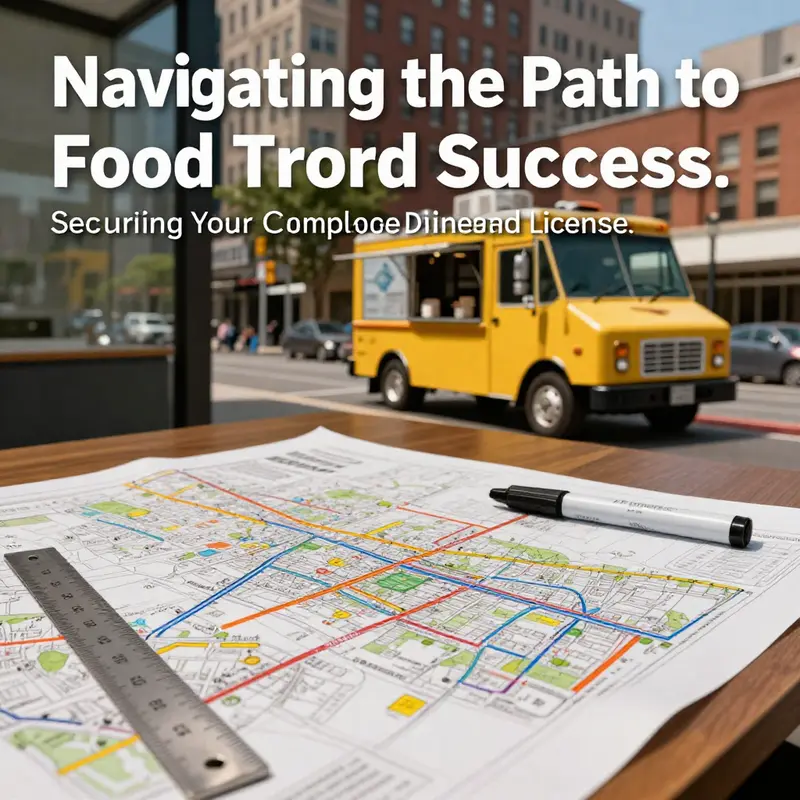
The road to launching a food truck begins long before the first sizzle of the grill. It starts with a map drawn not in ink, but in regulations, licenses, and numbers that govern where you can park, what you can serve, and how you safeguard every bite you hand to a customer. This isn’t merely a bureaucratic hurdle; it’s a framework that protects your business, your customers, and the neighborhoods you serve. When you treat licensing as a strategic compass rather than a checkbox, the process reveals itself as a sequence of thoughtful decisions that, taken together, form a stable platform for growth. In places where the lanes of commerce feel crowded and the rules feel opaque, the license becomes your license to operate with legitimacy and credibility. It signals to event organizers, park managers, and diners that you are accountable, prepared, and serious about food safety and community standards.
The core of this journey is a triad: the business structure you choose, the health and safety requirements that govern food preparation and service, and the zoning realities that determine where you may station your truck. Each of these elements is interdependent. Your business entity influences taxation, liability, and personal protections. The food service permit validates your capability to prepare and serve food in a sanitation-conscious environment. Zoning—the set of rules about where you can operate—decides which streets, districts, and venues will become your daily stage. When you align these components from the outset, you reduce backtracking later, streamline renewals, and position yourself to seize opportunities like markets and events that welcome mobile vendors.
Starting with the most visible piece, the basic business license, means declaring to the city or county that you exist as a legal entity with a defined scope of activity. This license isn’t just a formality; it legitimizes your enterprise in the eyes of permitting agencies and lenders alike. It also clarifies how you report income, taxes, and other obligations. For most founders, the simplest path is to register as a sole proprietorship or a single-member limited liability company. The choice isn’t merely about reducing risk; it’s about aligning your personal and business finances in a way that makes sense for a small, nimble operation that may scale over time. The act of registration itself is a gateway to other essential steps, including the assignment of a legal business name and access to state-level filings that confirm your ability to operate under that name within your jurisdiction.
Pairing this with the assignment of an Employer Identification Number, or EIN, from the Internal Revenue Service creates a clean separation between personal assets and business activity. An EIN is more than a tax form. It’s a credential that unlocks business banking, vendor contracts, payroll if you hire staff, and the ability to file returns without exposing your personal Social Security number. The process is straightforward and often completed online in minutes, yet the impact reverberates across every financial or regulatory interaction you’ll have in the life of the business.
Once your entity and EIN are in place, the next layer is the local business license. This is where city and county governments assert their right to regulate commerce within their boundaries. The local license is the broad permission slip that allows you to operate your enterprise within a given jurisdiction. It’s usually issued by a department that handles licenses and permits, and it often requires proof of your business entity, tax numbers, and a plan for basic operations. In practice, this means you’ll provide information about your business address (more often, a postal address or a home base for the business), ownership structure, and contacts for responsible parties. Because rules differ from place to place, you’ll want to map out the exact departments you’ll approach, the expected timelines, and the fees involved. A well-planned schedule helps you avoid last-minute scrambles that can derail a pop-up event or a prime lunch hour.
Among the most critical permits you’ll secure is the food service permit, sometimes referred to as the mobile food service license. This is the permit that attests your mobile kitchen meets stringent sanitation standards and that your operation can deliver safe, high-quality food. The health department reviews your plan for food storage, preparation, cooking, and service. They’ll expect to see a detailed floor plan of your truck or trailer that maps out equipment placement, workflow, and sanitation zones. It’s not merely about showing ‘there is a sink’ or ‘there is a refrigeration unit’; it’s about how those components interact to maintain correct temperatures, prevent cross-contamination, and enable hands-free handwashing. You’ll need to demonstrate a clean water supply, a method for hot and cold storage, and an appropriate waste disposal system. The health officials may require proof that your staff hold valid food handler permits or certifications, and they’ll perform an on-site inspection to verify that your written plan corresponds to the real-world setup. Preparation here is not a one-off task; it’s a discipline that informs day-to-day habits at the truck.
The health and safety layer extends beyond the walls of the truck. You’ll be responsible for maintaining proper refrigeration to keep perishables at safe temperatures, ensuring cooking surfaces reach and hold the temperatures necessary for safe preparation, and maintaining a sanitary environment for all equipment and surfaces that come into contact with food. In many jurisdictions, you’ll also need a dedicated handwashing station or a sink with hot water, soap, and a way to dry hands, so that staff can practice proper hygiene between tasks. Waste disposal systems must be robust and compliant, designed to minimize pests and odors. Some cities require grease traps or other specialized infrastructure to manage by-products of cooking. Fire safety is another non-negotiable component; depending on the cooking methods and heat sources, you may need fire extinguishers and, in some cases, fire suppression systems in or near the vehicle.
Insurance is the invisible layer that undergirds your license and your peace of mind. Most jurisdictions require proof of general liability insurance before issuing permits. If your vehicle is damaged in an accident or someone is injured at your stand, insurance is what keeps your business afloat while you address claims and restore confidence with your customers. Because your food truck is a vehicle, you’ll also need commercial auto insurance. The presence of insurance isn’t just about meeting a regulatory requirement; it’s about communicating to clients and event organizers that you’re prepared to shoulder risk and that you take customer safety seriously.
As you assemble these protections, you’ll also encounter the zoning framework that shapes where you can operate. Zoning isn’t a relic of the past; it’s a living map that links you to neighborhoods, traffic patterns, and community planning goals. In many municipalities, you’ll find designated zones or districts that welcome mobile vendors. These food truck districts are strategically placed in high-traffic areas such as parks, downtown cores, or near event venues, where footfall aligns with the goals of both the city and your business. In other places, centralized markets or parking hubs provide a built-in audience and a predictable operating rhythm. The crucial concept here is proximity—where you can legally park, for how long, and how your presence intersects with brick-and-mortar restaurants offering similar cuisines. Buffer zones may limit your proximity to existing restaurants to prevent unfair competition or foot traffic conflicts. Understanding these buffer zones is essential if you want to avoid costly permit holds or the need to relocate on short notice during a busy season.
The application process itself has evolved toward digital-first pathways in many locales. Online portals streamline submission, tracking, and renewal, making it easier to stay on top of deadlines and documentation. Even so, the core work remains establishing a credible foundation. You’ll gather documentation about your business entity, operator details, and the specifics of your mobile unit—the vehicle, the size, the equipment, and any automated components you plan to use. Some jurisdictions may ask for technical specifications if you’re using automated vending equipment or other automated features, since these can affect sanitation, maintenance, and compliance. It’s wise to prepare a complete package that you can reuse across multiple applications, with updates as needed for unique requirements in each district. Preparation, in this sense, is a form of risk management: it reduces the likelihood of delays caused by missing documents or incongruities between your plan and the inspection reality.
To manage this journey with clarity, many operators find it helpful to work backward from deadlines and events. If you’ve secured a spot at a popular market three months from now, you’ll need to have your basic business license, EIN, and local permits in place well before the first sign goes up for the event. Keep a calendar that tracks renewal dates, inspection windows, and seasonal rules that may alter where you can operate or what you can serve. The renewal process—too often overlooked—carries its own requirements: updated insurance certificates, current food handler certifications for staff, and any changes in the equipment layout or menu that would warrant re-inspection or re-approval. A consistent, proactive approach to renewals transforms the licensing experience from a bottleneck into a routine part of operating life.
A practical way to imbue this complexity with a sense of progress is to view licensing as a living system rather than a one-time hurdle. Each permit, each registration, each inspection is a touchpoint with different parts of your community: the health department, the city licensing office, the park manager, the event coordinator, and the customers who will eventually queue up for your offerings. When you approach these touchpoints with a clear narrative—what you are, what you will provide, how you will maintain safety, and how you will respect the spaces you occupy—you create a story that supports your brand as well as your compliance posture. You can also borrow discipline from other mobile service industries that have mastered the art of working within a regulated framework. In this sense, the licensing roadmap becomes not a constraint but a competitive advantage: it signals reliability, safety, and professionalism to every partner you engage, from a festival organizer to a local retailer who wants a featured pop-up.
As you assemble the pieces, remember that local guidance matters as much as the requirements themselves. Your city’s official website and your local Small Business Development Center can be invaluable sources of current information, specific fees, and precise forms. Regulations shift with cities, counties, and states, so it’s essential to anchor your planning in the most up-to-date sources. A well-structured plan often includes a compact dossier for each jurisdiction you plan to operate in, with a core set of documents that you can adapt to local rules. This approach saves hours of friction later on and reduces the risk of misalignment between what you intend to do and what the regulator expects.
In the spirit of practical wisdom, let this be a reminder that the license is also a relationship. It’s a formal agreement to operate in a shared space with the city, the health department, and the public. When you treat inspections as collaborative checks rather than adversarial hurdles, you approach them with a posture of service: you’re offering to demonstrate your commitment to quality, safety, and respect for neighbors and fellow vendors. This mindset helps build trust with event organizers who value reliability, with park managers who want well-managed locations, and with customers who crave consistent, safe, and enjoyable meals on the go. And as your operation evolves—whether you grow your fleet, expand to new districts, or add a second cart—this same licensing scaffolding scales with you, providing a predictable anchor in a dynamic ecosystem.
For a broader perspective on how licensing and compliance play out in related industries, a related body of knowledge emphasizes people-first strategies in operations, which can be a helpful mindset as you manage your team and your customers. This approach isn’t about abstract philosophy; it translates into concrete practices, such as clear responsibilities, ongoing training, and dependable safety protocols that staff can rely on every shift. It also reinforces your organization’s culture of accountability, which in turn strengthens your licensing narrative with regulators and partners alike. If you want to explore this angle further, you can turn to resources that discuss people-first strategies in trucking, which, while not identical to mobile food service, share a focus on safety, compliance, and responsible operations as core business assets. People-first strategies in trucking.
The path you chart through these layers—corporate structure, registration, health permits, insurance, and zoning—will not be identical in every city. Yet the underlying rhythm remains constant: prepare thoroughly, document precisely, comply consistently, and renew on time. Keep your truck ready for audits and for the sightline of a curious customer who has a moment to compare the cleanliness of your service area, the clarity of your menu, and the professional presentation of your operation. When this rhythm becomes habitual, the licensing process stops feeling like a series of obstacles and starts feeling like a framework you can trust to protect your business and your customers while you build your brand with integrity.
For those navigating this landscape with a specific locale in mind, using official local resources is essential. Your city or county’s licensing portal will outline the exact forms, fees, and inspections that apply to your situation. Many jurisdictions also offer guidance through a Small Business Development Center or a similar agency, which can help you map out a realistic timeline, prepare the required documents, and anticipate common hurdles. The guidance you receive there can be instrumental in avoiding delays caused by incomplete submissions, misinterpretations of zoning rules, or missed inspection windows. In short, the more you prepare, the more the license becomes a bridge to opportunity rather than a barrier to entry.
To illustrate the idea of how licensing shapes operation in practice, consider the example of an established city’s mobile food vendor program. It demonstrates how a comprehensive framework—from application submission to facility inspection to ongoing compliance checks—can be integrated into a streamlined customer experience. The program emphasizes clear requirements for equipment, sanitation, and staff training, while also providing convenient access to forms, fees, and renewal procedures. This kind of program helps you time your launch, align your equipment purchases with regulatory expectations, and set a cadence for inspections that minimizes surprises during peak seasons. It is a reminder that licensure isn’t merely about meeting minimum standards; it’s about setting a professional baseline that supports sustainable growth and reliable service in a crowded urban environment.
As you move forward, you’ll likely find that the most productive way to manage this journey is to think in terms of ongoing readiness rather than one-off compliance. Create a living file that tracks permits, renewals, and inspections, along with copies of insurance certificates and staff certifications. Schedule checks at regular intervals to ensure that your equipment remains compliant, your water system stays within approved parameters, and your waste management continues to meet local requirements. Treat every renewal as a renewal of trust with your community and regulators. This approach makes license management less about scrambling when a deadline looms and more about maintaining a steady, reliable cadence that supports daily operations and planned growth.
In the end, the question isn’t merely how to obtain a business license for a food truck, but how to structure your journey so that licensing becomes the foundation of a resilient, trusted mobile dining operation. The license is your entry pass into a regulated ecosystem that prioritizes public health, neighborhood well-being, and consumer confidence. When you honor that ecosystem, you earn the right to serve food with pride, to participate in local events with legitimacy, and to expand your footprint as a licensed, responsible operator. The map may be long and the routes varied, but with careful preparation, thoughtful documentation, and a commitment to ongoing compliance, you’ll find that the path to a fully licensed, thriving food truck is not just possible—it can be the very backbone of a prosperous, sustainable business on wheels.
External resource for official guidance and current local requirements:
- City of Los Angeles – Mobile Food Vendor Program: https://www.lacity.org/department/business/food-vendor
For those who want a broader view of how licensing and compliance are managed in regulated mobile service contexts, local portals and SBDC offices are invaluable anchors. They provide specifics on fees, forms, inspections, and any seasonal or event-specific rules that may affect food truck operations. The key is to treat the process as a strategic sequence rather than an improvisation. By doing so, you build a foundation that supports not only a successful launch but a durable, scalable future in mobile food service.
Final thoughts
Acquiring a business license for your food truck involves several structured steps, each critical to ensuring compliance and operational success. From registering your business to understanding regulations that govern your operational landscape, being diligent and well-informed can simplify the process. Adherence to permits and insurance requirements, along with a thorough understanding of local zoning laws, will pave the way for seamless entry into the competitive food truck market. This knowledge not only safeguards your investments but also positions your food truck for business success.

