
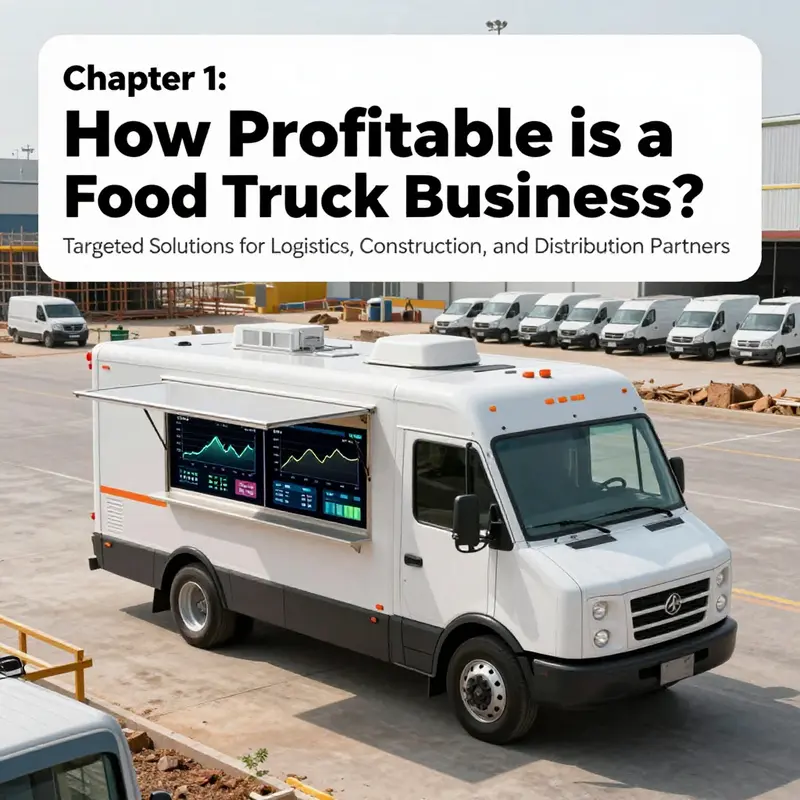
The profitability of a food truck business can be substantial when positioned to serve the operational realities of logistics and industrial clients. For organizations that manage complex supply chains, fleets, and on-site construction activities, a mobile food solution offers a dependable, scalable amenity that can improve workforce satisfaction, attract site partners, and generate margin-rich revenue streams. The global food truck market is expanding, with recent estimates around 6.3% annual growth, underscoring strong consumer and business demand for flexible, on-site dining and event catering. In B2B contexts, profitability is driven by a blend of high-earning opportunities per site or event, menu customization that resonates with a specific workforce, and the operational flexibility to move between job sites, campuses, and partner venues. The following four chapters translate this macro momentum into a practical profitability framework tailored to logistics and freight-adjacent industries: Chapter 1 analyzes growth and demand signals relevant to fleet operators, construction firms, and distribution centers; Chapter 2 examines revenue streams and pricing models optimal for on-site cafeterias, corporate events, and long-term site contracts; Chapter 3 dissects cost structures and margin drivers, from equipment and labor to procurement and route optimization; Chapter 4 identifies operational and market risks with concrete mitigation strategies. Together, these sections offer a cohesive, solution-oriented view of how a food truck can achieve durable profitability within the constraints and opportunities of industrial and logistics environments.
null
null
Chapter 2: Profiting on Wheels — Revenue Streams, Pricing, and Strategic Positioning for Food Trucks
Profitability in a food truck business comes from a disciplined blend of location, menu strategy, and cost management. The core idea is simple: bring appealing food to where people gather, and do it efficiently enough to generate a margin after all costs. The most reliable levers are where you operate, what you serve, how you price it, and how you control costs. The market for mobile food is growing as consumers seek convenient, flavorful experiences and operators gain reach through events, downtown locations, and catering.\n\nRevenue comes mainly from direct sales at events and in busy urban areas. Festivals, concerts, and office corridors can deliver high volumes in a short time, provided service is fast and the concept is compelling. Beyond daily sales, catering private events and corporate functions can unlock premium pricing and longer service windows. Merchandise, sauces, and online ordering add additional streams that complement the core business and help stabilize cash flow.\n\nPricing matters. A value based approach ties price to the perceived quality and uniqueness of the offering while covering ingredients, labor, and vehicle amortization. Dynamic pricing at peak times or during high demand events can help balance demand with throughput. Bundling items into combos increases average tickets and simplifies operations. Clear, simple pricing builds trust and reduces decision fatigue.\n\nCost discipline is essential. The truck typically has a lean fixed cost base, with most costs varying with location and volume. Controlling food costs, labor efficiency, fuel, and maintenance preserves margins. Operational discipline, from consistent recipes to efficient inventory, supports repeatable performance. A disciplined operator uses data on sales, peak times, and venues to forecast demand and optimize purchasing.\n\nA note on strategy: profitability comes from integrating multiple revenue streams around a strong brand and reliable execution. A well-defined menu, a scalable staffing plan, and partnerships with event organizers and venues help sustain margins. The broader market supports mobile dining, with flexibility and speed delivering advantages in crowded urban markets. With the right mix of events, catering, and at-home or online orders, a food truck can build a resilient and growing business.
Profit in Motion: Navigating Cost Structures, Overheads, and Margin Optimization for Food Trucks
Profit in Motion: Navigating Cost Structures, Overheads, and Margin Optimization for Food Trucks
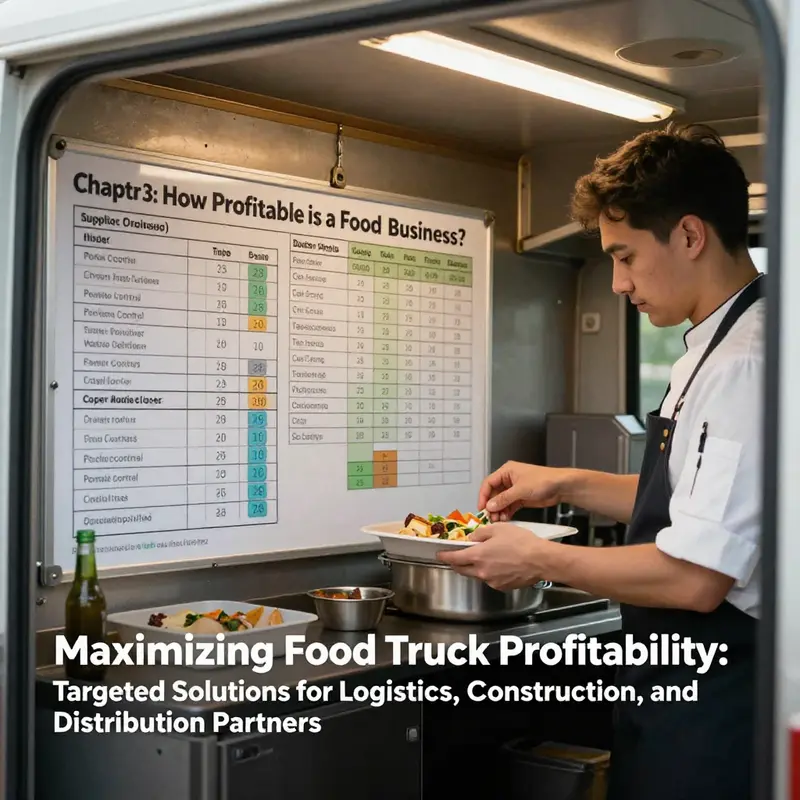
Profitability in the food truck space rests on a simple interplay: revenue must outpace both fixed and variable costs long enough to sustain growth, while margins are squeezed by urban prices, permit fees, and the inevitable frictions of mobile operation. The most reliable way to pursue this balance is to approach the business as a scalable model with clearly defined cost structures and a continuous feedback loop that informs menu design, staffing, and location decisions. On the cost side, several categories dominate the conversation. Start-up expenses can be substantial, often in the range of fifty thousand to one hundred fifty thousand dollars, depending on vehicle condition, kitchen equipment, and branding. These upfront investments are not merely a hurdle; they set the baseline for ongoing profitability by determining efficiency, capacity, and the ability to meet health and safety standards. Once on the road, ongoing costs accumulate in several predictable streams. Fuel and maintenance for a well-equipped truck can run in the neighborhood of eight hundred to fifteen hundred dollars per month, a reminder that the freedom of mobility comes with a recurring price tag. Insurance, permits, and compliance add another fixed layer of overhead that operators must absorb each month, regardless of sales volume. Then there are the variable costs—mostly ingredient costs and labor—whose fractions move with demand and operational choices. Ingredient costs typically account for thirty to forty percent of total revenue, a band that places inventory discipline at the center of profitability. When you combine these factors, you begin to see that margins are less a property of one great dish and more the outcome of a disciplined system around sourcing, waste reduction, and throughput.
A useful starting point is to acknowledge the reported profit margins in the industry. The National Restaurant Association notes that small food service operations, including food trucks, often post margins in the low single digits to the mid-single digits—roughly three to five percent on average. It is the realm of the exception where margins rise beyond ten percent, with top performers occasionally approaching or exceeding twenty percent. Those higher margins do not appear by accident. They emerge from a deliberate set of practices: menu engineering that emphasizes a limited, high-margin core, strategic use of popular items that still turn quickly, and a pricing strategy that reflects both demand and cost. In practice, this means designing a menu that minimizes waste, reduces cooking time, and maximizes the likelihood of upsells such as beverages or add-ons that complement flagship items.
To translate this into everyday operations, it is essential to map the full cost picture beyond the price tag on a recipe. Start-up costs are not one-time, abstract numbers; they shape the break-even horizon and the speed at which a truck can achieve sustainable profit. The vehicle itself is the engine of capacity. A well-kept truck that can churn out salads, tacos, or desserts with consistent speed reduces queue times, increases daily throughput, and lowers the labor-hours required per unit sold. The consequence is a more predictable margin, even in the face of fluctuating demand. On the cost side, fixed overheads such as parking fees, event permits, and street-closure costs must be anticipated. A prime downtown farmers market stall might come with a daily fee of one hundred to two hundred dollars, while a high-volume festival could demand a different pricing structure. Those costs, while predictable, have a disproportionate effect on profitability if they are not factored into a robust revenue plan.
Labor remains a decisive factor. A mobile kitchen often relies on a compact, multi-skilled crew who can handle food preparation, service, and basic maintenance. Wages are typically a meaningful share of variable costs, and scheduling efficiency can meaningfully alter the bottom line. The challenge is to staff leanly enough to maintain service speed and quality while preserving the flexibility that makes a truck viable in multiple venues. Cross-training staff to handle several roles can reduce the number of personnel needed per shift and lower overtime exposure. In a world of rising minimum wages and increasingly stringent health codes, the ability to operate with a small, versatile team is as much a strategic asset as a labor cost control tool.
If the numbers seem stark, they are also actionable. The 30–40% range for ingredient costs is not a rigid ceiling but a target that invites a more disciplined supply chain. Efficient inventory management—accurate forecasting, vendor relationships, and just-in-time ordering—reduces waste and preserves margin. In a restaurant world, the axiom that “you can’t sell what you don’t have” applies, but in a food truck it must be paired with the counter-axiom that “you can’t throw away what you stocked for the wrong reason.” The smaller footprint of a truck magnifies the impact of waste, so even modest improvements in waste reduction can yield noticeable gains in profit. Technology can help here. A capable point-of-sale system, paired with digital payments and data capture, creates a feedback loop that informs what to stock, when to reorder, and how to price items in response to demand patterns.
Pricing is not a blunt instrument but a dynamic tool. A rigid price structure can chase away customers, especially in highly competitive markets or during off-peak hours. Conversely, dynamic pricing—adjusting prices by time of day, day of week, or event-specific demand — can preserve margins without eroding volume, provided it is transparent and aligned with customer expectations. The most successful trucks treat pricing as a live signal, one that interacts with promotions, loyalty, and perceived value. For events and weddings, premium per-event pricing can unlock substantial revenue in a single day, as long as the service quality and menu tempo match the expectation and the contract confirms the venue’s willingness to pay for a reliable, high-end experience.
The geographic dimension is a powerful amplifier of profitability. Location matters not only for traffic volume but for the competitive landscape and the cost of doing business. Urban cores offer abundant foot traffic but come with higher permit costs, higher supply prices, and more intense competition. Suburban or semi-urban locations can provide steadier demand with lower overhead, though fewer large-scale events and festivals. The optimal strategy often blends a rotating calendar of high-traffic markets with a core set of regularly profitable sites. In each location, the operator should gather data on customer flow, peak times, and the competitive set, then adapt both menu and pricing to fit the local rhythm. This data-driven approach is the practical companion to the financial plan, ensuring that every location choice is anchored in expected volume and margin.
Seasonality is a fact of life for many trucks. We see sharper demand swings around winter holidays in some markets and stronger summer or festival seasons in others. A resilient profitability model anticipates these fluctuations rather than chasing a single year-round peak. Strategies like menu rotation, limited-time offerings, and flexible staffing can smooth the revenue curve. The aim is not to eliminate seasonality but to convert it into a cycle that the business can weather without sacrificing margins. A disciplined operator also uses the off-season to refine suppliers, renegotiate terms, and invest in marketing that sustains awareness. In practice, this means maintaining relationships with local events, building a mailing list of repeat customers, and staying active on platforms that can carry demand through slow periods.
All of this points to a broader discipline: treat the food truck as a scalable business with a growth plan instead of a transient venture. The claim is not that every truck will become a high-margin operation; rather, that profitability is accessible to those who optimize the cost structure around three pillars: menu engineering, cost control, and customer reach. Menu engineering means offering a compact, defensible set of items that travel and repeat well, reduce waste, and enable fast service. Cost control means forecasting and managing the entire cost stack—from fuel and maintenance to permits and insurance—so that margins are not eroded by avoidable expenses. Customer reach means leveraging a mix of in-person events, regular locations, and digital engagement to create consistent demand and steady cash flow. The intersection of these elements—efficient throughput, disciplined purchasing, and targeted marketing—defines the practical path to profitability in a business that moves as quickly as a food truck.
For operators entering the space, the arithmetic of profitability begins with a thoughtful financial plan. Start with a careful estimate of startup costs, recognizing that vehicle acquisition or lease, kitchen equipment, permits, and branding will shape both the capital needs and the break-even timeline. Then construct a monthly operating model that reflects realistic foot traffic, price points, and the mix of events and locations you anticipate. With that model, run scenarios—best case, typical case, and a conservative case—to understand how sensitive your margins are to changes in volume, input costs, and location fees. The goal is not to craft a perfect forecast but to build a living document that guides ongoing decisions and demonstrates to lenders or partners that profitability is achievable with discipline and continuous improvement. In practice, successful operators do not rely on luck; they rely on a continuous optimization process that treats each shift as an opportunity to refine pricing, speed, and customer experience while guarding against the risk of over-burdening overhead.
A final reflection ties this chapter back to the larger question of profitability across the food service landscape. The mobility and lower fixed costs of a food truck offer a compelling proposition when paired with a tight, data-informed approach to cost management. The capacity to shift venues, adapt menus, and tune pricing gives operators a flexible tool to respond to market signals without the overhead of a brick-and-mortar restaurant. The challenge is to align ambition with operational discipline. When owners embrace the idea that margins are earned in the margins—by focusing on high-margin items, minimizing waste, and driving repeat business through reliable quality and service—the financial outcomes begin to favor those who treat the truck not as a mobile kitchen alone but as a portable, scalable business unit with a clear plan for sustainable profitability. A practical, numbers-driven mindset—one that constantly tests assumptions, monitors key metrics, and adjusts course in light of real-world feedback—remains the most dependable compass for profitability in the food truck world.
For readers seeking a broader benchmark on industry trends and margins, see the National Restaurant Association’s industry trends resource, which offers data that complements the analysis presented here and helps contextualize profitability within the wider dining landscape. Investing in People: A New Path for Trucking Fleets.
External resource: https://www.restaurant.org/Research-and-Data/Industry-Trends
Profit on Wheels: Mastering Operational Discipline, Logistics, and Market Agility to Maximize Food Truck Profitability
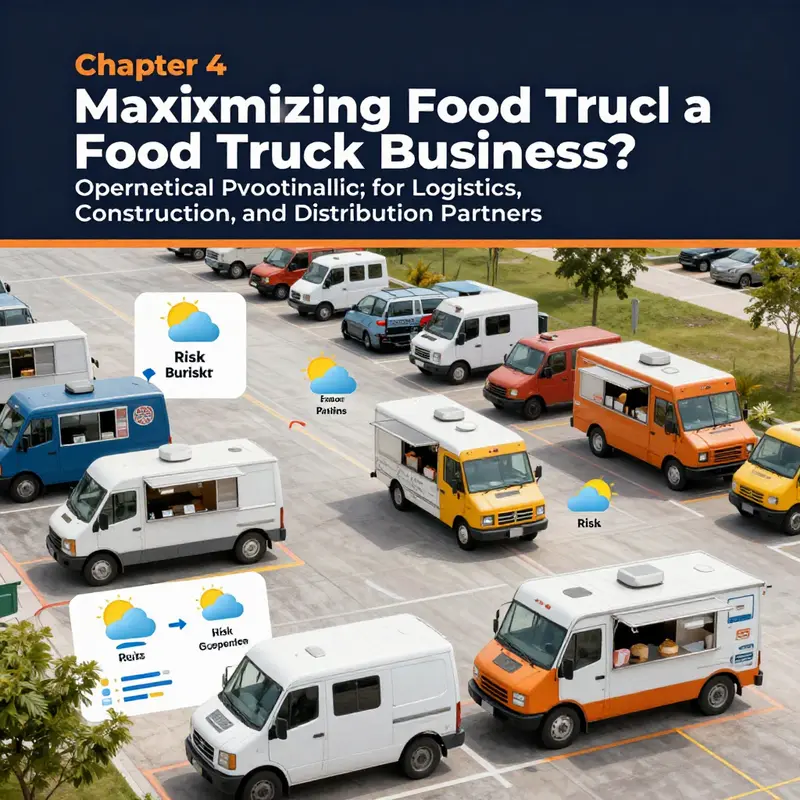
Profit on wheels hinges on more than a clever menu. It rests on a disciplined blend of operations, logistics, and the ability to ride the shifts and tastes of a changing market. The recent growth in the global food truck sector—about 6.3% annually—signals a sustained appetite for mobility and variety. Consumers love the quick service, the novelty, and the chance to discover new flavors in places where brick-and-mortar restaurants struggle to keep pace. But while the upside can be substantial, profitability is not automatic. It is earned through deliberate planning, precise execution, and a readiness to shift course as conditions evolve. The chapter that follows threads together the operational realities, the logistical frictions, and the market dynamics that shape margins. It also points to practical mitigation strategies, drawing on research that highlights both the advantages of the model and the risks it invites.
The most visible benefit of a food truck is speed and turnover. A truck can deliver a high-volume experience in locales where seating is scarce and foot traffic is dense. That dynamism translates into a potentially high earning potential per location or event, especially when the truck is tuned to a niche with premium appeal. Yet this apparent simplicity masks a web of dependencies. The food, the staff, the equipment, the schedule, and the audience must align for profit to accumulate. The initial and ongoing costs—equipment, licensing, insurance, and labor—tend to be lower than a full-scale restaurant, but they are still substantial. The lower fixed costs give the model resilience, but they also require sharper unit economics. In other words, margins hinge on the craft of selling a lot of tickets at a modest but consistent per-ticket profit and on keeping wastage and downtime to a minimum.
A central operational challenge that cannot be glossed over is the perishability of inventory. Many baked goods, prepared components, and fresh ingredients have a brief shelf life. Perishables demand precise forecasting, robust sourcing, and tight inventory controls to minimize waste. A small misalignment between projected demand and actual sales can translate into meaningful losses. The solution is not simply better forecasting but a systematized approach to purchasing, storage, and rotation. Real-time data on what sold, when, and at what price should drive the next order, the next batch, and even the menu. A good point-of-sale (POS) system coupled with inventory management software can illuminate patterns of use, expiration windows, and spoilage rates so operators can adapt before waste becomes a financial drain.
Logistics compounds the complexity, especially at larger events or festivals where competition for space is intense and operational rules are strict. Vendors must navigate vendor permits, power supply constraints, waste disposal requirements, and conditioned access to loading zones. Parking limitations and the need for long setup times can compress service windows and depress throughput if not managed well. The unpredictability of crowd flow adds another variable. A solid plan includes pre-event checklists, clear coordination with event organizers, and flexible staffing that can scale up or down with demand. The model benefits from a portfolio approach to events: some recurring venues for steady revenue, some seasonal festivals for peak growth, and some corporate or private bookings for predictable income during shoulder seasons.
Seasonality poses a particularly persistent risk. Outdoor food services tend to thrive in warmer months and struggle in colder weather. The revenue profile can swing wildly if you rely on one mode of operation. The mitigation logic is straightforward but requires foresight. Diversification matters: offer a mix of staples that travel well year-round and seasonal items that drive excitement during peak periods. Consider contracts with office campuses for weekday lunches if outdoor traffic dips in winter. Short, targeted menus can reduce waste and improve throughput in harsh conditions. And don’t overlook creative branding tied to seasons or events—limited-time offers can sustain interest and command premium pricing when demand spikes.
From a financial perspective, the restaurant analogies still apply. Overhead tends to be lower than a traditional restaurant, given the ability to move and the absence of a fixed storefront. Yet a food truck’s profit depends on optimizing the cost of goods sold (COGS), labor hours, and reliability of supply. A well-tuned operation tracks metrics such as average ticket size, customer dwell time, and cost per unit sold. The aim is not merely to shorten lines but to increase the value captured per customer without sacrificing service quality. Technology helps here. A POS system integrated with inventory and supplier management enables real-time insights into what sells, what gets wasted, and what needs restocking. Such visibility allows for proactive adjustments to menus, pricing, and staffing, reducing the risk of costly surprises at the end of a shift.
People are the quiet backbone of profitability. The staffing challenge is often the most unforgiving cost driver because labor represents a significant slice of ongoing expenses and directly affects service speed and consistency. In the trucking and mobile-food industries alike, investing in people yields outsized returns. Trained crew members who understand food safety, line efficiency, and customer service can turn a brief interaction into a repeat visit. This is not merely about hiring the right people but about cultivating a culture that emphasizes reliability, cross-functionality, and problem-solving in high-pressure environments. For those who manage fleets or multiple mobile units, this becomes even more critical. The literature on trucking emphasizes investing in people as a core strategic lever, and the food truck sector can benefit from a similar emphasis on people development, training, and retention. Investing in People: A New Path for Trucking Fleets serves as a useful cross-industry reminder that the ability to mobilize and retain capable staff is a scalable competitive advantage in any mobile business.
Operational discipline is essential, but it cannot exist in a vacuum. A food truck must coordinate supply, cooking, serving, and cleaning in a compact space. The physical footprint demands careful layout decisions that optimize workflow and minimize movement, reducing the risk of cross-contamination and mistakes. Standard operating procedures (SOPs) should be simple enough to be taught quickly yet precise enough to ensure consistency across shifts. Daily pre-opening checks, mise en place organization, and post-shift resets become more than rituals; they are the guardrails that protect margins. Moreover, the appetite for change is constant. New health guidelines, evolving consumer tastes, and local permit requirements can shift the cost structure and the viable menu set. The most resilient operators treat the business as a living system, updating recipes, procurement agreements, and staffing rosters as conditions evolve.
Pricing strategy and menu design are not cosmetic choices but fundamental drivers of profitability. A strong niche—whether it’s gourmet desserts, artisanal snacks, or a specialty cuisine—can command premium prices if the quality, speed, and presentation justify it. Yet premium pricing must be supported by perceived value, consistent portion control, and reliable delivery. A lean menu reduces waste and complexity, while a curated set of high-margin items can lift overall profitability. Seasonal items can attract attention and create a sense of urgency to purchase. But price alone cannot fix bad service. Queue management, order accuracy, and friendly interactions influence how much customers are willing to pay and how often they return.
In this environment, data becomes the compass. Operators who systematically collect and analyze performance data are better positioned to spot inefficiencies, test pricing models, and refine the customer experience. A few key metrics often illuminate the most actionable opportunities: average ticket size, which reflects the value customers see in the menu; dwell time, indicating how long customers stay in line and in front of the truck; and cost per unit sold, highlighting where waste or suppliers’ pricing pressure erodes margins. When these signals are monitored in near real time, managers can adjust menus, alter portion sizes, and revise staffing levels before profits slip. The integration of POS data with inventory tells a continuous story of demand and depletion; it informs whether to push more of a high-margin item or pare back on an underperforming line.
Financial resilience also depends on how well a business handles the unpredictable. Large events are a double-edged sword: they offer the potential for high revenue but come with complex rules, longer setup times, and unpredictable foot traffic. A proactive operator builds resilience by diversifying revenue streams. Corporate catering for lunch, evening private events, pop-up collaborations with local brands, and even commissary collaborations to share kitchen and prep space can smooth income across seasons. Building relationships with event organizers, venues, and corporate partners creates a pipeline that can buffer seasonal downturns. In addition, the adoption of flexible, mobile marketing strategies keeps the brand visible during slow periods. A robust social presence, customer referrals, and loyalty incentives can sustain demand even when festivals are sparse.
The interlock between operational discipline and market adaptability is perhaps the most vital element of profitability. A well-run truck does not merely chase the next festival; it anticipates demand, plans supply, and protects margins across waves of activity. The process starts with a clear calendar of opportunities and ends with a relentlessly optimized day-to-day operation. It includes cross-training staff so that a few versatile team members can handle multiple roles during peak times, reducing idle labor and keeping service fast. It also embraces technology to reduce manual, error-prone tasks and to accelerate decision-making. A thoughtful operator will track the value delivered per customer while continuously testing improvements in menu, pricing, and service flow.
To illustrate the practical flavor of these principles, imagine a city with a dense calendar of events, thriving office clusters, and a steady stream of private bookings. A truck that rotates between a handful of reliable pop-up locations for weekday lunch, commits to several mid-size events on weekends, and maintains a flexible catering schedule for private clients could realize more stable cash flow than a truck that relies on sporadic busy days. The profitability is then a function of the unit economics: the margin per item, the volume per shift, and the utilization of labor and equipment. This is where the old maxim applies: you do not merely sell food; you sell speed, consistency, and a story that resonates with the market. In turn, that story helps justify premium pricing for specialty offerings and seasonal menu items, which in turn reinforce margins even when input costs fluctuate.
The external literature and industry guidance reinforce these ideas without prescribing one perfect formula. They emphasize operational discipline, supply chain reliability, and a market-responsive strategy as the core levers of profitability. The broader takeaway is clear: profitability emerges from a cohesive system where inventory, labor, menus, and marketing are aligned to capture demand efficiently. It requires a willingness to adjust the plan when events, weather, or consumer sentiment shift. The recipe is not static; it is a dynamic balance of control and adaptability, anchored by reliable data and disciplined execution.
As you plan for growth or the launch of a new truck, keep a close eye on the pieces that often determine whether the dream stays profitable or becomes a costly experiment. Start with rigorous inventory discipline. Build a menu that can be scaled up or down with minimal waste. Invest in people who can work across functions and maintain service standards under pressure. Create a pipeline of revenue streams that can weather seasonal lulls. And always connect actions to measurable outcomes—price adjustments, portion control, and staffing levels that translate into healthier margins. When these elements align, the mobility that makes a food truck exciting also becomes the engine of sustainable profitability.
External resource for further benchmarking and practical planning can be found in a well-regarded industry exploration of profitability and business viability. Shopify’s analysis offers data-informed perspectives on financial performance and strategic levers for food trucks: https://www.shopify.com/blog/food-truck-profitability
Final thoughts
In markets where logistics, construction, fleet management, and distribution intersect with flexible dining, a strategically deployed food truck can deliver durable profitability. The key is to align market demand with disciplined operations: secure site contracts or recurring on-site service, tailor menus to the workforce and event profiles, implement rigorous cost controls, and maintain agility to move between venues as demand shifts. By combining targeted revenue streams, data-driven pricing, tight cost management, and proactive risk mitigation, operators can transform a mobile kitchen into a reliable profit center that complements existing logistics and supply-chain activities. Firms should view the food truck not merely as a food vendor but as a mobility-enabled extension of their own service ecosystem—one that enhances employee experience, strengthens site partnerships, and creates measurable value through consistent, repeatable profitability.