

In the trucking industry, payment mechanisms are critical to operational efficiency and liquidity. Notably, the common 80/20 payment structure—where 80% of sales are secured as upfront payments and the remaining 20% extended on credit—defines cash flow and credit management for logistics and freight companies. This arrangement provides essential liquidity while mitigating risks associated with delivery confirmations through Proof of Delivery (POD). Understanding the implications of this credit percentage is vital for various stakeholders, including logistics and freight companies, construction and engineering firms, fleet management companies, and food and beverage distributors. The ensuing chapters will delve into the percentage of sales that operate on credit in the trucking business, the financial implications of this practice, the risks associated with delayed payments, and strategies for optimizing performance while managing credit sales to ensure sustainable growth in this competitive landscape.
Credit in Trucking Sales: Reading the Hidden Half of the Invoice—and How It Shapes Cash Flow Across the Fleet

In the trucking business, a single number can tell only part of the story. The question of what percentage of sales are on credit sits at the intersection of contract terms, payment culture, and the practical realities of running a fleet. While some firms lean on a well-worn 80/20 dynamic—where roughly 80 percent of the invoice is paid upfront as an advance and the remaining 20 percent remains in play until a delivery is confirmed—the broader truth is that credit exposure in trucking is a moving target. It shifts with the type of operation, the terms negotiated with shippers, and the evolving role of third-party logistics providers. Understanding this credit share means looking not just at what is billed, but at what is actually collected, and how that cash flow shape interacts with the daily needs of fuel, maintenance, payroll, and capital replacement.\n\nThe 80/20 framework, widely cited in industry discussions, serves as a practical starting point for thinking about liquidity. The upfront portion provides immediate funds that keep wheels turning—fuel purchased for the next leg, tires that wear down on a long haul, and wages that must be paid promptly to retain the best drivers. The remaining portion, held in reserve until proof of delivery or other milestones is verified, acts as a safety net against operational risk. Yet even this widely used rule is not universal. Variations exist across different kinds of operations. Some owner-operators or small fleets may face tighter upfront terms as the cost of securing consistent freight rises, while larger fleets under contract with shippers or 3PLs may experience longer cash cycles as a matter of negotiated policy or network complexity. In practice, the percentage of sales that operate on credit is less a fixed statistic and more a reflection of contract architecture, compliance, and the trust embedded in carrier-shipper relationships.\n\nTo translate the concept into a tangible metric, many finance teams look to accounts receivable in relation to total revenue. Credit sales percentage, in its simplest form, is AR divided by total sales. When you see a high AR-to-revenue ratio in a trucking firm, that usually signals a discipline around extending credit rather than failing to collect. But the interpretation is not black-and-white. A high ratio can indicate aggressive growth financed by trade credit, or it can reveal a delay-in-payment pattern that becomes systemic due to shipper liquidity constraints. Conversely, a low ratio does not automatically imply robust cash flow. It can reflect stringent payment terms, aggressive collection practices, or a marginal customer base that pays quickly but at lower volumes. The point is not to chase a single number but to assess how credit terms and payment behavior shape liquidity across the business.\n\nIndustry researchers acknowledge that precise national averages for credit sales percentages in trucking are not readily published. The nature of trucking contracts—varying by segment, by region, by the frequency of shipments, and by how often fleets work through intermediaries—means that averages can be highly misleading if taken from a broad brush. Yet there is a line of evidence that supports the central idea: many trucking entities experience payment delays that echo a trade credit arrangement. When shippers, brokers, or 3PL networks deliver goods and services on credit terms, the business findings are similar to those in other capital-intensive, service-based sectors. Delays of 30 to 60 days after delivery are not unusual experiences in some segments, and those delays contribute to the practical extent of credit in revenue.\n\nWhat, then, should a fleet manager or owner-operator do to gauge the true credit exposure of their own business? The most straightforward lens remains the receivables turnover framework and the days sales outstanding (DSO) metric, augmented by careful analysis of contract terms. A fleet can track the average time it takes to convert a sale into cash, factoring in the typical payment terms negotiated with shippers. If the DSO is rising, it signals growing credit exposure—more revenue is in the AR bucket than is being converted into cash in a timely fashion. If the turnover is brisk, the AR cycle is tightening, suggesting either shorter payment terms or stronger collections discipline. In practice, this means that managers should routinely compare AR aging with revenue trends, and monitor delays by customer segment. A system that flags aging receivables as soon as they tip into 30, 45, or 60 days helps keep the cash conversion cycle within a healthy band.\n\nThe practical impact of these credit dynamics extends far beyond the math. Cash flow is the oxygen of a trucking operation. It funds the purchase of fuel for the next leg, the maintenance work that keeps equipment reliable, and the payroll that sustains a quality driver pool. A fleet heavily financed by receivables must manage the risk of late payments with appropriate liquidity cushions, credit lines, or financing arrangements that bridge gaps between delivery and settlement. A mature credit function also informs strategic choices about rate competitiveness, freight mix, and capacity planning. If a carrier recognizes that a meaningful share of revenue sits in AR, it can forecast downturns more accurately, pause nonessential capital expenditure during lean periods, and negotiate more favorable terms with lenders or insurance providers to buffer cash cycles.\n\nPart of this strategic discipline is recognizing how different business models shape credit exposure. Owner-operators who frequently operate under direct shipper terms may encounter shorter cycles if their customers pay promptly or use electronic invoicing that speeds up processing. On the other hand, large fleets that rely on 3PL networks or freight forwarders often encounter more extended payment terms. These networks can be efficient for capacity and market access, but they also carry the potential for longer cash cycles. The mix of customers—contract-based shippers, spot market loads, and intermodal arrangements—further influences how much revenue sits in receivables at any given time. In short, the credit share is not a uniform slice of the pie; it is a moving portion that shifts with the structure of the business and its trading partners.\n\nCredit management in trucking is neither passive nor cosmetic. It requires explicit policies that set out risk tolerances, credit limits by customer, and clear procedures for onboarding new customers. A robust policy defines what constitutes standard credit terms, what constitutes a red flag in payment behavior, and how the organization responds when payments fall behind. It can include practical steps such as requiring credit checks, establishing documented proof of delivery, and implementing a formal dispute resolution process to avoid payment hold-ups caused by disputes over charges or service quality. In an industry where margins are razor-thin, a well-designed credit policy protects liquidity and supports sustainable growth rather than merely playing catch-up when a payment slips.\n\nBeyond policy, technology and data play a central role in measuring and managing credit. Modern fleets increasingly use integrated accounting and fleet-management systems that align dispatch data, invoicing, and payments with real-time visibility into accounts receivable. This integration helps ensure that invoices reflect what was delivered and that payment terms are correctly applied. It also enables proactive notification of customers near term due dates and automated follow-ups on overdue balances. In this sense, a disciplined credit function is not just about risk mitigation; it is about operational efficiency. The more seamless the system, the faster the payment process can move, and the more accurate cash forecasts can be. For fleets aiming to improve liquidity, the goal is to convert as much revenue as possible into cash on or before the due date, while preserving positive relationships with customers who value reliability and transparency.\n\nOf course, the pathway from invoice to cash is not one-way. There are options to improve liquidity without sacrificing customer relationships. One widely used practice is factoring, where a carrier sells its accounts receivable to a financial intermediary at a discount in exchange for immediate cash. Factoring can be a practical tool when a fleet experiences temporary liquidity pressures or when opportunities require immediate capital for growth or maintenance. Another option is credit insurance, which helps cushion the organization against the risk of nonpayment by a customer, especially in a market where some shippers may be experiencing their own liquidity stress. Each approach introduces its own costs and trade-offs, so the decision to deploy such tools should stem from a careful assessment of the firm’s credit policy, cost of capital, and strategic objectives. In all cases, transparent communication with customers remains essential. Clear terms, predictable invoicing, and reliable delivery performance reduce the likelihood of disputes and the ensuing payment delays.\n\nThe picture painted by these considerations is that there is no single, universal percentage of sales that are on credit in trucking. The typical 80/20 rule provides a helpful rule of thumb, but it is a starting point rather than a destination. Some weeks may show a heavier upfront cash realization, while others reveal a more pronounced reliance on credit terms as part of the negotiation with a shipper or as a consequence of a longer freight chain. What matters is the trajectory of credit exposure: how AR evolves in tandem with revenue, how DSO trends move, and how liquidity buffers respond to changes in payment behavior or market conditions. For leaders who want to ground their decisions in data, the path forward lies in building a disciplined approach to measuring credit share, cultivating healthy relationships with customers who honor their terms, and maintaining flexibility to respond to shifts in the freight market.\n\nThis is where the broader ecosystem can support a fleet’s credit strategy. Industry benchmarks, when used judiciously, offer context for what constitutes reasonable payment terms and receivables performance within a given segment. The American Trucking Associations, for example, aggregates statistics and reports that shed light on the overall payment landscape, terms, and industry health. While no single figure defines the credit share across all trucking firms, these data points can anchor a fleet’s internal targets and help executives set realistic expectations for cash flow under varying market conditions. For those who want to dive deeper into industry benchmarks, industry statistics and reports provide a structured lens on the broader credit environment and its implications for liquidity and risk management. https://ata.org/resources/research-and-statistics/\n\nAs a practical takeaway, managers should view the percentage of sales on credit as a lens into working capital efficiency rather than a standalone metric. It should be paired with measures such as receivables turnover, DSO, and the cash conversion cycle. The objective is not to maximize upfront cash at the expense of customer relationships but to calibrate terms so that the liquidity engine stays strong without sacrificing capacity or service quality. And because the credit landscape is dynamic, this calibration requires ongoing attention. Regular reviews of customer credit profiles, proactive monitoring of payment trends, and a forward-looking forecast that incorporates seasonality and contractual shifts are essential.\n\nA useful cross-reference for broader perspectives on people and process in a changing trucking world can be found in related discussions about investing in human capital and operational excellence. The idea is simple: the resilience of a carrier’s credit posture depends not only on policy but on the people who implement it. A fleet that aligns its people, processes, and technology around clear credit objectives is better equipped to weather fluctuations in payment behavior and to sustain liquidity across cycles. This alignment—between people, policy, and performance—emerges as a practical philosophy for managing credit in trucking, one that recognizes the significance of administrative discipline as a driver of financial health. For readers seeking a deeper exploration of that people-centered approach, a related discussion highlights how investments in personnel and culture can strengthen trucking operations over the long term. Investing in People: Key to Trucking’s Success.\n\nIn sum, the percentage of sales that are effectively on credit in trucking is not a fixed statistic but a reflection of contract design, partner dynamics, and the efficiency with which a fleet converts promises into payments. The 80/20 framework remains a useful heuristic, yet the landscape is richly textured by the realities of 3PL networks, freight terms, and how aggressively a fleet manages credit risk. For practitioners, the practical task is to translate theory into day-to-day visibility: to know precisely where AR sits relative to revenue, to monitor aging with discipline, and to ensure liquidity buffers are calibrated to the cadence of deliveries. In doing so, a fleet can maintain operational momentum—keeping drivers paid, fuel flowing, and machines functioning—while navigating the inherent credit risks of a freight economy that thrives on timely, reliable delivery. As the industry continues to evolve, the ability to read and manage the credit portion of sales will remain a central competency, one that informs pricing, contract strategy, and the health of a trucking business across cycles.\n\nExternal resource for industry benchmarks and broader statistics: https://ata.org/resources/research-and-statistics/
The 20% Credit Window: Managing Liquidity in the Trucking Revenue Cycle

In the trucking industry, cash flow is a recurring cadence rather than a single event. Revenue arrives in a rhythm tied to miles driven, deliveries verified, and the reliability of payment terms negotiated with brokers and shippers. The standard arrangement 80/20 often means 80 percent of the invoice is paid upfront as an advance and the remaining 20 percent is released on proof of delivery. This structure sets the cadence and the risk profile for most carriers. The 20 percent portion represents credit risk and working capital needs.
The upfront 80 percent provides immediate liquidity to cover fuel, driver wages, maintenance, tires, and other operating costs. It reduces reliance on debt and helps weather seasonal volatility. The upfront cash is a cushion that supports more loads and steadier service levels.
The 20 percent still carries timing risk while awaiting POD. Delays, disputes, or deductions can stretch the cash conversion cycle. Fleets may bridge this gap with reserves, a robust credit line, or financing tools such as factoring. Factoring sells receivables at a discount to provide immediate cash and can be attractive for growing fleets, but it comes with costs and governance considerations.
Beyond mechanics, a holistic approach is needed. Clear credit policies, faster POD verification, and disciplined invoicing improve cash realization. Digital POD, streamlined paperwork, and defined escalation paths reduce resolution times and protect liquidity. The structure also invites strategic decisions around credit risk by customer or broker, and the potential use of external finance to smooth gaps during peak periods.
Macro level effects show that the 20 percent credit window can be a lever for growth when managed well. Firms that optimize receivables timing, reduce disputes, and use financing judiciously can sustain liquidity for fuel, payroll, and maintenance even in tougher markets.
In practice, leadership should align sales terms, operations, and finance. The 80/20 framework sets expectations for cash inflows and requires proactive plans for the 20 percent. A disciplined approach to credit, POD, and financing can transform the credit window from a liability into a strategic asset that supports growth and resilience.
The Credit Equation in Trucking Sales: Balancing Upfront Payments with Open Accounts for Cash-Flow Resilience

In the trucking industry, cash flow hinges on the balance between upfront payments and credit terms. An 80/20 approach – 80% collected upfront and 20% extended on open account until POD – creates a liquidity bridge that funds daily operations while maintaining service flexibility. The precise level of credit, however, is not fixed; it shifts with market conditions, counterparty risk, and the carrier’s credit-management discipline. Practical credit policy uses upfront deposits, factoring, and credit checks to manage risk while preserving growth opportunities. Digital tools and automation improve invoicing, POD verification, and settlement timing, reducing disputes and days sales outstanding. Ultimately, the optimal mix aligns liquidity with growth objectives, customer expectations, and the carrier’s ability to manage receivables effectively. For those seeking deeper guidance, industry analyses from ATRI and best-practice resources on credit risk in trucking offer data-driven roadmaps for balancing speed, reliability, and financial resilience.
Credit on the Road: Balancing Credit Sales and Cash Flow for Sustainable Growth in Trucking
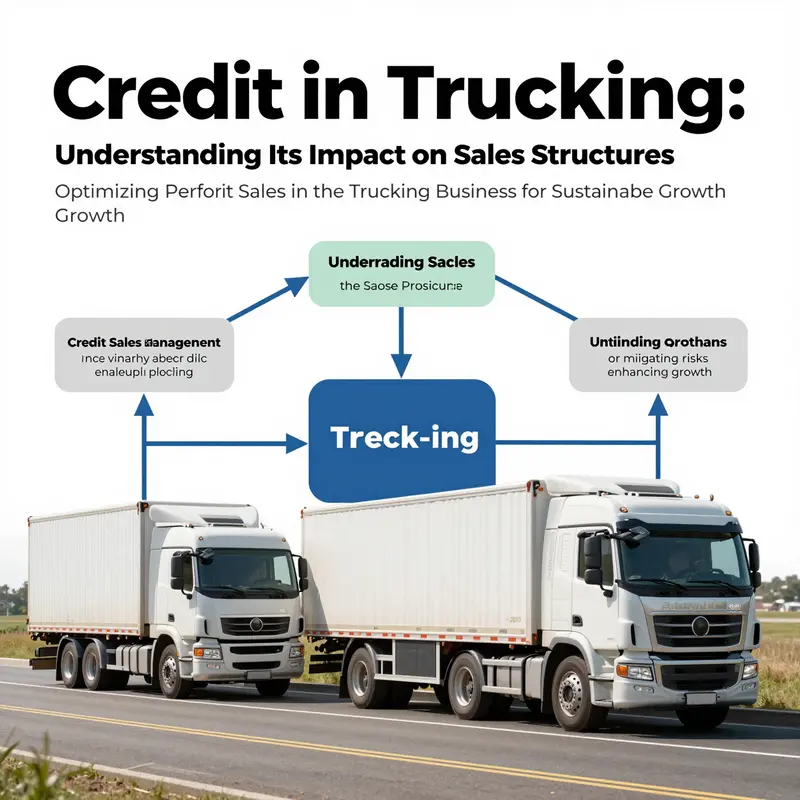
The trucking business sits at a crossroads where revenue recognition and cash flow timing determine whether a fleet stays on the road or idles at the dock. The 80/20 payment structure—where a large portion of revenue is advanced upfront and the remainder is earned on delivery confirmation—has become a practical default for many operators. It is not merely a cash management gimmick; it is a disciplined framework that translates sales into liquidity while preserving the security of the final payment. Yet, like any credit mechanism, it carries risk and demands a robust architecture of credit policies, risk assessment, and continuous monitoring. In this sense, credit in trucking is not just a finance function. It is a strategic lever that shapes contract choices, customer relationships, and long-term growth. The journey from upfront cash flow to sustainable growth, through the lens of trade credit, reveals a narrative of balancing opportunity with risk, speed with accuracy, and expansion with discipline.
At the core of the 80/20 approach is liquidity. The upfront portion—typically a substantial advance—funds immediate operating costs. Fuel still needs purchasing, tires wear down, and drivers require wages and benefits. When a fleet can deploy this cash quickly, it reduces the pressure to scramble for expensive short-term financing. It also softens the effect of delayed reimbursements from clients with longer payment cycles. In this sense, the 80/20 framework is less about granting generosity to buyers and more about sustaining the operational tempo that keeps freight moving and margins intact. The remaining 20 percent serves as a safety valve. It is the contingent portion that hinges on Proof of Delivery (POD) to confirm that the service was completed as promised. POD acts as a verification checkpoint, aligning payment with tangible performance. It helps prevent misalignment between revenue recognition and service execution, a misalignment that can quickly erode cash flow when volume spikes or when routes become unpredictable.
Nevertheless, the real world rarely adheres strictly to a tidy arithmetic. Customer profiles vary widely in their payment behaviors. Some shippers remit promptly, while others stretch terms under pressure or negotiate deductions after the fact. In practice, the 80/20 split is a starting point, not a universal law. A lean fleet with strong freight broker relationships might push closer to 70/30 in favor of upfront cash through negotiated incentives or early payment discounts. A smaller operator serving a handful of risk-heavy accounts could see the upfront share shrink to 60 percent or less if maintaining competitive contracts requires more favorable terms. The essential principle remains: upfront cash improves liquidity, while final payment upon POD anchors revenue on confirmed delivery. The arithmetic, then, becomes a live instrument in the toolbox of cash flow management rather than a fixed rule etched in stone.
To translate this principle into reliable financial performance, operators must craft disciplined credit policies. These policies do more than set payment terms. They define how credit is granted, how risk is assessed, and how performance is monitored over time. A well-constructed policy begins with a clear credit baseline: the criteria by which customers are deemed creditworthy, the minimum data required to extend terms, and the maximum allowable exposure per client. It also specifies payment terms, including the timing of advances, the schedule for remaining payments, and the conditions under which POD becomes the trigger for final settlement. The policy should be aligned with the company’s broader strategic goals, whether that means targeting larger clients with longer payment cycles or prioritizing smaller customers who pay more quickly but contribute less volume.
Crucially, credit management is not a one-time approval process. It is an ongoing discipline that lives in the daily rhythms of invoicing, receivables monitoring, and collections. Invoices must be issued promptly and accurately, with the right terms and a clear path to payment. Aging analyses should be part of a daily routine, flagging accounts that move from early to late stages and triggering proactive outreach before late status becomes a delinquency. Proactive collections aren’t antagonistic; they are part of the service to the customer—the smoother the flow of communication, the more likely it is that issues are resolved quickly and relationships are preserved. This is where the capacity to blend people, process, and data becomes decisive. A well-staffed credit team, empowered to act at the moment a risk signal appears, can avert larger losses and maintain steady cash flow.
The human dimension is essential. The most sophisticated credit algorithm cannot replace seasoned judgment when a carrier faces a weather event, a regulatory shift, or a sudden surge in fuel costs that squeezes margins. The willingness to engage customers early, to renegotiate terms when needed, and to explore mutual risk-sharing options—such as volume-based discounts for early payment or staged invoicing aligned with milestone PODs—often differentiates thriving fleets from those that limp along on thin margins. This is not simply about collecting debt; it is about preserving trust and resilience in a relationship that can span months or even years and dozens of shipments. The long arc of growth rests on the silent work of maintaining dependable credit relationships while steering toward healthier cash conversion.
Data-driven management is the compass that guides this balance. Modern fleets increasingly rely on dashboards that map receivables aging, payment histories, and POD confirmations against contract terms. These dashboards reveal patterns: which clients consistently adhere to schedules, which clients require reminders, and where disputes tend to arise. They also illuminate the latent risk embedded in certain lanes or client segments. For example, a shipper that operates across multiple states may exhibit different payment behaviors due to regional economic conditions, variations in regulatory timelines, or the credibility of local counterparties. A robust credit program uses this information not to punish risk-takers but to tailor terms strategically. It can steer resources toward high-potential accounts while positioning more conservative terms for riskier ones, always with an eye toward sustainable growth rather than short-term wins.
The strategic value of trade credit goes beyond liquidity. When managed with discipline, it enables a carrier to compete more effectively for contracts with larger, more demanding clients who rely on favorable credit terms to manage their own day-to-day cash cycles. The ability to offer credit, underpinned by a transparent policy and strong risk controls, can differentiate a trucking firm in a crowded market. It signals reliability and predictability—two qualities that contract partners prize when every dollar matters. Yet the flip side is equally real. Overreliance on a broad base of credit sales without parallel risk controls can strain liquidity, inflate bad debt provisions, and curtail growth opportunities. The balance is delicate: credit can be both the accelerator and the brake, depending on how it is governed.
One way to strengthen governance is to integrate credit policy with broader strategic planning. Credit decisions should be tied to performance metrics, including gross margins, operating ratios, and capacity utilization. If a planned contract promises scale, the credit policy should anticipate the working capital needs that come with that scale. In some cases, that may justify tighter upfront terms, more aggressive POD-scoped settlements, or even the use of factoring or credit insurance to maintain liquidity while expanding the client base. The aim is not to eliminate risk but to price it into the business model so that growth remains disciplined and repeatable. In practice, this means that data-driven monitoring should feed into regular governance reviews, where the finance team, operations leadership, and sales leadership align on credit exposure, risk appetite, and growth objectives.
Embedded within these considerations is a broader lesson about sustainable growth: disciplined credit management is less about chasing every sale and more about shaping a portfolio of customers whose payment behaviors align with the company’s cash conversion cycle. A well-structured policy reduces the chance of a liquidity crunch when volumes spike or when external shocks—such as a regional downturn or a sudden rise in fuel prices—test the resilience of the fleet. It also provides a framework for capacity planning. If receivables are taking longer to convert to cash, the fleet may need to adjust hiring, equipment utilization, or route planning to preserve service levels without overextending credit risk. In this sense, credit is a strategic instrument for operational excellence. It helps synchronize strategic objectives with financial reality and clarifies the path from contract signing to profitable delivery.
The empirical literature supports this view. Studies on trade credit financing show that firms with well-defined credit policies tend to experience more stable cash flows and higher rates of sustainable growth. The MDPI study on trade credit financing and firm-level sustainable growth highlights how thoughtful credit arrangements can support expansion while mitigating financial fragility. For practitioners, the lesson is practical as well as theoretical: cultivate a credit framework that integrates risk assessment, clear terms, timely invoicing, and proactive collections with the commercial goals of scale and service reliability. This is the blueprint for turning credit sales into a lever for lasting performance rather than a blind risk exposure. As the industry navigates persistent pressure on margins and the demands of a complex regulatory and competitive landscape, the ability to convert credit into capability will separate the firms that merely survive from those that thrive on every mile of the road.
To connect theory with practice, consider the ways in which a fleet can embed these principles into daily operations. Start with the customer intake process: beyond standard information, collect payment histories, banking relationships, and references that help calibrate credit limits. Then define a tiered approach to terms that aligns with client value and risk, ensuring that the most strategic customers enjoy favorable terms while still maintaining discipline across the portfolio. Invoicing should be precise and timely, with POD digital workflows that minimize disputes. Automate reminders and establish clear escalation paths for overdue accounts. Train staff to recognize early warning signals, such as repeated changes in shipper personnel, inconsistent cargo volumes, or disputes that appear to stall payments. Each of these signals can be addressed before they accumulate into a larger receivable problem.
Ultimately, the chapter’s argument is simple in its core claim: credit sales can drive growth and resilience when they are governed by a transparent policy, executed with discipline, and informed by data-driven insight. The road to sustainable growth lies in balancing the speed of cash inflows against the assurance of payment. It requires a cultural commitment to accuracy, punctuality, and proactive risk management. It asks for leadership that can translate complex credit analytics into practical decisions on pricing, contract selection, and capital budgeting. And it invites operators to rethink the relationship between sales, operations, and finance as a single, integrated system rather than as siloed functions. In a market where margins compress and competition intensifies, such integration is not optional—it is essential for keeping wheels turning while building a scalable, defensible business model.
For operators who want to ground these insights in human capital and process excellence, consider the value of investing in people who can steward credit policy across the organization. The capability to assess risk, negotiate terms, and manage collections rests on skilled professionals who understand both the financial mechanics and the customer dynamics of the trucking sector. As one fleet manager notes, success hinges on people who bring both analytical rigor and relationship finesse to the table. That sentiment finds support in practice and theory alike, including contemporary literature that links disciplined credit practices to sustainable growth outcomes. If you want to explore the people-side of credit management further, you can explore resources like investing in people key to trucking’s success, which emphasizes building the leadership and operational capabilities necessary to drive credit-driven growth forward on the road ahead.
In closing, while the 80/20 framework provides a practical backbone for cash flow, the true engine of growth is the orchestration of credit policy, risk management, and continuous improvement. The fleet that treats credit as a dynamic strategic asset—backed by timely data, clear terms, and capable people—will navigate the costs, uncertainties, and opportunities of a competitive market with greater confidence. It will secure contracts that promise scale while maintaining the liquidity and discipline necessary to deliver on promises. And it will embed a culture of prudent risk-taking that turns credit into a reliable pathway to sustainable expansion rather than a brittle vulnerability. For readers who want to deepen the empirical perspective on how trade credit can support firm-level sustainable growth, the MDPI study provides a rigorous foundation and a broader context for these practical reflections. You can find it here: https://www.mdpi.com/2076-0817/13/5/143. In the meantime, consider how a thoughtfully designed credit program could reshape your own fleet’s growth trajectory, starting with a simple alignment of upfront advances, POD-based confirmations, and a disciplined cadence of credit reviews that keeps the business moving forward mile by mile.
Internal link for further reading: investing in people key to truckings success.
External reading: for a rigorous empirical perspective, see the MDPI study: Trade Credit Financing and Firm-Level Sustainable Growth. https://www.mdpi.com/2076-0817/13/5/143
Final thoughts
A comprehensive understanding of the percentage of sales on credit within the trucking business reveals crucial insights into cash flow dynamics, operational challenges, and financial risks. By recognizing the impact of the 20% credit on liquidity and the overall success of trucking operations, stakeholders can better navigate the complexities of credit management. As the industry evolves, adopting effective strategies to manage credit sales will prove essential not only for sustaining growth but also for mitigating risks in a highly competitive environment. Emphasizing robust credit policies can pave the way for improved operational resilience, ensuring long-term success.