
Building a successful trucking business demands more than just a fleet of trucks; it requires a well-rounded strategy encompassing a solid business plan, effective equipment selection, dedicated driver recruitment processes, and optimized operational efficiency. For logistics and freight companies, construction and engineering firms, fleet management companies, and food and beverage distributors, understanding these components is critical in establishing a competitive advantage. This article will delve into four essential chapters, each aimed at guiding stakeholders through the crucial elements of the trucking business landscape, highlighting solutions that cater to their unique operational needs.
Blueprint for Profit: Crafting a Business Plan That Drives a Successful Trucking Company
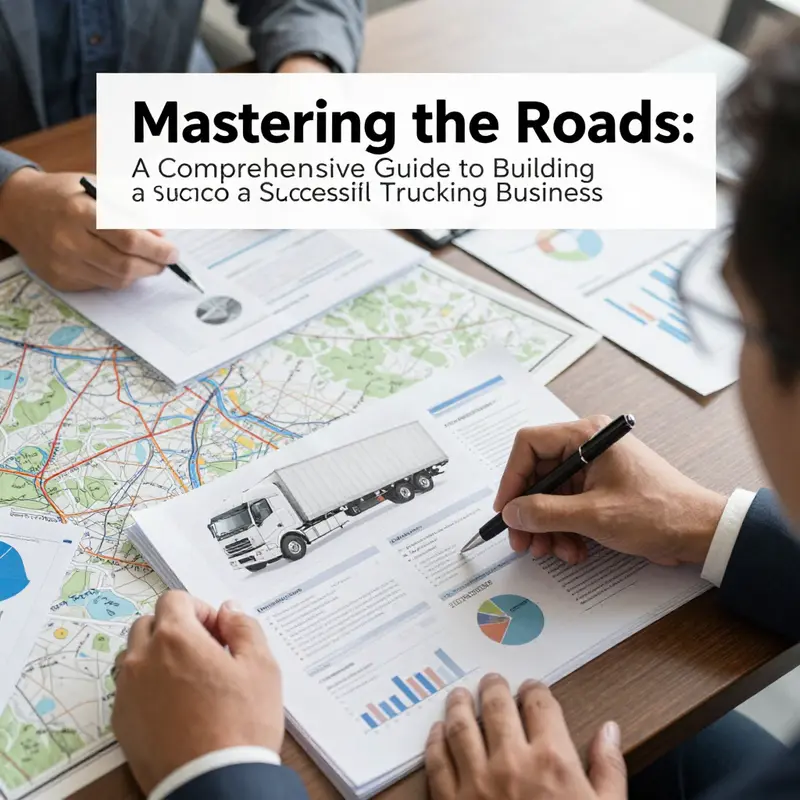
A business plan for a trucking company is not a bureaucratic exercise. It is the strategic blueprint that determines where your company will compete, how it will win, and how it will endure. Think of it as the map you consult before you buy a truck, hire your first driver, or sign a lease on a yard. The strongest plans are both practical and flexible. They marry on-the-ground realities with clear financial logic. They explain the niche you will own, the service you will deliver, and the daily systems you will use to deliver it reliably.
Start by studying the market you intend to serve. The trucking industry feels large until you narrow the field. National freight totals are impressive, but local lanes and specialty loads are where margins are made. Identify the lanes, customers, and cargo types that match your capacities and goals. Will you serve short regional runs or multi-state long hauls? Will you focus on time-sensitive refrigerated loads or oversized construction components? Choosing a niche reduces competition and sharpens your operational needs. It also clarifies equipment choices, insurance requirements, and driver skill sets. This early decision drives every estimate and assumption in your plan.
Your plan must state a compelling value proposition. Customers hire carriers for predictable outcomes. Promise what you can repeatedly deliver. Maybe that is guaranteed on-time pickups, transparent tracking updates, or a driver culture that protects fragile freight. Your value proposition shapes hiring, training, and technology. If your promise is speed and visibility, you must invest in real-time tracking and responsive dispatch. If your focus is specialty handling, your drivers need specific certifications and hands-on practice. Make this promise central to your narrative so every operational decision aligns with it.
Operational detail is where a plan proves its worth. Lay out the fleet strategy with specificity. Decide whether to lease or buy, and explain why. Estimate acquisition costs, fuel burn, and maintenance schedules for the vehicle types you need. Account for lifecycle expenses such as tires, brakes, and emissions-related repairs. Include realistic downtime assumptions. A single mechanical failure can cost days and thousands in lost revenue. Present a maintenance cadence and a contingency fund to manage unplanned repairs without disrupting cash flow.
Driver strategy belongs next. Drivers are the company’s face on the road. A robust hiring, training, and retention plan reduces turnover costs and raises service quality. Define candidate standards for experience, safety records, and customer interaction. Detail your onboarding program, covering compliance with hours-of-service rules and safe handling protocols. Offer pathways for career growth and for drivers to provide feedback. Investing in people pays dividends. For a deeper look at prioritizing your workforce, consider the perspective on investing in your team: Investing in People: Key to Trucking’s Success.
Technology choices should support, not complicate, operations. Specify the systems that will run dispatch, tracking, invoicing, and compliance. Prioritize tools that automate repetitive tasks and provide useful data. Electronic logging for compliance is non-negotiable. Telemetry and routing tools cut fuel costs and idle time. But don’t adopt tools for their novelty. Choose systems that integrate, scale, and deliver measurable returns. Describe how you will use data to refine routes, reduce empty miles, and monitor driver safety.
Financials tie every element together. Build three core financial schedules: a startup budget, a monthly operating projection for the first year, and a three-year forecast. Be conservative on revenue and generous on costs. Include realistic utilization rates and seasonality in your revenue model. List fixed costs—insurance, lease payments, and administrative salaries—separately from variable costs like fuel and repairs. Show breakeven analysis and outline the cash runway you need to survive slow periods. If you will seek financing, explain how funds will be used and how loans will be repaid. A lender or investor should be able to see how you convert debt into steady cash flow.
Marketing and sales plans are often underestimated. Freight does not find itself automatically. Explain how you will find lanes and customers. Will you build direct relationships with shippers, work with brokers, or use load boards to supplement steady work? Describe your pricing approach. Will you compete on price, on service, or on reliability for niche loads? Outline how you will present your brand, how you will handle new-account onboarding, and how you will keep customers coming back. Reliable invoicing, prompt settlement of claims, and clear communication about delays are small processes that create lasting trust.
Risk management must be explicit. Regulatory compliance, insurance coverage, and cargo security present real threats. Detail your approach to safety audits, driver background checks, and incident response. Plan for regulatory updates and environmental requirements that could affect your equipment choices. Include insurance layers for liability, cargo, and physical damage. Demonstrate how you will monitor compliance and prepare for roadside inspections. Address common threats such as theft by describing locking protocols, parking policies, and tracking measures.
Agree on the operational and financial metrics you will track. Plan to monitor utilization rates, revenue per mile, fuel cost per mile, maintenance cost per mile, and days payable and receivable. Track driver turnover and accident rates. Use these metrics as the feedback loop that refines your plan. If utilization falls or fuel costs spike, the data should tell you where to act. Build a routine for monthly reviews and quarterly strategy adjustments. A living plan adapts to new market signals and internal performance.
Scalability should feel intentional, not accidental. Describe the conditions under which you will add trucks or enter new lanes. Tie expansion to measurable goals—targeted utilization thresholds, positive cash flow for a defined period, or a pipeline of contracted loads. When you scale, replicate the practices that worked at smaller size. Formalize training, standardize maintenance, and codify customer service protocols. Avoid duplicating inefficiency at scale. Your plan should show how systems and teams will carry more volume without eroding margins.
Finally, present a clear timeline with milestones. Include short-term goals such as equipment acquisition and first customer signings. Add medium-term targets like hitting utilization benchmarks and achieving profitability. Establish longer-term aspirations: geographic expansion, diversification into new freight types, or investment in low-emission vehicles when economically feasible. Milestones convert abstract goals into accountable steps.
A business plan’s real power is the discipline it imposes. It forces you to quantify assumptions, confront risks, and prioritize actions. When built carefully, it becomes a daily tool for decision-making. It tells you when to invest in people, when to tighten routes, and when a new truck is a smart buy. Keep it concise, keep it honest, and revisit it often. Treat the plan as a living document that grows with your company.
For broader context on industry size and performance benchmarks, consult the American Trucking Associations’ industry statistics at the end of your planning review: https://ata.org/research-and-statistics/industry-statistics/.
Chapter 2: Aligning Equipment with Strategy—How the Right Trucks and Technology Propel Profit and Performance
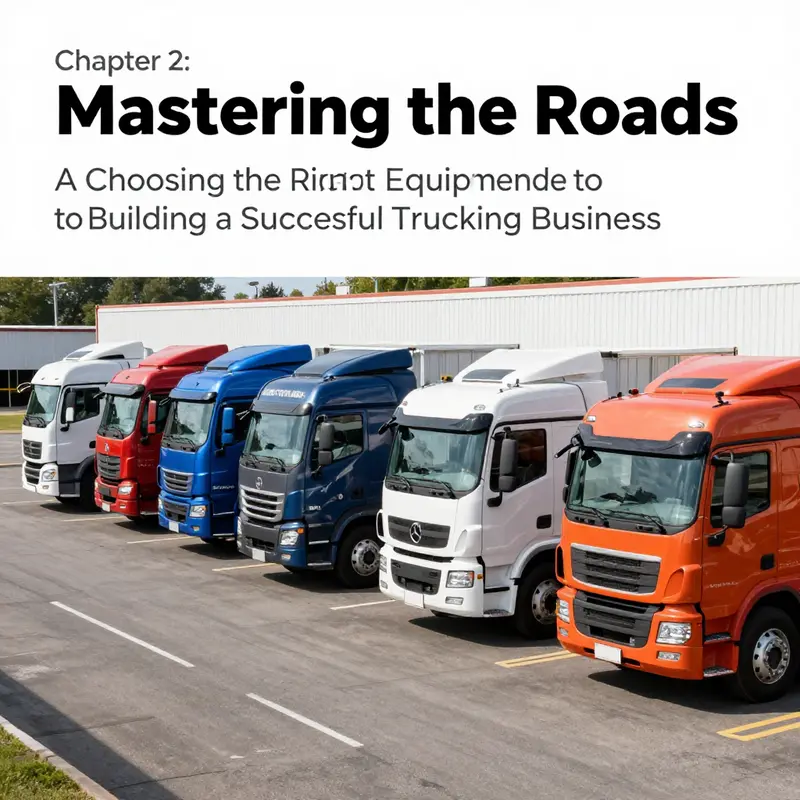
Selecting the right equipment isn’t a cosmetic decision for a trucking business. It’s the backbone that determines how quickly you can move freight, how reliably you can serve customers, and how tightly you control costs over time. The equipment you choose should reflect a coherent strategy that matches your niche, route structure, and cargo mix. If your plan centers on long-haul freight across vast distances, you’ll want a tractor that blends high fuel efficiency with durability, a suspension that cushions rough highways, and telematics that deliver real-time health checks and location data. The road profile becomes a cost model when you consider aerodynamics, engine efficiency, and transmission behavior that minimize fuel burn and maximize uptime. If, instead, you’re building a regional or local operation—serving distribution centers, food service, or construction materials—the calculus shifts. Smaller, more maneuverable trucks with appropriate bodies can reduce turn times, improve access to tight loading docks, and accommodate specialized bodies like refrigerated units or flatbeds. In this context, the mix of vehicle size, cargo capability, and payload efficiency can be the difference between margin and misalignment with customer expectations. The emerging frontier—electrification and alternative fuels—adds another layer of complexity. Electric and hybrid options have entered the mainstream, offering meaningful savings on fuel and maintenance over time. The 2024 Department of Energy assessment highlights that electric medium-duty trucks can show substantial total-cost-of-ownership advantages when evaluated over a five-year horizon, even after accounting for higher upfront costs. Yet infrastructure matters. Charging availability along key corridors, depot placement, and the pace of charging deployment can shape the practicality of an all-electric fleet for some routes. A practical approach is to view equipment selection as a living part of your business model, not a one-time purchase decision. It begins with a rigorous cost-benefit analysis, complemented by pilot programs that allow you to test different configurations before committing to scale. In parallel, you should map out financing options that align with your cash flow and risk tolerance, recognizing that equipment is a capital-intensive asset whose value erodes if not properly maintained or if downtime becomes frequent. This is where maintenance discipline becomes non-negotiable. The right trucks are built to last, but only if they are kept in serviceable condition through scheduled inspections, proactive part replacements, and a culture that treats maintenance as an investment in reliability rather than a cost center. Regular tire maintenance, brake checks, alignment, and oil changes aren’t afterthoughts; they are the daily disciplines that keep your equipment performing at peak efficiency and your drivers safe. Telemetry and onboard diagnostic tools play a critical role here. Real-time engine health data, fuel-consumption metrics, and driver behavior analytics create a feedback loop that informs both maintenance planning and driver coaching. When a truck reports a developing issue before it becomes a breakdown, downtime is minimized, and repair costs stay predictable. In fact, the most profitable fleets treat every mile as a chance to validate the business case for their equipment choices rather than as an inevitable expense to be endured.
Equipment strategy also interlocks with the broader technology stack that supports modern trucking. A Transportation Management System (TMS) integrated with electronic logging devices (ELDs) and telematics can automate load matching, streamline invoicing, and provide customers with transparent shipment tracking. This isn’t merely about efficiency; it’s about building trust. Customers are increasingly attentive to data-driven visibility and predictable delivery windows. The right equipment, paired with a capable digital backbone, enables those promises. It also matters for driver satisfaction. A comfortable, well-maintained truck with a quiet ride and ergonomic controls reduces fatigue and supports safer driving, which in turn lowers insurance costs and boosts retention. It’s easy to think about equipment in isolation, but the strongest approaches knit together vehicle choice, maintenance discipline, technology, and people—drivers who know how to maximize fuel economy, understand load securement standards, and communicate proactively with dispatchers. On the topic of people, consider how equipment decisions ripple through your team. The modern fleet relies on technicians, mechanics, and fueling staff who can interpret telematics alerts and execute rapid preventative tasks. A harmonious equipment plan thus aligns with hiring and training strategies that emphasize reliability, safety, and continuous improvement. To that end, a well-structured pilot program can illuminate where you should invest next. Try a small fleet of alternative-fuel configurations on representative routes, monitor total costs, uptime, and customer satisfaction, and compare those results against your baseline. The lessons from this approach often reshape long-term capital plans more than any spreadsheet projection could. In the end, the aim is an asset mix that matches your service levels to your price points, while keeping your risk profile in balance with growth ambitions. A thoughtful equipment program acknowledges that trucks and trailers are not just tools but enablers of a broader business model. They determine how you execute routes, how you respond to driver feedback, and how you scale with confidence when demand picks up or shifts. When you couple the right hardware with disciplined maintenance, robust data streams, and a people-first implementation mindset, you create a foundation that can weather market volatility and evolving regulatory landscapes. That foundation translates into predictable performance, shorter cycle times, and a more resilient margin as fuel costs and carrier markets fluctuate.
As you mature this equipment strategy, remember that it is not a solitary decision. It should be informed by the entire operating ecosystem you’re building. A practical step is to explore complementary investments in people, safety culture, and process improvements that amplify the value of your assets. For example, you can read about investing in people as a core driver of fleet success here: Investing in People—a New Path for Trucking Fleets. This link can help you contextualize how training, recruitment, and retention plans magnify equipment investments and accelerate the ROI of your fleet hardware. The objective is a coherent, repeatable system: choose the right tool for the right job, maintain it relentlessly, and use data to steer both capital and people decisions. When you achieve that alignment, the outcome isn’t merely lower operating costs; it’s a durable capability to deliver reliable service and predictable profitability amid a shifting transportation landscape. And as you continue to refine the mix—whether leaning toward high-efficiency diesels, electrified options, or a blended fleet—the core decisions should always align with your route profile, cargo types, and customer commitments.
External reference: For a broader view on the economics of electric trucks and total cost of ownership over multi-year horizons, see the U.S. Department of Energy’s 2024 evaluation at https://www.energy.gov/eere/vehicles/articles/electric-trucks-are-saving-money-and-reducing-emissions-2024-report
Driver-First Strategies: Recruiting, Onboarding, and Retaining the Talent That Keeps Your Fleet Moving
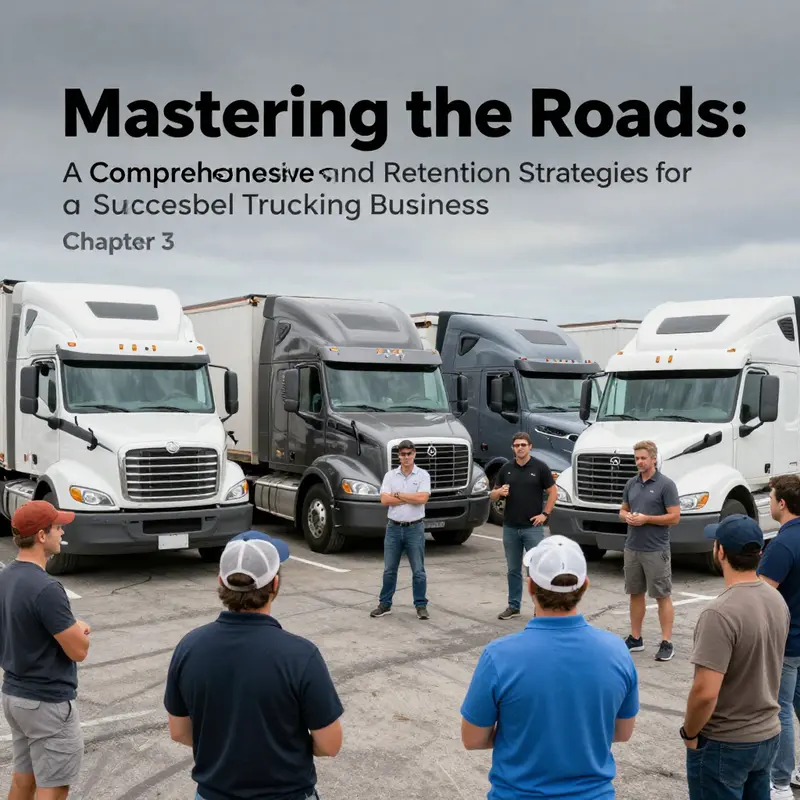
Building a driver-first operation is the single most reliable way to scale a profitable trucking business. Drivers are not interchangeable inputs; they are decision-makers on the road who represent your brand, protect your assets, and determine service consistency. Recruiting the right people and keeping them requires clarity about who you need, a compelling employer value proposition, deliberate onboarding, and a retention system that rewards loyalty and performance. This chapter lays out a complete, practical approach to identify candidates, make your company appealing, integrate new hires smoothly, and sustain a motivated driver force.
Begin by defining the precise driver profile you require. General descriptors like “experienced” or “regional” are a start, but a useful profile maps skills, preferences, and constraints. Note preferred route lengths, average haul durations, cargo types, expected home time, and required endorsements. Include soft qualities such as customer service orientation, reliability, and problem-solving. When you recruit with specific profiles, job postings and outreach become focused. This reduces mismatches and early turnover.
Your employer value proposition must answer a simple question for candidates: why should I commit my next five years to your fleet? Compensation is necessary but not sufficient. Modern drivers weigh equipment condition, scheduling predictability, and respect from dispatch and management as much as pay. Make visible commitments: invest in well-maintained vehicles and comfortable cabs. Describe routine maintenance schedules and safety inspections in hiring materials. Promise a dispatch approach that treats drivers as partners, not just cost centers. Deliver on those promises from day one to build credibility.
Crafting competitive compensation requires clarity and transparency. Drivers respond to simple, predictable pay models. Whether you use hourly, percentage, or mileage-based pay, document the calculation and give examples. Include guaranteed minimums for the first months to reduce income uncertainty for new hires. Build bonuses for safety, fuel efficiency, and on-time delivery, but set targets that feel attainable. Consider non-cash benefits that matter: paid time off, retirement contributions, or subsidized health options. These benefits often make a difference for drivers choosing between similar pay packages.
Onboarding is where many businesses lose good people. A structured program removes ambiguity and shortens time to full productivity. Begin with administrative tasks completed before the first road trip. Provide a clear schedule for training, required paperwork, and a single point of contact. Pair each new driver with a mentor for the first several runs. Mentors offer route tips, company expectations, and on-the-job coaching. Document standard operating procedures for common scenarios: detention, mechanical issues, and customer interactions. A consistent, documented approach reduces stress and improves confidence.
Training should be continuous, not a one-time event. Provide defensive driving refreshers, cargo securement reviews, and updates on regulatory changes. Use short, practical modules that drivers can consume on rest breaks. Emphasize fuel-saving driving techniques, simple maintenance checks, and fatigue management. Training demonstrates investment in the driver’s long-term success and cuts operating costs through fewer accidents and lower fuel use.
Scheduling and home time shape driver satisfaction more than many managers anticipate. Create schedules that provide reliable home time windows. Where possible, offer route options that match driver preferences. Some drivers accept longer hauls for better pay; others prioritize nights at home. Build a scheduling approach that can accommodate both. Flexibility in scheduling reduces burnout and increases retention.
Communication is a core retention tool. Clear, respectful dispatch communication reduces friction. Train dispatchers in empathetic problem-solving and involve drivers in scheduling conversations when feasible. Create a regular feedback loop: monthly driver check-ins, anonymous surveys, and an open forum for suggestions. Respond to feedback publicly and with action. When drivers see their input lead to change, loyalty grows.
Recognition and reward systems should be visible and timely. Celebrate safe driving milestones, retention anniversaries, and customer service wins. Small gestures—spot bonuses, gift cards, or public acknowledgment—drive morale. Institutionalize these gestures so recognition is expected as part of company culture, not random luck.
Safety must be both moral and practical. Make safety incentives real, not punitive. Reward proactive safety reporting and participation in safety committees. Use data to coach, not to punish. When drivers understand that safety programs protect them and reward them, they are more likely to engage and to stay.
Mental and physical health supports are essential. Long drives and irregular sleep patterns create stress. Offer resources for mental health, nutrition advice, and access to basic medical screens. Partner with clinics or telehealth services to make care accessible on the road. When drivers know their employer cares about their health, their commitment deepens.
Create career pathways within your operation. Promote top drivers to trainer roles, lead driver positions, or safety coordinators. Clear, visible progression reduces turnover and builds institutional knowledge. Pair promotions with training in leadership and communication so new leaders succeed.
Diversity and targeted outreach expand your talent pool. Recruit drivers from underrepresented groups and younger candidates entering the field. Work with local training programs and community colleges. Build internships or conditional employment for trainees who complete your program. These pipelines are long-term investments that pay dividends in reliability and community reputation.
Referral programs are a low-cost, high-return recruiting channel. Drivers who refer friends understand the job realities and self-select for cultural fit. Offer meaningful referral bonuses and pay them quickly. Track referral success and refine the program for maximum impact.
Use data to manage driver retention. Track turnover by tenure, route, and region. Monitor drivers’ reasons for leaving through exit interviews. Identify patterns and act on them. If turnover spikes for certain lanes, examine scheduling, pay competitiveness, and equipment on those lanes. A small shift in policy can turn a negative trend around.
Leverage partnerships to expand capacity quickly. Create relationships with training schools and community programs. Offer conditional hires to students who complete your curriculum. These partnerships reduce recruiting friction and establish a steady flow of new drivers.
Operate with a driver advisory council. Select experienced drivers to represent their peers. Meet regularly to review scheduling, equipment issues, and safety practices. This council builds trust and surfaces issues early. It also gives drivers a voice in company decisions that affect their daily lives.
Measure success through a few clear metrics: retention rate at 6, 12, and 24 months; average tenure; equipment downtime per driver; and safety incident frequency. Report these metrics to management and drivers. Transparency builds accountability and aligns incentives.
Finally, treat driver recruitment and retention as an ongoing investment. Policies that work today will require updates as markets shift and regulations change. Regularly review compensation, benefits, and scheduling against competitor offerings. Reinforce your commitment to drivers through visible investments in equipment, health resources, and leadership development. A driver-first approach reduces costs over time through lower turnover, fewer incidents, and stronger customer relationships.
For a deeper dive into recruitment tactics and practical outreach ideas, review this resource on targeted driver hiring strategies: Investing in People: Key to Trucking’s Success.
Further reading on practical recruitment tips and candidate targeting can be found here: https://www.indeed.com/career-advice/finding-a-job/truck-driver-recruitment-tips
null
null
Final thoughts
Establishing a successful trucking business is a multifaceted endeavor that requires careful planning, strategic equipment choices, effective driver management, and operational efficiency. By adhering to a comprehensive business plan, companies in logistics, construction, and fleet management can create resilient operations capable of adapting to the ever-changing demands of the industry. Emphasis on technological integration, a skilled workforce, and continuous client engagement can unlock growth opportunities and ensure sustainable success in a competitive market.