
Establishing a trucking business is a venture that promises substantial rewards but presents significant financial challenges. Understanding the multifaceted costs involved is crucial for Logistics & Freight Companies, Construction & Engineering Firms, Fleet Management Companies, and Food & Beverage Distributors looking to branch into this industry. This article unpacks the crucial financial elements, from acquiring vehicles to navigating the complex world of licenses and permits. Each chapter delves deeper into specific expense categories, aiding prospective business owners in developing a robust financial plan and ensuring a sustainable operation from the onset.
Financing the First Mile: Mapping Cash, Credit, and Capital for a Trucking Startup
Launching a trucking business is as much about financial street smarts as it is about drive time and route planning. The moment you decide to start, you are signing up for a sequence of large, interlocking costs that must be paid before a single mile is logged in revenue. The largest line item typically sits at the top of the balance sheet: vehicle acquisition. Whether you choose a brand-new tractor and trailer or a reliable used rig, the price tag is substantial and non negotiable if you intend to compete for predictable, quality freight. New tractors often sit in a broad range that starts around one hundred twenty thousand dollars and can climb well beyond one hundred eighty thousand, depending on the make, model, and features that influence resale value, reliability, and fuel efficiency. Used equipment lowers the barrier to entry but shifts the risk toward maintenance surprises and higher insurance costs if the vehicle’s history isn’t meticulously vetted. A pre-purchase inspection by a qualified technician is not a luxury; it is a guardrail against a cash drain hidden in the tires and undercarriage. The decision between new and used is rarely purely financial. It is a trade-off between depreciation, uptime, and the flexibility to scale. If your plan is to grow from a single truck to a small fleet within a few years, the math should tilt toward a durable asset with predictable maintenance costs, rather than a lower upfront price that compounds into frequent downtime and unpredictable repair bills. In any case, vehicle financing shapes the rest of the startup equation, because the loan terms, down payment expectations, and access to collateral influence every other spend you must justify to lenders. Next come licenses and permits, the bureaucratic gatekeepers that keep operations legal and trackable. A business license and FMCSA operating authority form the backbone of your compliance posture. The base costs here are modest compared with the vehicle, yet they are cumulative. A local business license may run from fifty to a few hundred dollars, while the FMCSA MC Number application has a fixed price that sits around three hundred dollars for interstate work. State-specific permits can add several hundred more, which, while seemingly small on the surface, accumulate quickly if you plan to operate across multiple jurisdictions or in busy corridors where compliance is non-negotiable for insurers and brokers. Then there is the cost of registration with state authorities, which many operators encounter as a necessary, predictable expense that keeps the company in good standing. Insurance, however, is where the ongoing financial pressure becomes immediately tangible and highly variable. Liability coverage often begins at the multiple thousands per year, with typical small-fleet baselines around four to six thousand dollars, depending on the fleet profile, traffic corridors, and claims history. Cargo insurance, essential for protecting the value of goods in transit, follows a similar scale, usually a few thousand dollars annually, again depending on the cargo types, routes, and risk factors. Physical damage or comprehensive insurance for your own vehicle is another substantial recurring line. The exact premium hinges on the truck’s age, usage, and the coverage limits chosen, but the recurring nature of this cost makes it one of the more predictable budgeting challenges. The true daily economics of trucking unfold in the technology and equipment stack that enables modern operations. GPS and fleet management software provide the visibility that brokers and clients demand, along with fuel efficiency and driver safety analytics that can save money over time; initial setup plus ongoing monthly fees can total several hundred dollars per month. Electronic logging devices are now a standard requirement; their purchase price is modest—often a couple of hundred dollars per device—but the monthly service fees accumulate across a growing fleet. Communication gear, dispatch software, and a basic office setup round out the suite of tools that keep orders flowing and records compliant. While these are recurring costs, their impact compounds as you scale, which is why early decisions about technology can either smooth or strain cash flow for months or years. Then there is working capital—the buffer that covers fuel, maintenance, payroll, tolls, and other day-to-day costs while you wait for payments from shippers. The cash gap between paying for fuel and receiving customer payments is a core challenge for new trucking ventures. If you operate as an owner-operator, you might be able to cover some early weeks with a leaner payroll, but the need for cash reserves remains just as critical. A practical rule of thumb is to aim for three to six months of operating expenses in reserve before launch. For instance, if your monthly burn is ten thousand dollars, a reserve of thirty to sixty thousand becomes the safety net that supports fuel purchases, routine maintenance, and the occasional unplanned repair without forcing you to chase every late-payment invoice. On the other hand, if you are building a small trucking company with multiple vehicles and a small crew, your working capital needs expand in step with the scale of your operation. You will incur higher insurance premiums, more complex accounting, and a larger payroll commitment, all of which magnify the importance of a stable, predictable liquidity plan. Beyond the core costs, there are additional, often overlooked items: professional services such as accounting and legal advice to set up your business structure and contracts; a basic website and marketing to win new contracts; and the costs of regulatory compliance, which can intensify when you cross borders or expand into new states. The sum of these parts is a realistic startup budget that reflects both the aspirational goal of a scalable trucking company and the practical realities of day-one operations. The chapter’s cost ranges boil down to a straightforward framework. An owner-operator starting with a used truck can look at roughly seventy-five thousand to a hundred and fifty thousand dollars in initial investment, with the spread driven by the truck’s condition, the quality of the licenses, and the caliber of the required insurances. A small trucking company with two or more vehicles or more ambitious growth plans can quickly reach two hundred thousand to five hundred thousand dollars or more, as you scale through additional trucks, increased insurance coverage, and a broader back-office operation. Yet even the most prudent plans encounter real-world frictions, particularly in the form of cash flow timing. Shippers sometimes pay slowly, and even trusted customers can face payment delays that ripple through your fuel and payroll calendars. This is why access to reliable financing becomes not just a convenience but a strategic necessity for many operators in their first years. Traditional bank loans remain a staple option, offering lump-sum capital with terms that can be negotiated to align with seasonal revenue patterns or targeted fleet upgrades. In the context of small trucking ventures, SBA-backed loans are often highlighted as particularly favorable; they tend to come with more flexible repayment terms and stronger encouragement for community-oriented small businesses to grow and stabilize. Financing is not merely about securing money; it is about shaping a balance sheet and an operating plan that can withstand delay in receivables, unexpected repairs, and the inevitable bumps along the growth curve. The path to funding intersects with the strategic decisions you make about your business model, your equipment lifecycle, and your approach to people and processes. This is where the notion of investing in human capital becomes crucial. A capable driver team, disciplined dispatch, and a culture of safety and efficiency create a multiplier effect that can convert capital expenditure into reliable uptime and reliable freight capture. For readers exploring this angle, the idea that hiring and developing people is not a cost but an investment is explored in depth in related discussions on Investing in people key to trucking success. Linking capital to people helps explain why certain startups survive the first year while others struggle; the answer often lies in how well governance, training, and operations scale together with the fleet. Financing options extend beyond traditional lenders. Alternative avenues, such as asset-based lines of credit, equipment financing, and even vendor financing, exist, but the core principle remains consistent: align liquidity with the cadence of revenue, plan for contingencies, and maintain the discipline to resist overextension. The broader takeaway is simple: a realistic, well-structured budget that includes a sizable reserve is the best insurance against the unpredictable rhythms of freight markets and driver turnover. For those who want to anchor their planning in proven guidelines, a reliable source of official financing direction is worth consulting. For authoritative guidance on financing options tailored to small trucking businesses, see SBA loans. That external reference provides a structured pathway to access capital designed for startups and small enterprises, helping to translate the theory of startup budgets into actionable funding strategies. In sum, understanding the financial architecture of starting a trucking business means embracing both the scale of upfront costs and the patience to build cash flow resilience. It means choosing equipment and insurance thoughtfully, investing in the technology stack that yields uptime, and cultivating a workforce that can deliver consistent, compliant performance. It means recognizing that funding is not a one-time event but an ongoing discipline—one that must align with a carefully crafted operating plan, a realistic growth trajectory, and a continuous commitment to safety, reliability, and customer value.
Gearing Up for Launch: Vehicle Acquisition in a New Trucking Business
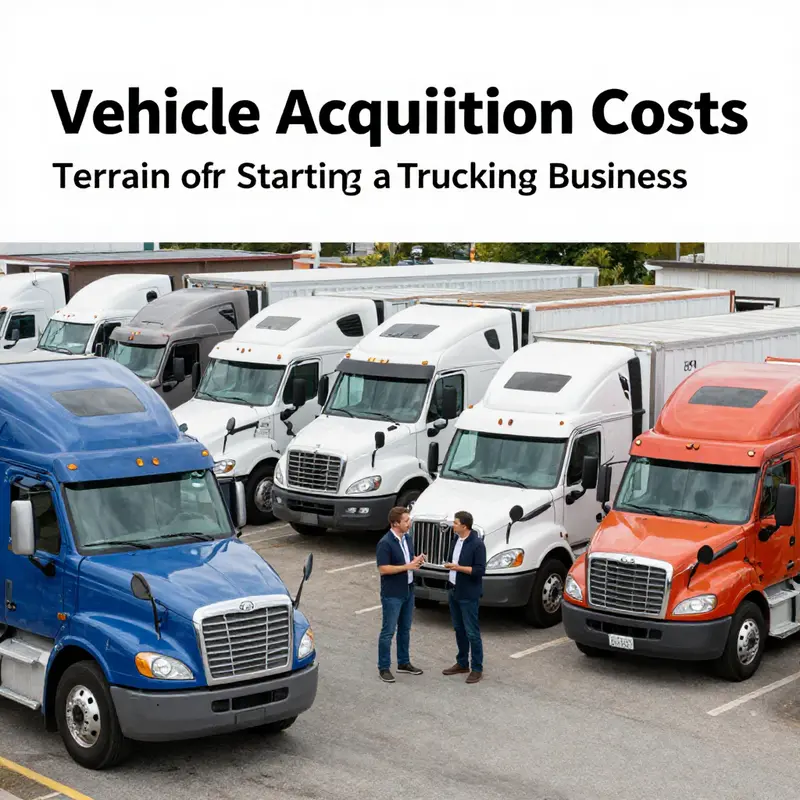
Choosing a vehicle is a cornerstone of startup budgeting for a trucking business. The price tag is not just about sticker cost; it shapes cash flow, financing needs, and insurance premiums for years. You have three broad paths: buy new, buy used, or lease/finance. Each path has distinct cost structures and risks, and the best mix depends on your business model, routes, and growth plan. The practical math informs every other line in your plan, from fuel and maintenance reserves to driver recruitment and insurance terms.
New trucks offer latest technology, warranties, and reliability, but come at a premium. A brand-new Class 8 tractor typically ranges from $120,000 to $180,000, depending on configuration and options. The upfront outlay can be jarring, but the upside is lower immediate maintenance and better fuel efficiency, with longer depreciation horizon.
Used trucks provide a lower entry price, often $50,000 to $100,000, suitable for owner-operators and small fleets seeking lower risk. However, there is risk; you must perform thorough inspections and review maintenance history to avoid hidden issues.
Leasing and financing mix upfront affordability with access to newer equipment. Leases can reduce initial cash outlay and sometimes include maintenance. Financing spreads the cost over time and builds equity, but total interest and payment schedule vary with credit and terms.
Your choice should align with your business model: an owner-operator might lean toward a used or conservative lease to preserve capital, while a growth-focused fleet may finance a newer asset for reliability and service levels. Regardless of path, vehicle costs interact with licensing, insurance, technology, and working capital, and many operators hold a reserve cushion – typically three to six months of operating expenses – to bridge the gap as revenue ramps up.
Beyond sticker price, consider the cost of capital. If you finance, present a plan detailing cost projections, expected debt service, maintenance reserves, and insurance premiums. Lenders want a credible path to repayment, and a larger down payment can reduce rate and term. Weigh the opportunity cost of tying up capital that could fund fuel and contingencies.
Finally, the operation’s scope and routes influence the optimal vehicle choice. High-mileage national lanes may justify newer equipment, while local or regional work could be served by well-maintained used trucks. The broader market trends and insurance requirements also shape the decision, so a disciplined forecast and risk-adjusted planning are essential. Build a plan anchored in reserves and scenario testing, ensuring there is a clear link between asset cost, route strategy, driver recruitment, and cash flow.
Opening the Road: Mastering Licenses and Permits to Launch Your Trucking Venture
Licenses and permits are the doorway to legally operating a trucking business. They protect you, your drivers, and the cargo you move. This chapter traces the journey from idea to revenue by aligning your plans with the rules that govern the road.\n\nCentral to this path is the Commercial Driver’s License, especially a Class A CDL, which enables you to operate tractor‑trailers. Before earning that credential you’ll secure a Commercial Learner’s Permit, or CLP, which requires passing a knowledge test covering federal regulations, safe driving practices, and vehicle inspections. With the CLP, you’ll begin a supervised training period that bridges to the skills test. When you demonstrate safe and competent operation of a tractor‑trailer, you earn the full Class A CDL. The learning curve is real, but the payoff is a credential that unlocks your core service.\n\nCosts and timelines vary by state and training path, and include written exams, behind‑the‑wheel instruction, and a practical skills test, plus time away from work.\n\nAfter CDL, you’ll encounter a broader licensing landscape: registering your business, obtaining a USDOT number from FMCSA, and securing operating authority for interstate movement. The USDOT number is your federal identifier and signals shippers that your operation exists within the federal safety framework. Many operators will pursue operating authority, sometimes called a motor carrier permit, which authorizes interstate transport. The cost is modest compared with ongoing compliance, but it is essential.\n\nIf you plan to grow a multi‑driver operation, forming a legal entity, such as an LLC or corporation, can protect personal assets and simplify contracts and financing. Your choice of business structure also affects insurance, payroll, and taxes, so seek professional guidance.\n\nEndorsements expand what you may haul. For hazardous materials, you’ll need the Hazardous Materials Endorsement (HME) and pass a TSA background check. The HME adds complexity and cost, but it is necessary for clients handling hazardous goods.\n\nCompliance is ongoing: licenses must be kept current, and rules evolve at federal and state levels. The FMCSA provides guidance, forms, and timelines that matter for new entrants. Hours‑of‑service, driver qualifications, insurance requirements, and vehicle inspections all shape your operating plan. Budgeting for licensing and registration should reflect both upfront and recurring costs—licenses, endorsements, entity formation, and state permits. Even with a single used tractor, renewals and endorsements require attention.\n\nA practical approach is to build a governance layer: designate someone to monitor FMCSA advisories and state updates, and set reminders for renewals and medical certificates. Licensing becomes a discipline that informs routes, customers, and risk management. It also signals credibility to brokers, shippers, and lenders, helping you scale with confidence.\n\nWhen budgeting, view licensing as a foundational investment in legitimacy and risk management rather than a nuisance. If a rule feels ambiguous, seek official guidance from the FMCSA or state regulators rather than shortcuts. For a concise reference on regulatory relief, consult official summaries and the FMCSA’s materials at https://www.fmcsa.dot.gov/.
Guarding the Road Ahead: Insurance Essentials for Launching a Trucking Business
Insurance is not the flashiest line item on a startup budget, but in trucking it is the quiet backbone that makes every other cost possible. A new operation can grow only as far as its risk exposure allows. The moment a truck hits the road, the business is vulnerable to property damage, cargo losses, and liabilities that can jeopardize even the best revenue plans. For a founder, the right protection is not merely about compliance; it is a strategic decision that shapes everything from driver recruitment to negotiating power with customers and lenders. In the early days, when cash flow is tight and every mile matters, building a robust insurance foundation also serves as a clear signal to stakeholders that the enterprise is serious, disciplined, and prepared to weather the rougher stretches of the industry. The goal is to cover the essentials without letting protection become a bloated fixed cost that stifles growth, and that balance comes down to understanding what coverage is non-negotiable and what adds resilience to your particular operation.
The most fundamental element is commercial auto liability insurance—often called third-party liability. This coverage is not optional in the sense that you choose to take it or leave it; it is a legal prerequisite for operating across state lines in most jurisdictions. The standard benchmark many states expect for interstate carriers is at least one million dollars of liability protection per incident. Some cargo chains or specialized freight types demand higher limits, and those expectations can tighten quickly if you pursue longer routes, hazmat shipments, or high-value cargo. Liability insurance exists to absorb claims that stem from injuries, property damage, or legal costs that would otherwise threaten the viability of your business. Without this shield, even a single serious incident can cascade into layoffs, fleet suspensions, or insolvency. In that sense, liability is the first line of financial defense you must secure before you hire a single driver or sign a lease on a maintenance bay.
Beyond liability, the next tier of protection guards your assets and your customers’ confidence. Physical damage coverage, which includes both collision and comprehensive options, ensures that your own truck is protected in the event of an accident, theft, fire, vandalism, or natural disaster. If you’re leasing or financing your equipment, the lessor will almost certainly require this coverage, often at a value that reflects the truck’s replacement cost. For a new operation, that means planning for a full-vehicle value to minimize gaps between what you owe and what insurance pays after a loss. Cargo insurance, frequently categorized as inland marine, is equally critical. The goods you transport carry their own risk profile, and cargo coverage reimburses you when freight is lost, damaged, or stolen during transit. This policy is not just about safeguarding revenue; it also preserves your relationships with customers who rely on you to uphold contractual delivery standards and protect their supply chains. When freight is high-value or perishable, cargo coverage is not luxury—it’s a business necessity.
No discussion of trucking insurance is complete without addressing non-trucking liability. This is the coverage that protects you when you’re operating outside a formal load, such as driving to a repair shop, returning home after a delivery, or moving a truck without a trailer. It can seem like a small edge case, but the costs associated with an incident during off-duty time can be substantial, particularly when personal exposure intersects with business ownership. Including non-trucking liability reflects a mature understanding of how drivers use equipment and how risk follows a vehicle through every mile of its life. Related to driver protection, workers’ compensation becomes a legal obligation as soon as you hire employees. Even if you start as a one-person operation, planning for workers’ comp is prudent. This coverage not only handles medical expenses and wage replacement for on-the-job injuries but also reduces the likelihood of costly lawsuits that can arise from workplace incidents. If you engage drivers as independent contractors to begin with, you’ll still want to map out how you’ll handle safety obligations and related coverage, since misclassifications can create expensive headaches down the road.
In tandem with these core protections, umber factors influence the pricing and the terms you’ll encounter. Premiums rise or fall based on vehicle characteristics—year, weight, horsepower, and overall risk profile of the equipment you operate. Driving history counts just as much as your fleet’s, and carriers will scrutinize the safety records of both owner-operators and any drivers you employ. The operating environment matters as well: urban corridors with dense traffic present different risk dynamics than long, rural routes with fewer incidents but higher exposure to maintenance issues. The safety toolkit you deploy can unlock meaningful discounts. Telematics devices, electronic logging devices, dash cameras, and advanced safety features like collision avoidance and lane-keeping systems provide tangible risk-reduction signals to underwriters. If you invest in these technologies, you should expect not only safer operations but more favorable premium discussions with insurers who value proactive risk management.
Choosing a provider is more art than science. It is tempting to fixate on price, but the right insurer also offers robust claims handling, responsive service, and a shared commitment to risk mitigation. When you compare quotes, consider the total cost of risk: premiums plus deductibles, exclusions, and the ease of claim processing. Bundling multiple lines of coverage with one insurer can yield efficiency and consistency in policy terms, which simplifies administration as your fleet expands. Discounts tied to safety investments,[][] ongoing driver training, and a demonstrable commitment to compliance can accumulate quickly, offsetting higher base premiums that come with a newer or heavier truck roster. And because the trucking landscape evolves—through regulatory shifts, technology leaps, and changing market demands—maintaining an ongoing dialogue with your insurer becomes part of prudent growth strategy, not a one-time purchase.
An emerging and contentious topic in the insurance space is the rise of alternative safety programs sometimes marketed as cost-savers. These programs present themselves as lower-cost pathways to protection, but they come with caveats. Often they operate as membership-based or quasi-insurance structures and may lack the regulatory oversight and financial guarantees that established carriers provide. The risk here is not hypothetical: a program that cannot cover large, legitimate losses can leave a business exposed at the moment when it matters most. For founders, the prudent approach is to view these options as temporary savings only if they come with transparent, independent financial backing and clearly defined risk-sharing terms. Otherwise, they should be treated with caution and weighed against traditional insurance backed by experienced, licensed carriers with strong claims networks. In other words, you should protect today with what you know will stand up under stress, not what sounds attractive in a glossy brochure.
The practical implication of all this for startup budgeting is clear. Insurance costs must be planned as a real equity-like expense—funded up front, reviewed annually, and aligned with your broader capital strategy. Mandated liability quickly becomes a non-negotiable line item, while physical damage, cargo, and non-trucking protections scale with your fleet and risk tolerance. Driver coverage, including workers’ compensation and UM/UIM where applicable, ensures you can recruit and retain talent with confidence. The interplay between coverage and daily operations is intimate: safety investments reduce premiums, reliable claims handling protects cash flow, and a well-chosen partner can turn a volatile risk graph into a manageable plan. As you map your startup path, you should embed this insurance discipline in every financial projection, every driver agreement, and every vehicle acquisition decision.
For readers who want to connect the insurance narrative to the people behind the wheels, consider exploring the idea of investing in people as a core strategy. When you prioritize driver training, safety culture, and transparent risk communication, you not only improve safety metrics but also create a collaborative underwriting story with your insurer. A practical starting point is to read about how leadership and people strategy intersect with fleet performance, such as the article on investing in people as a new path for trucking fleets. It reinforces that insurance is not a standalone checkbox; it’s the outcome of a disciplined, people-centered approach to risk management. Investing in People: Key to Trucking Success.
In sum, insurance is as fundamental to a trucking startup as the trucks themselves. It guards against the unpredictable, it enables growth, and it signals stability to customers and lenders. The best practitioners treat coverage not as a cost to be minimized but as a strategic asset that enables every other capability—from compliant operations and reliable uptime to scalable expansion and sustainable profit. As you finalize your startup plan, lock in the mandatory liability and then layer in protective lines that reflect your fleet’s reality. Invest in safety tech, cultivate a culture of compliance, and maintain an open dialogue with insurers who value a transparent, risk-aware partner. In that balanced approach lies the confident cruising speed that turns a good idea into a durable business on the open road.
Managing Working Capital for a Successful Trucking Business
Managing working capital is the lifeblood of a trucking venture. It is the difference between keeping a truck on the road and watching that same truck sit idle while bills pile up. In trucking, cash moves on a tight clock: you incur fuel, tolls, maintenance, and driver wages every day, while payment for a completed load often lags by weeks. The numbers matter not just in total but in timing. A small delay can tighten margins quickly, especially when you are financing equipment or paying down a loan. Because fleets are designed to move goods rather than hold inventory, their working capital cycles resemble a fast moving river rather than a slow reservoir. Revenue comes in when a shipment is delivered and the paperwork is settled, but essential costs accumulate daily. The most critical starting point is to understand that cash flow is not the same as profit; it is the ability to cover day to day expenses while growing the business. For many operators, the challenge is not making money on a load but converting that money into real cash in the bank in time to pay the next bill. This is why early planning matters as much as a full fleet plan and why a solid cushion matters just as much as a strong rate negotiation with a customer. A sound cash position gives you flexibility to weather shocks like a breakdown, a sudden fuel spike, or a late payment from a customer who normally pays reliably but slips this quarter. It also grounds more ambitious moves, such as adding a second truck or expanding into a new lane, in the confidence that daily costs won’t outpace revenue before the new earnings begin to flow. In short, strong working capital underpins both reliability and growth, two outcomes every operator is chasing at the same time.
One of the central challenges is the mismatch between when costs are incurred and when revenue is collected. A trucker may complete a load and submit an invoice, but the shipper may delay payment for 30 to 60 days. During this gap, the company must cover operational costs. If you are financing equipment, repaying loans, or paying drivers and fuel, those expenses do not wait for invoices. That mismatch is the quiet pressure behind every decision about financing, staffing, or routing. Industry analytics show cash flow pressures are common even among seemingly healthy fleets, and liquidity problems often precede profitability fluctuations caused by fuel spikes or maintenance surprises. In practice, this means you need a plan not only to fund expansion but to sustain operations when payments fall behind. Without a disciplined approach to timing and liquidity, a profitable load can become a liquidity problem the moment the check from a shipper is delayed. The risk grows as fleets scale, because more trucks bring higher fixed costs and more drivers who expect regular pay—while a few late-payments can cascade into a cash crunch.
To bridge the gap, many carriers turn to working capital strategies that do not rely solely on profits. Invoice factoring is one widely used option. By selling invoices to a third party at a discount, you get immediate cash rather than waiting for the standard payment terms to run their course. Short term lines of credit provide flexible access to funds for peak periods or unexpected maintenance without forcing a large equity draw. Equipment financing allows you to leverage the value of your fleet to preserve cash, so you can grow without starving day to day operations. Each option has costs and tradeoffs, so choosing the right blend depends on your credit profile, customer payment behavior, and growth plans. The common thread is to maintain liquidity while preserving the ability to take on new freight and invest in fleet reliability. A thoughtful mix might keep receivables turning quickly while giving you a predictable runway for repairs and new equipment purchases. At the same time, it is essential to remember that relying too heavily on nonoperating funding can erode profitability if the financing costs outweigh the cash flow benefits in lean months.
Beyond external funding, proactive management of internal processes matters just as much. Monitoring accounts receivable and nudging customers toward timely payments is essential. Negotiating favorable supplier terms can reduce payables pressure; for example, extending payable windows without harming relationships can improve your cash runway without increasing debt. Keeping a healthy balance between current assets and liabilities means paying attention to clock speed on both sides of the cash equation: speeding up receivables where possible and slowing the rate at which you incur payables within reason. In practice, this might involve routing and dispatch decisions that align with payment cycles, or budgeting fuel and maintenance with a buffer in mind. The point is to treat working capital as a dynamic resource, not a fixed number on a quarterly report. An operator who actively manages days sales outstanding, uses data to anticipate periods of higher fuel burn, and renegotiates terms with suppliers can keep the fleet moving even when market conditions tighten.
Technology plays a supporting role. Fleet management and accounting systems that integrate dispatch data with invoicing give you a clearer view of when money should flow and where bottlenecks occur. While the tools themselves cost money, they can reveal opportunities to shorten DSO days or avoid unnecessary expenditures by catching maintenance issues before they escalate. The people side matters as well. Investing in a capable team who understands the cash flow implications of every dispatch can yield big returns. This is not merely about balancing the books; it is about aligning daily decisions with the objective of staying solvent while growing capacity. The balance between low upfront cash burn and sustainable growth often hinges on deliberate tradeoffs between more trucks and stronger financial controls, and the best operators manage that balance with discipline.
As you consider long term viability, one approach worth exploring is investing in people as a strategic driver of cash flow and resilience. Invested leadership, stronger safety culture, and better retention reduce accidents, insurance costs, and service disruptions, which in turn stabilize both payments and costs. Investing in People: Key to Trucking’s Success is a reference point for understanding how training and leadership investment translate into fewer disruptions and more reliable service. It is not merely a social or HR concern; it is a practical lever that reduces costly disruptions and improves customer satisfaction, which in turn helps maintain steady payment pace and less volatile receivables.
Ultimately, cash flow discipline is about preparing for the unpredictable. A robust plan includes maintaining at least a three to six month cushion for operating expenses, as the field notes suggest. That buffer buys you the time to navigate payment delays, soften the financial shock of a breakdown, and pursue attractive freight opportunities without surrendering control of the fleet. In addition, proactive risk management—diversifying customers, aligning with creditworthy shippers, and maintaining reserve liquidity—helps you avoid shocking liquidity shortfalls when market conditions shift. The most successful fleets treat working capital as a strategic asset: a resource you deploy to sustain service levels, upgrade equipment, and win more business rather than a ledger line that can slip if customers pay late. As you weigh funding choices or plan an expansion, your goal should be to keep the wheels turning with confidence, knowing that cash flow resilience underpins every mile driven.
For a practical, strategy driven overview of how to boost cash flow across logistics, see FreightAmigo. If you want to explore a broader perspective on how to optimize working capital in logistics, the linked guide provides actionable steps and industry insights that complement the approach outlined here. FreightAmigo: Working Capital for Logistics
Final thoughts
Nonchalantly embarking on a trucking business venture can lead to financial pitfalls without thorough preparation. Each discussed chapter illuminated critical costs and requirements for establishing a successful trucking enterprise. By proactively addressing these factors—from vehicle acquisitions to ongoing expenses—future trucking entrepreneurs can foster a stable foundation, ensuring not just survival but thriving operations in a competitive industry. Remember, the key to success lies in proper planning and financial acumen.