
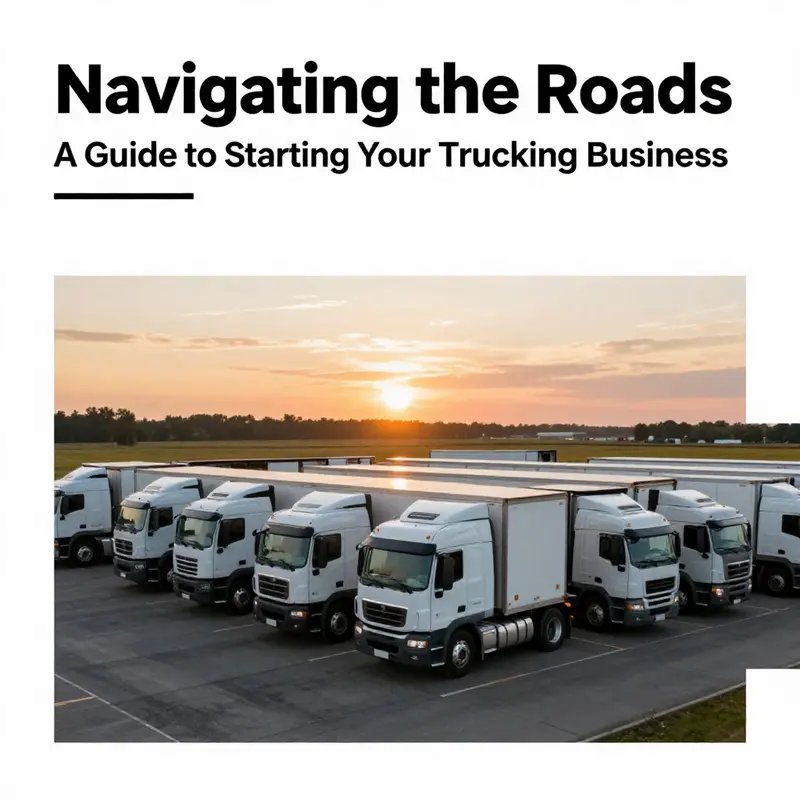
Starting a trucking business involves a blend of precise planning, regulatory compliance, and understanding market dynamics. For logistics and freight companies, as well as construction firms, engaging in the trucking sector opens avenues for enhanced operational efficiency and revenue generation. This comprehensive guide will delve into essential steps, beginning with defining your vision and niche, conducting effective market research, and securing funding while purchasing equipment. By following this structured approach, your trucking business can establish a solid foundation and thrive in a competitive landscape.
Finding Your Route: Crafting a Clear Vision and Profitable Niche for a New Trucking Business
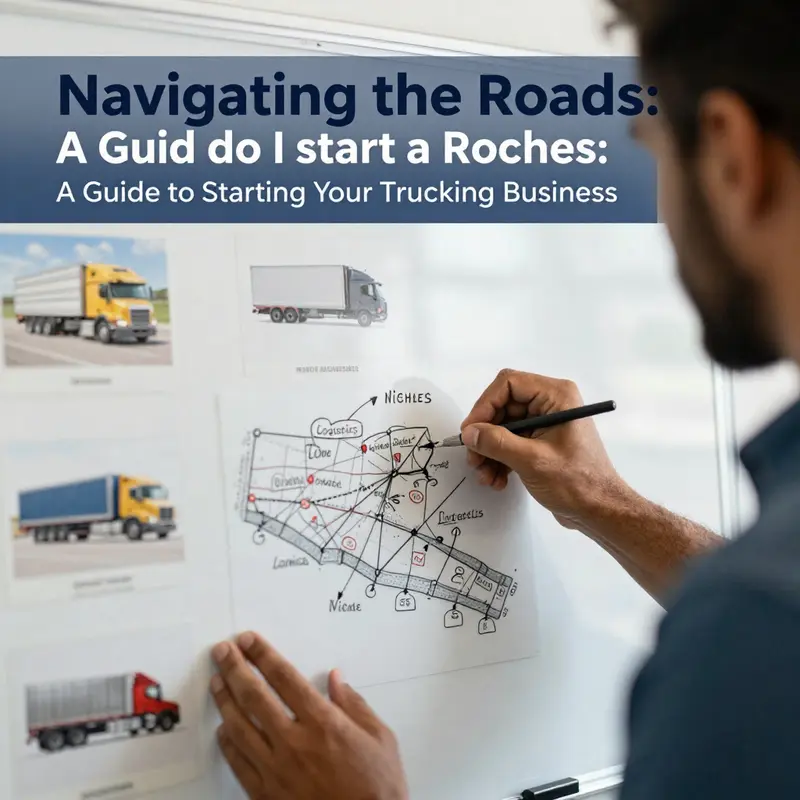
Finding Your Route: Crafting a Clear Vision and Profitable Niche for a New Trucking Business
Starting a trucking company without a focused vision is like setting out on a cross-country run with no map. Your vision defines the destination. Your niche defines the road you will travel. Both determine which routes you drive, the trucks you buy, the drivers you hire, and the customers who will trust you with their freight. This chapter walks you through a practical, strategic way to shape that vision and select a niche that gives you an operational edge and a defensible market position.
Begin by imagining the company you want in five to ten years. Picture the size of your fleet. Picture the markets you serve. Picture the reputation you build with shippers. This long-range picture should be specific enough to influence early choices. If you aim to become a regional refrigerated carrier serving food distributors, your vehicle purchases, hiring, and compliance needs differ from a plan to be a long-haul flatbed operator serving construction suppliers. A clear picture helps you decide everything from capital needs to brand voice.
Your vision must be realistic and actionable. Start with three concrete outcomes you want to achieve in five years. Make these outcomes measurable. Examples include: operating X trucks in two states, maintaining an average on-time delivery rate of Y percent, or achieving a net profit margin above Z. These targets guide initial investments and tell you when to hire or scale back. They also help you prepare for regulatory demands tied to scale, such as different insurance thresholds or reporting requirements.
Select a niche by matching market opportunity with your operational strengths. A niche is more than a cargo type. It is a combination of customer need, geographic reach, service level, and the capabilities you bring. You might specialize in short-haul urban deliveries for retailers, refrigerated food distribution, hazardous materials hauling, oversized loads, or dedicated contract services for a manufacturing client. Each choice carries distinct operational profiles. Short-haul urban work demands nimble routing and quick loading. Cold-chain logistics requires specialized trailers and rigorous temperature monitoring. HazMat hauling adds layered training and permitting.
Do market research that focuses on gaps, not just demand. Look for unmet needs. Which corridors lack reliable service? Which shippers report chronic delays? Which local industries expand faster than the available trucking capacity? Talk to warehouses, brokers, and potential customers. Analyze competitor weaknesses. A market flooded with one-hour delivery providers may still have weak options for scheduled, white-glove pickups from small manufacturers. Identify a point of pain you can solve consistently.
Building a differentiated service starts with narrow promises you can keep. If you promise same-day refrigerated pickups across a metro area, create processes, equipment lists, and staffing models that make that promise realistic. Overpromising and underdelivering damages your reputation. A narrower, dependable service attracts repeat business and referrals far more effectively than a broad, unreliable offering.
Operational design follows the niche. If you choose cold-chain services, invest in temperature-controlled trailers, real-time monitoring, and maintenance routines that prevent spoilage. If you select HazMat work, plan for special endorsements, placarding, secure routes, and enhanced insurance. For last-mile urban delivery, emphasize route density and quick-turn schedules. Each niche shapes your cost model. Map the operating cost per mile, per hour, or per load for your niche and compare it to potential revenue. This arithmetic reveals whether the niche can support the margins you need.
Brand identity should reflect your niche and values. Your brand is how customers perceive reliability, safety, and convenience. For specialized services, use messaging that signals expertise. For example, a cold-chain carrier might highlight strict temperature control standards and traceability. A HazMat-focused carrier should emphasize compliance rigor. Brand identity extends to visual cues, contracts, onboarding materials, and what drivers say to customers. Consistent, honest messaging helps you charge premium rates when you deliver on the promise.
Niches allow you to build systems that generate efficiency and expertise. When you operate within a focused set of routes or cargo types, you gain repeatable knowledge. You learn which docks move quickly, which shippers need specific paperwork, and which regulatory inspections are most likely. That learning curve increases productivity. It reduces unexpected downtime and helps you optimize asset utilization, such as the right trailer mix and maintenance cycles. It also reduces training time for new drivers when your operations are standardized.
Compliance is non-negotiable and varies by niche. Some services require additional endorsements, permits, and insurance. Hazardous materials hauling typically demands aHazMat endorsement for drivers and special permits for certain routes and cargos. Refrigerated transport may require specific sanitation and inspection protocols plus documentation for cold-chain integrity. Even local, intrastate services may require state-level operating authority. Before committing to a niche, list the required licenses, endorsements, environmental controls, and insurance levels. Factor these into startup costs and ongoing overhead.
Insurance and financial planning become more niche-specific once you decide. Certain cargos raise liability needs and premium costs. High-value freight or hazmat loads increase required insurance limits. Conversely, dedicated contract services with consistent lanes may earn favorable rates because insurers view them as lower risk. Run scenarios showing how different insurance profiles impact your break-even rates. Factor in reserve funds for incidents and regulatory fines. Financial discipline early prevents a single claim from destabilizing your operation.
Driver recruitment and training are central to niche success. Your drivers are the face of your brand and the hands that keep promises. Recruit individuals who hold appropriate endorsements and show professional habits. Screen driving records and verify certifications. Train drivers on niche-specific practices: refrigerated load handling, hazmat placarding and emergency procedures, or customer service protocols for white-glove deliveries. Ongoing training reduces liability and builds the trust that keeps customers returning.
Technology choices should align with your niche, not trend chasing. A tracking and telematics approach that supports real-time temperature logs is essential for cold-chain logistics. A reliable electronic log and route management system is critical for long-haul compliance and efficiency. For urban last-mile services, route-optimization tools and proof-of-delivery capture are primary. Choose systems that integrate billing, dispatch, and regulatory record-keeping. Integration saves time and reduces errors, which is crucial when you operate in specialized lanes.
Pricing strategy must reflect the value you deliver and the complexity you manage. Niche carriers can command higher rates when they offer services that are costly or risky for others. Price by the value to the customer, not only by the mile. For instance, reliable cold-chain pickup that prevents spoilage is worth a premium to a food distributor. HazMat compliance and secure routing are valuable to chemical manufacturers. When you price, include operational costs, insurance, compliance overhead, and a fair margin for growth. Also include contingency buffers for unexpected fuel costs or maintenance.
Partnerships accelerate growth in a niche. Early partnerships might include brokers, third-party logistics providers, or local warehouses. Choose partners who complement your strengths. A warehouse or fulfillment center that values your specialized handling can become a steady client. Brokers can help fill capacity while you build direct relationships. Over time, convert brokered loads into direct contracts. Long-term contracts reduce volatility and make financing expansions easier.
Operational risk management needs to be built around the niche. Identify the most damaging incidents for your line of work and plan mitigations. For refrigerated carriers, the biggest risk is temperature excursions. Implement redundant monitoring and contingency plans for trailer failures. For HazMat, the risk is an incident that causes regulatory scrutiny and costly cleanup. Invest in robust emergency response procedures and documented training. For high-turn urban routes, the risk is time-sensitive delays that disrupt customers. Map alternative routes and build a small buffer into scheduling.
Talent strategy goes beyond drivers. Your office staff handles billing, permits, and customer relationships. Hire or contract regulatory experts when your niche has complex licensing. Use a human capital approach that trains staff on the specifics of your niche so everyone understands the service promise. A people-first orientation lowers turnover and improves service consistency. For more on building a workforce strategy for trucking, review this piece about investing in people: Investing in People: Key to Trucking’s Success.
Start small and prove the model. Pilot a lane or a limited set of clients before scaling. Measure key performance indicators such as on-time delivery rate, customer satisfaction, cost per load, and incident frequency. Use these metrics to refine pricing, staffing, and equipment choices. A tight pilot reduces the likelihood of costly missteps when you expand.
Create a scaling roadmap. If your five-year vision aims for a regional presence, plan the phases: validate locally, expand to neighboring markets, standardize processes, and then replicate in new territories. Each expansion step should come with a financial checkpoint. Ensure a clean transfer of brand standards and operational playbooks to new locations or drivers.
Sustainability and regulatory trends influence long-term viability. Consider how emissions rules, electrification incentives, or local environmental standards affect your niche. For some niches, early adoption of lower-emission vehicles may open doors to contracts with retailers focused on sustainability. For others, it may not be cost-effective yet. Monitor regulatory trends and include scenario plans for future compliance needs.
Customer acquisition and retention hinge on the consistency you promise. Your niche-dependent marketing should target the decision-makers at potential client companies. Demonstrate your understanding of their pain points. Share case studies from your pilot phase. Offer clear contracts that define service levels, liability limits, and contingency plans. Excellent communication and reliable execution convert first-time customers into long-term partners.
Finally, structure your business legally and financially to support the vision. Register your business and obtain necessary operating authority for interstate or intrastate work. Title and register vehicles under the business entity. Align insurance policies with the specific exposures of your niche. Keep robust records for audits and inspections. These administrative details protect your reputation and your ability to operate.
A focused vision and a carefully chosen niche reduce guesswork. They make early decisions simpler and set the stage for disciplined growth. When you know the customers you serve and the promises you will keep, you can design operations that deliver those promises reliably. That reliability is your competitive advantage. Over time, your niche may expand or evolve. If it does, treat change as a deliberate strategy, not a reaction. Use the discipline you built in the niche to manage growth responsibly.
For clear, authoritative guidance on the licensing and regulatory steps that follow your vision and niche work, consult the official starting-a-motor-carrier guide from the federal agency that oversees commercial motor carriers.
https://www.fmcsa.dot.gov/starting-a-motor-carrier-business
Market Intelligence as Your Engine: Launching a Trucking Venture Through Rigorous Market Research
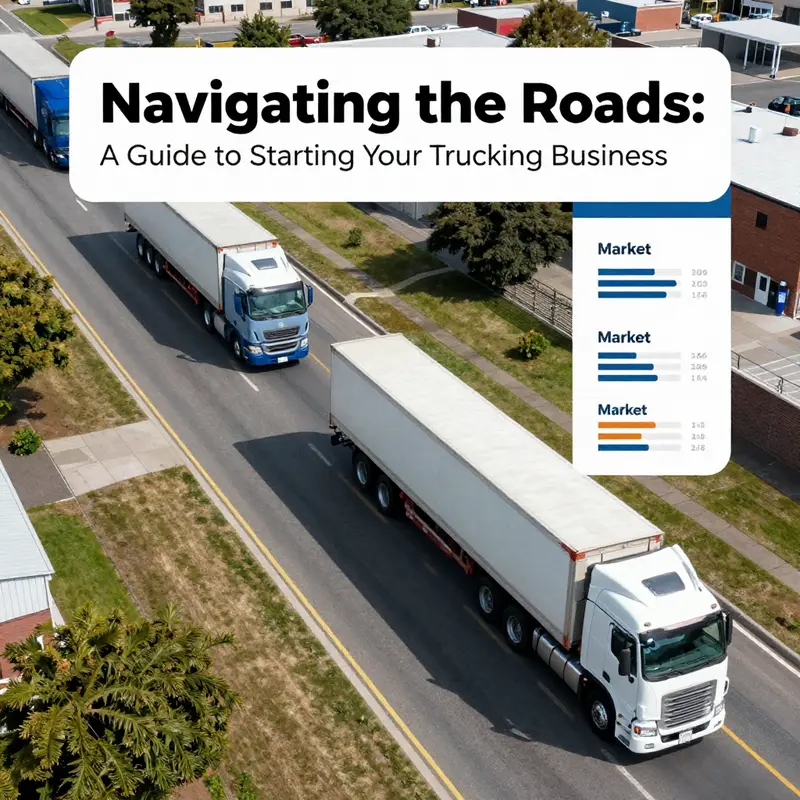
Market intelligence is the compass for a new trucking venture. In an industry built on schedules, safety, and cash flow, rigorous market research does more than validate a dream; it shapes every decision from the wheel choice to the first customer pitch. When you start a trucking business, you are not merely buying trucks; you are purchasing a route to reliability in a landscape that shifts with supply chains, regulations, and technology. The most successful startups do not enter the market with broad strokes and bravado. They enter with a clear picture of where demand lives, who competes in those spaces, and how to position a service that makes life easier for shippers, receivers, and end customers. They define a destination before they invest in asset, software, or people. This chapter threads market research into the fabric of a practical launch plan, showing how attention to demand, competition, and client behavior translates into a viable, defensible niche and a sustainable growth trajectory.
Think first about demand. Demand analytics in trucking hinge on how goods move, where they need to go, and when. In many markets, the highest growth signals come from segments that facilitate speed, flexibility, and specialization. The traditional view—full-truckload, line-haul service—still matters, but the real opportunities often lie in niche services that big incumbents overlook or treat as add-on options. For instance, regions with rising e-commerce fulfillment needs create a steady flow of short-haul and mid-range jobs that reward efficiency and reliability more than the ability to chase price alone. The latest market narratives emphasize a broader trend: customers increasingly value a digital, transparent experience. They want to know where the cargo is, when it will arrive, and what happened along the way. Your market research should translate these expectations into measurable capabilities for your operation.
In practical terms, demand analysis starts with a map of the local and regional freight flow. Where are the concentration hubs—distribution centers, manufacturers, consumer markets—that create predictable lanes? Where are the white spaces—underserved routes, underserved times of day, or underserved service types such as same-day delivery or time-window commitments? Understanding these dynamics requires data drawn from multiple sources: publicly available freight trends, conversations with potential clients, and pilot runs that test service concepts. You can measure demand not only by the sheer volume of freight but by the intensity of the service requirement. For example, a market with frequent last-minute loads, tight delivery windows, or high variability in freight profiles rewards operators who can provide flexible scheduling, dependable on-time performance, and proactive communication. These are not flashy claims; they are the elements your potential clients will evaluate you on, especially when your brand is still building trust.
A clear picture of demand naturally leads to a focused service offering. Avoid trying to be all things to all customers. The most resilient trucking startups select a niche and own it with depth and consistency. The niche can be a cargo type, such as dry van, refrigerated, or flatbed work, or a service model, such as dedicated contract carriage or regional distribution with rapid turnover. The modern market even rewards specialized, value-added services that help customers reduce complexity. Think warehousing, packing and unpacking, cross-docking, or specialized loading and unloading, especially for sensitive or high-value goods. The research question is not only what customers need now, but what they will need tomorrow. If your market analysis points to growing demand for faster, more predictable service, then your plan should include a delivery model that prioritizes reliability, with contingencies for delays and a transparent customer interface. If you identify a surge in eco-conscious logistics, you may want to test green routing, fuel-saving practices, or even electrified options where feasible. In short, market research informs not just what you do, but how you do it and how you tell your story to the market.
The evidence from broader market narratives reinforces the logic of niche positioning. In international contexts, market reports highlight how young, urban consumers and small-to-medium enterprises increasingly demand seamless digital interactions. A contemporary Chinese market study underscores this trend with striking signals: the personal vehicle transport segment within the consumer-to-consumer (C2C) sphere is expanding rapidly, driven by relaxed cross-provincial trade rules, lifestyles that favor mobility, and a growing population base. The C2C segment was valued at 82 billion yuan in 2025 and is projected to reach 150 billion yuan by 2030. While these figures live in a different regulatory and economic environment, the underlying dynamic is universal: more people and businesses expect faster, safer, clearer, and more trackable freight experiences. In a wider context, a 2025 industry report points to a trucking market that remains robust, with regional and national networks processing vast quantities of freight. The implications for a new entrant are clear: while large operators continue to scale, there is room for focused, service-oriented players who convert market gaps into reliable operations and a brand promise built on safety and transparency.
This is not a call to romanticize fragmentation; it is a strategy to understand how to compete intelligently. Competitive analysis helps you map pricing, routes, service levels, and customer sentiment. What do potential clients say about the experience of working with current providers? What do they wish existed—faster responses, more accurate ETAs, proactive issue resolution, or simpler invoicing processes? Your market research should convert these questions into concrete capabilities. A nuanced view of the competition reveals not only price and capacity, but also how drivers are deployed, how schedules are optimized, and how information flows between your fleet, your customers, and your back-office operations. Importantly, your research should identify a few entry points that are defensible—areas where you can commit to a higher-performing standard without inviting an immediate race to the bottom on rates. In some markets, that defensible edge might be a commitment to on-time performance through disciplined dispatch practices; in others, it could be a willingness to provide a white-label, highly responsive customer interface that makes the entire process feel effortless for the client.
The customer is not a monolith; it is a spectrum of needs and preferences. A careful market study defines your target profile, but it also informs how you build trust with that profile. Contemporary customers tend to be younger, urban professionals who value efficiency, digital access, and straightforward experiences. They want clear pricing, predictable billing, and real-time visibility. They are comfortable with technology, and they expect you to leverage it to reduce friction in the process. That means your research should help you design a service that is not only technically capable but also emotionally appealing—the sense that you are partnering with a professional who anticipates problems and communicates transparently when plans shift. The end result is a more resilient business model: a company that can win with reliability in delivery windows, proactive communication, and a customer experience that scales as you grow.
Narrowing your niche is not a constraint; it is a strategic advantage. When you know who you serve and how you serve them, you can design a streamlined operational blueprint. This blueprint should specify the fleet composition aligned with the chosen niche, the required compliance and safety protocols, and the technology stack that supports end-to-end visibility from dispatch to payment. Fleet decisions become less speculative when anchored in demand data. If your research shows a strong need for short-haul, high-frequency lanes, you may opt for a mixed fleet of light- and medium-duty vehicles that maximize uptime and reduce deadhead. If you uncover a growing appetite for controlled-temperature shipments in a specific corridor, your plan can emphasize refrigerated capabilities and specialized loading practices. In either case, the technology layer—telemetry, route optimization, and integrated billing—should enable you to monitor performance, forecast capacity, and communicate with clients in real time. The goal is to create a virtuous cycle: reliable operations reinforce trust, trust expands opportunity, and opportunity allows you to reinvest in smarter systems and better people.
The role of technology in market research and market entry cannot be overstated, but it must be grounded in practical realities. A modern trucking operation benefits from a Transportation Management System to coordinate dispatch, route selection, and invoicing; GPS tracking and telematics to monitor location, fuel efficiency, and safety metrics; and the ability to connect with load boards or secure direct client relationships. Importantly, automation should be implemented with a preference for simplicity and reliability. Complex tech without clear process can create more problems than it solves. Start with essential capabilities that deliver measurable improvements—on-time performance, transparent communication, simple invoicing, and a straightforward onboarding experience for clients. You can layer in more advanced analytics and predictive planning as you scale, but the foundation must be dependable. Evidence from industry studies suggests that real-time telematics and data-driven routing can yield meaningful cost savings and service improvements, making the case not merely for adoption but for disciplined deployment: a measured plan to capture value without overwhelming the organization with complexity.
As you translate market insights into action, remember that your launch is a learning process. The first months should be framed as a market test, not a grand rollout. Start with a few predictable lanes, a small roster of drivers, and a service level that you can sustain with quality control and hands-on management. Use early feedback to refine your value proposition, adjust pricing to reflect true costs and service levels, and tighten your operational playbook. Your market research should evolve into a living document you revisit quarterly, then monthly as you gain data from customers, carriers, and the freight marketplace. The aim is not to predict the market with perfect certainty but to maintain enough situational awareness to pivot when new demands appear, when competitors adjust, or when regulatory signals shift. This adaptability is what separates startups from those who struggle to translate analysis into momentum.
The journey from initial research to a viable trucking business is officiated by the practical steps that follow: secure the right permits, assemble a compliant and capable team, and invest in a lean but powerful technology backbone. Yet the most enduring driver is the clarity that market research provides about who you are serving and how you will serve them better than anyone else in your chosen lane. When you know your demand, your niche, and your service standards, the rest follows with greater focus. A well-researched launch aligns with the realities of your market and creates a narrative your early customers can trust. That trust, in turn, becomes your fastest channel for growth as referrals and reputation compound over time. In that sense, market research is not an afterthought but the engine that propels your trucking business from concept to consistent performance.
For readers curious about how broader cross-border and international perspectives intertwine with domestic market forces, you can explore perspectives on the regulatory and logistical challenges that shape corridor strategies and service design. Navigating cross-border challenges: key insights from the TCA annual meeting offers a lens on how policy and cooperation influence carrier viability across borders. This kind of resource complements your internal market research by highlighting how external frameworks can create both opportunities and constraints for a new entrant seeking to operate at scale. As you weave these insights into your plan, keep in mind that the market is not a fixed map; it is a living ecosystem that rewards those who listen, test, and adapt.
In closing, the essence of starting a trucking business with market research is not simply to identify a lucrative niche. It is to understand the daily realities of customers who pay for reliability, to design operations that deliver that reliability with precision, and to cultivate a brand promise that makes clients want to stay with you as they grow. The strongest entrants are those who couple disciplined data-driven insights with practical execution—choosing lanes, pricing, and service levels that reflect both the market’s needs and the company’s capabilities. They invest not only in trucks but in processes that reduce friction, and not only in customers but in the experience of working with them. Market research, executed with rigor and humility, becomes the steady force that keeps a startup from drifting and instead steers it toward sustainable momentum. And as the landscape continues to evolve with technology, regulation, and new patterns of demand, the discipline of listening to the market will remain the compass guiding every decision, from the first purchase of a single tractor to the day you scale into a dependable regional fleet.
External resource: China Vehicle Transport Market Study (2026)
Funding the Fleet: How to Finance and Choose the Right Trucks When Starting a Trucking Business
Funding the Fleet: How to Finance and Choose the Right Trucks When Starting a Trucking Business
Every successful trucking company begins with two decisions that shape everything else: how you will pay for the business and which vehicles you will operate. Those choices affect cash flow, service capability, regulatory compliance, maintenance burden, and your ability to win the work you want. This chapter walks through a practical, step-by-step approach to estimating capital needs, evaluating funding sources, and selecting equipment that aligns with your long-term vision. The aim is to help you make clear, defensible decisions so startup capital and vehicle purchases become engines for growth rather than ongoing drains on the business.
Begin by building a complete startup budget. A realistic budget lists one-time expenses and the first 12 months of operating costs. One-time items include vehicle deposits or purchase price, licensing and permits, initial insurance premiums, registration and titling fees, and any immediate workshop setup. Recurring costs cover driver wages, fuel, routine maintenance, tires, loan or lease payments, tolls, taxes, and administrative overhead like dispatch and accounting. Include soft costs too, such as marketing, legal fees, and technology setup for dispatch and electronic logs. Create the budget on a per-truck basis and then roll it up to the fleet size you plan to begin with. This method reveals the marginal cost of each additional truck, which helps when making phased growth plans.
When estimating vehicle costs, separate purchase price from total cost of ownership. The purchase price is only the start. Total cost of ownership includes insurance, fuel consumption, scheduled maintenance, unscheduled repairs, tires, depreciation, and the administrative cost of record keeping. For refrigerated, oversized, or hazardous cargo, add specialized equipment and higher insurance premiums. For long-haul operations, account for driver per-diem and overnight expenses. When you compare buying and leasing, place both figures in the same total-cost framework so you see real monthly obligations and long-term equity implications.
Assess your working capital needs next. New operations often face negative cash flow in early months. Payments from many shippers and brokers arrive after delivery, while fuel, driver pay, and loan obligations are immediate. Plan for at least three months of operating expenses beyond the initial outlay, unless you have pre-booked contracts that guarantee early revenue. This working capital cushion prevents missed maintenance, late payroll, and catastrophic regulatory lapses that can damage your reputation.
With a clear budget and cash flow forecast, consider funding sources. No single option fits every owner-operator or small fleet. Owner savings and funds from friends or family keep early costs low and preserve control. Bank loans and commercial lines of credit provide predictable repayment schedules and competitive interest rates for applicants with solid credit. Equipment financing and secured loans use the truck itself as collateral, which can lower credit thresholds for approval. Leasing reduces the upfront cost and often bundles maintenance or roadside assistance, but it limits ownership upside and can include penalties for excess wear and mileage.
Factor-based financing or invoice factoring can bridge the gap between deliveries and payment. Factoring turns unpaid invoices into immediate cash, improving liquidity and reducing the risk of unpaid loads. However, fees and contract terms vary. Use factoring strategically, not as a permanent substitute for strong cash management. Consider whether a factoring partner will take credit control or allow you to manage collections. That decision affects customer relationships and administrative flow.
Partnerships and private investors are another pathway. A capital partner can bring cash and expertise. When taking on equity, define roles clearly. Who handles day-to-day operations? What triggers additional capital calls? How is profit distributed? Formalize these terms in a written agreement to prevent disputes. If you pursue partners, weigh their non-monetary contributions too—industry contacts, driver recruitment, or maintenance experience can be worth as much as capital.
Specialized lenders exist that focus on transportation. These lenders understand industry cycles and typical asset lifecycles. They can provide equipment loans, lease-purchase agreements, or lines of credit tailored to trucking. Their approval criteria may focus more on business plans and anticipated revenue than on traditional credit history alone. When engaging with specialized lenders, still compare quotes. Terms such as interest rate, balloon payments, prepayment penalties, and required insurance levels matter to long-term viability.
Leasing is often attractive to first-time fleet owners. Operating leases lower the initial cash requirement and provide access to newer equipment. Maintenance can be easier to manage if the lessor offers service packages. Leasing also simplifies fleet upgrades as emissions or safety rules evolve. The downside is that monthly lease payments may be higher than loan payments for equivalent equipment. Leases rarely transfer residual value to you, so their long-term cost needs close scrutiny. A lease-to-own option can be a compromise, allowing ownership at the end of the term under set conditions.
If you choose to buy, shop for complete records on used vehicles and insist on pre-purchase inspections by an experienced technician. A lower sticker price can hide costly defects. For used trucks, review maintenance history, accident reports, engine and transmission rebuild histories, and any evidence of heavy modifications. Tires, suspension condition, and frame integrity are critical. For refrigerated units, verify cooling performance and service history. For hazardous-material haulers, ensure past modifications meet current regulatory standards.
When selecting vehicle specifications, start with the work you plan to win. Payload capacity, cargo type, route profiles, and delivery density determine axle configuration, cab type, trailer selection, and equipment options. Urban delivery fleets prioritize maneuverability and fuel efficiency at low speeds. Regional and long-haul operations prioritize driver comfort, fuel efficiency at highway speeds, and large fuel capacity. Refrigerated or bulk tanker work requires specialized trailers and additional maintenance. Each specification affects purchase price, fuel costs, and insurance premiums.
Fuel economy and emissions performance are not just environmental concerns. They are financial drivers. Fuel forms a large portion of operating expense, and efficiency varies with vehicle choice, route patterns, load stability, and driver behavior. Modern engines and aerodynamic packages reduce fuel use, but they often add to the purchase price. Calculate payback periods for fuel-saving options by factoring in anticipated miles and fuel prices. Also consider regulatory trends. Emissions rules can affect resale value and maintenance costs for certain engine types. For a deeper look at how emissions rules affect fleet investment decisions, read this piece on the challenges of emission regulations on fleet investments: challenges of emission regulations on fleet investments.
Insurance will be one of the largest ongoing expenses. Liability limits depend on cargo type and operation radius. High-value cargo, hazardous materials, and long-haul interstate work push premiums higher. Insurers evaluate the applicant’s safety program, driver hiring standards, driver records, and vehicle maintenance. Implementing strict driver screening and routine preventive maintenance will lower insurance risk and premiums over time. When you compare insurance offers, examine deductibles, coverage limits, exclusions, and claims handling procedures—not just premium amounts.
Tax treatment and depreciation are important considerations for ownership versus leasing. Buying allows you to claim depreciation and other capital allowances. Leasing can convert capital expense into operating expense, which sometimes simplifies cash flow and tax planning. Consult an accountant familiar with transportation tax rules to model after-tax cash flows under both scenarios. Also investigate available local or federal tax incentives or grants aimed at encouraging newer, cleaner equipment. These incentives can materially improve the economics of certain vehicle choices.
Negotiate purchase terms aggressively. Whether buying new or used, identify sources that allow you to compare multiple bids. Seek clarity on warranty terms, parts availability, and the cost of scheduled services. Ask about fleet discounts and extended service agreements. For used purchases, consider a short-term warranty or certified pre-owned program, which can reduce catch-up maintenance costs after acquisition.
Plan for maintenance from day one. A robust preventive maintenance program increases uptime and resale value. Schedule regular inspections, fluid changes, and component replacements based on manufacturer guidance and real-world experience. Keep detailed maintenance logs and use them when evaluating resale value. A maintenance reserve fund helps avoid surprises and can be included in your monthly budget as an operating cost. If you lack in-house expertise, contract with an experienced maintenance provider with transparent pricing and rapid response times.
Technology choices matter. Electronic logging and GPS trackers are no longer optional in most operations. They help with regulatory compliance and give you visibility for dispatch and customer updates. Telematics data also supports fuel and driver behavior management. When budgeting, include installation and subscription costs for fleet management technology. Choose systems that integrate with accounting and dispatch tools so you reduce administrative overhead and billing errors.
Set capital allocation rules before you spend. Decide what percentage of profits will go to fleet expansion, maintenance reserves, and owner distributions. This discipline reduces the temptation to use operating cash for growth before the business can sustain it. Use phased growth: start with a small, profitable base of operations and expand only after key metrics—utilization, on-time delivery, and claims ratio—meet your targets. Measured growth reduces financing needs and preserves negotiating power with lenders.
There will be trade-offs between flexibility, cost, and ownership. Owning gives you control over vehicle specification and potential resale gain. Leasing gives flexibility and lower upfront costs. Equipment financing lets you own while spreading payments. Use scenario planning to understand each option’s effect on monthly cash requirements and long-term balance sheet. Create best-case, base-case, and worst-case financial models that show how different choices perform under varying revenue, fuel price, and maintenance cost assumptions.
Prepare documents lenders will ask for. Typical requests include a detailed business plan, cash flow forecasts, driver qualification processes, maintenance procedures, and proof of prior industry experience if available. Lenders and leasing companies want evidence that you understand the market and that your revenue assumptions are realistic. Present a conservatively underwritten plan and a clear route to profitability to increase your chances of favorable financing.
Finally, align funding and equipment choices with your operational strategy. Buy or lease the equipment that lets you reliably fulfill the loads you plan to win. If your target customers demand on-time refrigerated service, invest in dependable refrigeration and redundant systems. If your niche is time-sensitive local deliveries, prioritize maneuverable trucks with low operating cost. The goal is to match asset capability to contract requirements so you compete on value, not just price.
For regulatory basics about carrier registration and vehicle compliance that affect vehicle selection and operations, see the Federal Motor Carrier Safety Administration resources: https://www.fmcsa.dot.gov/.
This chapter has covered estimating startup capital and working capital, comparing funding sources, evaluating buy versus lease scenarios, selecting vehicles based on payload and route requirements, protecting operations through insurance and maintenance planning, and aligning technology and accounting to support growth. The capital decisions you make at launch determine your operational flexibility for years. Plan conservatively, document assumptions, and prioritize uptime and compliance. Those choices will turn a promising start into a resilient, growing trucking business.
Final thoughts
Launching a trucking business is a multifaceted endeavor that requires solid planning and execution. By defining your vision, conducting in-depth market research, and ensuring you have the necessary funding and equipment, you set your venture on the path to success. Remember, the trucking landscape can be competitive, but through a strategic approach and commitment to quality service, your business can carve out a profitable niche and achieve long-term growth.