
Starting your own truck driving business is a multifaceted endeavor that requires a thorough understanding of regulations, market conditions, and operational logistics. This sector has seen significant growth, particularly among logistics and freight companies, construction firms, and food distributors, making it an attractive option for entrepreneurs. The journey begins with obtaining the necessary licenses and certifications, proceeding to market research, choosing the right equipment, legal business registration, and finally establishing a reliable logistics network. This article will equip you with essential insights and actionable steps to successfully navigate these critical phases, ensuring your business is positioned for success.
Licenses, Permits, and Driver Qualifications: The Legal Foundation of Your Truck Driving Business
Licenses, Permits, and Driver Qualifications: The Legal Foundation of Your Truck Driving Business
Starting a truck driving business begins with understanding and securing the credentials that allow you to operate legally and reliably. Every permit, certificate, and endorsement you collect will shape the scope of your services, who you can hire, and where you can drive. The process can feel detailed and technical, but it follows a clear logic: prove that you and your vehicles are safe, properly trained, and compliant with regulations. This chapter walks through that logic and gives practical steps you can follow so licensing becomes an accelerator, not an obstacle.
At the center of everything is the commercial driver’s license. This license is the key that unlocks the class of vehicle you can legally drive. If your work requires a single heavy vehicle, you will aim for the license class that covers vehicles above the heavy-weight threshold. If you plan to operate combination units, you must qualify for the higher class that covers tractor-trailers. Obtaining this license requires passing both written and skills tests. The skills exam often includes a pre-trip inspection, basic control exercises, and an on-road evaluation. These tests confirm you can handle common commercial scenarios and that you understand the vehicle’s systems.
Endorsements matter as much as the license class. They expand the types of cargo you may carry and the equipment you may operate. Examples include certifications for carrying liquids in tanks and transporting regulated materials. If your business model includes specialized freight, plan to acquire the relevant endorsements early. Each endorsement typically requires additional testing and sometimes medical or background checks. Scheduling these steps in sequence keeps downtime to a minimum.
Parallel to driver licensing, your business must secure a road transport operating permit. This permit legally authorizes freight operations under your business name. The application generally asks for documentation that proves vehicle suitability, driver qualifications, and a basic safety management framework. Authorities will expect technical inspections and verification of vehicle registration aligned with the freight purpose. If you operate several vehicles, obtain a permit that covers your planned fleet size and intended routes. The operating permit also sets the stage for audits and compliance checks, so maintain neat records from day one.
Every vehicle used in your enterprise must hold its own road transport vehicle certificate. This certificate confirms that the vehicle meets national or regional safety, emissions, and technical standards. Inspections are often graded; a minimum threshold must be met before the certificate is issued. Vehicles above a given weight must also be fitted with monitoring hardware that reports position, speed, and operational data to regulatory platforms. Planning for these systems during vehicle acquisition avoids retrofitting delays. Make sure each vehicle’s registration matches how you intend to use it, and keep inspection results organized for quick reference during audits.
Drivers need a personnel qualification certificate that proves they completed required training and passed the necessary exams. This is separate from the commercial license and focuses on professional competency for freight transport. Enroll in a certified training program that covers safe driving, cargo handling, defensive driving, and regulations around hours of service. If you hire drivers who already hold higher-level licenses from other vehicle categories, check whether streamlined certification paths or recognition of prior learning shorten their onboarding.
Insurance and business registration work alongside licenses to protect you and your clients. You must register your business with local authorities and obtain a tax identification number before applying for many permits. Insurance is not optional; liability, cargo protection, and collision coverage form the financial safety net that keeps operations viable after an incident. Policies are often reviewed during permit applications, so secure them early. Keep digital copies of insurance certificates, registrations, and driver qualifications to speed up the licensing process and simplify annual renewals.
Compliance systems are the structures that make licensing sustainable. Electronic log systems track hours of service and are now mandatory in many jurisdictions. Telematics and GPS systems support compliance by monitoring driver behavior and vehicle health. Regular preventive maintenance documentation and inspection records will be necessary during permit renewals and inspections. Treat these systems as part of your legal infrastructure. Invest time in setting up simple, repeatable processes for record keeping. Clear procedures save you from rushed paperwork later and lower the chance of fines or operational suspension.
Use online application platforms to compress timelines. Many authorities now offer a one-stop service where you can submit permit applications, vehicle certificates, and driver qualification documentation in a single portal. Register as soon as you have your business information ready, and follow the platform’s checklist precisely. A complete initial application drastically reduces back-and-forth and speeds approvals. If your jurisdiction offers integrated monitoring for heavy vehicles, plan to have tracking devices installed and connected during the same window you secure vehicle certification.
Practical sequencing matters. First, obtain your commercial driver’s license and any endorsements needed for your niche. Second, register the business and secure insurance so you can apply for the operating permit. Third, certify each vehicle and install required monitoring hardware. Fourth, enroll drivers in the professional qualification program and collect their personnel certificates. This order ensures that each piece of the puzzle slots into place logically and meets most authorities’ expectations.
There are efficiency gains available if you plan ahead. Leasing a compliant vehicle with monitoring hardware installed reduces upfront setup work. Working with a certified training provider that also helps with application paperwork can compress the timeline. And building basic safety management practices from day one—vehicle checklists, maintenance schedules, and driver briefing routines—makes audits routine rather than stressful.
Licensing is not a one-time effort. Renewals, re-inspections, and periodic audits will require attention. Keep a calendar of renewal dates and a digital folder for each vehicle and driver. A simple naming convention for files reduces the time required to assemble compliance packets. Regularly review regulatory changes so you can adapt quickly when standards shift.
Finally, view these steps as investments in credibility. Proper licensing and certification unlock contracts, permit access to high-value routes, and reassure shippers and brokers. Good credentials make you competitive and reduce operational risk. To build a resilient business, prioritize thoroughness over speed. Follow the required steps, maintain complete records, and use digital tools to streamline the process. When you do, your licenses will become the foundation on which a dependable, scalable trucking business grows.
For official procedural details and online application resources, consult the national transport authority’s portal: https://www.mot.gov.cn
You can also explore perspectives on workforce development that complement licensing and training initiatives in this industry piece on investing in people: https://titanbusinesstrucks.com/investing-in-people-key-to-truckings-success/
Market Intelligence for Your Truck Driving Business: Finding Routes, Niches, and Real Demand
Turning market research into your business advantage
Before you commit capital to a truck, a trailer, or a permit, build a clear picture of the market you plan to enter. Market research is the foundation that turns hope into a viable plan. It reduces risk, exposes opportunity, and shows where your specific skills and assets will be most profitable. Good research answers these core questions: What freight moves in my region? Who pays for it? Where are the gaps in service? What seasonal and economic cycles affect demand? And how much capacity already exists to meet that demand?
Start by mapping the types of freight moving through your target geography. Break freight into broad categories such as temperature-sensitive goods, bulk agricultural products, construction materials, high-value manufactured items, and general consumer goods. Each category has distinct equipment needs, route patterns, and peak seasons. For example, refrigerated loads demand reliable reefer units and cold-chain experience. Heavy machinery often requires specialized trailers and careful permitting. Urban deliveries reward smaller, nimble trucks and tight scheduling. Match your intended truck class and your personal or hired skills to these categories before you buy equipment.
Understanding competitors is the next crucial step. Look past headlines and focus on local realities. Identify large carriers serving major routes and smaller operators handling niche lanes. Observe their service frequency, pickup windows, and advertised transit times. Where possible, talk to shippers and warehouse operators to learn which carriers they prefer and why. Pricing alone does not win business. Reliability, specialized equipment, and flexible scheduling often command premiums. A small operator who can guarantee consistent, on-time deliveries on a specific route will outcompete lower-priced but less dependable alternatives.
Search for market gaps you can fill. These gaps are rarely huge voids; they are service frictions that larger carriers overlook. Faster last-mile options in congested urban corridors. Specialized trailers for items that require extra care. Weekend or evening pickups that shippers find hard to schedule. Short-run dedicated contracts for local manufacturers who lack a captive logistics partner. Identifying and documenting three to five repeatable pain points for shippers gives you a powerful starting proposition.
Economic trends reshape freight flows. E-commerce growth has increased parcel and last-mile demand, while manufacturing shifts affect bulk and intermodal freight. Track indicators such as local industrial output, warehouse construction, and port activity. Seasonal events matter too. Agricultural harvests, holiday retail cycles, and construction seasons create predictable spikes. Use these cycles to plan cash flow and capacity, and to negotiate seasonal contracts rather than spot rates during peaks.
Data sources are plentiful but vary in reliability. Public agencies publish valuable statistics on freight volumes, safety, and carrier numbers. Consult national or federal transport authorities for official freight and safety data. Industry associations and trade groups produce reports on demand forecasts and rate trends. Combine high-level reports with local, ground-level intelligence gathered from interviews with shippers, brokers, terminal operators, and truck stops. That blend of macro and micro data reduces surprises when you launch.
Quantify demand on the specific lanes you plan to run. Calculate typical daily or weekly load counts, average mileage, and realistic backhaul opportunities. A route with strong outbound freight but weak returns will require creative backhaul planning or acceptance of deadhead miles. Estimate round-trip miles per week, typical load weight and volume, and average gross revenue per load. From those numbers, project fuel consumption, maintenance intervals, and hourly utilization. Determining whether a lane supports sustainable margins is an essential early decision.
Rate benchmarking is essential. Collect published rate sheets if available, and record actual negotiated rates when you can. Understand the common pricing structures in your niche: per-mile, per-ton, flat-rate per trip, or fuel-surcharge-inclusive contracts. Pay attention to accessorial charges—fees for waiting time, detention, loading assistance, and liftgate use. These add-ons can substantially improve profitability if you capture them consistently and contract them clearly.
Risk assessment belongs inside research. Identify regulatory hurdles, local permit requirements, and seasonal road restrictions. Confirm where overweight or oversize permits are necessary. Assess security risks like cargo theft hot spots and factor in insurance premiums. Make a list of local enforcement practices affecting driver hours, parking, and vehicle inspections. These operational constraints change cost calculations and inform choices about equipment and routing.
Customer discovery matters as much as data. Meet potential clients and ask about their pain points and decision criteria. Many shippers choose carriers based on reliability, clear communication, and problem-solving, not the lowest bid. Propose small pilot runs to prove your service. A successful pilot can convert into recurring contracts. Use pilot runs to refine schedules, confirm equipment suitability, and validate cost estimates under real-world conditions.
Technology and partnerships are strategic levers. Familiarize yourself with fleet management systems, basic telematics, and electronic logging mandates that affect driver availability. Even if you start as a one-truck operator, track location, hours, and maintenance digitally to build credibility with shippers. Consider alliances with local warehouses, freight brokers, and other small carriers to increase load density and reduce empty miles. Network-building pays off faster than ad campaigns when you’re starting.
When your research yields a target niche and lane mix, stress-test your business model with conservative assumptions. Use lower-than-expected trip counts and higher maintenance costs. If your plan still produces acceptable margins, you have resilience. If not, iterate on the service mix, adjust equipment choices, or narrow your geography until numbers work.
People and staffing insights are part of market research. Analyze driver availability and wage expectations in your region. If driver shortages are common, plan for competitive compensation or training partnerships. Consider how investing in your workforce can become a market differentiator. See the discussion on Investing in People: Key to Trucking Success for perspectives on workforce strategies and retention.
Finally, document everything. Create a concise market brief that covers freight types, lane economics, competitor strengths, pricing benchmarks, seasonal cycles, regulatory constraints, and a list of potential early customers. Treat this brief as a living document you update after each pilot, customer meeting, or regulatory change. It will guide your initial purchases, permit applications, and customer outreach.
For step-by-step startup tools, and templates to convert your market intelligence into a formal business plan and operational checklist, consult the official small-business guidance at the U.S. Small Business Administration: https://www.sba.gov/business-guide/plan-your-business/start-a-small-business
null
null
Foundations in Law: Registering and Legally Launching Your Truck Driving Business
Launching a trucking venture starts long before the first mile is driven. The legal registration of your business is the anchor that keeps you compliant, insurable, and eligible to contract with shippers and brokers. When you register correctly, you establish a legitimate presence in the market, protect your personal assets, and unlock access to financing, commercial insurance, and a broader network of opportunities. The path toward that legal foundation blends choices about structure, naming, licensing, and tax responsibilities into a coherent architecture that supports growth rather than inviting friction down the road. The steps are chronological, but the mindset is consistent: treat registration not as a checkbox, but as the backbone of your operational integrity and long-term profitability.
Choosing the right business structure is the starting point. For many new truck operators, the decision rests between a sole proprietorship, which is the simplest form and the most common entry point, and a limited liability company, which provides a layer of protection between your personal assets and the liabilities of the business. A sole proprietorship offers speed and minimal upfront complexity, yet it ties personal finances to business risk. An LLC introduces liability protection and flexibility in taxation and management, which often proves worthwhile as you scale, hire drivers, and incur insurance requirements. The choice affects how you file taxes, how you open a bank account, and how you present yourself to customers. It also influences your ability to secure lines of credit or financing for equipment, so weigh the long-term implications as you project growth and potential partnerships.
If you operate under a name different from your legal name, you’ll want to register a Doing Business As (DBA) certificate. This step gives you the official capability to market your services under a distinct brand without forming a separate legal entity. It’s a practical move for building a recognizable identity in your local market and among shippers who may see your branded paperwork before they encounter your legal filings. The DBA process is typically a straightforward filing with your state or local authority, and once approved, you can begin using the DBA name on contracts and invoices with confidence. This is where your branding begins to align with your regulatory footprint, a small but essential bridge between who you are and how the market perceives you.
Beyond naming, the heart of legal readiness lies in federal and state licensing and permits. If you plan to transport goods across state lines, your operation will intersect with the Federal Motor Carrier Safety Administration (FMCSA). The FMCSA governs interstate commerce through registrations that drive your USDOT number and, in many cases, a state-issued Motor Carrier (MC) number. Creating a Unified Registration System (URS) account is the gateway to obtaining the USDOT number, a universal identifier that confirms you’re a legitimate carrier authorized to move freight across state boundaries. In addition to the USDOT number, many operators must secure a state MC number or equivalent permit, which authorizes you to operate as a motor carrier within that state. The process often requires proof of insurance, financial responsibility, and a detailed description of the types of services you intend to offer. For anyone who serves multiple states or contemplates cross-border work, understanding the scope of these registrations early helps prevent costly compliance gaps and delays in dispatch.
Insurance is inseparable from licensing. The road to legal operation requires evidence of robust coverage that protects the business, its drivers, and its cargo. Typical requirements include liability insurance, cargo insurance, and physical damage coverage for your vehicles. The exact minimums vary by state and the type of load you carry, but preparing with adequately sized limits—well above the bare minimum—can simplify negotiations with brokers and shippers and reduce the likelihood of coverage gaps during audits. Insurance isn’t just a cost; it’s the financial shield that underpins credibility with clients and lenders. It also serves as a powerful signal to prospective drivers that you’re serious about safety and compliance, a factor that ultimately informs your hiring and retention strategies.
Vehicle licensing and CDL compliance sit alongside these corporate registrations. Your truck must be titled and registered for commercial use, and you must hold a valid Commercial Driver’s License (CDL) that corresponds to the vehicle category you intend to operate. The licensing landscape is tiered: a Class B CDL covers single heavy vehicles such as box trucks or delivery vans, while a Class A CDL is required for tractor-trailers and other multi-vehicle combinations common in long-haul freight. In addition to the CDL, endorsements may be necessary for specific cargoes, such as hazardous materials or tanks, depending on your planned routes and clients. Training, testing, and ongoing compliance with safety standards become the fabric of your daily operations as you scale.
Registration is not only about obtaining credentials; it’s about creating an administratively sound foundation. You should secure a federal Employer Identification Number (EIN) from the Internal Revenue Service, even if you previously operated a sole proprietor under your personal Social Security number. An EIN enables you to open a business bank account, file payroll taxes if you hire drivers, and manage your finances with the professional separation that lenders and investors expect. State tax registrations—whether for income tax, sales tax, or other obligations—also deserve careful attention. The separation of personal and business finances, aided by a dedicated bank account and reputable accounting software, is a practical discipline that supports accurate reporting, easier audits, and clearer financial forecasting.
From a compliance perspective, there is value in documenting an organized safety and compliance program as you register. The FMCSA emphasizes the importance of driver training, vehicle maintenance, and safety inspections. A formal program—the steady rhythm of preventive maintenance, regular inspections, and documented driver training—serves as a living record. It reduces the risk of downtime due to maintenance or regulatory penalties and provides tangible evidence of due diligence when negotiating with customers or applying for additional authority as your operation grows. In this context, technology plays a quiet but critical role. Fleet management software and telematics help you capture maintenance events, inspection results, and safety training records in a centralized, auditable system.
As you assemble these elements, the value of a deliberate, integrated approach becomes clear. Your business structure aligns with your liability strategy; your DBA or brand name aligns with your market positioning; your USDOT and MC registrations align with the geographies you intend to serve; your insurance aligns with your risk profile; and your CDL and vehicle licenses align with the equipment you own or lease. The goal is not merely to tick boxes but to weave compliance into the fabric of daily operations. In practice, this means selecting a structure that supports sustainable growth, protecting personal assets while preserving flexibility for ownership changes or partnership arrangements, and creating a documented compliance routine that scales with you as you add loads, routes, and perhaps a second truck.
For operators who want a concise map of regulatory relief and practical advice during tricky regulatory periods, consider exploring resources that focus on the evolving landscape of trucking regulations and the exceptions or accommodations that sometimes arise during emergencies or seasonal disruptions. This perspective can help you plan contingencies that keep your permits valid and your loads moving even when the regulatory environment tightens. In practical terms, the path to legality is continuous rather than a one-time effort. As policies evolve, your business should adapt with updated registrations, renewals, and insurance coverages that reflect your current operations.
Ultimately, registering your truck-driving business legally is an act of stewardship. It signals to brokers, customers, lenders, and future drivers that you are building a durable enterprise rather than simply operating a vehicle. It is the quiet discipline that supports reliability, trust, and the predictable performance that clients expect when they choose to partner with you. The steps may seem granular, but they cohere into a single, powerful outcome: a compliant, bankable, and scalable foundation for a trucking business that can grow with confidence.
To delve deeper into regulatory considerations and practical relief strategies, you can review additional guidance on regulatory topics such as winter-storm protections and compliance nuances for motor carriers. Regulatory relief during winter storms trucking.
For a concrete, externally guided walkthrough of USDOT registration and related federal steps, you may also consult a detailed instructional resource that outlines the process step by step. For a practical walkthrough, watch this step-by-step video tutorial on USDOT registration: https://www.youtube.com/watch?v=8w9vXjNq0uI
Building a Reliable Logistics Network to Launch Your Trucking Business
Starting and sustaining a truck driving business depends on one central asset: a reliable logistics network that keeps freight moving and revenue predictable. A strong network does more than supply loads. It reduces empty miles, lowers operating costs, and builds long-term customer trust. Begin by researching demand in the corridors you plan to serve. Map the major shippers, distribution centers, and industrial clusters within your region. Note volume peaks, seasonal spikes, and recurring weekly or monthly flows. Focus on corridors where freight density intersects with capacity constraints. Those lanes often pay better and deliver regular work. Use this intelligence to pick a target niche rather than try to serve every demand. A clear niche — such as regional refrigerated hauls, flatbed construction work, or short-haul urban distribution — shapes the right equipment, the driver skill set, and the partners you pursue.
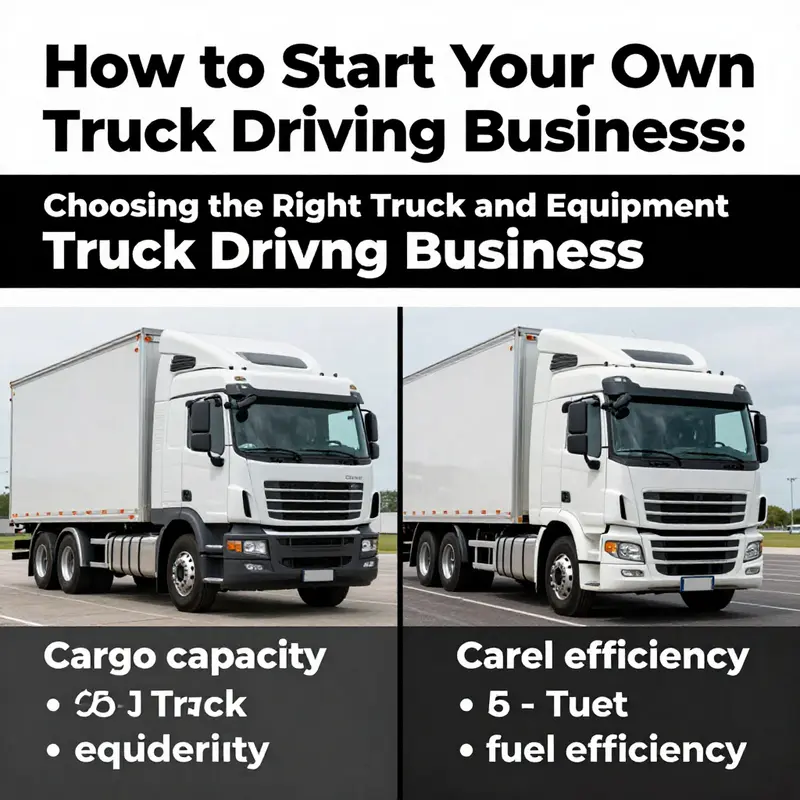
Once you know where loads originate and terminate, match that profile to the right truck and equipment. Vehicle choice should reflect typical payloads, ticket sizes, and route length. Light-duty trucks can win last-mile and small-business contracts, while heavy rigs suit long-distance and bulk freight. Prioritize fuel economy, uptime history, and ease of maintenance when evaluating options. Buying used equipment reduces upfront costs, but ensure thorough inspections and a known service history. If you lease, read contract terms for permitted use and maintenance responsibilities. Remember that downtime kills margins. Plan for spare parts access and a trusted repair shop network before the truck leaves the lot.
Building partnerships is the next decisive step. Identify and introduce yourself to local shippers, third-party logistics providers, and warehouse operators. Offer clear value: reliable pickups, consistent on-time deliveries, and transparent communication. Start small with a handful of recurring clients and expand organically. A network built on predictable service attracts larger accounts over time. Look beyond direct shippers to venues that consolidate freight, such as cross-dock facilities and regional hubs. These nodes smooth demand variability and offer frequent, smaller loads that keep cash flow steady.
A central hub or staging area changes how a small trucking business operates. Even a modest parcel of leased space at a shared-use warehouse gives you a place to consolidate less-than-truckload (LTL) shipments, reload faster, and offer scheduled pickups. Hubs also reduce deadhead miles and let you string multiple deliveries into a single efficient run. If running a true hub is not yet affordable, partner with local warehouses or distribution centers that will receive and hold freight for scheduled consolidation. Those relationships require careful coordination but deliver the same operational advantages.
Technology underpins any modern network. Implement basic telematics to track vehicle location, driver hours, and fuel burn. Use route optimization tools that adapt to traffic and weather, and integrate dynamic routing to shorten delivery windows. A lightweight customer portal or simple automated updates can set you apart from competitors who rely on manual calls. Avoid overcomplicated systems when starting out; choose solutions that scale with your business. Ensure all reporting ties back into your accounting and dispatch workflows so you can measure load profitability and driver productivity.
Finding loads requires a dual approach. Maintain active outreach to local shippers and brokers, and use digital load-matching services for spot work. Establishing long-term contracts reduces volatility and simplifies planning. When negotiating rates, price conservatively. Cover fuel, maintenance, insurance, tolls, and realistic driver pay. Include clauses for accessorials and delays. For spot rates, calculate a floor price that protects margins and avoid chasing every low-priced load that increases wear and tear without meaningful profit.
Safety and compliance are non-negotiable elements that shape reputation and access to contracts. Maintain strict vehicle inspection schedules and documented maintenance records. Train drivers on defensive driving, cargo securement, and company procedures. If your operation crosses borders or state lines, keep permits and hours-of-service records current and accessible. Compliance systems reduce the risk of fines and help clients trust that you will deliver reliably. A visible commitment to safety can be a differentiator when competing for freight.
Insurance and cargo protection must align with the freight you haul. Work with an insurer who understands commercial trucking to set appropriate liability and cargo limits. Consider riders for specialized cargo and evaluate deductible structures against cash flow. Cargo claims slow payments and damage client relationships. Implement clear loading and unloading protocols, and document cargo condition at pickup and delivery. These practices protect you and demonstrate professionalism.
Driver relationships anchor your network. Hire for reliability and train for consistency. Offer clear routes, predictable schedules, and pay structures that reward on-time performance and safe driving. Retain drivers through consistent communication and by investing in their development. When drivers understand routes and customers, service quality improves. Small investments in training and incentives often yield lower turnover and higher client satisfaction.
Security and cargo-theft mitigation matter, especially on high-value lanes. Use layered measures: secure parking, cargo seals, GPS geofencing, and verified pickup and delivery procedures. Screen access to your facility and train drivers on situational awareness. When possible, plan pickups and drop-offs in well-lit, monitored locations. These measures reduce insurance claims and maintain client confidence.
Operational resilience means planning for variability. Build cash reserves for unexpected repairs and slower seasons. Diversify your customer base to avoid dependency on one shipper. Consider service diversification, such as offering scheduled last-mile deliveries, white-glove handling, or expedited options. Each new service should be evaluated for equipment needs and margin potential before rollout.
Scaling the network requires systems and repeatable processes. Standardize rate sheets, contract templates, and onboarding checklists. Use simple fleet management tools to generate performance reports and identify underperforming lanes. As volume grows, invest in a modestly larger hub, hire a dispatcher, and formalize customer service procedures. Keep growth measured. Expand into adjacent lanes where you already have presence and relationships, not into unfamiliar long-distance markets without research.
Finally, stay plugged into industry developments and regional changes that affect freight flows. Local economic shifts, new distribution centers, and shifts in trade policy change demand patterns. Regularly revisit your lane profitability and client mix. When you combine disciplined market research, targeted equipment choices, strategic partnerships, technology that scales, and a relentless focus on safety and service, you create a logistics network that supports a profitable trucking business.
For an example of intermodal and chassis innovations that can influence hub and equipment choices, see Stoughton intermodal innovations. For additional guidance on shaping a resilient logistics network, consult this practical industry resource: https://www.transporeon.com/blog/how-to-build-a-reliable-logistics-network/
Final thoughts
Launching a truck driving business requires careful planning, regulatory compliance, and strategic market engagement. By following the outlined steps—securing the necessary licenses, conducting diligent market research, choosing the right truck, registering legally, and building a logistics network—you can lay a solid foundation for a successful venture. This business not only offers significant financial potential but also the satisfaction of being integral to various industries. As you embark on this journey, remember that continuous learning and adaptation will be key to your long-term success.