
Hotshot trucking occupies a pivotal role in modern supply chains by delivering time-sensitive freight with agility and precision. For logistics and freight companies that need rapid responses, construction and engineering firms that require urgent equipment parts and site-ready materials, fleet management teams seeking scalable models, and food and beverage distributors facing tight delivery windows, a well-planned hotshot operation can close critical gaps between production, sites, and customers. This guide presents a practical, end-to-end path to launching a hotshot trucking business that emphasizes regulatory compliance, operational efficiency, and dependable service. By defining a precise niche, securing the necessary authority, and building a disciplined operational backbone, you can achieve sustainable growth with modest initial investment. The following chapters build on each other: first, identifying the right market and business model; second, securing licenses, permits, and operating authority; and third, selecting equipment, arranging appropriate insurance, and structuring day-to-day operations. Together, these components form a cohesive blueprint for becoming a reliable partner to logistics operators, construction teams, fleet managers, and distributors who demand speed without compromising safety or compliance.
Niche by Necessity: Crafting a Clear Model to Launch a Hotshot Trucking Business
Choosing where to start is the fastest way to gain momentum in hotshot trucking. The decision that shapes every other move is not merely which truck you own, but which niche you serve and what kind of business model you build around it. Time-sensitive freight demands not only speed but predictability. Your ability to consistently deliver on tight deadlines, with minimal surprises, will determine whether you can attract repeat clients and command premium pricing. When you approach this chapter, imagine you are sketching a map for a road you will drive every day. The destination is a sustainable, scalable operation, but the route depends on the niche you choose and the framework you set for revenue, risk, and growth. In practice, a strong niche emerges from a careful blend of market need, your capabilities, and a model that aligns with your risk tolerance and long-term goals. The better you define that blend from the outset, the more resilience you will have when markets shift, competitors adjust, or customers tighten their belts.
To begin, consider the core markets that routinely rely on hotshot services for urgent, time-sensitive freight. Industrial parts and equipment deliverables can be a steady lane if you cultivate relationships with manufacturers and repair facilities that must keep lines up and machines running. Construction-related freight—such as rapid transport of heavy utility or earthmoving components between sites—offers another reliable corridor, particularly when schedules hinge on critical project milestones. Emergency or near-emergency repair shipments, where downtime translates to significant losses for a client, can justify higher rates and stricter service level agreements. The common thread is clear: you win by becoming a trusted partner who removes risk from a customer’s critical operations. Rather than chasing generic freight volume, you pursue predictable demand you can meet with a well-planned operation. That focus becomes the foundation of both your pricing and your service promises.
From there, the business model you build around that niche determines how you generate revenue, how you allocate risk, and how you scale. At the simplest level, you might operate as a sole proprietor, doing the driving yourself and expanding only as certainty and cash flow allow. This path minimizes legal complexity and upfront overhead, but it also ties your personal finances directly to business ups and downs. If you plan to grow, an LLC often provides liability protection and credibility, while still letting you manage ownership and taxation in a straightforward way. Some operators eventually evolve into partnerships or small corporations as they add drivers and assets. Each structure has trade-offs in terms of taxes, compliance, and governance. Your choice should reflect how many people you intend to bring on, how you want control distributed, and what level of personal exposure you are willing to accept.
In shaping the niche and the model, you must also decide on the type of equipment that will carry you to your first client exhibitions and then toward profitability. A hotshot operation typically favors vehicles that balance cargo capacity, reliability, and maneuverability. Common configurations include box trucks of a manageable length for tight urban routes, or lightweight flatbeds capable of handling heavy, longer loads that require secure tie-downs or specialized equipment. The decision between using a personal vehicle, leasing, or purchasing a dedicated hotshot truck hinges on your initial capital and your tolerance for maintenance obligations. Leasing can reduce upfront costs and provide maintenance options that lower the risk of downtime—an important consideration when your business depends on timely deliveries. If you intend to grow quickly, you may want to reserve capacity by adding one or two more drivers and assets within a defined period. A clear equipment plan helps you estimate insurance needs, maintenance budgets, and deployment timelines for each asset you add to the fleet.
But a well-chosen niche and a solid model do not exist in isolation from regulatory realities. Before you can begin hauling goods across state lines, you must secure the proper licensing and operating authority. The federal framework is built on accountability and safety, and it translates into predictable costs and administrative steps. At a minimum, you will need to register with the federal motor carrier authority to obtain a motor carrier number and a unified registration number. If you plan interstate operations, you will also confront the requirement for “For-Hire” operating authority. The state layer adds its own set of licenses and inspections that vary by region but typically require proof of insurance, vehicle compliance checks, and a clear business registration. The paperwork is not a hurdle to progress; it is the passport that legitimizes your business and reassures customers that you meet professional standards. The process may feel meticulous, yet it is the backbone of every credible operation. When you pair niche focus with compliant structure, you lay a foundation for reliable service that clients can trust with their most time-sensitive freight.
That trust is reinforced by how you manage risk and how you communicate value. The insurance stack you assemble must reflect the scope of your niche and the real exposures you encounter. Primary liability insurance often forms the bedrock, with minimums that reflect the potential consequences of accidents on high-value cargo and in congested environments. Cargo insurance protects the goods you transport, and it should be aligned to the typical value of shipments you handle. Physical damage coverage guards the trucks and trailers that carry your business forward, while uninsured/underinsured motorist coverage provides a buffer against the unexpected. Insurers typically want to see proof of compliance with safety and federal regulations before they issue policies, so prepare for a review of DOT filings, vehicle maintenance records, and driver qualifications. Insurers value operational discipline: a well-documented maintenance schedule, training programs for drivers, and a track record of on-time deliveries. A robust insurance framework, like a well-constructed niche and model, signals to clients and lenders that you are a credible, long-term partner rather than a temporary service provider.
Another crucial piece is the human element. Driving is the core skill, but the scale you seek depends on your ability to recruit, train, and retain qualified operators who share your service standards. As you consider whether to operate solo or recruit additional drivers, think about how you will preserve consistency in loading practices, load securement, and adherence to hours-of-service rules. The driver pool you assemble should reflect the demands of your niche: for example, loads that require careful handling of sensitive equipment, compliance with hazmat endorsements if needed, and the capacity to pivot quickly between urgent deliveries and scheduled routes. Training should cover defensive driving, proper cargo securing, and the documentation road—ensuring you and your drivers can demonstrate compliance during stops or inspections. Electronic logging devices become a practical tool here, converting policy into practice by providing real-time visibility into hours, rest periods, and routing—without sacrificing efficiency.
Pricing, too, deserves deliberate design rather than reactive bidding. A well-defined niche supports pricing models that reflect the value you deliver. Some operators charge by the mile when the path is predictable and the load is uniform. Others lean into job-based pricing when urgency, distance, or complexity varies—capturing value from clients who need a guaranteed window or a fixed delivery date. A third approach combines distance with level of service, offering flat-rate pricing for routine deliveries and premium surcharges for guaranteed time windows or unusual handling requirements. The key is to present clients with clear, transparent terms: what is included, what might incur extra charges, and how performance guarantees are evaluated. A predictable pricing framework also simplifies back-office work, making it easier to forecast revenue and manage cash flow as you scale.
Having a niche and a model also means thinking about how you will reach and service clients. Early success often comes from a focused, local approach—targeting manufacturers, repair shops, and construction firms that value speed and reliability over price alone. You can build a base by combining direct outreach with a broad digital footprint and a reputation for dependable delivery. While online load boards and digital dispatch platforms can help you find early opportunities, you should also invest in person-to-person connections. Attend local trade shows, join industry associations relevant to your chosen niche, and cultivate relationships with fleet managers who frequently require fast deliveries of high-value or time-sensitive cargo. Premium service is your differentiator: real-time tracking, prompt communication, reliable ETA updates, and proactive problem solving when plans change. When clients sense you are more than a courier—when they sense a partner who understands their critical schedule—you earn repeat business and referrals, reducing your marketing overhead over time.
Technology is not a substitute for relationships, but it is a force multiplier. A transportation management system helps you automate dispatching, optimize routes, and bill clients efficiently. Telemetry and GPS tracking provide location data, fuel usage insights, and driver behavior monitoring, all of which sharpen your operating decisions. A client portal can turn shipments into a transparent experience, where customers see ETAs, update instructions, and review invoices in one place. These digital tools do more than improve efficiency; they reinforce your value proposition to clients who require visibility into complex logistics. The data you collect also informs your continuous improvement loop: you identify where you lose time or incur unnecessary costs, then implement adjustments that reduce waste and improve service levels. Studies and industry pilots consistently show that digital management tools can reduce empty miles when used to reallocate capacity and plan smarter routes, which in turn heightens fleet utilization and profitability. In a niche-driven business, data helps you tailor your service to the precise needs of your clients while preserving your operational discipline.
Of course, the blueprint you choose must be financially sound from day one and sustainable as you grow. Start with a detailed cost projection that mirrors the realities of your chosen niche and model. Vehicle costs can be substantial, whether you buy or lease, and you should budget for insurance, licensing, permits, and ongoing maintenance. Fuel and maintenance expenses are real, and you should estimate them per mile rather than as generic monthly charges to prevent underestimating cash burn during lean periods. It is prudent to maintain a reserve that covers three to six months of operating expenses. This cushion protects you during demand dips or unexpected maintenance needs and signals financial resilience to lenders who may support your growth with favorable terms.
When you take all these elements together—niche specificity, a coherent business model, compliant licensing, robust insurance, trained drivers, disciplined operations, and a strategic use of technology—you create a cycle of reliability that feeds itself. Your niche attracts specific customers who value the focused service you provide. Their steady demand validates your model so you can reinvest in more equipment or more drivers, which expands your capacity to handle larger or more frequent loads. With a credible operation, you gain access to higher-quality opportunities and more predictable cash flow, which in turn justifies higher rates and better terms. The positive feedback loop can be your most powerful asset, but it requires discipline to maintain the quality that started the momentum. If you lose sight of the core value you promised clients—speed without sacrificing safety, reliability without overextending your resources—the momentum can stall.
As you move through these considerations, remember that the craft of starting a hotshot trucking business is less about chasing a silver bullet and more about building a practical, repeatable system. Your niche is the compass; your model is the engine; your regulatory posture is the warranty that keeps customers confident. When these pieces align, you do not simply launch a business—you establish a dependable service that clients will count on in their most mission-critical moments. The next chapter will build on this foundation by exploring how to turn that initial system into a scalable operation: how to hire, how to scale responsibly, and how to balance growth with continued service excellence. For now, let this real-world approach to niche and model anchor your plans. Remember that a well-chosen niche, paired with a sound business framework, can make a modest start remarkably resilient and capable of expanding as your reputation grows. And if you ever doubt the importance of people in this equation, consider how investing in your team translates into better service, better safety, and better margins—an idea you can explore further through dedicated discussions on team development and leadership in the trucking context. Investing in people: a new path for trucking fleets.
Finally, consult established guidance to keep your plans grounded in regulatory reality. The U.S. Department of Transportation’s official resources provide the authoritative framework for licensing, safety, and compliance necessary to operate across state lines. As you prepare to engage with regulators, customers, and partners, keeping the regulatory pathway clear will support your credibility and ensure you stay on the right side of the rules as you scale. For official guidance, see the U.S. Department of Transportation’s site. U.S. Department of Transportation.
Grounded in Compliance: Securing Licenses, Permits, and Authority to Launch a Hotshot Trucking Startup
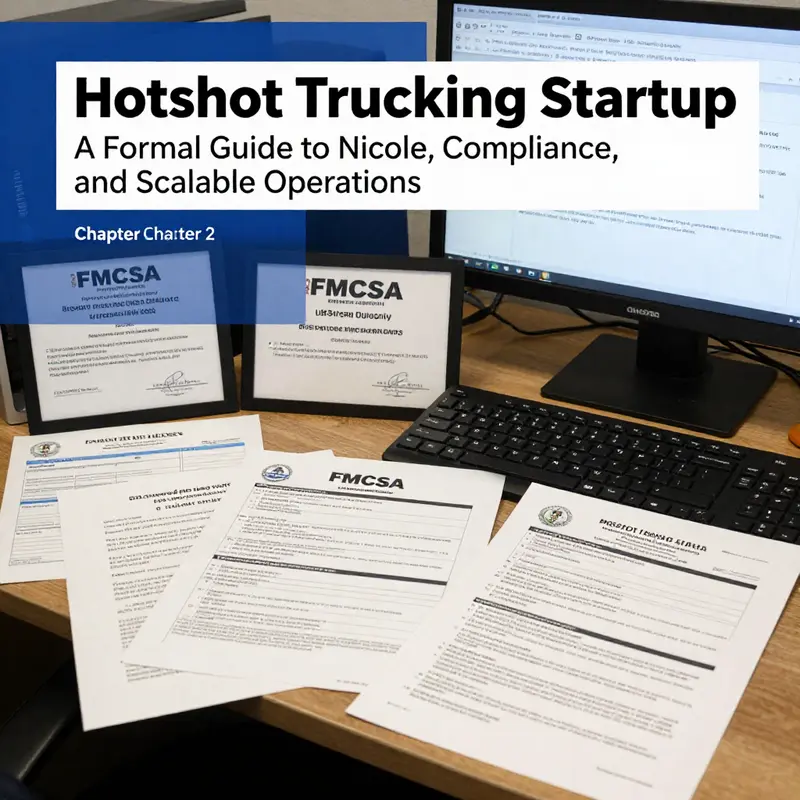
Launching a hotshot trucking business starts with a deliberate legal foundation. Before moving loads or buying trucks, you must choose a business structure, obtain an EIN, and set up banking. The core federal steps are to secure USDOT and MC authority through FMCSA URS, and to appoint process agents with BOC-3 filings in the states where you operate. Insurance is layered: minimum liability around 1 million dollars for many property-carrying operations, plus cargo, physical damage, and uninsured/underinsured motorist coverages. State licensing then follows: CDL if weights push beyond standard limits, and registration programs such as IRP and IFTA for multi-state operations. Driver-management adds drug and alcohol testing, driver qualification files, medical cards, and Hours of Service compliance with ELDs. A practical compliance calendar helps manage renewals, filings, and policy changes. The result is credibility and resilience: a plan you can present to shippers and insurers, and a platform for contract growth. The path is not just about meeting minimums; it is about building a repeatable, audit-ready process that supports reliable service.
From Tools to Timelines: Building an Operational Backbone for a Hotshot Trucking Venture
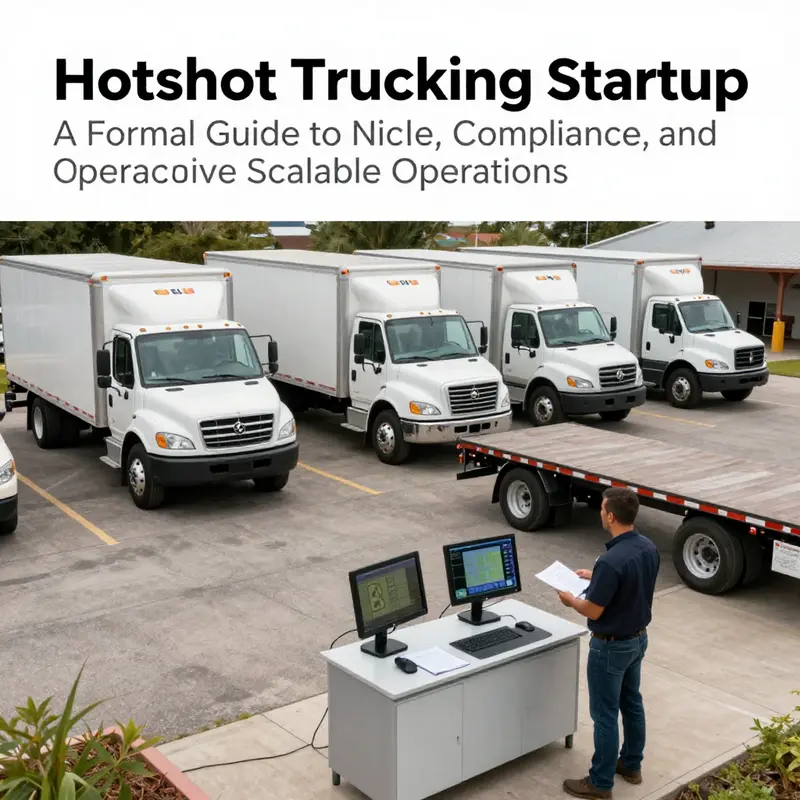
Launching a hotshot trucking business hinges on a careful blend of dependable equipment, solid insurance, and a well-designed operating spine. The equipment you choose sets the tempo for every delivery window and every hard‑won customer smile, while insurance and risk management translate potential misfortune into a manageable cost of doing business. The backbone, meanwhile, is the workflow that turns a promise of speed into a reliable service that clients return to again and again. In practice, this chapter follows a deliberate sequence: select the right hardware, secure comprehensive protection, and then weave together dispatch, billing, and driver management into a cohesive system that minimizes friction and maximizes uptime. Although the specifics can vary with location and load type, the underlying principles hold true for a lean, scalable start.
Equipment decisions are a matter of balance. A hotshot operation thrives on vehicles that are nimble enough to handle time‑sensitive freight yet sturdy enough to haul heavier loads over meaningful distances. The common configurations—box trucks for quick loading and unloading, or gooseneck trailers hitched to a lighter tractor—offer different advantages depending on the typical payload, distance, and your access to maintenance resources. The first rule is reliability over novelty. Start with equipment that has a solid maintenance history and a track record of uptime. In many cases, prudent entrepreneurs opt for a used truck or trailer with verifiable service records or they enter a disciplined lease arrangement that includes routine maintenance. Leasing can preserve cash flow in the early months when workloads are not yet consistent, while still giving you access to a modern, safety‑compliant platform that your clients can trust.
Safety and compliance are inseparable from capability. Your vehicles must meet FMCSA safety standards, not just for the sake of regulations but because a dependable fleet builds client confidence. That means well‑maintained brakes, reliable lighting, sturdy tires, and an integrated system for geofenceable, auditable tracking. Telematics and GPS aren’t luxuries in hotshot work; they’re a core aspect of service level and vulnerability mitigation. Real‑time location data informs dispatch decisions, helps you honor tight delivery windows, and serves as a transparent touchpoint for customers who rely on you to keep progress visible. The equipment choice also shapes your maintenance rhythm. With a lean operation, a preventive maintenance schedule becomes an investment in reliability rather than a costly disruption. The discipline of scheduled inspections reduces breakdowns and preserves the predictable delivery cadence that clients depend on.
As you weigh box trucks against gooseneck trailers, consider load characteristics and loading speed. Box trucks excel at fast, door‑to‑door handoffs and can be easier to insulate from weather, which matters for time‑sensitive freight. Gooseneck setups, by contrast, typically offer higher payload capacity and a broader set of haul options, which is advantageous when you encounter construction equipment, machinery parts, or urgent industrial components. Either path should align with a practical load plan drawn from early client conversations and pilot assignments. When cash flow is tight, a hybrid approach can also work: use a modest, reliable box truck for the majority of urgent local work while reserving a trailer setup for heavier, less frequent runs that stretch into the next day. Regardless of configuration, the objective is a vehicle that loads quickly, handles payloads with security, and maintains predictable fuel efficiency across typical routes.
Beyond the chassis, the ancillary equipment matters just as much. A dependable winch, proper tie‑downs, and a secure cargo system reduce the risk of damage and claims—factors clients scrutinize when choosing a partner for high‑value or time‑sensitive freight. Consider the ergonomics of loading and unloading, because operators who struggle with awkward equipment are slower, riskier, and more likely to miss delivery commitments. If you are starting with one truck and plan to scale, document a standard loading and securing protocol that drivers can follow without ambiguity. A clear protocol reduces training time for new hires and creates a consistent service experience that customers recognize and appreciate.
Finance and cash flow considerations shape equipment decisions as well. Start by mapping total cost of ownership, not just the sticker price. This means factoring depreciation, interest or lease payments, insurance premiums, maintenance reserves, tires, fuel efficiency, and the opportunity cost of capital. In the earliest stages, the goal is to acquire a dependable platform that supports steady revenue, not a showpiece that strains your budget when the first slow week arrives. A practical rule of thumb is to set an upfront reserve for essential maintenance in the first six months, then adjust as you learn which routes and load types dominate your calendar. In parallel, begin cultivating relationships with reputable lending partners or leasing fleets that understand the hotshot niche. A lender who appreciates the dynamics of on‑demand freight can offer terms that align with your seasonal fluctuations and early growth plans.
Once equipment and basic safety considerations are settled, the next pillar to construct is a robust insurance framework. The layer of protection you assemble is not merely a regulatory compliance exercise; it is the foundation that makes clients comfortable with sending you their most time‑sensitive and valuable shipments. The core policy set should include primary liability insurance, typically with a substantial per‑accident limit, to reflect the risk profile of transporting high‑value freight. Cargo insurance is essential for shielding against loss or damage, and it should be calibrated to the value of typical shipments you expect to carry. Physical damage coverage protects your asset base from the inevitable wear and tear of travel, while uninsured/underinsured motorist coverage adds a safety net in the event of incidents where fault and coverage become uncertain.
Most carriers will require proof of DOT compliance and a solid safety record before issuing policies, so your efforts in the early phase to document inspections, maintenance, and adherence to hours‑of‑service rules pay dividends in easier underwriting. Work with a broker who specializes in trucking risk. They can translate your operational plan into a policy package that aligns with your actual exposure, rather than a one‑size‑fits‑all template. Given the time sensitivity of freight work, you may also discuss additional protections for non‑owned trailer liability or contingent cargo coverage if you anticipate partnering with owner‑operators or subcontractors. When a customer asks for proof of coverage, you want to present a clean, credible profile that signals you are not a startup with dubious risk but a prepared partner who treats safety and reliability as core values.
As insurance discussions unfold, a practical idea takes center stage: build a culture of accountability around maintenance and compliance. This is not about meeting a minimum standard; it is about creating a defensible operating posture that reduces the odds of claims, protects margins, and reinforces your brand. A common misstep is to underestimate the value of documentation. High‑quality records—maintenance invoices, inspection checklists, incident reports, and driver training logs—do more than satisfy auditors. They tell a story to clients and lenders about an organization that takes risk management seriously. The right documentation streamlines audits, lowers insurance friction, and can translate into better rates over time as your safety profile improves.
With equipment secured and insurance arranged, the chapter turns to the operational spine that turns promises into deliveries. Dispatch and billing systems are not optional accessories; they are the digital nerves of a modern hotshot business. A lean operation benefits from a transportation management mindset that automates routine tasks, reduces manual data entry, and increases the transparency that clients expect. A basic yet scalable setup includes a dispatch workflow that captures load specifics, driver availability, equipment compatibility, and delivery windows. Route planning should be dynamic, accounting for traffic, weather, and the need to arrive within the promised timeslot. This is where technology moves from nice‑to‑have to essential—where a well‑selected fleet management software pair can link dispatch, telematics, invoicing, and customer communication into a single, auditable thread.
Real‑time tracking becomes a standard feature, not a selling point. Clients increasingly judge a carrier by visibility—knowing where a shipment is, and when it will arrive, reduces anxious phone calls and accelerates billing. A robust system sets up alerts for key events, such as departure, arrival at a facility, loading confirmations, and delays. The value of such tracking extends to operations intelligence: analyzing the data helps you identify patterns, optimize routes for future loads, and shrink unproductive miles. In hotshot work, where speed and reliability are often the decisive competitive edge, a few well‑placed data points can translate into repeat business and higher margins.
A practical operating backbone also includes driver management that respects time constraints while maintaining safety. Even if you begin as a sole owner‑operator, the plan to scale should include onboarding, performance monitoring, and a feedback loop that helps drivers grow with the business. Training in defensive driving, load security, and FMCSA hours‑of‑service compliance isn’t just compliance; it’s a differentiator that reassures clients who deal with sensitive, time‑critical freight. Electronic logging devices (ELDs) are not merely a regulatory requirement; they are an instrument of operational discipline that reduces disputes and keeps your payroll and invoicing aligned with actual hours worked. The long‑term payoff is a reputation for professionalism, lower claim frequency, and smoother audits when you expand beyond a single vehicle.
As you build out the operational spine, remember that clients are not only seeking speed but also predictability and clarity. A simple but powerful approach is to establish a client‑facing portal or a robust invoicing workflow that mirrors the expectations of professional buyers in manufacturing, construction, and event services. Real‑time progress updates, clear terms, and straightforward payment options reduce miscommunications and accelerate cash flow. Early on, this may mean starting with a straightforward, contract‑oriented agreement for common job types—express deliveries, urgent parts drop‑offs, or on‑site equipment relocation. As your fleet grows, you can invest in more sophisticated features, such as automated billing tied to GPS events or performance dashboards that demonstrate on‑time delivery rates and fuel efficiency. These elements are not vanity metrics; they become the benchmarks your clients use to decide whether to award future work.
The strategic value of an integrated approach becomes especially apparent when you align equipment and operations with niche markets. A hotshot operation that targets a specific sector—such as industrial parts delivery, emergency repairs logistics, or equipment relocation for construction sites—benefits from a predictable cadence of jobs and a reputation for reliability within that niche. This alignment makes it easier to forecast demand, calibrate insurance coverage against known risk profiles, and tailor dispatch rules to common load types. It also makes business development more efficient: instead of chasing general freight, you pursue known buyers and service levels that appreciate your specialized capabilities. In this sense, the equipment and operational spine are not just the means of moving goods; they are the signals that convey your value proposition to a predictable market.
As you approach the end of the startup phase, it is valuable to reflect on how people factor into the machinery of your operation. Even a single rig relies on the competence and discipline of its driver, the reliability of its maintenance partner, and the competence of the back‑office team that keeps the schedule intact. A growing business must integrate a people strategy with its equipment and risk management, and this is where learning from broader industry practices pays off. For example, investing in people and leadership development has shown to yield stronger fleet performance and higher retention, which in turn supports consistent service levels and client satisfaction. You can explore this dimension further in resources that discuss building teams and investing in human capital as a strategic driver of trucking success. Investing in People: Key to Trucking’s Success offers perspectives on how people processes reinforce every mile you cover and every contract you win. The practical takeaway is straightforward: your operational backbone gains velocity when you treat personnel as a scalable capability, not just a line item in payroll. In the long run, that alignment between hardware, protection, and people is what differentiates a startup hotshot squad from a volatility‑prone one‑truck operation.
The regulatory and safety framework remains an unglamorous but essential partner in your growth. Your equipment and insurance should be considered through the lens of risk management rather than as a mere compliance checkbox. A disciplined approach to maintenance, driver training, and incident reporting reduces the frequency and severity of claims, which in turn lowers insurance costs and keeps premiums predictable as you expand. The FMCSA and state regulators are signatures on the door to interstate work, but the real enforcement of quality is the quiet effort you invest in preventive care, punctuality, and transparent communication with clients. In practice, this means you build a culture that views every load as a bond with a customer—an agreement to deliver on time, intact, and with clear, auditable records that support every invoice.
In closing, the acquire‑equipment, secure‑insurance, and build‑operations triad is not a checklist to complete once and forget. It is a living, evolving framework that should adapt as you prove out your niche, learn the patterns of demand, and refine your cost structure. The most resilient hotshot operators treat equipment selection as a foundation for reliability, insurance as a safety net that enables risk‑taking where it matters, and operations as the daily discipline that converts capacity into dependable service. When done well, this triad yields a business that not only survives the inevitable market fluctuations but also earns the confidence of customers who repeatedly rely on a partner capable of turning urgent needs into timely, professional outcomes. And as you scale, the core principle remains unchanged: quality comes from consistency—consistency in equipment readiness, consistency in safety and coverage, and consistency in the workflows that keep every delivery on schedule.
External resource: https://www.fmcsa.dot.gov/regulations/operations
Final thoughts
Launching a hotshot trucking business that effectively serves logistics and freight partners, construction and engineering firms, fleet managers, and food & beverage distributors hinges on three aligned pillars: a clearly defined niche with a credible business model, robust regulatory readiness, and a well-structured operational foundation. By selecting the right vehicle type and service level, obtaining the necessary licenses and operating authority, and implementing insurance alongside efficient dispatch and telematics, you create a durable value proposition grounded in reliability and compliance. This integrated approach reduces risk, improves service consistency, and positions your operation for sustainable growth even as market demands shift. The practical path outlined here helps you move from conceptual planning to a disciplined, client-focused hotshot trucking business ready to scale.