
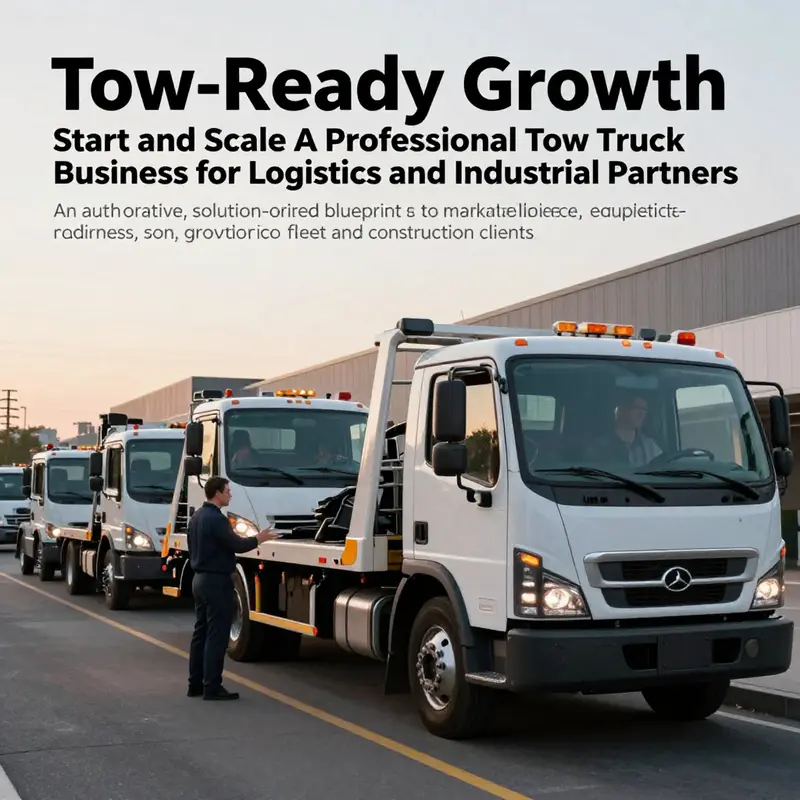
Strategic tow truck services are essential to maintaining continuous operations for large logistics networks, construction sites, and regional distributors. By delivering reliable recovery, roadside, and freight-related services, a professional tow operation can become a trusted extension of a client’s supply chain. The core opportunity lies in serving enterprise buyers—logistics and freight companies, construction and engineering firms, fleet management providers, and regional food and beverage distributors—with predictable response times, transparent pricing, and rigorous safety standards. To convert this opportunity into a profitable, scalable business, a structured approach is required: define a clear market position and service mix; secure compliant operations; equip and deploy a capable fleet; and establish a brand and financial system that supports long-term partnerships. This article outlines four interdependent chapters that guide you from market intelligence to sustainable growth. Chapter 1 focuses on Market Research and Business Planning, ensuring your offerings align with customer needs and the economics of servicing large fleets. Chapter 2 covers Legal Requirements and Licensing, to ensure eligibility for fleet contracts and interstate work. Chapter 3 emphasizes Acquire the Right Equipment and Operational Readiness, detailing vehicle types, equipment, and maintenance practices that meet industrial expectations. Chapter 4 addresses Brand, Marketing, and Financial Management, showing how to present a professional image, win contracts, and manage cash flow. Together, these sections provide a coherent, solution-oriented roadmap for launching a tow truck business that resonates with enterprise buyers and scales with demand.
Toward a Strong Start: Market Research and a Purposeful Plan for Launching Your Tow Truck Business
Launching a tow truck business begins long before a single mile is logged behind the wheel. It starts in the quiet work of market research and planning, where observations about the roads translate into a clear, defendable path to profitability. The strongest launches are not built on hope but on a well-constructed plan that reflects local demand, the realities of pricing, and the rhythm of a 24/7 service industry. This chapter stitches together those threads, showing how to listen to the market, identify a sustainable niche, and frame a business plan that guides daily decisions while attracting investors or lenders. It is a map for turning parking lot whispers into a disciplined route to growth, where every assumption is tested against the realities of your community and the mechanics of your budget.
Market research, at its core, is about understanding where your service is needed and why. Start by surveying your geographic area with a practical eye: what neighborhoods bear the brunt of breakages, what times of day see the most activity, and how the highway network funnels traffic toward certain corridors. Urban centers tend to yield high call volumes and a premium on rapid response, but they also demand tighter dispatch, better routing, and more boots on the ground to cover the dense geography. In contrast, suburban and rural regions reward reliability over speed, with broader service areas and longer drive times that still must be priced to cover fuel and wear. The landscape is shaped not only by roads but by the people who use them and the businesses that depend on timely, careful vehicle transport. Population density, road conditions, weather patterns, and the presence of major logistc hubs all influence demand. The aim is not to chase every potential customer but to identify the segments where you can deliver consistent value and maintain attractive margins.
From there, you build your target customer profile. Your most direct customers fall into several essential groups. Individual drivers need prompt roadside assistance after a breakdown or collision. Auto repair shops and body shops require dependable transport for damaged vehicles and consistent service with manageable dispatch. Car dealerships and rental companies move inventory between locations and may need scheduled, reliable handling to protect high-value assets. Insurance providers frequently contract with tow operators to streamline claim-related towing, storage, and liability management. Finally, there are niche markets within the field, such as high-value or specialty vehicles that require extra care and specific equipment. Understanding which of these segments you can serve most effectively helps you shape pricing, response times, and the messaging you use in marketing. It also clarifies the operational model you’ll need to deliver on those promises.
Competitors share the road with you before you ever officially start. A thorough competitive check reveals how many tow trucks operate in your area, the service zones they cover, their pricing structures, and their advertised response times. It also uncovers their reputations—visible in online reviews, social media chatter, and the real-world impressions of dispatchers and drivers. Look beyond the obvious offerings and ask what gaps exist. Are there 24/7 gaps, limited nursing of heavy vehicle recovery, or inconsistent communication with customers? Do local firms emphasize price over service quality, or vice versa? The aim is not to imitate but to differentiate. The gaps you uncover become your entry points: a commitment to faster first response in specific neighborhoods, a more transparent pricing model, or a documented standard for safe handling of delicate or luxury vehicles. The competitive landscape also informs your branding and service differentiation, from how you present your pricing to how you communicate during a tow. A thoughtful positioning—rooted in actual market needs—reduces the risk of overspending on assets that your customers do not value.
With market observations in hand, you shift into the backbone of the venture: a detailed business plan. This is the document that translates insights into an executable strategy and a credible forecast. A well-crafted plan has several core sections, each serving a purpose. The executive summary compresses your concept, mission, and objectives into a shareable snapshot that can anchor conversations with lenders or partners. The company description clarifies your legal structure, location, and growth vision, answering why you’re entering this space and how your experience positions you for success. The market analysis formalizes what you’ve learned about demand, trends, and the competitive environment, often supported by simple charts or data points that illustrate demand cycles and seasonality. The organization and management section outlines how you’ll staff the operation—drivers, dispatchers, mechanics, and support personnel—and explains how you’ll grow that team as the business scales. The service offering sets the scope of what you provide, from standard towing to specialized transport, roadside assistance, and storage coordination. You should be explicit about which services you will prioritize first, given your market context and capital constraints. The marketing and sales strategy translates your market findings into concrete customer acquisition and retention tactics. It covers your online presence, partnerships with garages and insurers, and customer incentives designed to build steady referral traffic. Finally, the financial plan lays out startup costs, ongoing operating expenses, pricing assumptions, and revenue projections. It includes a break-even analysis, cash flow expectations, and a sequence of milestones tied to when you expect profitability and expansion. A business plan is not a static document; it is a living agreement with yourself and your lenders about how you will allocate time, money, and effort to reach your stated goals.
In this framework, a practical instinct matters as much as numerical rigor. Your plan should reflect real-world constraints: the days when a tow crew must chase multiple incidents across a wide radius, the cost of fuel, insurance, and maintenance, and the capital required to acquire or upgrade equipment. It is where the advice of others—mentors, experienced operators, and industry peers—translates into actionable assumptions. The plan also anchors risk assessment, prompting you to weigh scenarios such as slower growth, price pressure from competitors, or regulatory delays in licensing. A formal plan supports you when you approach lenders or investors, because it demonstrates a disciplined approach to capital allocation and risk management. The SBA offers a practical reminder that a thoughtful, written plan increases your odds of long-term survival and success—the kind of outcome you want from your very first year. For a practical, fill-in-the-blank approach to crafting your plan, you can explore templates and guidance through the SBA’s Business Plan Tool. This resource helps you structure, test, and refine your plan so it remains relevant as the business environment shifts.
As you shape your plan, think of people as a strategic asset. The path from plan to execution is smoother when you consider how you will recruit, train, and retain capable drivers, dispatchers, and shop staff. A chapter in the broader narrative of building a tow business focuses on investing in people as a lever for quality and growth. You can explore the concepts of human-capital investment at Investing in People for Trucking Fleets, which discusses how strong teams sustain performance, safety, and customer satisfaction even as demand fluctuates. This perspective helps ensure your marketing messages, service standards, and pricing are matched by a workforce capable of delivering them consistently.
The synthesis of market insights, a clear service proposition, and a robust plan also drives decisions about equipment and capital. Your choice of tow truck type, whether light- or heavy-duty, depends on the service mix you intend to emphasize and the geographies you will serve. The plan should spell out not only the initial purchase but the cadence of expansion: when to add a second truck, how to finance it, and how the added capability will translate into higher call volumes or the ability to serve a wider area. It should also address ancillary services that can improve the unit economics of the business, such as temporary storage coordination, specialty transport, or fleet services for local businesses. While equipment is the outward sign of a tow operation, the financial plan keeps the lights on and the wheels turning. Realistic revenue assumptions, carefully estimated dispatch efficiency, and transparent pricing all feed into the break-even analysis and the long-term growth trajectory.
In practice, a market-aware plan reframes typical startup choices. It guides you to center your early marketing budget on the channels most likely to yield measurable returns, such as robust online presence, accurate maps listings, and a few high-impact partnerships with local garages and insurance providers. It helps you set pricing that reflects your costs while remaining competitive, and it highlights the importance of clear, customer-centric communication—before, during, and after a tow. The language of the plan translates into the day-to-day operations you implement, from dispatch protocols and safety training to customer service standards and invoicing practices. In short, market research informs what you offer; the plan shows how you will offer it in a financially sustainable way; and both together prepare you to turn road-tested insight into reliable service and steady growth.
This seamless progression—from market observations to a formal plan, and from that plan to disciplined execution—keeps you aligned with customer needs and market realities without becoming hostage to wishful thinking. The journey is iterative: you test assumptions against data, adjust service mix and pricing, and expand only when the unit economics prove sound. The result is not a one-off startup sprint but a measured ascent that builds credibility with lenders, partners, and customers. As you move forward, the next chapter will translate this groundwork into practical steps for obtaining the necessary licenses and assembling the team that will carry your brand into the field. The story of your tow truck enterprise begins with listening to the market—and ends, in steady form, with repeatable, dependable service that keeps you growing.
External resource for further guidance: SBA’s Business Plan Tool: https://www.sba.gov/business-guide/plan-your-business/write-your-business-plan
Chapter 2: Laying the Groundwork for a Tow Truck Startup — Legal Requirements and Licensing
The tow truck business hinges on more than skilled vehicle recovery and quick dispatch. In truth, the legal and licensing framework is the backbone that makes every other step—from buying equipment to landing your first contract—possible. When you begin to map out your startup, think of licensing not as a barrier but as a design constraint. It shapes where you locate, how you operate, what insurance you carry, and how you interact with customers, cities, and regulators. The sooner you align with these requirements, the smoother your path to profitability becomes. You will not only satisfy regulators; you will cultivate trust with customers who want to know that the company they rely on can legally and reliably handle their emergency needs, every time.
Across the country, the journey begins with two parallel lanes: local approvals that greenlight a physical operation and the broader credentials that allow you to move vehicles and cargo across borders when necessary. Local approval typically starts with land use and safety standards. In practice, that means securing zoning clearance for your business location and passing a site inspection that confirms your facility can safely support commercial towing operations. The logic is simple: a tow yard and a shop should not merely exist; they must be designed to keep workers safe, protect the public, and prevent disturbance in the surrounding area.
A telling example emerges from urban guidance that underscores this sequence. In Chicago, for instance, prospective tow operators are expected to become a Registered Tow Truck Operator and to complete an inspection of their business site after zoning approval. This approach ensures that the facility meets the city’s safety and operational standards before it can begin serving customers. While the specifics vary by jurisdiction, the underlying principle holds true in many municipalities: regulatory approval is not a final stamp but an ongoing partnership to maintain safe and compliant operations. To acknowledge this local layer and to start your planning with the right questions, you can reference the official guidance on the city’s site. The implication is clear: your first investments should be in compliance readiness as much as in shiny new equipment.
Beyond the local approvals, there are federal and state credentials that matter, especially if you intend to operate across state lines or move vehicles commercially. At the federal level, nearly every tow operation that crosses state lines or acts as a motor carrier will encounter USDOT numbers and possibly an MC (Motor Carrier) number. These identifiers are not mere bureaucratic details; they are the authorization that signals your legitimacy to move freight and operate as a carrier. The path to these numbers begins with an accurate business registration, but the process itself invites patience and meticulous record-keeping. Your plan should include a realistic timeline for obtaining these numbers, a forecast of the financial impact of compliance costs, and a strategy for maintaining compliance over time. Local licenses and federal numbers serve different but complementary purposes: the former keeps you legally positioned in one place; the latter enables you to scale and operate more broadly, if you choose to pursue interstate work or fleet expansion.
Registration of the business is the logical next step after you select a legal structure—LLC, corporation, or sole proprietorship. The choice affects liability, taxes, and how you raise capital. A formal business registration also aligns with licensing requirements from the city and state, creating a consistent thread from your storefront to your dispatch desk. While the specifics of incorporation and tax treatment lie outside the towing-specific scope of this chapter, the prudent route favors a structure that shields owners and their personal assets while providing a straightforward path for obtaining licenses and insurances. Speaking to this alignment, keep in mind that every license you secure—whether a basic business license at the city or a more specialized operator permit—reflects the same disciplined approach to legality and responsibility.
Insurance is another non-negotiable pillar. A robust package tailored to towing operations typically includes general liability, physical damage, and cargo coverage. A practical baseline rule of thumb is to target coverage well above the value of your primary assets and the potential exposure from customers’ vehicles. Insurance isn’t merely a cost; it’s a signal to customers and lenders that you are prepared to absorb risk while upholding professional standards. In many markets, regulators expect proof of insurance as part of the licensing and site-approval process, and lenders will insist on it to support financing for equipment and facilities. You should map out coverage details early, then revisit them annually as your fleet grows, as your services diversify, or as regulations shift. The conversation with your insurer should include the specifics of your operational hours, dispatch platforms, and the typical geographic reach of your service, since these factors influence premium levels and claims handling expectations.
A critical thread weaving through all licensing activities is the requirement for safety and facility readiness. The site inspection that often accompanies zoning approval is not a one-time formality. Regulators expect a yard with secure fencing, adequate lighting, controlled access, proper drainage, and safe storage to prevent incidents and unauthorized use. Your equipment—the tow vehicle itself—must be registered and insured, and it should comply with weight, height, and safety standards established by local authorities. In many jurisdictions, the vehicle will also need proper licensing and registration akin to other commercial fleets. The attention paid to facility readiness often correlates with long-term operating efficiency: a well-organized yard reduces response times, lowers risk of damage during loading and unloading, and signals to customers that you run a professional operation worthy of their trust.
Operational discipline becomes a legal asset as you transition from plan to practice. A well-designed dispatch protocol, clear pricing structures, and documented safety procedures support licensing renewals and regulatory audits. Modern regulatory expectations increasingly intersect with technology. Electronically captured records—work orders, service summaries, and driver logs—can streamline compliance during inspections and audits. Dispatch software that records call times, location data, and invoicing trails is not a luxury; it’s a compliance asset that protects your business and clarifies service expectations for customers and regulators alike. As you scale, this automation becomes essential for maintaining transparency, which, in turn, sustains your eligibility for ongoing licenses and insurance terms.
In the broader regulatory conversation, it is often helpful to explore practical considerations and potential regulatory relief that can ease the path for operators—especially during unusual conditions. A relevant industry resource discusses regulatory relief strategies and practical tips, helping you stay compliant without stifling operational flexibility during events that stress the system. You can explore this perspective here: regulatory-relief-winter-storms-trucking.
All these dimensions—local zoning and inspections, federal motor carrier credentials, business registration, licensing, and robust insurance—form a cohesive sequence. Start with a clear map of what authorities in your city or county require for a tow operation. Then align your business structure, insurance, and vehicle strategy to that map. Do not treat the licensing phase as a separate hurdle; treat it as an integrated design constraint that informs where you build, how you hire, what equipment you buy, and how you communicate with customers. In this sense, licensing becomes a compass that guides your first year and beyond. It guards against mismatches between your service promise and your legal capacity, which is a common pitfall for new entrants who focus on trucks and dispatches but overlook the licensing cadence and regulatory maintenance that keep a tow business legally healthy.
As you prepare to submit applications and schedule inspections, keep the rhythm simple and repeatable. Gather the documents you will need across licenses early—proof of ownership or lease for your facility, a clear site plan, records of employee qualifications, and proof of appropriate insurance coverage. A well-documented package can shorten review times and reduce back-and-forth with regulators. If a jurisdiction requires a facility inspection, treat it as a collaborative process rather than a hurdle. Demonstrate you understand safety, security, and operations, and show how your setup facilitates rapid, reliable service to customers. The clarity you bring to your licensing package often translates directly into smoother approvals and fewer delays, which in turn supports a more predictable start-up phase.
The licensing journey also interacts with your long-term growth strategy. Even as you obtain essential licenses and secure insurance, keep in mind that some licenses are not one-time events. They require renewal, periodic reporting, and ongoing compliance checks. Build this cadence into your business operations so you don’t miss renewals or encounter lapses that disrupt service. A disciplined compliance routine—annual reviews of insurance limits, updates to vehicle registrations, and quarterly checks of regulatory changes—becomes part of the operational culture you cultivate from day one. In practice, this means scheduling annual insurance reviews, keeping a central library of regulatory documents, and designating a compliance owner on your team who maintains contact with regulatory bodies and industry associations.
In bridging from licensing to day-to-day execution, remember that the broader legitimacy of your tow business hinges on clarity and consistency. Your customers should perceive you as a company that not only offers rapid response but also honors the rules that keep roads safer and communities protected. The licensing phase is your early investment in that perception. It is a quiet investment with loud returns: fewer surprises in audits, higher confidence from insurers and lenders, and a stronger foundation for stable growth as you add vehicles, expand your service area, or pursue fleet contracts.
External resource for official guidance on local licensing and operator classifications can be found here for further reading: https://www.cityofchicago.org/city/en/depts/dcd/suppinfo/registeredtowtruckoperator.html
Equipped for Action: Securing the Right Tow Trucks and Building Operational Readiness for a Successful Tow Truck Startup
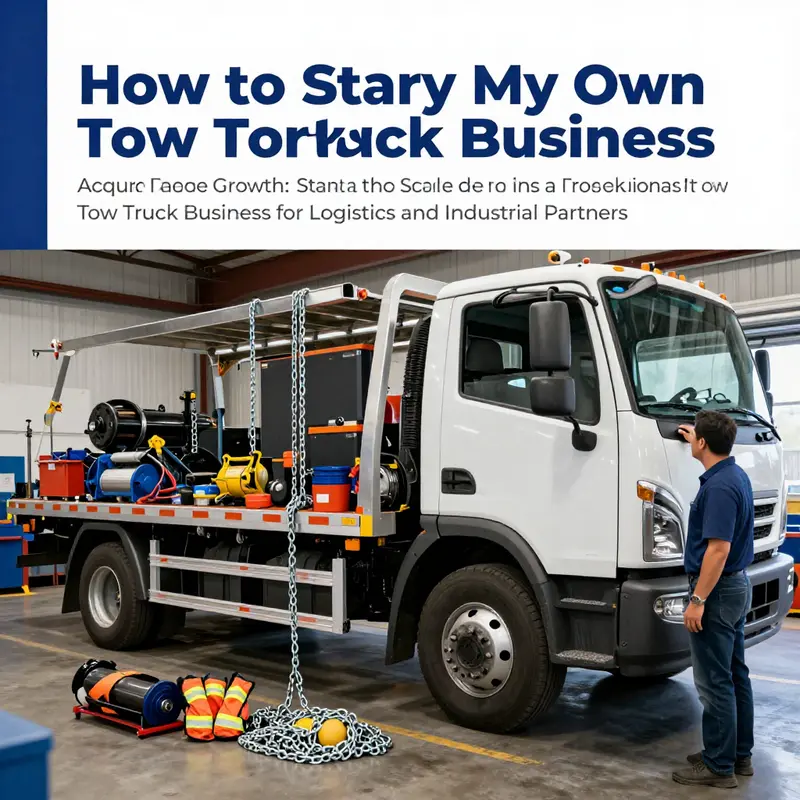
When you set out to launch a tow truck business, the equipment you choose and the readiness of your operations are not just logistics details. They are the spine of your service promise. If you can move quickly, safely, and with predictable costs, you win trust before you earn it. The decision begins with the market you intend to serve and the kinds of incidents you expect to encounter. Urban streets often demand light-duty capability, rapid response, and nondisruptive equipment that can maneuver tight corners and lift a variety of passenger vehicles. In contrast, rural routes or fleet-heavy markets may call for heavier gear, higher payload capacity, and robust recovery systems designed to handle longer distances, heavier trucks, or compound recoveries. Either path requires a careful mapping of service scope to the machines you can operate reliably every day. This alignment is where readiness begins, long before a sign goes up or a dispatch call is answered.
The heart of readiness is choosing the right equipment for the job and then protecting that choice through disciplined maintenance and thorough inspections. When deciding between new and used, many owners lean toward a used vehicle to conserve upfront capital. That choice, however, carries a discipline: a meticulous pre-purchase inspection, a clear maintenance plan, and a schedule that prevents lapses in safety or availability. A well-maintained truck is more than a vehicle; it is a portable service unit that must perform when the clock is ticking. Your inspection checklist should cover the integrity of the chassis, hydraulics, winches, and mounting points, as well as routine components like brakes, tires, and lights. A coaching mindset on maintenance—treating every mile as an opportunity to confirm reliability—turns downtime into a controlled cost instead of an unpredictable expense.
Beyond the frame and the wheel, the gear you carry defines your capacity to respond. Core equipment includes a capable winch, strong towing straps, chains with appropriate tension ratings, anchor points that won’t fail under load, and a hydraulic lift or rollback system suited to your service profile. Safety gear—reflective vests, hard hats, gloves, wheel chocks, safety cones, high-visibility lighting, and fire suppression equipment—serves as a constant reminder that service means safeguarding lives as well as assets. These items are not conveniences; they are commitments to customers and to your team. On the vehicle itself, clear licensing and registration must be in order, because a tow operation is as much a moving business as it is a service drill. A truck that looks ready but fails a basic compliance check undermines your credibility as surely as a late arrival.
Once a stable core is in place, you should think about how the equipment supports your broader business plan. A compact urban model might emphasize a light-duty flatbed with a retractable strap system and compact tool kits that fit into tight storage compartments. A regional or enterprise-facing model might be configured for heavy-duty towing, with multiple winches, stronger hydraulics, and a modular setup capable of handling commercial fleets or longer-haul recoveries. Either configuration benefits from modularity: the ability to adapt as customer needs evolve or as market conditions shift. The deployment of each unit should be tied to a forecast of demand and a practical plan for maintenance windows that minimize downtime during peak hours.
Equally important as the hardware is the software of operations. A reliable communications backbone is essential. Two-way radios or modern data terminals keep your crew synchronized as they navigate congested streets, detours, or incidents that demand a fast, coordinated response. GPS tracking and dispatch software give you real-time visibility into location, ETA, and the status of each call. When a driver arrives at the scene, a standardized set of procedures should guide the interaction with the customer, the scene safety measures, and the efficient securing of the vehicle. The objective is not to complicate the encounter with bureaucracy, but to remove ambiguity. A clear, written dispatch protocol helps front-line staff know exactly what information to request, what steps to take, and how to document the outcome for billing and follow-up.
Developing standardized procedures also means thinking through the entire lifecycle of a call—from the initial request to the final invoice. A unified workflow reduces the chance of miscommunication between customers, dispatch, and drivers. It ensures that the base price, mileage, and any ancillary fees are transparent from the moment the call is placed. This transparency does more than manage expectations; it protects your brand from disputes and builds a reputation for reliability. On the financial side, you should implement digital tools for invoicing and e-signatures so that a customer can approve a tow without delays and your back office can close the ticket quickly. The quicker a job is closed, the faster you convert service into cash and then reinvest in more capacity.
The human element rounds out readiness. Equipment and processes exist to support people who must operate them under pressure. This is where the idea of investing in people as a cornerstone of success comes into play. Not only do you need skilled drivers who understand vehicle dynamics and load management, you also need dispatchers who can triage emergencies, keep calm, and communicate with empathy. Training should address safety protocols, proper rigging techniques, posture for repetitive tasks, and the nuances of protecting a client’s property as if it belonged to a family member. When you frame training as ongoing development rather than a one-off requirement, you create a culture of continuous improvement that translates into fewer incidents, quicker response times, and higher customer satisfaction.
As you build your team, consider how to structure growth around the rhythms of your market. Early on, you may find repeat work with insurance partners, car dealerships, and roadside assistance providers; a lean crew with a small fleet can cover multiple lanes of demand. In time, you may expand into fleet services or urban-to-rural coverage, which requires a scalable model: more trucks, more drivers, and more robust dispatch capabilities. The shift from startup to growth hinges on the reliability of your equipment and the predictability of your operations. If a single truck is out of service, the impact on response times and customer trust can be magnified across the entire network. That reality argues for redundancy in both hardware and processes. You should plan contingencies—backup drivers, spare parts, and a clear escalation path for heavy incidents—to maintain service levels even when one part of the system falters.
Another layer of readiness comes from data-driven discipline. Track maintenance intervals, repair histories, fuel efficiency, and uptime. Use these metrics to fine-tune your fleet mix and to justify capital investments when the business case is strongest. A disciplined approach to data helps you avoid the trap of chasing the latest shiny equipment without understanding how it translates into service reliability and profitability. It also makes you more attractive to insurers and partner networks because you can demonstrate measurable improvements in safety and efficiency.
The practical synthesis of equipment strategy and operational readiness is visible in the day-to-day cadence of your business. A well-prepared tow unit is not just a tool for extraction; it is a mobile service center that must uphold safety, minimize impact on customers, and return to service quickly. When a driver is dispatched, you want confidence that the vehicle will perform, that the driver is equipped with the right knowledge, and that the customer will receive a transparent explanation of charges and next steps. This level of confidence comes from thoughtful selection, regular maintenance, clear procedures, and a culture that treats every call as an opportunity to prove reliability rather than a one-off transaction.
Finally, remember that equipment readiness and operational discipline are not static milestones but ongoing commitments. Market conditions shift, technology evolves, and regulations tighten or ease with time. The more you institutionalize readiness—through checks, training, documentation, and continuous improvement—the more scalable your tow truck startup becomes. The goal is not merely to survive the launch phase; it is to create a resilient foundation that supports growth, preserves margins, and earns customer loyalty across services and geographies. For guidance on federal licensing and the regulatory path that underpins interstate operations, consult the official DOT resources and related business guidance as you firm up your plan. External resources such as the U.S. Department of Transportation provide free, up-to-date instructions and forms for registering your towing business federally—critical for interstate operations. https://www.transportation.gov
For broader strategic thinking about people and organizational capability as you scale, consider the idea that investing in people is a key driver of long-term success in trucking and beyond. Investing in people key to trucking success can help you frame your culture, training, and leadership development as a deliberate, measurable asset rather than a soft skill. These human factors often determine whether a promising equipment plan translates into durable customer relationships and recurring revenue.
As you finalize the equipment plan and readiness roadmap, keep the focus on delivering consistent, transparent, and safe service. The combination of properly matched machines, disciplined maintenance, clear operational procedures, and people-centered leadership creates a business that is not easily disrupted by competition or weather. It is this blend of hardware and human processes that will anchor your tow truck startup through its early months and into a growth trajectory that is both sustainable and scalable.
External resource reference: Start with the foundational guidance on federal licensing from the U.S. Department of Transportation to ensure interstate operations are sound and compliant: https://www.transportation.gov. External knowledge about the regulatory environment can help you plan for the long arc of compliance and insurance readiness, not just the immediate equipment needs. For practical planning and market entry perspectives, consult foundational guidance such as the SBA’s start-a-towing-company resource, which provides a structured framework for market analysis, licensing, and basic financial planning: https://www.sba.gov/business-guide/plan-your-business/start-a-towing-company. Together, these sources help you translate a strong equipment and readiness spine into a legitimate, capable, and resilient tow truck business.
Brand, Marketing, and Financial Management: The Cornerstones of Launching Your Tow Truck Enterprise
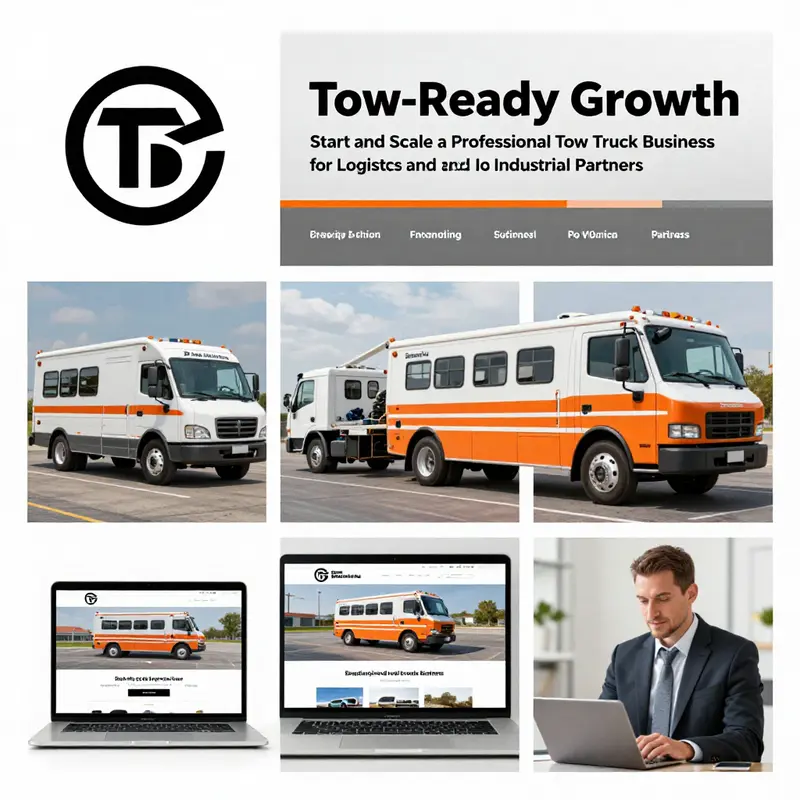
When you set out to launch a tow truck business, the brand you present to the world often determines how quickly you gain trust and how reliably customers choose you in a crowded market. A strong brand in towing is more than a logo or a color scheme; it is a promise. It signals safety, speed, honesty, and 24/7 availability. That promise has to be reflected in every touchpoint, from the appearance of your fleet on the road to the clarity of your invoices and the soundness of your pricing. The fleet you operate is not just a collection of vehicles; it is a fleet of moving billboards that broadcasts your values to every potential client who passes by. A clean, well-maintained truck with a crisp logo and legible contact information communicates professionalism without a word being spoken. The impact extends beyond aesthetics: a consistently branded truck helps you stand out in a competitive area, increases word of mouth, and lowers the cognitive load on customers trying to decide whom to call in an emergency. Your branding must be legible at a glance, even in rain, dusk, or on a busy city street, because in a tow situation, seconds count and trust matters more than anything.
Brand consistency is the backbone of credibility. This means a deliberate choice of color schemes, typography, and messaging that travels with you from your website to your dispatch cards, storefronts, and uniforms. Consistency reduces uncertainty for customers. If someone saw a logo and a certain color pairing on a billboard and then encountered the same branding on a driver’s uniform and on the side of a tow rig during a rescue, they would feel a sense of familiarity and safety. That familiarity translates into confidence to choose your service, even when another operator is closer or cheaper. Yet branding is more than visual identity; it encompasses tone of voice, how you describe services, and how you respond when things go wrong. Your brand should project reliability, transparency, and a sincere commitment to customer care. That commitment is reinforced by the way your drivers speak with customers, the way estimates and invoices are prepared, and the speed and accuracy of communications during a rescue.
Operational branding, then, is inseparable from your service standards. The promise you make publicly must be matched by how you perform on the ground. If your base message highlights fast response times, then your dispatch system, road crew training, and route planning must consistently deliver. The fleet’s appearance should align with that promise; a well-kept truck communicates that you take pride in every job, regardless of size. In a town or city with multiple towing options, the impression created by your fleet’s upkeep and your drivers’ demeanor can tip the scales in your favor. A credible brand also helps when you pursue partnerships with insurers, rental firms, and autobody shops. These relationships rely on trust: a brand that signals reliability makes a carrier more attractive as a partner for steady, repeat business. In short, branding is not just marketing; it is the practical foundation for every commercial relationship you will build.
Once you have a clear brand, the next phase is bringing it to life through a practical, results-focused marketing approach. A user-friendly digital presence is essential in today’s market. Your website should be a fast, informative hub that explains services clearly, presents transparent pricing, and offers a straightforward way to request help or schedule a tow. The value of an online booking option cannot be overstated: it reduces friction, speeds up response times, and provides you with a structured workflow to manage requests. Integrating real-time dispatch and GPS-based updates into the customer experience not only adds a layer of transparency but also builds trust. Customers want to know when help will arrive and where their vehicle is in the process; providing that reassurance through technology elevates your service above the rest and can turn a one-time call into repeat business.
Marketing your tow service also benefits from a robust local network. Partnerships with auto repair shops, parking facilities, car rental agencies, and fleet managers can create reliable referral channels. When a site owner or manager can confidently recommend your service to their customers, you gain a steady stream of work that aligns with your capacity. In practice, this means creating simple, mutually beneficial agreements that recognize the realities of a tow operation: quick responses, fair pricing, and dependable service. Word of mouth remains powerful in this industry; people who have had a positive experience will tell friends and colleagues who experience similar breakdowns or accidents. A well-timed referral program—perhaps a modest first-transaction discount for the referrer or a small bonus for the new customer—can seed the early growth you need to reach profitability.
Digital content plays a critical role as well. Short, informative videos showing safe recovery practices, how to contact help during a breakdown, or a behind-the-scenes look at your dispatch process can demystify towing and position your brand as an authority that cares for customers and their vehicles. Real-time updates, safety tips, and service stories can be shared across social platforms to build authenticity and trust. When done with care, these posts do more than entertain; they demonstrate competence and reinforce your brand’s core values—safety, speed, and customer care—before a customer even makes a call. The social-media approach should be human and local, highlighting community involvement and responsiveness rather than generic, broad-brush messaging. It is also worth noting that a strong online presence helps your physical marketing too. People search for local services online, compare options, read reviews, and most importantly, look for consistency between what a brand promises and what it delivers in practice.
From a financial standpoint, branding and marketing must be disciplined processes with measurable outcomes. Set clear goals for lead generation, conversion rates, and average job value, and tie these metrics to your marketing spend. The beauty of a lean tow-truck startup is that you can align branding investments with early profitability milestones. Start with core branding and a minimal but high-impact marketing package: a professional logo and vehicle livery, a basic but functional website, a Google presence with proper contact details, and a concise, honest pricing page. Track the sources of your leads so you know which channels deliver the best return on investment. This is where the financial management strategy dovetails with branding: you must allocate and monitor a marketing budget, forecast revenue from different channels, and adjust as you learn what resonates with your local market. It is not enough to attract customers; you must retain them through reliable service and consistent, fair pricing.
The synergy between brand, marketing, and finance is essential to scaling a tow truck operation. A strong brand lowers the cost of acquiring customers because people recognize your promise and trust your ability to deliver. Marketing turns that trust into action, guiding potential customers to your door or your phone, and providing the information they need to feel confident in calling you. Financial management then ensures that this growth is sustainable. It means tracking every dollar spent on branding, marketing, and service delivery, recognizing patterns in revenue and costs, and maintaining a reserve to cover downtime, maintenance, and equipment replacement. The practical upshot is a startup that can weather seasonal fluctuations and unexpected setbacks while maintaining dependable service for the community it serves. A disciplined approach to branding and marketing, supported by solid financial controls, paves the way for steady growth rather than sudden spikes and collapse.
To reinforce the human edge behind the brand, consider the people who power your service. A skilled, courteous team not only performs well in the field but also reinforces the brand’s values through every interaction. This is more than training; it is cultivating an organizational culture that prizes safety, empathy, and efficiency. For leaders who want to anchor their business in people, there is a compelling argument to invest in staff development as part of branding and growth strategy. See the idea summarized in investing-in-people-key-to-truckings-success, which emphasizes how a strong, well-supported team translates into better customer experiences and stronger brand equity. The payoff is not just improved morale; it is a clearer, more credible brand story that customers can trust and champions you can rely on when the pressure rises during callouts.
As you weave branding, marketing, and financial discipline together, your tow-truck startup begins to resemble a well-run service organization rather than a one-off operation. You will be judged not only by how fast you arrive, but by how clearly you communicate, how fair your pricing looks, and how consistently you deliver on the promises you make in your branding. A practical path forward is straightforward: define a brand that communicates reliability, create a marketing plan that prioritizes local relationships and online clarity, and implement financial practices that track performance and preserve capital for the long haul. When these pieces align, your business becomes more than a set of trucks and drivers; it becomes a trusted partner in your community’s mobility and safety infrastructure.
For practical steps on marketing and sales, consider the guidance from a well-regarded startup resource. The following external reference offers structured, actionable steps for building brand awareness, attracting customers, and sustaining growth through digital channels and partnerships: https://www.sba.gov/business-guide/marketing-and-sales.
Further, to anchor the idea that people drive the brand as much as the trucks themselves, you can look to one industry perspective that highlights investing in people as a core strategy for trucking success: Investing in People: Key to Trucking’s Success. This perspective emphasizes how a capable, customer-focused team amplifies brand credibility and customer satisfaction, ultimately supporting both marketing outcomes and financial performance.
In sum, a tow truck startup thrives when branding signals reliability, marketing builds trusted relationships in the local ecosystem, and financial discipline sustains growth. The chapters ahead will expand on the practical steps to obtain the necessary licensing and operational capabilities, but the essence of a durable business rests on how convincingly you tell your story, how consistently you deliver on it, and how prudently you manage the money that keeps the wheels turning. External resources and internal partnerships will help you refine and extend that story as you scale, while maintaining the core values that make your service indispensable to the community it serves.
Final thoughts
In launching a tow truck business that serves logistics, construction, fleet management, and distribution clients, success hinges on disciplined market insight, strict regulatory compliance, reliable and adaptable equipment, and a professional brand that communicates safety, value, and accountability. Begin with precise market definition and a service portfolio designed for enterprise buyers, then secure the necessary licenses and insurance to bid on contracts. Select equipment and maintenance practices that meet the expectations of industrial customers, and deploy modern dispatch and invoicing tools to ensure transparency and efficiency. Finally, invest in a compelling brand and a robust financial system to manage growth, measure profitability, and sustain long-term partnerships. A focused, staged approach yields a scalable operation with recurring contracts, higher reliability, and a defensible position in a competitive market.