
Operating a food truck offers strategic value for organizations with on-site crews, large distribution networks, and field-based operations. Yet, moving from concept to compliant execution requires navigating a complex regulatory landscape that spans city, county, and state authorities. For Logistics & Freight companies, Construction & Engineering firms, Fleet Management operations, and Food & Beverage Distributors, the licensing process isn’t just about staying legal—it’s about enabling dependable service delivery at contractor sites, warehouses, and customer locations. This article delivers a practical, three-chapter framework to understand which licenses are typically required, how they’re organized by category, and the concrete steps and fees involved in securing them. Chapter 1 outlines the Regulatory Landscape to establish who issues the licenses and how jurisdictions interact. Chapter 2 breaks down Essential Licenses and Permits by Category to create a usable reference. Chapter 3 covers Compliance, Fees, and Practical Steps to help you implement a phased, cost-conscious rollout. Together, these sections connect regulatory requirements to real-world operations, risk management, and vendor readiness for industrial food-service delivery.
Chapter 1 — Navigating the Regulatory Landscape: The Licenses You Need to Run a Food Truck
Launching a food truck in the United States is as much a regulatory journey as a culinary one. The barriers to entry are not primarily financial or culinary; they are procedural and jurisdictional. The moment you decide to roll a kitchen onto wheels, you are entering a patchwork of federal guidelines, state statutes, and city or county ordinances. The result can feel overwhelming, but it becomes navigable when you view licensing as a sequence of tasks that map to specific outcomes: legality, safety, accountability, and the ability to operate in chosen neighborhoods. The core truth is simple: there is no single license that authorizes a food truck to roam everywhere. Instead, you accumulate a layered set of permissions that, stacked correctly, grant you legitimate access to the streets, to customers, and to the financial systems that keep your business afloat. To begin this journey, you must first understand the typology of requirements and then translate that understanding into a practical plan that works for your location, your menu, and your business structure. The most universal lesson is not that licenses are difficult to obtain, but that they are location-specific and time-bound. What works in one city may look very different in another, and even within the same city, changes in health codes or business tax rules can shift the landscape from season to season.
At the center of the regulatory map sits the general business license, the foundational credential that validates your right to operate a business within a given jurisdiction. This license is issued by the local city or county government and is the gateway to legality. It signals that the enterprise exists, that it has a defined legal structure, and that it plans to comply with local commercial norms. The exact application may request information about your business structure—whether you will operate as a sole proprietor, a limited liability company, or another entity—along with details about your principal place of operation and the nature of your business. In practice, the business license is less about food and more about the business entity’s existence within a defined territorial boundary. Without this credential, even well-prepared street operations risk shutdown or penalties simply for lacking formal authorization.
If the business license is the doorway, the health and safety perimeter is the next key boundary. The health department or environmental health agency in your area issues the food service permit, sometimes called a food establishment permit. This permit ensures that your mobile kitchen meets established standards for sanitation, equipment safety, storage temperature controls, and general hygienic practices. A food truck’s kitchen is a moving laboratory, and inspectors assess it as such. They will review the layout of your galley, the quality and placement of refrigeration, the adequacy of handwashing facilities, the separation of raw and cooked foods, and the workflow that minimizes cross-contamination. They will also evaluate cleaning schedules, waste disposal, and the maintenance of utensils and surfaces. Securing this permit usually requires passing a comprehensive inspection of the vehicle’s kitchen area, equipment, and operations. The inspector’s concern is not only the food you intend to serve but the way in which that food arrives at customers, is stored, and is prepared for service under mobile conditions.
Alongside the health permit, a food handler’s permit or food protection certification often appears as a mandatory credential. In many places, at least one person on staff—commonly the owner or the manager—must demonstrate a working knowledge of food safety through a recognized training course and examination. The principle behind this requirement is straightforward: whoever touches or handles food must understand safe handling practices to minimize risks such as improper cooling, cross-contamination, or poor personal hygiene. The certification process is designed to be approachable and practical, producing a credential that signals to customers and regulators that your team can maintain a safe and sanitary operation even in the hustle of a busy service window. The responsibility here extends beyond a single person: depending on local rules, managers may be required to renew their certification after a set period, ensuring that standards stay current with evolving public health guidance.
Beyond the health and business credentials, most food truck operators will encounter a sales or seller’s permit. This permit is tied to state tax administration and is essential for collecting and remitting sales tax on taxable food products. In practice, obtaining a seller’s permit means registering with your state’s Department of Revenue or equivalent agency, providing information about your business and its anticipated sales, and then using that registration as the basis for tax collection. The sales tax environment can be complex, varying by state and sometimes by locality, especially if you operate in multiple jurisdictions or at events that require special tax treatment. The sales tax permit is not merely a regulatory formality; it is the mechanism that aligns your business with state tax law compliance, a necessary prerequisite for legitimate financial operations and for avoiding penalties that can arise from incorrect or late filings.
A related, often essential, credential is the Employer Identification Number, or EIN. While not a license itself, the EIN is the Federal Tax Identification Number used by the IRS to identify your business for tax purposes, especially if you plan to hire employees or open a business bank account. Even for sole proprietors who never plan to hire staff, some banks require an EIN to open a business account, which helps keep personal and business finances separate and cleaner for accounting and tax reporting. The EIN is a gateway to formal employment practices, payroll processes, and more robust financial management—critical for growth and scaling beyond a single operator operation. The decision to obtain an EIN typically comes early in the planning phase, but you can secure it at any time through the IRS, often with minimal friction if you have already established a legal business entity.
In many cities, there are also mobile-specific permits or street-vendor licenses that address the unique realities of vending from a truck or cart in public spaces. Mobile vendor permits reflect the reality that a food truck does not simply park in one place but moves between locations. These licenses or permits may be tied to designated zones, limits on operating hours, or requirements to secure a spot at a market or event. They can also govern how you position your truck on a street, how you interact with pedestrians, and how you manage queue lines. Because mobile vending interacts with public infrastructure, traffic patterns, and adjacent businesses, the issuance of these permits often involves coordination with additional municipal agencies and adherence to local ordinances about street vending, curbside commerce, and public-rights-of-way usage.
The regulatory landscape is not uniform. A practical way to approach it is to treat the process as a stepwise verification: first confirm your general business authority with the city or county, then secure the health and safety permissions tied to your kitchen, then address tax and employment considerations, and finally tackle mobile-specific permissions if you intend to operate across multiple zones or at special events. Each jurisdiction may layer in extra requirements—special inspections after vehicle modifications, additional insurance mandates, or unique licensing fees that reflect local cost structures and risk assessments. The variability can be daunting, but the pattern is predictable: licenses and permits exist to ensure that the food truck operates within a framework that protects public health, ensures fair commerce, and maintains orderly streets and markets.
A central reality emerges from this map: the most critical step is to engage early with the right authorities. Before making big investments in a truck, a kitchen setup, or a branding campaign, reach out to your local city or county government office and your state health department to obtain a definitive, location-specific list of requirements. In practice, this means visiting the local government portal or calling the relevant departments to determine which licenses apply to your business model and whether any provisional steps—such as submitting plans or scheduling pre-inspections—are necessary. This early engagement pays dividends by reducing the risk of backlogs, last-minute surprises, or noncompliance penalties once you are ready to start cooking at scale.
For readers seeking a structured starting point, the U.S. Small Business Administration maintains a comprehensive, up-to-date guide on licenses and permits. While the specific licenses vary by jurisdiction, SBA’s resource frames the general approach and connects operators to broader regulatory considerations, from zoning to environmental impact and beyond. The SBA guide emphasizes the importance of understanding the regulatory ecosystem before launch and provides practical links to official sources for the most current requirements. This external resource serves as a reliable compass as you assemble your compliance plan and align it with your business goals, especially if you intend to expand beyond a single city or enter interstate commerce.
The practical takeaway is clear: license and permit requirements are not obstacles to be overcome in a single sprint but a coordinated sequence that accompanies your growth. Start with the business license as the foundational authorization to operate. Expect to layer in the health-permit, underscored by a food-handler’s credential for your team, as you design and operate your mobile kitchen. Prepare for tax compliance with a seller’s permit and, if you hire, the EIN to anchor payroll and vendor relations. If your vision includes moving across neighborhoods, markets, or festival grounds, invest in the mobile-vendor framework that aligns with local street-operations rules. Throughout, maintain a disciplined calendar for renewals, inspections, and updates, because lapses in any one credential can disrupt service, jeopardize customer trust, and raise compliance costs in the long run.
In practice, a successful licensing strategy blends proactive planning with adaptive execution. Begin by cataloging each required license and permit—and note the issuing authority and renewal cadence. Create a document packet that includes your business formation paperwork, vehicle and kitchen specifications, proof of insurance, and any facility inspections you anticipate. Align your menu and service model with the health department’s expectations about safe handling, proper refrigeration temperatures, and sanitation protocols. Build your staffing plan around the food handler requirements, including ongoing training schedules and maintenance of certification records. Finally, design a workflow for obtaining and updating licenses that accommodates the realities of a mobile operation: travel time to offices, the possibility of on-site inspections during events, and the need to adjust to seasonal schedules or temporary restrictions in certain districts.
As you write your compliance playbook, remember that licensing is not a one-time checkbox but a living framework. Changes in your business structure, menu, or operating area can trigger updates to licenses or additional permits. Vehicle modifications may require new approvals or re-inspections. Seasonal events may demand temporary operating licenses or event-specific clearances. By building a robust documentation system and a proactive renewal calendar, you can keep the regulatory side of the business running as smoothly as the kitchen side. The outcome is not just legal operation; it is a foundation for customer trust, predictable cash flow, and scalable growth. When customers see a truck that meets all public health and regulatory expectations, they see a business that respects them, their community, and the rules that keep everyone safe.
In sum, the licensing journey for a food truck blends public health safeguards, tax compliance, business governance, and local policy nuance into a single, navigable path. The process begins with the most universal credential—the business license—and extends through health and safety permits, staff certifications, tax registrations, and mobile-venue permissions. The trajectory is not uniform, but the logic is: secure the core authorizations first, then layer on the specifics that enable mobility and expansion. With careful planning, disciplined recordkeeping, and proactive engagement with the right agencies, a food truck can move from concept to sidewalk to festival stage with clarity and confidence. For operators who want a broader map, an authoritative overview from the U.S. Small Business Administration can serve as a trusted starting point and ongoing reference as local rules evolve. Access to that resource provides a structured guide to obtain licenses and permits, anchoring your regulatory readiness as you bring your culinary vision to the streets.
External resource: https://www.sba.gov/business-guide/starting-a-business/obtain-licenses-and-permits
Chapter 2: The Licenses That Power a Food Truck — Essential Permits by Category
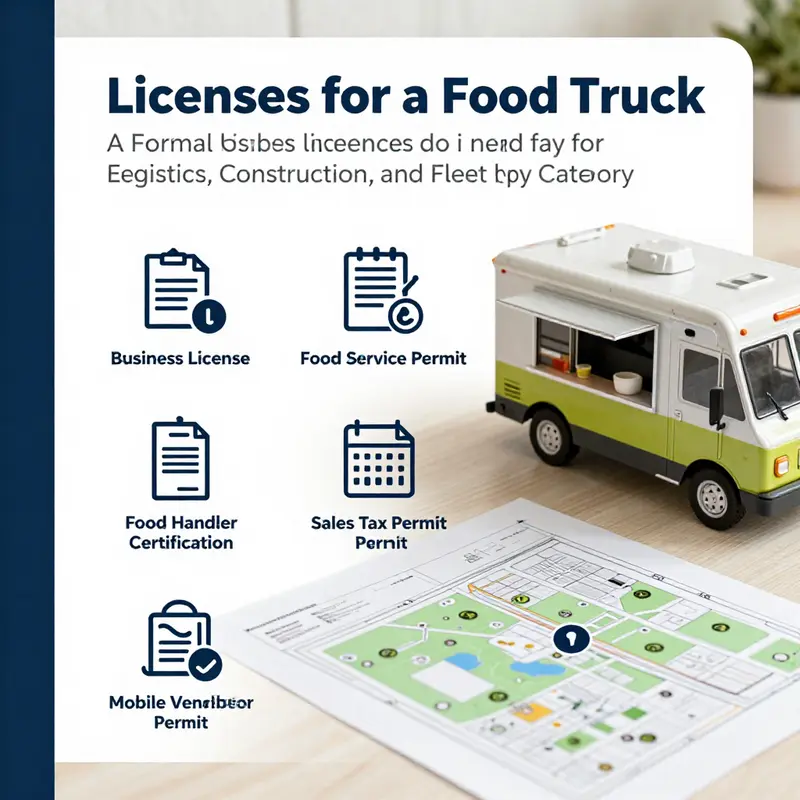
A food truck can be a portable stage for your culinary vision, but it also sits at the intersection of commerce, health, safety, and local policy. The licenses and permits you need are less about a one-size-fits-all checklist and more about a framework that ensures your operation is legal, safe, and sustainable in the places you serve. In practice, most jurisdictions require a core set of documents that establish your business’s legality, a health and safety regime that protects the public, and a vehicle- and location-specific authorization that keeps you operating where food trucks are allowed to roam. The path you follow starts with the basics of business registration and taxes, then moves into the health and food safety permissions, followed by the vehicle and mobile-vending specifics, and finally extends into zoning, signage, labor, and insurance. Getting these elements right isn’t just about avoiding fines; it’s about building a foundation you can scale on as you add routes, events, or multiple trucks to your fleet. The journey begins with a conversation with your local government offices and a careful reading of the requirements that apply to your city, county, and state, because the exact licenses and the order in which you obtain them can vary widely from place to place.
At the heart of the licensing framework is the recognition that a food truck is both a business and a moving food establishment. The first cluster—business registration and basic tax permits—creates your legal existence in the eyes of public authorities. You’ll typically need a business license that registers your enterprise with the city or county where you plan to operate. This license often asks for the business structure you’ve chosen, whether you’re a sole proprietorship, an LLC, or another entity, and it confirms you intend to run a lawful operation in that jurisdiction. In many places, you’ll also file a DBA or fictitious name registration if you plan to operate under a name different from your legal entity or personal name. An Employer Identification Number (EIN) from the Internal Revenue Service is another common element, especially if you plan to hire staff or if you want to open a business bank account in the business’s name. And if you’re selling taxable food items, a seller’s permit or sales tax license from your state’s department of revenue or taxation is typically required. These registrations lay the groundwork for compliant financial operations and help you establish credit, insurance, and banking relationships that support growth.
The health and food safety permissions form the heart of public protection. The primary credential is the health department permit or food service establishment license. This permit is not a formality; it certifies that your mobile kitchen meets specific standards for food handling, storage, sanitation, and general hygiene. In many jurisdictions, you’ll undergo a plan review of your truck’s layout and equipment before you’re allowed to operate. The plan review ensures that your kitchen configuration is designed to safeguard food safety—where you place sinks, handwashing stations, refrigeration, and hot holding units, and how you separate raw and ready-to-eat foods. After a successful plan review, you’ll face periodic inspections to verify ongoing compliance with sanitation procedures, temperatures, cleaning schedules, and pest-control measures. A certified food handler or a food protection manager certification is often required, with some places insisting that at least one person on staff has completed approved food safety training and passed an examination. In certain locales, a formal food safety plan or HACCP (Hazard Analysis and Critical Control Points) may be required, especially if you work with high-risk foods or more complex processes. This cluster is where your operations meet public health expectations, and the emphasis is on preventing contamination, cross-contact, and improper temperature control.
Beyond the health department, the regulations for mobile units bring in a series of vehicle- and operation-specific permits. A mobile vending permit or street-vending license often exists as a distinct category because it codifies the unique realities of a vehicle-based business. The authority issuing this permit may be the health department, a dedicated mobile-vending office, or a city division overseeing street commerce. You’ll also need to address the basic requirement of vehicle registration and, in many cases, commercial auto insurance. The vehicle becomes a business asset as well as a regulatory subject, and authorities examine it for roadworthiness, fire safety, and fuel handling. Fire department involvement is common, with inspections to confirm the presence and functionality of a fire suppression system and portable extinguishers. If your cooking setup uses gas, propane, or other fuels, you can expect gas-safety inspections and certifications from licensed professionals. A commissary agreement is another feature that appears in some jurisdictions. Under this arrangement, your truck operates from a licensed commercial kitchen facility for storage, cleaning, and waste disposal. For certain areas, you’ll need to show proof that you have access to a compliant commissary, even if you intend to use your own area for some tasks. These steps are designed to mitigate the risks that come with cooking in a compact space, with concentrated heat, power draws, and the potential for fuel leaks. The practical effect is to ensure that your truck is not just a culinary stage but a safe, controlled environment for food preparation when it’s on the move.
Zoning, location, and environmental considerations add another layer to the permitting journey. Local zoning rules determine where you can legally operate your truck—on public streets, in private lots, at events, or in designated business districts. Some cities require special-use permits for mobile vending in particular zones or at certain times; others simply rely on general street-vending allowances and permit systems. Parking restrictions, time limits, and the need for designated vending zones are common themes. Waste and grease disposal are not afterthoughts; you’ll often need a plan for grease management, waste collection, and proper disposal that aligns with local environmental codes. Water connections and backflow prevention may also come into play if you connect to a municipal water supply or if your operation includes any water-intense processes. The environmental dimension reinforces a broader duty to keep public spaces clean and to minimize any negative impact on the surrounding area.
Equipment, signage, and identity complete the set of permissions that keep a mobile business compliant and recognizable. Some jurisdictions require equipment permits and periodic inspections to verify that refrigeration units, ventilation, handwashing facilities, and other critical components meet safety standards. If you rely on a handwashing station, you may need to show it passes inspection and remains stocked with soap and running water at all times during operation. Signage itself can trigger permitting requirements, especially if you plan to display banners or storefront-style graphics beyond what is allowed in a standard sign code. Drafting a signage plan that respects local ordinances can save you time and avoid last-minute rework when you apply for a permit.
Labor, insurance, and employment compliance thread through every stage of the process. If your business grows beyond a solo venture, workers’ compensation insurance becomes important, with many states requiring it for employers. Posting requirements—labor notices, wage statements, and employment posters—are part of the regulatory fabric you must respect. Payroll taxes and unemployment insurance are additional considerations as you scale. Insurance itself is a multi-layered shield: general liability insurance protects against bodily injury and property damage, while commercial auto insurance covers your truck as a vehicle. Depending on the risk profile of your business and lender requirements, you might also consider product liability and equipment coverage. Each of these protections not only reduces risk but also signals to partners, landlords, and customers that you operate professionally and responsibly.
In some places, alcohol licensing or permits can become a factor if your concept includes serving beer, wine, or cocktails. Alcohol regulation is highly location-specific and can require lengthy timelines, many steps, and significant cost. If you plan to offer such beverages, you’ll need to prepare for a layered process that often includes municipal and state approvals, background checks, and compliance with beverage control board rules. It’s a thoughtful reminder that your licensing journey may branch into areas beyond food handling and basic street vending, requiring careful project management and patience.
Planning, timelines, and costs are real drivers of success. The time required to obtain permits ranges from weeks to several months, depending on your jurisdiction and the complexity of your operation. Fees vary widely, too, from a few hundred dollars to several thousand per permit, plus recurring renewal obligations. The best approach is to start with the most universally required licenses—the business license, the health permit, and the seller’s tax permit—and then layer in the mobile and location-specific authorizations. Plan review, inspections, and any required corrective actions should be anticipated in your launch timeline. A well-organized packet of documents helps: license applications, plan drawings of the kitchen layout, equipment specs, insurance certificates, commissary agreements, and a record of prior inspections if you’ve already operated in another jurisdiction.
A practical path to navigate this landscape works like this: begin with your city or county’s business licensing office to understand the basic registration and DBA needs. Then contact the local health department to confirm the exact food service permit, the required food-handler certifications, and the plan-review process for a mobile unit. If you’re operating a true mobile unit, seek out the mobile-vending permit or street-vending license and confirm whether a commissary is a prerequisite or a recommended best practice. Don’t forget the fire marshal’s office for a fire-safety inspection and the gas- or propane-safety authority if you use gas. You’ll also want to align with the tax authority in your state to secure a seller’s permit and, if you hire staff, to understand payroll and workers’ compensation obligations. Throughout this process, keep an organized folder of all licenses, inspection reports, permits, and certificates. A clean trail of compliance reduces friction during future renewals or audits and gives you a credible standing when you approach event organizers or property owners for space.
If you’re unsure where to begin, a tailored, location-specific checklist can be invaluable. Share your city or state, your intended operating model (full-time street vending, event-focused, or a hybrid), and any constraints you’re facing. A well-mapped plan helps you anticipate requirements rather than react to them, and it gives you a realistic timetable for opening. For readers who want a broader frame of reference while you assemble your local list, you can consult resources that discuss regulatory landscapes in the industry and how businesses prepare for shifting policy. This broader picture can help you anticipate delays and plan for contingencies, especially if you intend to scale beyond a single truck or pursue mixed-use operation across multiple neighborhoods.
As with any regulatory journey, the best path is proactive, organized, and collaborative. Start early, gather complete information, and keep communication channels open with your local agencies. A typical sequence—business registration, health-permitting, mobile-operator approvals, and then zoning and environmental compliance—often creates a smooth ladder toward opening. Each jurisdiction may present different hurdles, but the underlying logic remains consistent: establish your legal base, prove you can operate safely and cleanly, confirm you can manage the vehicle and its use in public spaces, and ensure you can meet ongoing obligations through reliable insurance and accountable practices. If you want a localized map that translates the general categories into the exact permit names, agencies, and steps for your area, I can help with that. Share your city and state, and tell me whether you’re aiming to serve at events, park in a fixed spot, or roam across multiple neighborhoods. The clearer your plan, the more precise the licensed path becomes.
In the meantime, consider the broader ecosystem of guidance that accompanies this regulatory journey. For a practical sense of how jurisdictions organize their resources for mobile operations, you can explore a related discussion on regulatory relief and how it can affect timing and approval processes. Internal links can help you connect the dots between general guidance and specific, location-based requirements. For example, you can read more about regulatory relief for trucking here: Regulatory relief for trucking.
Finally, when you’re ready to anchor your planning in primary sources, you’ll want to consult the official pages of your own city, county, and state. Many jurisdictions maintain online portals with permit checklists, fee schedules, and application portals. A representative and frequently cited example is the City of Los Angeles, which maintains a dedicated portal for food trucks and related licensing. This portal provides the most current, area-specific guidance and should be your definitive reference as you finalize your submission materials. For a practical, real-world example of an external resource you can consult for authoritative guidance on food-truck licensing in a large urban environment, visit: https://www.lacity.org/foodtrucks
If you’d like, I can tailor this discussion to your exact locale, map out a precise one-page plan with the required permit names, agencies, typical costs, and expected timelines, and point you to the official application portals. A targeted checklist that aligns with your operating plan will reduce back-and-forth with agencies and help you hit your opening date with confidence.
External resource note: The City of Los Angeles food trucks portal is a practical reference point for understanding how a major city structures the permitting process and the steps you’ll likely encounter in similar jurisdictions. You can use it as a benchmark while you determine the specific requirements in your own area.
Chapter 3: Navigating Licenses for a Food Truck — A Practical, Site-Specific Compliance Roadmap
Starting a food truck business is exciting, but the thrill can fade quickly if you overlook the licenses and permits that keep your operation legal and ethically sound. The road to a compliant mobile kitchen is not a single toll booth you pay once; it is a series of checkpoints that vary by city, county, and state. Different menus, hours of operation, and the frequent need to park in diverse public spaces all influence which permits you must hold. The messages from regulators are consistent: safety, accountability, and transparent operations are non-negotiable. What looks like a straightforward idea—serving hot meals from a compact kitchen on wheels—unfolds into a layered regulatory map the moment you decide where and when you will operate. The core idea is simple: you need official permission to do business, to prepare and serve food, to collect sales tax, and, if you hire staff, to manage payroll and compliance. But the specifics matter. A plan that works in one neighborhood can require a different mix of licenses in another. This chapter pulls those threads together into a cohesive, practical path forward, while honoring the reality that every jurisdiction writes its own playbook for mobile vendors.
At the heart of the licensing puzzle is the business license, sometimes called a business tax registration. This is the baseline permission that your city or county grants to recognize your entity as a legal competitor in the local marketplace. It serves as the official green light to operate within a defined geographic area and is issued through the local clerk’s office or an equivalent licensing department. The common expectation is straightforward: you provide your business name, the structure you’ve chosen (whether a sole proprietorship, an LLC, or another form), a description of your operations, and the principal place of business. Fees in this space typically sit in a modest range, often drifting from about fifty dollars up to a few hundred, depending on the jurisdiction’s assessment of risk, revenue potential, and the administrative costs of maintaining the permit. Processing times vary too; some cities offer rapid online processing, while others require in-person visits and longer queues. Because this permit is foundational, many operators treat it as the first step in their calendar, locking in a due date early so subsequent permits can follow on schedule.
The food service establishment permit, sometimes labeled as a mobile food vendor permit in certain locales, is the next essential layer. Administered by the local health department or environmental health agency, this permit is the formal assurance that your mobile kitchen meets public health and safety standards. The permit is not a mere formality; it is tied to an actual inspection of your vehicle’s kitchen layout, refrigeration capacity, hot and cold holding equipment, waste disposal systems, and handwashing facilities. In practice, you should expect to prepare interior floor plans, equipment lists, and a workflow that demonstrates safe food handling from storage to service. The inspector will look for a cleanable surface, proper separation of raw and ready-to-eat foods, and a designed route that minimizes cross-contamination. Some areas require a certified food protection manager on staff, a credential that underscores the team’s knowledge of temperature control, sanitation, and allergen management. While the specifics vary, the common arc is the same: your kitchen must be designed and operated in a way that protects public health, and the permit stands as the official seal of compliance. Fee ranges for this permit are commonly in the broad territory of a hundred to five hundred dollars per year, reflecting differences in enforcement intensity, annual inspections, and the scope of permitted operation.
A related but distinctly practical requirement is the food handler’s permit or its equivalent certification for at least one person on your team. In many states and localities, having a trained individual who understands the basics of safe food handling is a prerequisite for opening the doors. This is not simply a badge to display; it is a training commitment that informs your team’s daily routines, especially around ticket times, peak service, and the handling of potentially hazardous foods. The certification process generally involves completing a course that covers personal hygiene, preventing cross-contamination, proper cooking temperatures, and safe cooling and storage practices, followed by an assessment. For a small operation, the owner often serves in this role, but if you hire staff, ensuring at least one certified person is on site helps you meet regulatory expectations and can reassure health inspectors during visits.
In the realm of sales and tax compliance, the seller’s permit or sales tax permit is the permit most food sellers encounter repeatedly. If your jurisdiction taxes food sales, you must register with the state’s revenue department so you can collect and remit sales tax. The administrative path is usually straightforward: you apply online through the state’s tax or revenue portal, provide basic business information, and indicate your estimated volume of sales. The result is a permit you can use on receipts and in your tax filings. Fees here are typically minimal or even zero, but the ongoing responsibility is real: you will regularly file sales tax returns, report your taxable sales, and ensure timely remittance. The exact process and cadence will differ by state, so it’s wise to set calendar reminders for filing periods to avoid penalties and interest.
Beyond the basics of business formation and health compliance, your business structure matters for tax and banking purposes. An Employer Identification Number, or EIN, is issued by the Internal Revenue Service and serves as a unique federal identifier for your business. Even if you do not hire employees immediately, many banks require an EIN to open a business bank account. If you do plan to grow and hire, an EIN becomes essential for payroll, tax withholding, and separating personal and business finances. The application is designed for speed and simplicity and is free of charge. A quick online submission usually yields an assignment almost instantly, making the EIN a relatively painless step that pays dividends in future financial clarity and compliance.
Local governments rarely only regulate what happens inside the truck; they also want to regulate where the truck sits and moves. Zoning and parking permits fall into this category. Municipalities increasingly treat mobile food vendors as limited fixtures within public and semi-public spaces. You may need authorization to operate in specific zones—parks, municipal lots, or commercial districts—and some locales require a permit for each site or event you plan to attend. Fees can vary widely, from a modest annual or seasonal charge to a per-event fee, depending on how many locations you intend to access and how intensively you plan to operate. Expect a process that aligns with planning or zoning departments, and be prepared to present where and when you will be operating. Some areas also offer temporary or seasonal permits designed for festivals, farmers markets, or other short-term markets, which allow you to participate in a constrained window without committing to year-round access.
Then there are special permits that come into play depending on your menu and location. If alcohol sales are on the table, you’ll face state-level licensing that sits outside the typical food vending permits, often requiring separate alcohol control approval. If you plan to use grills, open flames, or certain cooking methods, you may encounter live-fire or fire-safety permits that are commonly required by urban authorities. Event-specific permits are another frequent requirement when you want to operate at fairs, concerts, or organized markets. Each of these additional permits expands the regulatory scope and the cost, but they are not universally needed. The upshot is that your license bundle should be treated as a dynamic, location-dependent set rather than a fixed, universal package. Your operating plan will influence which extras you must secure.
In practice, the most reliable path to a compliant operation starts with a direct, proactive look at your local landscape. The single most critical step is to contact your local city or county government office and your state health department to obtain the definitive checklist for your precise area. Jurisdictions publish official portals with permit applications, inspection schedules, and renewal requirements. While the general principles above hold across many markets, the exact forms, questions, fees, and processing times vary. A practical example is a major city’s online portal dedicated to food trucks, where you can access forms, inspection criteria, and contact points in one place. The takeaway is to begin with a central source of truth for your locale and then map the rest of your compliance steps against that schedule. If you’re unsure where to start, a reliable starting point is your city’s business services portal, which often hosts permit checklists and provides a link to the health department and planning office.
Throughout this process, it helps to maintain a running calendar of filings and renewals. Licenses typically carry annual or multi-year renewal cycles, and many inspections are tied to those cycles. Keeping digital copies of every permit, inspection report, and receipt is essential not only for your own records but also for presenting a clear compliance history to potential partners, event organizers, or lenders. A disciplined record-keeping habit can avert last-minute scrambles when permit renewal time arrives or when you relocate to a new site. Before you launch, you should budget for the initial licensing and setup costs, recognizing that you will likely encounter a range of fees that vary by locale. A reasonable starting expectation is a combined upfront outlay of roughly one thousand to twenty-five hundred dollars, acknowledging that larger, more regulated cities will push toward the higher end of that estimate and may impose additional one-off or recurring charges tied to inspections and site access.
As you weave together the licensing fabric, you’ll notice a practical cadence: identify the required licenses, prepare the necessary documents, schedule the vehicle inspection, submit plans, and then await approval. Each step has its own timing and a potential for delay, but having a clear sequence can dramatically reduce surprises. A minimal, three-tier plan often proves effective. Tier one is establishing your business entity and obtaining the business license. Tier two focuses on health and safety, including the food service establishment permit and, if applicable, the food handler’s certification. Tier three covers tax compliance and location-based permissions, such as the seller’s permit and zoning or parking approvals. If you maintain these layers in parallel and keep communications with the issuing offices open, you’ll typically stay ahead of the curve and avoid cascading delays that can derail a launch.
In the spirit of steady progress, a few practical tips help translate this regulatory maze into action. Start small and test the waters with a single event or market before expanding to multiple sites. This approach not only validates demand but also reduces the risk of overcommitting to licenses that might not yet be necessary in the early stages. Always double-check local regulations, as the online portals of city or county government sites are the most accurate and frequently updated sources. Budget for compliance as part of your startup costs rather than treating licenses as a one-time hammer stroke. A modest, realistic reserve can cover unexpected inspections or late permit approvals and prevent cash-flow pressure during the critical early weeks of operation. Finally, stay organized. Create separate folders—digital and physical—for each permit, inspection report, and renewal notice. Set reminders for renewals and keep a running log of any correspondence with licensing authorities. The clarity you gain from this discipline translates directly into smoother operations and fewer headaches when you scale.
For operators who want a broader perspective on navigating regulatory landscapes, a cross-cutting resource that codifies federal guidance and practical steps can be a helpful companion. It provides structured, official, and generalized instructions that you can adapt to your local reality. In addition to the city and state resources you consult, this broader framework gives you a consistent reference point as you move from one jurisdiction to another. While your local portal remains the primary source for exact requirements, the broader guidance helps you understand the overall architecture of licensing and permits, how to anticipate potential hurdles, and how to prepare in advance for renewals and audits. As you develop your compliance plan, consider consulting this general framework to maintain a steady, forward-looking approach to licensing and permit management. regulatory-relief for trucking regulations.
In closing, the licenses and permits that govern a food truck are not just bureaucratic hurdles to clear; they are the infrastructure that makes your operation trustworthy, safe, and sustainable. They speak to your responsibility to customers, your staff, and the communities you serve. They also define the boundaries within which you can grow—from a single market stall to a network that travels from one neighborhood to another. Understanding the typical license family, recognizing that timelines and fees vary by jurisdiction, and crafting a disciplined plan for acquisition and renewal will help you move from idea to ongoing business with fewer speed bumps and more runway for growth. To ensure you stay on track, begin with your local business services portal to identify the exact requirements for your area, then work methodically through preparation, inspection, and submission steps. The well-curated sequence of licenses is not a barrier to success but a structured path that, when followed, keeps your operation clean, compliant, and ready to roll as opportunities arise. For a dependable summary of foundational steps and resources, see the external guidance offered by the federal Small Business Administration, which lays out the journey of starting a business and points to state-specific resources you’ll encounter along the way: https://www.sba.gov/business-guide/launch-your-business/start-a-business.
Final thoughts
A compliant food truck program for logistics and industrial operations hinges on a clear, jurisdiction-aware licensing strategy. Chapter 1 establishes the regulatory landscape, helping you identify which agencies issue the licenses that your fleet and site teams must hold. Chapter 2 translates those requirements into a practical, category-based checklist—covering business licenses, health/safety permits, tax registrations, and mobile-vendor authorizations. Chapter 3 translates this knowledge into action: a staged plan that accounts for fees, renewal cycles, and timelines, enabling a predictable path from application to operation with minimal disruption to site services. By aligning licensing with fleet schedules, site access, and vendor onboarding, your organization reduces risk, maintains compliance, and preserves the reliability of on-site food service for field operations.