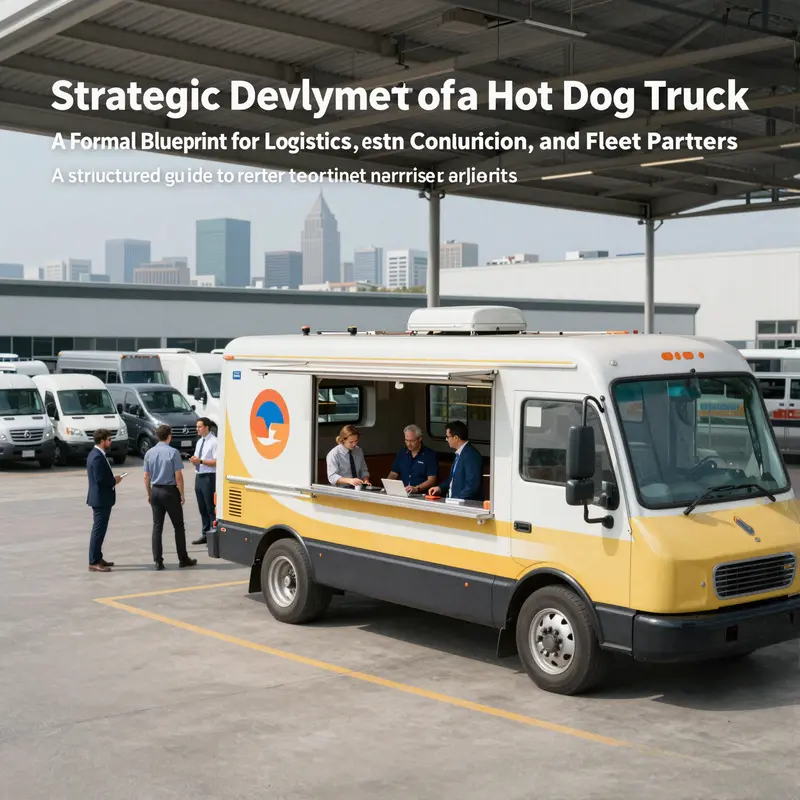
Mobile food service continues to offer a practical, low-capital pathway to profitable operations, especially when aligned with the needs of logistics networks, construction sites, and fleet-heavy environments. A hot dog truck that targets Logistics & Freight Companies, Construction & Engineering Firms, Fleet Management Providers, and Food & Beverage Distributors can deliver reliable on-site dining, reduce meal delays, and enhance employee welfare programs. This article presents a five-chapter framework designed for operators who aim to serve corporate campuses, distribution centers, and job sites with a scalable, repeatable model. Each chapter builds on the previous one to create a cohesive plan: from disciplined market research and niche selection to licensing, equipment, branding, and data-driven financial planning. By thinking of the truck as a modular, site-facing asset rather than a standalone street vending asset, entrepreneurs can pursue predictable demand and consistent margins. The framework emphasizes regulatory compliance, operational excellence, and customer engagement that resonates with enterprise buyers, enabling gradual expansion across routes and sites while maintaining quality and service standards.
From Market Insight to Menu Innovation: Charting Your Hot Dog Truck’s Path
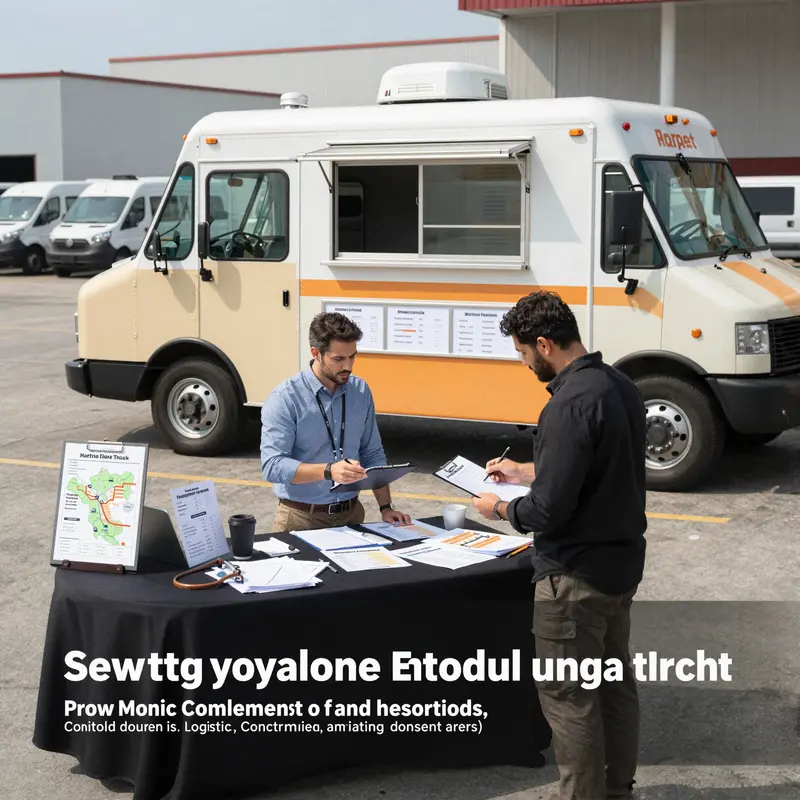
The allure of a hot dog truck rests not just in the sizzle of the grill, but in the clarity of a plan that translates curiosity into steady customers. Before you lift a single lid, you need to listen to the street you plan to serve. Market research becomes your compass, guiding you to the places where hunger and convenience intersect with opportunity. Start by scanning the rhythm of your city’s food scene: where do people gather in large numbers, and what gaps in the offering exist when the lunch whistle blows or the evening crowd begins to spill from transit hubs and theater districts? It is a practical art, not a guesswork exercise. Observe who is already serving hot dogs, what styles they favor, and how they price their items. Look for patterns: are there long lines at certain times, a preference for quick, affordable meals, or a readiness to invest in more elaborate toppings? The aim is not to imitate but to identify a niche that you can credibly own with speed, quality, and a clear value proposition.
One actionable signal emerges from consumer trends: personalization matters. A leading insight from the broader street-food landscape notes that a large share of diners favors customizable options. In practice, this means your cart design should invite choice without slowing service. A simple build-your-own station with a focused range of toppings can transform a standard hot dog into a meal that feels tailor-made. Yet customization works best when it remains efficient. The trick is to pair a few high-impact toppings with a reliable base product. If you can deliver a signature customization experience in under a minute, you gain consistent repeat business and word-of-mouth referrals. In short, your market research should translate into a menu that communicates both clarity and flexibility.
With a sense of demand established, niche selection becomes the second pillar of your early strategy. A niche gives your truck a distinct identity in a crowded street-food ecosystem. Rather than chasing a generic hot dog, consider a focused theme that resonates with your locale. Regional styles can offer a durable foundation: a beef-dominated Chicago-style profile, a leaner New York-style frank with bold mustard notes, or a modern fusion approach that pairs kimchi, craft buns, and premium toppings. The practical upside of a niche is operational efficiency. A cart can be configured around a specific topping bar, a set of warming drawers, or a compact, purpose-built layout tailored to a signature concept. A niche also supports branding clarity; customers remember you for a specific experience, not just a hot dog on a bun. As you refine the niche, test the concept in a few high-traffic pockets and collect data on what resonates. Short-term trials, coupled with real-time feedback, help you calibrate both the offering and the route network you will build.
The strategic planning phase then threads these insights into a coherent business model. Decide early whether you will operate a traditional gas-powered cart or move toward an electric cart. Electric carts are increasingly appealing for urban zones with strict fire codes and ongoing sustainability considerations. They also simplify compliance in some jurisdictions where open flames are restricted near student campuses or dense pedestrian corridors. Your plan should articulate how you will allocate your initial capital, what you expect to spend on equipment, and how quickly you anticipate achieving profitability. It should also spell out pricing, margins, and daily volume targets. For example, a pragmatic pricing framework might target $8 per hot dog with food costs around $3, yielding about a 62.5% gross margin. This level of detail in your plan helps you evaluate scenarios, manage cash flow, and defend your concept when you seek initial funding from savings, loans, or a small crowdfunding round. The plan does not merely serve as a budgeting tool; it also acts as a communication document you can share with future team members and potential partners who will help you scale.
To translate strategy into operations, your supply chain and equipment choice must align with the niche and market footprint. A turnkey trailer or a well-equipped van, when matched to a focused concept, can be more impactful than a larger, more generalized setup. The equipment list should be thoughtful and minimal at first: a reliable grill or roaster, refrigeration for perishable toppings, a compact serving counter, a dependable POS, and a clean water and waste system. If you are piloting a niche concept, you might optimize the layout to accommodate a limited-but-articulate topping selection and a dedicated préparation zone. This alignment between concept and hardware minimizes waste, speeds service, and fosters consistent quality—the trifecta of a scalable food business.
As you map out your route strategy, consider how you will blend location, timing, and marketing. Market research suggests that proximity to business districts, universities, stadiums, and large events yields the strongest flow. But pace matters too. Your initial route should optimize for predictable cycles: a predictable lunch rush near office towers, a post-class crowd around campus, or a weekend market that acts as a testing ground for new menu items. The branding and the technical setup must support rapid, friendly service in these environments. A clean, memorable cart design, clear menu boards, and a friendly, consistent service demeanor help transform casual passersby into repeat customers.
Branding itself is more than a logo; it is a narrative you tell with every customer interaction. Your cart shape, color palette, and menu language convey a story about quality, speed, and the texture of your niche. Consider how digital tools can extend your brand’s reach from the curb to the feed. Geographic tagging, real-time location updates, and limited-time offers drive engagement. A practical example is leveraging location-based promotions in a way that respects local foot traffic patterns and festival calendars. The goal is to create a brand that feels both familiar and fresh, a signal to customers that they know what to expect and they can get it quickly.
The path from market insight to operational excellence requires a disciplined approach to licensing, safety, and regulatory compliance. Your strategic plan should outline the licenses you will need, the health and safety standards you will meet, and the process for obtaining mobile vendor permits from your local health department. This is not merely a bureaucratic hurdle; it is the foundation for a resilient business that can move between neighborhoods with confidence. Your plan should also address insurance, liability considerations, and a basic incident response protocol. When you can demonstrate that you understand these requirements up front, you reduce friction during the critical opening phase and position yourself to scale with fewer surprises.
In practice, scaling a hot dog truck hinges on a data-informed approach to location, menu, and marketing. Start small, test in one or two high-traffic venues, and measure what happens. Track daily sales, popular toppings, and the cadence of customer visits. Translate those signals into route decisions, topping adjustments, and marketing messages. The most successful operators treat each day as a living experiment, using feedback to refine both the product and the process. The objective is not only to survive the first season but to build a model you can replicate, adapt, and expand as your reputation and capacity grow. The business case is clear: a well-executed hot dog truck can deliver consistent, scalable revenue in a model that remains lean enough to weather seasonal fluctuations and competitive pressure.
If you are seeking a practical touchpoint to align people with your mission, consider how service orientation underpins every successful operation. In trucking and other service-driven industries, a people-first approach has proven essential for building trust, reliability, and consistency across dispersed teams and routes. This principle translates well to a street-food context, where every interaction shapes a shopper’s willingness to return. Your team, even if just you and one assistant at the outset, should operate with clarity, courtesy, and accountability. When customers feel valued and the process feels seamless, the repeat visits compound into predictable days and a growing base of loyal patrons. This mindset also informs how you train staff and how you design your SOPs, ensuring that every step—from food handling to customer greeting—reflects your brand’s promise.
From a practical standpoint, the combination of market insight, a well-chosen niche, and a strategic plan creates a foundation that is robust yet flexible. You will be able to adjust menus, switch locations, and refine pricing as you gather data. Digital tools can support this adaptation, helping you map foot traffic, track sales by location, and forecast demand during peak periods. The endgame is straightforward: establish a recognizable, dependable offering in the right places, and maintain tight control over quality and service. When those elements align, the hot dog truck becomes more than a temporary venture; it evolves into a repeatable business model that thrives on speed, variety, and smart, data-driven decisions.
For readers seeking further guidance on the supplier and equipment dimension, one practical route is to explore authoritative supplier guidance that helps you evaluate quality, compliance, and after-sales support. This resource provides a framework for selecting high-quality vendors that align with your niche and geographic needs, ensuring your start-up has reliable partners from day one. How to Find and Select High-Quality Hot Dog Vendor Suppliers.
Internal link note: A broader, practical perspective on people-first strategies in trucking can also inform how you manage growth and team dynamics as your hot dog operation scales. See people-first strategies in trucking for ideas on leadership, training, and customer-centered service that translate well to a mobile food business.
Steering Through Rules: Licensing, Permits, and Compliance for a Hot Dog Truck
Licensing and regulatory compliance are not the dull gates you pass through to start a hot dog truck; they are the foundation that keeps your venture moving smoothly, safely, and sustainably. In many dense urban environments, including major cities, the appetite for quick, affordable meals collides with a maze of rules designed to protect public health. For a new operator, this can feel daunting, but when you see licensing as a strategic map rather than a barrier, the process reveals itself as a blueprint for reliability, quality, and repeat customers. The core idea is simple: you must prove you can operate cleanly, safely, and within the bounds of local and federal expectations before you can serve a single customer on a mobile unit. The practical consequences are clear—licenses certify your legitimacy, permits authorize your mobility, and ongoing compliance preserves your license and your reputation.
In a city that treats street food with seriousness, the licensing landscape typically centers on three pillars: the business authorization itself, the mobile operating permit, and the health- and safety-oriented permits tied to food handling. In practical terms, you will likely need a business license to operate legally, a food handler or food safety certification for your staff, a mobile vendor permit issued by the local health department, and a seller’s permit for sales tax collection. The exact names and pairings vary by jurisdiction, but the logic remains constant: formal approval, a defined control point for sanitation, and a system to monitor and enforce compliance. This is where the concept of a commissary comes into play. A commissary is a fixed, approved site where you can clean equipment, restock supplies, process waste, and perform other essential back-end tasks. In many places it is not just convenient but a prerequisite for a mobile food unit to operate in a compliant fashion. When you plan your route and schedule, you are simultaneously planning where you will replenish and sanitize with the same discipline you apply to your menu and your pricing.
New York City, as a case in point, shows how seriously these requirements are taken. The city’s health department explicitly ties licensure to safety standards that align with the FDA Food Code. To sell food from a mobile unit, you must obtain a valid food vendor license or supervisory license, and your mobile unit must carry the appropriate permit. Your staff must possess valid food handler permits, and you must maintain conditions that meet temperature controls, prevent cross-contamination, and uphold personal hygiene standards. The authority may also require you to operate from a commissary that is itself properly registered and inspected. This is not a mere formality; the commissary serves as the logistical backbone that keeps all 廣—the equipment, the food, and the waste—under controlled conditions, enabling you to run in a compliant, safe, and predictable way.
The complexity of permission scales with the ambition of your vehicle. Small, basic carts often contend with relatively modest licensing requirements, reflecting their limited food preparation capacity and smaller footprint. In contrast, a fully customized mobile kitchen—the kind capable of restaurant-style service on wheels—entails a more rigorous approval process. Expect a higher bar for the vehicle’s structural integrity, ventilation and exhaust systems, drainage and wastewater handling, and fire suppression provisions. In the eyes of the health department, a more capable kitchen on wheels translates into higher potential risk, which justifies more comprehensive inspections and more stringent standards. Your planning should reflect this by aligning your equipment choices with the permits you intend to obtain, not the other way around.
A practical approach to these requirements begins with a precise, honest assessment of what you plan to sell and where you plan to operate. If you anticipate many hours and a steady stream of customers in business districts, campuses, or transit hubs, you will want to map out a fixed commissary location that you can register with the local authority. You will also need to articulate your menu and handling practices with clarity so the approving bodies can verify that your procedures align with the FDA’s expectations for safe storage temperatures, avoidance of cross-contamination, and hygienic practices. The FDA Food Code is not a distant reference; it is the operating standard that governs on-site storage, food preparation, and personnel cleanliness. Your SOPs—detailed, step-by-step routines for thawing, cooking, hot holding, cooling, and cleaning—become the visible proof that your operation can be trusted to deliver safe food every time.
As you navigate the licensing process, you may encounter milestones that test both your patience and your planning. Applications, fees, background checks, and site inspections form a cadence you will learn to anticipate. Some cities offer expedited processing or parallel reviews for operators who can demonstrate robust plans for safety and waste management. It helps to compile a comprehensive package up front: architectural or engineering sketches for your mobile unit, specifications for your refrigeration and cooking equipment, evidence of your commissary affiliation and lease, a training plan for staff, and a cooling and waste-disposal plan that satisfies environmental safeguards. While this may feel meticulous, the payoff is straightforward: once your licenses and permits are in place, the doors to steady daily revenue open with less friction, and you gain a verifiable framework to scale from a single unit to a network of routes.
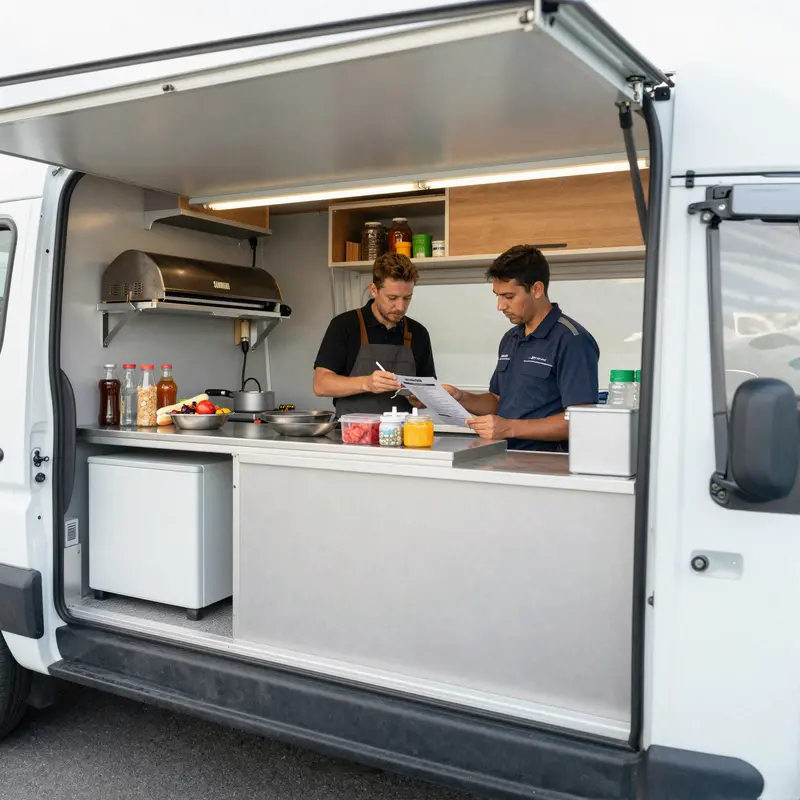
One thread that frequently emerges in conversations about mobile food vending is the role of a commissary not merely as a convenience but as a compliance anchor. In many jurisdictions, the commissary becomes the anchor for your health, sanitation, and waste-handling practices. It is where you maintain cold storage for perishable ingredients, where you provision and inventory, and where you conduct post-service cleaning and equipment sanitation. For operations with limited cooking on unit, the commissary might also be a place for bulk preparation, which must still adhere to cold-chain rules and sanitary standards. The idea is simple: you separate the back-end logistics from the front-line service in a controlled facility that has its own inspections and approvals. This separation reduces risk, improves consistency, and makes it easier to demonstrate compliance when health inspectors arrive.
Embedding regulatory realities into daily practice is the most reliable way to protect your brand and your profits. Training your crew to follow documented SOPs, to wear clean uniforms and gloves, and to monitor temperatures with calibrated thermometers is not optional; it is actively required. You should translate the FDA’s expectations into practical routines: check hot holding temperatures for your hot dogs, ensure cold storage temperatures stay within safe ranges, prevent cross-contact with allergens, and sanitize surfaces between customers. When a health inspector asks to review your records, you want your logs—equipment maintenance, cleaning schedules, temperature logs, and waste disposal records—to tell a coherent, consistent story of careful operation. Even things as seemingly small as handwashing stations, clean utensils, and properly labeled chemical cleaners can become decisive factors in a positive inspection outcome.
In practice, licensing and compliance intersect with your broader business strategy. A well-planned compliance posture can be a differentiator that signals reliability to landlords, event organizers, and customers alike. It reduces the risk of costly shutdowns and gives you a predictable operating rhythm that supports marketing and growth. For example, if you plan to participate in seasonal markets or large gatherings, your readiness with licenses, permits, and a compliant commissary can shorten setup times and improve access to premium locations. It also supports customer trust; people are more willing to queue for a hot dog when they believe the vendor is operating within laws designed to protect their health.
As you prepare for launch, remember that licensing is not a one-off hurdle but an ongoing discipline. Renewals, continuing education for staff, periodic vehicle inspections, and routine reviews of your SOPs keep you aligned with evolving regulations and best practices. If your business matures, you may shift toward branded networks or franchises that offer centralized recipe development or bulk supply arrangements. Those pathways bring additional compliance considerations, but they also bring the potential for shared systems and collective bargaining power.
For operators who want to explore broader regulatory resources, practical guidance from other sectors can be instructive. See how experiences in adjacent mobile industries handle sudden regulatory shifts and emergency response planning by visiting resources that discuss regulatory relief applicable to mobile and small businesses. This cross-field awareness helps you design a more resilient operation and reduces the risk that external changes disrupt your schedules or your revenue streams. regu lator y-relief-winter-storms-trucking
In sum, licensing, permits, and compliance are not merely bureaucratic hurdles. They are the scaffolding that supports consistent quality, safe service, and sustainable growth for a hot dog truck. When you anchor your plan to the real-world requirements of a commissary, clear licensing, and an unwavering commitment to sanitary standards, you set a stable course for both immediate success and long-term expansion. Your compliance framework becomes a core competency that separates you from casual vendors and positions you to win repeat customers, reliable event opportunities, and scalable routes as urban demand for fast, affordable meals continues to rise.
For those seeking formal guidelines and official verification of requirements, see the city health department’s mobile food vendors page, which outlines permits, inspections, and regulatory expectations in detail. This page, while specific to a city, provides a concrete reference for practices that transfer across many urban contexts and helps you prepare thoroughly before you file any applications.
External resource: Official guidelines and standards for mobile food vending can be found here: https://www.nyc.gov/site/health/healthy-eating-drinking/mobile-food-vendors.page
null
null
Brand on Wheels: Crafting Identity, Driving Foot Traffic, and Building Loyal Fans for Your Hot Dog Truck
A hot dog truck makes a promise with every plate and every glance. The sizzle of the grill is just the start. The real draw is the identity you project—one customers can recognize in a single pass, remember at the end of a long day, and seek out again next week. Branding for a mobile food venture isn’t vanity; it’s a compact, living business plan that travels with you. Your brand tells a story about quality, speed, value, and personality. It whispers what kind of experience a customer will have before they even taste the first bite. That story should be consistent across every touchpoint—your truck’s exterior, the way you present the menu, the tone of your staff, the visuals on your packaging, and the cadence of your social updates. In a crowded street-food scene, a strong, coherent brand turns a passing lunch into a predictable ritual and a weekend stop into a memory your customers share with friends.
Your branding starts with a clear sense of what sets your offering apart. Do you lean into a classic, nostalgic American dog with a nod to traditional toppings, or do you push a modern, chef-inspired lineup with artisanal sausages and unexpected accents? Perhaps you favor a regional specialty that has a story—Chicago-style, New York–inspired, or a bold fusion that blends flavors people crave but rarely see on a grill. Whatever path you choose, the essence of the brand should be communicated in a way that feels effortless and authentic. This is not about chasing trends; it’s about aligning your menu, your truck design, and your on-site service with a cohesive character customers can anticipate and trust every time they see your vehicle pulling into a lot.
Everything about the truck should echo that character. The exterior design becomes a portable billboard that communicates mood before a word is spoken. A color palette, logo, and typeface—chosen with intention—should be legible from a distance and memorable up close. This visual branding carries through to the menu boards, napkins, cups, and even the uniforms of the staff. Consistency here is not rigidity; it’s a guarantee that a customer’s experience will feel the same whether they’re grabbing a quick bite at a plaza, queuing up at a weekend festival, or stopping by a corporate campus during lunch. The branding should also extend to the way you tell your story: a simple, memorable slogan, a short origin tale about your sausages or toppings, and a visual rhythm in your posts that reflects your hours, locations, and the energy you bring to each stop.
Once the brand is defined, a thoughtful marketing plan helps you translate that identity into real-world results. Start with a precise view of who you want to attract. Office workers craving a fast, satisfying lunch; families attending weekend events; students looking for a flavorful break between classes; or food enthusiasts chasing a unique street-food experience. This audience map should shape where you station the truck, when you appear, and how you speak to customers. It also informs your content strategy. Visual storytelling matters as much as menu design. High-contrast photos of a steaming hot dog, the texture of a glossy bun, and a drizzle of sauce can create mouthwatering anticipation. Short, human captions that reveal a bit of your daily routine—steam, sizzle, and a friendly voice—build familiarity. When possible, share behind-the-scenes glimpses of sourcing ingredients, daily prep, and the care that goes into each order. Such transparency deepens trust and invites customers into your world rather than simply presenting a product.
Online engagement benefits dramatically from a light but steady touch. A robust presence doesn’t require a dozen elaborate campaigns; it hinges on regular, authentic updates that let people know where you are and what you’re serving. Real-time location updates, friendly replies to comments, and occasional spotlight posts featuring staff or customer favorites create a sense of community around the truck. This is not just about posting menus; it’s about narrating a real-time, moving story of a business that shows up when and where people need it. A strong micro-campaign can be as simple as a limited-time topping or a daily pairing—one hot dog with a specific drink or side at a fixed price. People will plan around it if they know you’ll be in a particular spot, at a certain time, offering a dependable value proposition.
A practical dimension of branding lies in the physical and digital ecosystems that surround your truck. On the physical side, the signage should be legible at a distance and welcoming up close. The menu should be clean, easy to read, and adjustable as your concept evolves. The packaging should reinforce the brand’s color story and convey a sense of care—think sturdy wrappers, clearly printed toppings, and a gentle nod to sustainability if that aligns with your values. On the digital side, your location strategy matters as much as your food. A simple, well-maintained listing that includes hours, current location, and a compact menu can be the difference between a passerby and a customer. If you can, add a brief, consistent voice to your updates—the same warm, efficient tone you convey in person. Those micro-moments of recognition compound over time into a loyal circle of regulars who know they can find you when they crave comfort and speed.
The relationship with customers is where branding becomes a living practice. Engagement should be two-way, not a one-way broadcast. Encourage feedback and make it easy for customers to share what they loved and what they’d change. Contests can spark energy without demanding heavy investment. A simple “Best Dog Name” photo contest invites customers to participate, and the winners can receive a complimentary topping or a small bundle. A loyalty card—punch five times and get a free upgrade or add-on—transforms casual buyers into repeat guests. And crucially, you can cultivate what feels like a conversation rather than a sale by greeting regulars by name, remembering their go-to order, or asking for quick input on a new topping idea. In a world of quick meals, these small, personal touches can tip the scale toward enduring affection for your truck.
The branding and engagement strategy naturally feeds into growth plans. A strong, recognizable identity lowers the friction for trial and repeat purchases. It makes pivoting between locations easier because customers carry the memory of your truck with them. It also creates the space needed to experiment with new offerings—seasonal toppings, regional twists, or weekend specials—without diluting the core brand. Data from daily sales, customer feedback, and location performance can guide decisions about where to linger, which events to pursue, and how to adapt your menu to local tastes. You don’t need to be everywhere at once; you need to be present where your brand resonates most. The same disciplined approach that helps a trucking operation manage assets, costs, and logistics also supports a brand that grows in quality and reach over time.
As you weave brand, marketing, and customer engagement into the fabric of your daily operation, remember that the best brands in street food are not built overnight. They emerge from consistency, responsiveness, and a genuine commitment to delighting people in a simple, flavorful moment. Your truck becomes a rolling stage where the audience not only tastes food but experiences a story they want to repeat. If you cultivate that narrative with clarity and kindness, your brand will do more than attract customers. It will earn their trust, inspire repeat visits, and scale in a way that matches the mobility at the heart of a hot dog truck.
For a broader, people-centric perspective that informs how brands in moving markets connect with communities and teams, you can explore broader discussions on people-first strategies in trucking here: people-first-strategies-in-trucking.
As you plan your pathway, keep in mind that the most resilient brands in mobile food are those that treat every day as an opportunity to reinforce identity while listening closely to the people who show up for your food. The street is your classroom, and every serving is a chance to refine the narrative you want customers to tell their friends. A well-told brand story paired with consistent, thoughtful engagement creates a virtuous cycle: recognizable, trusted, and desired—the fuel that powers repeat visits and sustainable growth.
External resource for deeper execution: for a comprehensive guide on the regulatory and operational aspects of mobile vending, consult the official government resource at https://www.sba.gov/business-guide/plan-your-business/start-a-mobile-food-business.
From First Dollar to Fleet: Financial Planning, Profitability, and Scaling a Hot Dog Truck Business
Turning a hot dog idea into a sustainable, scalable business hinges on financial discipline as much as culinary craft. It is easy to underestimate how quickly small costs add up, or how fast a single, steady route can become a small network with the right planning. The heart of this chapter is to translate the charm of quick service into a rigorous financial framework. It invites you to see the venture not only as a tasty street option but as a model for cash flow, margins, and growth that can be replicated with careful execution. A robust plan starts at the top with a clear picture of startup costs, funding routes, and the three core financial statements that guide every decision: income, cash flow, and balance sheet. You then weave in pricing, menu design, and operating discipline to push margins higher while preserving speed and quality. This is the bridge from a one-truck operation to a small fleet, where each incremental truck expands you into new locations, new peak hours, and new learning curves, all while preserving the brand promise that drew customers in the first place.
Foundations rest on numbers. Startup costs for a hot dog truck are not a mystery if you break them into categories you can control. There is the vehicle or conversion cost, the cooking and prep equipment, refrigerated storage, a service counter and a reliable POS, plus water, waste, and safety systems. Permits, licenses, insurance, and initial inventory are predictable line items, but their total demands discipline. Working capital—enough to cover the first one to three months of operating expenses—often decides whether a venture stumbles out of the gate or builds momentum. The sensible path is to bootstrap where possible, layer in financing as milestones are met, and keep a conservative buffer for the unknowns of a mobile business—weather, traffic patterns, and event calendars that shift weekly. A well-structured financial plan also maps the funding journey: personal savings, a small business loan, lines of credit, or even a staged investment as you prove the model in a single high-traffic spot before expanding.
The practical backbone is the trio of financial statements. An income statement shows revenue, the cost of goods sold per hot dog and toppings, and operating expenses such as labor, fuel, and marketing. A balance sheet tracks assets like the truck and equipment, plus liabilities such as financed vehicles or short-term obligations. The cash flow statement reveals timing: when receipts come in against when payments occur to suppliers and staff. Your pricing strategy should aim for healthy gross margins, with a typical target around 60–70% for hot dogs with toppings, leaving room for labor, rent-in-kind marketing, and utilities. The goal isn’t just to price for profit but to price for throughput—getting more customers through the window or at the curb while maintaining quality and consistency.
Menu design is a strategic lever in this system. The core product—hot dogs of reliable quality—serves as the anchor, but signature items and appealing add-ons push the ticket value upward. Customizable toppings and occasional premium twists—such as gourmet sausages or bold sauces—can uplift perceived value without compounding kitchen complexity. Upselling beverages, chips, and specialty sauces lifts the average ticket and bolsters contribution margins. If you run numbers, you’ll see that a higher average price per unit with manageable variable costs can dramatically improve cash generation, provided demand stays steady and your preparation remains efficient. Throughput matters as much as price. A well-constructed plan estimates customers per hour, items per customer, and daily operating hours to forecast monthly revenue with realism and guardrails for seasonality.
Cost structure in this business divides clearly into fixed and variable components. Variable costs track directly with volume: the hot dogs, buns, toppings, condiments, napkins, and packaging. Labor costs fluctuate with hours and staffing levels, while fuel and maintenance track vehicle use and routes. Fixed costs—permits, insurance, vehicle depreciation, utilities, and marketing—remain spread over a larger volume as you scale, which is why growth, when done cleanly, can spread those fixed costs thinner per unit. The strategic art is to optimize the mix: maintain lean, repeatable SOPs that keep labor costs predictable, negotiate bulk pricing for staples, and monitor waste to protect margins. Depreciation and amortization of the vehicle and equipment should be embedded in tax planning and long-range forecasts so you aren’t surprised by a tax bill or a capital replacement need when a vehicle ages.
Profitability is driven by the interplay of price, volume, and cost. A practical way to think about this is through the break-even lens. Your contribution margin per unit—price minus variable cost per hot dog—must cover fixed costs, and only after that point does each additional sale contribute to net profit. A simple forecast, even a simplified model, can reveal whether you’re on track to hit monthly profitability. Sensitivity analysis—testing how changes in price, volume, or ingredient costs affect outcomes—helps you plan for better or worse scenarios. It also clarifies how close you are to the margin of safety, should supplier prices rise or a popular event cancel. The habit of running these scenarios monthly creates a resilient business that can tolerate hiccups while preserving the core value proposition.
Cash flow management is the lifeblood of a mobile operation. Because receipts may cluster around peak hours, events, or lunch windows, aligning supplier payment terms with cash inflows is essential. A tight cash conversion cycle minimizes working capital needs and reduces the risk of a cash crunch during slow periods. Forecasting weekly cash receipts and disbursements, maintaining a small emergency fund, and planning for the seasonality and weather are prudent practices. It is not enough to know you’ll be profitable on paper; you must ensure you have the liquidity to buy ingredients, pay staff, and cover maintenance without disruption.
As you consider scale, the natural question is how far a single truck can go before you need a second one. Scaling is less about duplicating the same operations and more about building a repeatable model. A second truck extends your route options, spreads fixed costs over a larger revenue base, and introduces new logistics challenges: route planning, inventory pooling, supplier agreements, and a broader staffing framework. A centralized kitchen versus on-truck prep is a critical decision at this stage. Centralized prep can offer consistency, bulk purchasing, and a cleaner back-end, while on-truck prep preserves speed and reduces transport time. Fleet management becomes a new discipline: maintenance schedules, fuel efficiency tracking, driver performance, and standardized training. Technology becomes your companion here—portable POS systems with offline capability, inventory management, and route-planning software help you keep quality and reliability across multiple trucks.
A practical framework to guide growth is a three-year financial forecast with monthly cadence. Start with assumptions for item prices, COGS per item, and daily volume targets. Build revenue forecasts by item, incorporate promotions, and include seasonal adjustments. Map costs to line items: variable costs by item, labor costs by shift, and fixed expenses like permits and insurance. A cash flow forecast then links to quarterly and annual plans, showing when you invest in a second truck, hire more staff, or broaden marketing. Key performance indicators should be tracked relentlessly: gross margin, operating margin, EBITDA, cash flow from operations, break-even point, inventory turnover, and labor cost per unit. The objective isn’t to chase complexity for its own sake but to have a clear, actionable dashboard that informs decisions about location, schedule, and pricing.
Risk management remains integrated throughout. Food safety and compliance require consistent SOPs and regular inspections, while the competitive landscape rewards branding, service speed, and location strategy. Weather and seasonality demand contingency plans, and regulatory changes call for ongoing monitoring of health codes and licensing. Operational risks—vehicle breakdowns, supply chain hiccups, or labor turnover—benefit from reserve funds and cross-trained staff who can fill roles quickly. The certainty of a plan comes from continuous learning and adaptation rather than rigid adherence to a single model.
Implementation is a staged but coherent journey. In the first 0–3 months, validate the concept with a lean operation, build a lean financial model, secure initial funding, and get permits, branding, and a basic menu in place. In the 3–6 month window, push toward consistent weekly revenue, refine the menu mix for throughput, and experiment with second-route viability if demand supports it. In the 6–12 month period, formalize vendor relationships, invest in analytics, and begin exploring a second truck or additional routes. By 12 months and beyond, consider a small fleet, a central kitchen option, or licensing paths. Each milestone should prove the model, allowing you to reinvest with confidence rather than chase unsustainable growth.
To illustrate how this plan translates into numbers, consider a simplified scenario: a hot dog truck priced at $4.50 per unit, with 1.8 items per customer and 40 customers per hour over 6 hours daily for 22 days a month. If COGS per unit is $1.25 and labor costs run at two workers per shift, $15 per hour, the math becomes tangible: monthly revenue of $23,760, COGS of $6,600, gross profit of $17,160, labor of about $3,960, and fixed costs around $1,366. Net profit before tax appears at roughly $11,833. Of course, this is a stylized demonstration; real results vary by location, traffic, and execution. Yet the exercise demonstrates how a disciplined approach to pricing, volume, and cost controls creates a pathway to sustainable profitability while still allowing room for reinvestment as you expand.
As you navigate toward scaling, a critical lever is people. Building a capable, aligned team makes the difference between a solo operator who burns the midnight oil and a replicable model that others can follow. Investing in people—training, hiring, and culture—becomes a strategic asset that compounds as you grow. See a deeper exploration of this idea in resources focused on investing in people as a driver of truck-based business success: Investing in people key to trucking’s success.
The pathway from a single hot dog truck to a small fleet is not only about expanding revenue. It is about preserving the core offering, maintaining quality, and building a system that can operate across multiple locations with the same standards. In the chapters that follow, you will see how to translate these financial principles into practical operational tactics and location strategies that keep your brand consistent, your guests happy, and your growth controllable. Meanwhile, the financial backbone you assemble now—carefully estimating startup costs, constructing reliable cash flow, and planning for scalable capacity—will keep your venture resilient no matter what the market brings.
External resource: Start a mobile food business guide. https://www.sba.gov/business-guide/plan-your-business/start-a-mobile-food-business
Final thoughts
A disciplined approach to launching a hot dog truck that targets logistics, construction, and fleet environments yields a durable, scalable micro-business. The five-chapter framework—market research and niche selection, licensing and compliance, equipment and operations, branding and customer engagement, and rigorous financial planning—provides a repeatable model that translates street-vending simplicity into enterprise-ready execution. By focusing on high-traffic sites where fleets and field workers congregate, maintaining strict SOPs, and delivering reliable, safe food service, operators can establish recurring demand and predictable margins. As the business matures, phased expansion to additional sites, campuses, and depots can unlock route-based revenue, enhanced client loyalty, and sustained profitability. The key takeaway is clear: treat the hot dog truck as a field-ready asset that travels to clients, not merely as a street corner vendor, and coupling this with data-driven planning will drive steady growth in a competitive market.